
SCIENCE PROCESS SKILLS By Sabrina Fiorini Alexandra Bosch
SCIENCE PROCESS SKILLS By Sabrina Fiorini & Alexandra Bosch

There are three dimensions of science that are important when understanding science process skills: First Dimension includes: • Content of Science • Basic concepts • Our scientific knowledge
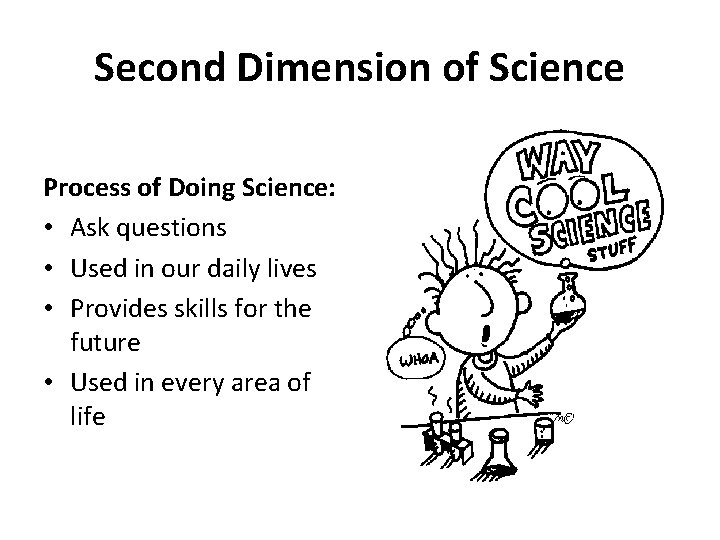
Second Dimension of Science Process of Doing Science: • Ask questions • Used in our daily lives • Provides skills for the future • Used in every area of life
Third Dimension of Science • • Science Attitudes: Curiosity Imaginative Enthusiastic about questions Enthusiastic about solving problems
Teaching Respect for Science Methods and Values: • Seeking to answer questions • Using evidence • Realizing importance of rechecking data • Understanding science theories can change • Understanding science knowledge can change

Six Basic Process Skills: • Observation • Communication • Classification • Measurement • Inference • Prediction
Six Basic Process Skills • Are integrated together • Are also important individually • Can be in logical order • Observation and communication (Younger Students) • Inference and Predication (Older Students)
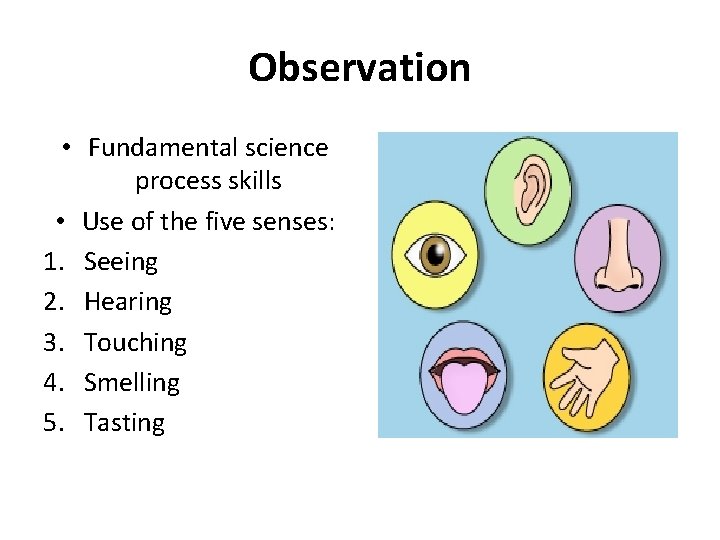
Observation • Fundamental science process skills • Use of the five senses: 1. Seeing 2. Hearing 3. Touching 4. Smelling 5. Tasting
Classification Classify: • Places • Objects • Ideals • Events Generate: • Lists • Tables • Charts
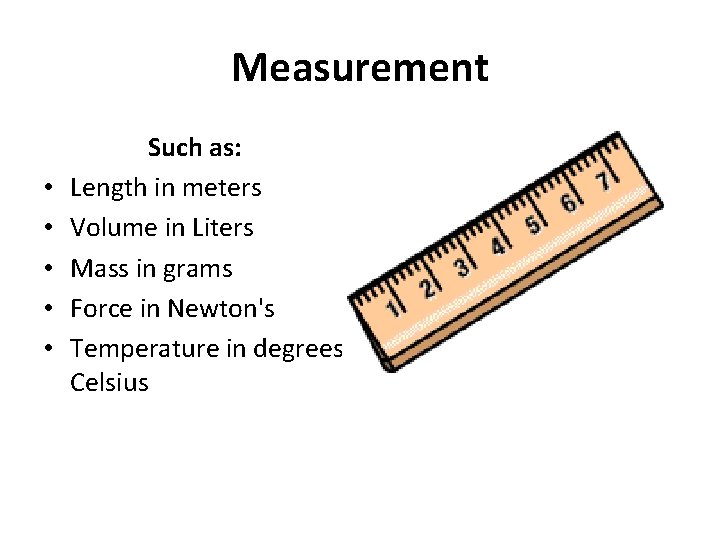
Measurement • • • Such as: Length in meters Volume in Liters Mass in grams Force in Newton's Temperature in degrees Celsius
Communication May include: • Oral • Written • Mathematical • Organizing Ideas using: Ø Visual representations Ø Appropriate vocabulary Ø Mathematical equations
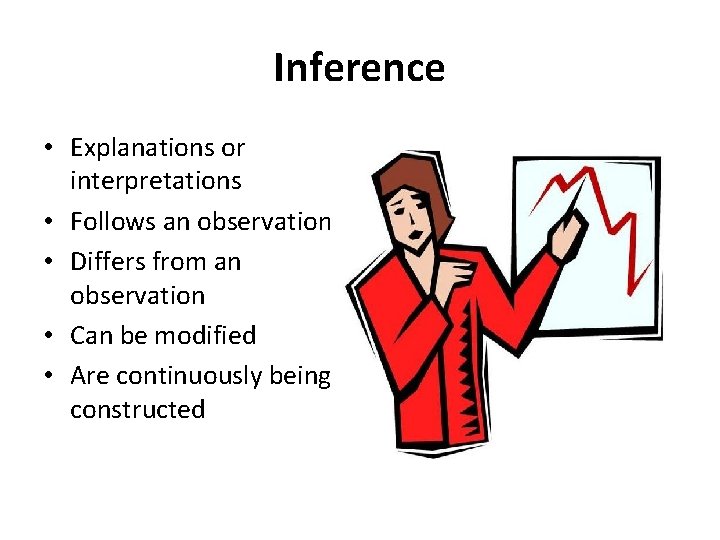
Inference • Explanations or interpretations • Follows an observation • Differs from an observation • Can be modified • Are continuously being constructed
Predicting • Making an educated guess • Forecasting future observations • Based on observation • Based on inferences • Correct predictions • Provide confidence in the inference
Experiment • Testing a Hypothesis • Manipulation and control of independent variables. • Effects on dependant variables • Interpret and present results • Integrate process skills • Report
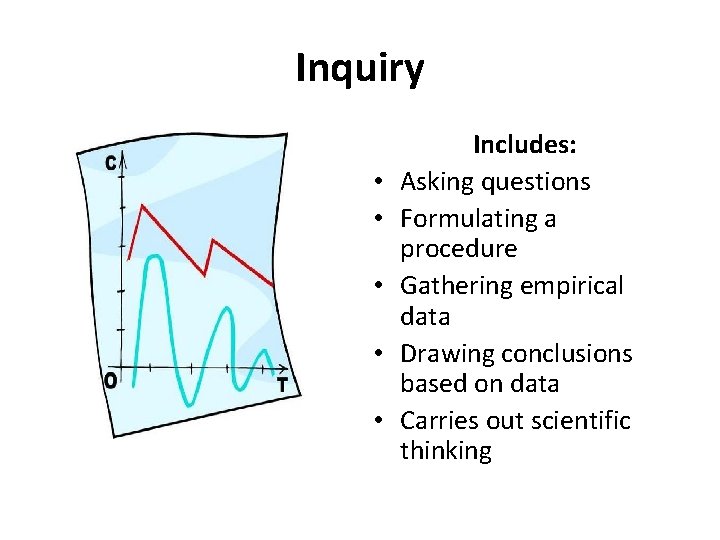
Inquiry • • • Includes: Asking questions Formulating a procedure Gathering empirical data Drawing conclusions based on data Carries out scientific thinking
Examples of Science Process Activities • Shaking a sealed can (Grades 1 -2) • Circuit game (Grade 3) • Dice-in-a-box (Grade 4) • Pattern experiments (Grades 5 -8) • Build your own lava lamp
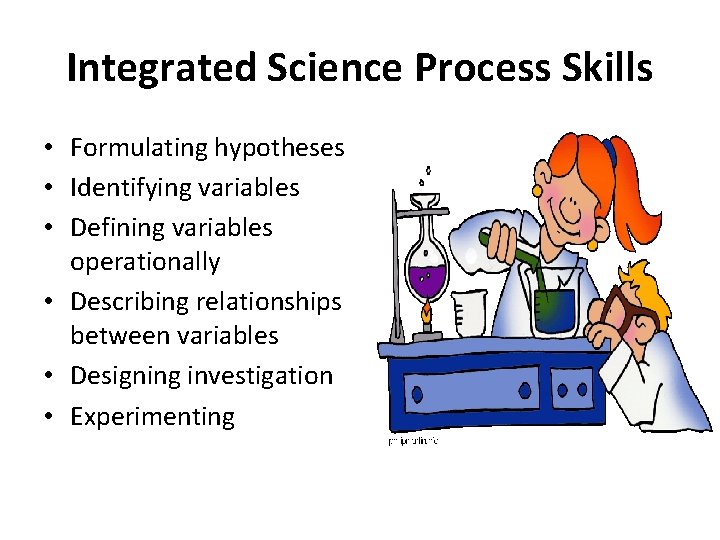
Integrated Science Process Skills • Formulating hypotheses • Identifying variables • Defining variables operationally • Describing relationships between variables • Designing investigation • Experimenting
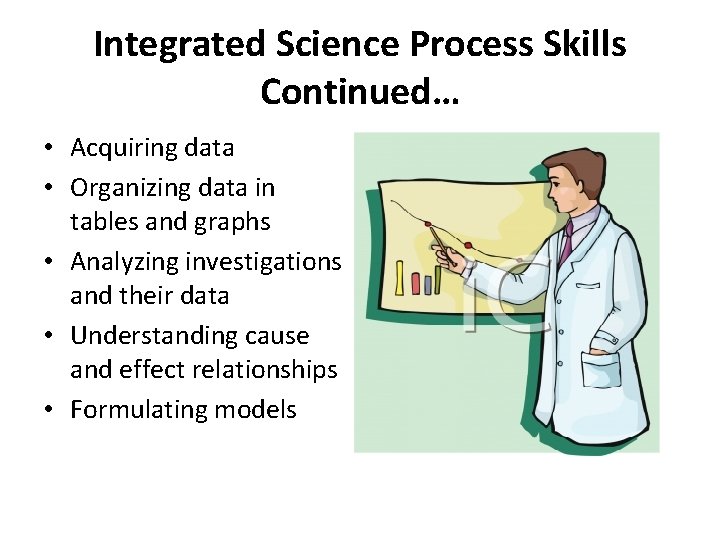
Integrated Science Process Skills Continued… • Acquiring data • Organizing data in tables and graphs • Analyzing investigations and their data • Understanding cause and effect relationships • Formulating models
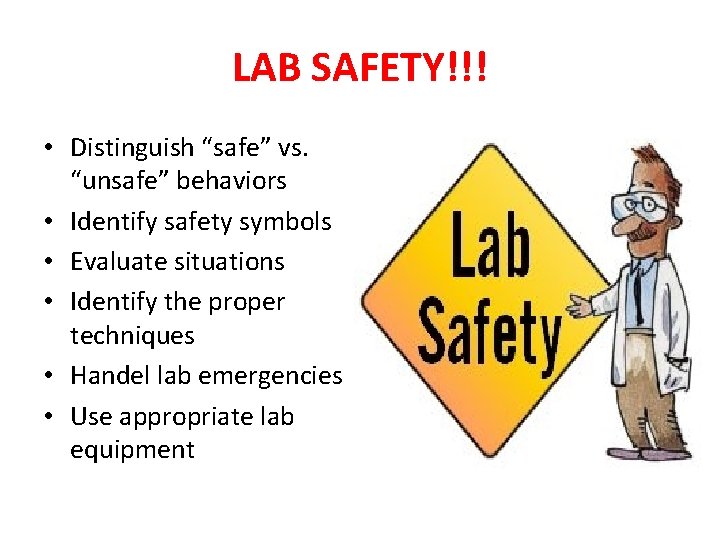
LAB SAFETY!!! • Distinguish “safe” vs. “unsafe” behaviors • Identify safety symbols • Evaluate situations • Identify the proper techniques • Handel lab emergencies • Use appropriate lab equipment
Bibliography • Lancour, K. (n. d. ). Training Guide. Retrieved March 30, 2009, from http: //www. tufts. edu/as/wright_center/products /sci_olympiad/pslsl_training_hammond. pdf • Science Process Skills: Classifying. (n. d. ). Retrieved March 30, 2009, from http: //arapaho. nsuok. edu/~adams 001/Process. Sk ills. htm • Teaching The Science Process Skills. (2007, June 12). Retrieved March 30, 2009, from http: //www. longwood. edu/cleanva
- Slides: 20