
Science of the Springs Astrobiology in Yellowstone National
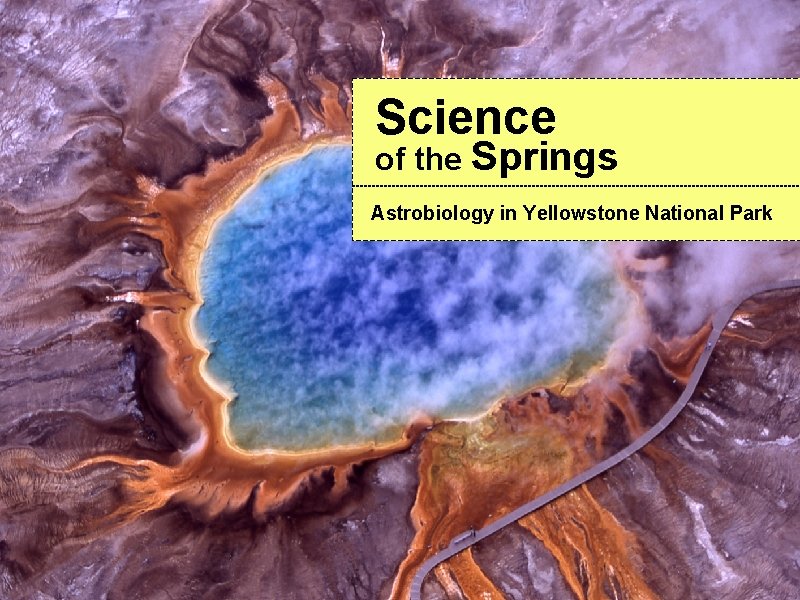
Science of the Springs Astrobiology in Yellowstone National Park
What is Astrobiology? Astro: stars, universe + Biology: the study of life • New field of science: combines geology, biology, chemistry, astronomy 3 main questions • How did life begin? • Are we alone? • What is the future of life on Earth and beyond?
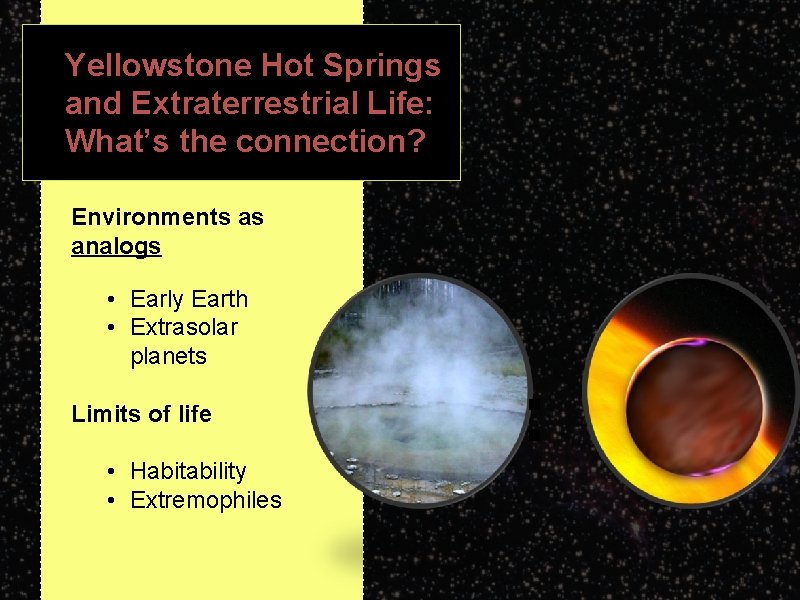
Yellowstone Hot Springs and Extraterrestrial Life: What’s the connection? Environments as analogs • Early Earth • Extrasolar planets Limits of life • Habitability • Extremophiles :

Extremophiles Tiny, extreme-loving microbes • Bacteria & Archaea • Microbes are found EVERYWHERE on Earth. • Extremophiles when extreme! • Yellowstone is one of the best places to study extremophiles. • Variety and accessible
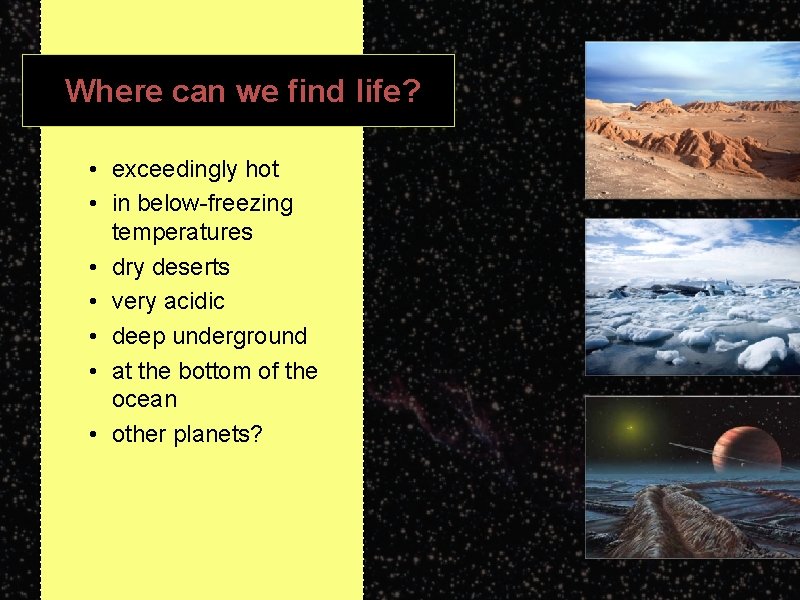
Where can we find life? • exceedingly hot • in below-freezing temperatures • dry deserts • very acidic • deep underground • at the bottom of the ocean • other planets?
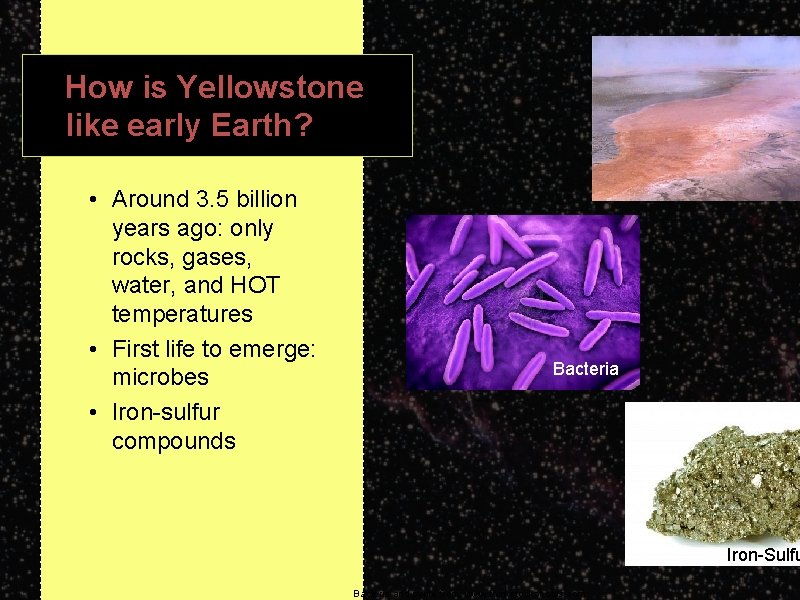
How is Yellowstone like early Earth? • Around 3. 5 billion years ago: only rocks, gases, water, and HOT temperatures • First life to emerge: microbes • Iron-sulfur compounds Bacteria Iron-Sulfu Bacteria and pyrite from: www. thinkstockphotos. com
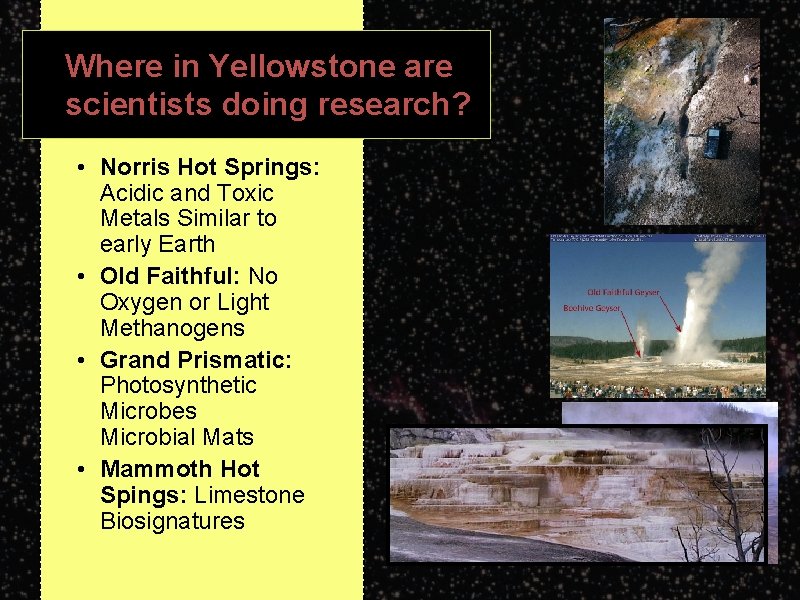
Where in Yellowstone are scientists doing research? • Norris Hot Springs: Acidic and Toxic Metals Similar to early Earth • Old Faithful: No Oxygen or Light Methanogens • Grand Prismatic: Photosynthetic Microbes Microbial Mats • Mammoth Hot Spings: Limestone Biosignatures
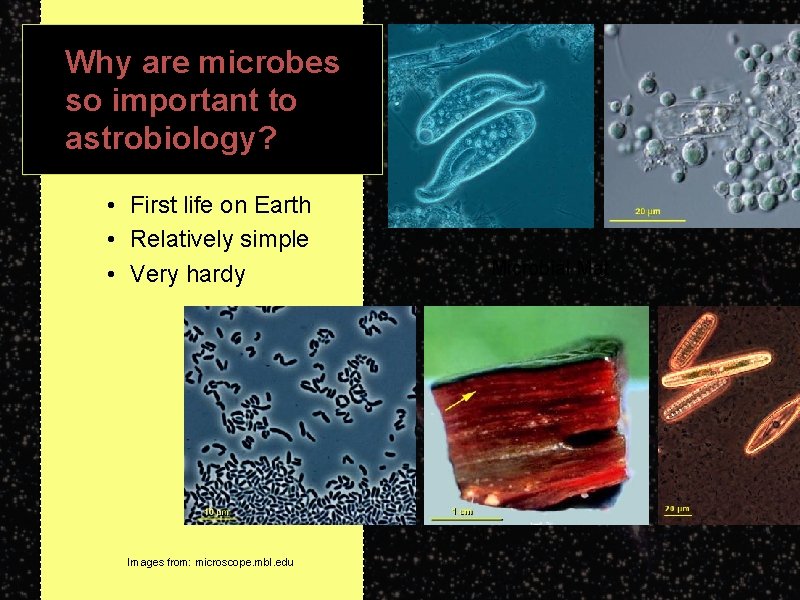
Why are microbes so important to astrobiology? • First life on Earth • Relatively simple • Very hardy Images from: microscope. mbl. edu Microbial Mat
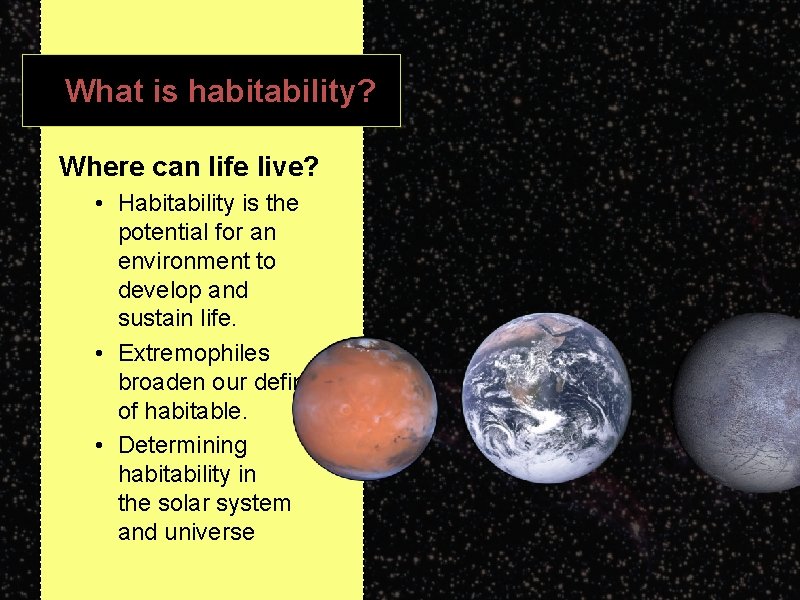
What is habitability? Where can life live? • Habitability is the potential for an environment to develop and sustain life. • Extremophiles broaden our definition of habitable. • Determining habitability in the solar system and universe
- Slides: 9