
Science Models are A scientific model is a



- Slides: 50
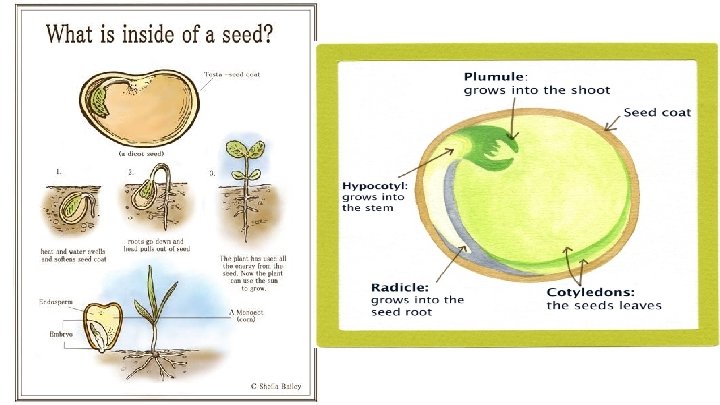
Science Models are. . . A scientific model is a conceptual, mathematical or physical representation of a real-world phenomenon. Can represent these in pictures
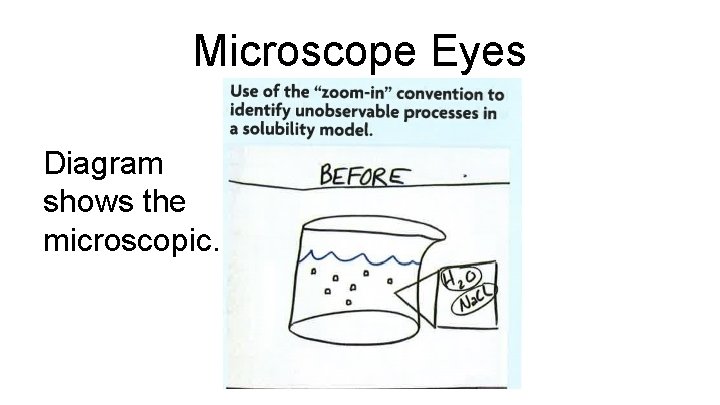
Microscope Eyes Diagram shows the microscopic.
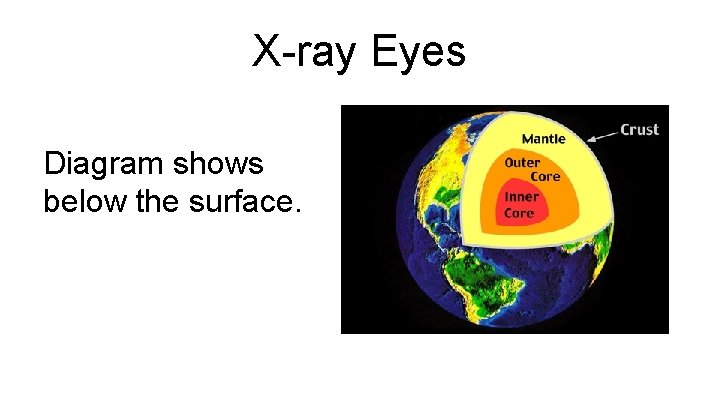
X-ray Eyes Diagram shows below the surface.
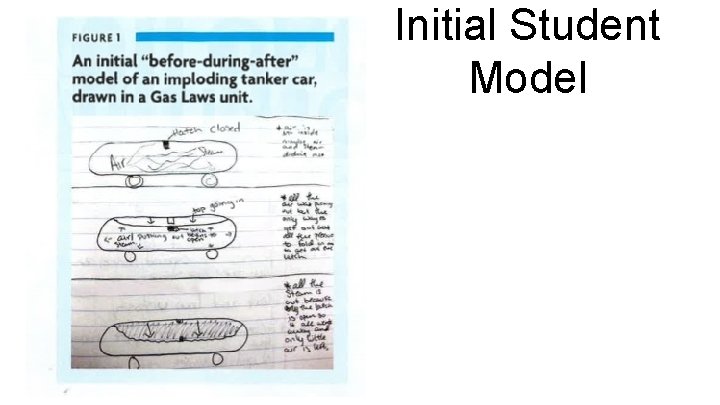
Initial Student Model
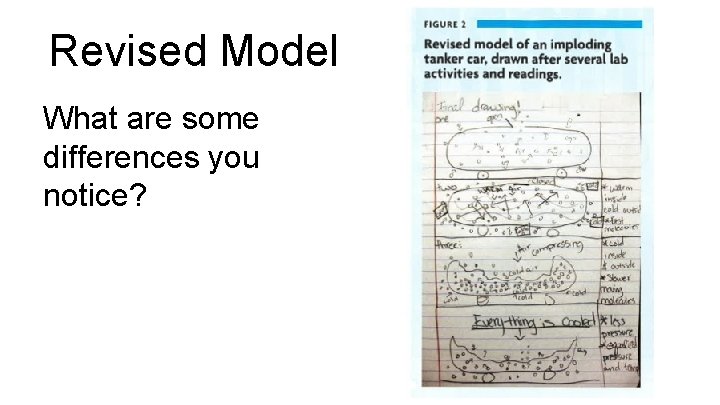
Revised Model What are some differences you notice?
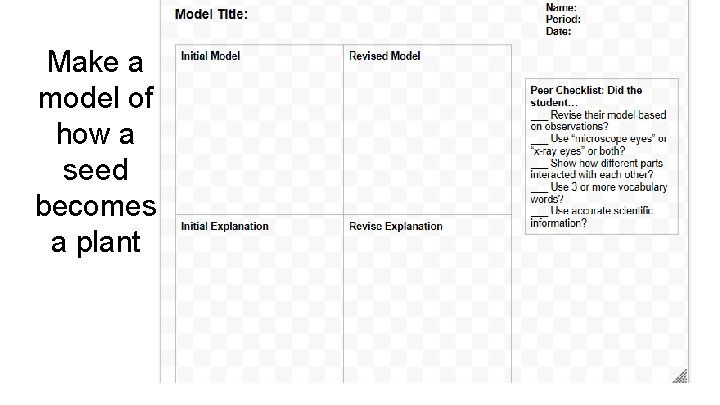
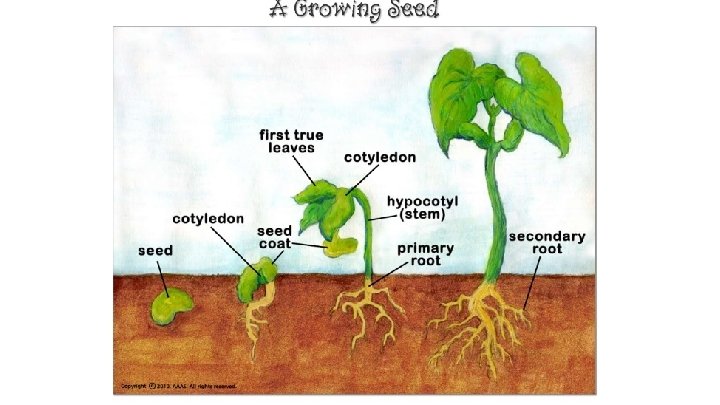
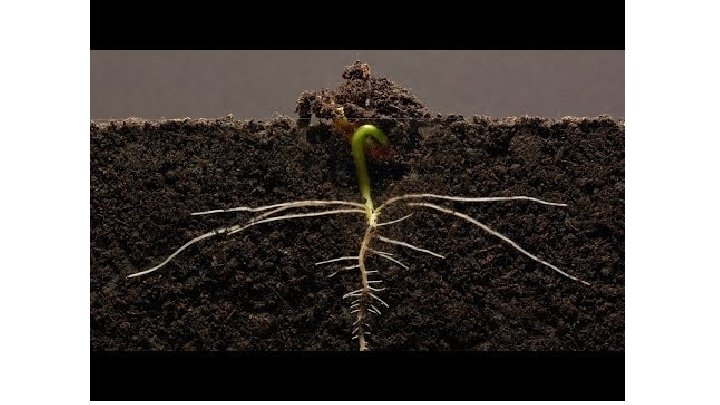
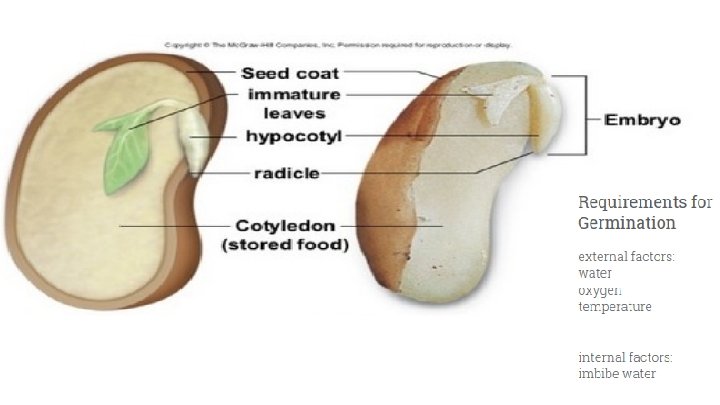
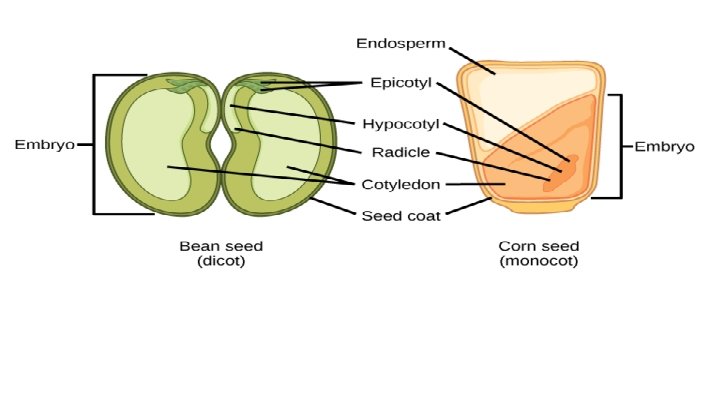
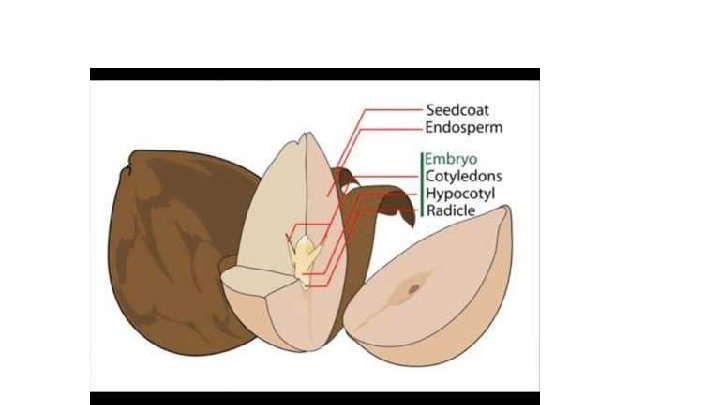
Make a model of how a seed becomes a plant
Don’t be scared of the next model. . .
Watch
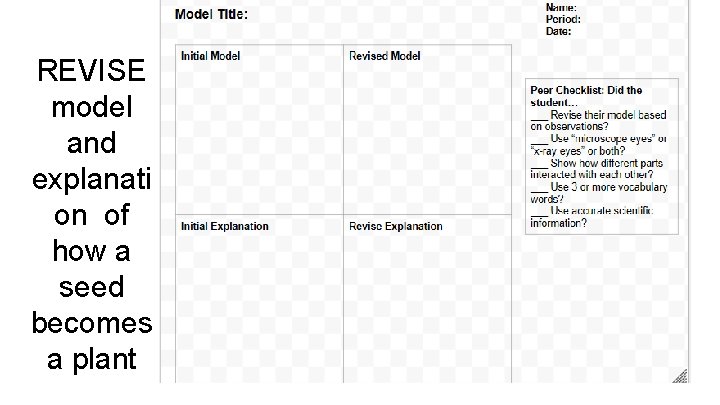
REVISE model and explanati on of how a seed becomes a plant
Allow a peer to view your model and give you FEEDBACK
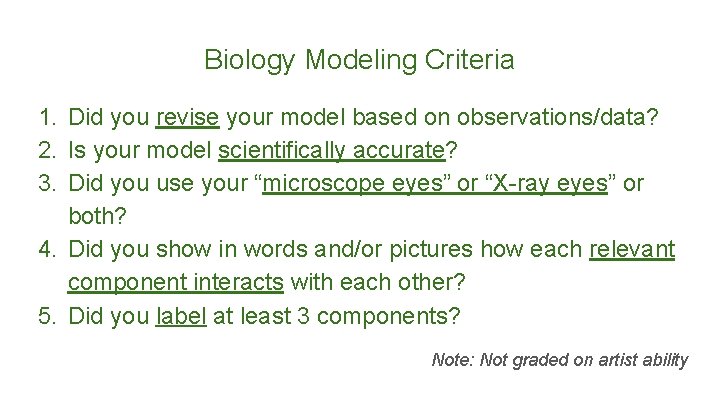
Biology Modeling Criteria 1. Did you revise your model based on observations/data? 2. Is your model scientifically accurate? 3. Did you use your “microscope eyes” or “X-ray eyes” or both? 4. Did you show in words and/or pictures how each relevant component interacts with each other? 5. Did you label at least 3 components? Note: Not graded on artist ability
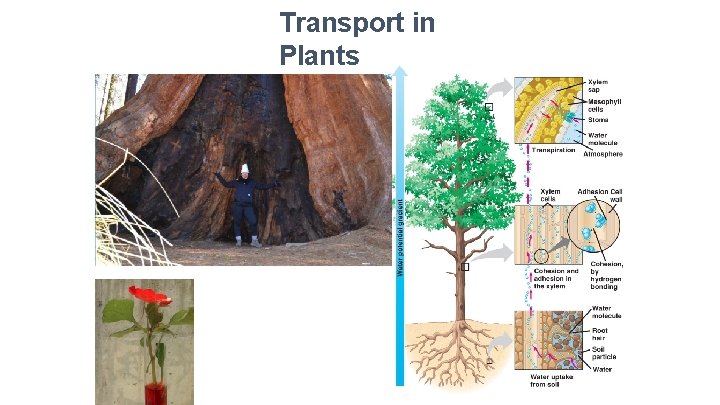
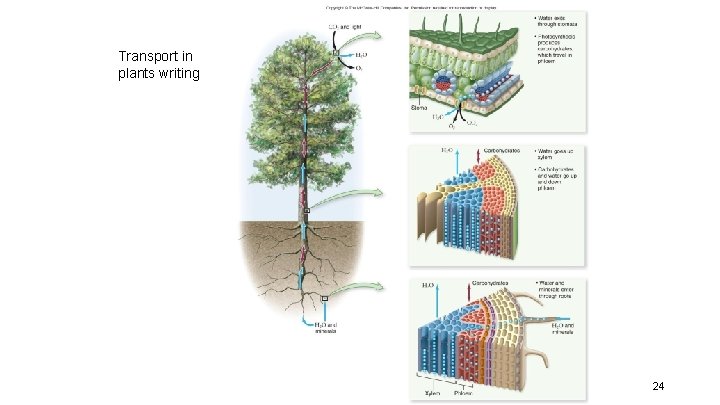
Transport in Plants
Transport in plants writing 24
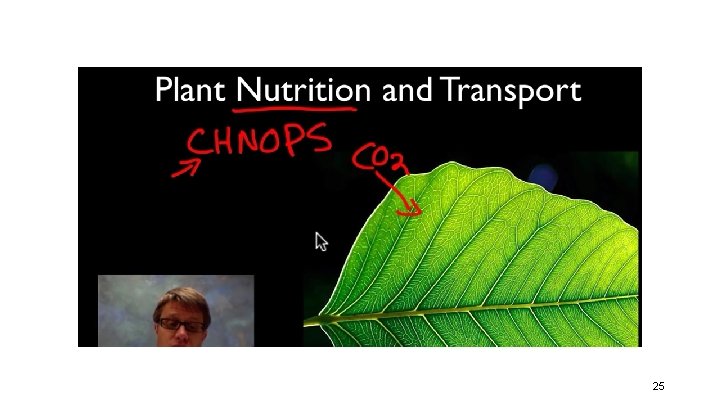
25
Transport Mechanisms 1) Water first enters the roots (higher water potential to lower potential) 2) Then moves to the xylem • Innermost vascular tissue • Water rises through the xylem because of a combination of factors 3) Most of that water exits through the stomata in the leaves 26
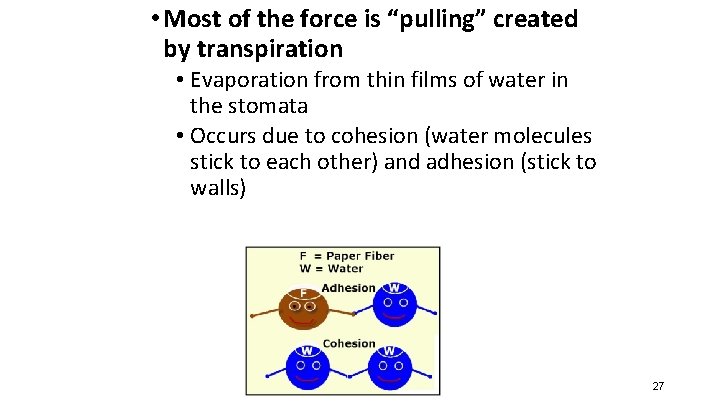
• Most of the force is “pulling” created by transpiration • Evaporation from thin films of water in the stomata • Occurs due to cohesion (water molecules stick to each other) and adhesion (stick to walls) 27
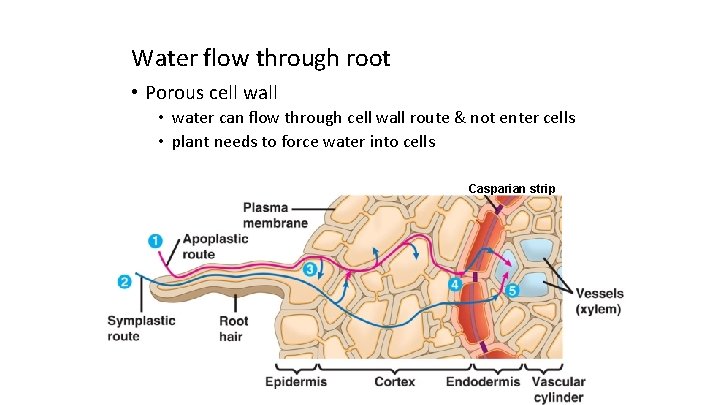
Water flow through root • Porous cell wall • water can flow through cell wall route & not enter cells • plant needs to force water into cells Casparian strip
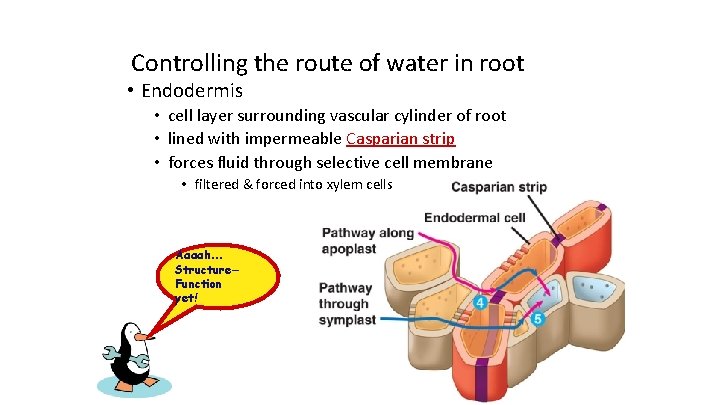
Controlling the route of water in root • Endodermis • cell layer surrounding vascular cylinder of root • lined with impermeable Casparian strip • forces fluid through selective cell membrane • filtered & forced into xylem cells Aaaah… Structure– Function yet!
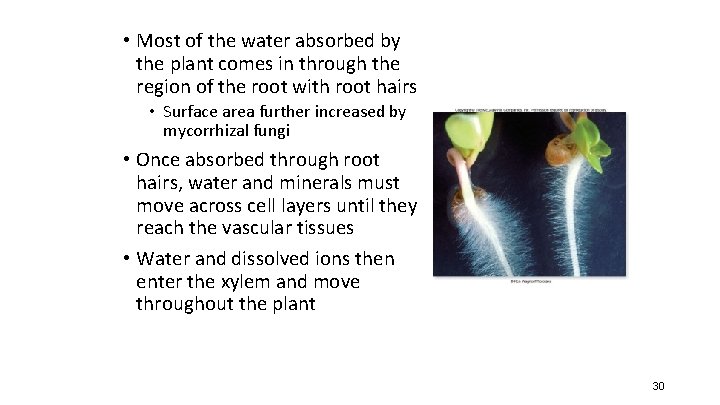
• Most of the water absorbed by the plant comes in through the region of the root with root hairs • Surface area further increased by mycorrhizal fungi • Once absorbed through root hairs, water and minerals must move across cell layers until they reach the vascular tissues • Water and dissolved ions then enter the xylem and move throughout the plant 30
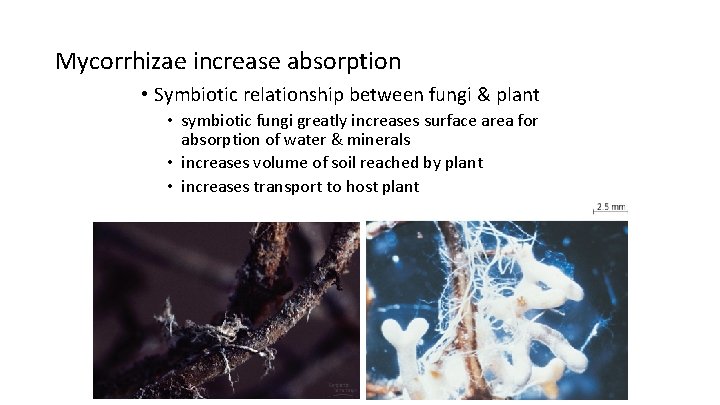
Mycorrhizae increase absorption • Symbiotic relationship between fungi & plant • symbiotic fungi greatly increases surface area for absorption of water & minerals • increases volume of soil reached by plant • increases transport to host plant
Water Absorption through Roots • STRUCTURE and FUNCTION 32
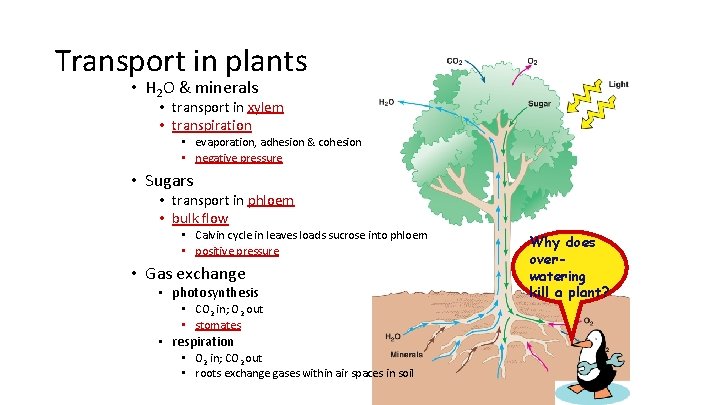
Transport in plants • H 2 O & minerals • transport in xylem • transpiration • evaporation, adhesion & cohesion • negative pressure • Sugars • transport in phloem • bulk flow • Calvin cycle in leaves loads sucrose into phloem • positive pressure • Gas exchange • photosynthesis • CO 2 in; O 2 out • stomates • respiration • O 2 in; CO 2 out • roots exchange gases within air spaces in soil Why does overwatering kill a plant?
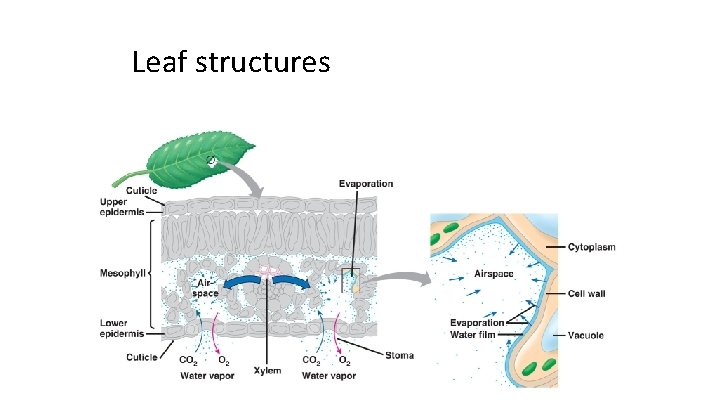
Leaf structures
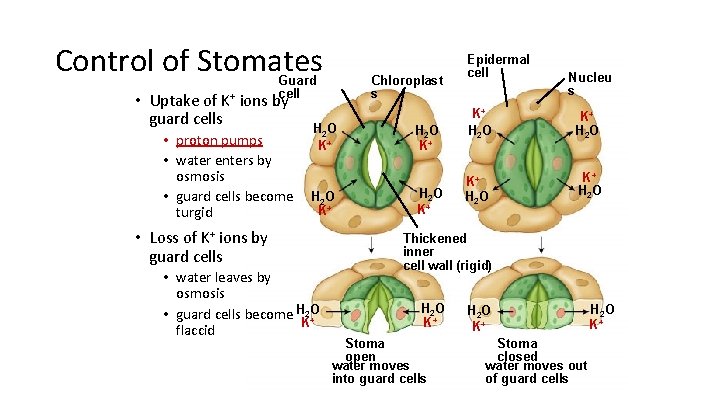
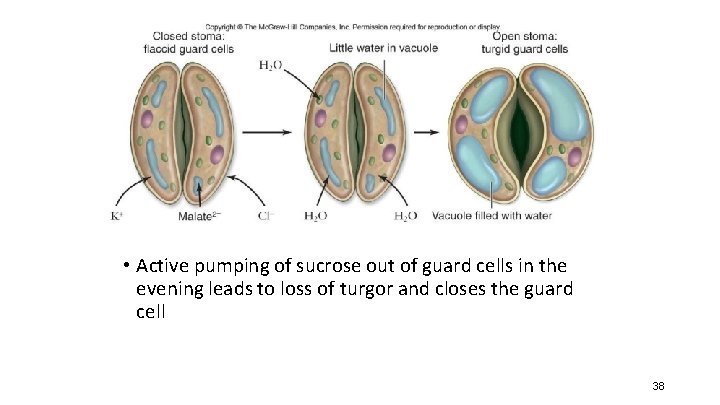
Control of Stomates Guard cell • Uptake of K+ ions by guard cells • proton pumps • water enters by osmosis • guard cells become turgid Chloroplast s H 2 O K+ • Loss of K+ ions by guard cells • water leaves by osmosis • guard cells become H 2 O K+ flaccid H 2 O K+ Epidermal cell Nucleu s K+ H 2 O Thickened inner cell wall (rigid) H 2 O K+ Stoma open water moves into guard cells H 2 O K+ Stoma closed water moves out of guard cells H 2 O K+
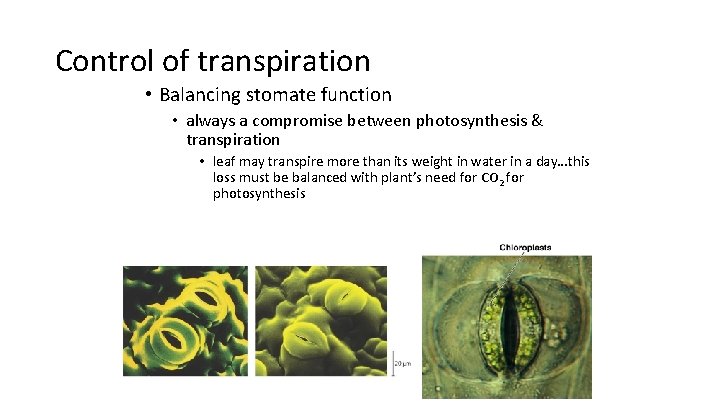
Control of transpiration • Balancing stomate function • always a compromise between photosynthesis & transpiration • leaf may transpire more than its weight in water in a day…this loss must be balanced with plant’s need for CO 2 for photosynthesis
Rate of Transpiration • Over 90% of the water taken in by the plant’s roots is ultimately lost to the atmosphere • At the same time, photosynthesis requires a CO 2 supply from the atmosphere • Closing the stomata can control water loss on a short-term basis • However, the stomata must be open at least part of the time to allow CO 2 entry 37
• Active pumping of sucrose out of guard cells in the evening leads to loss of turgor and closes the guard cell 38
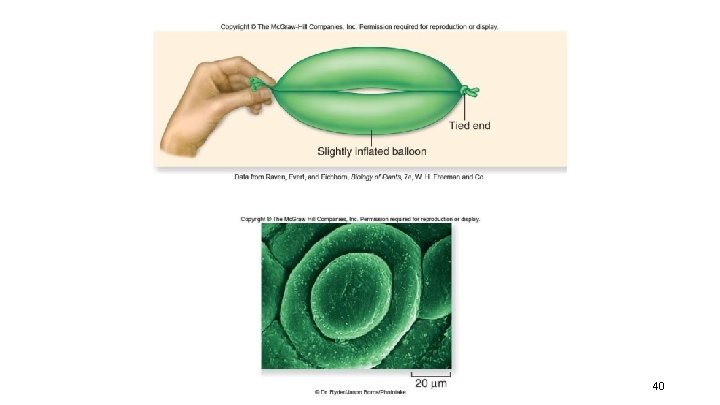
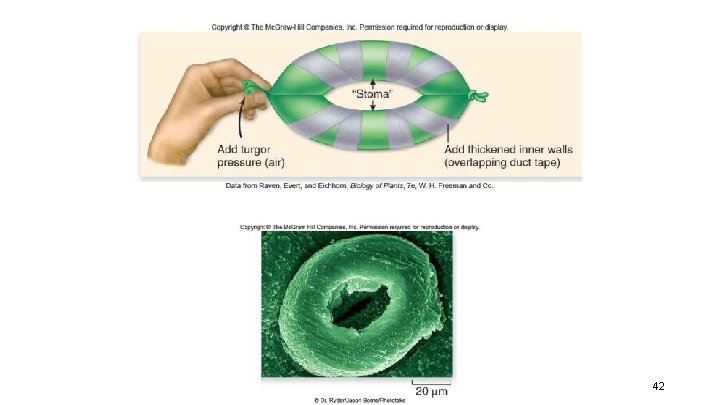
• Guard cells • Only epidermal cells containing chloroplasts • Have thicker cell walls on the inside and thinner cell walls elsewhere • Bulge and bow outward when they become turgid • Causing the stomata to open • Turgor in guard cells results from the active uptake of potassium (K+), chloride (Cl) • Water enters osmotically 39
40
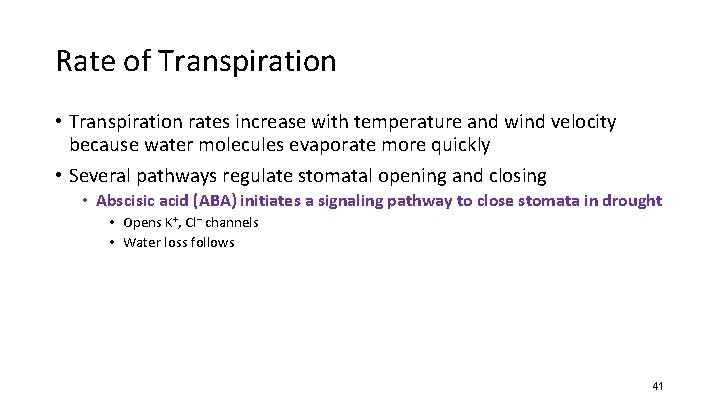
Rate of Transpiration • Transpiration rates increase with temperature and wind velocity because water molecules evaporate more quickly • Several pathways regulate stomatal opening and closing • Abscisic acid (ABA) initiates a signaling pathway to close stomata in drought • Opens K+, Cl– channels • Water loss follows 41
42
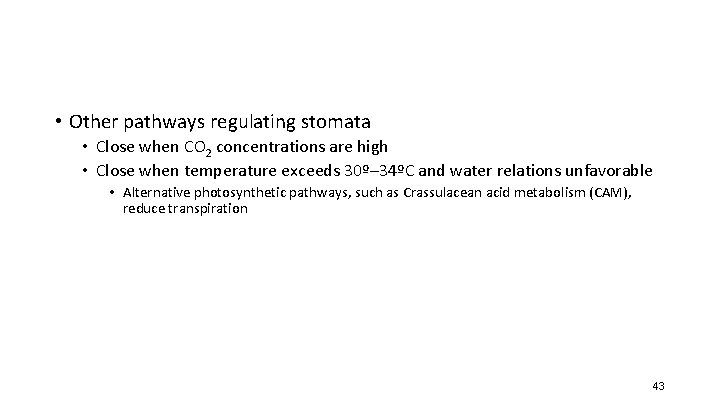
• Other pathways regulating stomata • Close when CO 2 concentrations are high • Close when temperature exceeds 30º– 34ºC and water relations unfavorable • Alternative photosynthetic pathways, such as Crassulacean acid metabolism (CAM), reduce transpiration 43
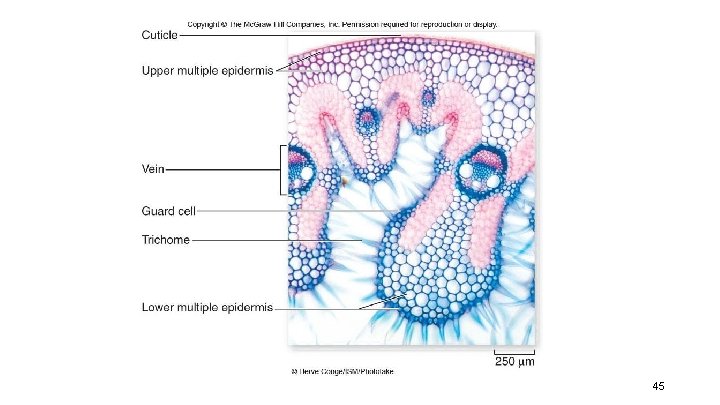
Water Stress Responses • Many morphological adaptations allow plants to limit water loss in drought conditions • • • Dormancy Loss of leaves – deciduous plants Covering leaves with cuticle and wooly trichomes Reducing the number of stomata Having stomata in pits on the leaf surface 44
45
• Plants have adapted to flooding conditions which deplete available oxygen • Flooding may lead to abnormal growth • Oxygen deprivation most significant problem • Plants have also adapted to life in fresh water • Form aerenchyma, which is loose parenchymal tissue with large air spaces • Collect oxygen and transport it to submerged parts of the plant 46
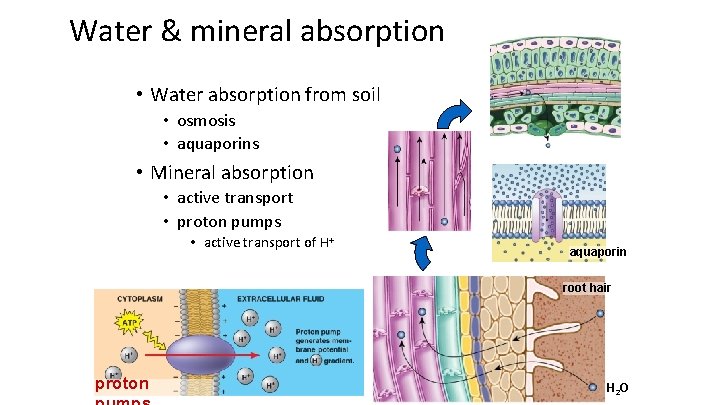
Water & mineral absorption • Water absorption from soil • osmosis • aquaporins • Mineral absorption • active transport • proton pumps • active transport of H+ aquaporin root hair proton H 2 O
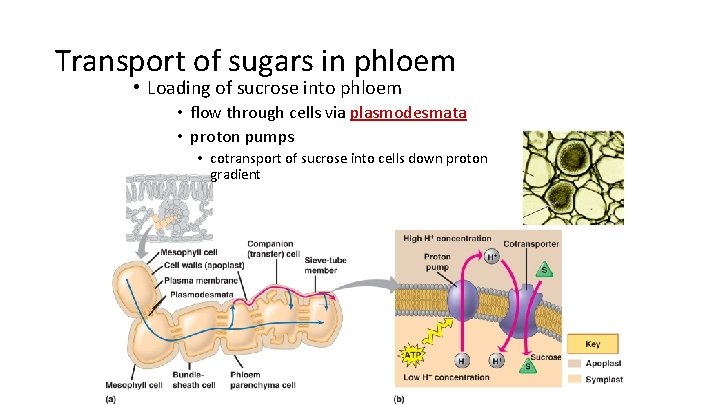
Transport of sugars in phloem • Loading of sucrose into phloem • flow through cells via plasmodesmata • proton pumps • cotransport of sucrose into cells down proton gradient
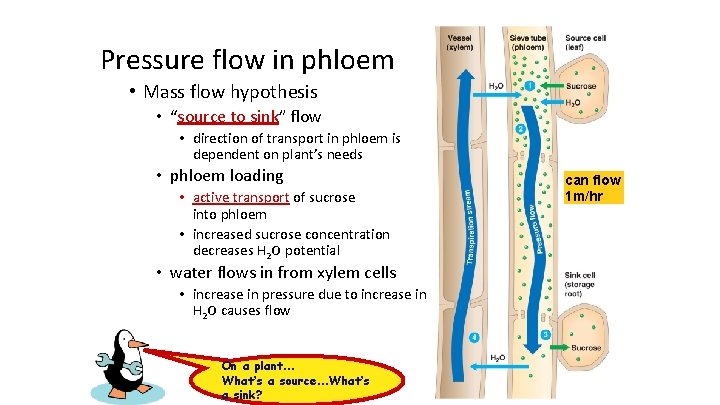
Pressure flow in phloem • Mass flow hypothesis • “source to sink” flow • direction of transport in phloem is dependent on plant’s needs • phloem loading • active transport of sucrose into phloem • increased sucrose concentration decreases H 2 O potential • water flows in from xylem cells • increase in pressure due to increase in H 2 O causes flow On a plant… What’s a source…What’s a sink? can flow 1 m/hr
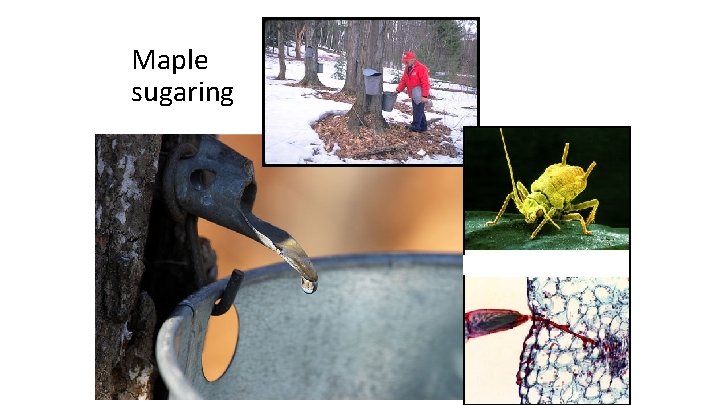
Maple sugaring