
Science Measurement SI units adapted from the metric
- Slides: 28
Science Measurement SI units, adapted from the metric system, are used in science Base units are: Meter – length Liter – volume Gram - mass Science TAKS Need to Know 1
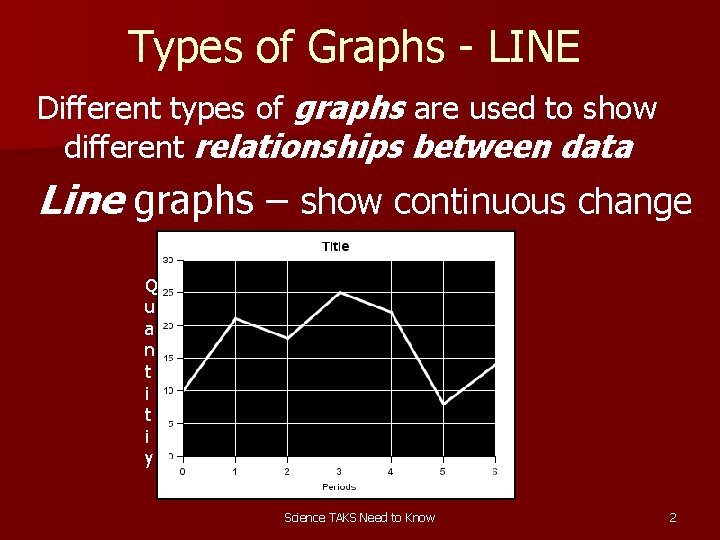
Types of Graphs - LINE Different types of graphs are used to show different relationships between data Line graphs – show continuous change Q u a n t i y Science TAKS Need to Know 2
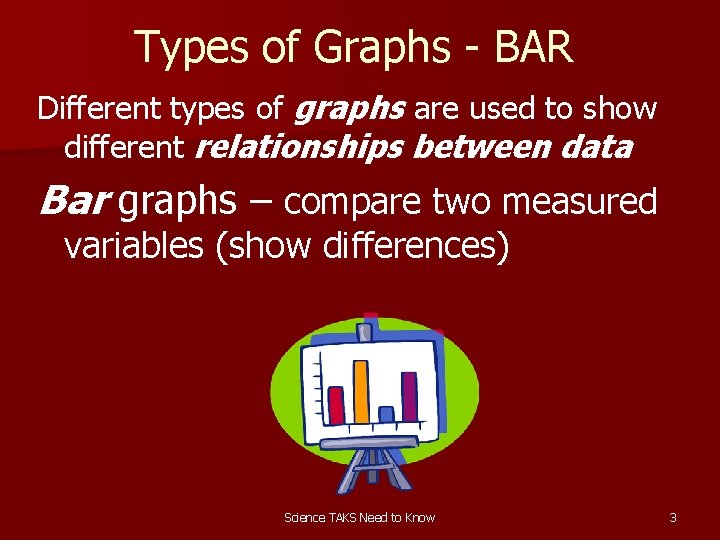
Types of Graphs - BAR Different types of graphs are used to show different relationships between data Bar graphs – compare two measured variables (show differences) Science TAKS Need to Know 3
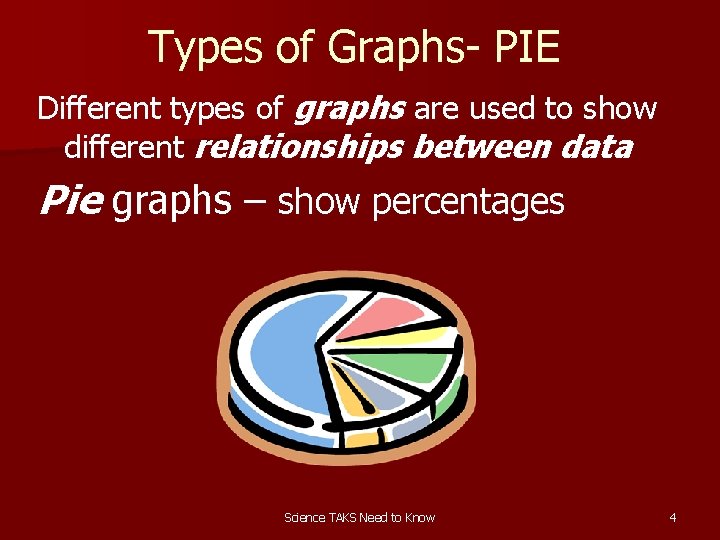
Types of Graphs- PIE Different types of graphs are used to show different relationships between data Pie graphs – show percentages Science TAKS Need to Know 4
Democritus named the atom n 2, 500 years ago, the Greek philosopher Democritus, decided that matter was made up of tiny, indivisible units called “atoms”. 8. 3 E Science TAKS Need to Know 5
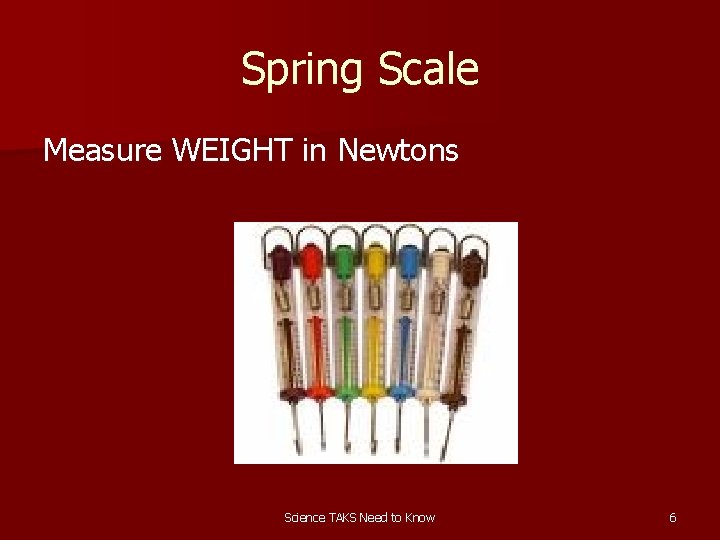
Spring Scale Measure WEIGHT in Newtons Science TAKS Need to Know 6
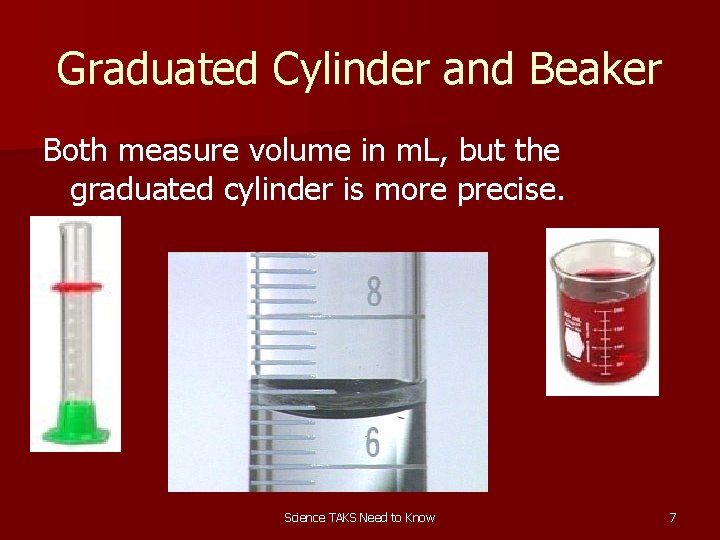
Graduated Cylinder and Beaker Both measure volume in m. L, but the graduated cylinder is more precise. Science TAKS Need to Know 7
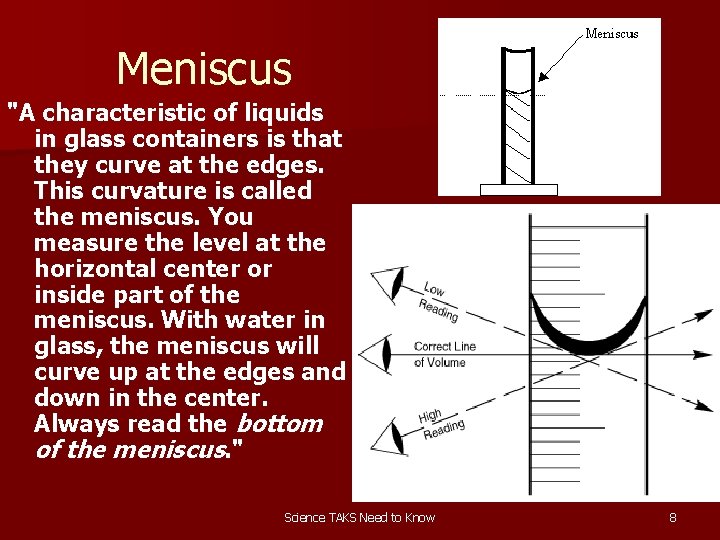
Meniscus "A characteristic of liquids in glass containers is that they curve at the edges. This curvature is called the meniscus. You measure the level at the horizontal center or inside part of the meniscus. With water in glass, the meniscus will curve up at the edges and down in the center. Always read the bottom of the meniscus. " Science TAKS Need to Know 8
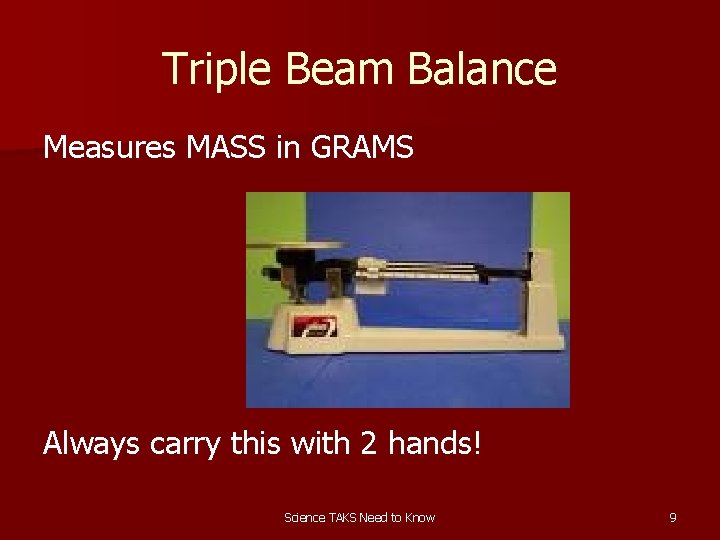
Triple Beam Balance Measures MASS in GRAMS Always carry this with 2 hands! Science TAKS Need to Know 9
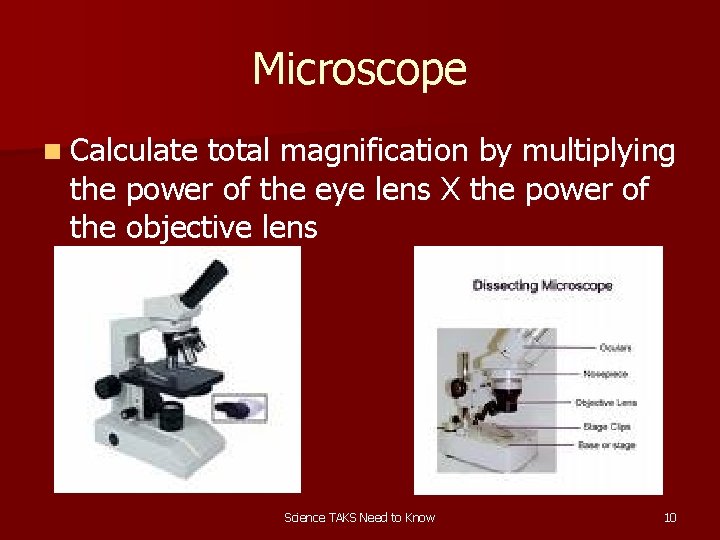
Microscope n Calculate total magnification by multiplying the power of the eye lens X the power of the objective lens Science TAKS Need to Know 10
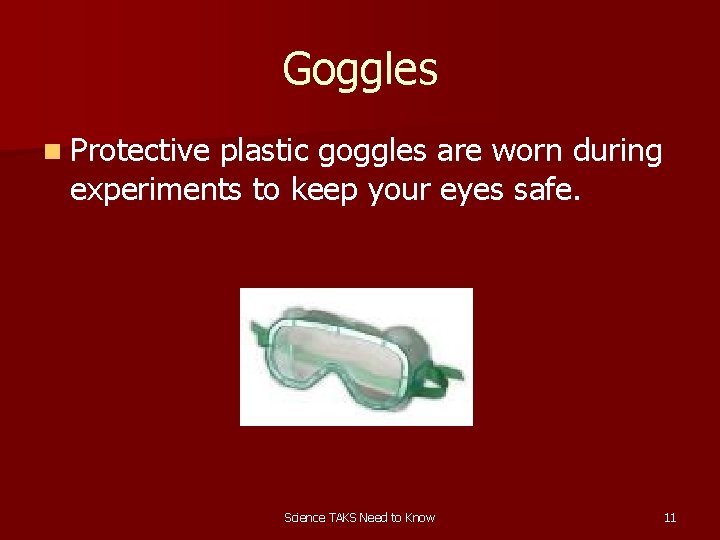
Goggles n Protective plastic goggles are worn during experiments to keep your eyes safe. Science TAKS Need to Know 11
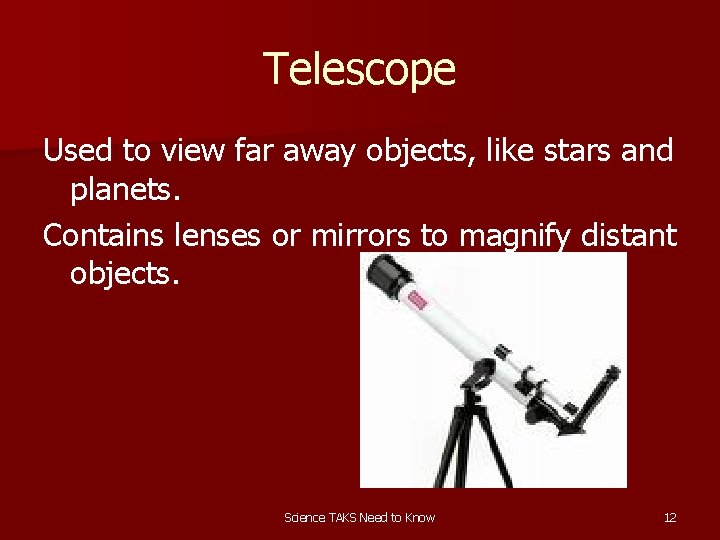
Telescope Used to view far away objects, like stars and planets. Contains lenses or mirrors to magnify distant objects. Science TAKS Need to Know 12
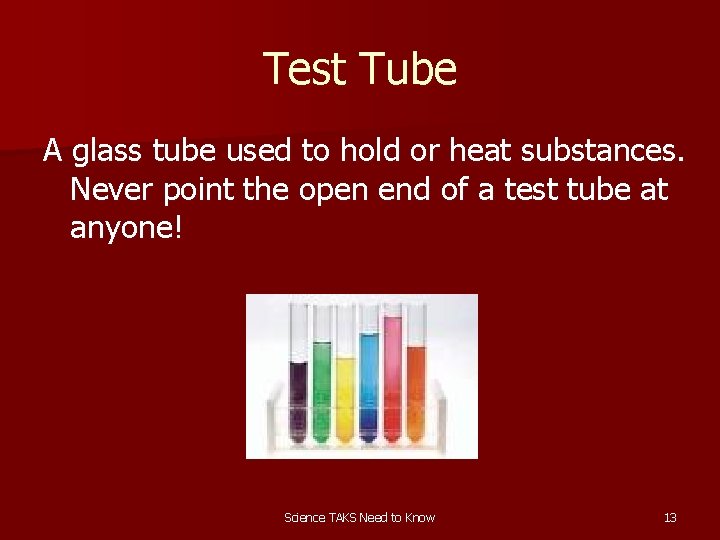
Test Tube A glass tube used to hold or heat substances. Never point the open end of a test tube at anyone! Science TAKS Need to Know 13
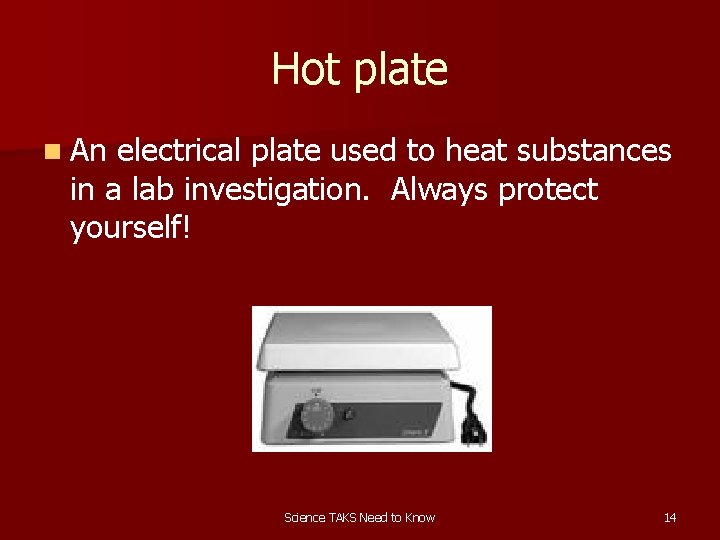
Hot plate n An electrical plate used to heat substances in a lab investigation. Always protect yourself! Science TAKS Need to Know 14
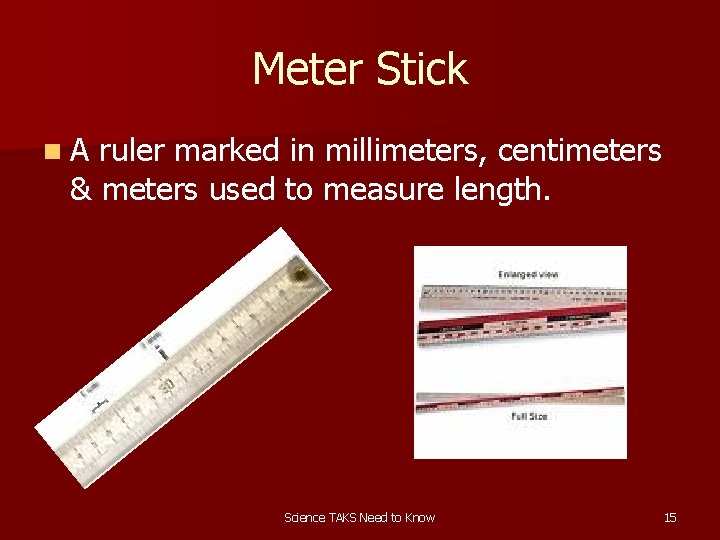
Meter Stick n. A ruler marked in millimeters, centimeters & meters used to measure length. Science TAKS Need to Know 15
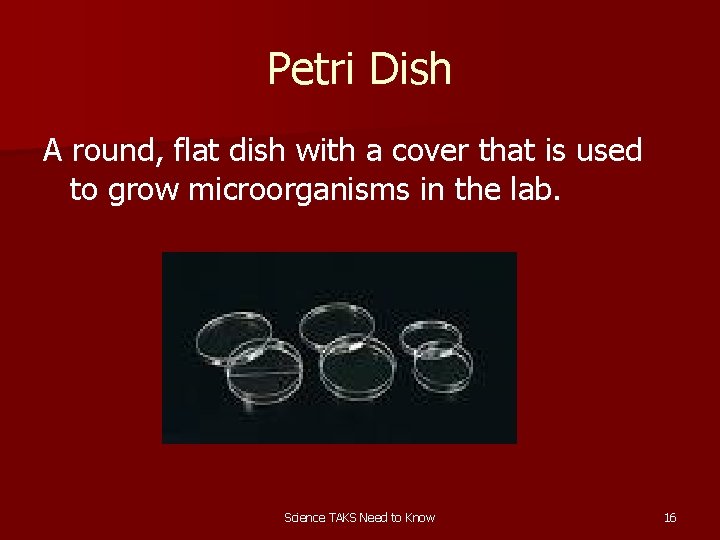
Petri Dish A round, flat dish with a cover that is used to grow microorganisms in the lab. Science TAKS Need to Know 16
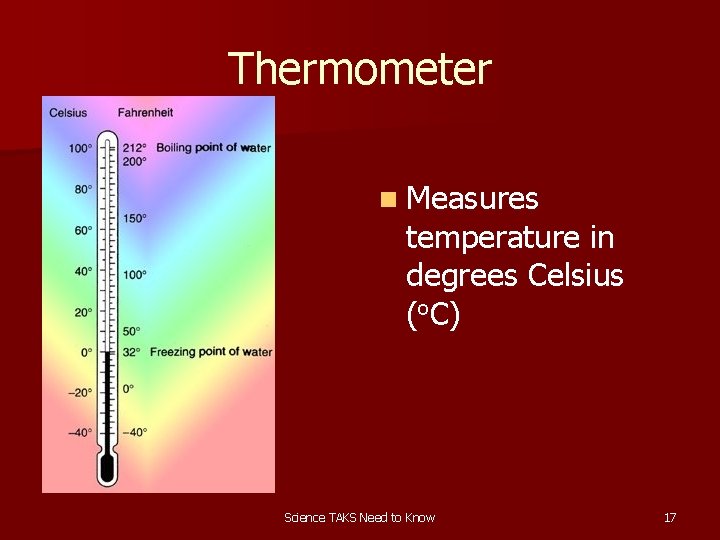
Thermometer n Measures temperature in degrees Celsius ( o. C) Science TAKS Need to Know 17
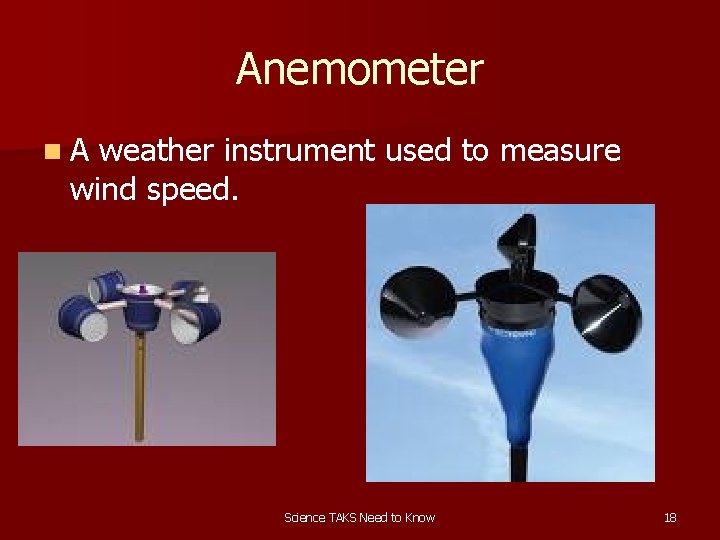
Anemometer n. A weather instrument used to measure wind speed. Science TAKS Need to Know 18
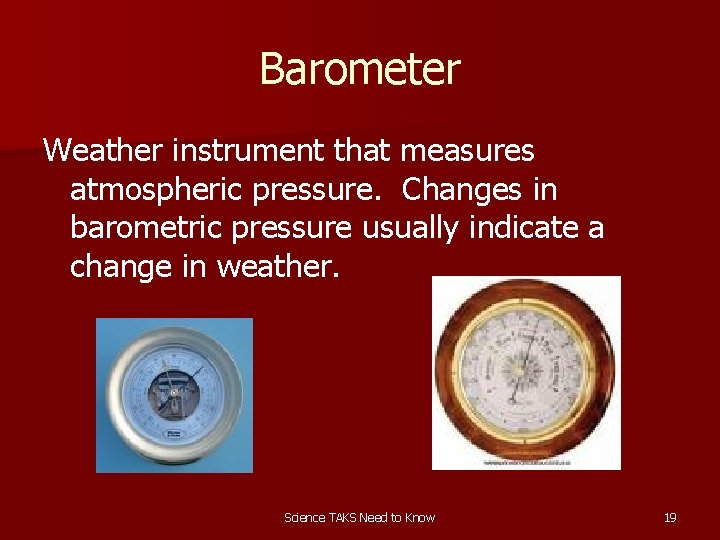
Barometer Weather instrument that measures atmospheric pressure. Changes in barometric pressure usually indicate a change in weather. Science TAKS Need to Know 19
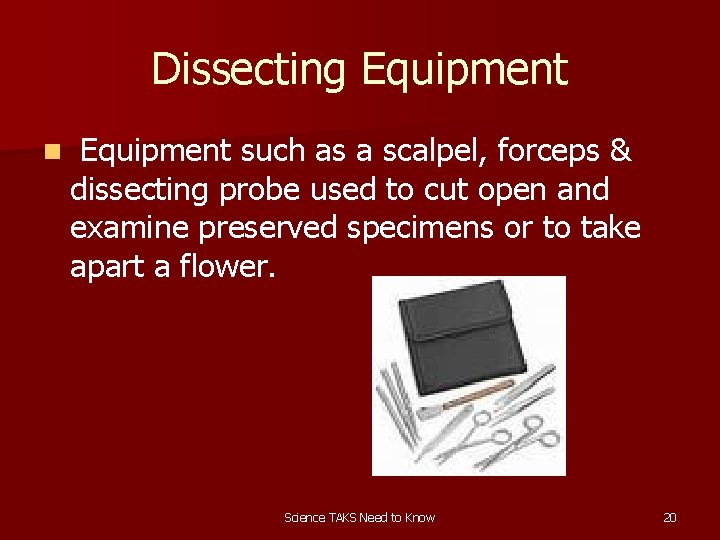
Dissecting Equipment n Equipment such as a scalpel, forceps & dissecting probe used to cut open and examine preserved specimens or to take apart a flower. Science TAKS Need to Know 20
Independent Variable The MANIPULATED or CHANGED factor in an experiment. This is the variable controlled by the person doing the experiment. Ex: You may change the amount of water you give a plant or the amount of fertilizer applied to soil. Science TAKS Need to Know 21
Dependent Variable The outcome or RESULT of manipulating or changing the independent variable. What happens to the dependent variable is the EFFECT of what the experimenter does to the independent variable Science TAKS Need to Know 22
Inferences Conclusions that go beyond the facts Science TAKS Need to Know 23
Promotional Claim A statement used to sell a product or service. Can sometimes be misleading, so you need to understand basic science facts to be able to evaluate how valid the information is. Science TAKS Need to Know 24
Valid conclusion Valid results are those that are wellsupported by evidence. When scientific findings are evaluated, a scientist looks for reliable and accuracy. Multiple trials, or sets of data, give us more reliable and valid information. VALID results are REPRODUCIBLE – they can be recreated by other scientists. Science TAKS Need to Know 25
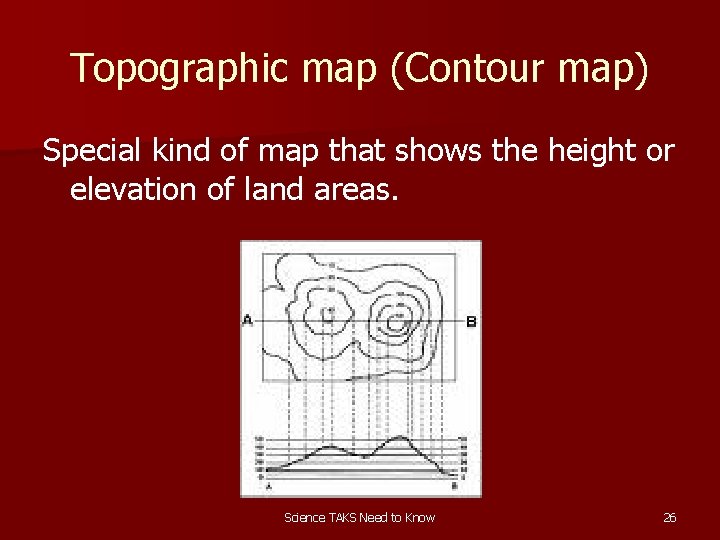
Topographic map (Contour map) Special kind of map that shows the height or elevation of land areas. Science TAKS Need to Know 26
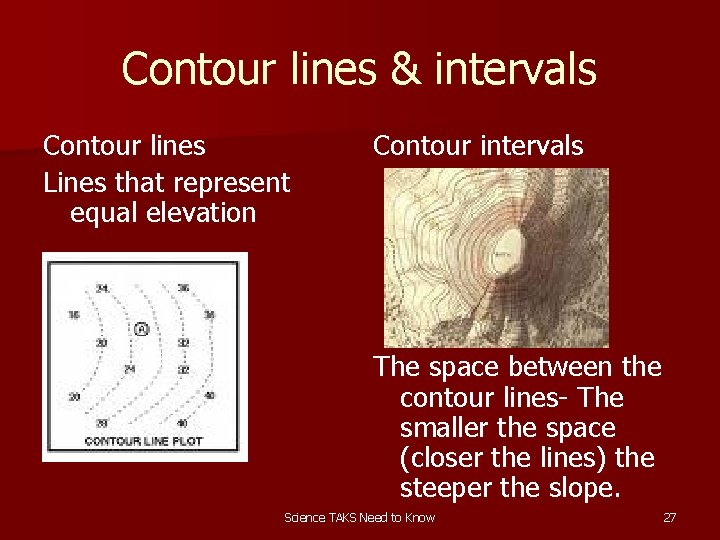
Contour lines & intervals Contour lines Lines that represent equal elevation Contour intervals The space between the contour lines- The smaller the space (closer the lines) the steeper the slope. Science TAKS Need to Know 27
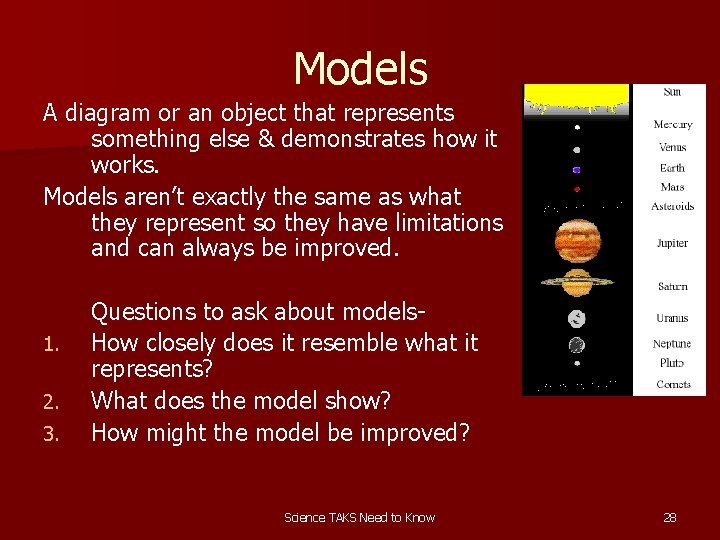
Models A diagram or an object that represents something else & demonstrates how it works. Models aren’t exactly the same as what they represent so they have limitations and can always be improved. 1. 2. 3. Questions to ask about models. How closely does it resemble what it represents? What does the model show? How might the model be improved? Science TAKS Need to Know 28