
Science Log Skeletal System On pg 11 name
- Slides: 15
Science Log: Skeletal System On pg. 11, name and describe at least four of the functions of the skeletal system. (Chpt. 15; Section 2) Materials for today: scissors, glue, ISN,
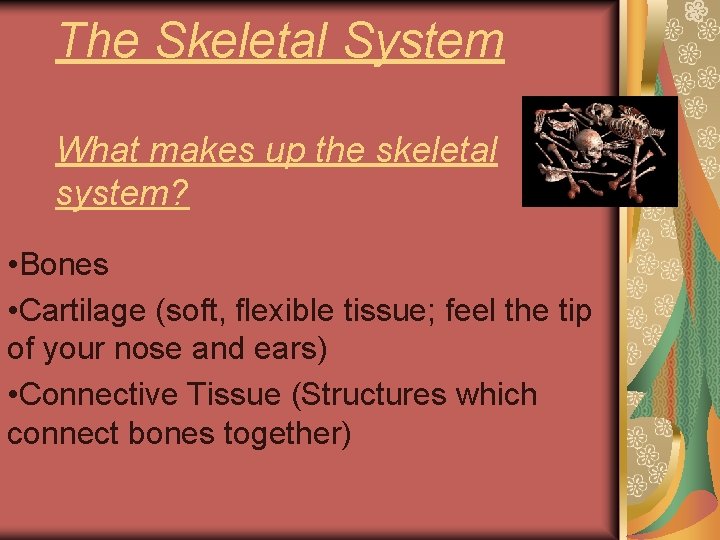
The Skeletal System What makes up the skeletal system? • Bones • Cartilage (soft, flexible tissue; feel the tip of your nose and ears) • Connective Tissue (Structures which connect bones together)
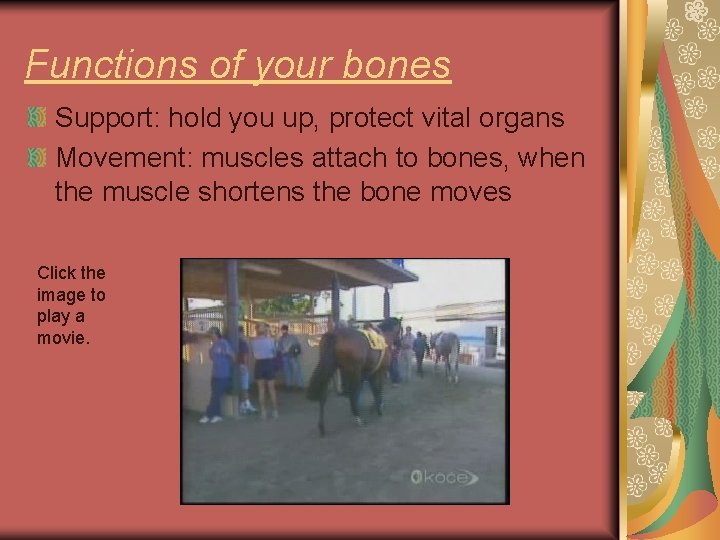
Functions of your bones Support: hold you up, protect vital organs Movement: muscles attach to bones, when the muscle shortens the bone moves Click the image to play a movie.
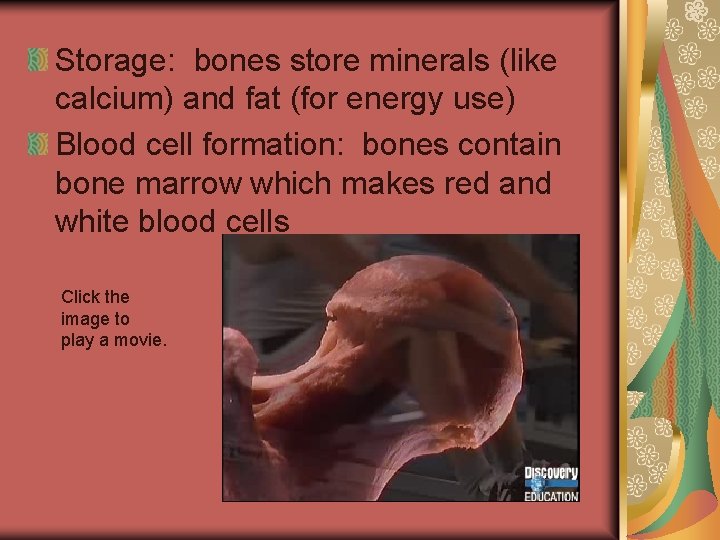
Storage: bones store minerals (like calcium) and fat (for energy use) Blood cell formation: bones contain bone marrow which makes red and white blood cells Click the image to play a movie.
Are bones just dry, hard pieces of scaffolding to hold up our bodies? (Explain your answer) How does the cardiovascular system rely on our skeletal system?
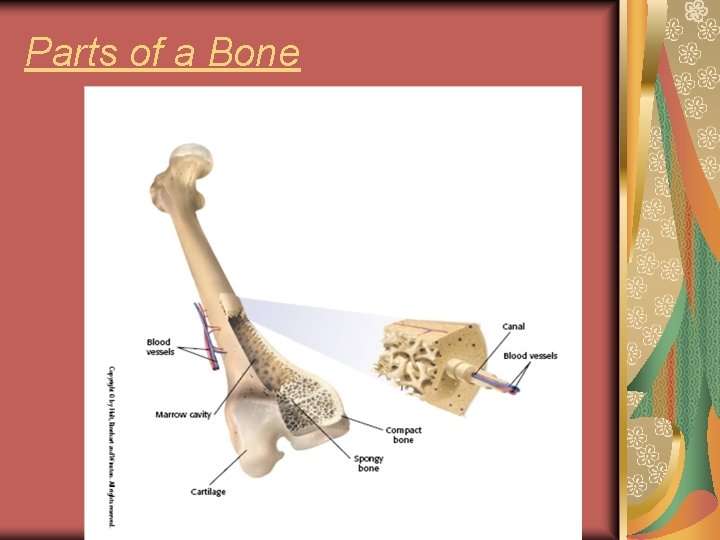
Parts of a Bone
Bone Parts Questions Where is cartilage found on bones? _______________ The outer layer of bone tissue is called? ______ The inner bone tissue is called? ________ What is the tissue that is found in long bones like the femur and makes blood cells? _______
How do bones grow? Most bones start out as cartilage As you grow, cartilage gets replaced by bone. Many times babies that are not strapped in car seats still survive car crashes with no broken bones. Explain how that is possible.
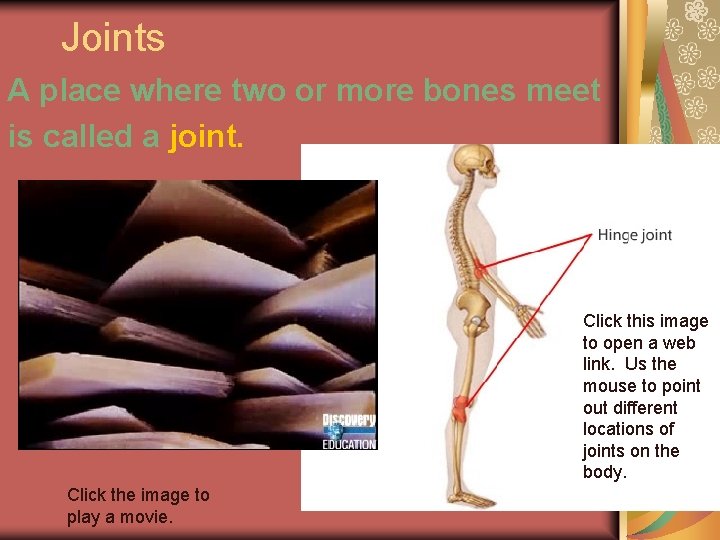
Joints A place where two or more bones meet is called a joint. Click this image to open a web link. Us the mouse to point out different locations of joints on the body. Click the image to play a movie.
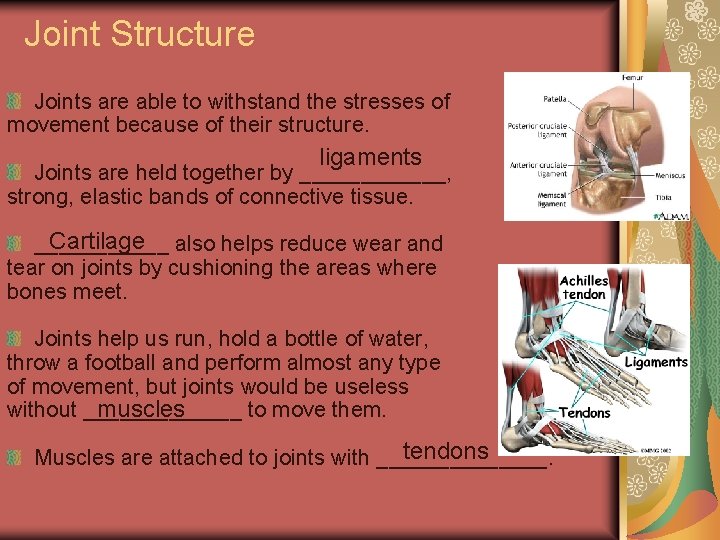
Joint Structure Joints are able to withstand the stresses of movement because of their structure. ligaments Joints are held together by ______, strong, elastic bands of connective tissue. Cartilage also helps reduce wear and ______ tear on joints by cushioning the areas where bones meet. Joints help us run, hold a bottle of water, throw a football and perform almost any type of movement, but joints would be useless muscles without _______ to move them. tendons Muscles are attached to joints with _______.
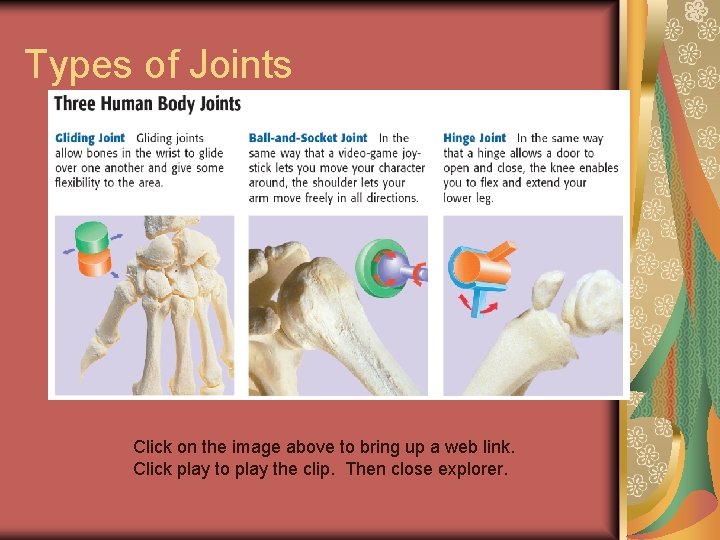
Types of Joints Click on the image above to bring up a web link. Click play to play the clip. Then close explorer.
Skeletal System Injuries and Diseases Despite their strength and flexibility, bones can break, or fracture. dislocated Joints can become ______ when bones move out of their proper positions. A sprain occurs when the ligaments ______ of a joint have been stretched too far or have torn.
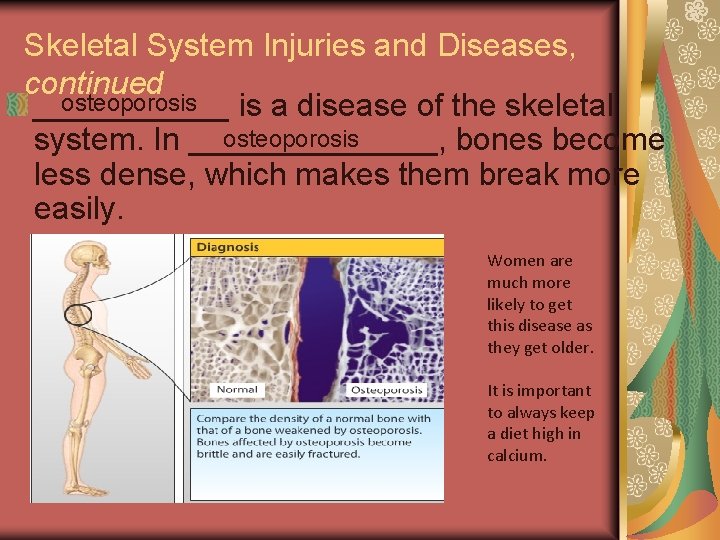
Skeletal System Injuries and Diseases, continued osteoporosis ______ is a disease of the skeletal osteoporosis system. In _______, bones become less dense, which makes them break more easily. Women are much more likely to get this disease as they get older. It is important to always keep a diet high in calcium.
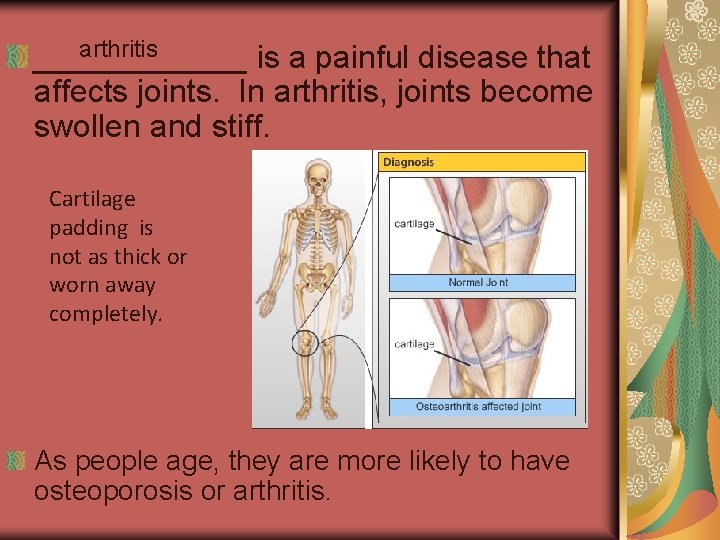
arthritis ______ is a painful disease that affects joints. In arthritis, joints become swollen and stiff. Cartilage padding is not as thick or worn away completely. As people age, they are more likely to have osteoporosis or arthritis.
Questions 1. Imagine that you are 50 years old and you have developed osteoporosis in your pelvis, explain what has happened to you and why. 2. You have arthritis in your phalanges. Describe what has happened to you in detail (include the type of joint, body part, and tissues involved). 3. You’ve just sprained your hip. Describe what has happened (include types of tissues, name of bones and type of joint)