
Science Living Things and Their Habitats Year One
Science Living Things and Their Habitats Year One Science | Year 4 | Living Things and Their Habitats | Grouping Living Things | Lesson 1
Aim • I can group living things in a range of ways. • I can use a range of methods to sort living things. Success Criteria • I can sort living things into groups. • I can generate criteria to sort living things. • I can sort living things into a Venn diagram. • I can sort living things into a Carroll diagram.
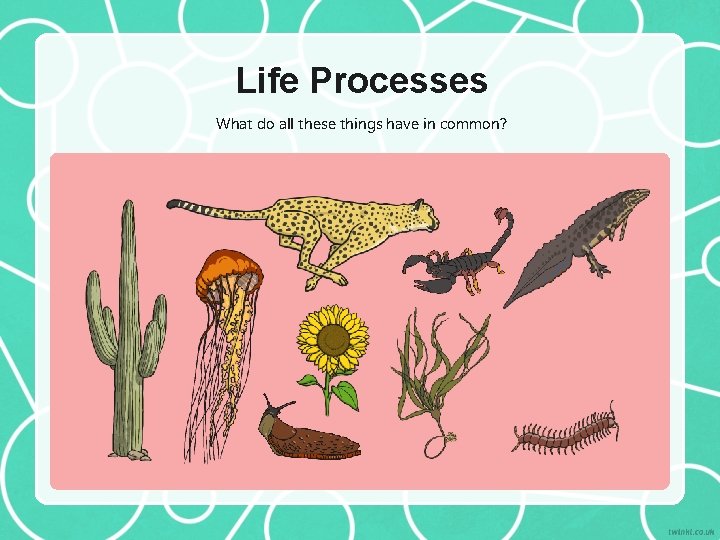
Life Processes What do all these things have in common?
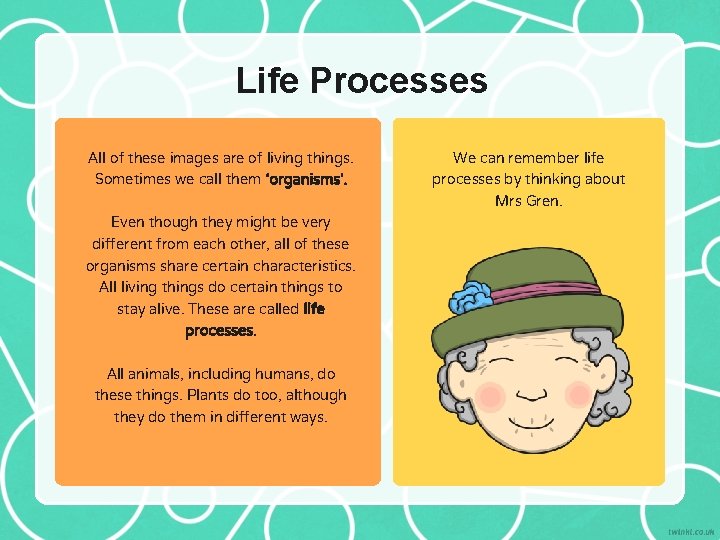
Life Processes All of these images are of living things. Sometimes we call them ‘organisms’. Even though they might be very different from each other, all of these organisms share certain characteristics. All living things do certain things to stay alive. These are called life processes. All animals, including humans, do these things. Plants do too, although they do them in different ways. We can remember life processes by thinking about Mrs Gren.
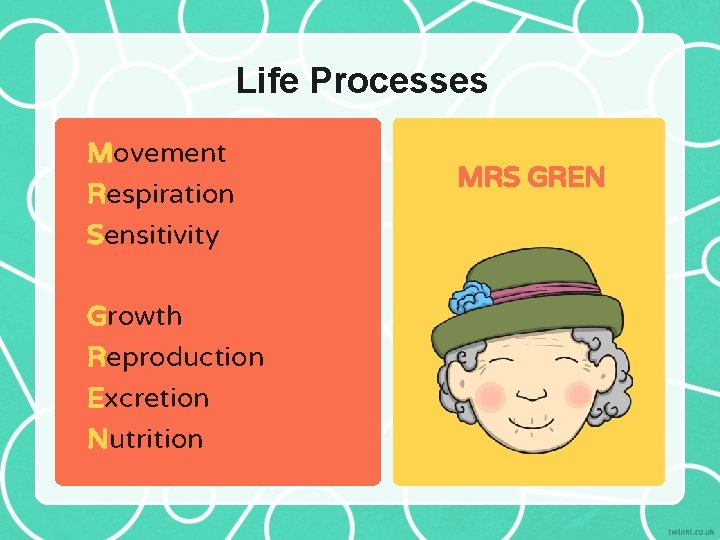
Life Processes Movement Respiration Sensitivity Growth Reproduction Excretion Nutrition MRS GREN
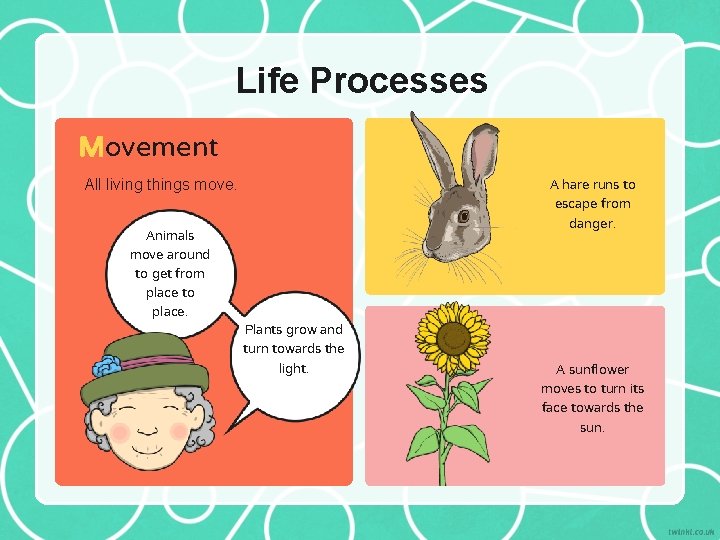
Life Processes Movement A hare runs to escape from danger. All living things move. Animals move around to get from place to place. Plants grow and turn towards the light. A sunflower moves to turn its face towards the sun.
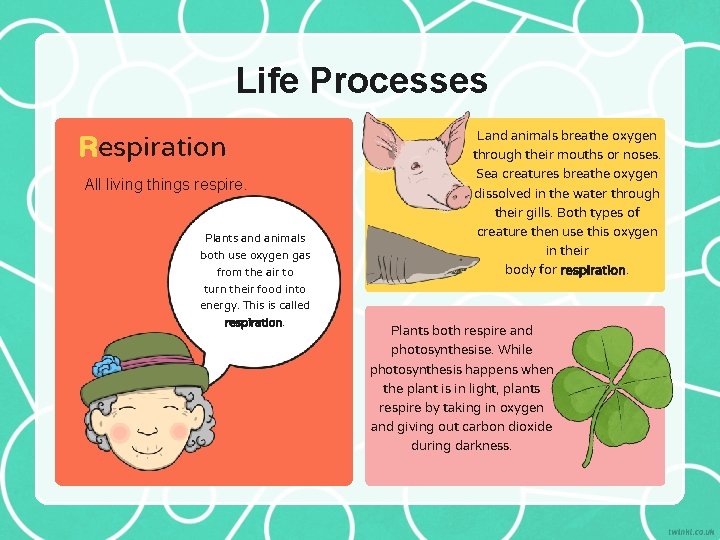
Life Processes Respiration All living things respire. Plants and animals both use oxygen gas from the air to turn their food into energy. This is called respiration. Land animals breathe oxygen through their mouths or noses. Sea creatures breathe oxygen dissolved in the water through their gills. Both types of creature then use this oxygen in their body for respiration. Plants both respire and photosynthesise. While photosynthesis happens when the plant is in light, plants respire by taking in oxygen and giving out carbon dioxide during darkness.
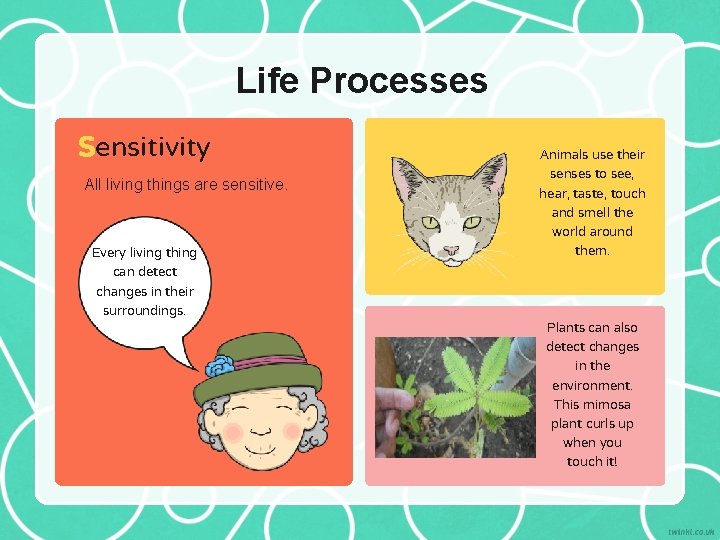
Life Processes Sensitivity All living things are sensitive. Every living thing can detect changes in their surroundings. Animals use their senses to see, hear, taste, touch and smell the world around them. Plants can also detect changes in the environment. This mimosa plant curls up when you touch it!
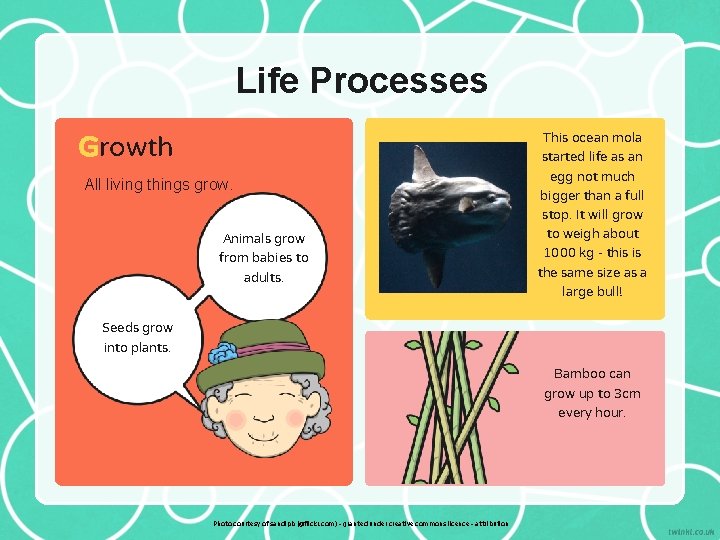
Life Processes Growth All living things grow. Animals grow from babies to adults. Seeds grow into plants. This ocean mola started life as an egg not much bigger than a full stop. It will grow to weigh about 1000 kg - this is the same size as a large bull! Bamboo can grow up to 3 cm every hour. Photo courtesy of sandipb (@flickr. com) - granted under creative commons licence - attribution
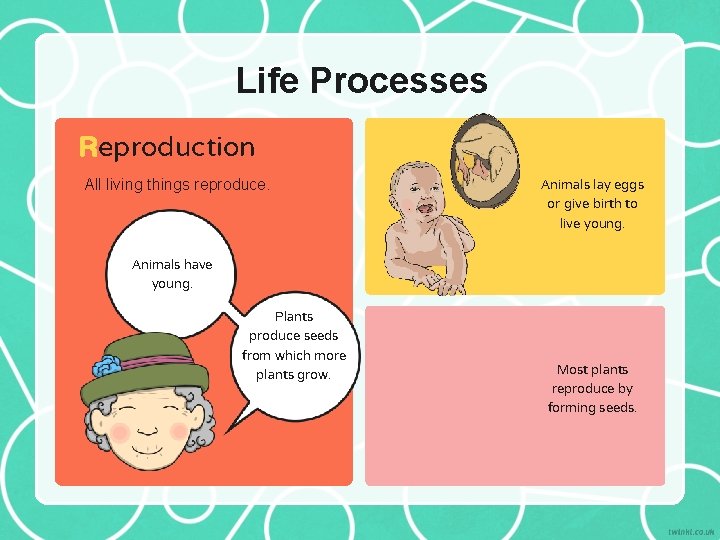
Life Processes Reproduction All living things reproduce. Animals have young. Plants produce seeds from which more plants grow. Animals lay eggs or give birth to live young. Most plants reproduce by forming seeds.
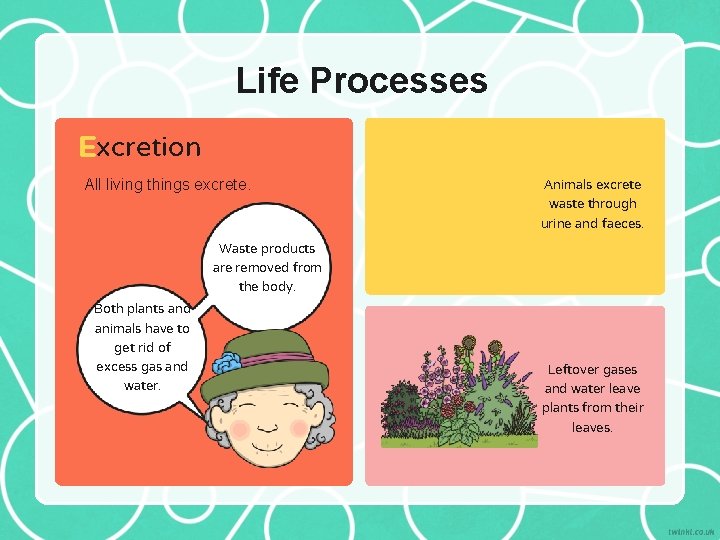
Life Processes Excretion All living things excrete. Both plants and animals have to get rid of excess gas and water. Waste products are removed from the body. Animals excrete waste through urine and faeces. Leftover gases and water leave plants from their leaves.
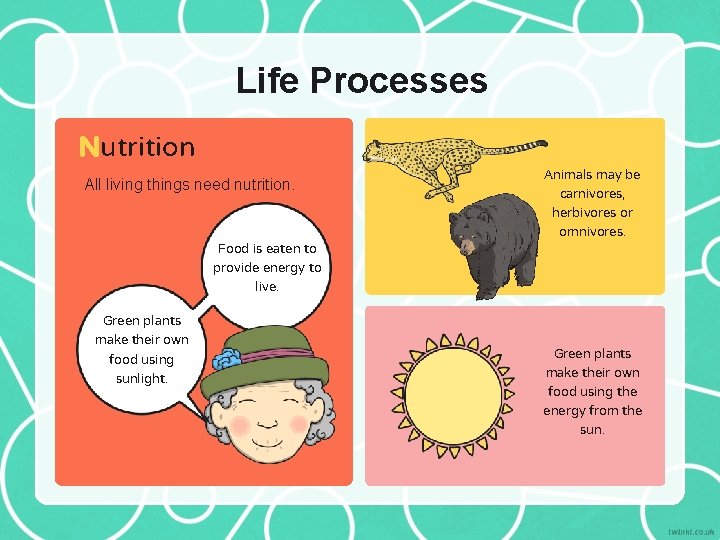
Life Processes Nutrition All living things need nutrition. Food is eaten to provide energy to live. Green plants make their own food using sunlight. Animals may be carnivores, herbivores or omnivores. Green plants make their own food using the energy from the sun.
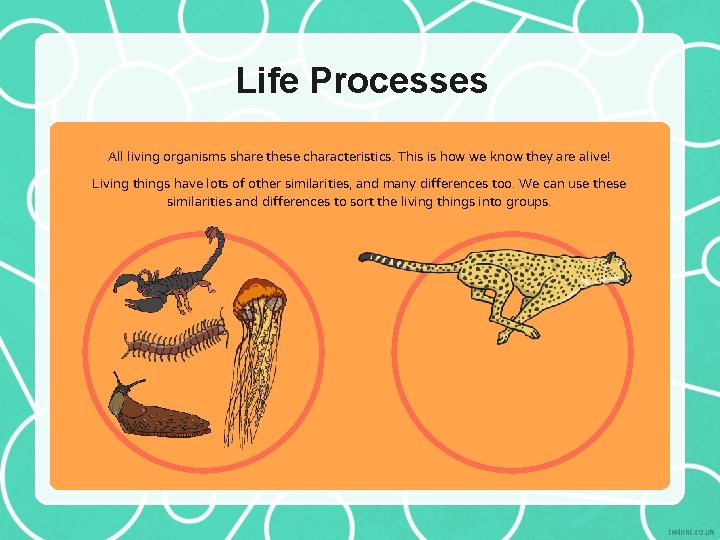
Life Processes All living organisms share these characteristics. This is how we know they are alive! Living things have lots of other similarities, and many differences too. We can use these similarities and differences to sort the living things into groups.
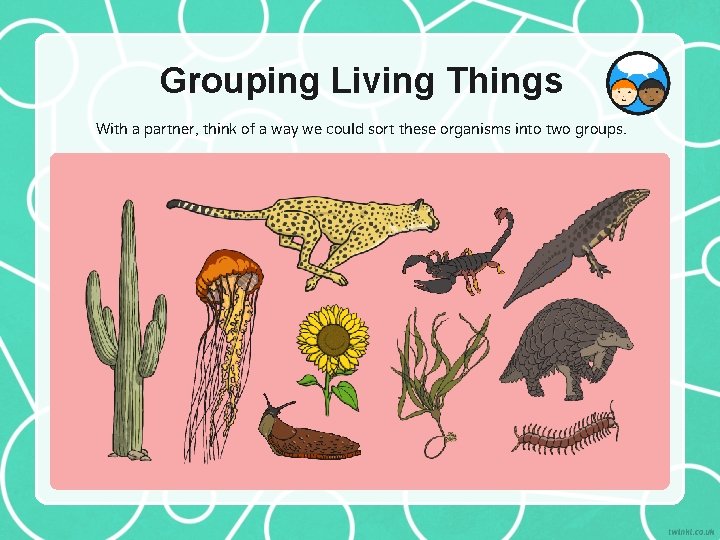
Grouping Living Things With a partner, think of a way we could sort these organisms into two groups.
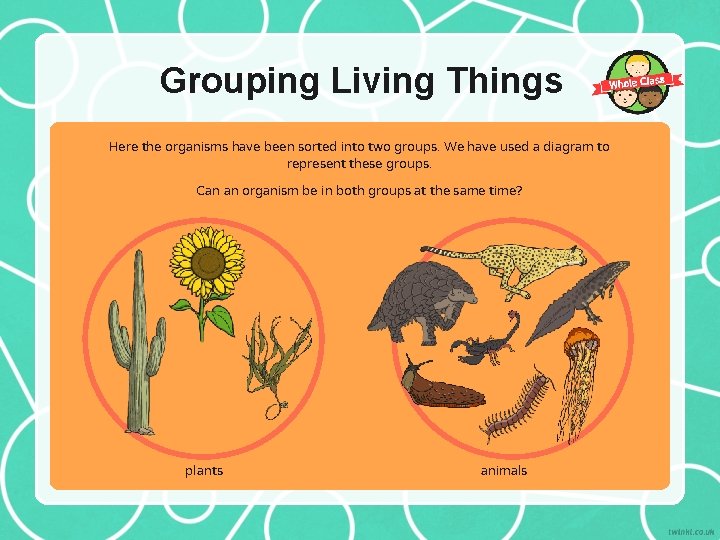
Grouping Living Things Here the organisms have been sorted into two groups. We have used a diagram to represent these groups. Can an organism be in both groups at the same time? plants animals
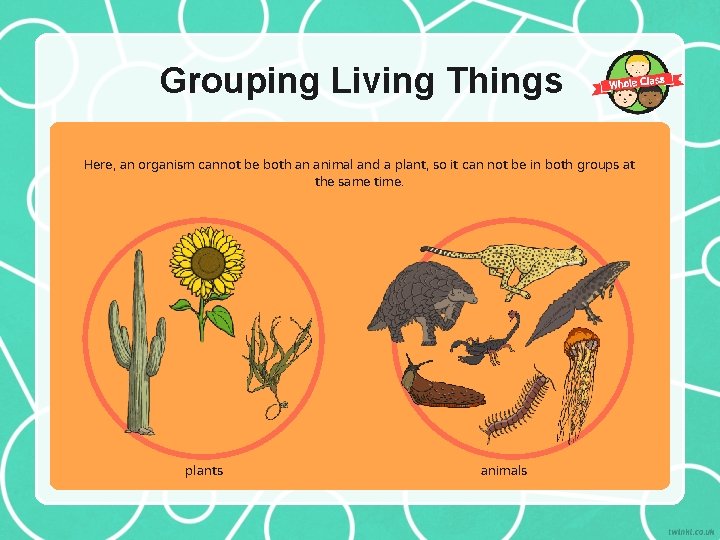
Grouping Living Things Here, an organism cannot be both an animal and a plant, so it can not be in both groups at the same time. plants animals
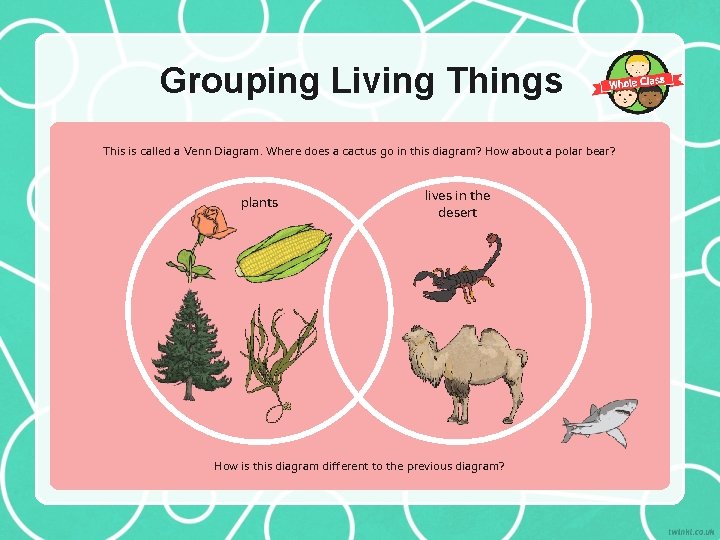
Grouping Living Things This is called a Venn Diagram. Where does a cactus go in this diagram? How about a polar bear? plants lives in the desert How is this diagram different to the previous diagram?
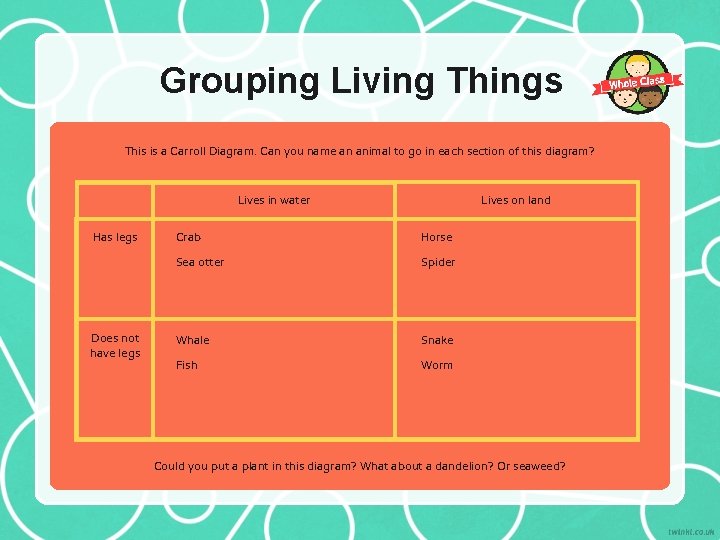
Grouping Living Things This is a Carroll Diagram. Can you name an animal to go in each section of this diagram? Lives in water Lives on land Has legs Crab Horse Does not have legs Whale Snake Sea otter Fish Spider Worm Could you put a plant in this diagram? What about a dandelion? Or seaweed?
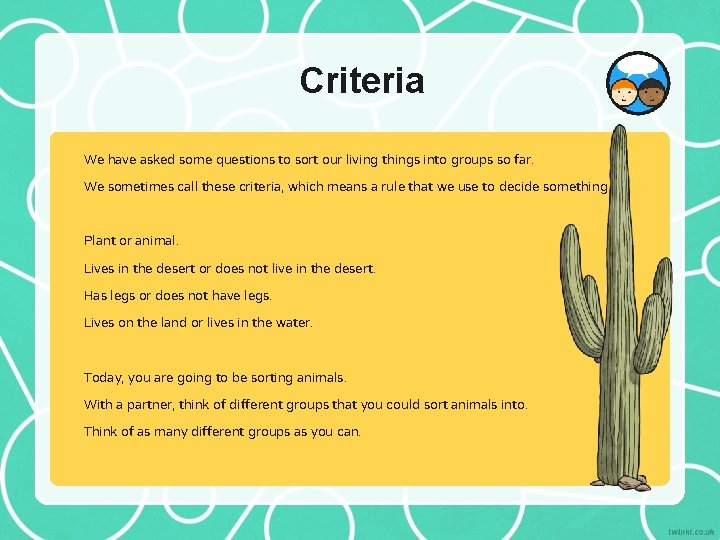
Criteria We have asked some questions to sort our living things into groups so far. We sometimes call these criteria, which means a rule that we use to decide something. Plant or animal. Lives in the desert or does not live in the desert. Has legs or does not have legs. Lives on the land or lives in the water. Today, you are going to be sorting animals. With a partner, think of different groups that you could sort animals into. Think of as many different groups as you can.
Criteria What criteria did you think of?
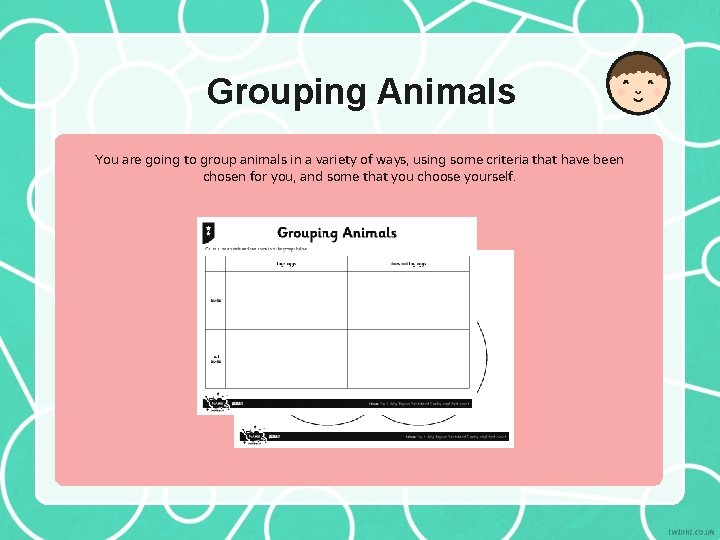
Grouping Animals You are going to group animals in a variety of ways, using some criteria that have been chosen for you, and some that you choose yourself.
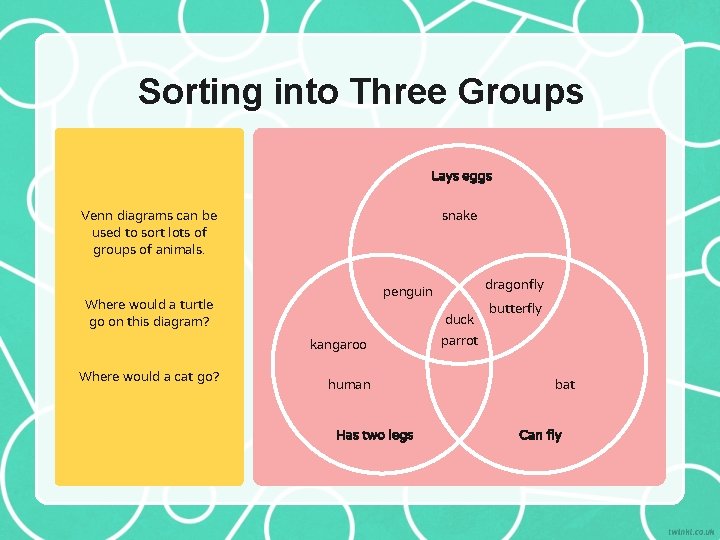
Sorting into Three Groups Lays eggs Venn diagrams can be used to sort lots of groups of animals. Where would a turtle go on this diagram? Where would a cat go? snake penguin kangaroo human Has two legs duck parrot dragonfly butterfly bat Can fly
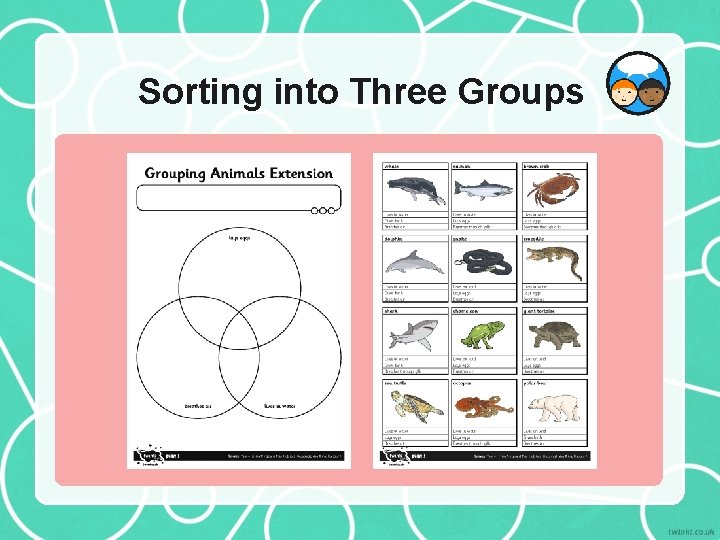
Sorting into Three Groups
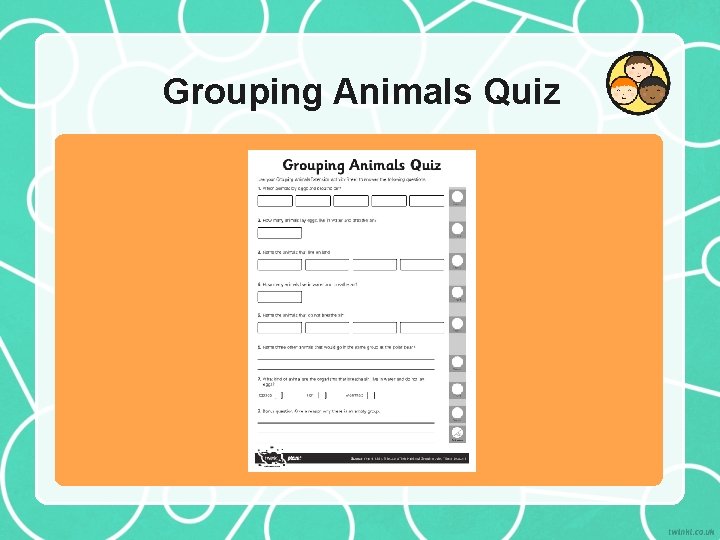
Grouping Animals Quiz
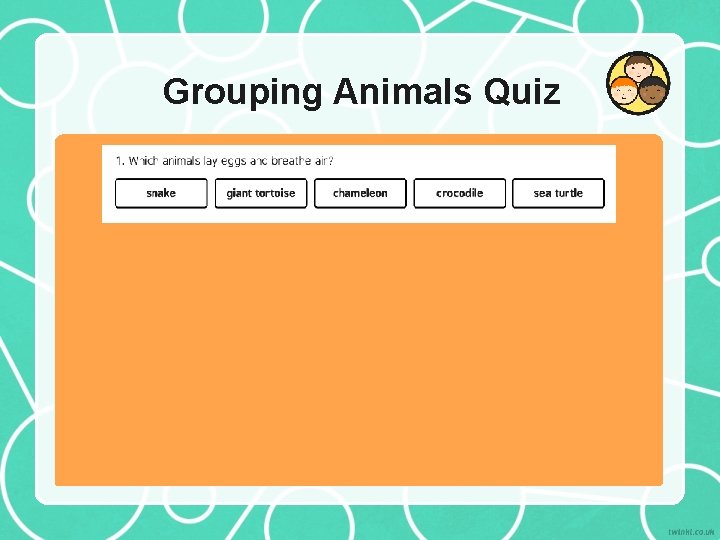
Grouping Animals Quiz
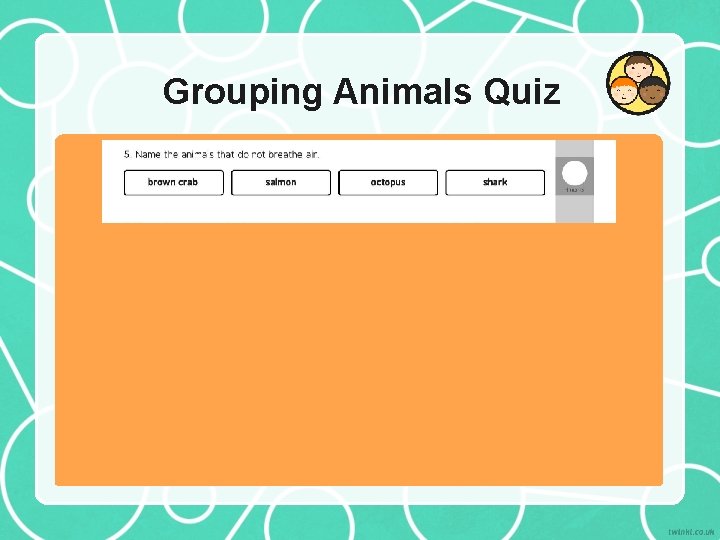
Grouping Animals Quiz
Grouping Animals Quiz Well Done!
Aim • I can group living things in a range of ways. • I can use a range of methods to sort living things. Success Criteria • I can sort living things into groups. • I can generate criteria to sort living things. • I can sort living things into a Venn diagram. • I can sort living things into a Carroll diagram.

- Slides: 30