
Science LI to describe how fossils are formed

Science LI: to describe how fossils are formed
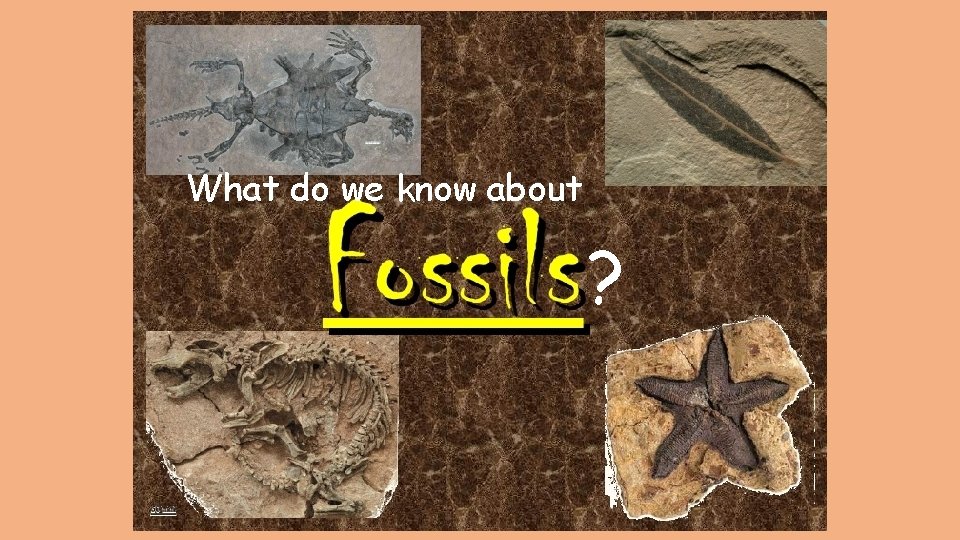
What do we know about ?
Think back to your science last week, can you remember what fossils are? Write your thoughts down on a piece of paper and when you are finished, have a look on the next page and check your answers.
FOSSILS A fossil is the preserved remains or traces of a dead organism. The process by which a fossil is formed is called fossilisation. It’s very rare for living things to become fossilised. Usually after most animals die their bodies just rot away and nothing is left behind. However, under certain special conditions, a fossil can form.
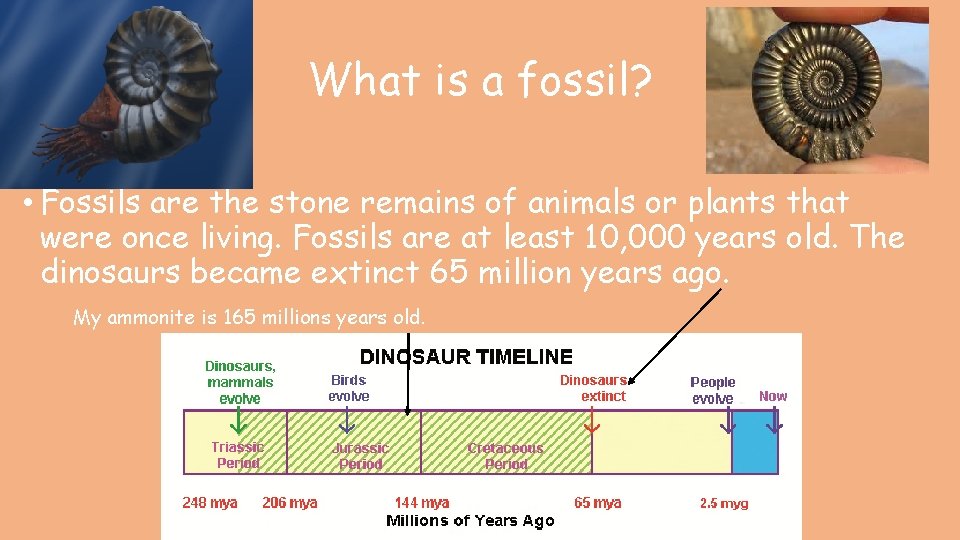
What is a fossil? • Fossils are the stone remains of animals or plants that were once living. Fossils are at least 10, 000 years old. The dinosaurs became extinct 65 million years ago. My ammonite is 165 millions years old.
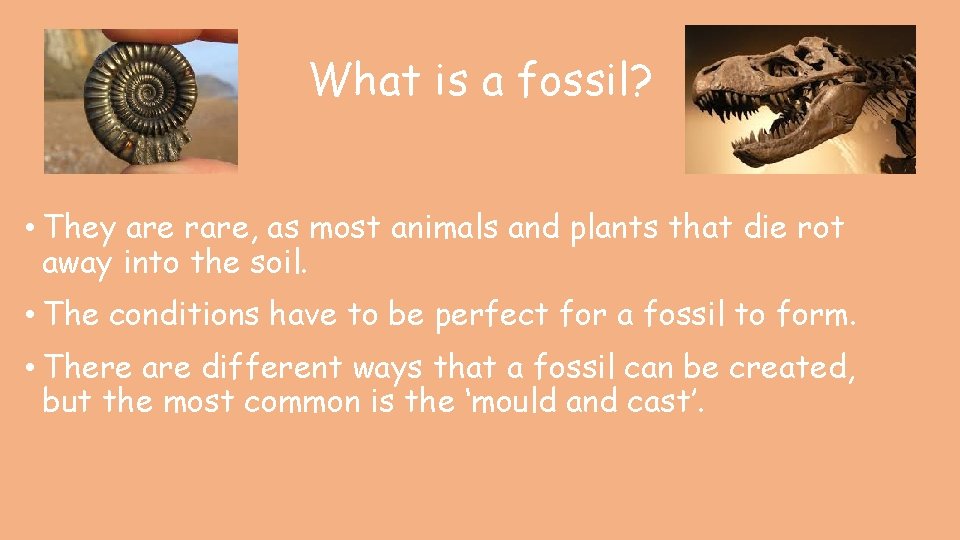
What is a fossil? • They are rare, as most animals and plants that die rot away into the soil. • The conditions have to be perfect for a fossil to form. • There are different ways that a fossil can be created, but the most common is the ‘mould and cast’.
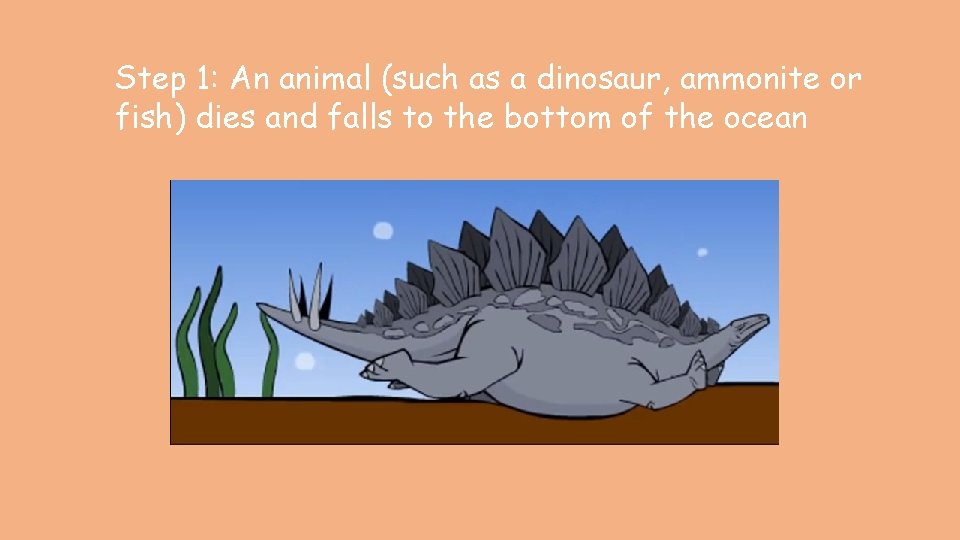
Step 1: An animal (such as a dinosaur, ammonite or fish) dies and falls to the bottom of the ocean
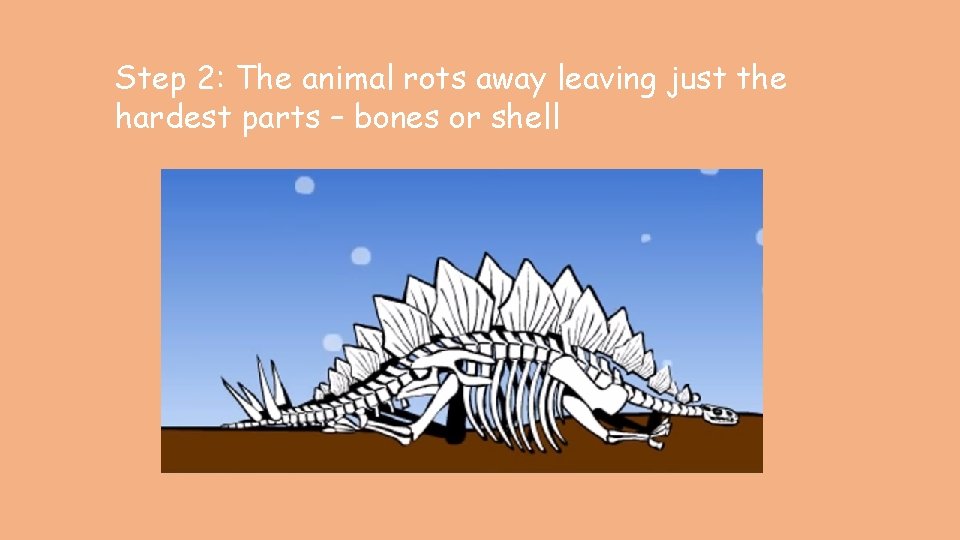
Step 2: The animal rots away leaving just the hardest parts – bones or shell
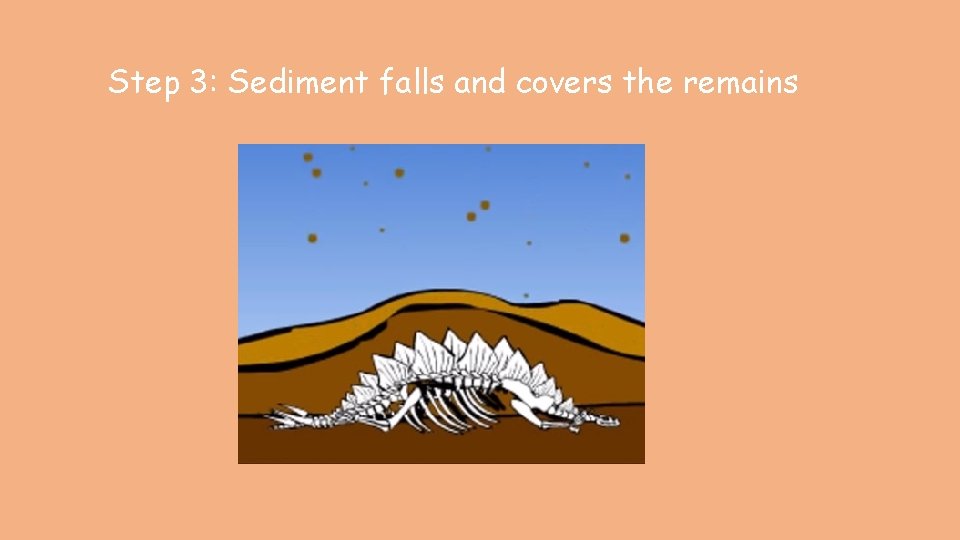
Step 3: Sediment falls and covers the remains
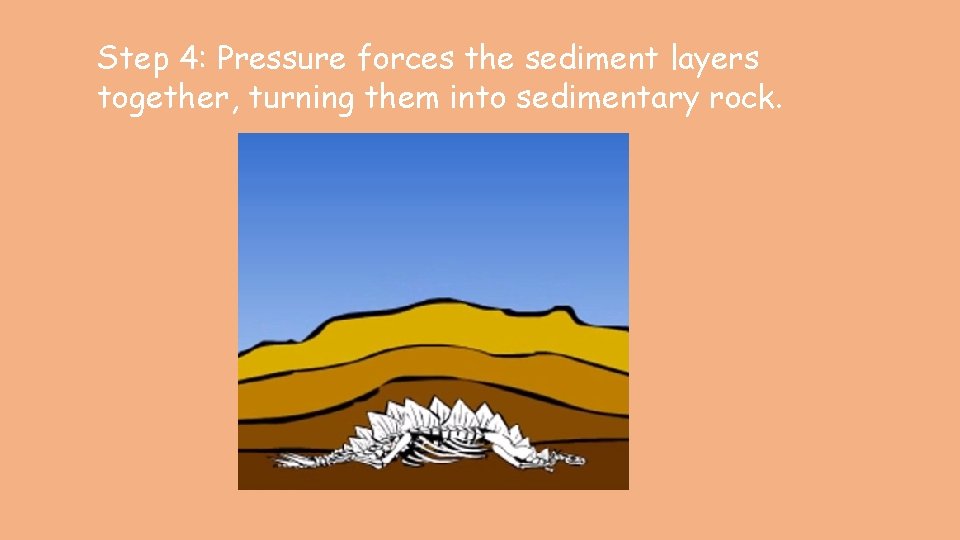
Step 4: Pressure forces the sediment layers together, turning them into sedimentary rock.
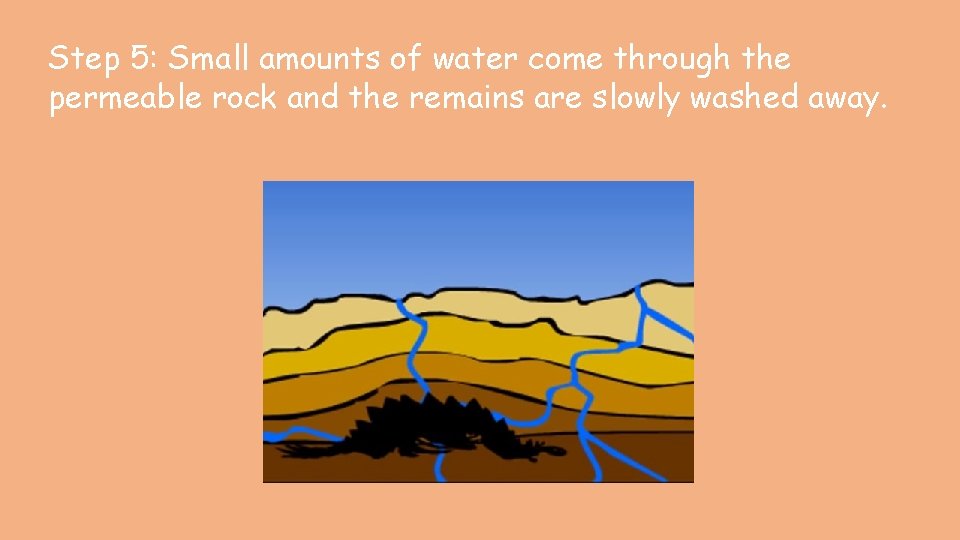
Step 5: Small amounts of water come through the permeable rock and the remains are slowly washed away.
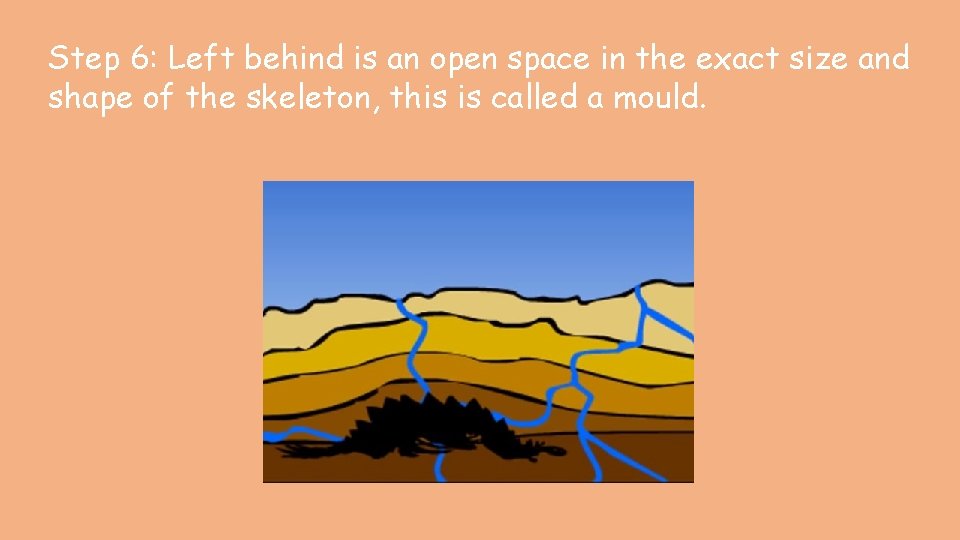
Step 6: Left behind is an open space in the exact size and shape of the skeleton, this is called a mould.
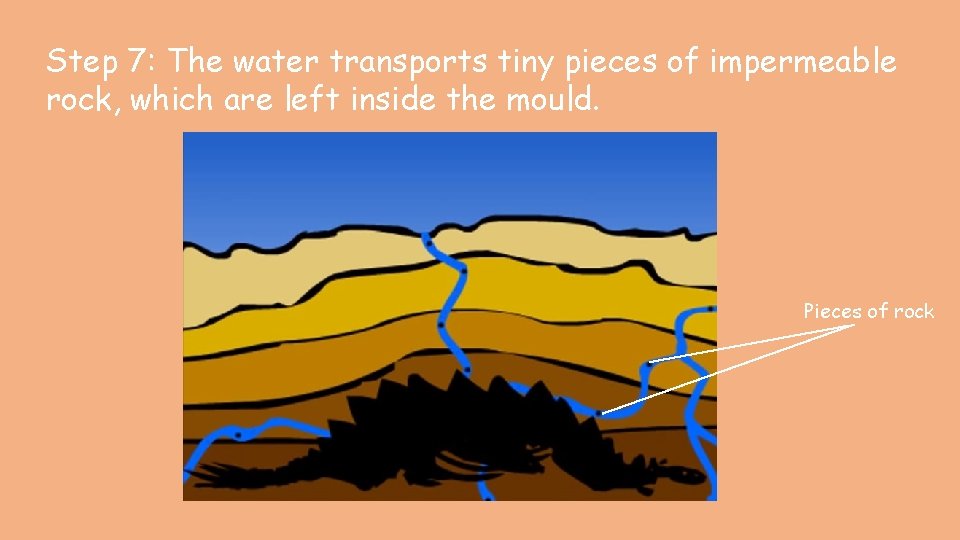
Step 7: The water transports tiny pieces of impermeable rock, which are left inside the mould. Pieces of rock
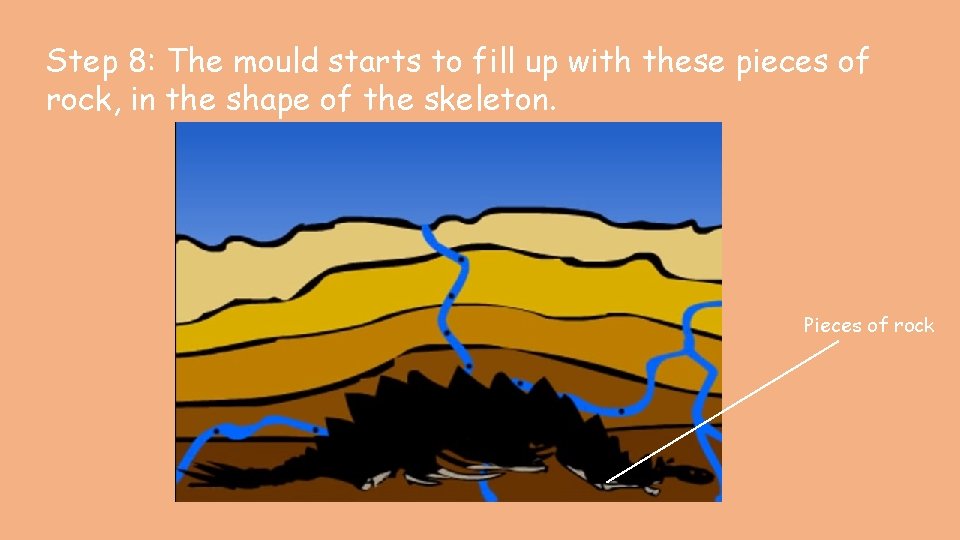
Step 8: The mould starts to fill up with these pieces of rock, in the shape of the skeleton. Pieces of rock
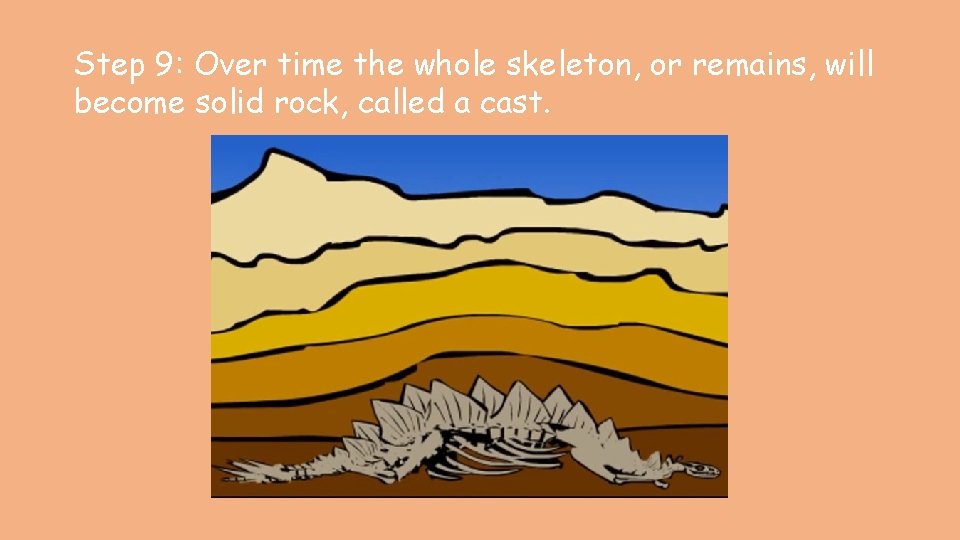
Step 9: Over time the whole skeleton, or remains, will become solid rock, called a cast.
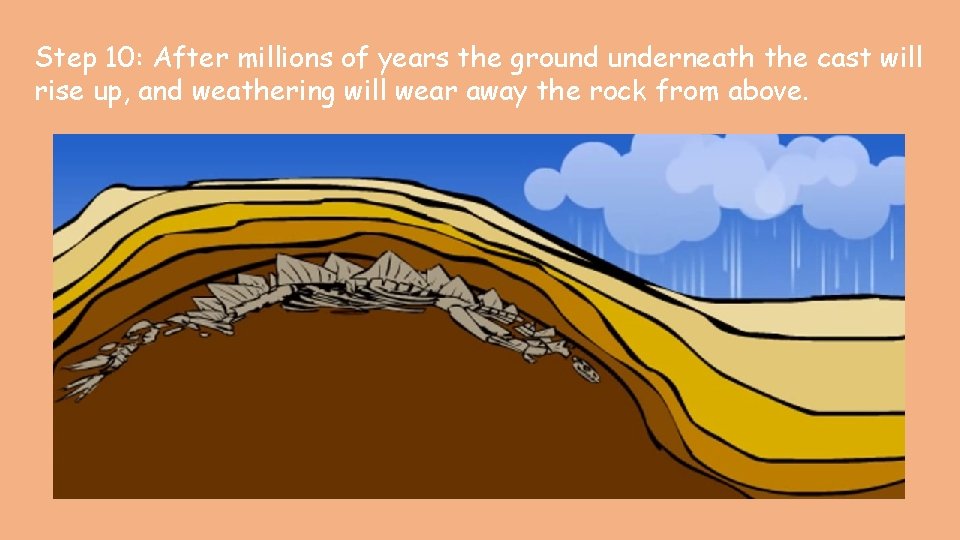
Step 10: After millions of years the ground underneath the cast will rise up, and weathering will wear away the rock from above.
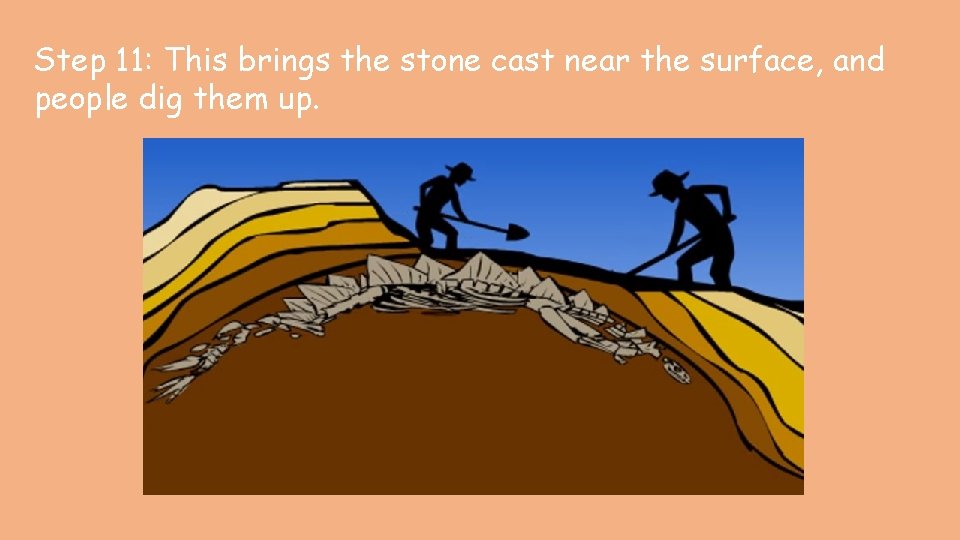
Step 11: This brings the stone cast near the surface, and people dig them up.
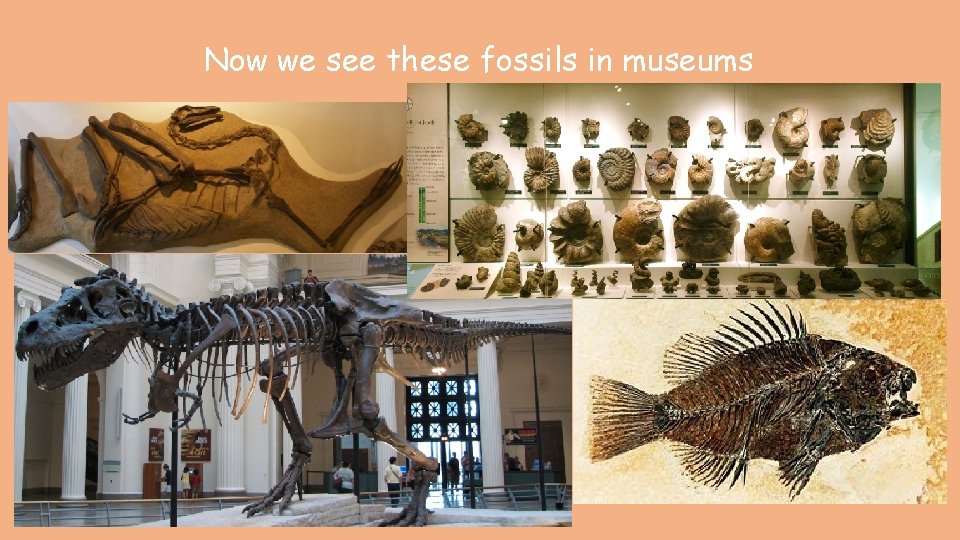
Now we see these fossils in museums
Task Using the information you have read about, you need to complete an information brochure that explains/informs exactly how fossils are made. You will need to include each step, with a illustration/drawing to go with each step. Each step will need to be labelled too.
- Slides: 19