
Science Lab Safety Know the class emergency plan
Science Lab Safety
Know the class emergency plan. �If anything happens, the first thing you need to do is tell Ms. Bertles! �If something dangerous happens, we will walk outside into the hall to make sure everyone is safe.
Science activities can be very fun, but… YOU MUST KNOW HOW TO FOLLOW THE RULES!
Know the directions before you begin. �Make sure that you know what to do before you do it. Ask any questions BEFORE you begin.
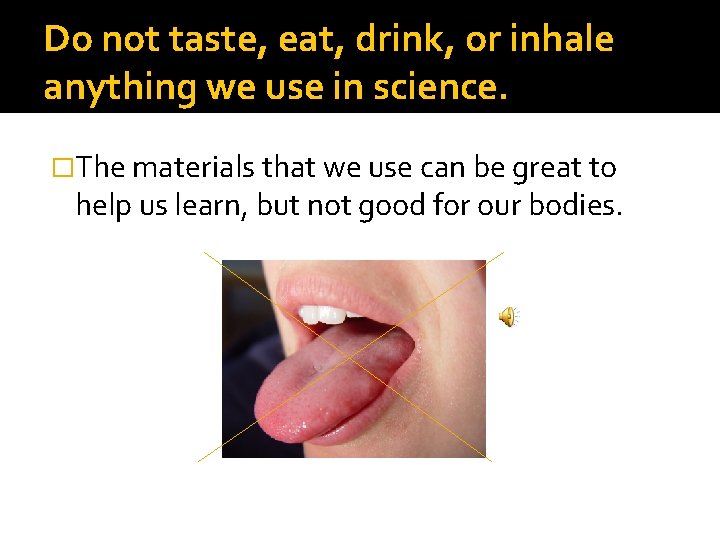
Do not taste, eat, drink, or inhale anything we use in science. �The materials that we use can be great to help us learn, but not good for our bodies.
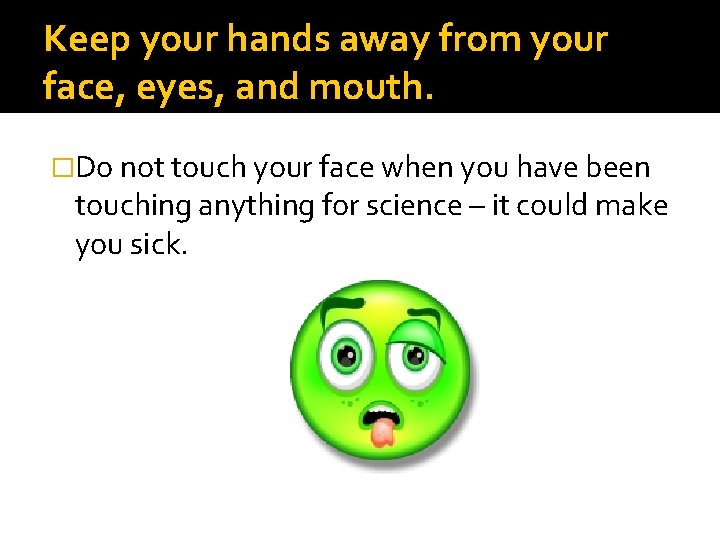
Keep your hands away from your face, eyes, and mouth. �Do not touch your face when you have been touching anything for science – it could make you sick.
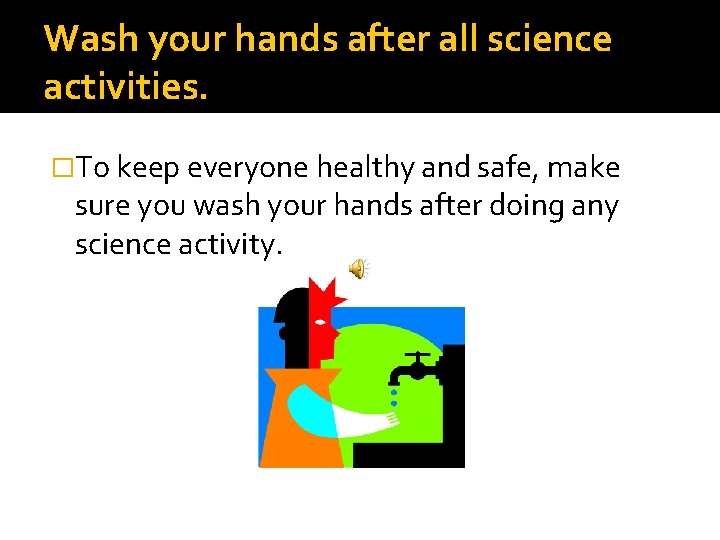
Wash your hands after all science activities. �To keep everyone healthy and safe, make sure you wash your hands after doing any science activity.
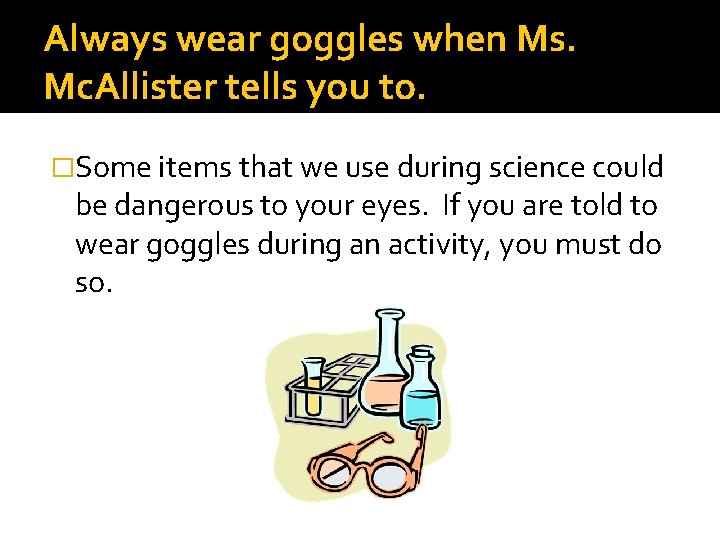
Always wear goggles when Ms. Mc. Allister tells you to. �Some items that we use during science could be dangerous to your eyes. If you are told to wear goggles during an activity, you must do so.
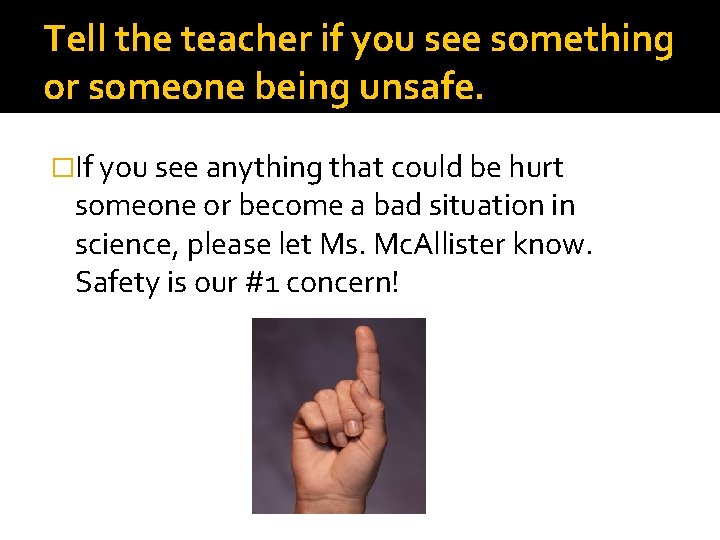
Tell the teacher if you see something or someone being unsafe. �If you see anything that could be hurt someone or become a bad situation in science, please let Ms. Mc. Allister know. Safety is our #1 concern!
Tell Ms. Mc. Allister right away if you have an accident or injury. �Even if it seems small, please let the teacher know if an accident or injury happens. Sometimes little things can turn into big things.
A Video about Safety �http: //www 1. teachertube. com/view. Video. ph p? video_id=88281 A Webquest about Safety �http: //ph 052. k 12. sd. us/Lab%20 Safe ty%20 Webquest. htm
References � � � Elementary Safety Contract for Science Lab (used as a reference for rules): http: //www. neisd. net/curriculum/Sch. Improv/science/safety_contract_ele m. htm Lab Safety Video (video used in powerpoint to display lab safety): http: //www. teachertube. com/view. Video. php? video_id=88281 Science Safety Procedures in an Elementary Lab (used as a reference for rules): http: //www. ehow. com/facts_5463726_science-safety-procedureselementary-lab. html Lab Safety Webquest: http: //ph 052. k 12. sd. us/Lab%20 Safety%20 Webquest. htm Lab Safety Powerpoint (used as reference for rules): uhill-sec. vsb. bc. ca/science/full. ppt
How to use this presentation with… � Visually impaired student – the sound clips are used in the presentation to engage students who are not able to see the slides; teacher will read slides to accommodate for student. � Hearing impaired student - all rules are explicitly written out so students can read them instead of relying on the oral presentation by the teacher. � ADHD student – slides are short and concise to keep student’s attention. � Autistic student – the use of pictographic cues and visual support can help students with autism as they often demonstrate relative strengths in concrete thinking, rote memory, and understanding of visual-spatial relationships.
- Slides: 13