
Science Lab Equipment One of the basic tools
Science Lab Equipment – One of the basic tools for Scientists to explore and discover. *Modified from: http: //www. summithill. org/File. Uploads/Teacher. Files/Lab. Equipment. Power. Point_8_31_2013 _11_05_18_PM. ppt
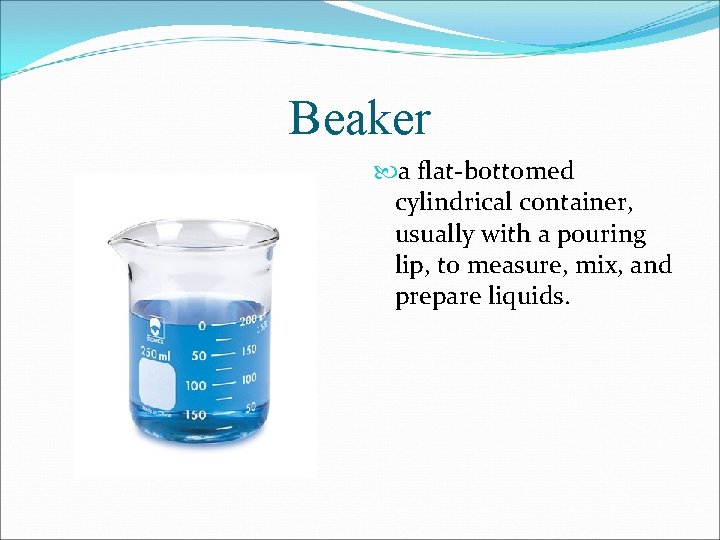
Beaker a flat-bottomed cylindrical container, usually with a pouring lip, to measure, mix, and prepare liquids.
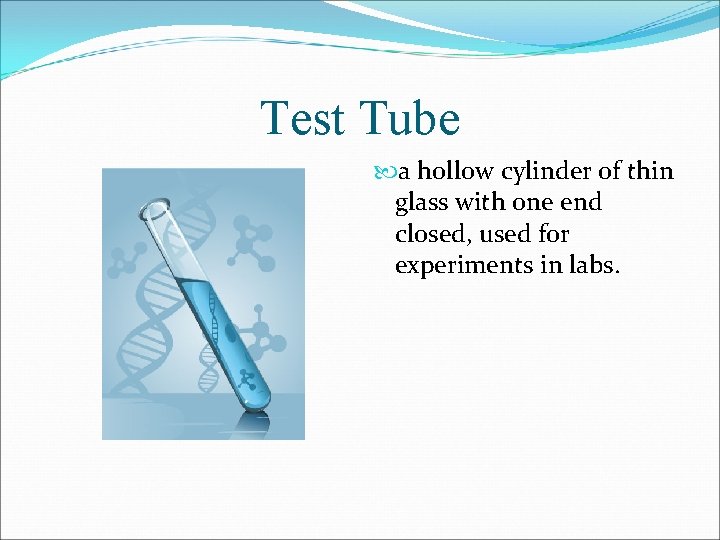
Test Tube a hollow cylinder of thin glass with one end closed, used for experiments in labs.
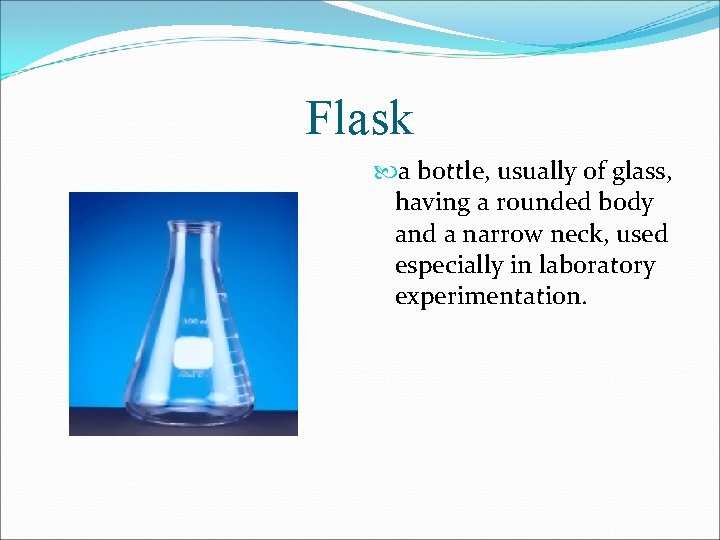
Flask a bottle, usually of glass, having a rounded body and a narrow neck, used especially in laboratory experimentation.
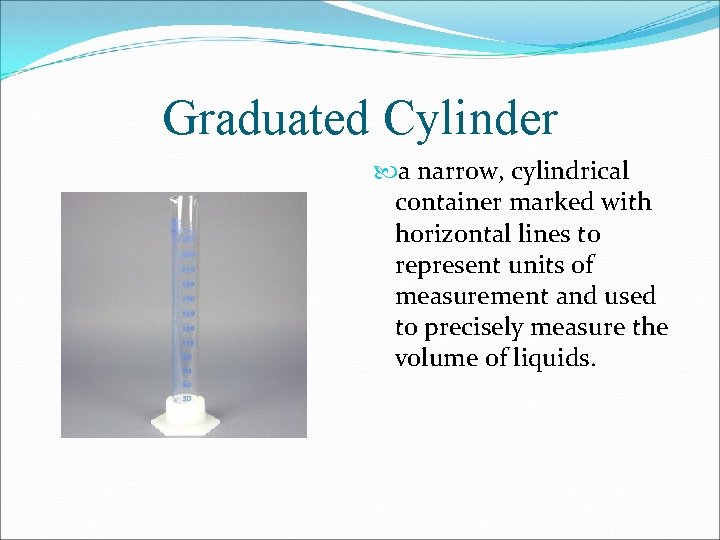
Graduated Cylinder a narrow, cylindrical container marked with horizontal lines to represent units of measurement and used to precisely measure the volume of liquids.
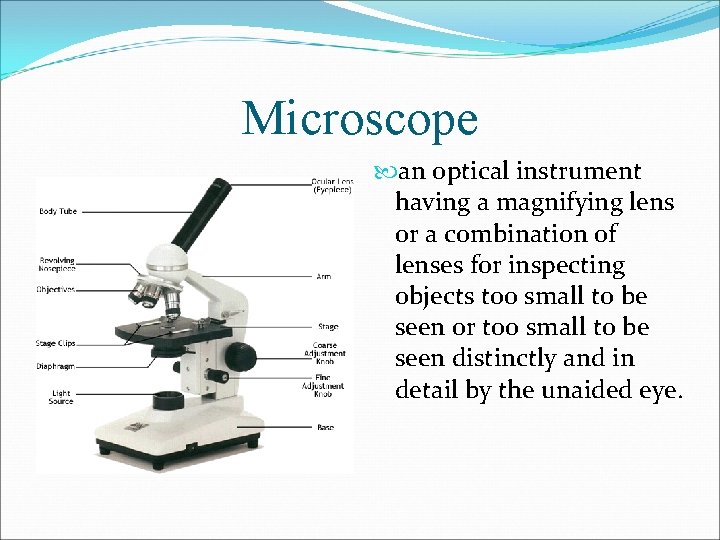
Microscope an optical instrument having a magnifying lens or a combination of lenses for inspecting objects too small to be seen or too small to be seen distinctly and in detail by the unaided eye.

Test Tube Holder A plastic holder used to hold test tubes or dry them.

Magnifying Glass lens that produces an enlarged image of an object.
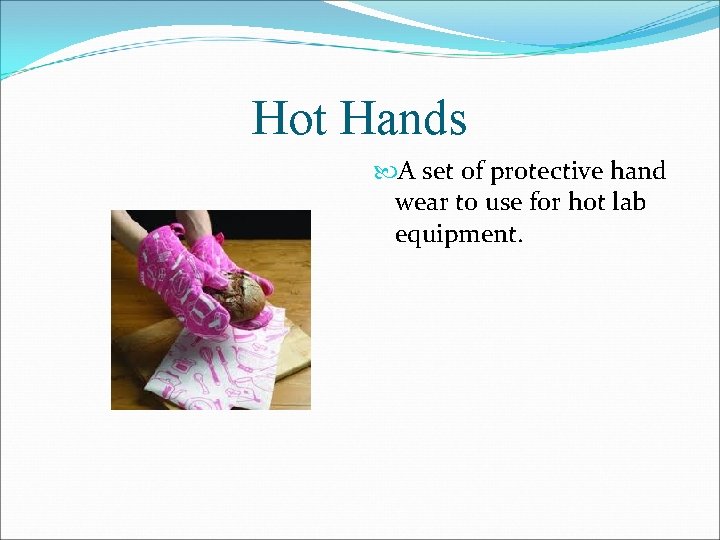
Hot Hands A set of protective hand wear to use for hot lab equipment.
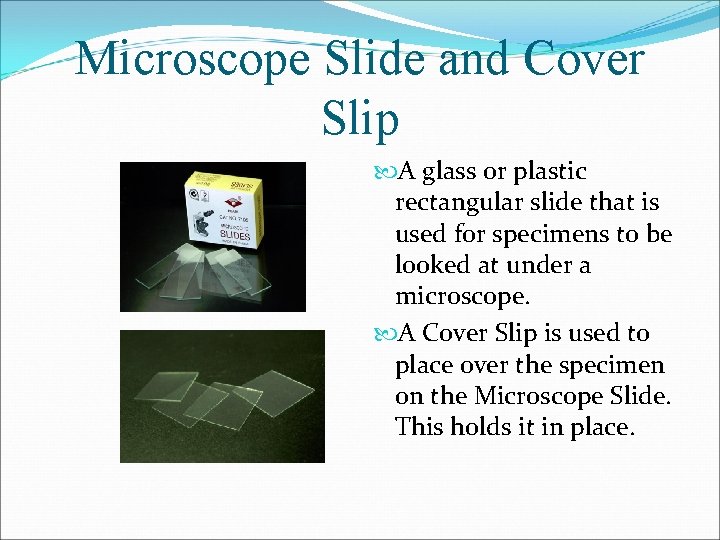
Microscope Slide and Cover Slip A glass or plastic rectangular slide that is used for specimens to be looked at under a microscope. A Cover Slip is used to place over the specimen on the Microscope Slide. This holds it in place.
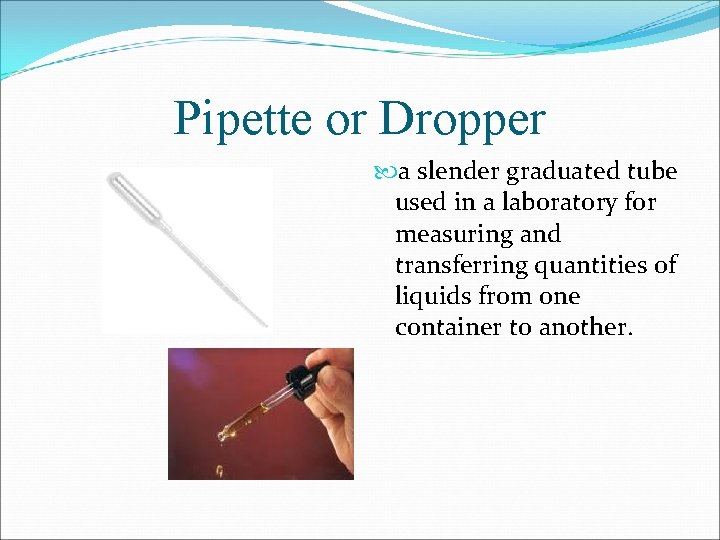
Pipette or Dropper a slender graduated tube used in a laboratory for measuring and transferring quantities of liquids from one container to another.
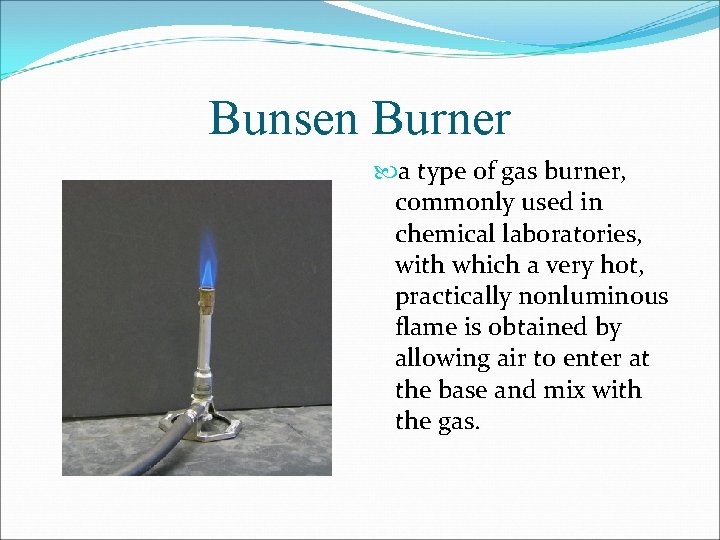
Bunsen Burner a type of gas burner, commonly used in chemical laboratories, with which a very hot, practically nonluminous flame is obtained by allowing air to enter at the base and mix with the gas.
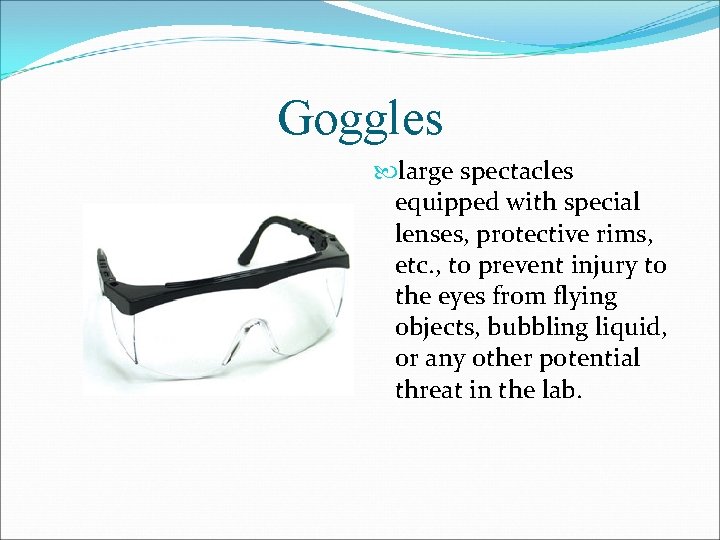
Goggles large spectacles equipped with special lenses, protective rims, etc. , to prevent injury to the eyes from flying objects, bubbling liquid, or any other potential threat in the lab.
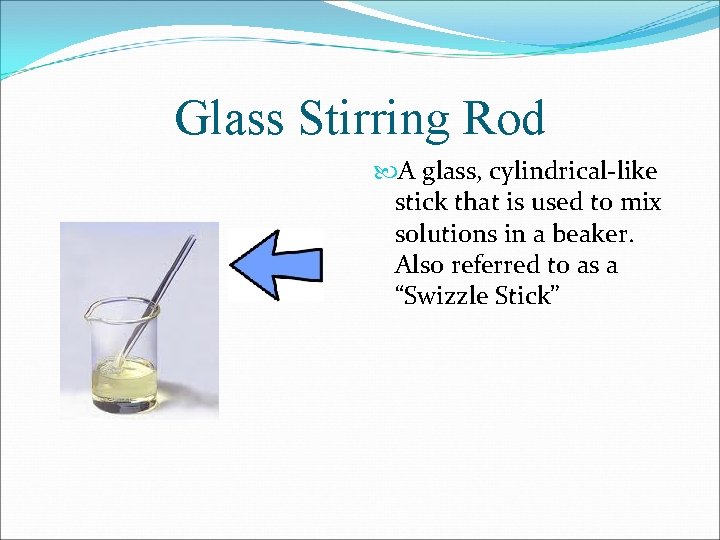
Glass Stirring Rod A glass, cylindrical-like stick that is used to mix solutions in a beaker. Also referred to as a “Swizzle Stick”
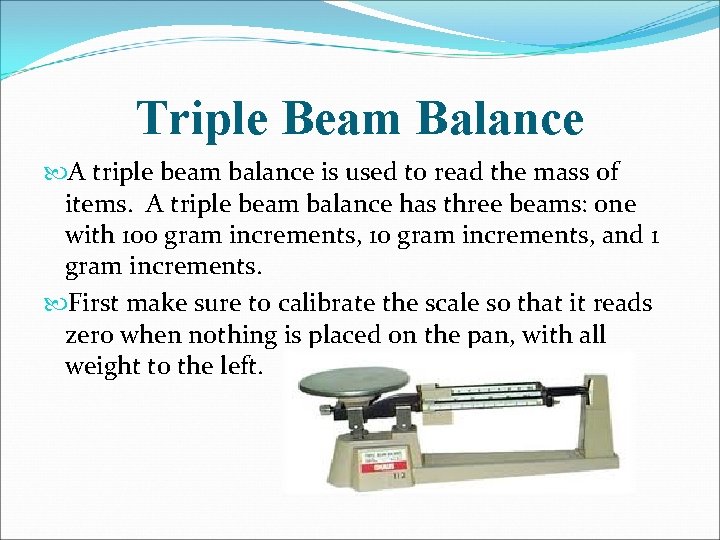
Triple Beam Balance A triple beam balance is used to read the mass of items. A triple beam balance has three beams: one with 100 gram increments, 10 gram increments, and 1 gram increments. First make sure to calibrate the scale so that it reads zero when nothing is placed on the pan, with all weight to the left.
KNOW YOUR LAB EQUIPMENT Study your notes and drawings on the lab equipment. This is so vital when performing labs and reading procedure.
- Slides: 16