
Science Interactive Notebook Table of Contents 12 Scientists

Science Interactive Notebook
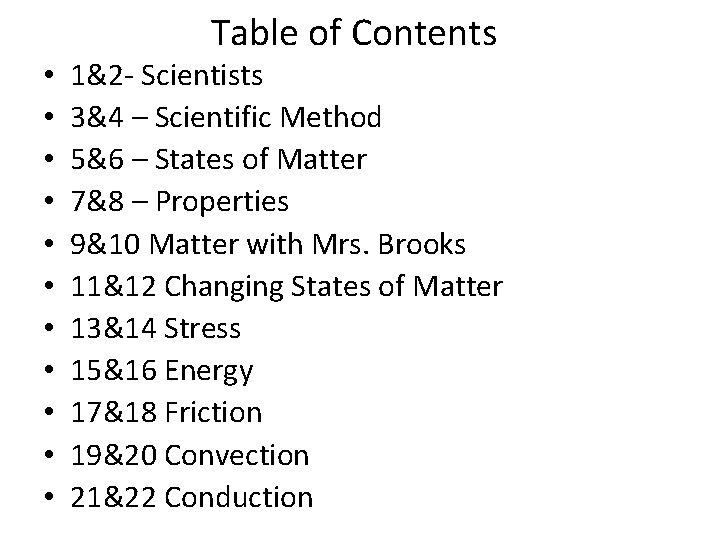
• • • Table of Contents 1&2 - Scientists 3&4 – Scientific Method 5&6 – States of Matter 7&8 – Properties 9&10 Matter with Mrs. Brooks 11&12 Changing States of Matter 13&14 Stress 15&16 Energy 17&18 Friction 19&20 Convection 21&22 Conduction
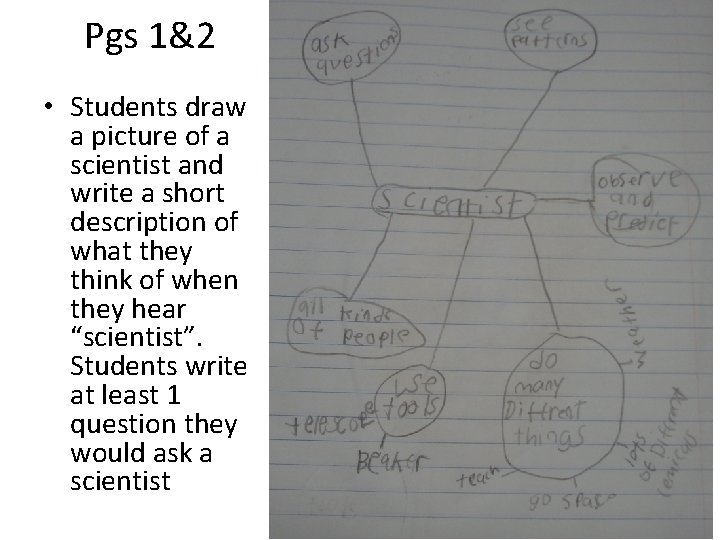
Pgs 1&2 • Students draw a picture of a scientist and write a short description of what they think of when they hear “scientist”. Students write at least 1 question they would ask a scientist
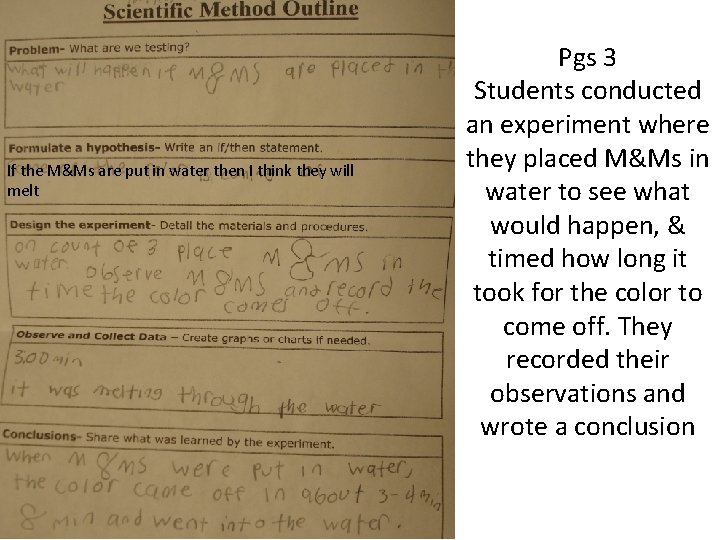
If the M&Ms are put in water then I think they will melt Pgs 3 Students conducted an experiment where they placed M&Ms in water to see what would happen, & timed how long it took for the color to come off. They recorded their observations and wrote a conclusion
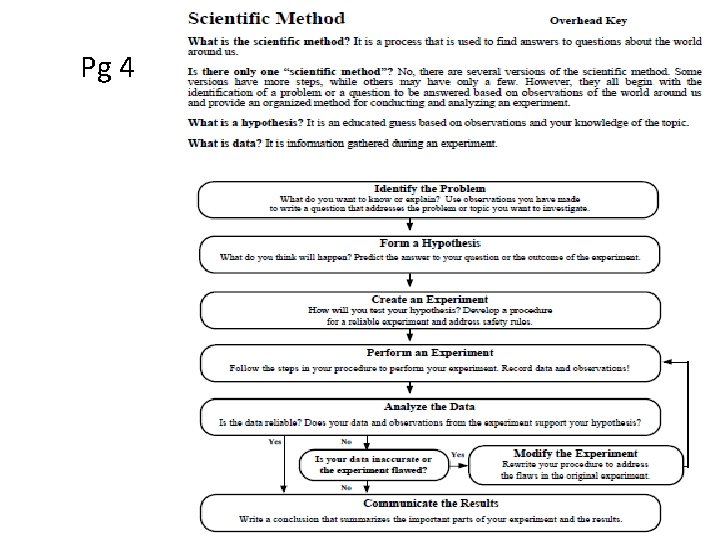
Pg 4
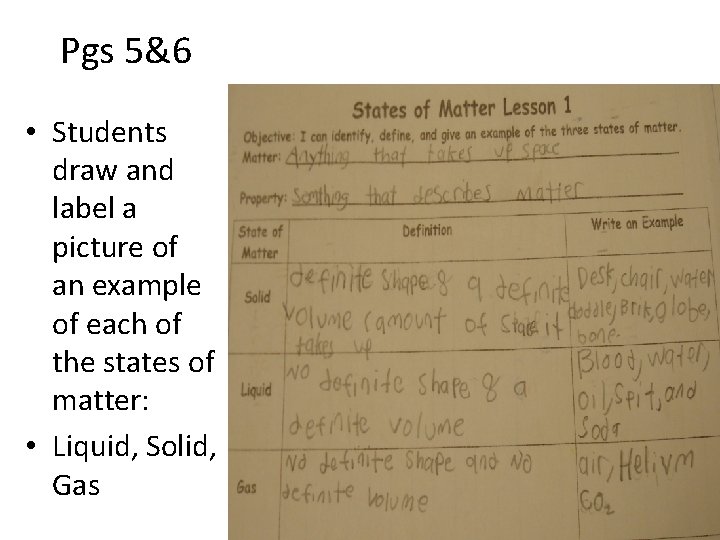
Pgs 5&6 • Students draw and label a picture of an example of each of the states of matter: • Liquid, Solid, Gas
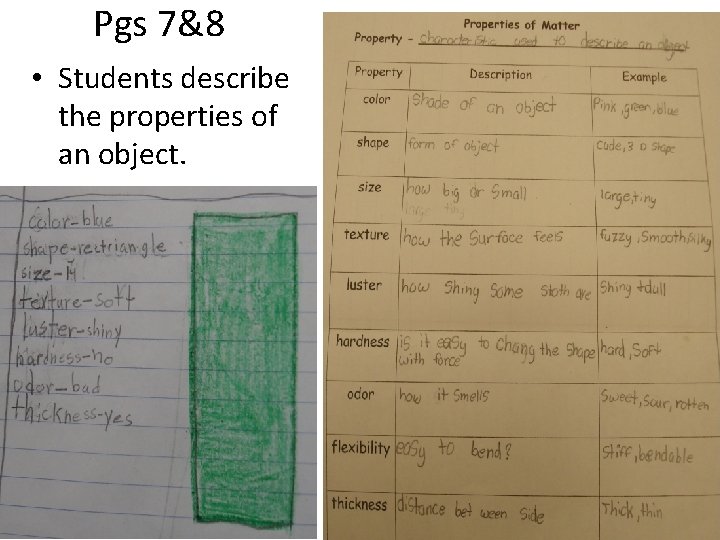
Pgs 7&8 • Students describe the properties of an object.
Pg 9 • Students choose one of the following to complete and then add an illustration with color: • Our school is having a State of Matter Contest. Each type of matter is to give a speech as to why they are better than the other two types of matter. Pick one type of matter and create the speech that tells why you should win the State of Matter Contest. • You are working for Ben and Jerry’s Ice Cream company as an ice cream inventor. Your group has been discussing making ice cream that is not a solid but a gas or liquid. You are to present an argument that supports why all ice cream needs to be a solid. • At the science lab today, your teacher was talking about items that can change from a solid to a liquid, a liquid to a gas, or go through all three stages of matter. She used water as an example. Identify another item that can change its state of matter and how it can do that. • If you could be any object-solid, liquid or gas, why would you be that object, and what would you be able to do?
Pg 10 List three things you learned or thought were interesting from Mrs. Brooks’ visit. List two ways that her activities relate to what you are learning in science. Be specific and state specific events from the day as well as specific objectives in science. List one question you still have about anything that happened during Mrs. Brooks’ visit. During our time with Mrs. Brooks, students felt silly putty and beads to see different types of solids. They poured water into different containers to see how liquids take the shape of their container. They put Alka Seltzer and water into film canisters to see how gas expands and wants to escape (the lid popped off after pressure built up). Students watched water put into liquid nitrogen to see how water changes states into a solid. Students then held the frozen water in the containers (added heat) to see how it changes back into a liquid. Students saw a balloon expand to see how gas takes up space.
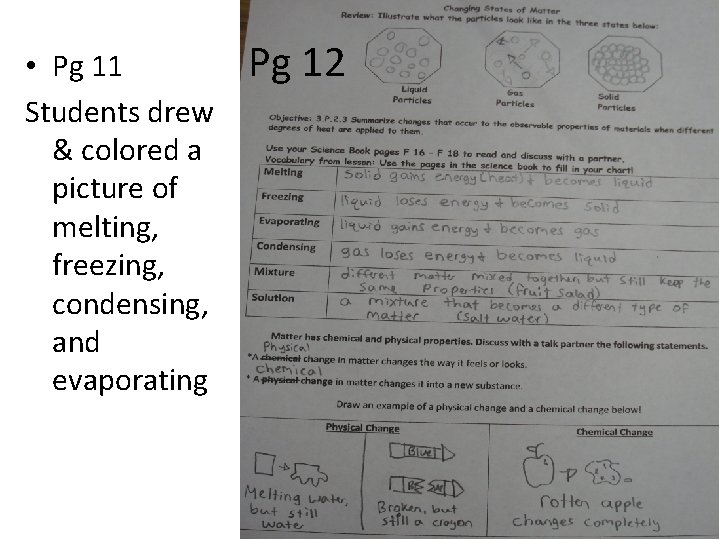
• Pg 11 Students drew & colored a picture of melting, freezing, condensing, and evaporating Pg 12
Pg 13 Students describe and illustrate a time when they were stressed and how they dealt with/ could have dealt with it. Pg 14 Stress- a response; mental/ emotional strain Stressors- What causes stress (a big test, a crowd of people, fighting with a friend…etc) Managing Stress 1. Recognize your symptoms (headache, hard to sleep, crying, sweating, tightness…etc) 2. Can be positive (excitement) or Negative (worry) 3. Find good ways to relieve stress: Take deep breaths, think positively, encourage others/ be with encouraging people, go for a walk, write down your thoughts/feelings, …etc.
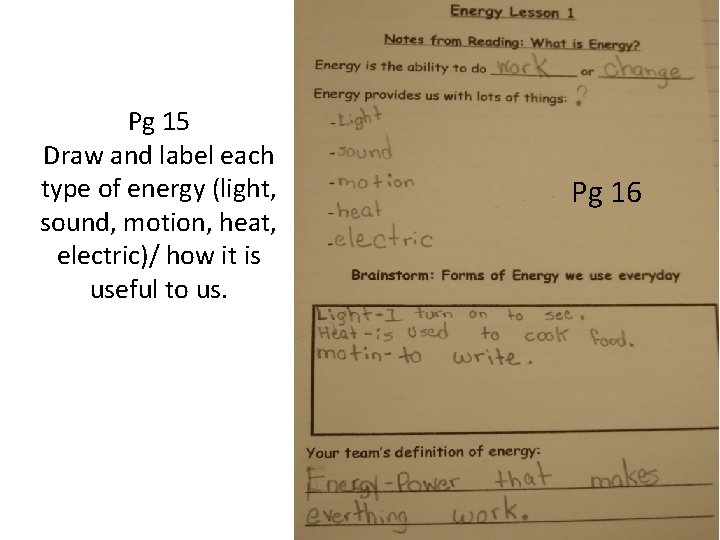
Pg 15 Draw and label each type of energy (light, sound, motion, heat, electric)/ how it is useful to us. Pg 16
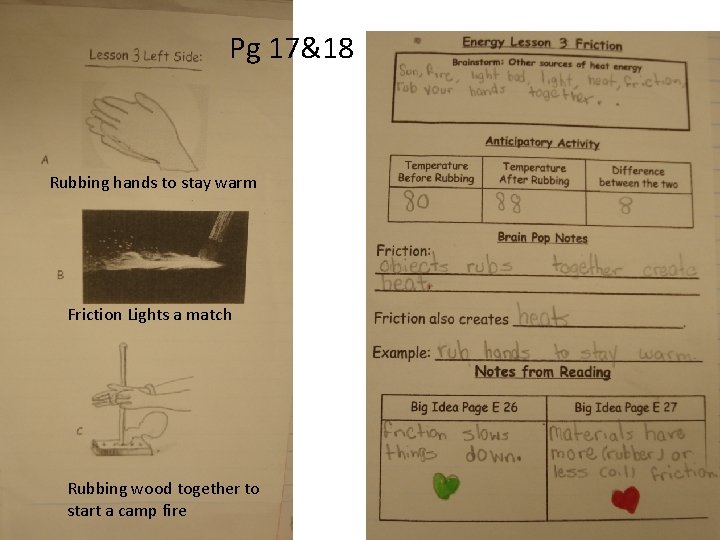
Pg 17&18 Rubbing hands to stay warm Friction Lights a match Rubbing wood together to start a camp fire
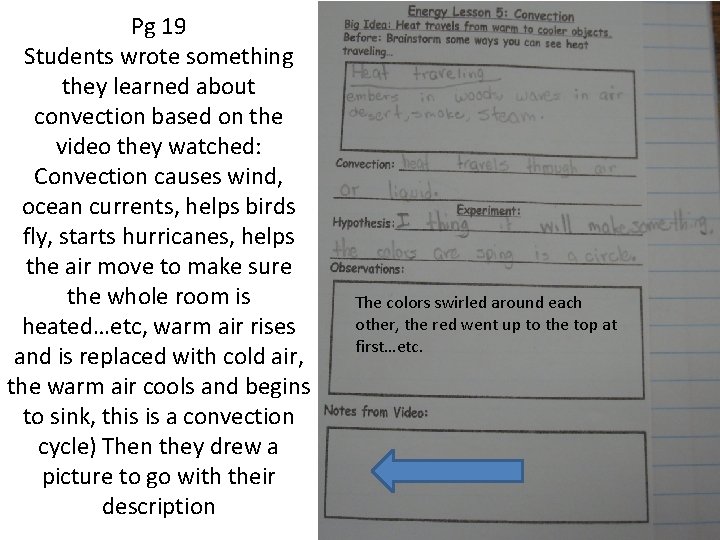
Pg 19 Students wrote something they learned about convection based on the video they watched: Convection causes wind, ocean currents, helps birds fly, starts hurricanes, helps the air move to make sure the whole room is heated…etc, warm air rises and is replaced with cold air, the warm air cools and begins to sink, this is a convection cycle) Then they drew a picture to go with their description The colors swirled around each other, the red went up to the top at first…etc. Pg 20
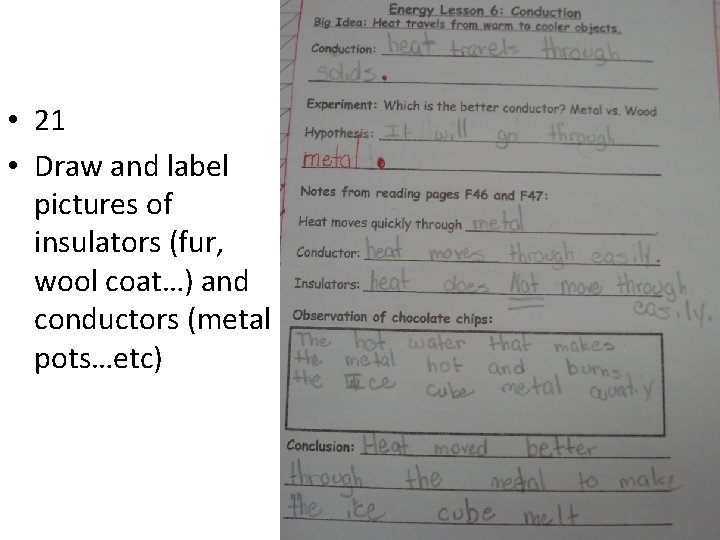
• 21 • Draw and label pictures of insulators (fur, wool coat…) and conductors (metal pots…etc)
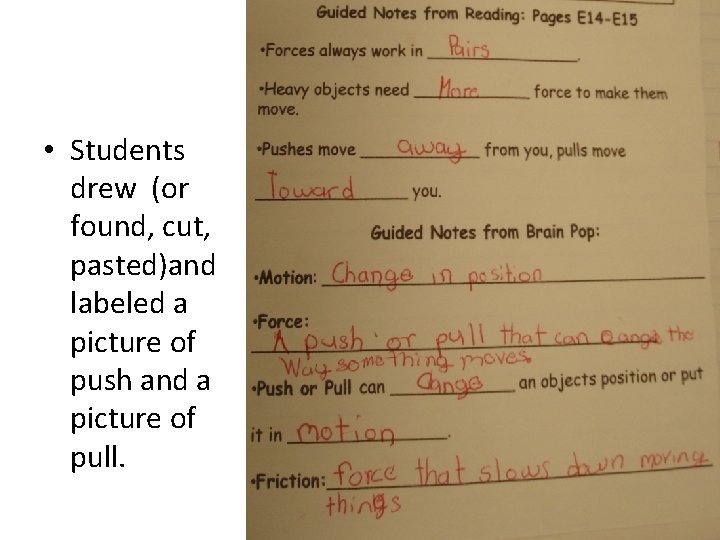
• Students drew (or found, cut, pasted)and labeled a picture of push and a picture of pull.
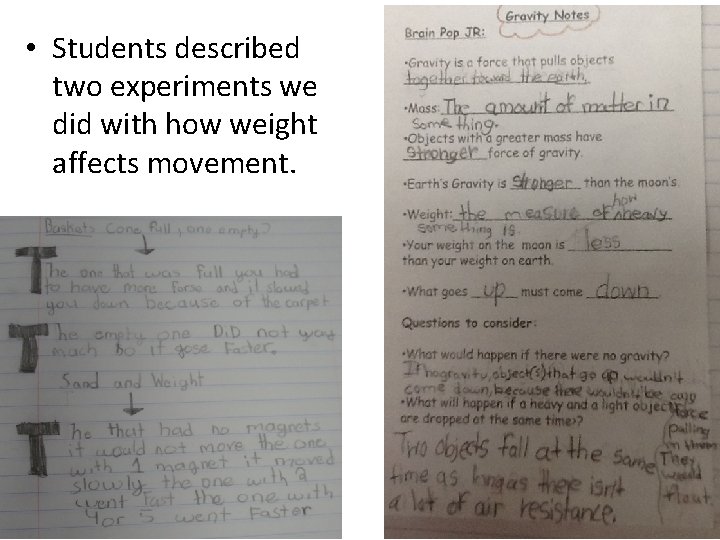
• Students described two experiments we did with how weight affects movement.
- Slides: 17