
Science Higher and Lower Different Sounds can be

Science Higher and Lower
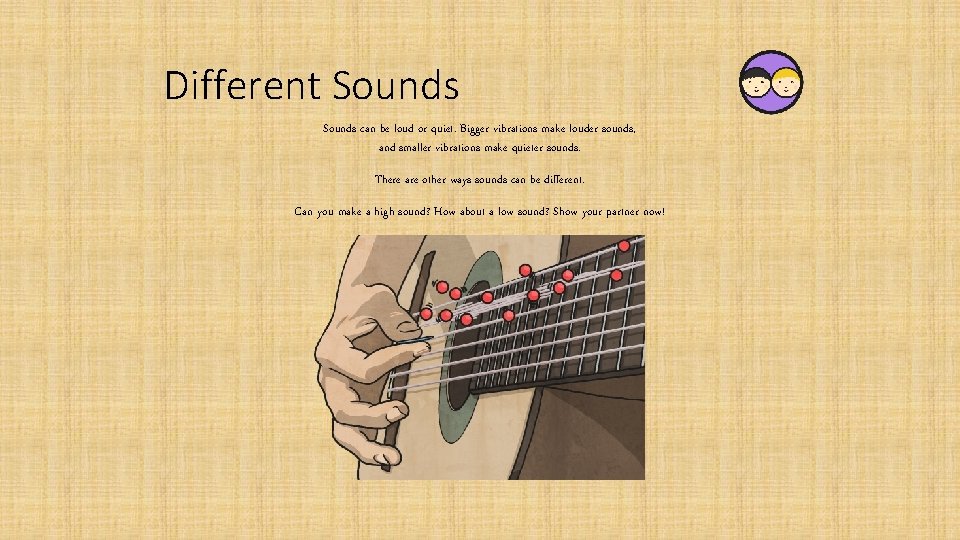
Different Sounds can be loud or quiet. Bigger vibrations make louder sounds, and smaller vibrations make quieter sounds. There are other ways sounds can be different. Can you make a high sound? How about a low sound? Show your partner now!

Watch this clip about pitch: https: //www. bbc. co. uk/bitesize/topics/zgffr 82/articles/z 3 j 3 jty
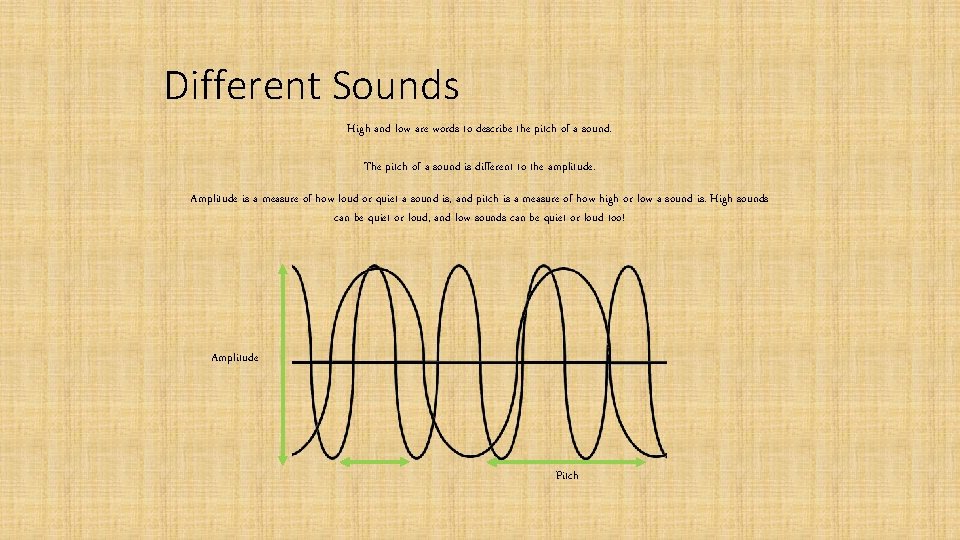
Different Sounds High and low are words to describe the pitch of a sound. The pitch of a sound is different to the amplitude. Amplitude is a measure of how loud or quiet a sound is, and pitch is a measure of how high or low a sound is. High sounds can be quiet or loud, and low sounds can be quiet or loud too! Amplitude Pitch
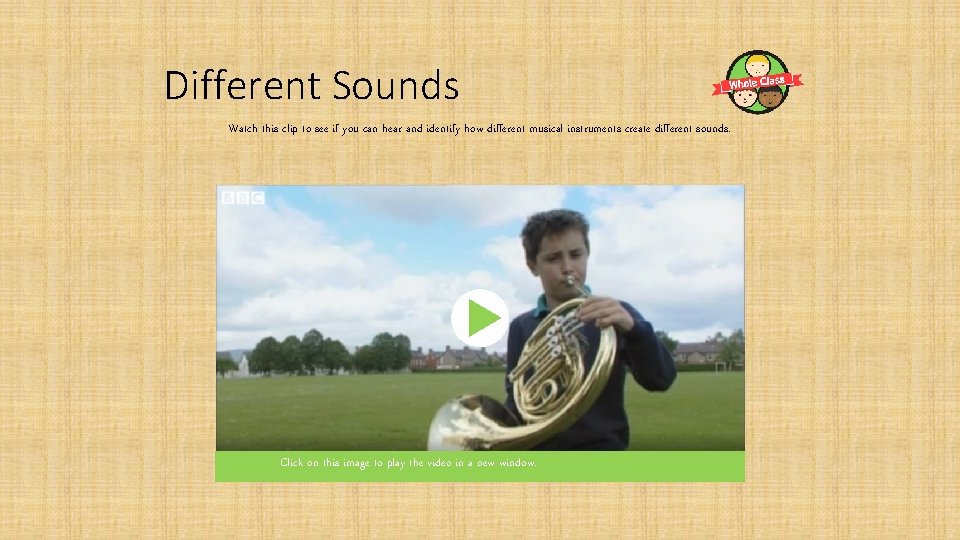
Different Sounds Watch this clip to see if you can hear and identify how different musical instruments create different sounds. Click on this image to play the video in a new window.
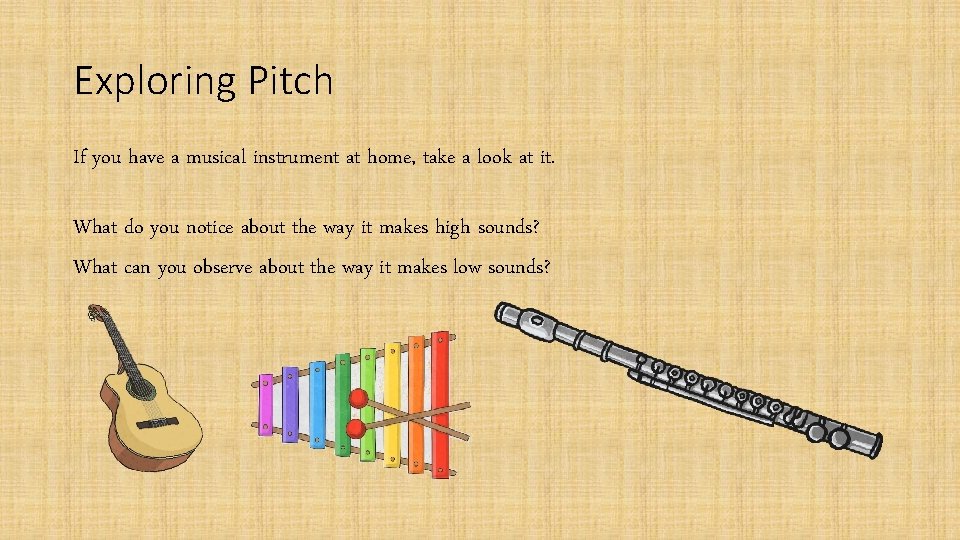
Exploring Pitch If you have a musical instrument at home, take a look at it. What do you notice about the way it makes high sounds? What can you observe about the way it makes low sounds?
Changing Pitch Watch this clip explaining how the pitch of a sound can be changed. Did you observe or notice anything similar? Click on this image to play the video in a new window.
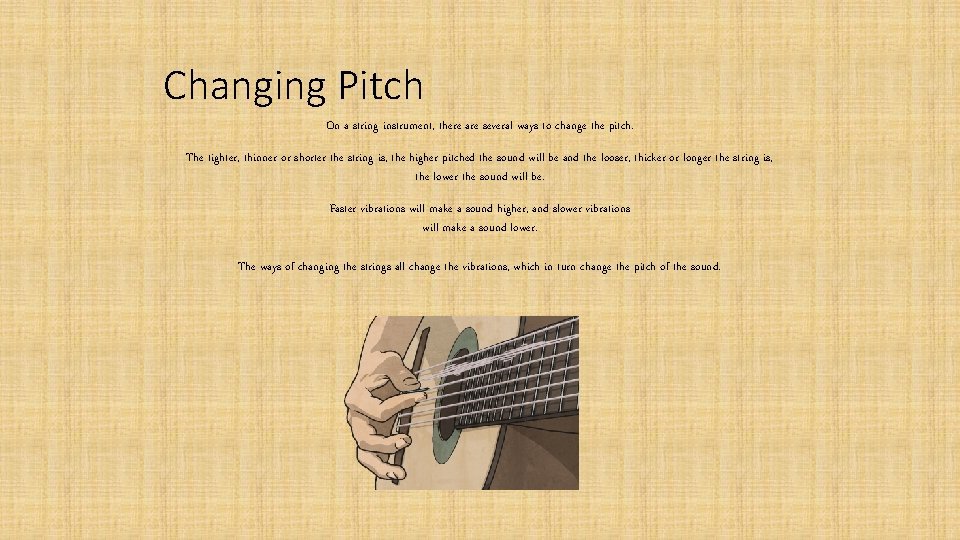
Changing Pitch On a string instrument, there are several ways to change the pitch. The tighter, thinner or shorter the string is, the higher pitched the sound will be and the looser, thicker or longer the string is, the lower the sound will be. Faster vibrations will make a sound higher, and slower vibrations will make a sound lower. The ways of changing the strings all change the vibrations, which in turn change the pitch of the sound.
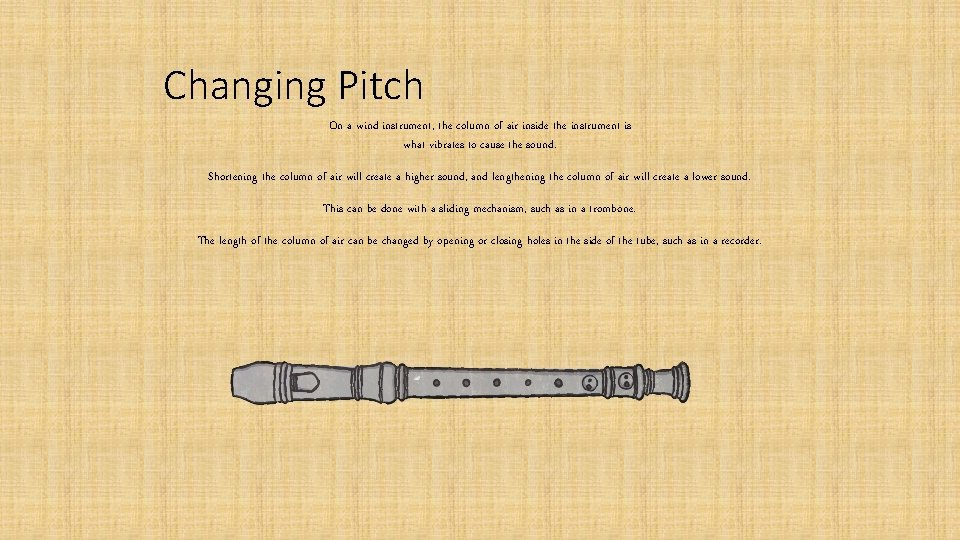
Changing Pitch On a wind instrument, the column of air inside the instrument is what vibrates to cause the sound. Shortening the column of air will create a higher sound, and lengthening the column of air will create a lower sound. This can be done with a sliding mechanism, such as in a trombone. The length of the column of air can be changed by opening or closing holes in the side of the tube, such as in a recorder.
Changing Pitch In a percussion instrument, the surface or object that is struck is the thing that vibrates to create the sound. The pitch of a percussion instrument can be changed in different ways. There may be a series of different length bars or keys, such as in a xylophone. The shorter the bar or key, the higher the pitch will be. There may be different instruments of different sizes. For example, when playing hand bells the musician will have a set of bells to play. The smaller the bell, the higher the pitch. The larger the bell, the lower the pitch. In a drum, the tighter the skin, the higher the pitch will be. A thinner skin will make a higher pitched sound a thicker skin will make a lower pitched sound.
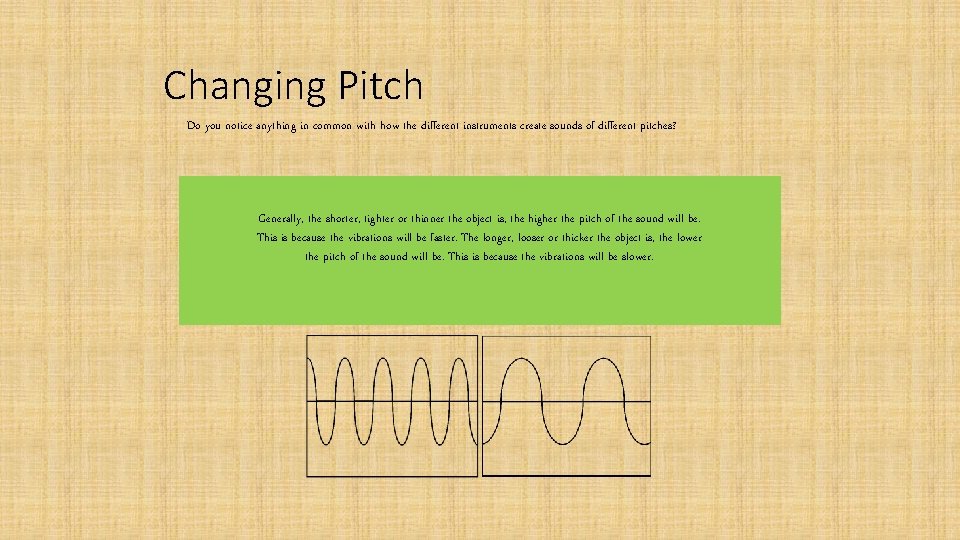
Changing Pitch Do you notice anything in common with how the different instruments create sounds of different pitches? Generally, the shorter, tighter or thinner the object is, the higher the pitch of the sound will be. This is because the vibrations will be faster. The longer, looser or thicker the object is, the lower the pitch of the sound will be. This is because the vibrations will be slower.
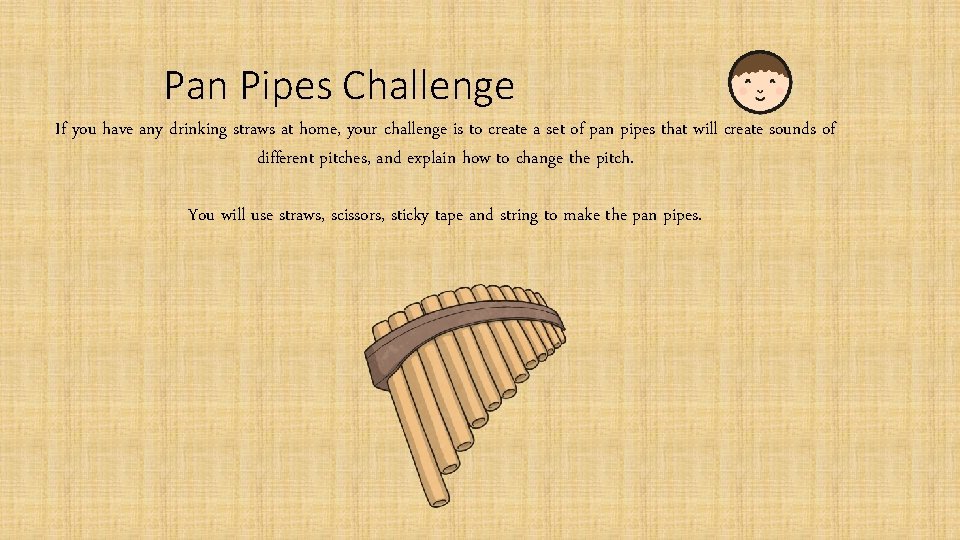
Pan Pipes Challenge If you have any drinking straws at home, your challenge is to create a set of pan pipes that will create sounds of different pitches, and explain how to change the pitch. You will use straws, scissors, sticky tape and string to make the pan pipes.
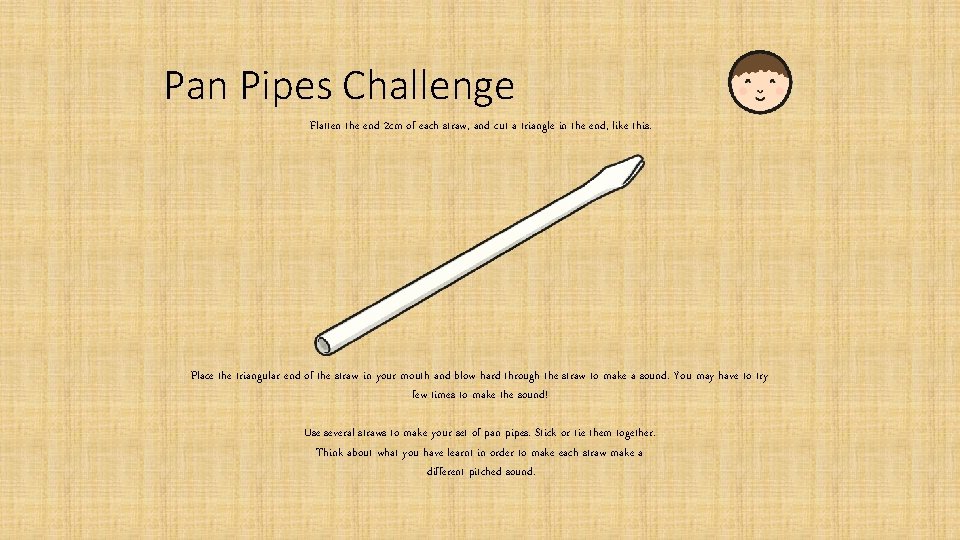
Pan Pipes Challenge Flatten the end 2 cm of each straw, and cut a triangle in the end, like this. Place the triangular end of the straw in your mouth and blow hard through the straw to make a sound. You may have to try few times to make the sound! Use several straws to make your set of pan pipes. Stick or tie them together. Think about what you have learnt in order to make each straw make a different pitched sound.
- Slides: 13