
Science Hearing Sounds Vibrations Sounds are made when
Science Hearing Sounds.
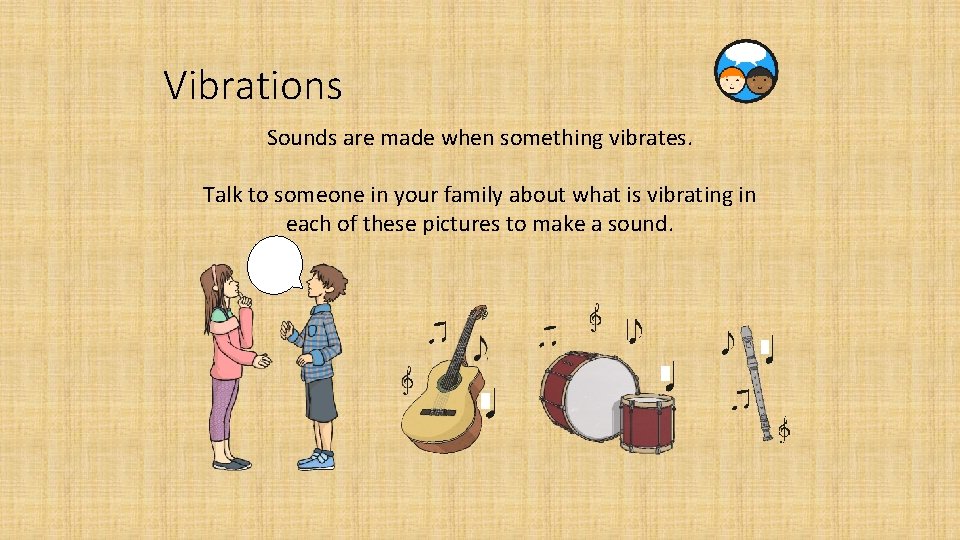
Vibrations Sounds are made when something vibrates. Talk to someone in your family about what is vibrating in each of these pictures to make a sound.
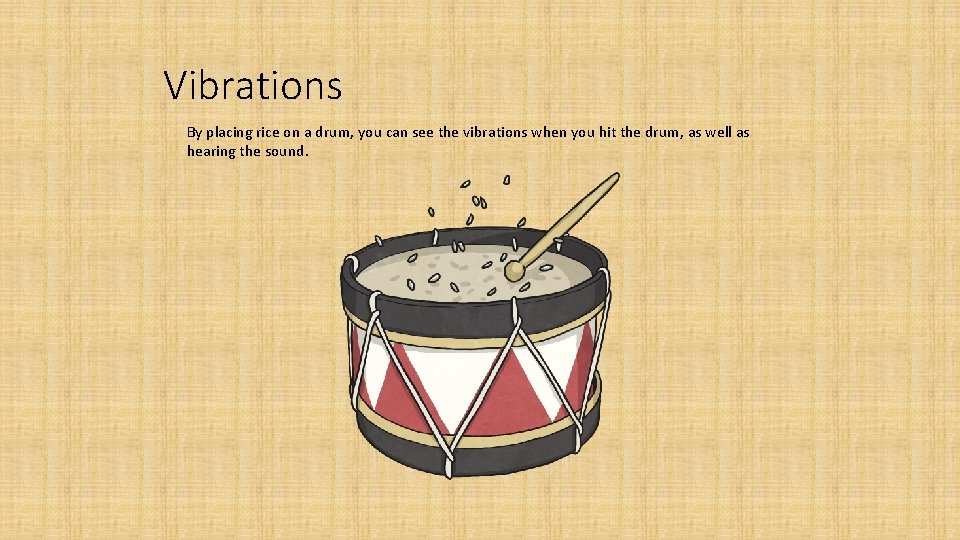
Vibrations By placing rice on a drum, you can see the vibrations when you hit the drum, as well as hearing the sound.
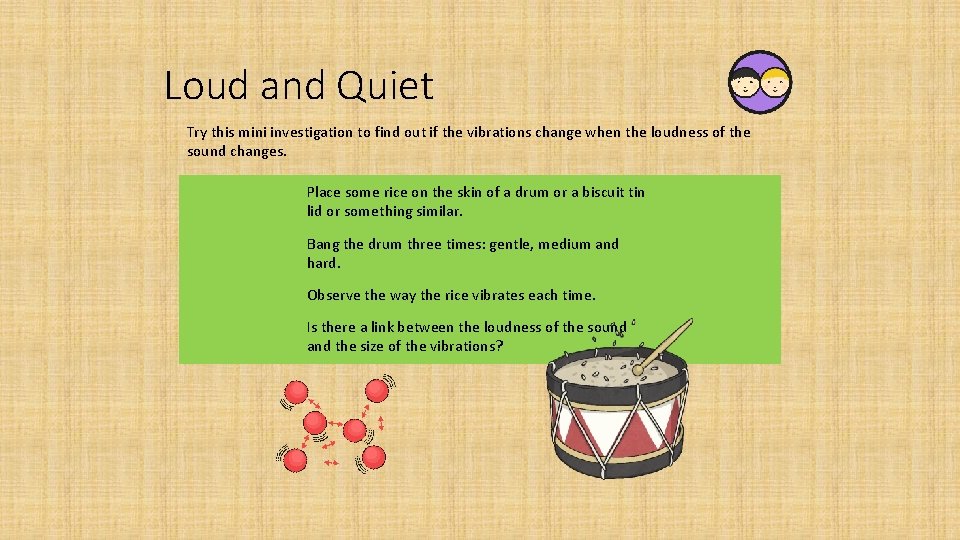
Loud and Quiet Try this mini investigation to find out if the vibrations change when the loudness of the sound changes. Place some rice on the skin of a drum or a biscuit tin lid or something similar. Bang the drum three times: gentle, medium and hard. Observe the way the rice vibrates each time. Is there a link between the loudness of the sound and the size of the vibrations?
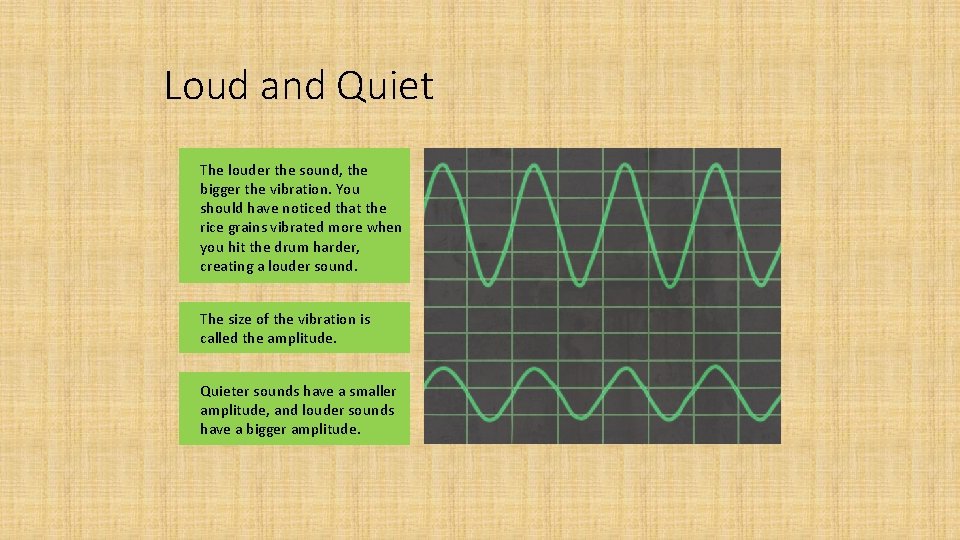
Loud and Quiet The louder the sound, the bigger the vibration. You should have noticed that the rice grains vibrated more when you hit the drum harder, creating a louder sound. The size of the vibration is called the amplitude. Quieter sounds have a smaller amplitude, and louder sounds have a bigger amplitude.
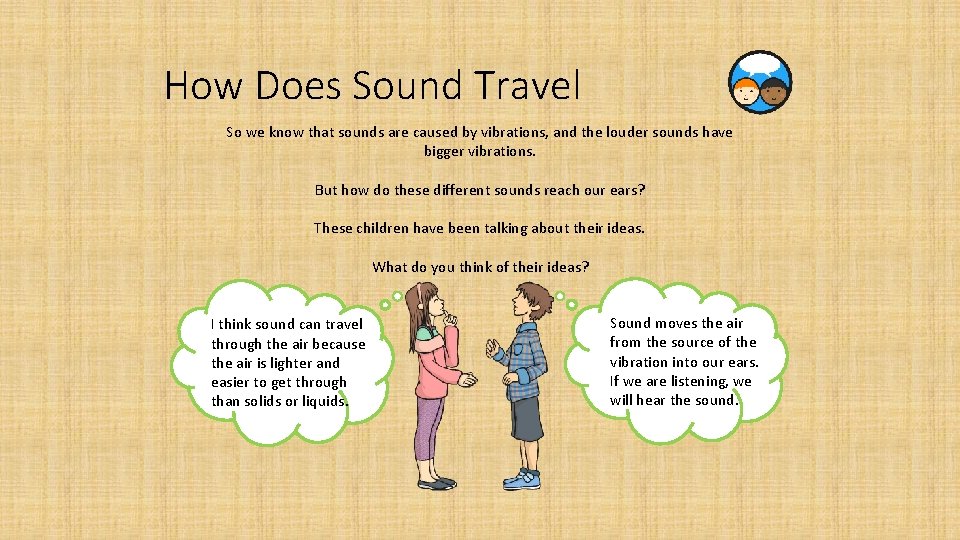
How Does Sound Travel So we know that sounds are caused by vibrations, and the louder sounds have bigger vibrations. But how do these different sounds reach our ears? These children have been talking about their ideas. What do you think of their ideas? I think sound can travel through the air because the air is lighter and easier to get through than solids or liquids. Sound moves the air from the source of the vibration into our ears. If we are listening, we will hear the sound.
Think about molecules of solids, liquids and gases…. • FACT: Sound travels four times faster and farther in water than it does in air! • FACT: Sound travels at 330 metres per second. • Things that travel faster than sound are called supersonic… …Concorde • No air in space = no molecules to vibrate = no sound!!!
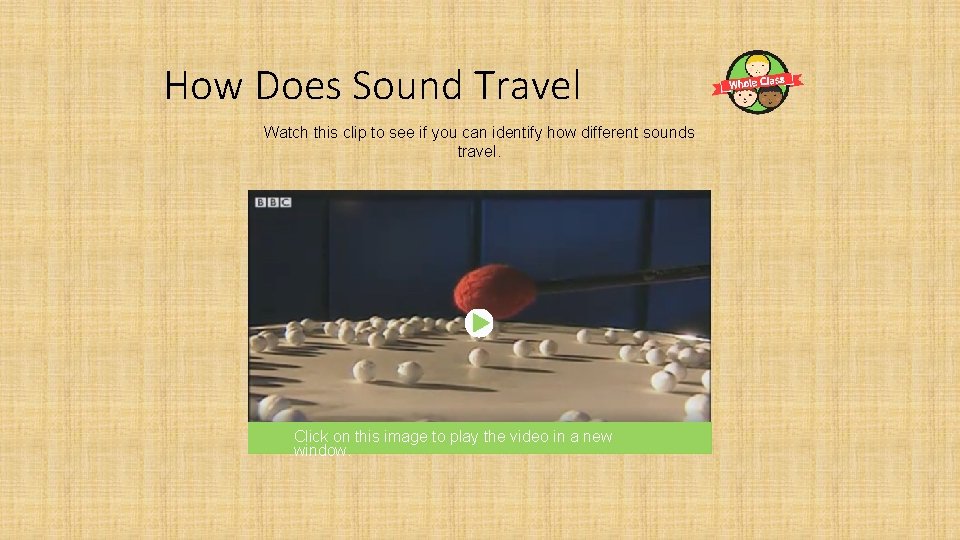
How Does Sound Travel Watch this clip to see if you can identify how different sounds travel. Click on this image to play the video in a new window.
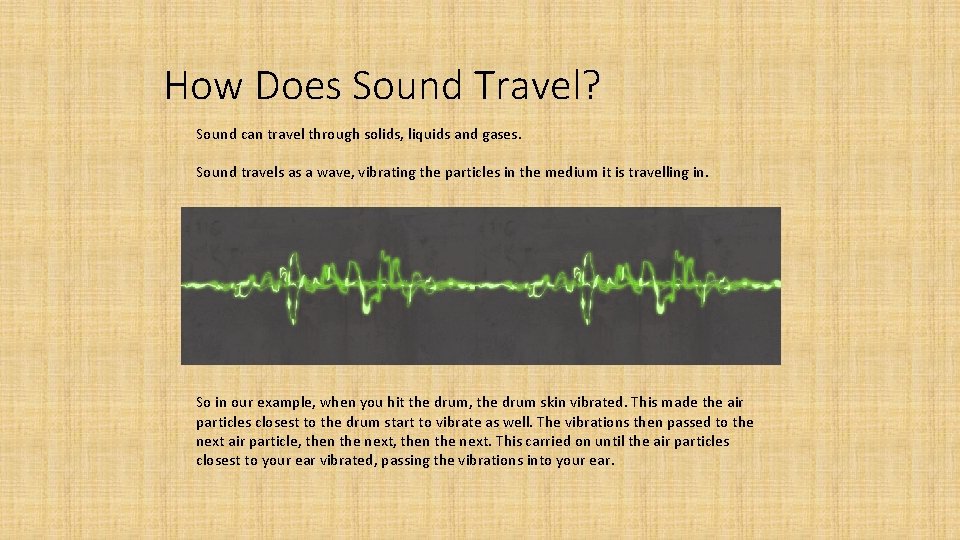
How Does Sound Travel? Sound can travel through solids, liquids and gases. Sound travels as a wave, vibrating the particles in the medium it is travelling in. So in our example, when you hit the drum, the drum skin vibrated. This made the air particles closest to the drum start to vibrate as well. The vibrations then passed to the next air particle, then the next. This carried on until the air particles closest to your ear vibrated, passing the vibrations into your ear.
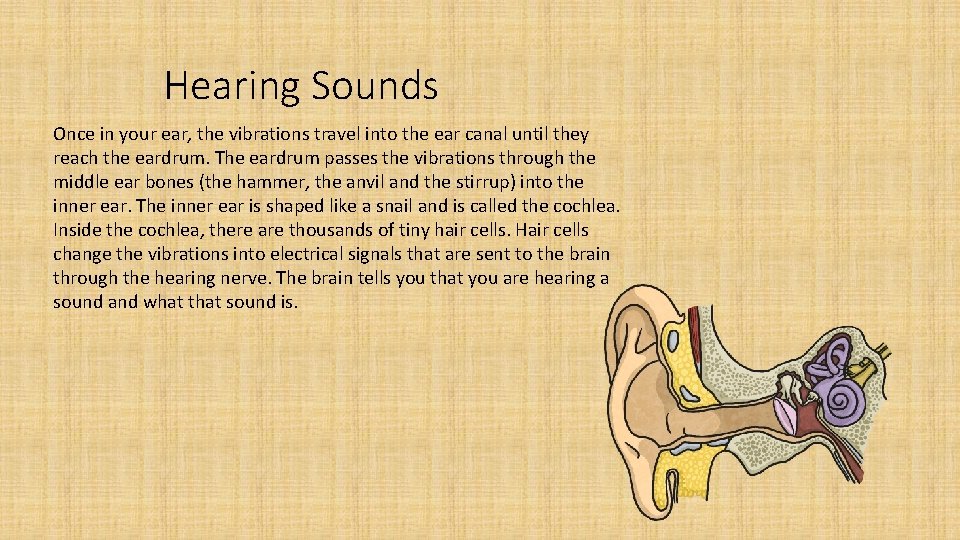
Hearing Sounds Once in your ear, the vibrations travel into the ear canal until they reach the eardrum. The eardrum passes the vibrations through the middle ear bones (the hammer, the anvil and the stirrup) into the inner ear. The inner ear is shaped like a snail and is called the cochlea. Inside the cochlea, there are thousands of tiny hair cells. Hair cells change the vibrations into electrical signals that are sent to the brain through the hearing nerve. The brain tells you that you are hearing a sound and what that sound is.
- Slides: 10