
SCIENCE Formative Assessment Lesson Force Motion alpha version


- Slides: 25
SCIENCE Formative Assessment Lesson Force & Motion alpha version 11 -2014
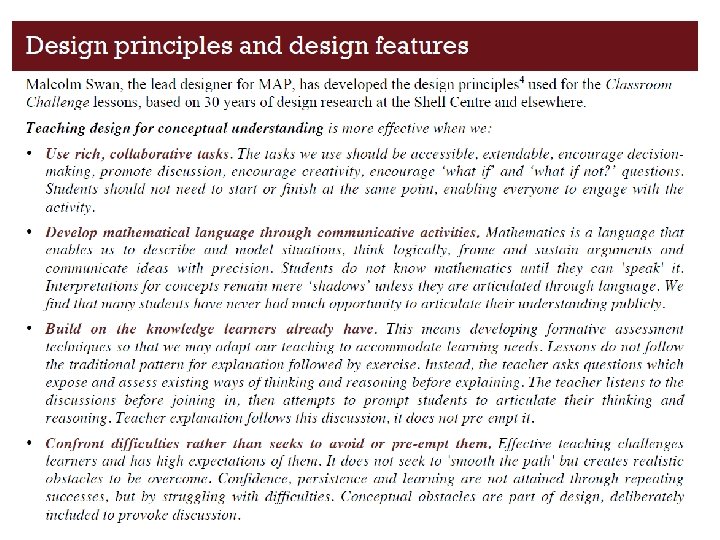
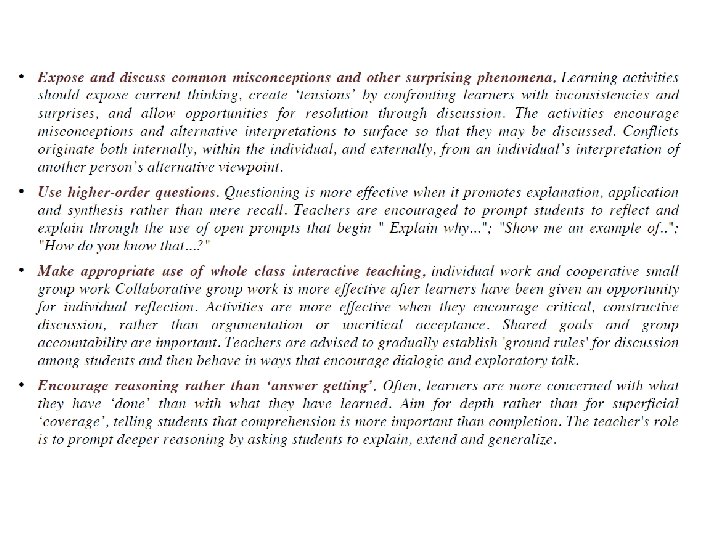
Intent of Lesson Approach n Modeled after MDC Formative Assessment Lesson Process – tools used to implement Common Core Standards for Mathematics n Typically be taught 2/3 of the way through a unit n Intent of these types of lessons is to engage students in a productive struggle that helps deepen conceptual understanding and allows students to correct flawed thinking based on their own reasoning.
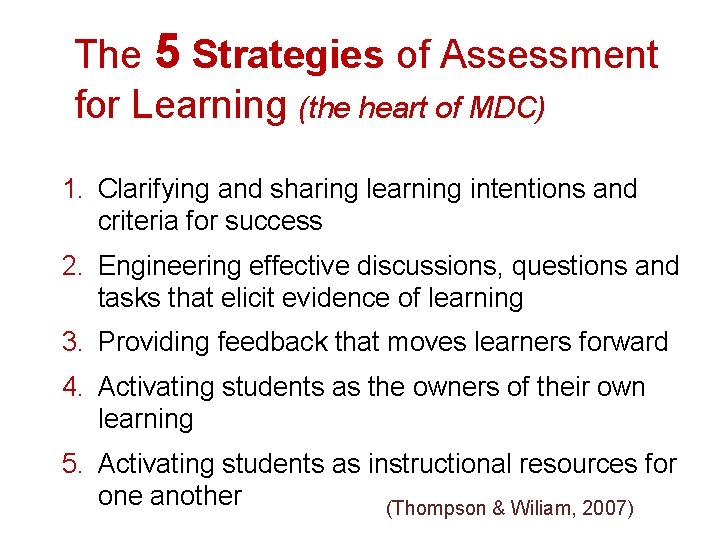
The 5 Strategies of Assessment for Learning (the heart of MDC) 1. Clarifying and sharing learning intentions and criteria for success 2. Engineering effective discussions, questions and tasks that elicit evidence of learning 3. Providing feedback that moves learners forward 4. Activating students as the owners of their own learning 5. Activating students as instructional resources for one another (Thompson & Wiliam, 2007)
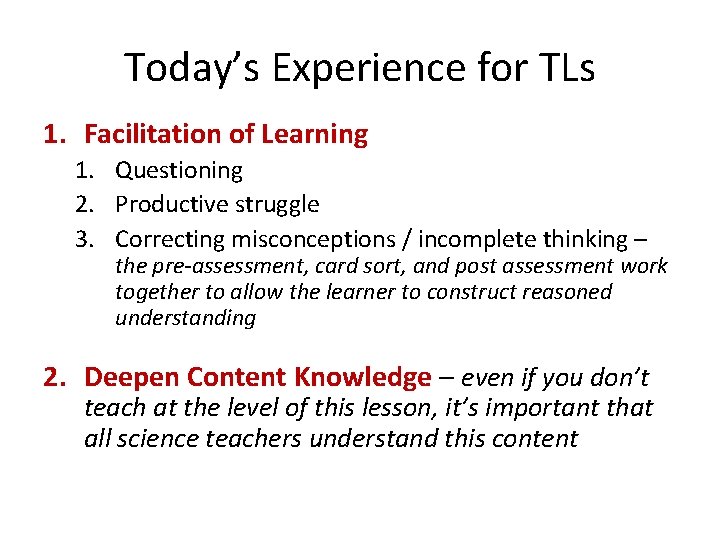
Today’s Experience for TLs 1. Facilitation of Learning 1. Questioning 2. Productive struggle 3. Correcting misconceptions / incomplete thinking – the pre-assessment, card sort, and post assessment work together to allow the learner to construct reasoned understanding 2. Deepen Content Knowledge – even if you don’t teach at the level of this lesson, it’s important that all science teachers understand this content
Warm-up www. youtube. com/watch? v=5 C 5_d. OEy. Afk
• Would the hammer and feather drop the same on the Earth? Why? • What force(s) are acting on the hammer & feather on the Moon? The Earth? • If a force is applied to an object, how does it affect the object?
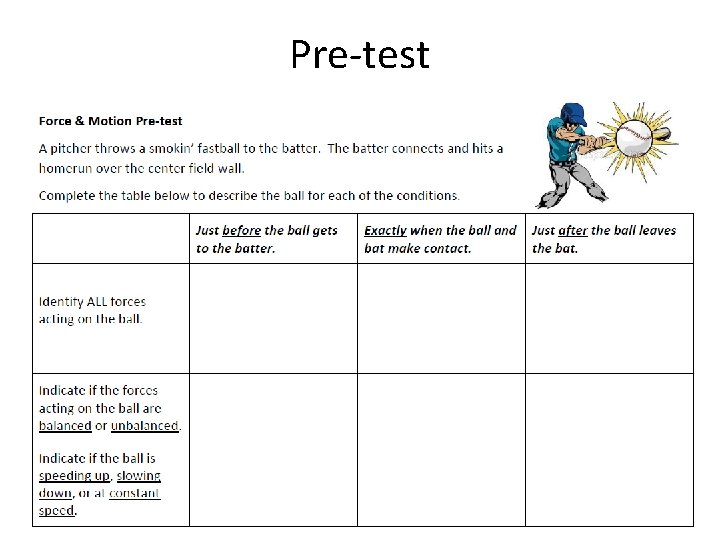
Pre-test
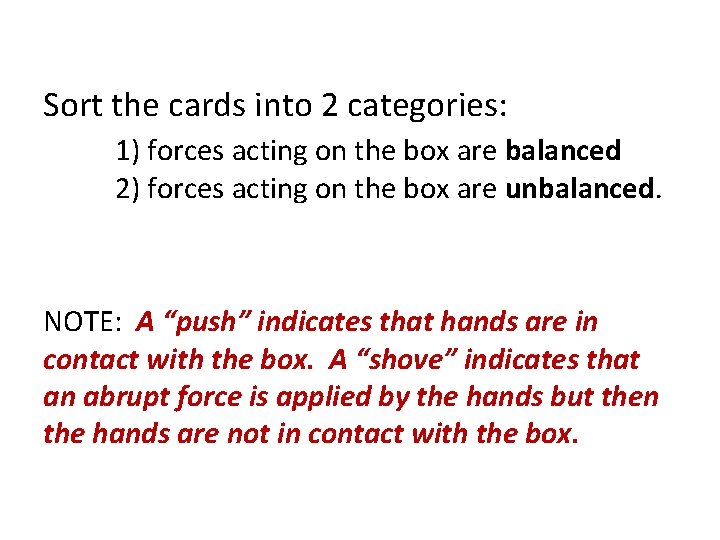
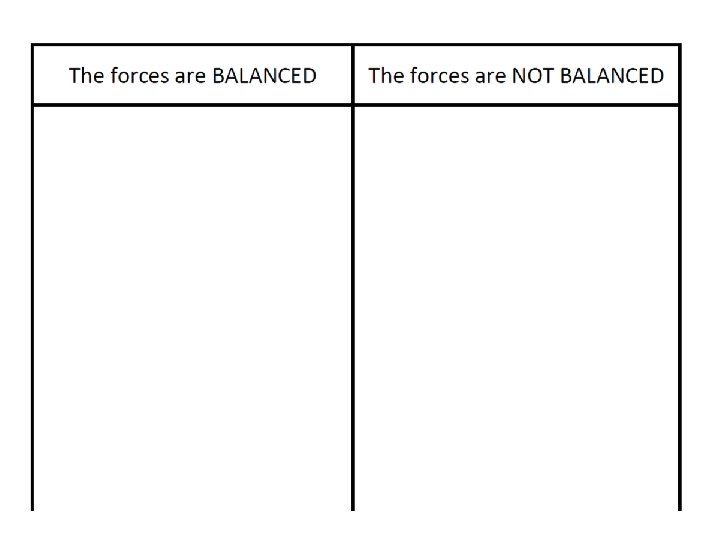
Sort the cards into 2 categories: 1) forces acting on the box are balanced 2) forces acting on the box are unbalanced. NOTE: A “push” indicates that hands are in contact with the box. A “shove” indicates that an abrupt force is applied by the hands but then the hands are not in contact with the box.
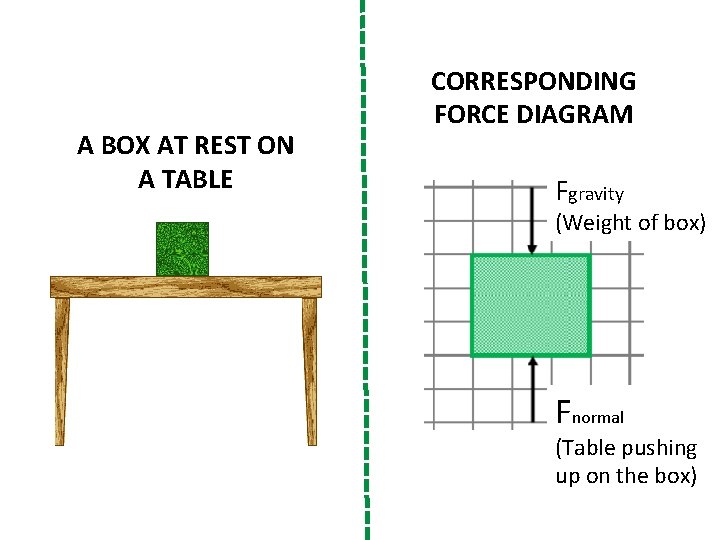
A BOX AT REST ON A TABLE CORRESPONDING FORCE DIAGRAM Fgravity (Weight of box) Fnormal (Table pushing up on the box)
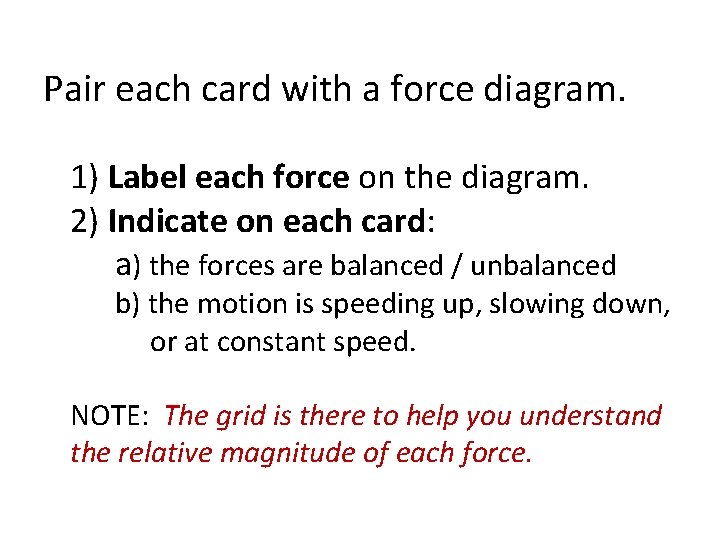
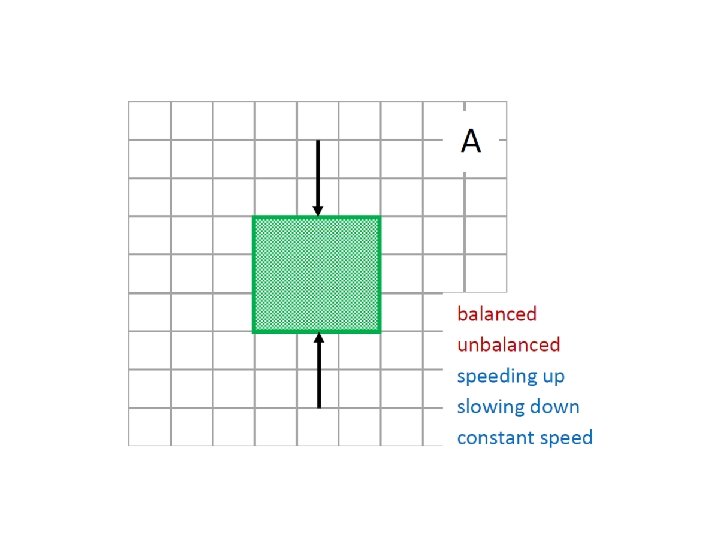
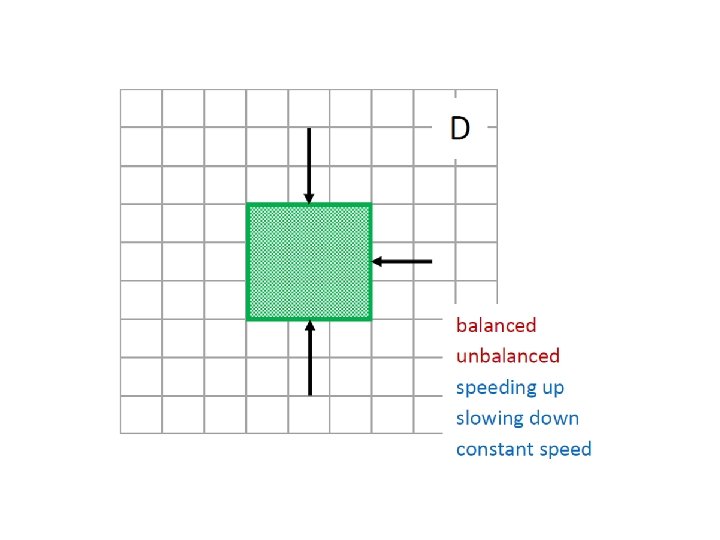
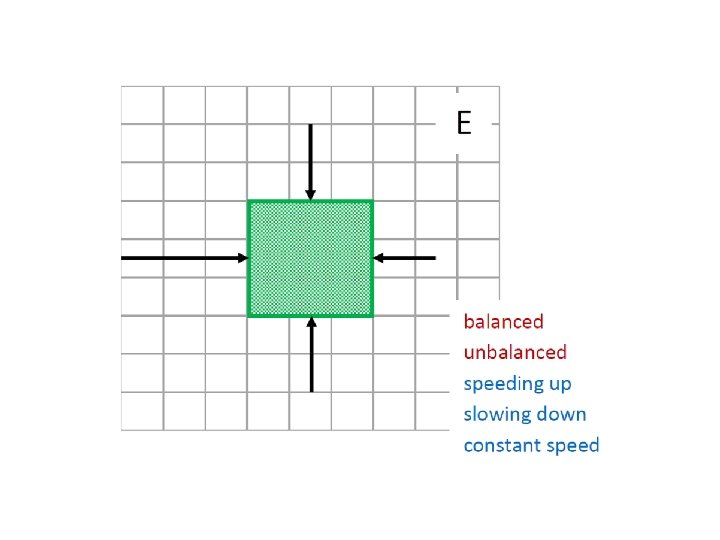
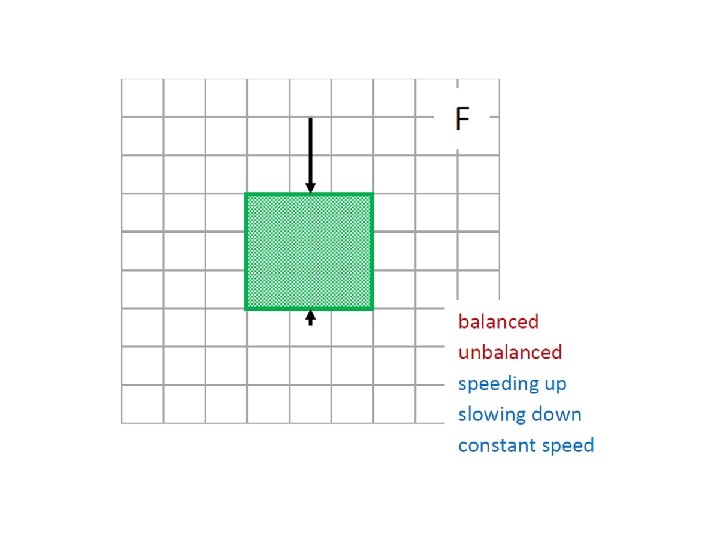
Pair each card with a force diagram. 1) Label each force on the diagram. 2) Indicate on each card: a) the forces are balanced / unbalanced b) the motion is speeding up, slowing down, or at constant speed. NOTE: The grid is there to help you understand the relative magnitude of each force.
Sharing work 1. One person from each group get up and visit a different group. 2. If you are staying at your table, explain your card order to the visitor, justifying the placement of each card. 3. If you are the visitor, look carefully at the work and challenge any cards that you think are in the wrong place. 4. If you agree on the placement of the cards, compare your methods used when ordering. P-16
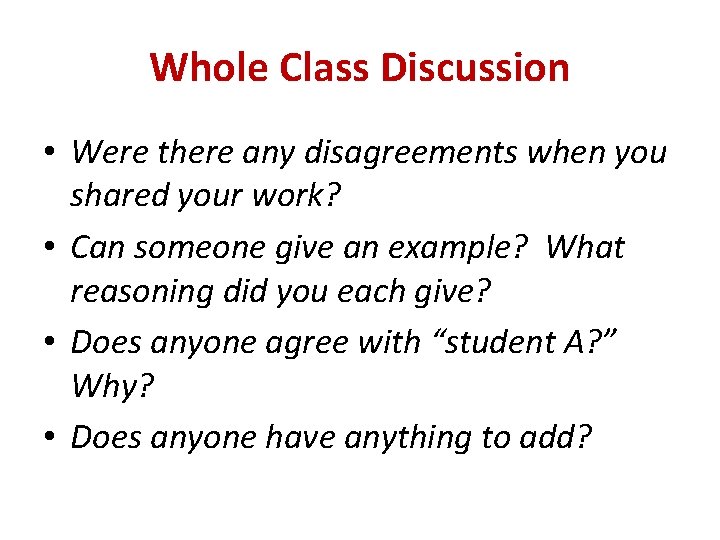
Whole Class Discussion • Were there any disagreements when you shared your work? • Can someone give an example? What reasoning did you each give? • Does anyone agree with “student A? ” Why? • Does anyone have anything to add?
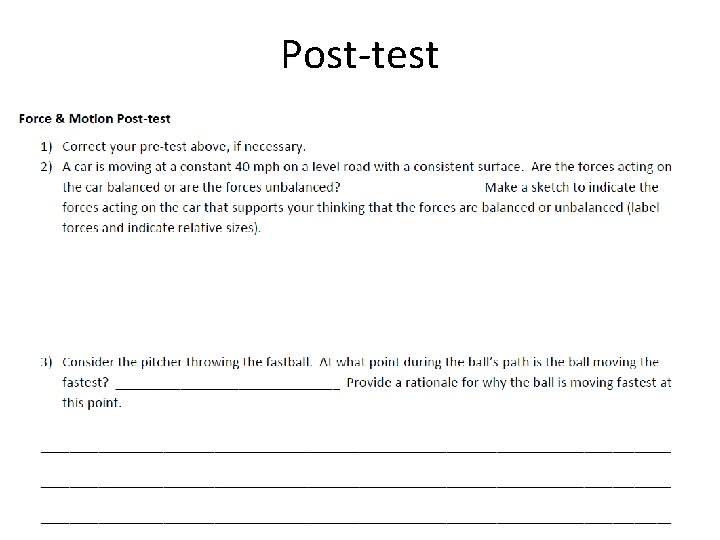
Post-test
Questions? Feedback?