
SCIENCE FAIR WHAT ELEMENTS MUST YOUR SCIENCE FAIR

- Slides: 30
SCIENCE FAIR
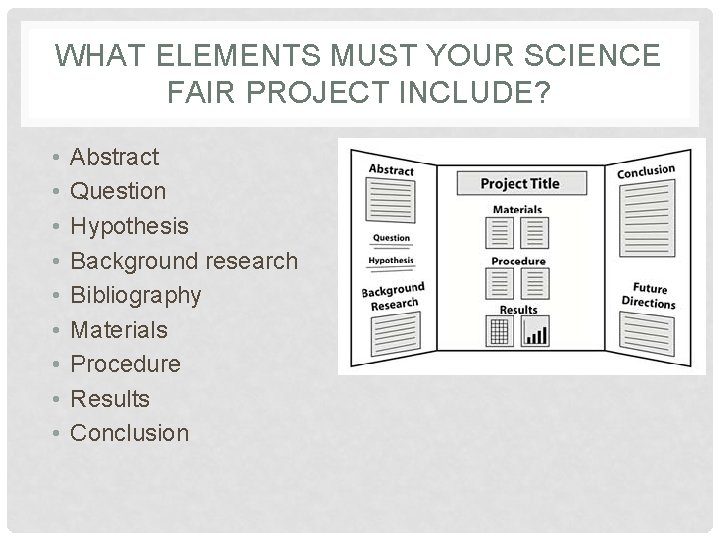
WHAT ELEMENTS MUST YOUR SCIENCE FAIR PROJECT INCLUDE? • • • Abstract Question Hypothesis Background research Bibliography Materials Procedure Results Conclusion
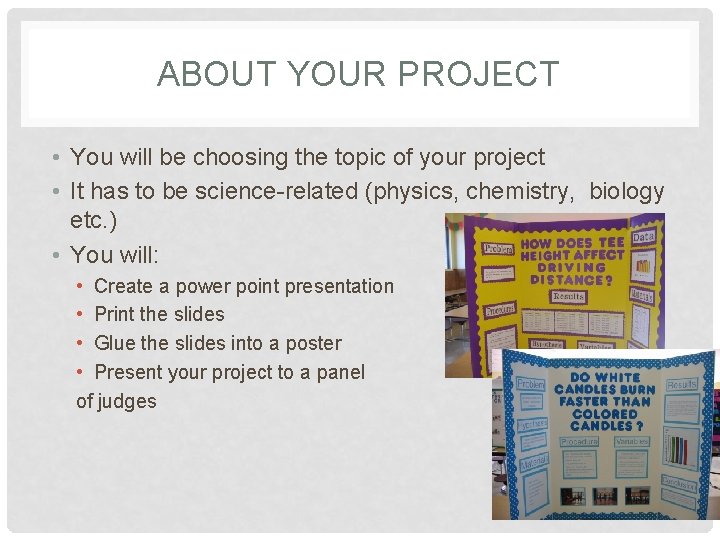
ABOUT YOUR PROJECT • You will be choosing the topic of your project • It has to be science-related (physics, chemistry, biology etc. ) • You will: • Create a power point presentation • Print the slides • Glue the slides into a poster • Present your project to a panel of judges
INITIAL INSTRUCTIONS • • • Log into your gmail account Open “google drive” Open a new “presentation” Name it “Science Fair + your name” Share it with your partner (if you have one) and with your teachers: Miss Edith cienciacademia@gmail. com Miss Maria morenoscience@gmail. com
SLIDE #1 • • Write the title of your project The name of the school Your names The date (December 9 th, 2013)
SLIDE #2 • Abstract It is a summary of your project
SLIDE #3 • Question • What are you trying to find? • Include dependent and independent variables
SLIDE #4 • Hypothesis • Make an educated guess; try to answer your “question” • Your hypothesis has to have the following format: If _________ then ________
SLIDES #5 -8 • Research Do research on your topic INCLUDE BIBLIOGRAPHY Author, title, editorial, place, year, pages
SLIDE #9 • Materials: • List every material you used
SLIDE #10 • Procedure: • Step by step indicate what you did • Do not forget to take pictures
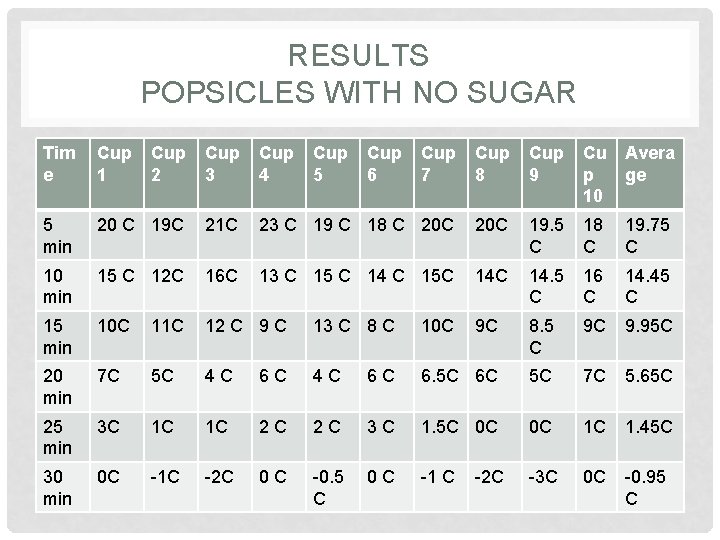
SLIDE #11 -13 • Results: • Make graphs, charts, tables etc. illustrating your results
SLIDE #14 • Conclusion • Describe your results • Compare your results to your hypothesis • At least one paragraphs
EXAMPLE
STUDYING THE EFFECT THAT SUGAR HAS ON THE FREEZING OF POPSICLES Academia Internacional San Miguel de Allende Miss Edith and Miss Maria December 9 th, 2013
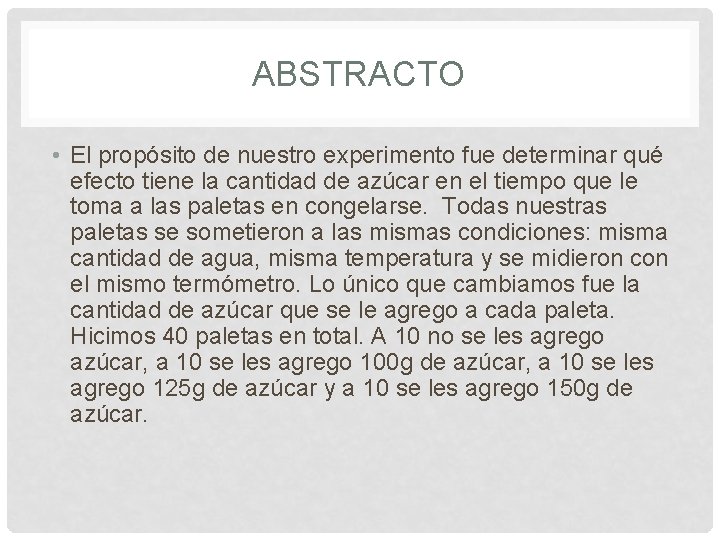
ABSTRACTO • El propósito de nuestro experimento fue determinar qué efecto tiene la cantidad de azúcar en el tiempo que le toma a las paletas en congelarse. Todas nuestras paletas se sometieron a las mismas condiciones: misma cantidad de agua, misma temperatura y se midieron con el mismo termómetro. Lo único que cambiamos fue la cantidad de azúcar que se le agrego a cada paleta. Hicimos 40 paletas en total. A 10 no se les agrego azúcar, a 10 se les agrego 100 g de azúcar, a 10 se les agrego 125 g de azúcar y a 10 se les agrego 150 g de azúcar.
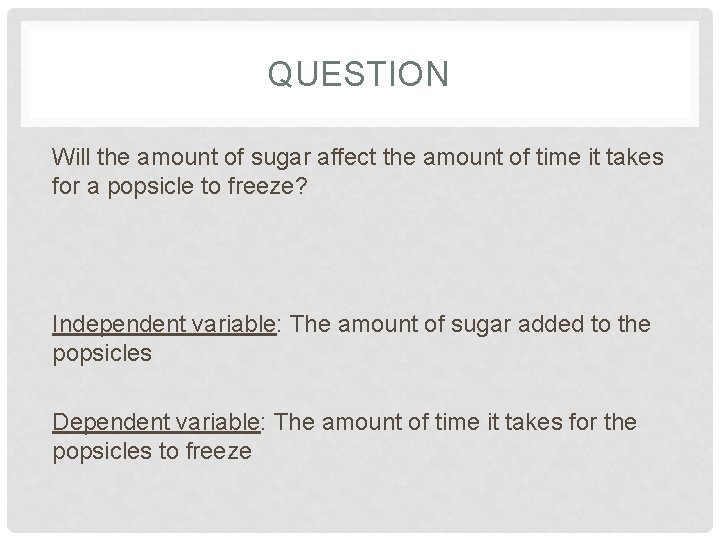
QUESTION Will the amount of sugar affect the amount of time it takes for a popsicle to freeze? Independent variable: The amount of sugar added to the popsicles Dependent variable: The amount of time it takes for the popsicles to freeze
HYPOTHESIS If we add more sugar, then the popsicles will freeze faster
BACKGROUND RESEARCH Todo lo que nos rodea esta formado por materia. La materia en nuestro planeta puede encontraste en cuatro estados: solidos, líquidos, gases y plasma. Materia es todo lo que tiene masa y volumen. La materia tiene propiedades definidas como: densidad, masa, volumen, solubilidad, punto de fusión y punto de ebullición. Las moléculas en el estado solido se encuentran unidas por fuerzas muy intensas, que no les permiten dejar sus posiciones fijas. Solo pueden vibrar ligeramente. Tienen volumen, tamaño, peso y densidad definidas. Las fuerzas entre las moléculas en el estado liquido son mas débiles que las de los solidos. Esto les permite moverse con mayor facilidad. Los líquidos no tienen una forma definida; sin embargo, tienen volumen y peso definidos. A comparación de las moléculas de los solidos y líquidos, las moléculas de los gases se encuentran muy separadas unas de las otras y se mueven a gran velocidad. Las fuerzas de atracción son casi nulas.
Los cambios de estado son: fusión, vaporización, condensación, solidificación y sublimación. Fusión es el paso de solido a liquido. La fusión del agua se produce a los 0 C°. Evaporación es el paso de liquido a gas. La evaporación del agua se produce a los 100 C°. El punto de ebullición es donde la materia se convierte de liquido a gas. Esta se produce a mas de 100 C°. Cuando la materia se enfría, se produce la condensación y la solidificación. La condensación es cuando un gas se convierte en liquido. La solidificación es cuando un liquido se convierte en solido.
La temperatura es una propiedad de la materia que esta relacionada con la sensación de calor y frio. Ésta se mide con un instrumento de medición llamado termómetro. Las partículas de mercurio se encuentran dentro del termómetro. Al ponerse en contacto con el agua caliente estas partículas se mueven mas rápido lo que hace que el liquido suba por el tubo. Al contrario, si el liquido se enfría, sus partículas ya no se mueven tan rápido y el liquido desciende por el tubo. La unidad de medida de la temperatura son los grados Celsius.
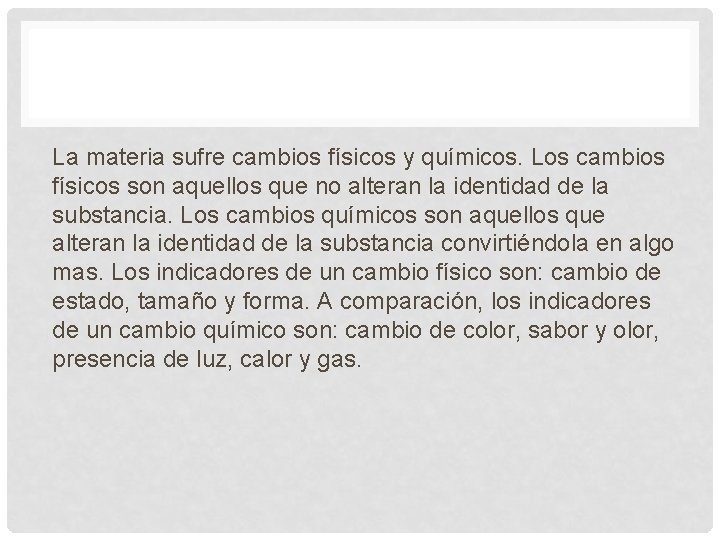
La materia sufre cambios físicos y químicos. Los cambios físicos son aquellos que no alteran la identidad de la substancia. Los cambios químicos son aquellos que alteran la identidad de la substancia convirtiéndola en algo mas. Los indicadores de un cambio físico son: cambio de estado, tamaño y forma. A comparación, los indicadores de un cambio químico son: cambio de color, sabor y olor, presencia de luz, calor y gas.
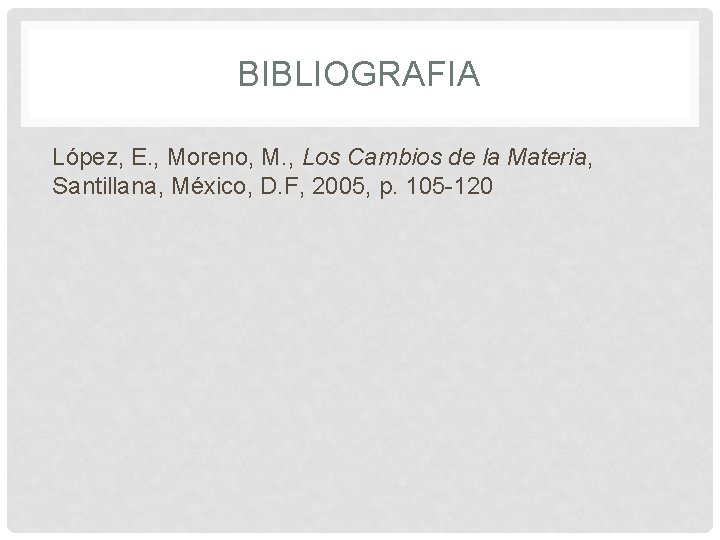
BIBLIOGRAFIA López, E. , Moreno, M. , Los Cambios de la Materia, Santillana, México, D. F, 2005, p. 105 -120
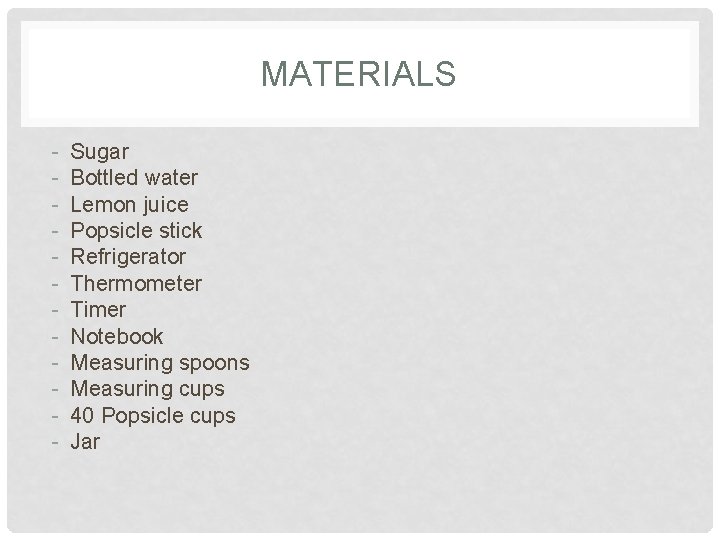
MATERIALS - Sugar Bottled water Lemon juice Popsicle stick Refrigerator Thermometer Timer Notebook Measuring spoons Measuring cups 40 Popsicle cups Jar
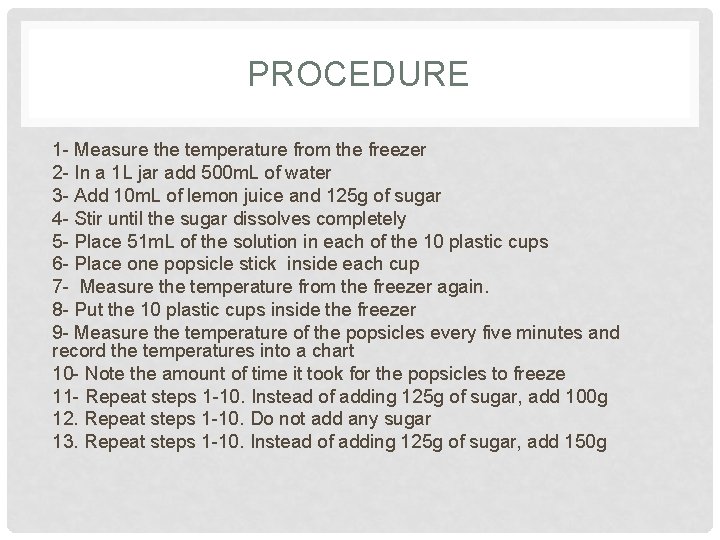
PROCEDURE 1 - Measure the temperature from the freezer 2 - In a 1 L jar add 500 m. L of water 3 - Add 10 m. L of lemon juice and 125 g of sugar 4 - Stir until the sugar dissolves completely 5 - Place 51 m. L of the solution in each of the 10 plastic cups 6 - Place one popsicle stick inside each cup 7 - Measure the temperature from the freezer again. 8 - Put the 10 plastic cups inside the freezer 9 - Measure the temperature of the popsicles every five minutes and record the temperatures into a chart 10 - Note the amount of time it took for the popsicles to freeze 11 - Repeat steps 1 -10. Instead of adding 125 g of sugar, add 100 g 12. Repeat steps 1 -10. Do not add any sugar 13. Repeat steps 1 -10. Instead of adding 125 g of sugar, add 150 g
RESULTS POPSICLES WITH NO SUGAR Tim e Cup 1 Cup 2 Cup 3 Cup 4 Cup 5 Cup 6 Cup 7 Cup 8 Cup 9 Cu Avera p ge 10 5 min 20 C 19 C 21 C 23 C 19 C 18 C 20 C 19. 5 C 18 C 19. 75 C 10 min 15 C 12 C 16 C 13 C 15 C 14 C 15 C 14. 5 C 16 C 14. 45 C 15 min 10 C 11 C 12 C 9 C 13 C 8 C 10 C 9 C 8. 5 C 9 C 9. 95 C 20 min 7 C 5 C 4 C 6 C 6. 5 C 6 C 5 C 7 C 5. 65 C 25 min 3 C 1 C 1 C 2 C 2 C 3 C 1. 5 C 0 C 0 C 1 C 1. 45 C 30 min 0 C -1 C -2 C 0 C -0. 5 C 0 C -1 C -3 C 0 C -0. 95 C -2 C
POPSICLES- 100 G OF SUGAR
POPSICLES 125 G OF SUGAR
POPSICLES 150 G OF SUGAR
CONCLUSIÓN En base a nuestros resultados podemos observar que, en promedio, las paletas que tienen menor cantidad de azúcar se congelan mas rápido a comparación de aquellas con mayor cantidad de azúcar. Esto se debe a que el peso molecular del azúcar es mayor lo que hace que tarden mas tiempo en congelarse. Nuestros resultados anulan nuestra hipótesis ya que a menor cantidad de azúcar, mas rápido se congelan las paletas.