
Science Fair Information Introduction All Stockbridge Middle School
Science Fair Information
Introduction All Stockbridge Middle School students must choose between doing either a National History Day Project or a Science Fair Project.
What is a Science Fair Project? • A journey of scientific inquiry • Students answer a scientific question by conducting an experiment. • The process ends with a showcase event that shows students that their work matters to the school community.
The Scientific Method • • Ask a Question Do Background Research Construct a Hypothesis Test Your Hypothesis by Constructing and Completing an Experiment • Record and Analyze Your Data to Draw a Conclusion • Communicate Your Results
Requirements • Log Book • Final Science Fair Paper • Backboard if selected for School Fair
Logbook • You need a composition notebook • Label your logbook: name, teacher’s name, topic, and grade • • Number all pages in your logbook Always date every entry Write in blue or black ink ONLY!!! This should be used during all phases of your project.
Logbook • Make a table of contents • Write one entry every day • Include a reflections section in your logbook • Always include any changes made to procedures in the logbook • Include any and all observations during your experiment
Logbook • Answer the following questions: • What did I learn today? • What happened during my experiment? • What are the procedures of my experiment? • What did I observe today with my experiment? • What research did I find today? • What sources did I use today?
Choose a Topic • Two things are very important: • 1) Think of a topic that interest you • 2) Think of a testable question about that topic • Remember you are becoming a scientist • Example: What is the effect of ______on_______? • This topic should be written in a question format.
Choose a Topic • Once you find a general topic that interests you, complete the Science Fair Topic Approval Form • A scientific question usually starts with: How What When Who Which Why Where
Example Topics • How does water purity affect surface tension? • When is the best time to plant soy beans? • Which material is the best insulator? • How does arch curvature affect load carrying strength? • How do different foundations stand up to earthquakes? • What sugars does yeast use?
Do Research • Once your teacher approves your topic, conduct background research on your topic. Write down all of your sources in your Log Book and cite your references. If source is online, scroll to the bottom of articles to check the references. Interview experts about the topic. • The more you know about a subject, the easier it will be to write your hypothesis and complete your research plan.
Form a Hypothesis • This is an educated guess • This is an answer to your science fair question • Your hypothesis should be written in an “If/then” statement • If I add different types of water to soil, then the distilled water will cause my plants to grow faster. ”

Do background research. • Collect information. • Define what to look for. • Look in a variety of sources. • Key Goal: Obtain enough information to make a prediction of what will happen in the experiment.
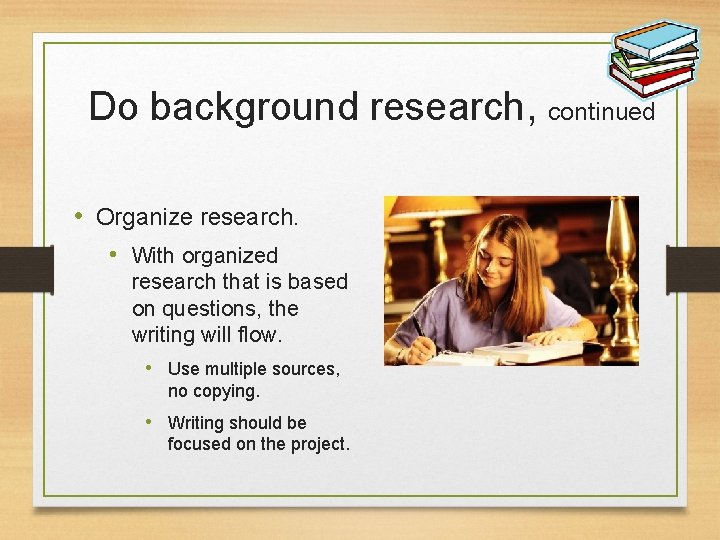
Do background research, continued • Organize research. • With organized research that is based on questions, the writing will flow. • Use multiple sources, no copying. • Writing should be focused on the project.
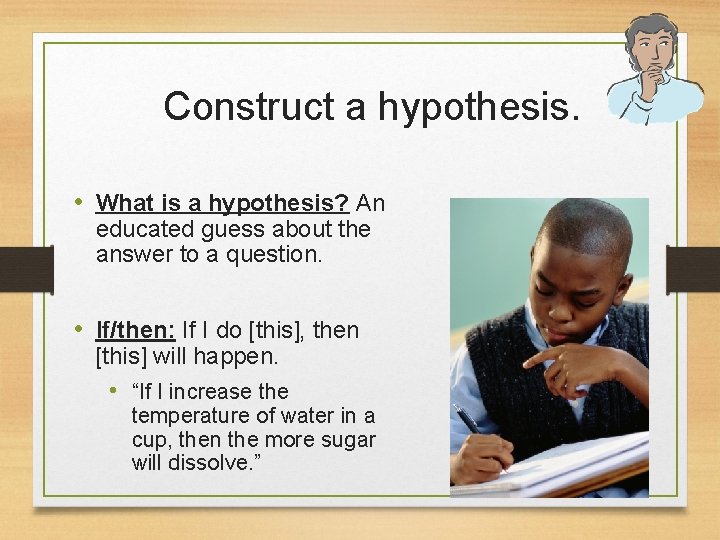
Construct a hypothesis. • What is a hypothesis? An educated guess about the answer to a question. • If/then: If I do [this], then [this] will happen. • “If I increase the temperature of water in a cup, then the more sugar will dissolve. ”
Construct an experiment. • Process • Design an experimental procedure. • Steps and materials should be spelled out.
Write your Research Plan • The plan is to include: A. Project purpose and background information B. Research Question, Hypothesis, Expected Outcomes C. Procedures, Risks and Data Analysis D. Bibliography
Do your experiment AFTER YOUR RESEARCH PLAN IS APPROVED • Expectations • It’s ok if the first experiment goes wrong and you have to modify the procedure. • It’s ok if the experiment disproves the hypothesis. • Safety, safety! • It takes time!
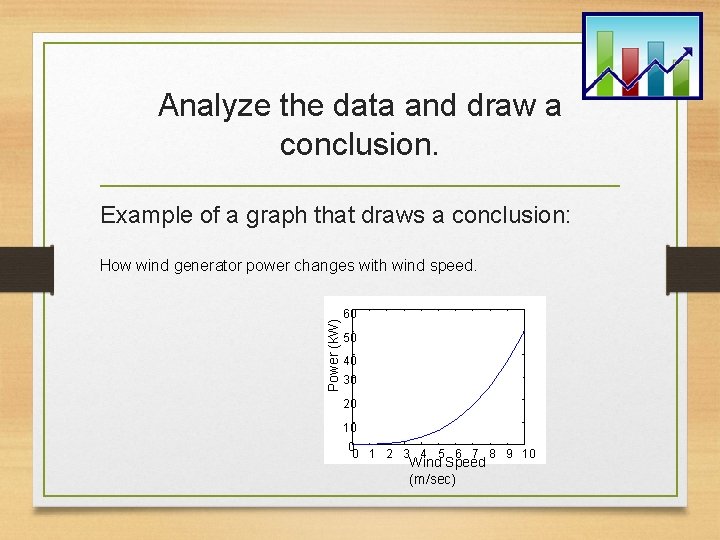
Analyze the data and draw a conclusion. Example of a graph that draws a conclusion: Power (k. W) How wind generator power changes with wind speed. 60 50 40 30 20 10 0 0 1 2 3 4 5 6 7 8 9 10 Wind Speed (m/sec)
Writing the final paper • The paper will contain all the parts of the experiment. • The paper must be 3 -5 pages not including the following: • Cover page • Abstract • Table of contents • Acknowledgements • Sources/bibliography
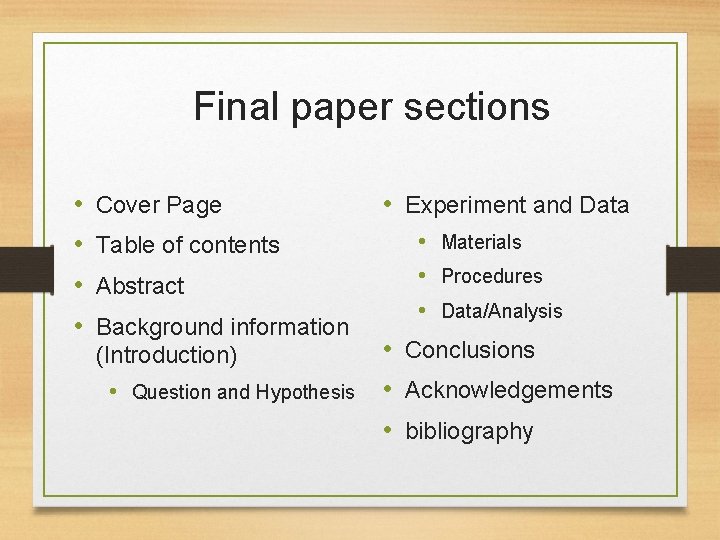
Final paper sections • • Cover Page Table of contents Abstract Background information (Introduction) • Question and Hypothesis • Experiment and Data • Materials • Procedures • Data/Analysis • Conclusions • Acknowledgements • bibliography
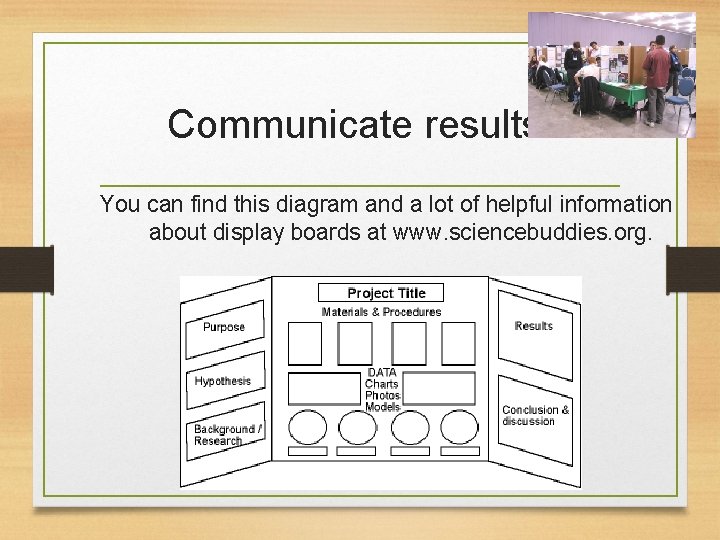
Communicate results. You can find this diagram and a lot of helpful information about display boards at www. sciencebuddies. org.
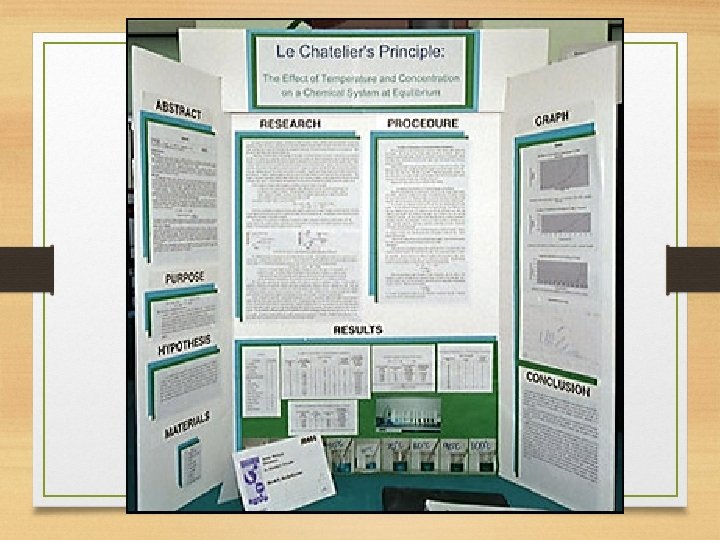
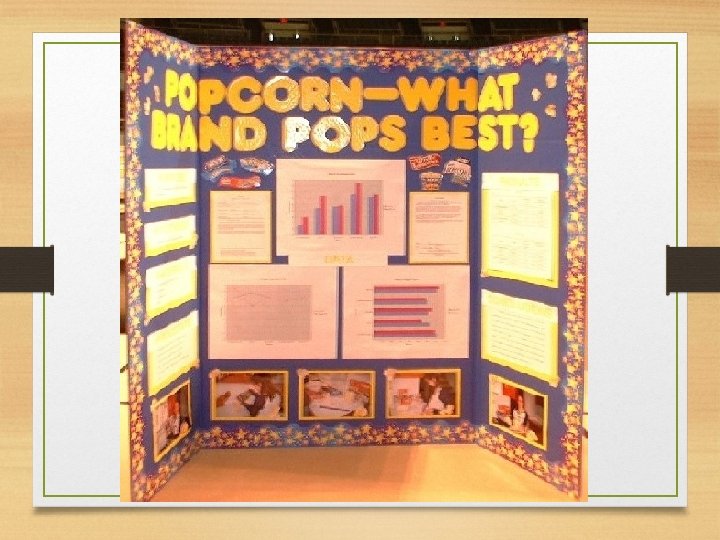
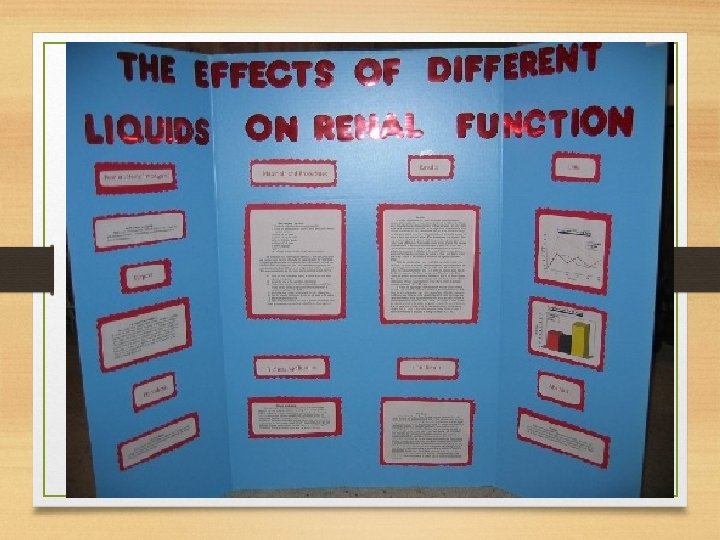
Backboard • Everything must be typed…. . NO TAPE!!! • Limit the number of colors on board • DO NOT handwrite on board…EVERYTHING MUST BE TYPED!!! • NO GLITTER or GLITTER GLUE
Website • Use the following websites for help: • www. sciencebuddies. org • www. sciencebob. org • http: \www. societyforscience. o rg
- Slides: 28