
Science Fact of the Day If the entire
- Slides: 21
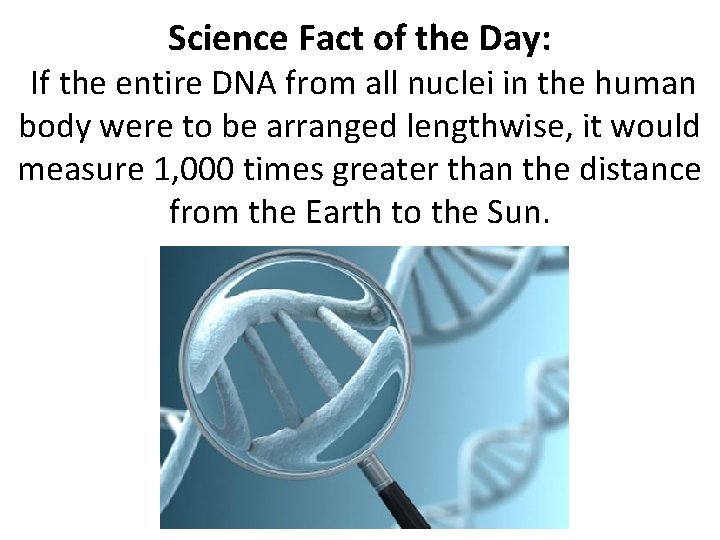
Science Fact of the Day: If the entire DNA from all nuclei in the human body were to be arranged lengthwise, it would measure 1, 000 times greater than the distance from the Earth to the Sun.
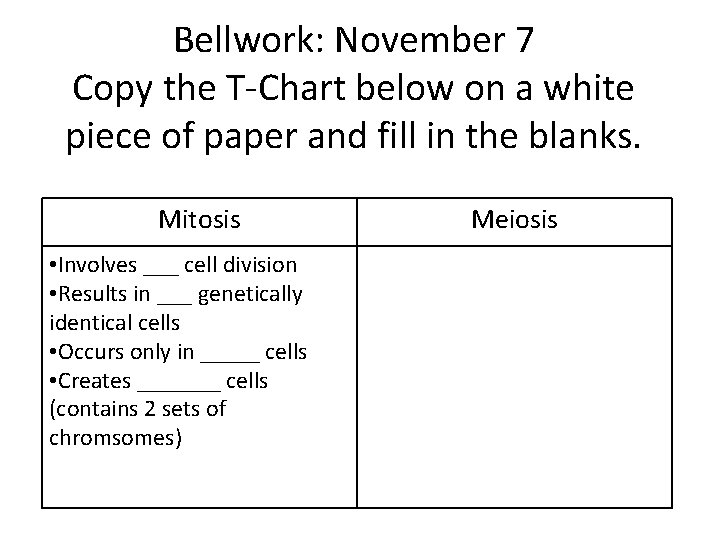
Bellwork: November 7 Copy the T-Chart below on a white piece of paper and fill in the blanks. Mitosis • Involves ___ cell division • Results in ___ genetically identical cells • Occurs only in _____ cells • Creates _______ cells (contains 2 sets of chromsomes) Meiosis
Objective: I will understand the purpose of meiosis. Language Objective: I will write notes about meiosis and make a Venn diagram of meiosis and mitosis.
Chromosomes
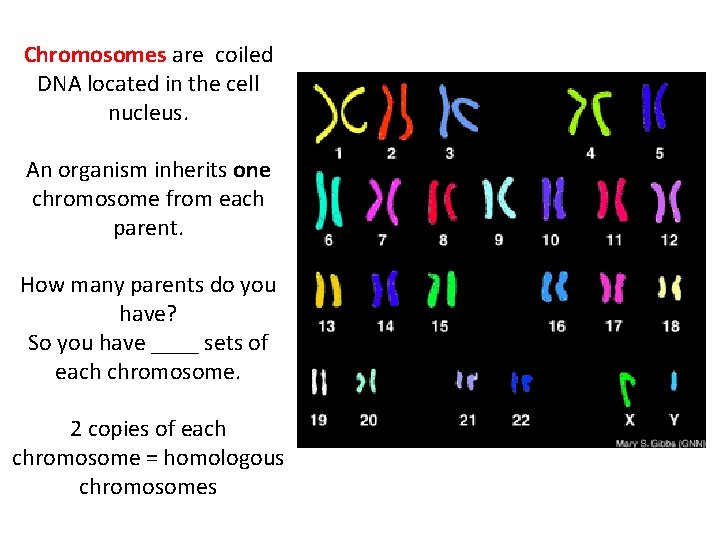
Chromosomes are coiled DNA located in the cell nucleus. An organism inherits one chromosome from each parent. How many parents do you have? So you have ____ sets of each chromosome. 2 copies of each chromosome = homologous chromosomes
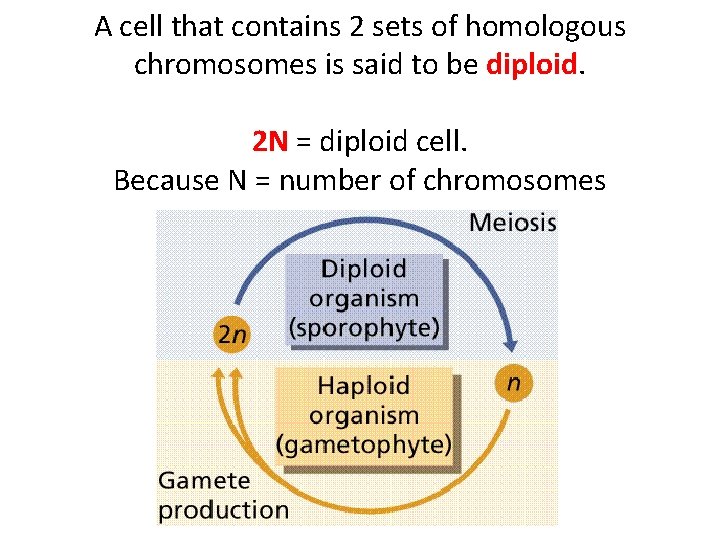
A cell that contains 2 sets of homologous chromosomes is said to be diploid. 2 N = diploid cell. Because N = number of chromosomes
Sexual Reproduction & Our Cells
On a cellular level, what happens during sex? Biologically speaking, what’s the point of sex?
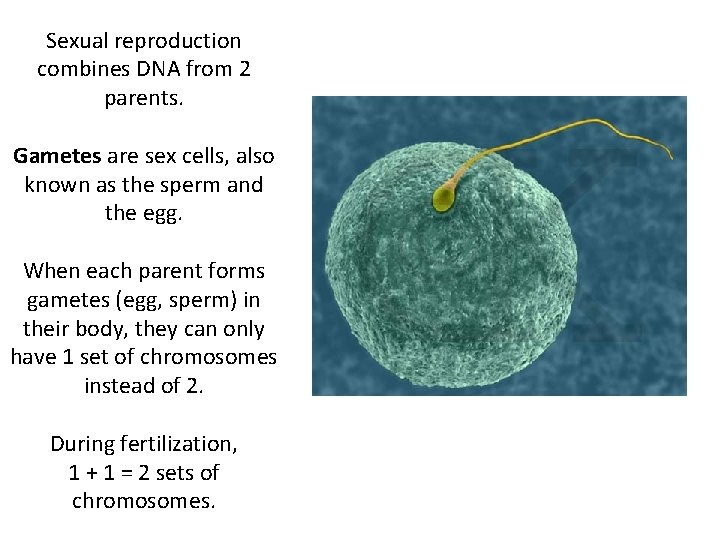
Sexual reproduction combines DNA from 2 parents. Gametes are sex cells, also known as the sperm and the egg. When each parent forms gametes (egg, sperm) in their body, they can only have 1 set of chromosomes instead of 2. During fertilization, 1 + 1 = 2 sets of chromosomes.
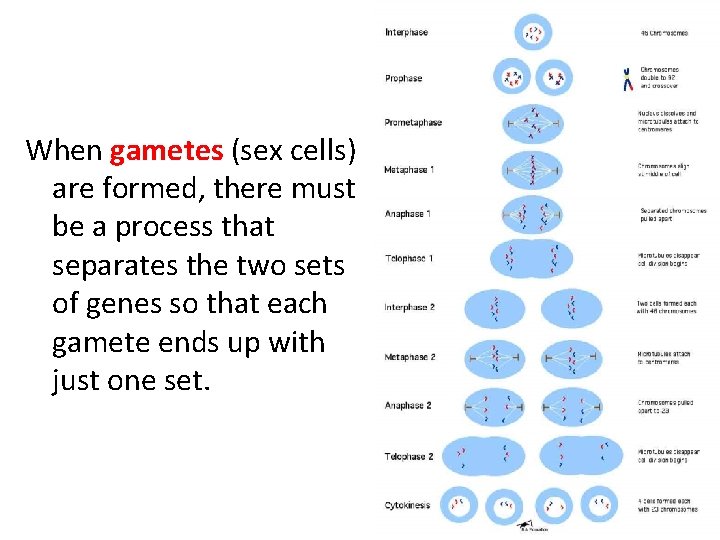
When gametes (sex cells) are formed, there must be a process that separates the two sets of genes so that each gamete ends up with just one set.
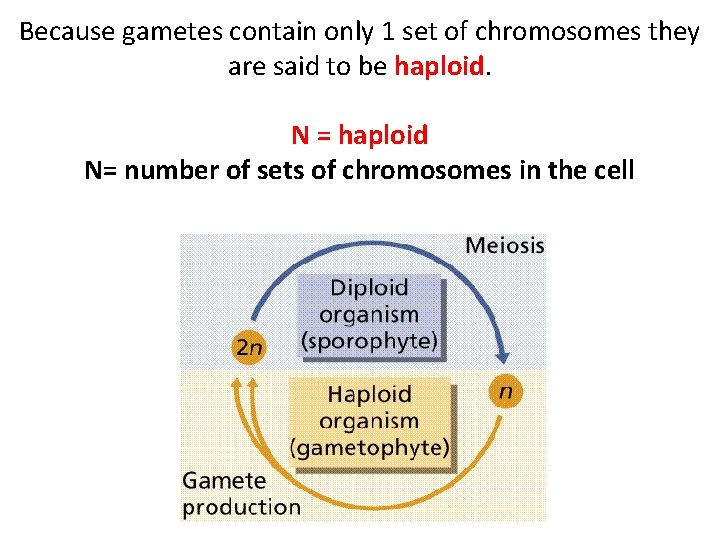
Because gametes contain only 1 set of chromosomes they are said to be haploid. N = haploid N= number of sets of chromosomes in the cell
Meiosis
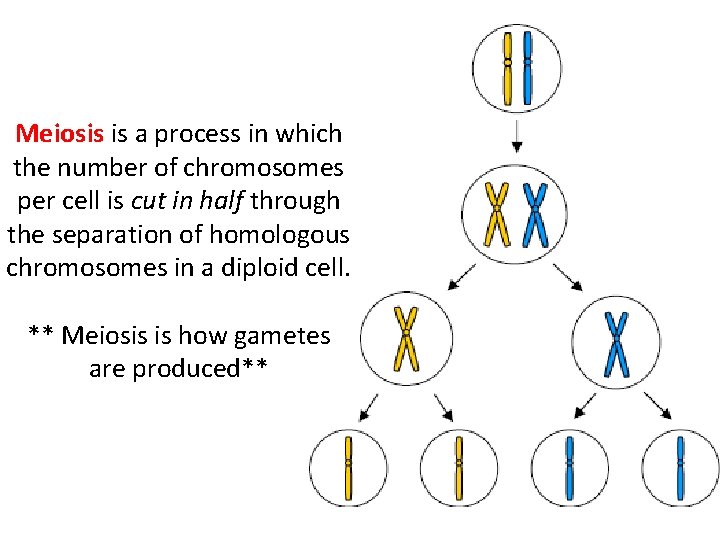
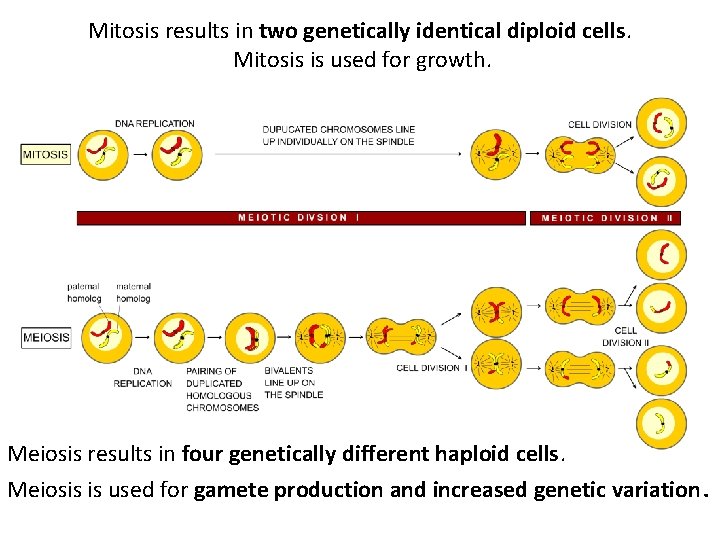
Meiosis is a process in which the number of chromosomes per cell is cut in half through the separation of homologous chromosomes in a diploid cell. ** Meiosis is how gametes are produced**
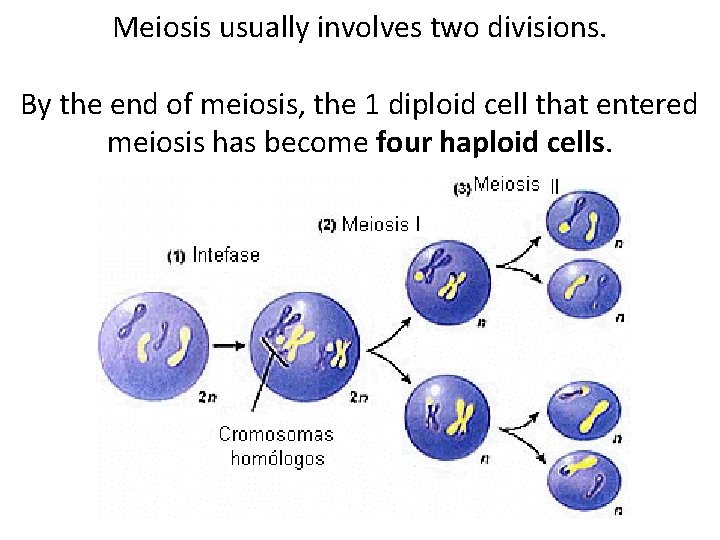
Meiosis usually involves two divisions. By the end of meiosis, the 1 diploid cell that entered meiosis has become four haploid cells.
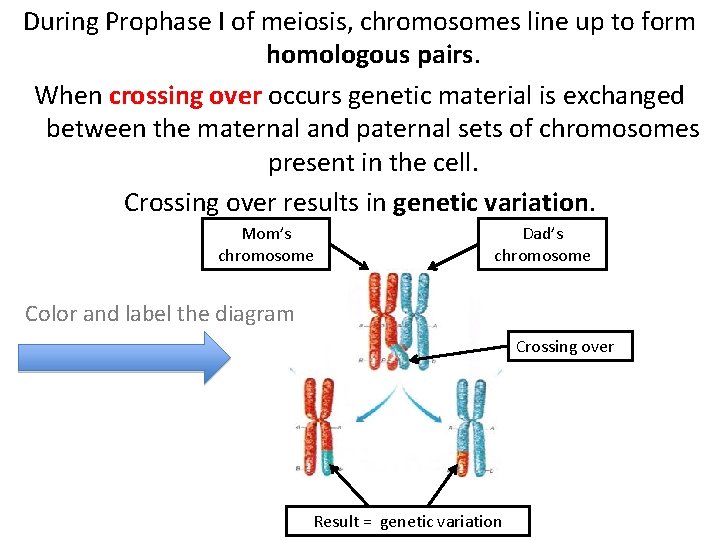
During Prophase I of meiosis, chromosomes line up to form homologous pairs. When crossing over occurs genetic material is exchanged between the maternal and paternal sets of chromosomes present in the cell. Crossing over results in genetic variation. Mom’s chromosome Dad’s chromosome Color and label the diagram Crossing over Result = genetic variation
Results of Meiosis
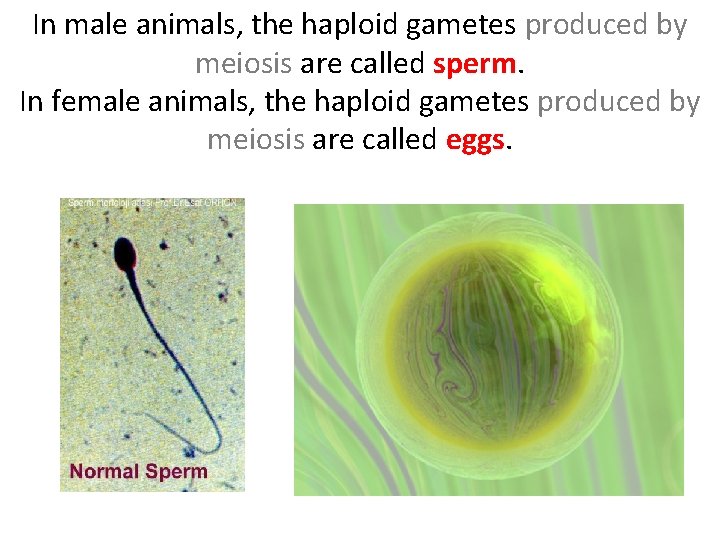
In male animals, the haploid gametes produced by meiosis are called sperm. In female animals, the haploid gametes produced by meiosis are called eggs.
Mitosis vs. Meiosis
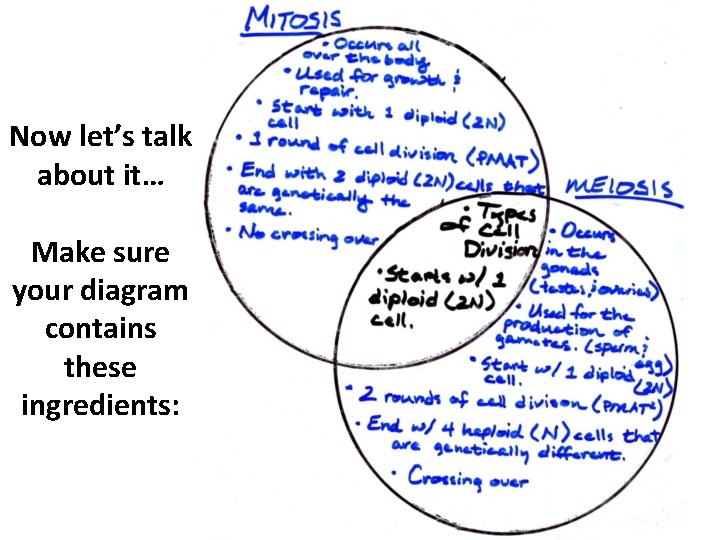
Mitosis results in two genetically identical diploid cells. Mitosis is used for growth. Meiosis results in four genetically different haploid cells. Meiosis is used for gamete production and increased genetic variation.
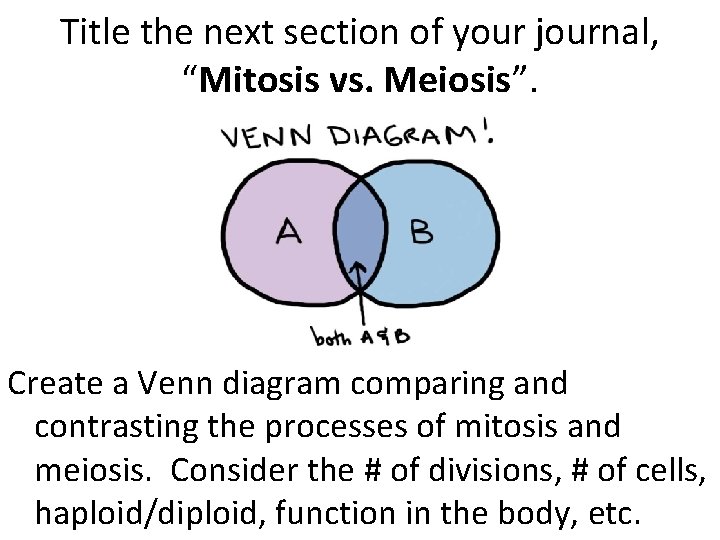
Title the next section of your journal, “Mitosis vs. Meiosis”. Create a Venn diagram comparing and contrasting the processes of mitosis and meiosis. Consider the # of divisions, # of cells, haploid/diploid, function in the body, etc.
Now let’s talk about it… Make sure your diagram contains these ingredients: