
Science Bodies Of Water Today Learning Intention We
Science Bodies Of Water

Today… • Learning Intention – We are learning about different bodies of water. • Success Criteria – • I can name different bodies of water. • I can give the properties of each body of water. • I can create a piece of work that shows the difference between the bodies of water.

What is a Body of Water? • A body of water or waterbody is any significant accumulation of water, generally on a planet's surface.
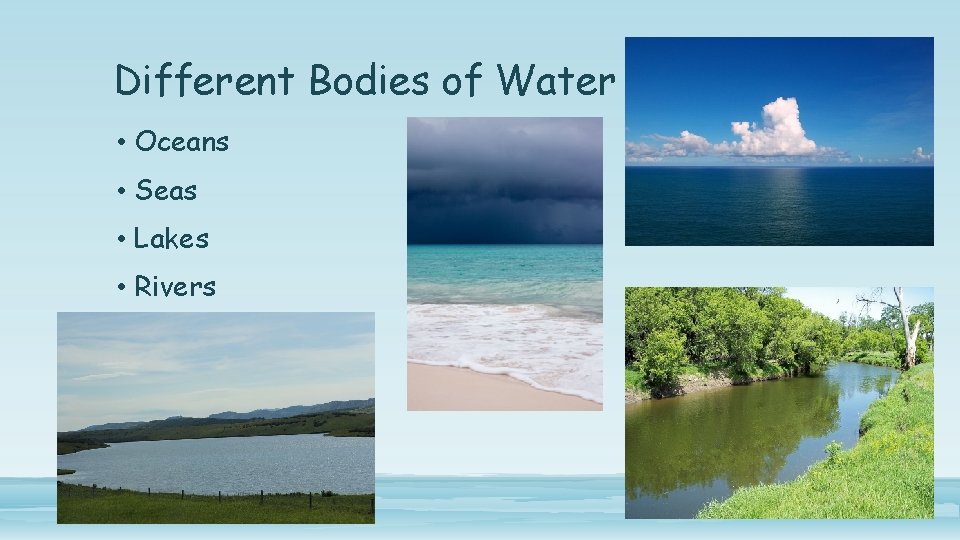
Different Bodies of Water • Oceans • Seas • Lakes • Rivers

The Ocean • Oceans covers more the 70% of The Earth’s surface. • Salty water – not suitable to drink. • Can you remember the names of the oceans from Monday with Mrs Raeper? • Arctic Ocean • Atlantic Ocean • Pacific Ocean • Indian Ocean • Antarctic Ocean
The Sea • The Sea is found where the land meets the ocean. • Smaller than the ocean. • Part of the ocean – like the Mediterranean Sea. • Think of the beach
Rivers • A strip of water that flows through many places. • It begins on mountains or hills where melted snow and rainwater gets collected. • The beginning of the river is called the source. • The end of the river is known as the mouth. • Rivers contain fresh water, so it is suitable to drink.
Lakes • A lake is a large area of water which is surrounded by land. • Formed when water finds its way into a basin. • Can be formed from rain or underground water. • Need a continuous source of new water otherwise they will dry up.
Watch this video to show you different bodies of water
Today’s activity… • From what you have learned about different bodies of water, I would like you to create a piece of work that show what these look like. • You can use whatever you like to create your body of water – pencils, coloured pencils, pens, paint, tissue paper or you could even create the body of water using actual water! • Send your pictures in to Mrs Raeper.
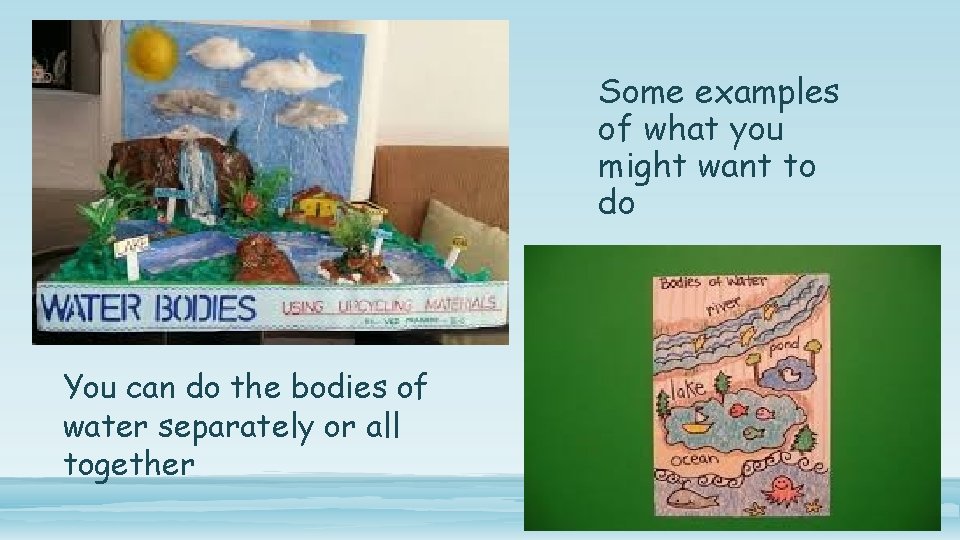
Some examples of what you might want to do You can do the bodies of water separately or all together
- Slides: 11