
Science and Societys Unifying Mission Jason Ross April










- Slides: 30
Science, and Society’s Unifying Mission Jason Ross April 7, 2016
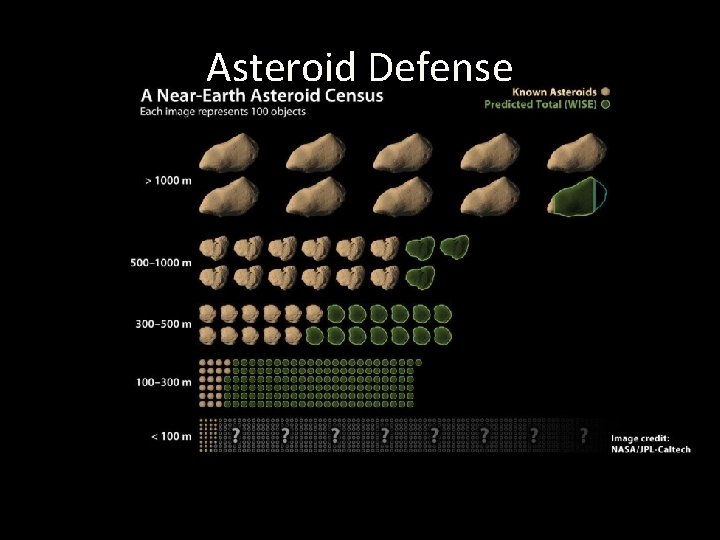
Asteroid Defense
Science, and Society’s Unifying Mission Jason Ross April 7, 2016
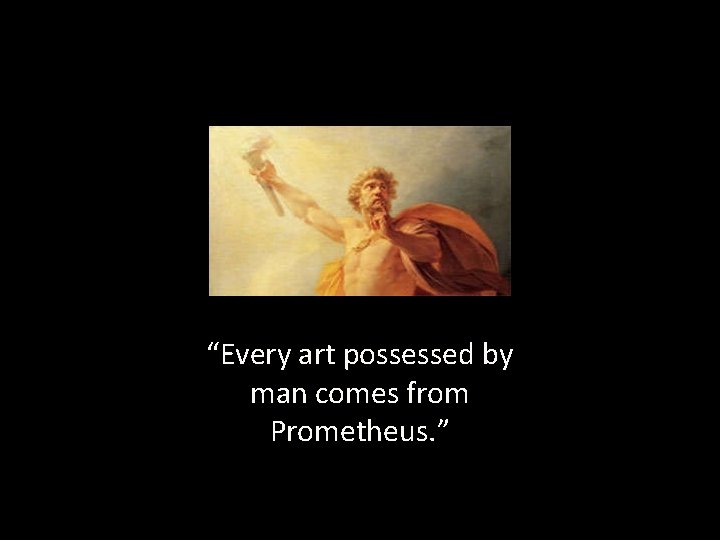
“Every art possessed by man comes from Prometheus. ”
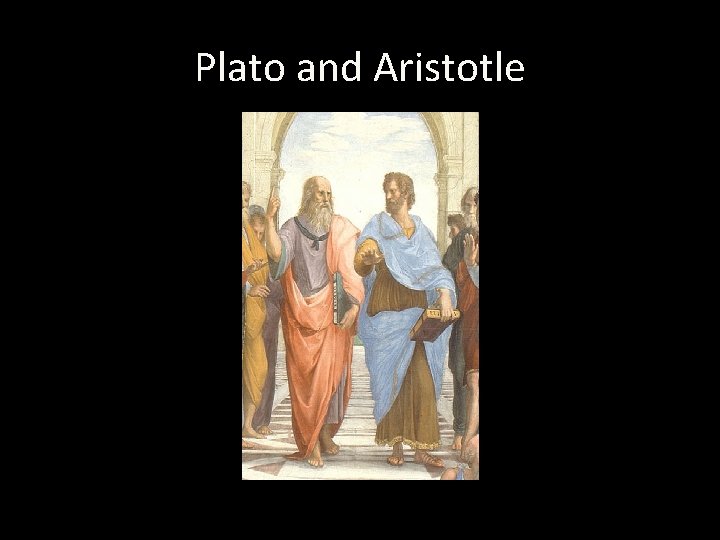
Plato and Aristotle
Plato, Timaeus “For God desired that, so far as possible, all things should be good and nothing evil; wherefore, when He took over all that was visible, seeing that it was not in a state of rest but in a state of discordant and disorderly motion, He brought it into order out of disorder, deeming that the former state is in all ways better than the latter. For Him who is most good, it neither was nor is permissible to perform any action save what is most fair. ”
Plato, Meno
Aristotle, De Anima “Since, according to common agreement, there is nothing outside and separate in existence from sensible spatial magnitudes, the objects of thought are all in sensible forms. . . Hence, no one can learn or understand anything in the absence of senses. . .
Aristotle, De Anima “While in respect of all the other senses we fall below many species of animals, in respect to touch, we far excel all other species in exactness of discrimination. That is why man is the most intelligent of all animals. ”
Aristotle, Posterior Analytics “All instruction given or received by way of argument proceeds from pre-existing knowledge… “We have already said, that scientific knowledge through demonstration is impossible unless a man know the primary immediate premises. How does man know?
Aristotle, Posterior Analytics “So our sense perception comes to be what we call memory and out of frequently repeated memories of the same things develops experience; for a number of memories constitute a single experience… “From experience… originates… the knowledge of the man of science. ”
1900
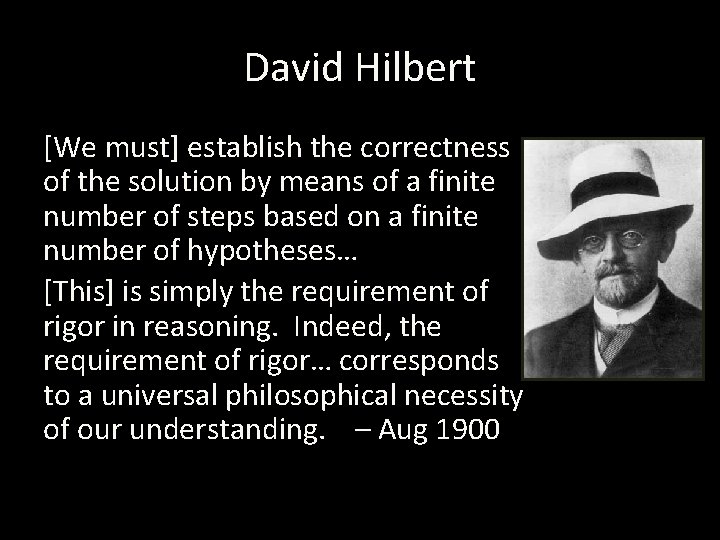
David Hilbert [We must] establish the correctness of the solution by means of a finite number of steps based on a finite number of hypotheses… [This] is simply the requirement of rigor in reasoning. Indeed, the requirement of rigor… corresponds to a universal philosophical necessity of our understanding. – Aug 1900
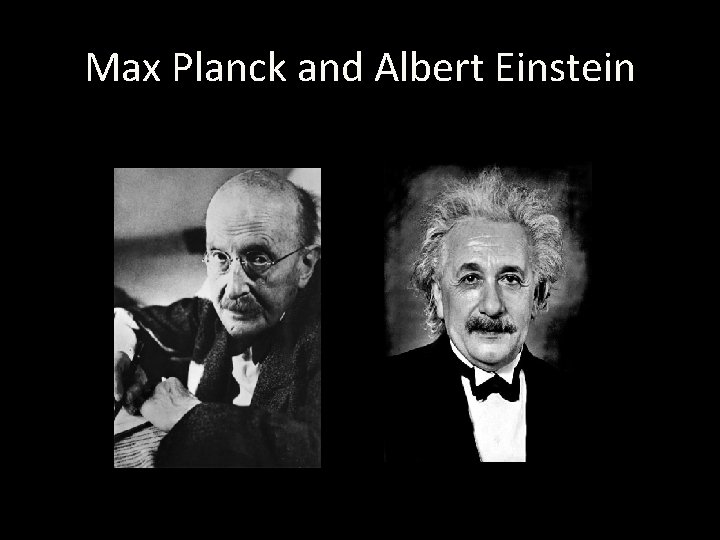
Max Planck and Albert Einstein
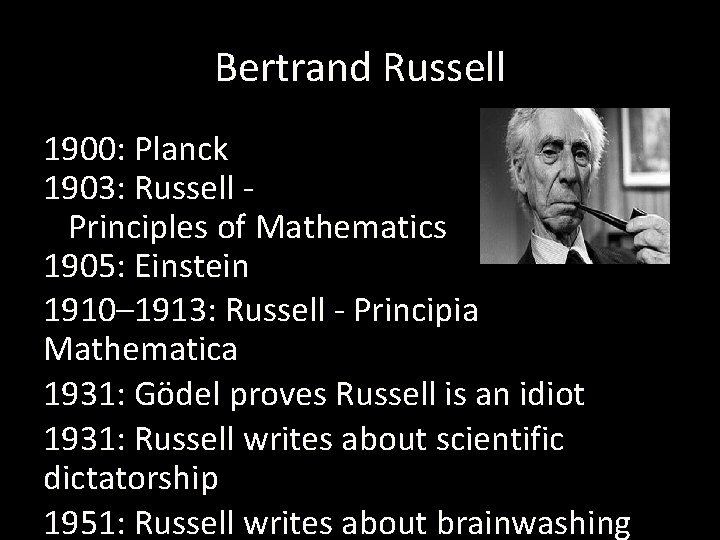
Bertrand Russell 1900: Planck 1903: Russell Principles of Mathematics 1905: Einstein 1910– 1913: Russell - Principia Mathematica 1931: Gödel proves Russell is an idiot 1931: Russell writes about scientific dictatorship 1951: Russell writes about brainwashing
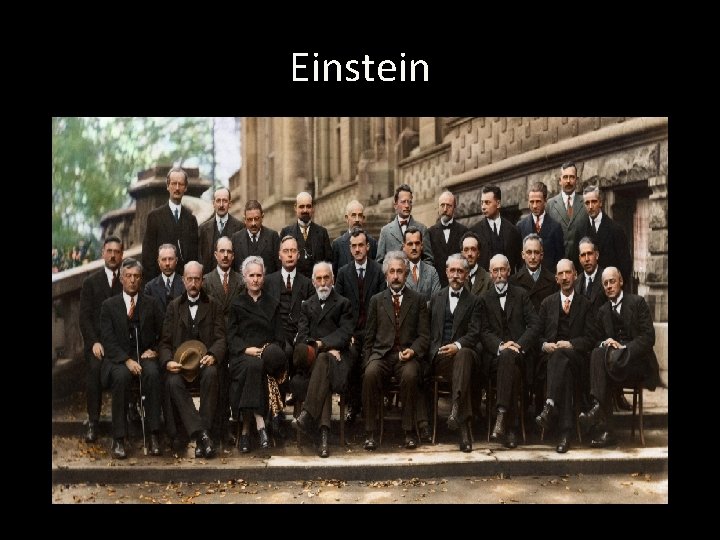
Einstein
The Future
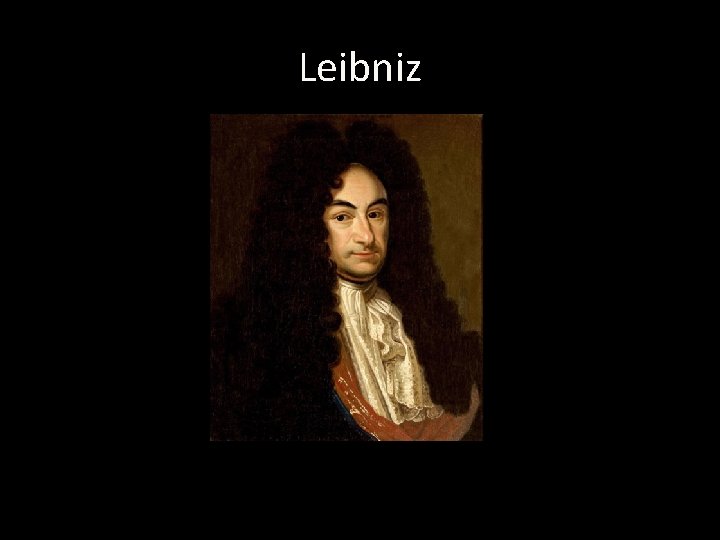
Leibniz