
Science and Myths Behind DeviceBased Technology Aloke Finn

Science and Myths Behind Device-Based Technology Aloke Finn, M. D. CVPath Institute Inc. Gaithersburg, MD, USA

Aloke Finn, MD Grant/Research/Clinical Trial Support R 01 HL 141425 Leducq Foundation Grant; 480 Biomedical; 4 C Medical; 4 Tech; Abbott; Accumedical; Amgen; Biosensors; Boston Scientific; Cardiac Implants; Celonova; Claret Medical; Concept Medical; Cook; CSI; Du. Ning, Inc; Edwards Life. Sciences; Emboline; Endotronix; Envision Scientific; Lutonix/Bard; Gateway; Lifetech; Limflo; Med. Alliance; Medtronic; Mercator; Merill; Microport Medical; Microvention; Mitraalign; Mitra assist; NAMSA; Nanova; Neovasc; NIPRO; Novogate; Occulotech; Orbus. Neich Medical; Phenox; Profusa; Protembis; Qool; Recor; Senseonics; Shockwave; Sinomed; Spectranetics; Surmodics; Symic; Vesper; W. L. Gore; Xeltis. Speaker’s Bureau Abbott Vascular; Biosensors; Boston Scientific; Celonova; Cook Medical; CSI; Lutonix Bard; Sinomed; Terumo Corporation. Consultant/Advisory Boards Amgen; Abbott Vascular; Boston Scientific; Celonova; Cook Medical; Lutonix Bard; Sinomed.

Cumulative Distance From Nerves to Lumen 100 Cumulative percentile of nerves 90 80 70 90 th percentile Proximal 6. 77 mm / Middle 6. 64 mm /Distal 5. 27 mm 75 th percentile Proximal 4. 67 mm / Middle 4. 49 mm / Distal 3. 24 mm 75% of sympathetic nerves located a mean of 4. 28 mm from lumen 60 50 50 th percentile Proximal 2. 84 mm / Middle 2. 58 mm / Distal 1. 81 mm 40 30 Proximal (n=3070) 20 Middle (n=2952) Distal (n=2008) 10 0 ≤ 0. 5 ≤ 1. 0 ≤ 1. 5 ≤ 2. 0 ≤ 2. 5 ≤ 3. 0 ≤ 3. 5 ≤ 4. 0 ≤ 4. 5 ≤ 5. 0 ≤ 5. 5 ≤ 6. 0 ≤ 6. 5 ≤ 7. 0 ≤ 7. 5 ≤ 8. 0 ≤ 8. 5 ≤ 9. 0 ≤ 9. 5 ≤ 10. 0 Distance from arterial lumen (mm) Sakakura K, et al. J Am Coll Cardiol 2014
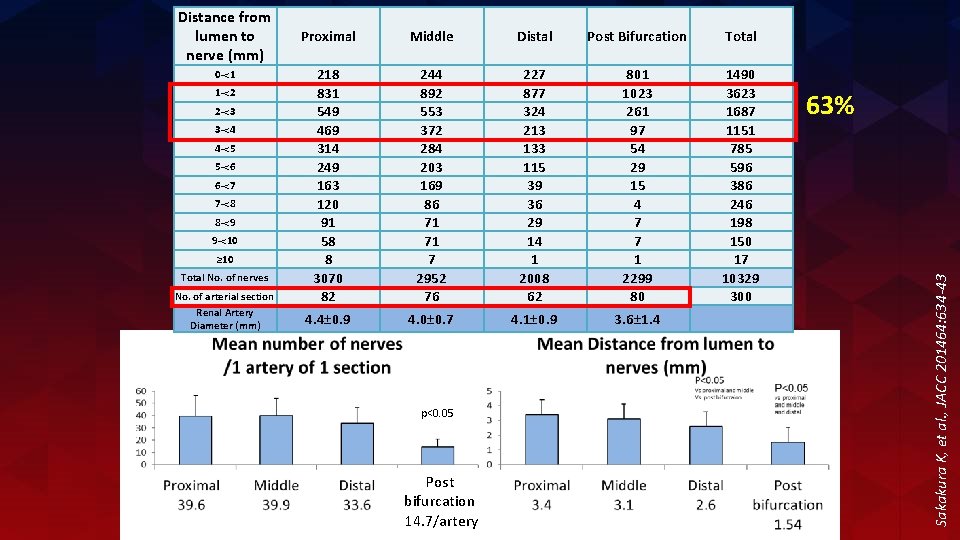
0 -<1 1 -<2 2 -<3 3 -<4 4 -<5 5 -<6 6 -<7 7 -<8 8 -<9 9 -<10 ≥ 10 Total No. of nerves No. of arterial section Renal Artery Diameter (mm) Proximal Middle Distal Post Bifurcation Total 218 831 549 469 314 249 163 120 91 58 8 3070 82 244 892 553 372 284 203 169 86 71 71 7 2952 76 227 877 324 213 133 115 39 36 29 14 1 2008 62 801 1023 261 97 54 29 15 4 7 7 1 2299 80 1490 3623 1687 1151 785 596 386 246 198 150 17 10329 300 4. 4± 0. 9 4. 0± 0. 7 4. 1± 0. 9 3. 6± 1. 4 p<0. 05 Post bifurcation 14. 7/artery 63% Sakakura K, et al. , JACC 201464: 634 -43 Distance from lumen to nerve (mm)
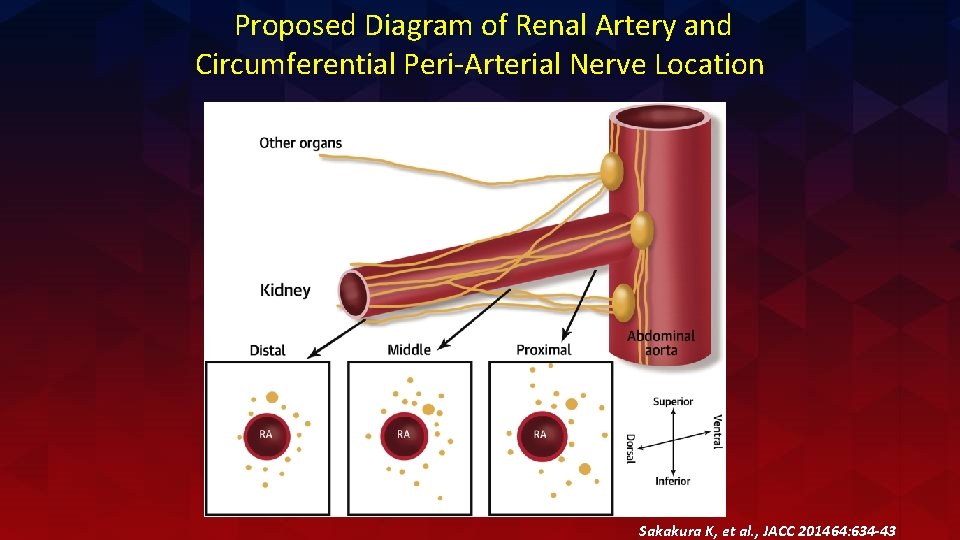
Proposed Diagram of Renal Artery and Circumferential Peri-Arterial Nerve Location Sakakura K, et al. , JACC 201464: 634 -43
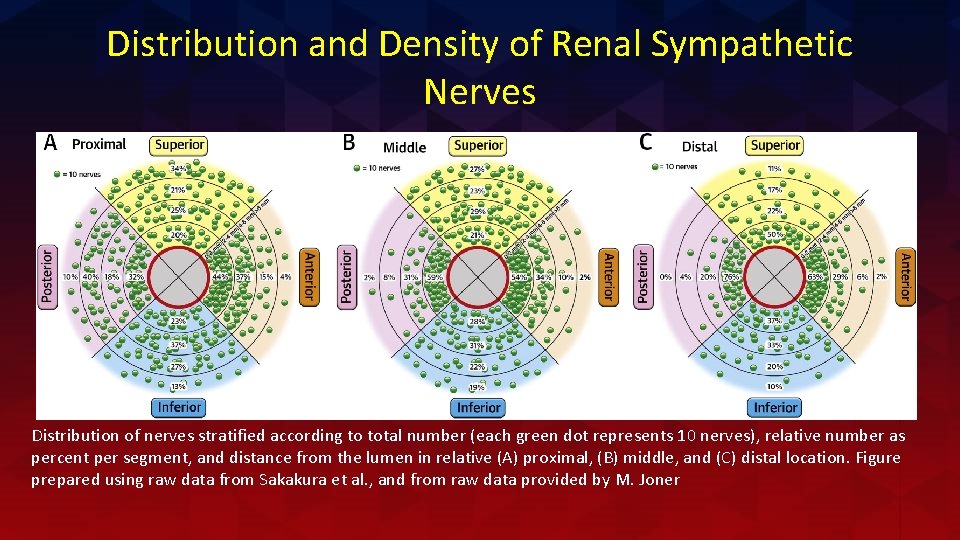
Distribution and Density of Renal Sympathetic Nerves Distribution of nerves stratified according to total number (each green dot represents 10 nerves), relative number as percent per segment, and distance from the lumen in relative (A) proximal, (B) middle, and (C) distal location. Figure prepared using raw data from Sakakura et al. , and from raw data provided by M. Joner
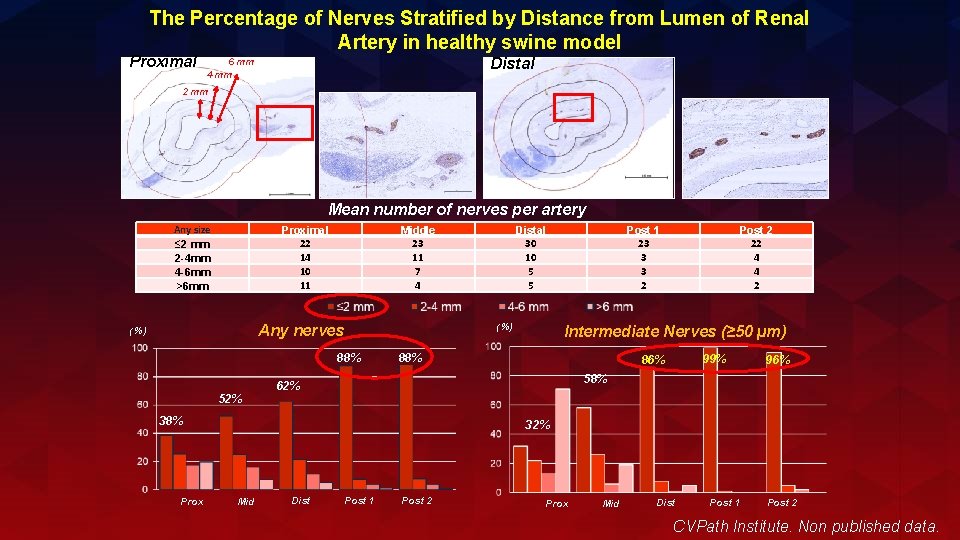
The Percentage of Nerves Stratified by Distance from Lumen of Renal Artery in healthy swine model Proximal Distal 6 mm 4 mm 2 mm Mean number of nerves per artery Any size ≤ 2 mm 2 -4 mm 4 -6 mm >6 mm Proximal 22 14 10 11 Middle 23 11 7 4 88% 52% Post 2 22 4 4 2 Intermediate Nerves (≥ 50 µm) 88% 99% 86% 96% 58% 62% 38% Prox Post 1 23 3 3 2 (%) Any nerves (%) Distal 30 10 5 5 32% Mid Dist Post 1 Post 2 Prox Mid Dist Post 1 Post 2 CVPath Institute. Non published data.
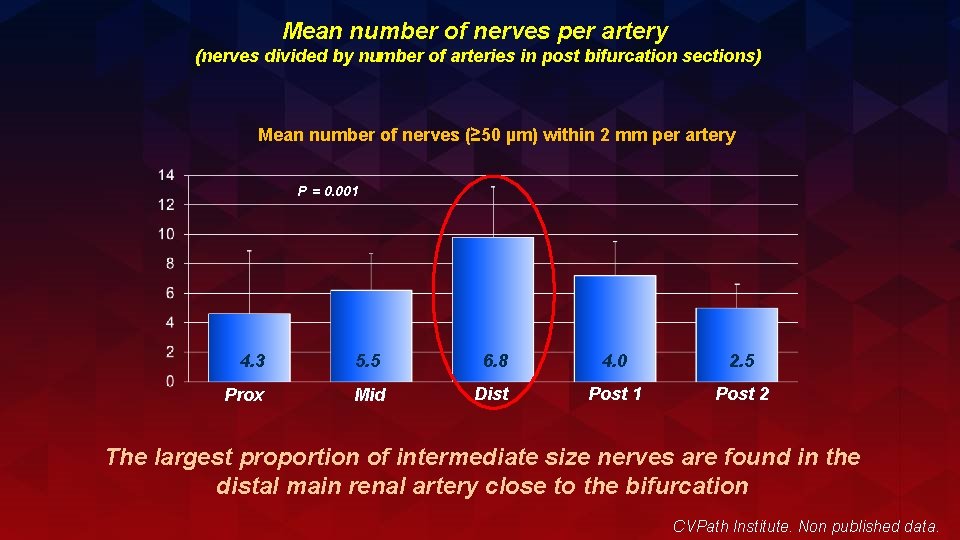
Mean number of nerves per artery (nerves divided by number of arteries in post bifurcation sections) Mean number of nerves (≥ 50 µm) within 2 mm per artery P = 0. 001 4. 3 5. 5 6. 8 4. 0 2. 5 Prox Mid Dist Post 1 Post 2 The largest proportion of intermediate size nerves are found in the distal main renal artery close to the bifurcation CVPath Institute. Non published data.
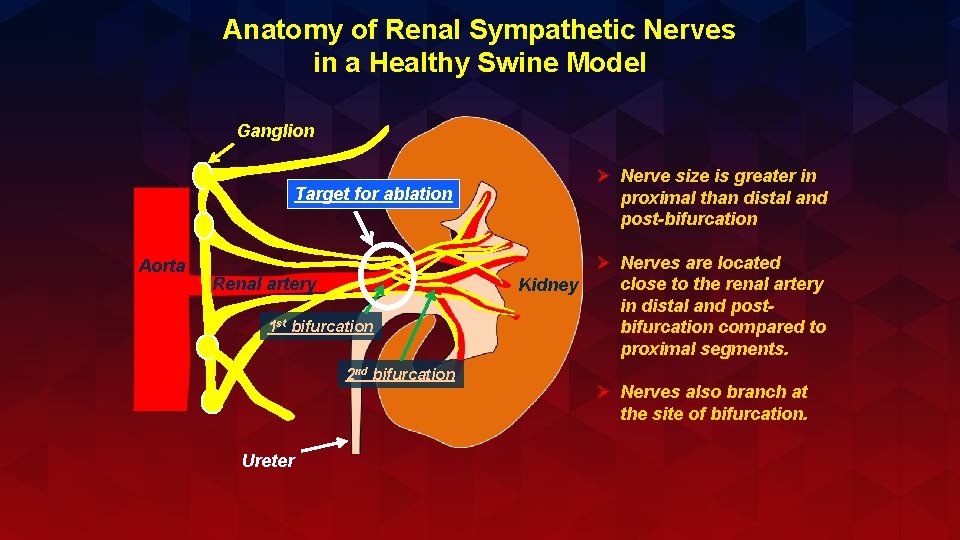
Anatomy of Renal Sympathetic Nerves in a Healthy Swine Model Ganglion Ø Nerve size is greater in proximal than distal and post-bifurcation Target for ablation Aorta Renal artery Kidney 1 st bifurcation 2 nd bifurcation Ureter Ø Nerves are located close to the renal artery in distal and postbifurcation compared to proximal segments. Ø Nerves also branch at the site of bifurcation.
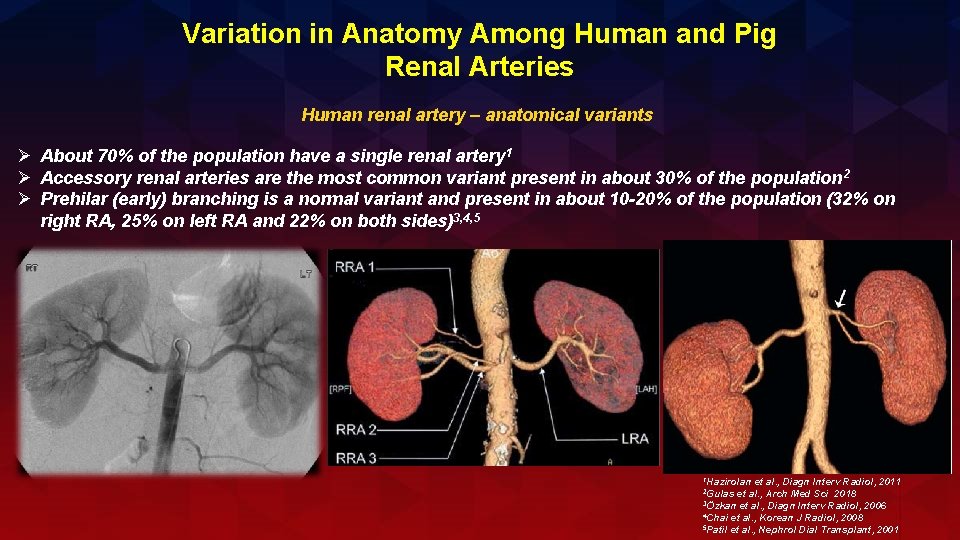
Variation in Anatomy Among Human and Pig Renal Arteries Human renal artery – anatomical variants Ø About 70% of the population have a single renal artery 1 Ø Accessory renal arteries are the most common variant present in about 30% of the population 2 Ø Prehilar (early) branching is a normal variant and present in about 10 -20% of the population (32% on right RA, 25% on left RA and 22% on both sides)3, 4, 5 1 Hazirolan et al. , Diagn Interv Radiol, 2011 et al. , Arch Med Sci 2018 3Özkan et al. , Diagn Interv Radiol, 2006 4 Chai et al. , Korean J Radiol, 2008 5 Patil et al. , Nephrol Dial Transplant, 2001 2 Gulas
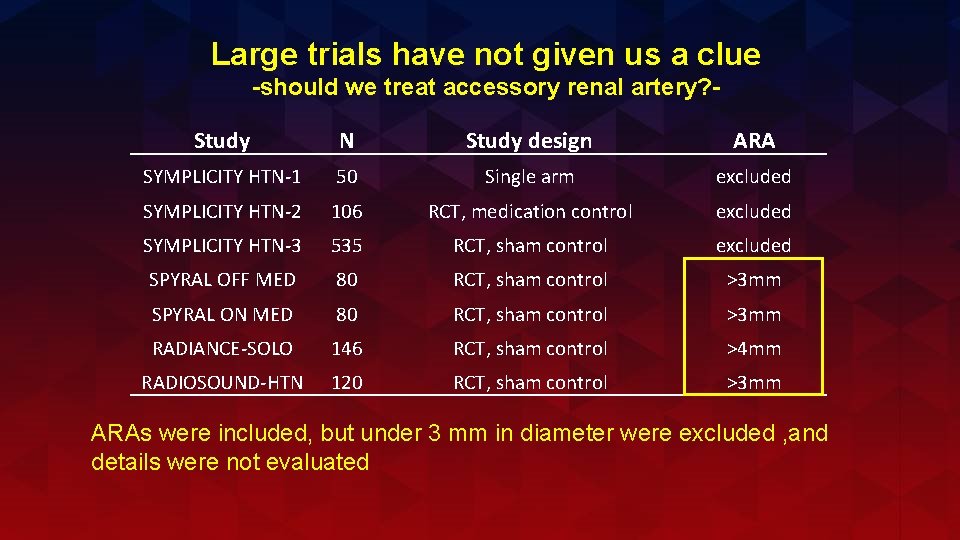
Large trials have not given us a clue -should we treat accessory renal artery? Study N Study design ARA SYMPLICITY HTN-1 50 Single arm excluded SYMPLICITY HTN-2 106 RCT, medication control excluded SYMPLICITY HTN-3 535 RCT, sham control excluded SPYRAL OFF MED 80 RCT, sham control >3 mm SPYRAL ON MED 80 RCT, sham control >3 mm RADIANCE-SOLO 146 RCT, sham control >4 mm RADIOSOUND-HTN 120 RCT, sham control >3 mm ARAs were included, but under 3 mm in diameter were excluded , and details were not evaluated
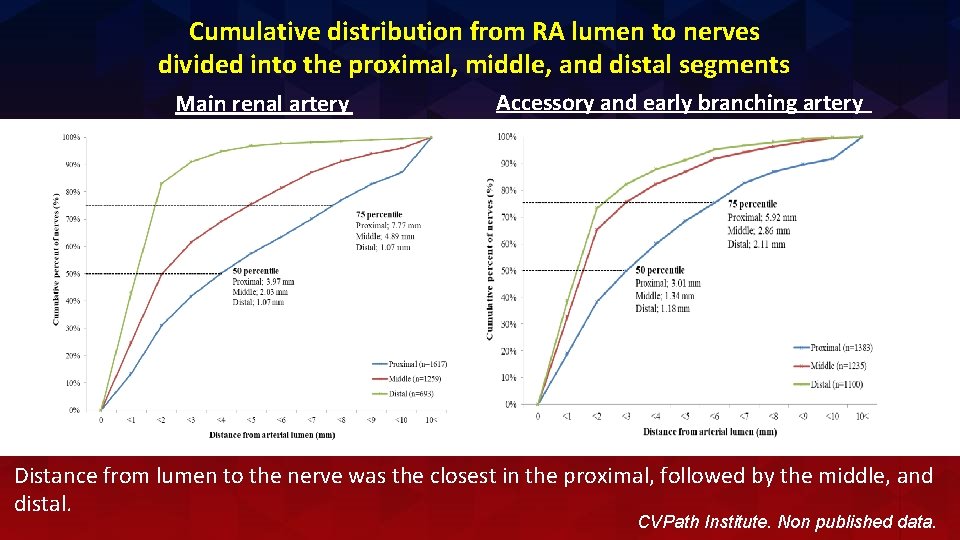
Cumulative distribution from RA lumen to nerves divided into the proximal, middle, and distal segments Main renal artery Accessory and early branching artery Distance from lumen to the nerve was the closest in the proximal, followed by the middle, and distal. CVPath Institute. Non published data.
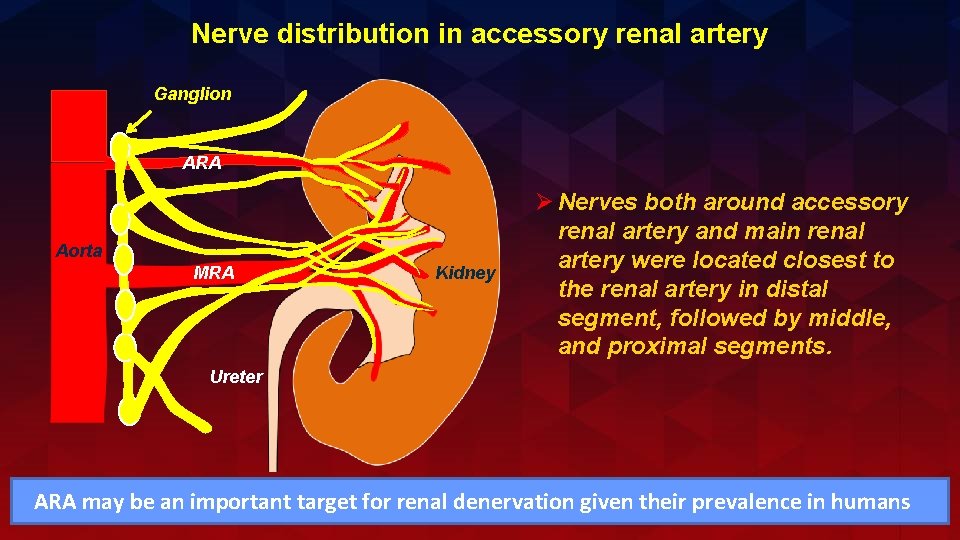
Nerve distribution in accessory renal artery Ganglion ARA Aorta MRA Kidney Ø Nerves both around accessory renal artery and main renal artery were located closest to the renal artery in distal segment, followed by middle, and proximal segments. Ureter ARA may be an important target for renal denervation given their prevalence in humans
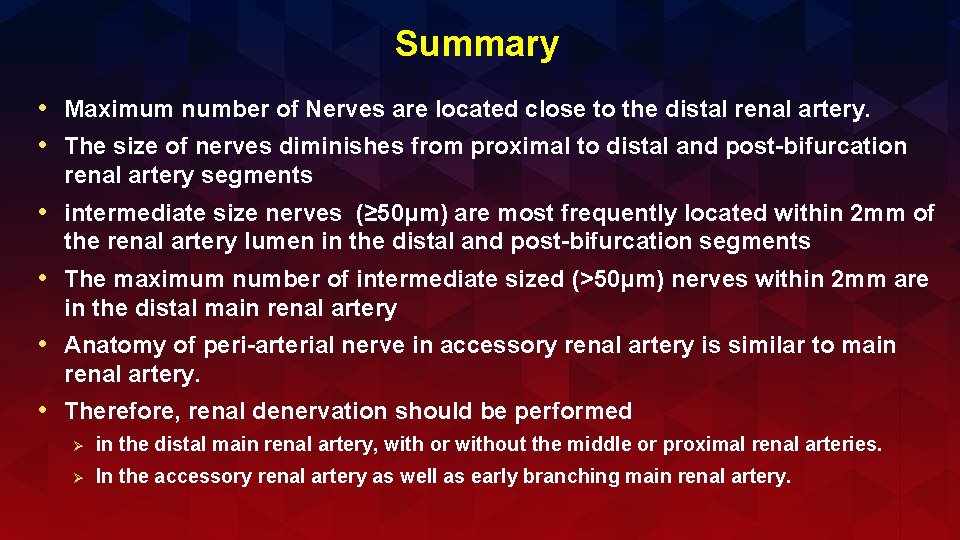
Summary • Maximum number of Nerves are located close to the distal renal artery. • The size of nerves diminishes from proximal to distal and post-bifurcation renal artery segments • intermediate size nerves (≥ 50μm) are most frequently located within 2 mm of the renal artery lumen in the distal and post-bifurcation segments • The maximum number of intermediate sized (>50μm) nerves within 2 mm are in the distal main renal artery • Anatomy of peri-arterial nerve in accessory renal artery is similar to main renal artery. • Therefore, renal denervation should be performed Ø in the distal main renal artery, with or without the middle or proximal renal arteries. Ø In the accessory renal artery as well as early branching main renal artery.

Acknowledgments Funding CVPath Institute Inc. CVPath Institute Yu Sato, MD Hiroyuki Jinnouchi, MD Atsushi Sakamoto, MD Rika Kawakami, MD Masayuku Mori, MD Anne Cornelissen, MD Maria Romero, MD Robert Kutz, MS Russ Jones Abebe Atiso, HT Jinky Beyer Lila Adams, HT Frank D Kolodgie, Ph. D Renu Virmani, MD Washington DC

Standardization for Histologic Evaluation of renal denervation devices in preclinical study
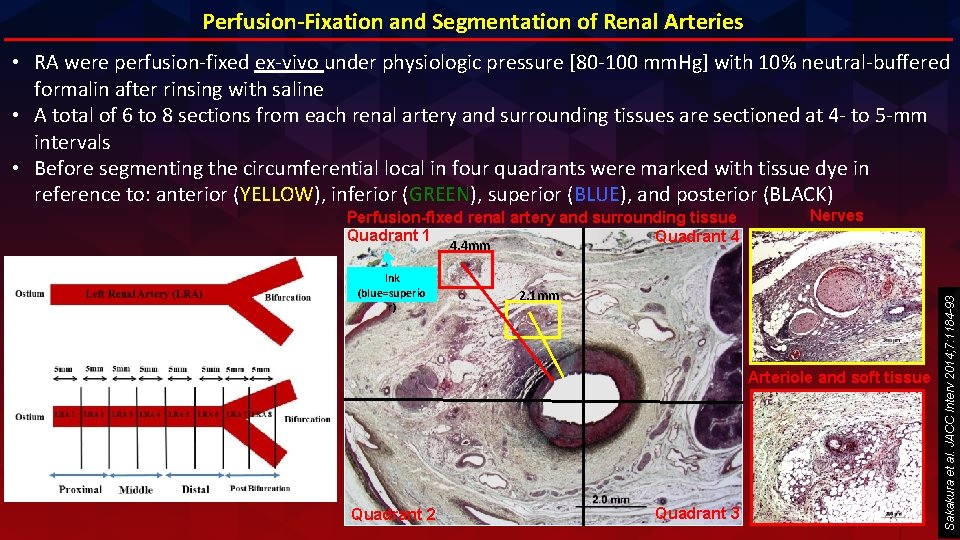
Perfusion-Fixation and Segmentation of Renal Arteries • RA were perfusion-fixed ex-vivo under physiologic pressure [80 -100 mm. Hg] with 10% neutral-buffered formalin after rinsing with saline • A total of 6 to 8 sections from each renal artery and surrounding tissues are sectioned at 4 - to 5 -mm intervals • Before segmenting the circumferential local in four quadrants were marked with tissue dye in reference to: anterior (YELLOW), inferior (GREEN), superior (BLUE), and posterior (BLACK) Perfusion-fixed renal artery and surrounding tissue Quadrant 1 Quadrant 4 Nerves Ink (blue=superio r) 2. 1 mm Arteriole and soft tissue Quadrant 2 Quadrant 3 Sakakura et al. JACC Interv 2014; 7: 1184 -93 4. 4 mm
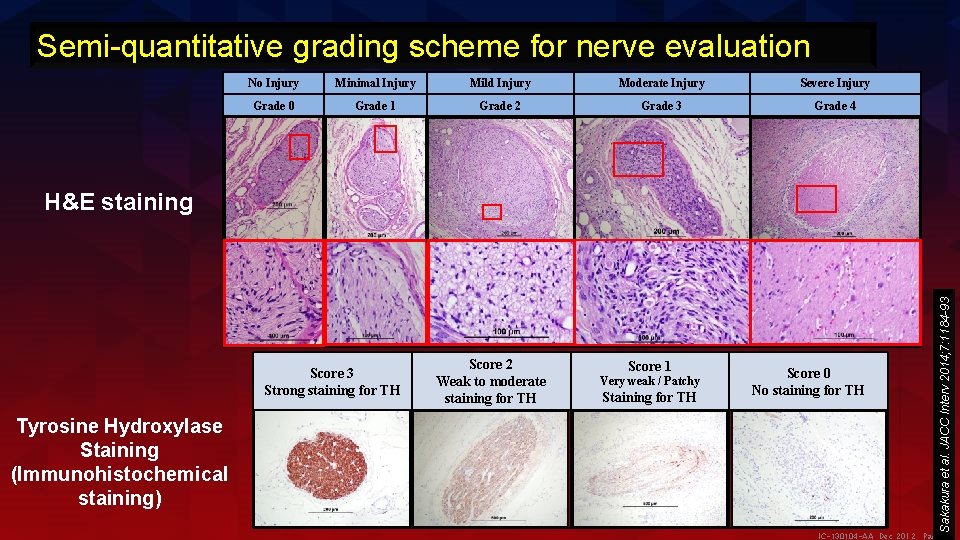
Semi-quantitative grading scheme for nerve evaluation No Injury Minimal Injury Mild Injury Moderate Injury Severe Injury Grade 0 Grade 1 Grade 2 Grade 3 Grade 4 Score 3 Strong staining for TH Tyrosine Hydroxylase Staining (Immunohistochemical staining) Score 2 Weak to moderate staining for TH Score 1 Very weak / Patchy Staining for TH Score 0 No staining for TH Sakakura et al. JACC Interv 2014; 7: 1184 -93 H&E staining IC-130104 -AA Dec 2012 Page 18
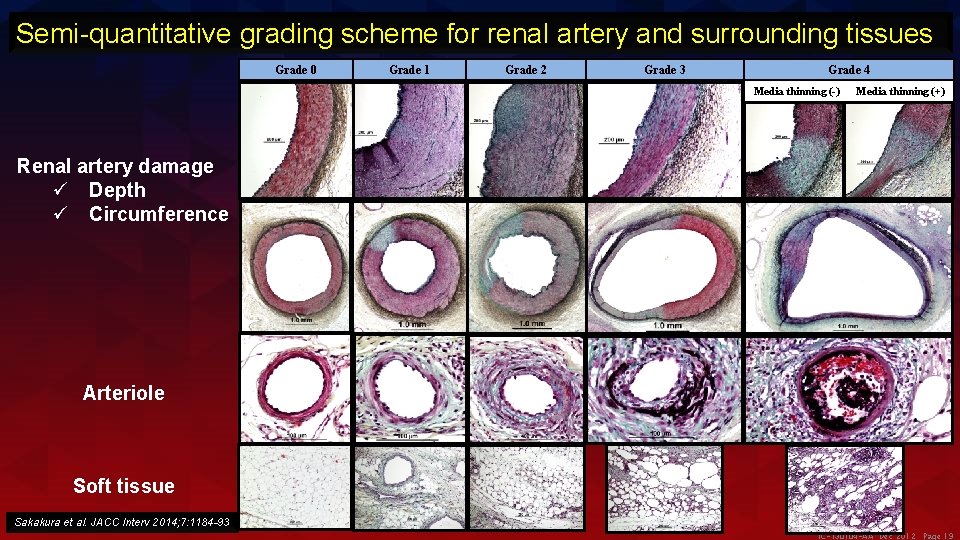
Semi-quantitative grading scheme for renal artery and surrounding tissues Grade 0 Grade 1 Grade 2 Grade 3 Grade 4 Media thinning (-) Media thinning (+) Renal artery damage ü Depth ü Circumference Arteriole Soft tissue Sakakura et al. JACC Interv 2014; 7: 1184 -93 IC-130104 -AA Dec 2012 Page 19
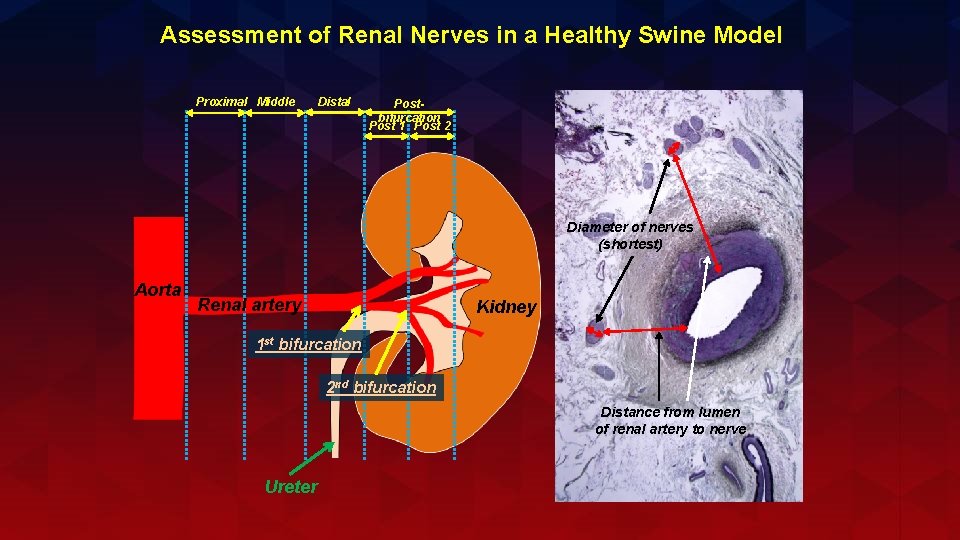
Assessment of Renal Nerves in a Healthy Swine Model Proximal Middle Distal Postbifurcation Post 1 Post 2 Diameter of nerves (shortest) Aorta Renal artery Kidney 1 st bifurcation 2 nd bifurcation Distance from lumen of renal artery to nerve Ureter
- Slides: 20