
SCIENCE 9 BIOLOGY UNIT SUSTAINABLE ECOSYSTEMS Lesson INTRODUCTION
SCIENCE 9: BIOLOGY UNIT SUSTAINABLE ECOSYSTEMS Lesson: INTRODUCTION TO ECOSYSTEMS
The Earth is a big ball of rock with a molten core. On the surface of this rock, we find _____, and _______. And in, on, around this water, air and soil, we find… LIFE: animal life, plant life, and microscopic life. Organism: an individual animal, plant, or single-celled life form.
This thin layer of life on the surface of the Earth is called the _______ (“bio” means living). Supporting the biosphere is the: _______ – the solid parts of the Earth including rocks, soil, and even ice. _______ – the liquid parts of the Earth including lakes, oceans, rivers, etc. _______– the gas and vapour surrounding the Earth.
The interactions of all the organisms in the biosphere with each other and with their environment is called _______. The study of all the interactions in the biosphere is so impossibly big and complex, biologists and ecologists have separated the surface of the Earth into various regions called ______.
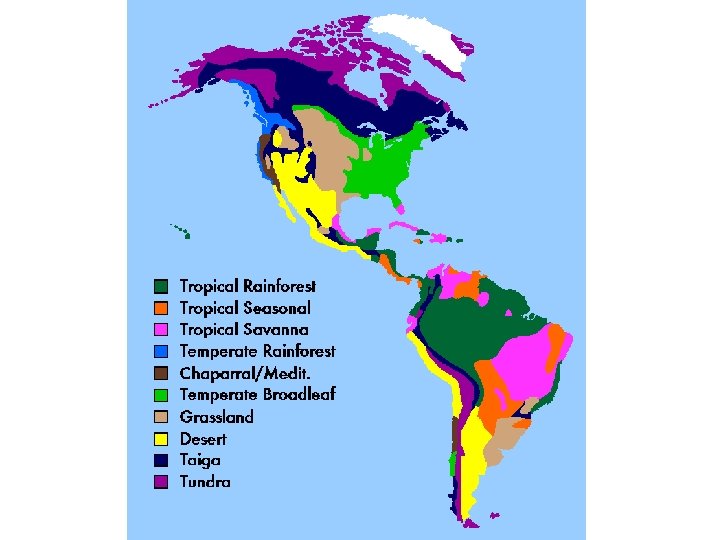
A biome is defined as a region of the Earth with a particular climate which has a controlling effect on the types of plants and animals found there. The largest Canadian biomes include: • The tundra • The boreal forest (taiga) • The temperate deciduous forest • The grasslands • The mountain biome You learn more about biomes in Geography.
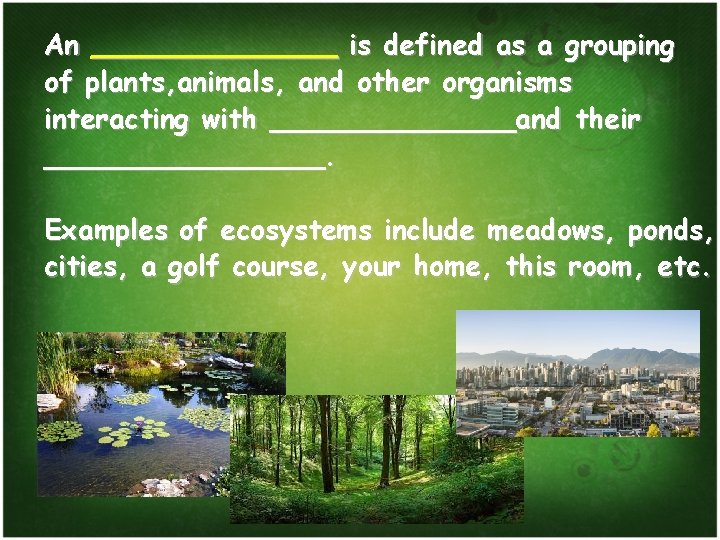
An _______ is defined as a grouping of plants, animals, and other organisms interacting with _______and their ________. Examples of ecosystems include meadows, ponds, cities, a golf course, your home, this room, etc.
An ecosystem involves both living factors (plants, animals, and microscopic organisms) and non-living factors (climate, sunlight, soil, water). The living factors are called _________and the non-living factors are called _________.
Why don’t we find: • • Polar bears at the equator? Cactus at the North Pole? Apple trees in the desert? Penguins in the Caribbean?
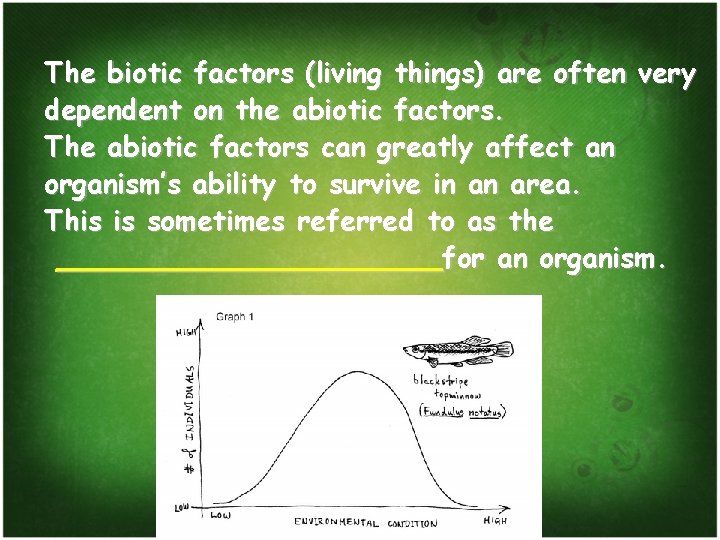
The biotic factors (living things) are often very dependent on the abiotic factors. The abiotic factors can greatly affect an organism’s ability to survive in an area. This is sometimes referred to as the ___________for an organism.
- Slides: 10