
Science 9 Aim Introduction to environmental chemistry Agenda
- Slides: 41
Science 9 Aim: Introduction to environmental chemistry.
Agenda 1. Science Sizzler 2. Chemicals in the environment notes continued 3. Videos: Bill Nye Video: Pollution, and recycle videos. 4. Tomorrows class
Unit C: ENVIRONMENTAL CHEMISTRY �What’s it all about? � Chemicals in the Environment � Acids vs. Bases � Substances Essential for Life � Water and Air Quality � Monitoring the Atmosphere � Harmful Chemicals
Everything is made up of Chemicals �Trees �Mountains �Air �Our Bodies �EVERYTHING!! …all living things depend on chemicals to survive
Examples of Chemicals we need… �Oxygen �Nitrogen �carbon dioxide �Carbon �Water �Potassium �Calcium �Sodium
Examples of Chemicals we need… �Oxygen �Nitrogen �carbon dioxide �Carbon �Water �Potassium �Calcium �Sodium Research 3 Chemicals: 1) Why do we need it? 2) What is its importance? 3) How do living things get it? Be Specific! At least 2 or 3 Sentences for Each Question
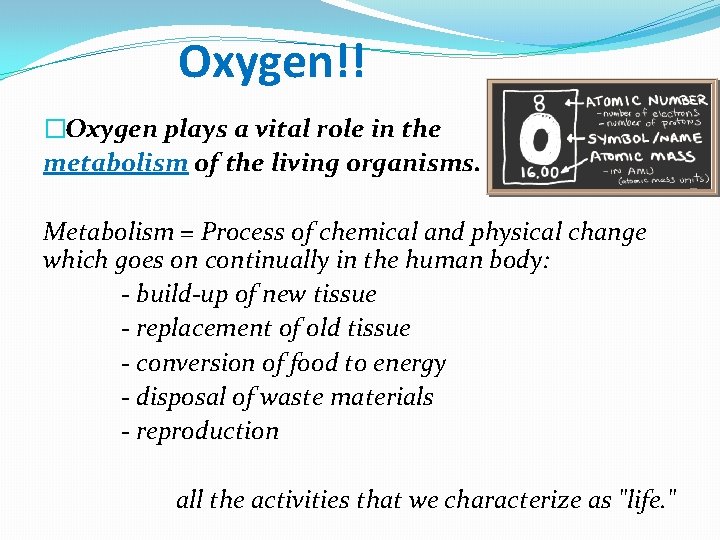
Oxygen!! �Oxygen plays a vital role in the metabolism of the living organisms. Metabolism = Process of chemical and physical change which goes on continually in the human body: - build-up of new tissue - replacement of old tissue - conversion of food to energy - disposal of waste materials - reproduction all the activities that we characterize as "life. "
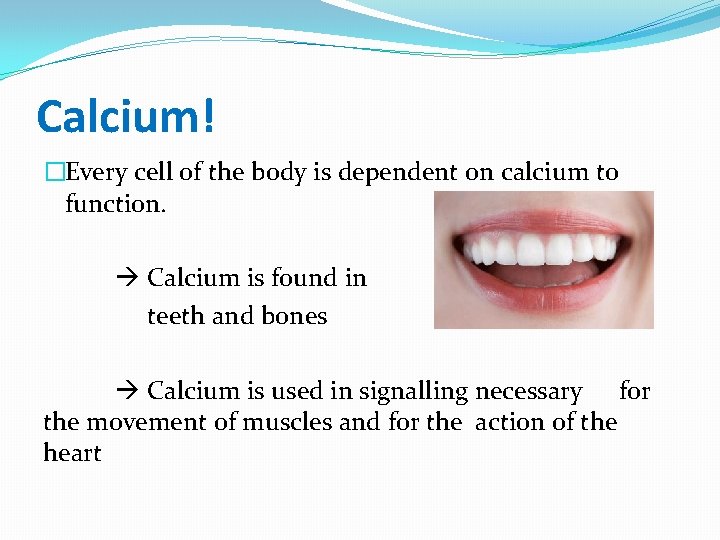
Calcium! �Every cell of the body is dependent on calcium to function. Calcium is found in teeth and bones Calcium is used in signalling necessary for the movement of muscles and for the action of the heart
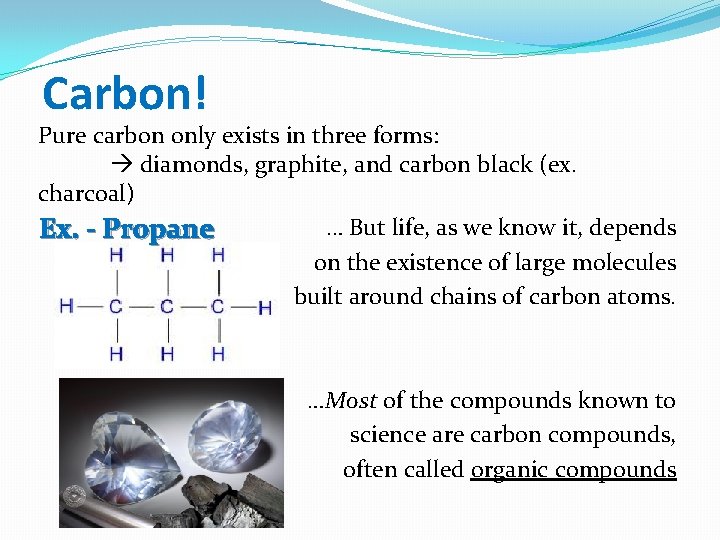
Carbon! Pure carbon only exists in three forms: diamonds, graphite, and carbon black (ex. charcoal) … But life, as we know it, depends Ex. - Propane on the existence of large molecules built around chains of carbon atoms. …Most of the compounds known to science are carbon compounds, often called organic compounds
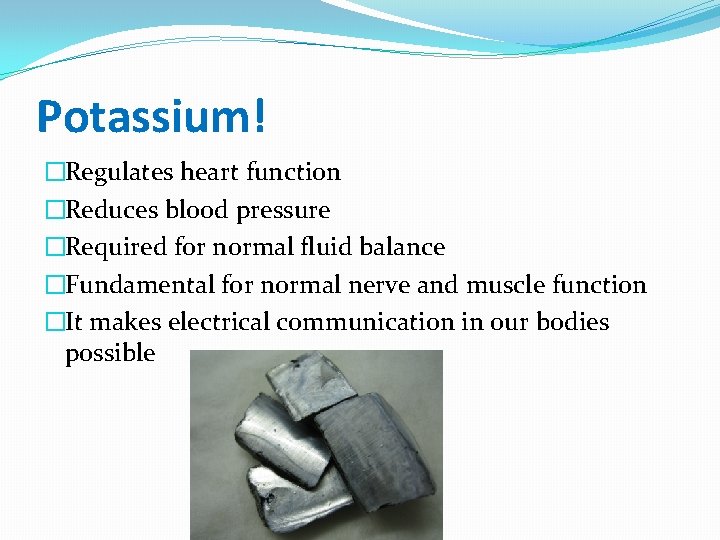
Potassium! �Regulates heart function �Reduces blood pressure �Required for normal fluid balance �Fundamental for normal nerve and muscle function �It makes electrical communication in our bodies possible
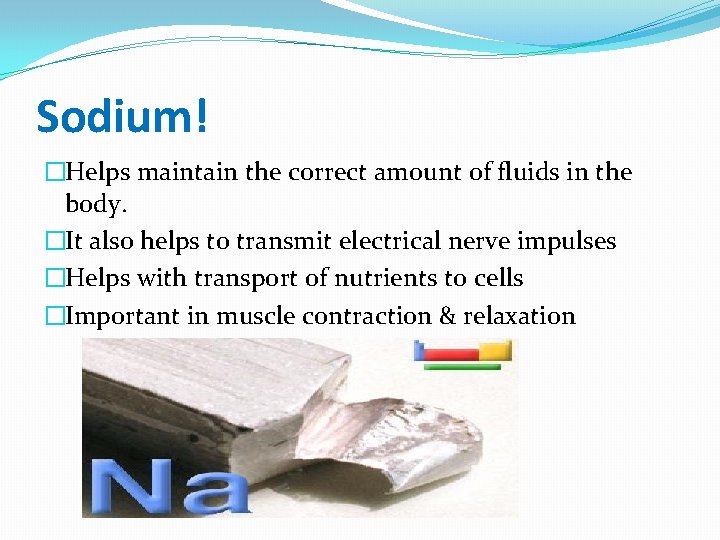
Sodium! �Helps maintain the correct amount of fluids in the body. �It also helps to transmit electrical nerve impulses �Helps with transport of nutrients to cells �Important in muscle contraction & relaxation
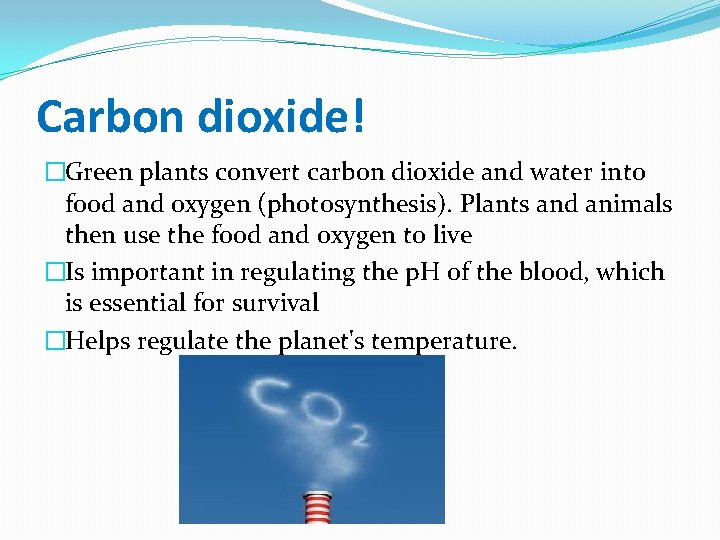
Carbon dioxide! �Green plants convert carbon dioxide and water into food and oxygen (photosynthesis). Plants and animals then use the food and oxygen to live �Is important in regulating the p. H of the blood, which is essential for survival �Helps regulate the planet's temperature.
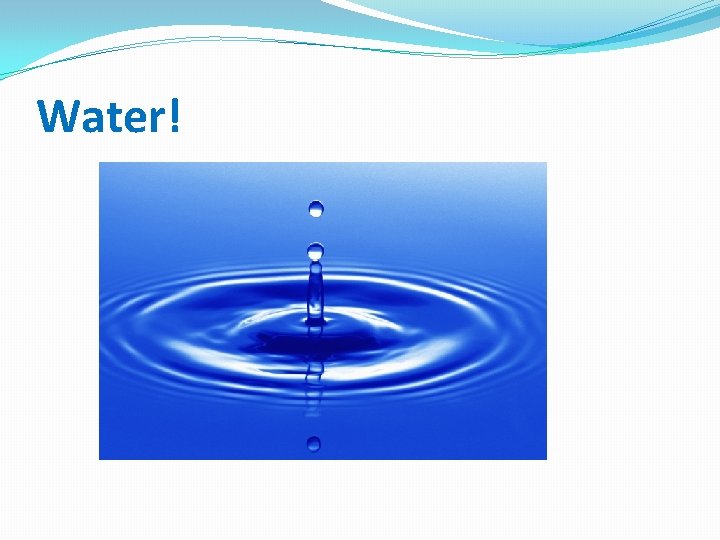
Water!
Nitrogen! �Proteins are made up partly of Nitrogen. Without Proteins, your cells can’t repair themselves or build new tissues. �Enzymes (catalysts in bodies and plants) are partly made up of Nitrogen. Without Enzymes, simple acts, such as food metabolism, would take 200 years to complete
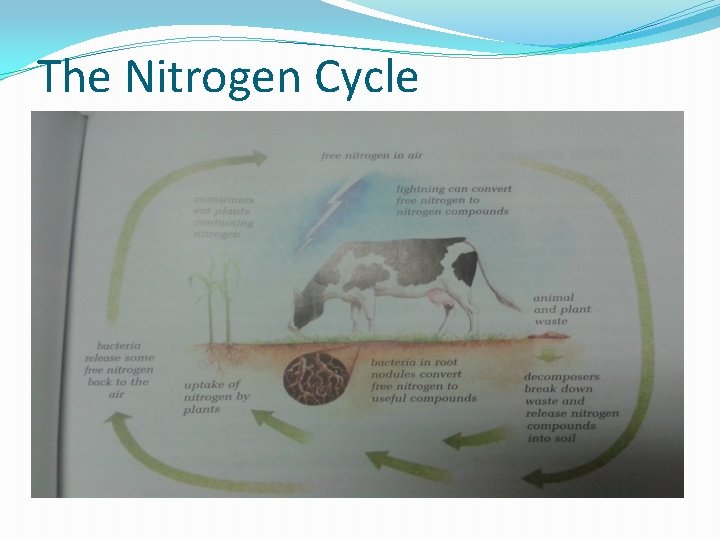
�Air is made up of 78% nitrogen gas �Plants can only use nitrogen when it is combined with other elements like H and O. �Nitrogen Fixation: the process in which free Nitrogen is combined with other elements to form compounds that organisms can use. �Bacteria does most of the nitrogen fixation in soil. �A cycle is formed
The Nitrogen Cycle
�There are many examples of these cycles and they can be found in many places Ex. Phosphorous cycle, water cycle, and carbon dioxide cycle.
Minerals Plants Need Primary Macronutrients(needed in large amounts): nitrogen (N), phosphorus (P), potassium (K) Secondary Macronutrients(needed in large amounts): calcium (Ca), sulphur (S), magnesium (Mg) Micronutrients(needed in small amounts): boron (B), chlorine (Cl), manganese (Mn), Iron (Fe), zinc (Zn), copper (Cu), nickel (Ni), selenium (Se), and sodium (Na).
Your body has many chemical processes taking place constantly in it, and you create a lot of chemical changes in your surroundings as well. �Cellular respiration: turning food and oxygen into carbon dioxide, water and energy. �Chemicals formed by human activities that are harmful to the environment are called ______ Pollution
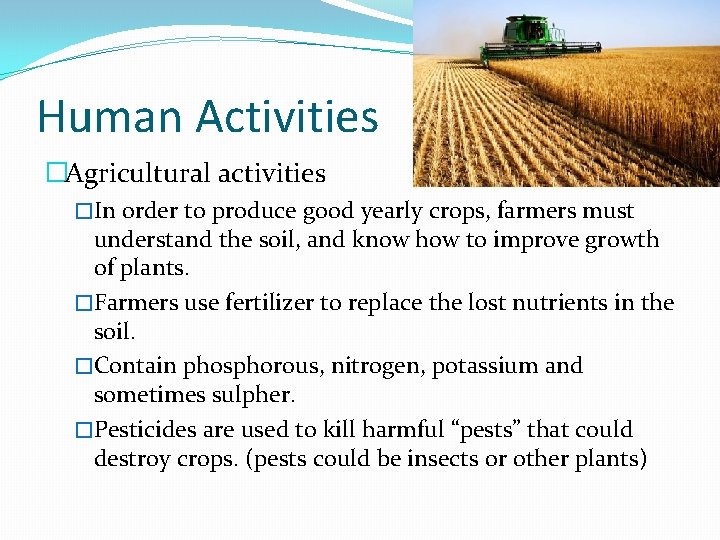
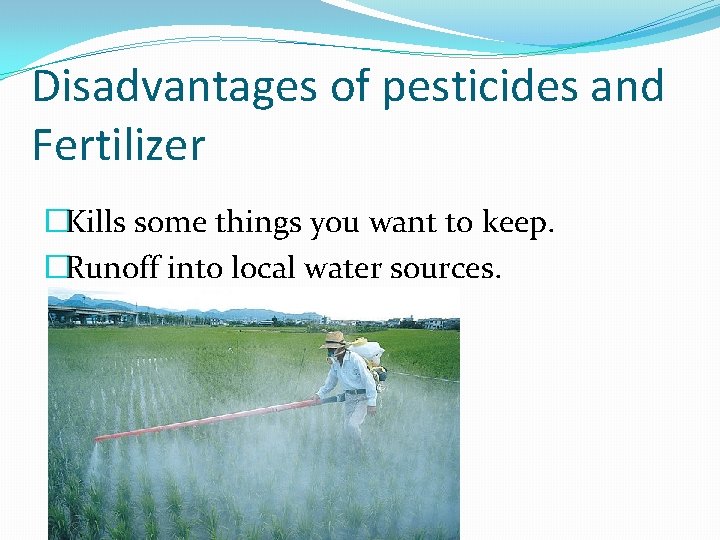
Human Activities �Agricultural activities �In order to produce good yearly crops, farmers must understand the soil, and know how to improve growth of plants. �Farmers use fertilizer to replace the lost nutrients in the soil. �Contain phosphorous, nitrogen, potassium and sometimes sulpher. �Pesticides are used to kill harmful “pests” that could destroy crops. (pests could be insects or other plants)
Disadvantages of pesticides and Fertilizer �Kills some things you want to keep. �Runoff into local water sources.
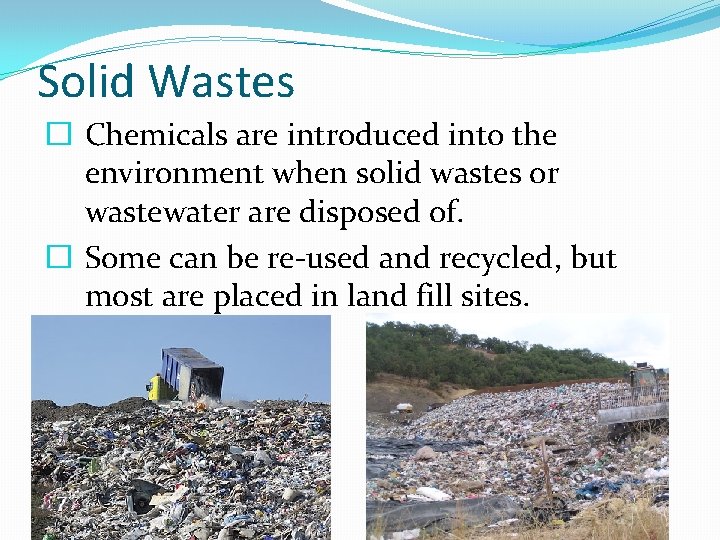
Solid Wastes � Chemicals are introduced into the environment when solid wastes or wastewater are disposed of. � Some can be re-used and recycled, but most are placed in land fill sites.
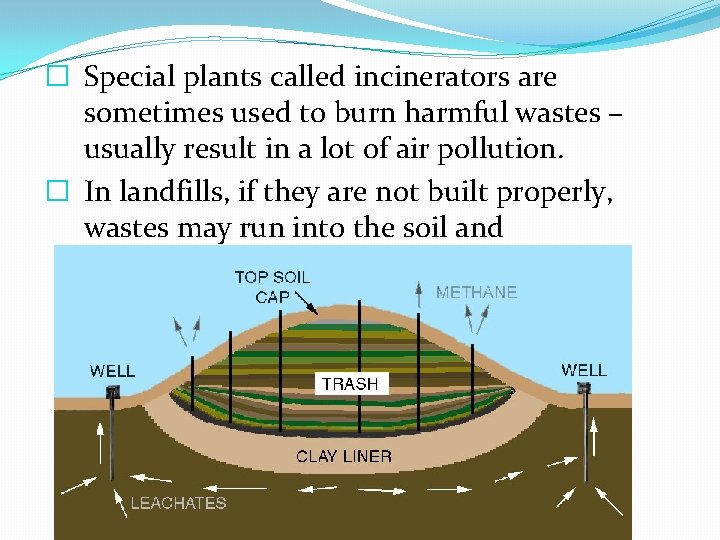
� Special plants called incinerators are sometimes used to burn harmful wastes – usually result in a lot of air pollution. � In landfills, if they are not built properly, wastes may run into the soil and groundwater.
Wastewater �Wastewater containing dissolved and undissolved materials from your home is called sewage. �Sewage moves into septic tanks or sewage treatment plants via pipes. �Sewage treatment plants treat wastewater, and release the effluent into rivers or lakes. �Storm sewers may carry water directly to rivers or lakes.
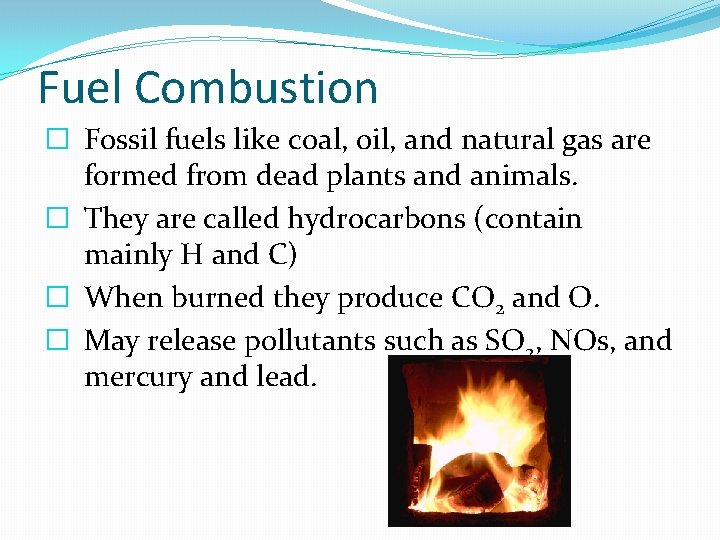
Fuel Combustion � Fossil fuels like coal, oil, and natural gas are formed from dead plants and animals. � They are called hydrocarbons (contain mainly H and C) � When burned they produce CO 2 and O. � May release pollutants such as SO 2, NOs, and mercury and lead.
Methane gas(CH 4) Propane (C 3 H 8)
Industrial Processes �Electrical power generation, mineral processing, and fertilizer production may release chemicals into the environment. �Natural gases that contain hydrogen sulphide is called “sour” gas, if no H 2 S is present, it is considered “sweet. ” �Natural gas processing is done a lot in alberta.
Some Chemicals are Harmful to Living Things
What is an ACID? �A compound that dissolves in water to form a solution with a p. H lower than 7 What is an BASE? �A compound that dissolves in water to form a solution with a p. H greater than 7
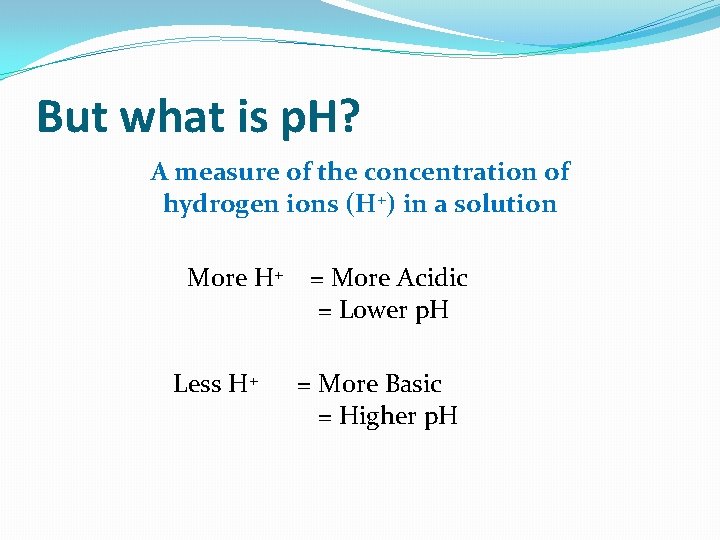
But what is p. H? A measure of the concentration of hydrogen ions (H+) in a solution More H+ Less H+ = More Acidic = Lower p. H = More Basic = Higher p. H
The p. H of Pure Water 7 (Neutral – not an acid or a base)
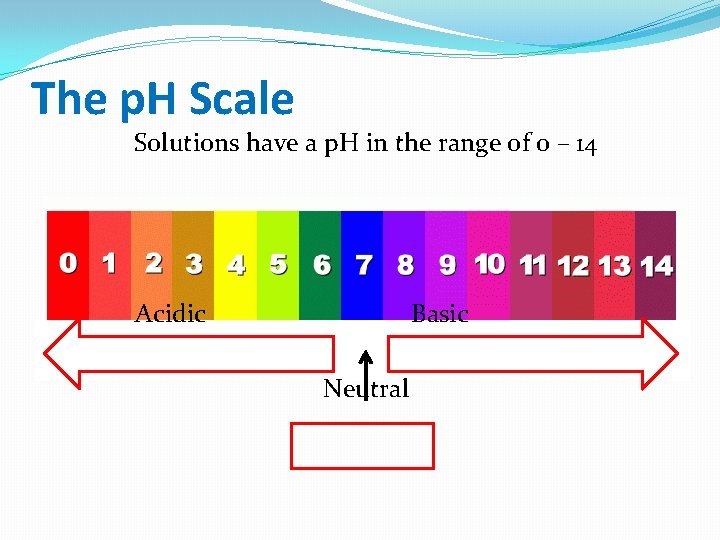
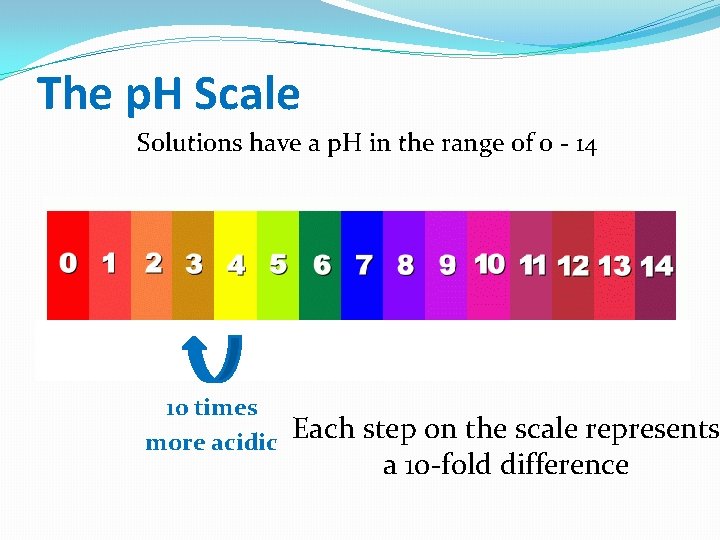
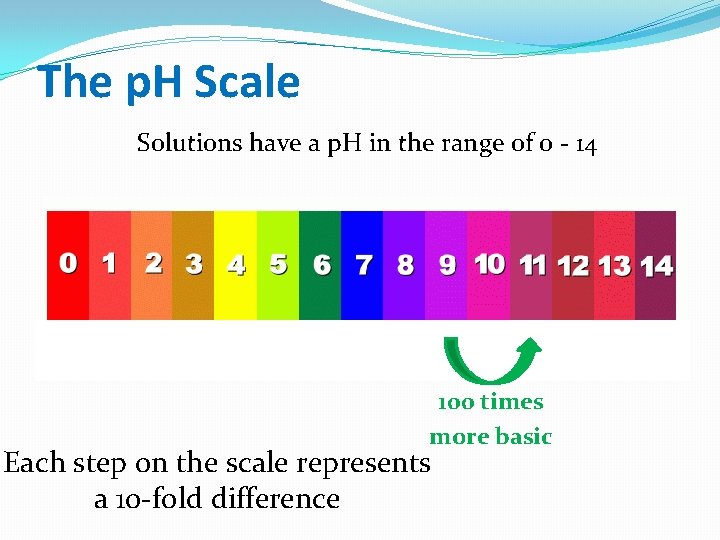
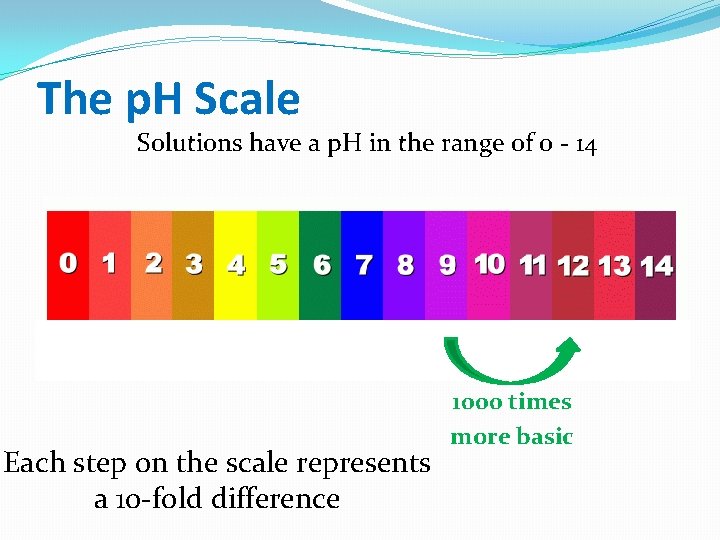
The p. H Scale Solutions have a p. H in the range of 0 – 14 Acidic Basic Neutral
The p. H Scale Solutions have a p. H in the range of 0 - 14 10 times more acidic Each step on the scale represents a 10 -fold difference
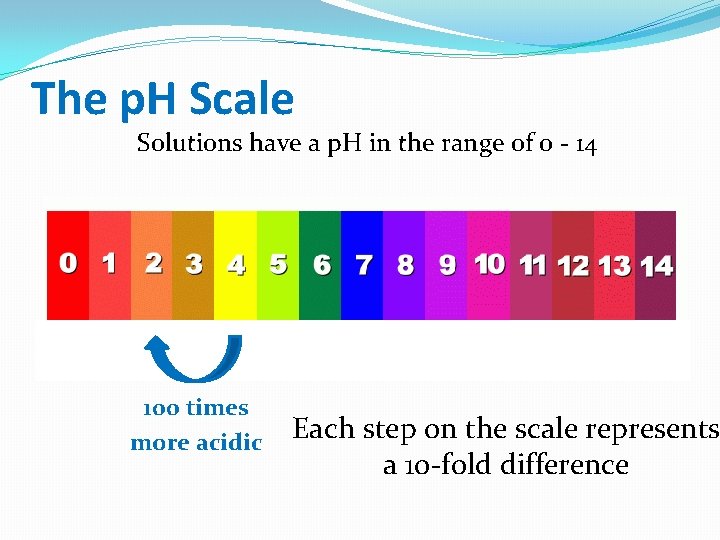
The p. H Scale Solutions have a p. H in the range of 0 - 14 100 times more acidic Each step on the scale represents a 10 -fold difference
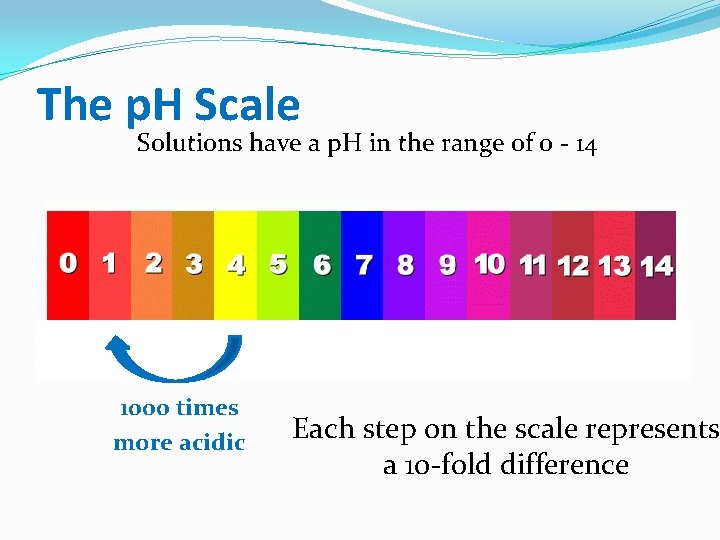
The p. H Scale Solutions have a p. H in the range of 0 - 14 1000 times more acidic Each step on the scale represents a 10 -fold difference
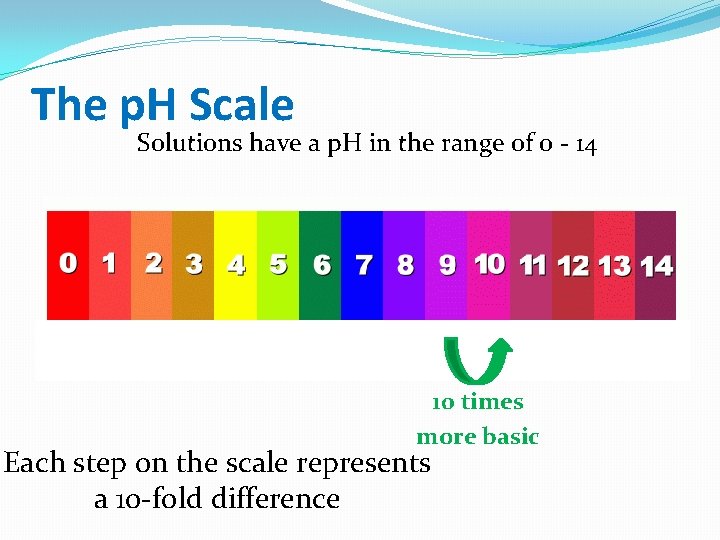
The p. H Scale Solutions have a p. H in the range of 0 - 14 10 times more basic Each step on the scale represents a 10 -fold difference
The p. H Scale Solutions have a p. H in the range of 0 - 14 100 times more basic Each step on the scale represents a 10 -fold difference
The p. H Scale Solutions have a p. H in the range of 0 - 14 Each step on the scale represents a 10 -fold difference 1000 times more basic
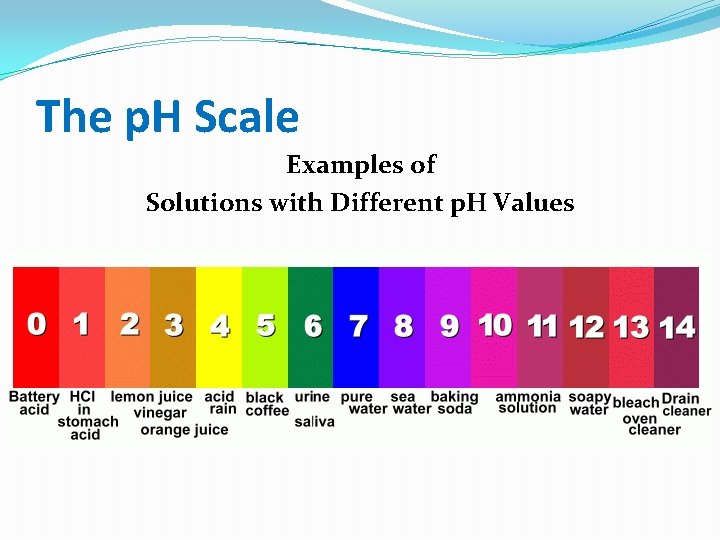
The p. H Scale Examples of Solutions with Different p. H Values
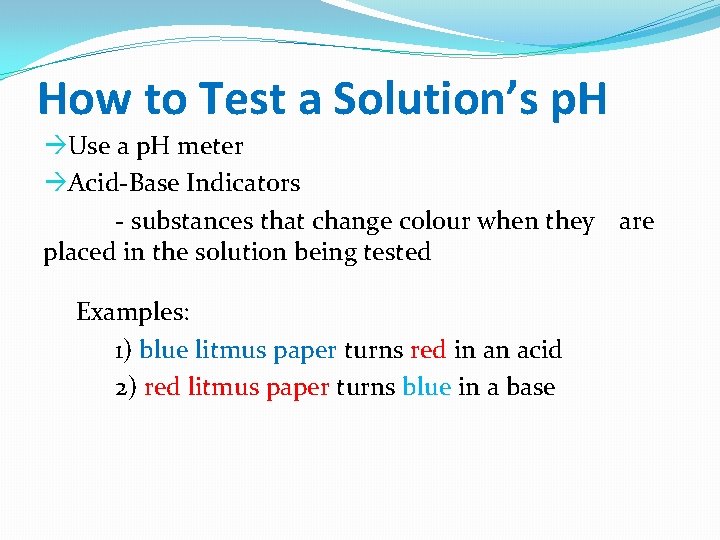
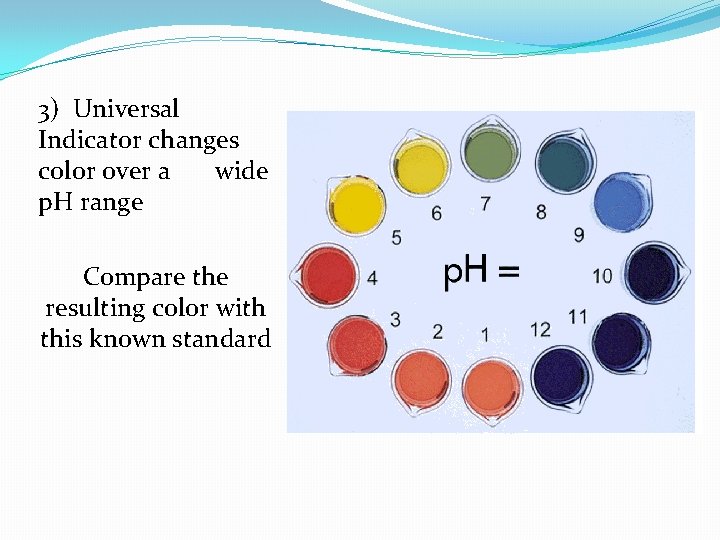
How to Test a Solution’s p. H Use a p. H meter Acid-Base Indicators - substances that change colour when they are placed in the solution being tested Examples: 1) blue litmus paper turns red in an acid 2) red litmus paper turns blue in a base
3) Universal Indicator changes color over a wide p. H range Compare the resulting color with this known standard