
Science 5 Unit 5 Ecosystems Lesson 1 What

- Slides: 14
Science 5 Unit 5 Ecosystems Lesson 1 What is an Ecosystem?
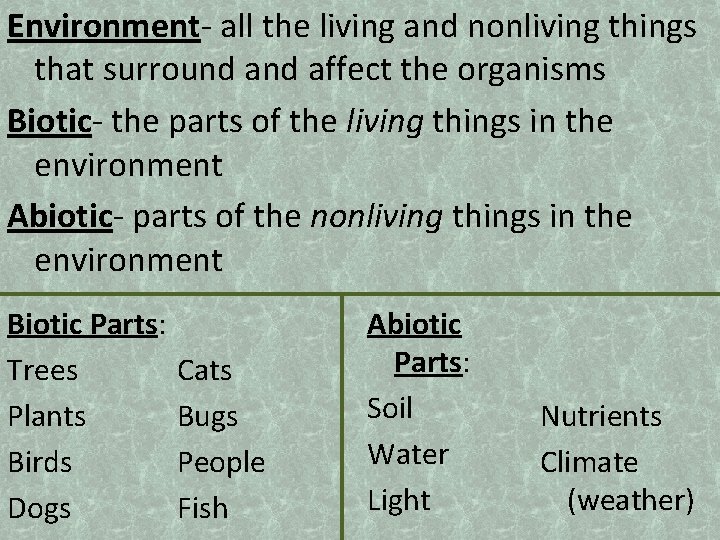
Environment- all the living and nonliving things that surround affect the organisms Biotic- the parts of the living things in the environment Abiotic- parts of the nonliving things in the environment Biotic Parts: Trees Plants Birds Dogs Cats Bugs People Fish Abiotic Parts: Soil Water Light Nutrients Climate (weather)
Climate- the average weather in an area over time Ecosystem- all the organisms living in a place together with their environment (can be huge like a desert or forest, or small like a puddle) Population- a group of organisms of the same species in an ecosystem Community- the different populations that share an ecosystem Competition- the interactions between populations to meet needs Limiting Factors- limited resources, such as water, shelter and space needed to support a certain number of organisms
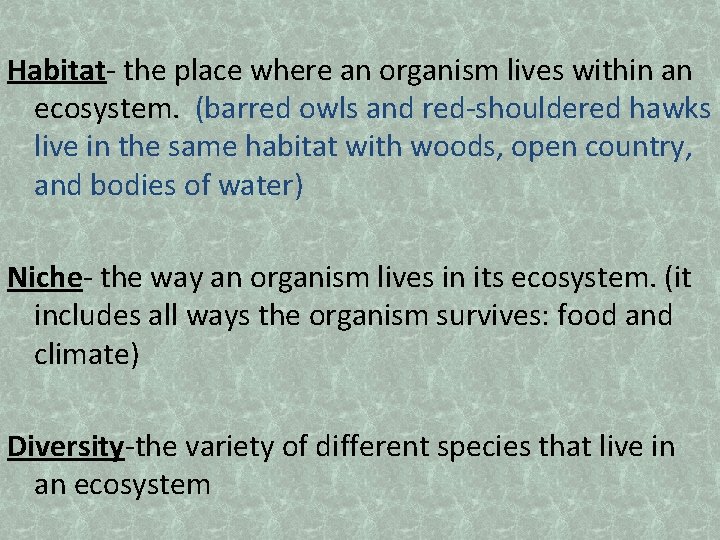
Habitat- the place where an organism lives within an ecosystem. (barred owls and red-shouldered hawks live in the same habitat with woods, open country, and bodies of water) Niche- the way an organism lives in its ecosystem. (it includes all ways the organism survives: food and climate) Diversity-the variety of different species that live in an ecosystem
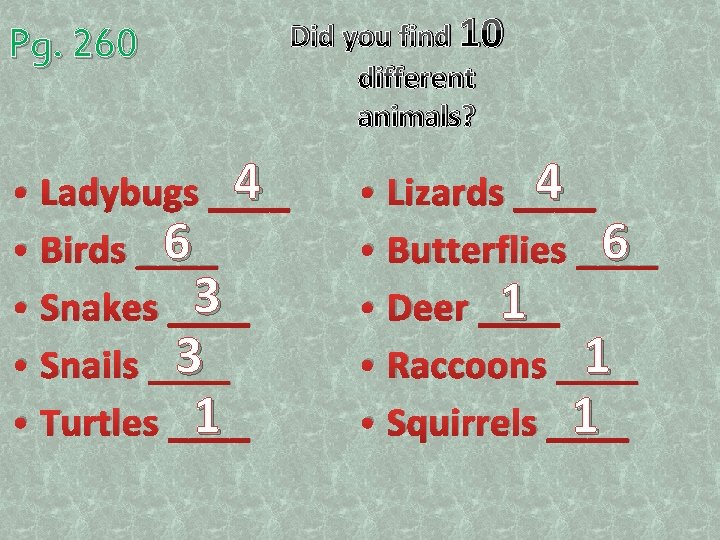
Pg. 260 • • • Did you find 10 different animals? 4 Ladybugs ____ 6 Birds ____ 3 Snakes ____ 3 Snails ____ 1 Turtles ____ • • • 4 Lizards ____ 6 Butterflies ____ 1 Deer ____ 1 Raccoons ____ 1 Squirrels ____
Science 5 Unit 5 Ecosystems Lesson 3 How do Environmental Changes Affect Organisms?
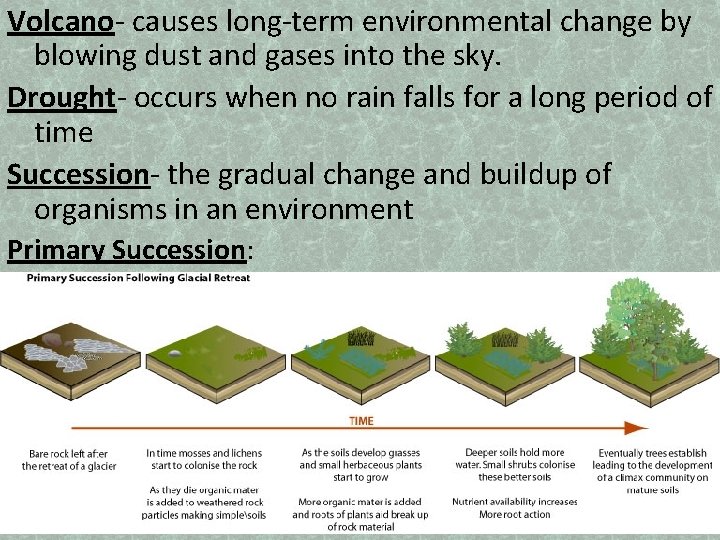
Volcano- causes long-term environmental change by blowing dust and gases into the sky. Drought- occurs when no rain falls for a long period of time Succession- the gradual change and buildup of organisms in an environment Primary Succession:
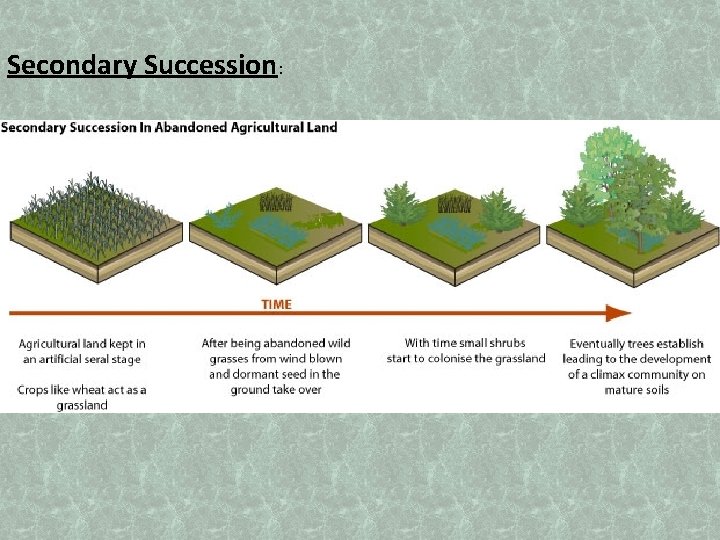
Secondary Succession:
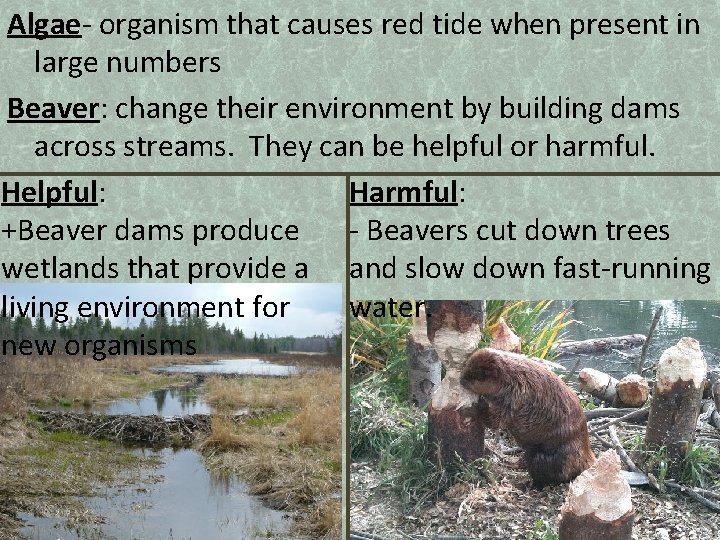
Algae- organism that causes red tide when present in large numbers Beaver: change their environment by building dams across streams. They can be helpful or harmful. Harmful: Helpful: - Beavers cut down trees +Beaver dams produce wetlands that provide a and slow down fast-running water. living environment for new organisms
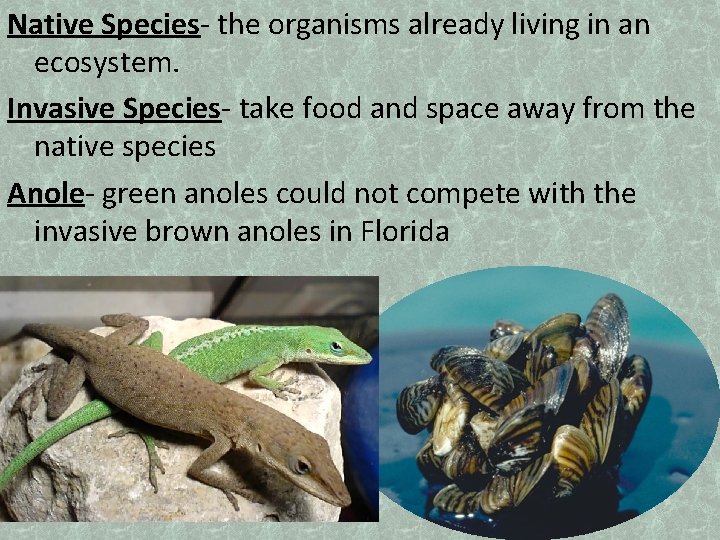
Native Species- the organisms already living in an ecosystem. Invasive Species- take food and space away from the native species Anole- green anoles could not compete with the invasive brown anoles in Florida
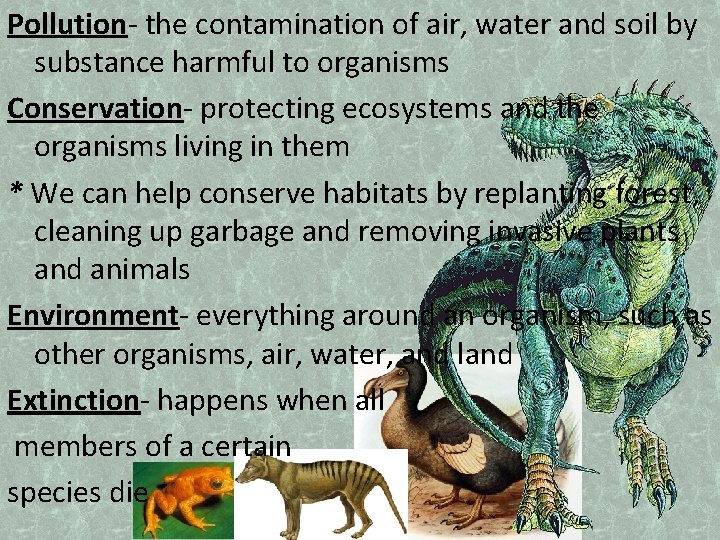
Pollution- the contamination of air, water and soil by substance harmful to organisms Conservation- protecting ecosystems and the organisms living in them * We can help conserve habitats by replanting forest, cleaning up garbage and removing invasive plants and animals Environment- everything around an organism, such as other organisms, air, water, and land Extinction- happens when all members of a certain species die
Science 5 Unit 5 Ecosystems Test Review
Unit 5 Test Review Ecosystem- all biotic and abiotic things that affect an organism. Biotic Factors- living organism in an environment (animals, plants) Abiotic Factors- non living parts of an environment (sunlight, temperature, air, rain) Population- a group of organisms of the same species living in an ecosystem Niche- an organisms complete role or function within an ecosystem. Low Diversity- low number of plant and animals Invasive Species- a species without a predator, takes food and space away from the native species, a species brought to a new environment
An invasive plant can be controlled by pulling the plant up by the root or killing it before it reproduces. The purpose of a controlled burn is to clear away small plants and to prevent wild fires. If the land was removed from an ecosystem, there would be a major decrease in the total number of organisms living in that area. In drought conditions the soil is very dry. In wet land, soil is wet. Humans harm the ecosystem by destroying habitats.