
SCIENCE 4 HUMAN DIGESTIVE SYSTEM Presented by Ms
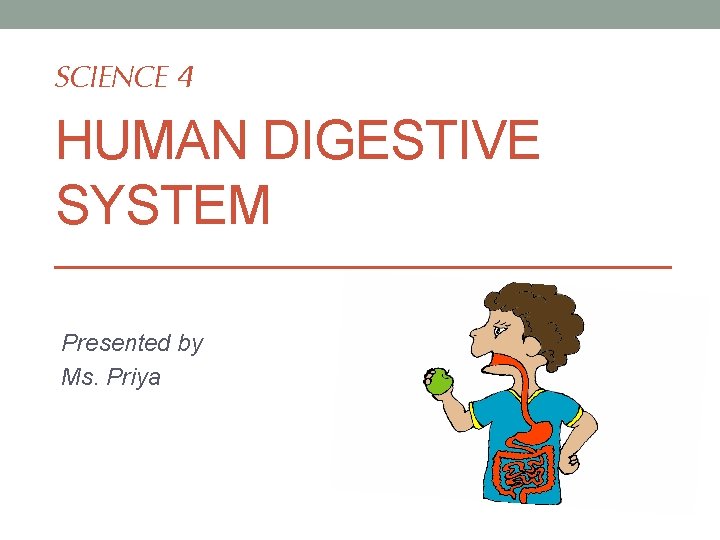
SCIENCE 4 HUMAN DIGESTIVE SYSTEM Presented by Ms. Priya
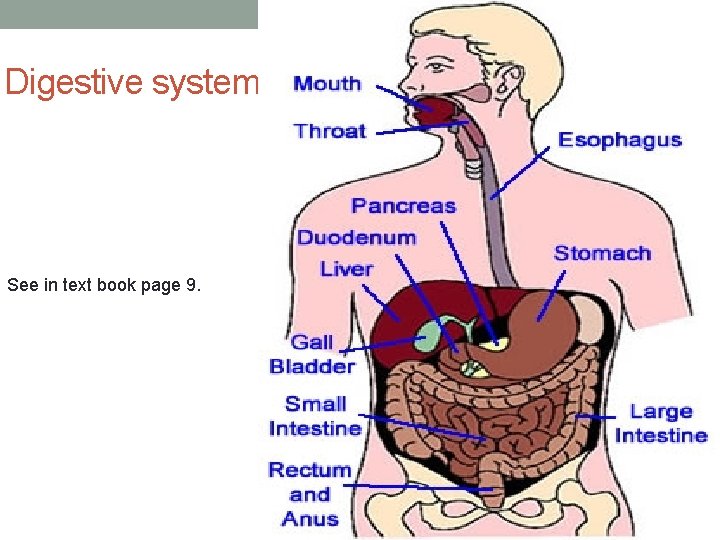
Digestive system See in text book page 9.
What is digestion? Digestion is the breakdown of food into smaller components that can be absorbed into the blood. Digestion is divided into two types – • the mechanical digestion of food occurs in the mouth when it is physically broken down into smaller pieces • the chemical digestion occurs in the intestinal tract when the food is broken down into small molecules by digestive enzymes.
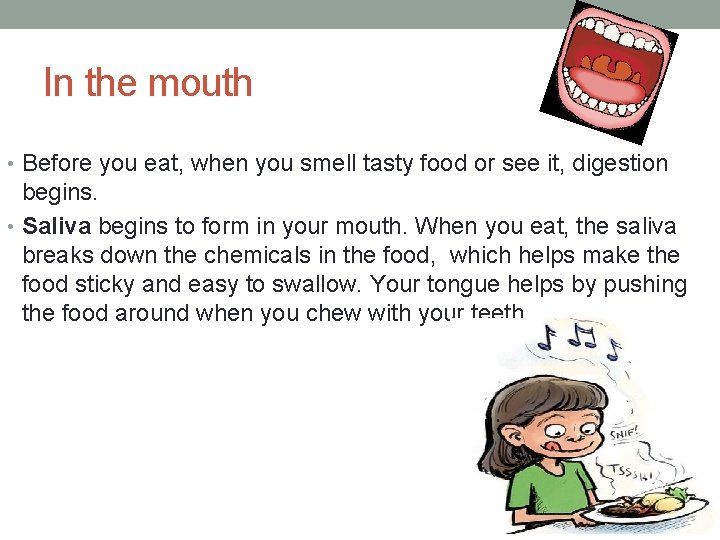
In the mouth • Before you eat, when you smell tasty food or see it, digestion begins. • Saliva begins to form in your mouth. When you eat, the saliva breaks down the chemicals in the food, which helps make the food sticky and easy to swallow. Your tongue helps by pushing the food around when you chew with your teeth.
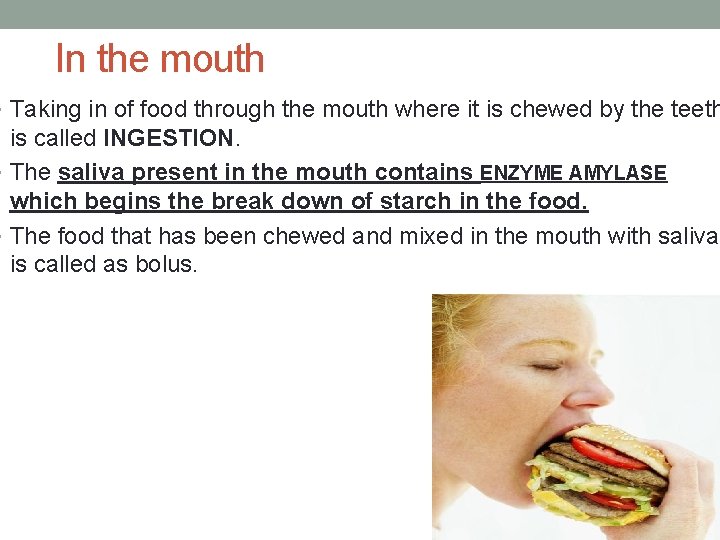
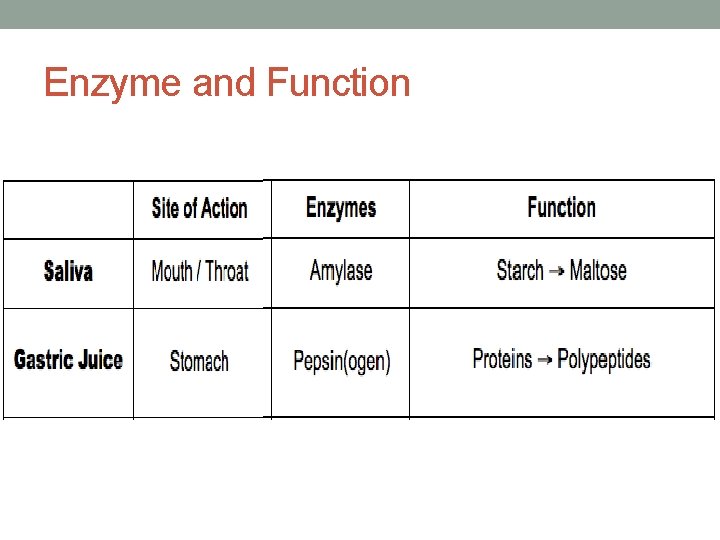
In the mouth • Taking in of food through the mouth where it is chewed by the teeth is called INGESTION. • The saliva present in the mouth contains ENZYME AMYLASE which begins the break down of starch in the food. • The food that has been chewed and mixed in the mouth with saliva is called as bolus.
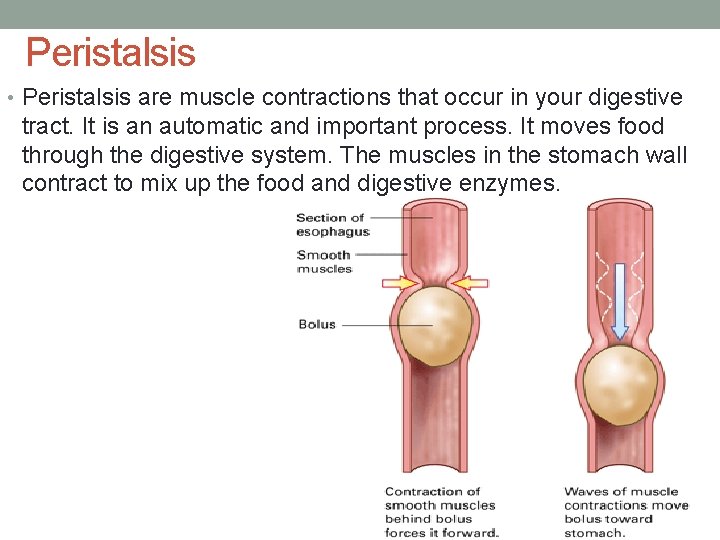
Peristalsis • Peristalsis are muscle contractions that occur in your digestive tract. It is an automatic and important process. It moves food through the digestive system. The muscles in the stomach wall contract to mix up the food and digestive enzymes.
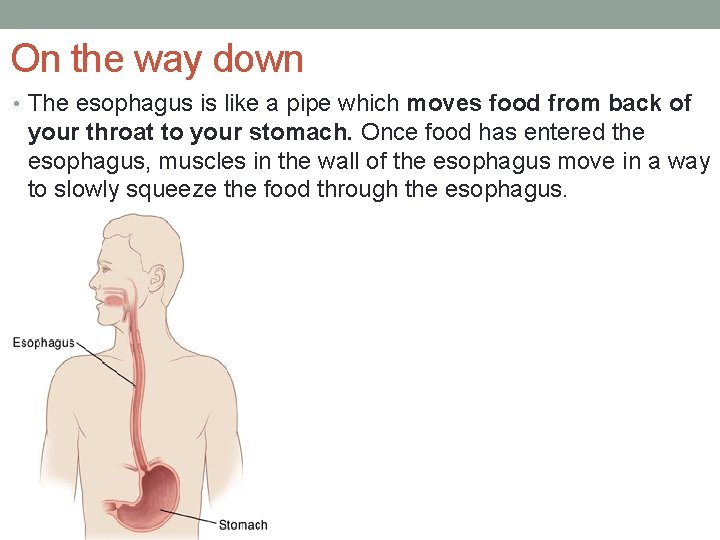
On the way down • The esophagus is like a pipe which moves food from back of your throat to your stomach. Once food has entered the esophagus, muscles in the wall of the esophagus move in a way to slowly squeeze the food through the esophagus.
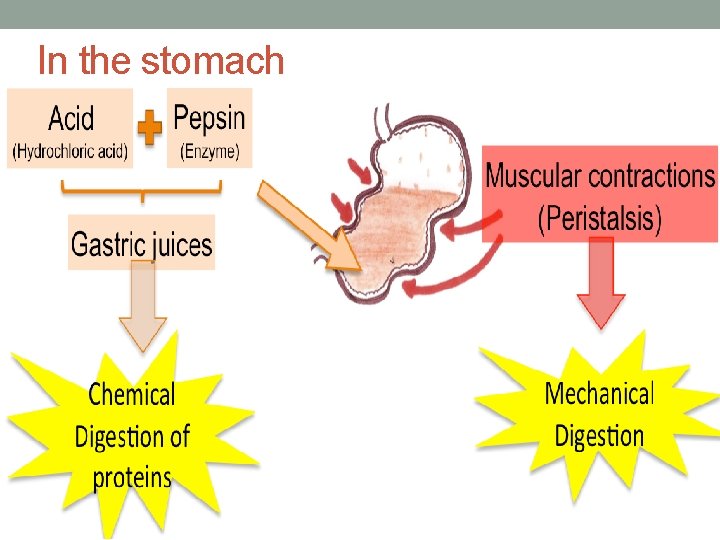
In the Stomach Your stomach is attached to the end of the esophagus. It has three important roles: • to store the food you have eaten • to break down the food into a liquid mixture • Break down protein The stomach is like a mixer, mashing all the small balls of food that came down from esophagus into smaller pieces. It does this with help from the strong muscles in the walls of the stomach. The stomach wall releases GASTRIC JUICE. The gastric juice contains ENZYME PEPSIN AND HYDROCHLORIC ACID. Gastric juices also help kill bacteria that might be in the eaten food.
In the stomach • GASTRIC JUICES start to breakdown the protein in the food. • Acid is needed to breaks down proteins into amino acids so they can be absorbed by the stomach and taken to the liver. So, food will be more easily absorbed into the body. • The acid is important in digestion of proteins, by activating digestive enzymes. • The acids in the stomach work by breaking down the proteins present in food. • While this chemical digestion is happening, further mechanical digestion is occurring through peristalsis.
In the stomach
Enzyme and Function
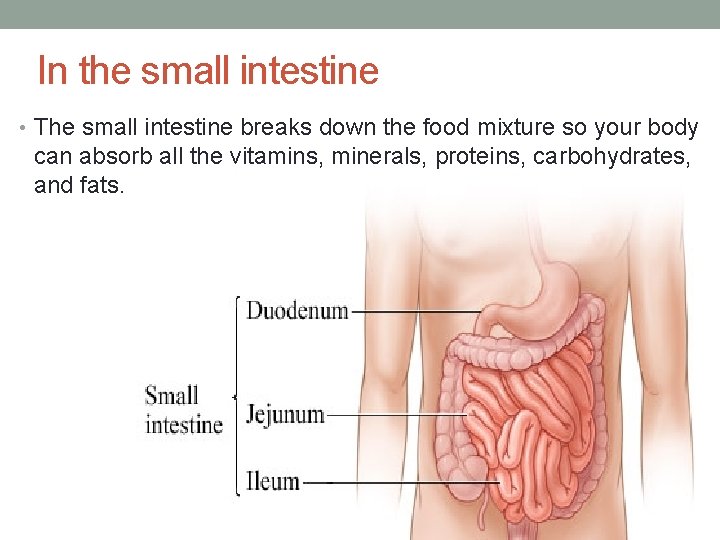
In the small intestine • The small intestine breaks down the food mixture so your body can absorb all the vitamins, minerals, proteins, carbohydrates, and fats.
In the small intestine • The small intestine can be divided into 3 major parts: • duodenum is the first part of intestine. Half digested food from the stomach is mixed with bile from the liver and pancreatic juice from the pancreas to complete its digestion in the duodenum. • jejunum is the middle section of the small intestine that helps in nutrient absorption. • ileum is the last section of small intestine. The ileum completes the absorption of nutrients.
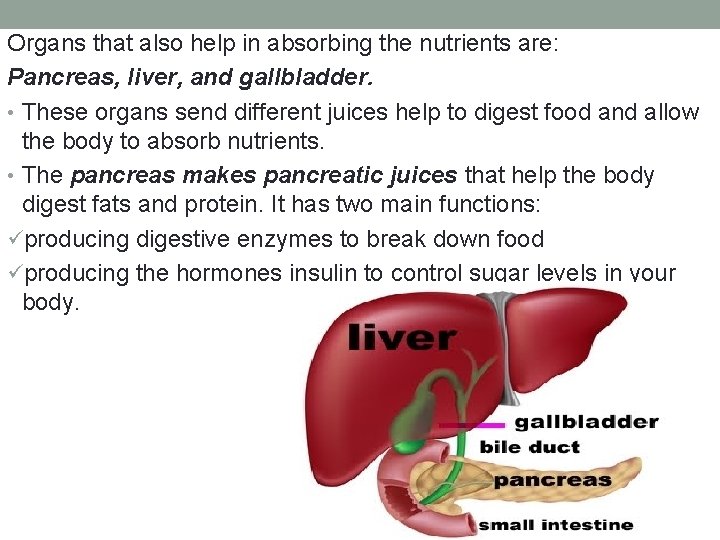
Organs that also help in absorbing the nutrients are: Pancreas, liver, and gallbladder. • These organs send different juices help to digest food and allow the body to absorb nutrients. • The pancreas makes pancreatic juices that help the body digest fats and protein. It has two main functions: üproducing digestive enzymes to break down food üproducing the hormones insulin to control sugar levels in your body.
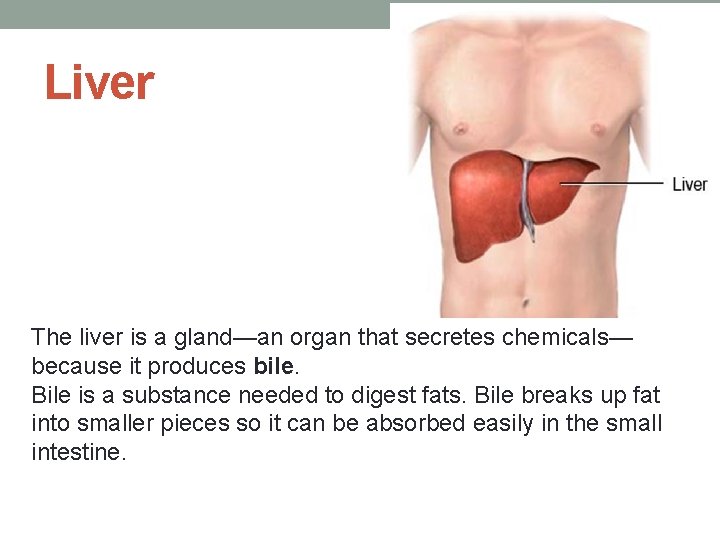
Liver The liver is a gland—an organ that secretes chemicals— because it produces bile. Bile is a substance needed to digest fats. Bile breaks up fat into smaller pieces so it can be absorbed easily in the small intestine.
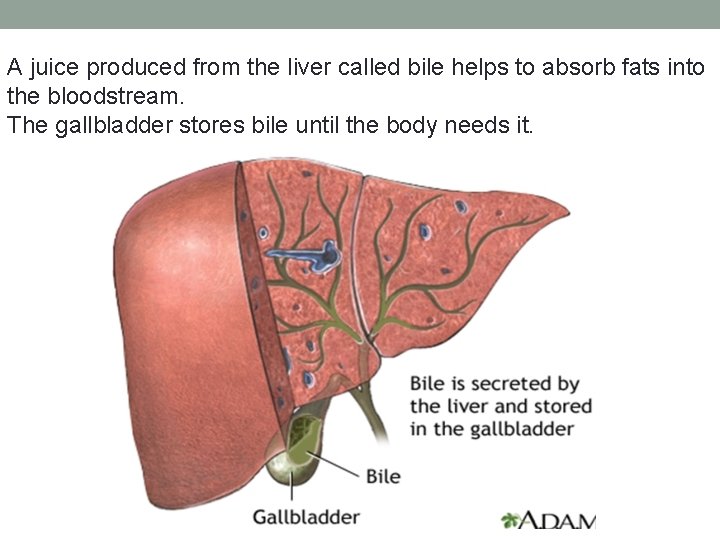
A juice produced from the liver called bile helps to absorb fats into the bloodstream. The gallbladder stores bile until the body needs it.
Liver • The nutrient-rich blood comes directly to the liver for processing. The liver filters out harmful substances or wastes, turning some of the waste into more bile. • For example, the liver stores certain vitamins and a type of sugar your body uses for energy. the liver • Detoxifies the blood to rid it of harmful substances such as alcohol and drugs • Stores some vitamins and iron • Stores the simple sugar glucose • Breaks down insulin and other hormones
Large Intestine
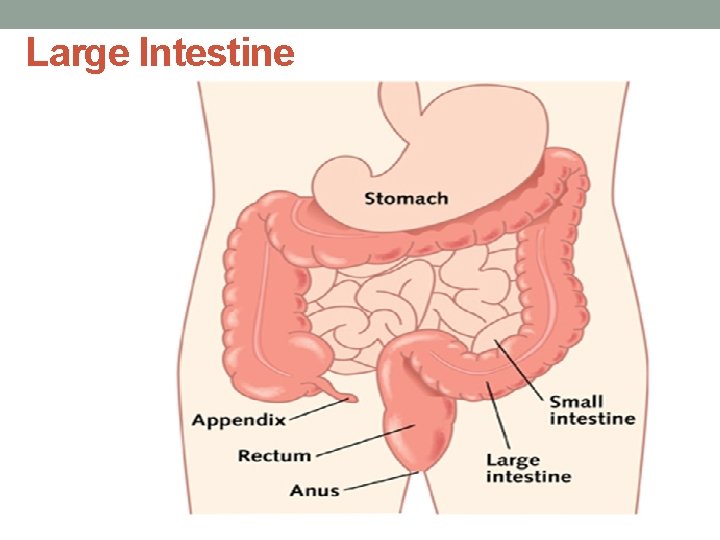
Large intestine • Large intestine is the final part of your digestive system. • The large intestine consists of the caecum, appendix, colon and rectum. • The major function of the large intestine is to absorb water from the remaining (waste) indigestible food matter and transmit the useless waste material from the body. • Indigested (WASTE) food enters your large intestine. It then reabsorbs water that is used in digestion and eliminates undigested food. This causes food waste products to harden and form faeces, which are then excreted.
Large Intestine • The large intestine has a tiny tube with a closed end it is called the appendix. It's part of the digestive tract, it doesn't do anything. It can cause big problems because sometimes it gets infected and needs to be removed through surgery. • The waste passes through the part of large intestine called the colon , where the body gets its last chance to absorb the water and some minerals into the blood. • As the water leaves the waste product, what's left gets harder and as it keeps moving along, until it becomes a solid called stool or a bowel movement.
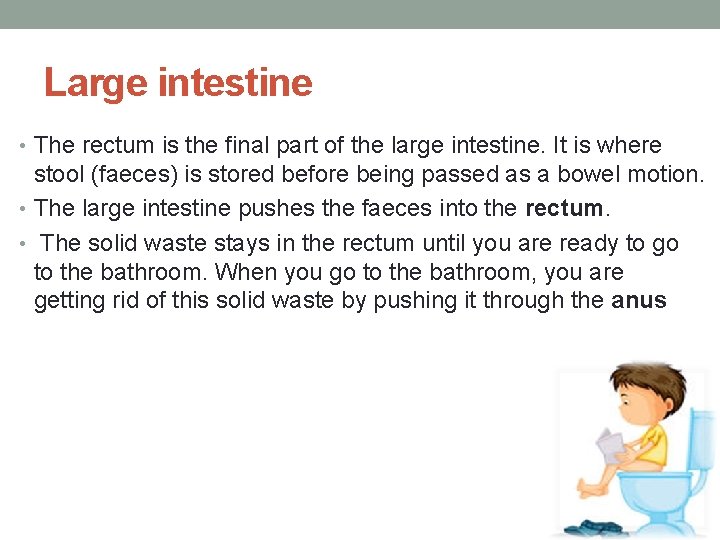
Large intestine • The rectum is the final part of the large intestine. It is where stool (faeces) is stored before being passed as a bowel motion. • The large intestine pushes the faeces into the rectum. • The solid waste stays in the rectum until you are ready to go to the bathroom. When you go to the bathroom, you are getting rid of this solid waste by pushing it through the anus
Digestive System • You can help your digestive system by drinking water and eating a healthy diet that includes foods rich in fiber. • High-fiber foods, like fruits, vegetables, and whole grains, make it easier for poop to pass through your system. • The digestive system is a important part of your body to get the nutrients you need to grow properly and stay healthy.
- Slides: 22