
Science 1206 Physics Using Significant Digits Rules for


- Slides: 14
Science 1206 -Physics Using Significant Digits
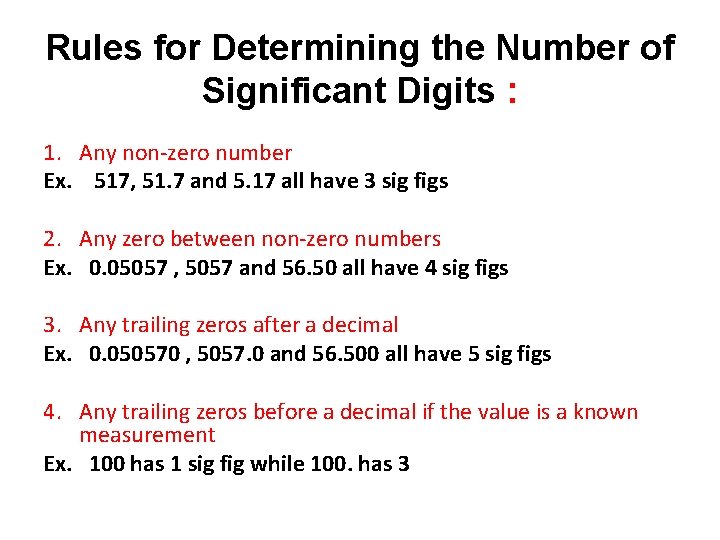
Rules for Determining the Number of Significant Digits : 1. Any non-zero number Ex. 517, 51. 7 and 5. 17 all have 3 sig figs 2. Any zero between non-zero numbers Ex. 0. 05057 , 5057 and 56. 50 all have 4 sig figs 3. Any trailing zeros after a decimal Ex. 0. 050570 , 5057. 0 and 56. 500 all have 5 sig figs 4. Any trailing zeros before a decimal if the value is a known measurement Ex. 100 has 1 sig fig while 100. has 3
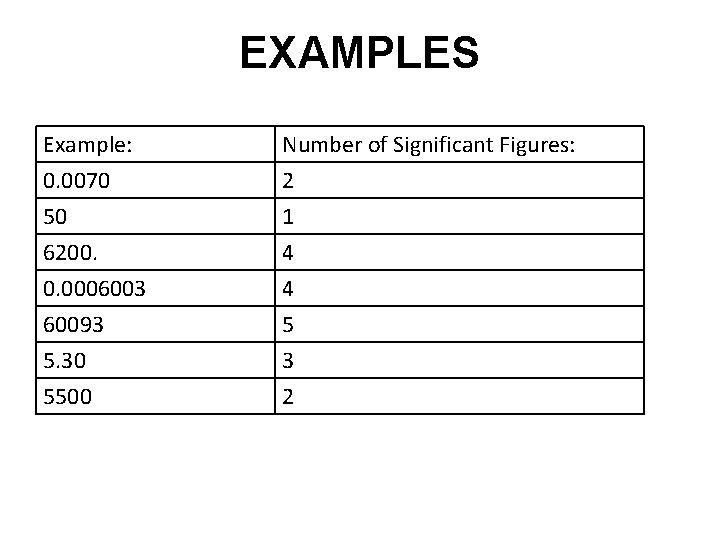
EXAMPLES Example: 0. 0070 50 6200. Number of Significant Figures: 2 1 4 0. 0006003 60093 5. 30 5500 4 5 3 2
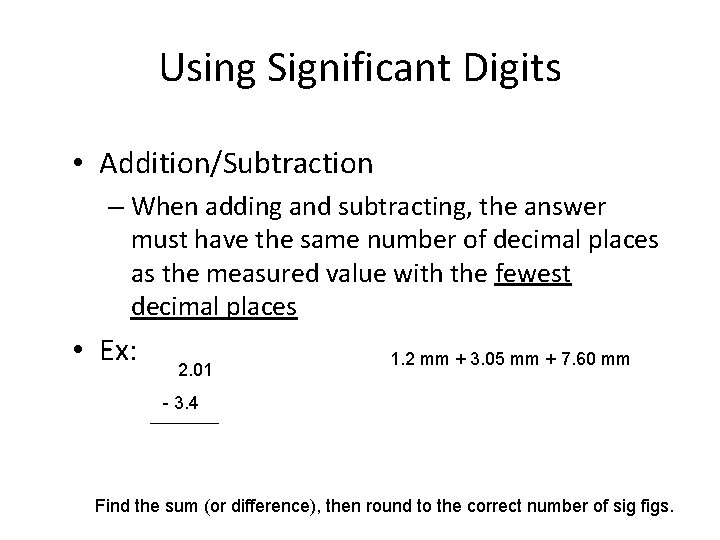
Using Significant Digits • Addition/Subtraction – When adding and subtracting, the answer must have the same number of decimal places as the measured value with the fewest decimal places • Ex: 2. 01 1. 2 mm + 3. 05 mm + 7. 60 mm - 3. 4 Find the sum (or difference), then round to the correct number of sig figs.
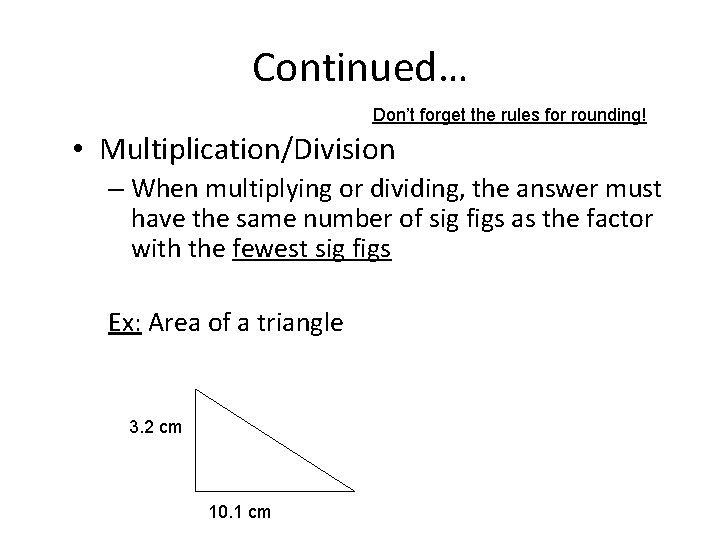
Continued… Don’t forget the rules for rounding! • Multiplication/Division – When multiplying or dividing, the answer must have the same number of sig figs as the factor with the fewest sig figs Ex: Area of a triangle 3. 2 cm 10. 1 cm
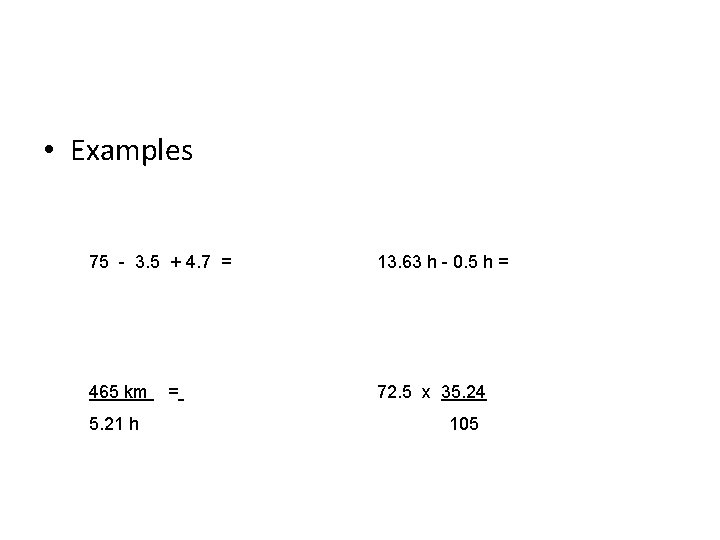
• Examples 75 - 3. 5 + 4. 7 = 13. 63 h - 0. 5 h = 465 km 72. 5 x 35. 24 5. 21 h = 105
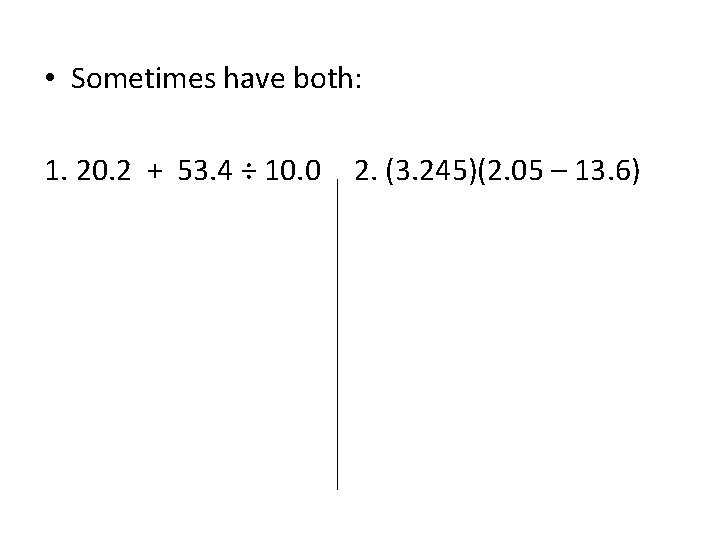
• Sometimes have both: 1. 20. 2 + 53. 4 ÷ 10. 0 2. (3. 245)(2. 05 – 13. 6)
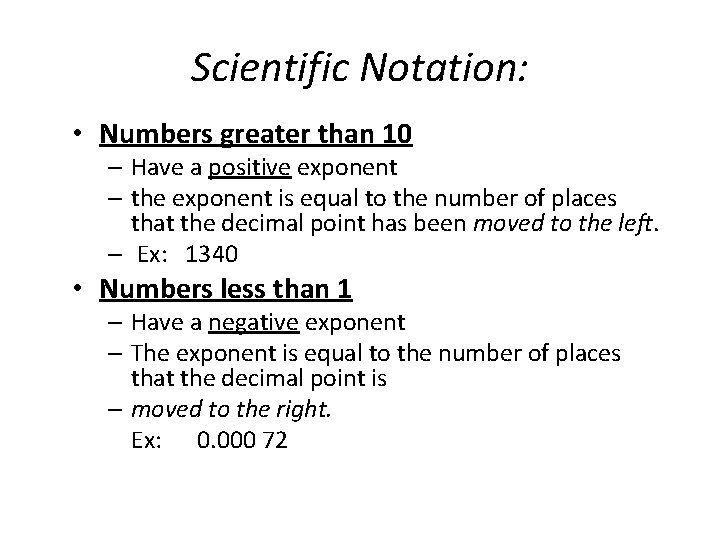
Scientific Notation: • Numbers greater than 10 – Have a positive exponent – the exponent is equal to the number of places that the decimal point has been moved to the left. – Ex: 1340 • Numbers less than 1 – Have a negative exponent – The exponent is equal to the number of places that the decimal point is – moved to the right. Ex: 0. 000 72
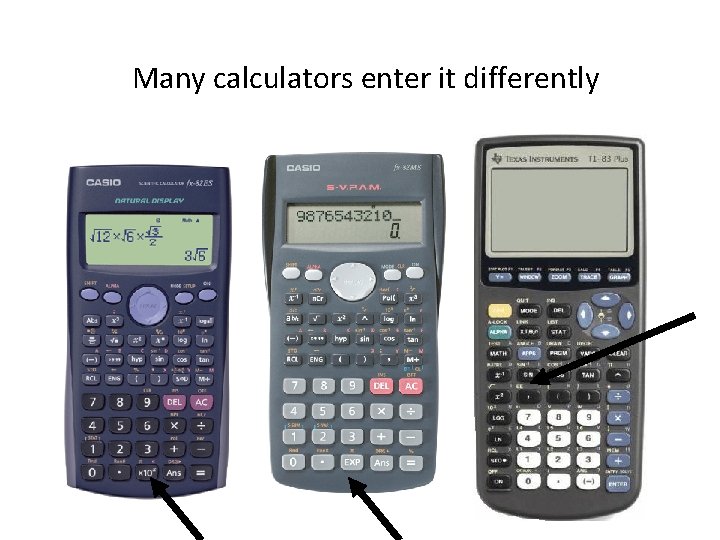
Many calculators enter it differently
Homework • Pg 349 • # 2, 3 (List # of sig figs), 4, 6 • Will be checked and corrected tomorrow!!
Homework Check • Pg 349 • # 2, 3 (List # of sig figs), 4, 6
Continued… • At times, we need to convert from small units to large units, and vice versa Convert 2000 km into m Convert 45 min into hours Convert 45346 s into hours Sometimes we can do them in our heads, but it is easy to make mistakes
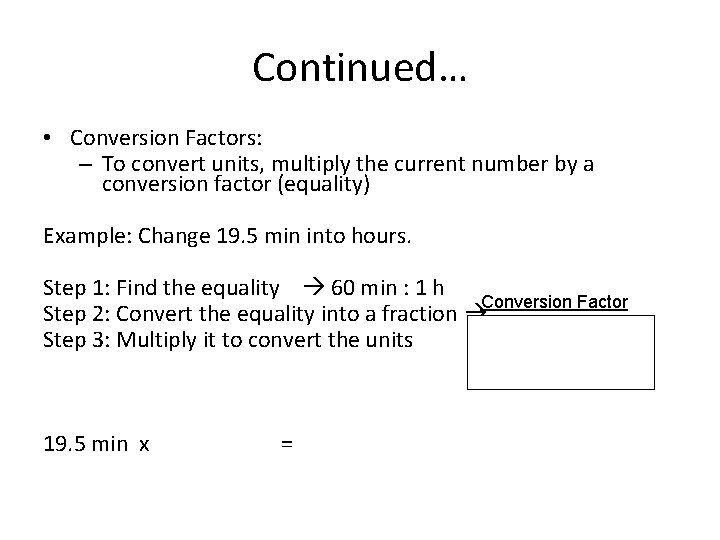
Continued… • Conversion Factors: – To convert units, multiply the current number by a conversion factor (equality) Example: Change 19. 5 min into hours. Step 1: Find the equality 60 min : 1 h Conversion Factor Step 2: Convert the equality into a fraction Step 3: Multiply it to convert the units 19. 5 min x =
Practice (Find the conversion factor first) 5. 00 km to m 4. 7 h to min 265 m to mm 23. 6 h to s