
Science 10 Ecological Roles and Relationships Life Functions

- Slides: 20
Science 10 Ecological Roles and Relationships
Life Functions � Relationships between organisms in ecosystems can be very difficult to understand. � In order to survive in an ecosystem, an organism must be able to carry out several life functions.
Life Functions � Life functions: definition › The basic processes that all organisms must be able to carry out in order to survive. › There are 8 life functions…
Life Functions � 1. Respiration › The ability to convert food into energy. � 2. Regulation › The ability to maintain a stable internal environment (homeostasis). � 3. Reproduction › The ability to produce more of their own kind (not needed for the individual organism to survive).
Life Functions 4. Growth › The ability to increase in size. 5. Excretion › The ability to remove metabolic wastes (Carbon dioxide, water and urea). 6. Nutrition › The ability to obtain and process food (autotrophic or heterotrophic).
Life Functions 7. Transport › The ability to move materials into, out of and throughout an organism. 8. Synthesis › The ability to manufacture materials that cannot be obtained from the environment.
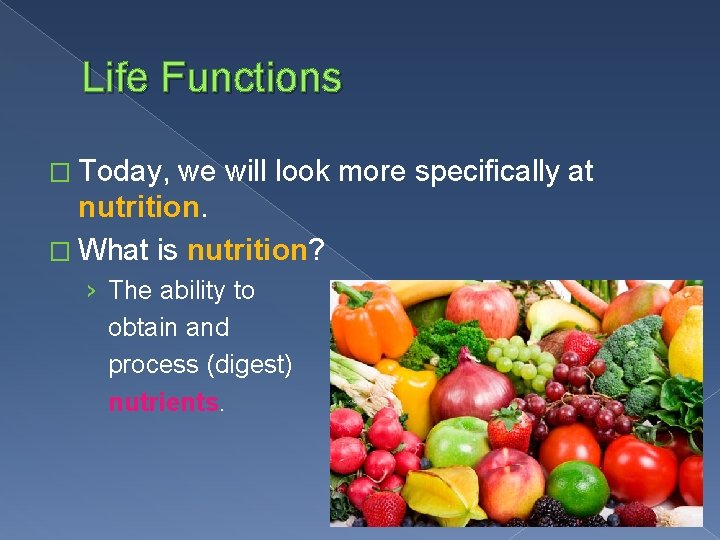
Life Functions � Today, we will look more specifically at nutrition. � What is nutrition? › The ability to obtain and process (digest) nutrients.
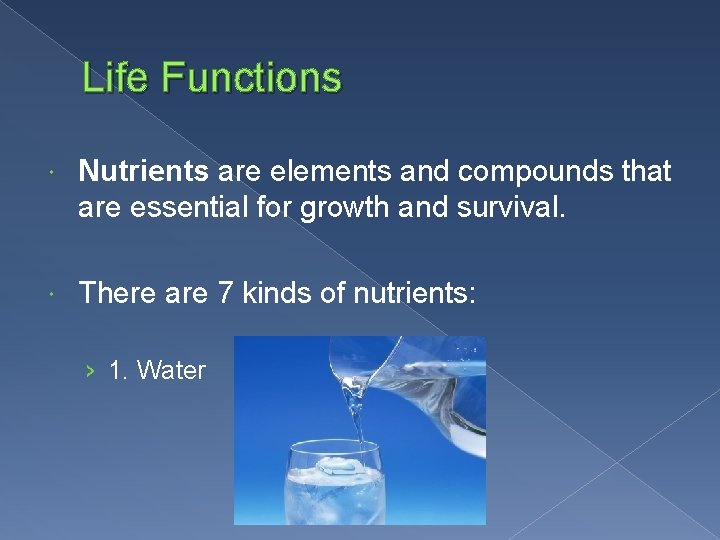
Life Functions Nutrients are elements and compounds that are essential for growth and survival. There are 7 kinds of nutrients: › 1. Water
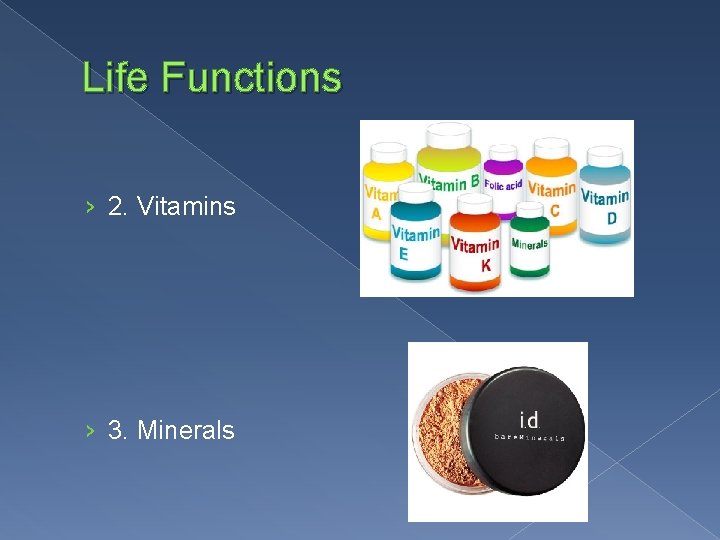
Life Functions › 2. Vitamins › 3. Minerals
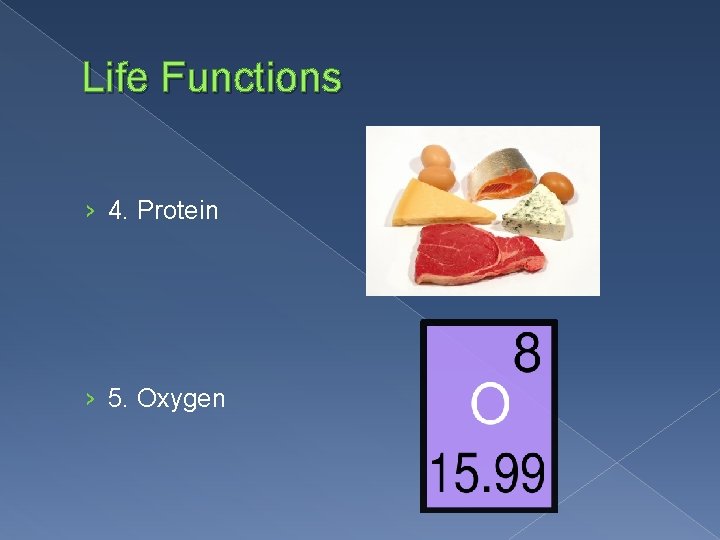
Life Functions › 4. Protein › 5. Oxygen
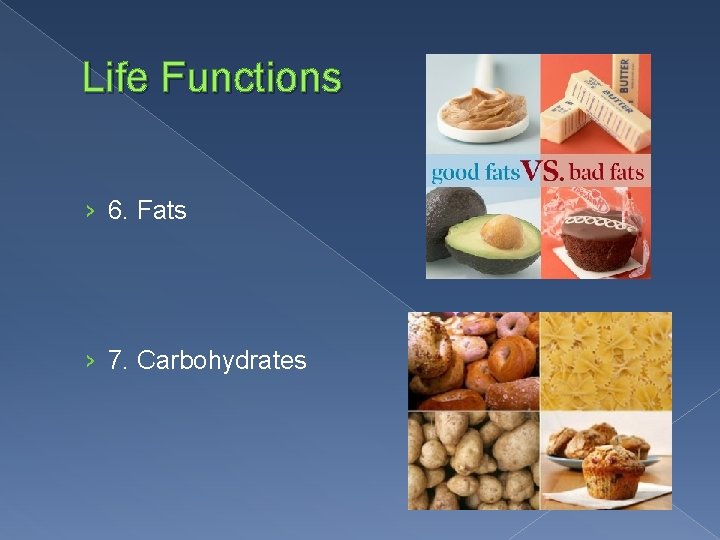
Life Functions › 6. Fats › 7. Carbohydrates
How do Organisms Obtain Nutrients? � All organisms, no matter how big or small, can only get nutrients in two ways. � They can be producers or consumers.
How do Organisms Obtain Nutrients? � Producers › They are any organisms that can make their own food. › All producers are autotrophs, they make their own food. › This usually happens through photosynthesis. › Examples: �Plants – the most important producers on land. �Algae – produce food while living in water. �Phytoplankton – microscopic plants in water
How do Organisms Obtain Nutrients? � Consumers › Any organism that gets nutrients by consuming other organisms. › Consumers are heterotrophs, they get their food from consuming and digesting other organisms. › Examples: �Humans �Caterpillars �Wolverines
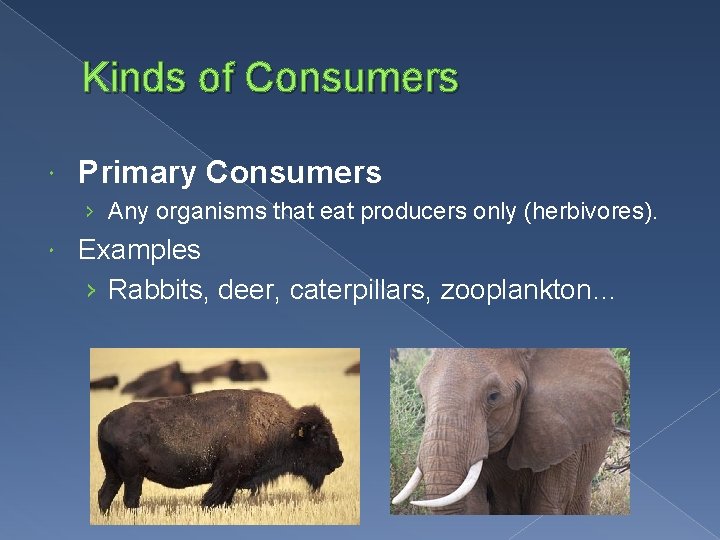
Kinds of Consumers Primary Consumers › Any organisms that eat producers only (herbivores). Examples › Rabbits, deer, caterpillars, zooplankton…
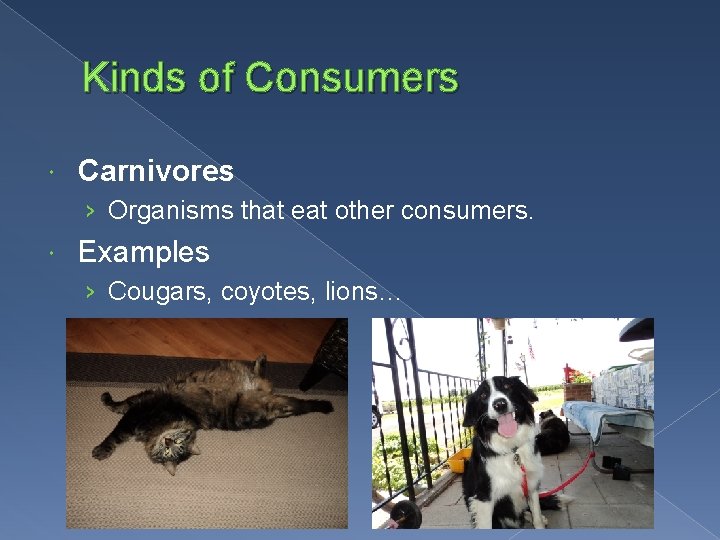
Kinds of Consumers Carnivores › Organisms that eat other consumers. Examples › Cougars, coyotes, lions…
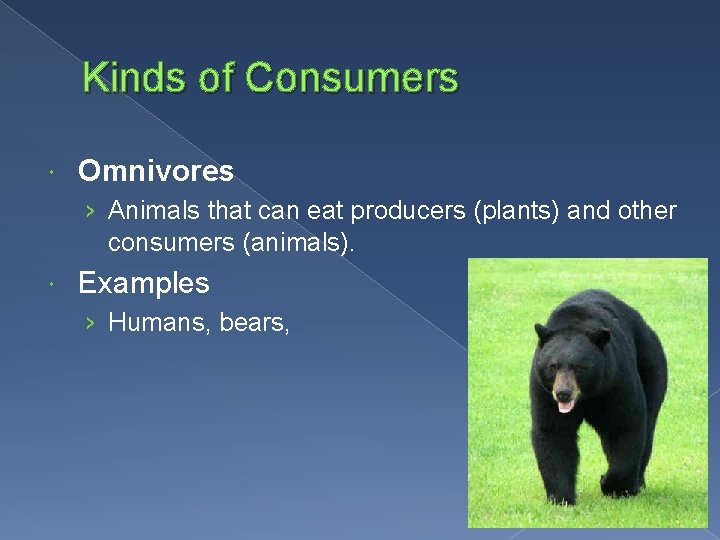
Kinds of Consumers Omnivores › Animals that can eat producers (plants) and other consumers (animals). Examples › Humans, bears,
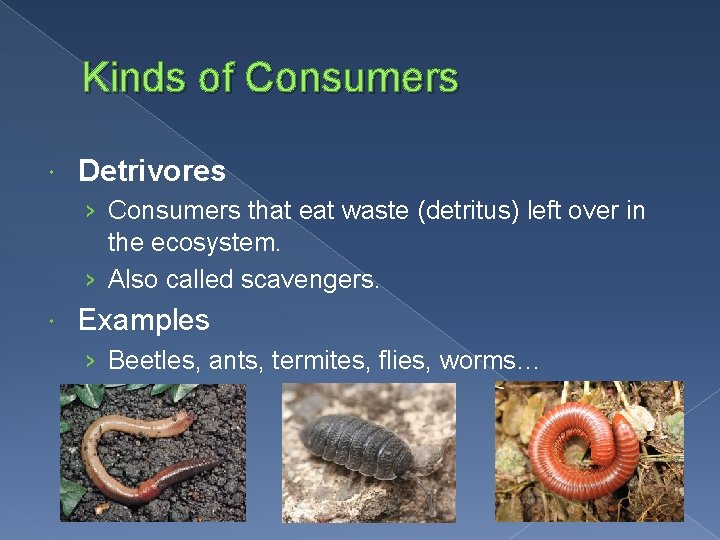
Kinds of Consumers Detrivores › Consumers that eat waste (detritus) left over in the ecosystem. › Also called scavengers. Examples › Beetles, ants, termites, flies, worms…
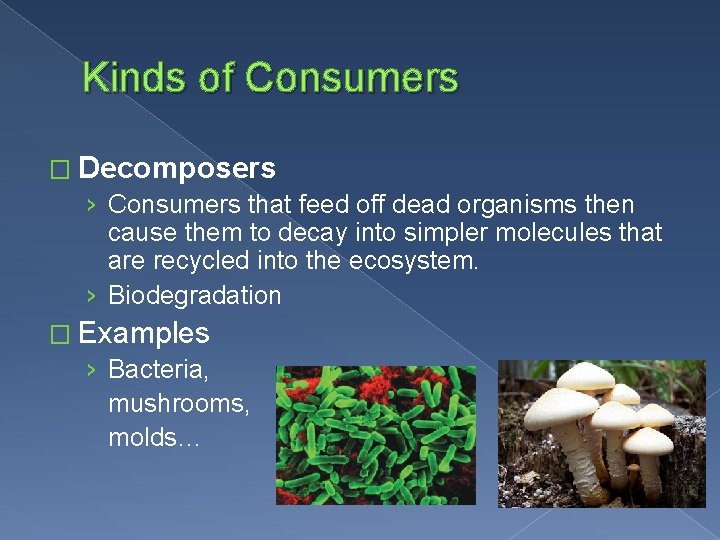
Kinds of Consumers � Decomposers › Consumers that feed off dead organisms then cause them to decay into simpler molecules that are recycled into the ecosystem. › Biodegradation � Examples › Bacteria, mushrooms, molds…
Kinds of Consumers