
Science 10 B 3 1 3 Thermodynamics Engines
Science 10 B 3. 1 -3 Thermodynamics, Engines and Energy Efficiency
Types of Systems: �Isolated �Open �Closed �Can you think of an example of each?
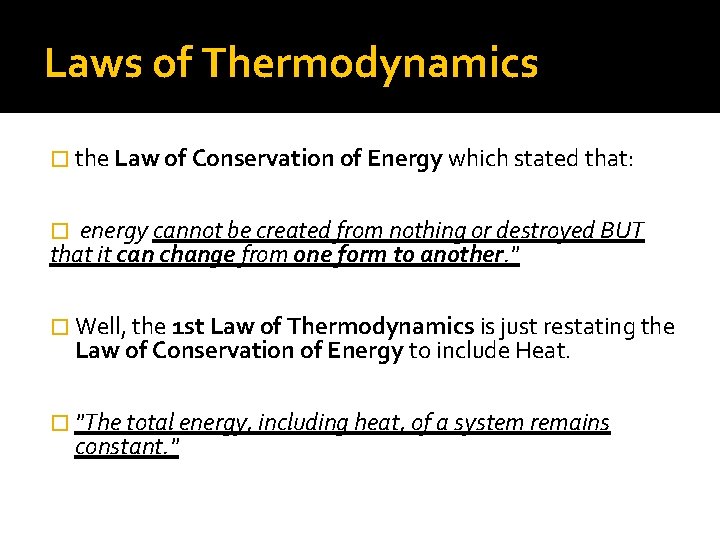
Laws of Thermodynamics � the Law of Conservation of Energy which stated that: energy cannot be created from nothing or destroyed BUT that it can change from one form to another. " � � Well, the 1 st Law of Thermodynamics is just restating the Law of Conservation of Energy to include Heat. � "The total energy, including heat, of a system remains constant. "
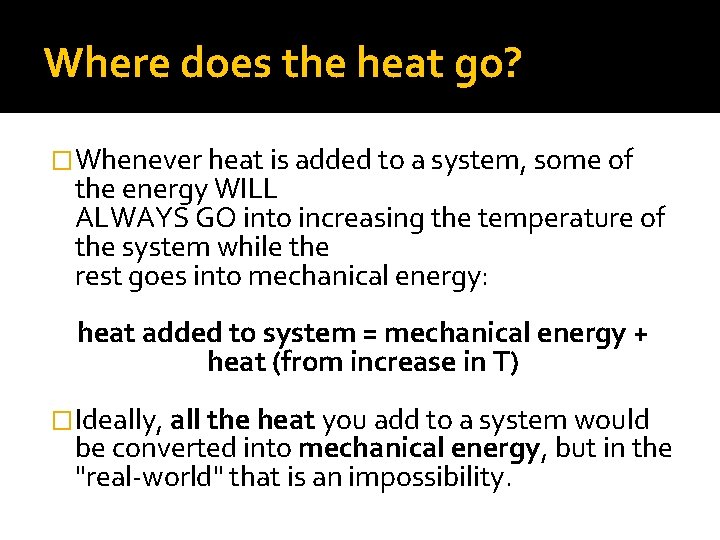
Where does the heat go? �Whenever heat is added to a system, some of the energy WILL ALWAYS GO into increasing the temperature of the system while the rest goes into mechanical energy: heat added to system = mechanical energy + heat (from increase in T) �Ideally, all the heat you add to a system would be converted into mechanical energy, but in the "real-world" that is an impossibility.
So you think you own a perfect machine? �If a machine could convert all the energy you put into it into mechanical energy, it would be called a perfect machine or a perpetual motion machine. �Many, many attempts have been made in the past to build one but frictional forces are always present to convert some of your input energy into increasing the temperature of your machine.
Laws of Thermodynamics �Well, the 2 nd Law of Thermodynamics described the direction of energy flow in natural systems. It states that: �"Heat will naturally flow from a warmer object to a cooler object, ut never from a cooler object to a warmer object. "
Heat Engines and Pumps �Heat Engines are devices that convert heat into mechanical energy as heat flows naturally from a warmer region to a cooler region. �Heat Pumps are devices that move heat from a cooler region to a warmer region. Since heat will never naturally move in this direction, work needs to be put into the system to make this happen.
Heat Engines and Pumps HEAT ENGINE HEAT PUMP � heat flows naturally from a � devices that move heat � No work necessary � work needs to be put into warmer region to a cooler region. from a cooler region to a warmer region. the system to make this happen.
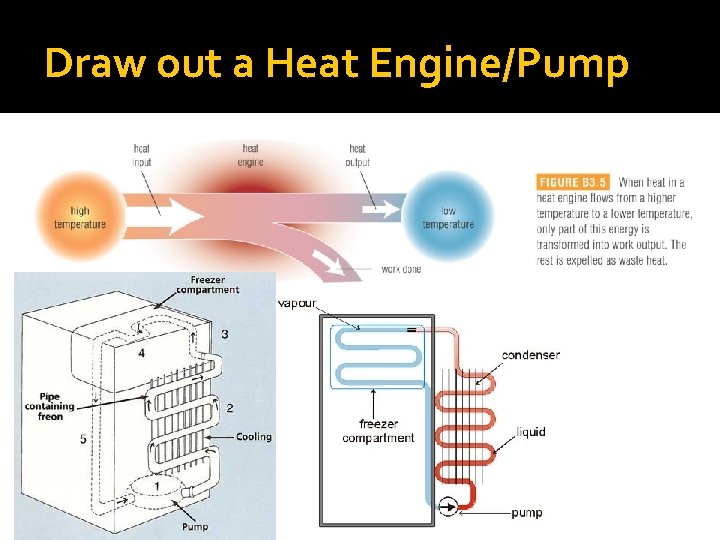
Draw out a Heat Engine/Pump
Think about it �Are these laws inter-related? Describe how these laws connect. �Practice: p 205 Questions 1 - 5, 7, 10, 11
Steam Engine Activity: � You are to research and share your information about the following types of steam engines to the class. You are to be in 8 groups selected by the teacher � You have 15 minutes to collect information and 5 minutes to think of a way to present it. � After being in a group and choosing which engine you want to research, have your group members each pick a number between 1 -4, The groups can’t have more than one person assigned to a number Choices: � The Gunpowder Engine: � The Heat Engine: � The Savery Engine: � The Watt Engine � The Internal Combustion Engine: 1794 1806 1900’s
Steam Engine Activity Roles � 1 = Researcher – Pulls information from the textbook � 2 = writer – person writes information from the researcher � 3 = Planner - person plans out possible ideas for presentation methods � 4= Lead presenter – person is lead presenter for class presentations.
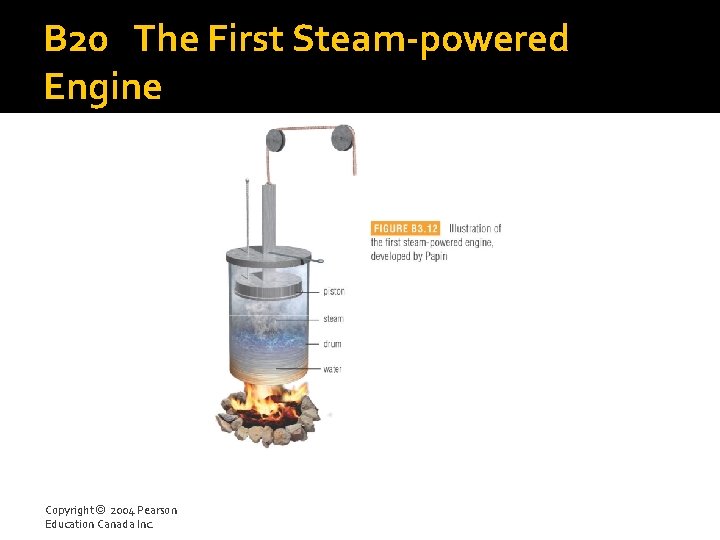
B 20 The First Steam-powered Engine Copyright © 2004 Pearson Education Canada Inc.
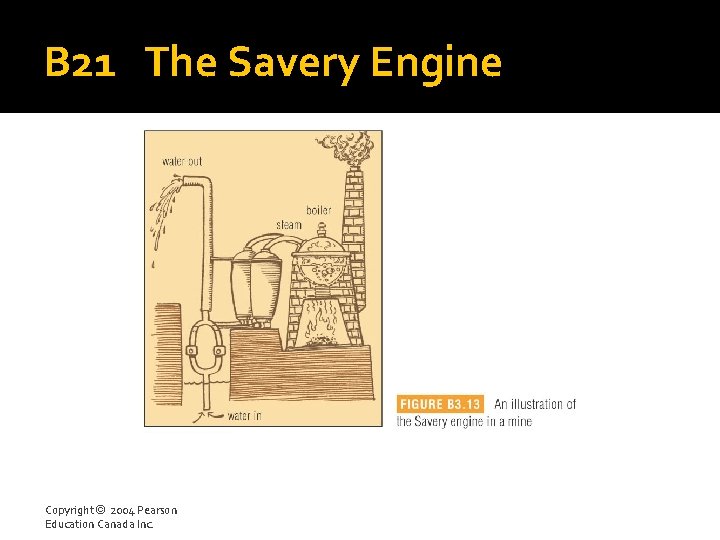
B 21 The Savery Engine Copyright © 2004 Pearson Education Canada Inc.
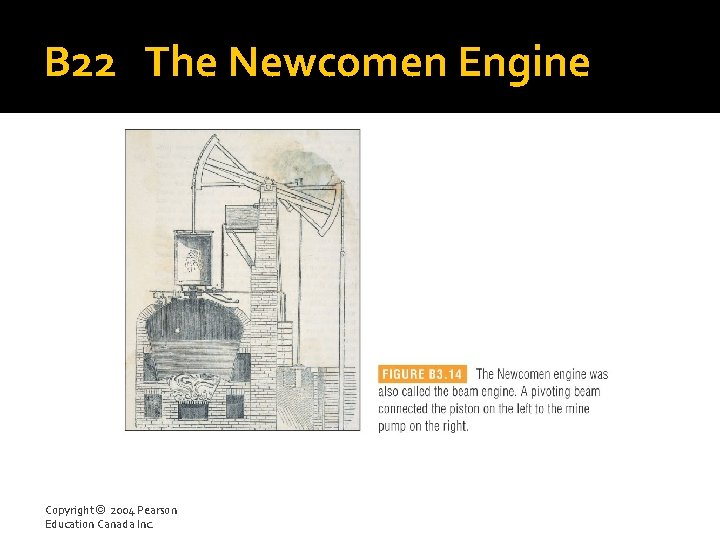
B 22 The Newcomen Engine Copyright © 2004 Pearson Education Canada Inc.
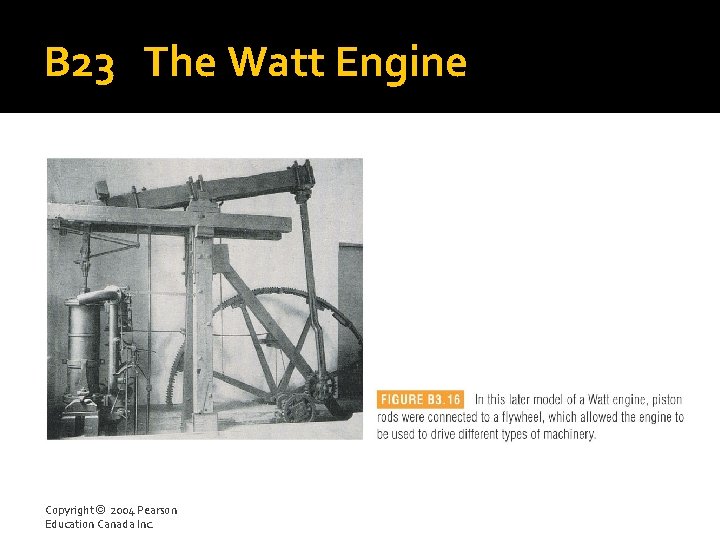
B 23 The Watt Engine Copyright © 2004 Pearson Education Canada Inc.
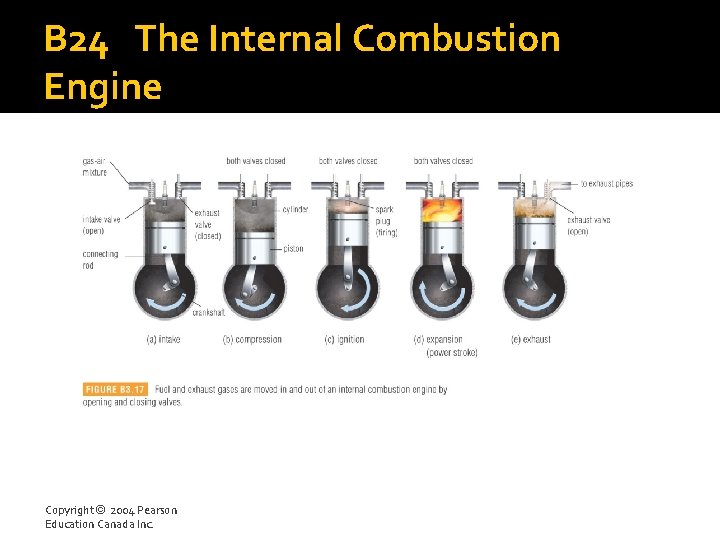
B 24 The Internal Combustion Engine Copyright © 2004 Pearson Education Canada Inc.
Useful Energy The purpose of any machine is to convert the initial energy added to it into the form of energy you need to do the work you want done. �The initial energy source is called the energy input. �The desired energy needed to do the work is called useful energy output. �The work the machine is supposed to do is called the useful work output.
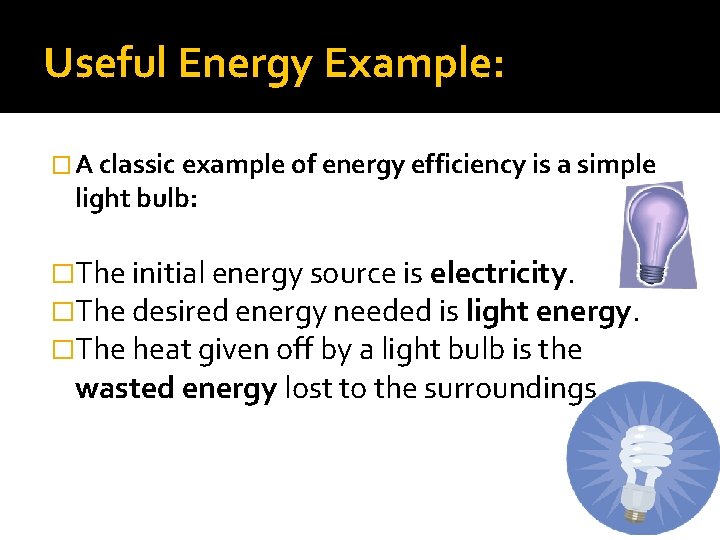
Useful Energy Example: � A classic example of energy efficiency is a simple light bulb: �The initial energy source is electricity. �The desired energy needed is light energy. �The heat given off by a light bulb is the wasted energy lost to the surroundings.
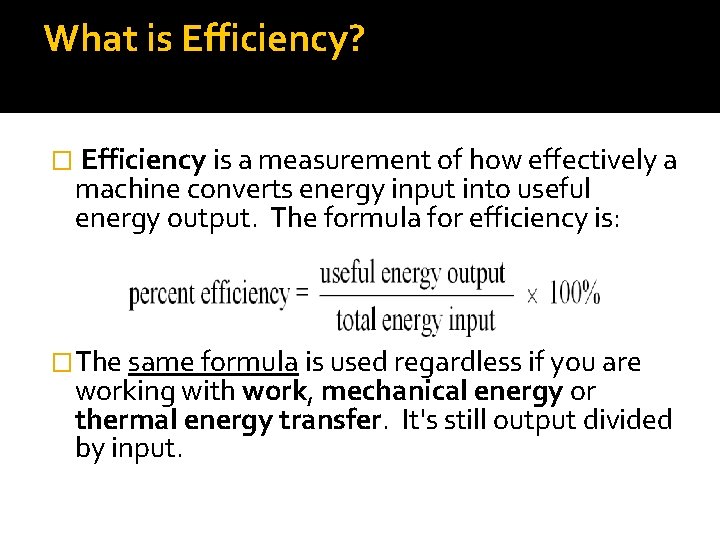
What is Efficiency? � Efficiency is a measurement of how effectively a machine converts energy input into useful energy output. The formula for efficiency is: �The same formula is used regardless if you are working with work, mechanical energy or thermal energy transfer. It's still output divided by input.
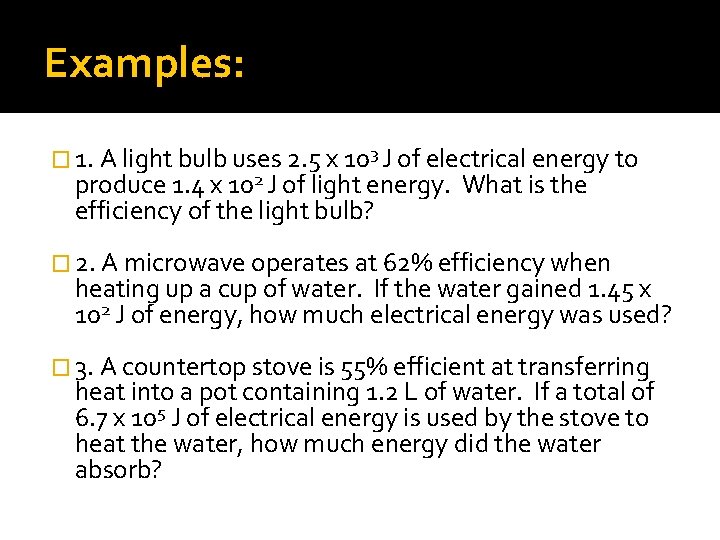
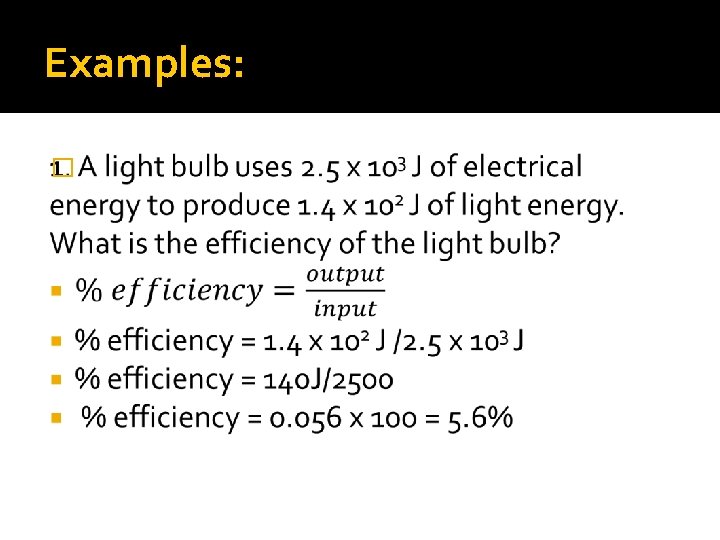
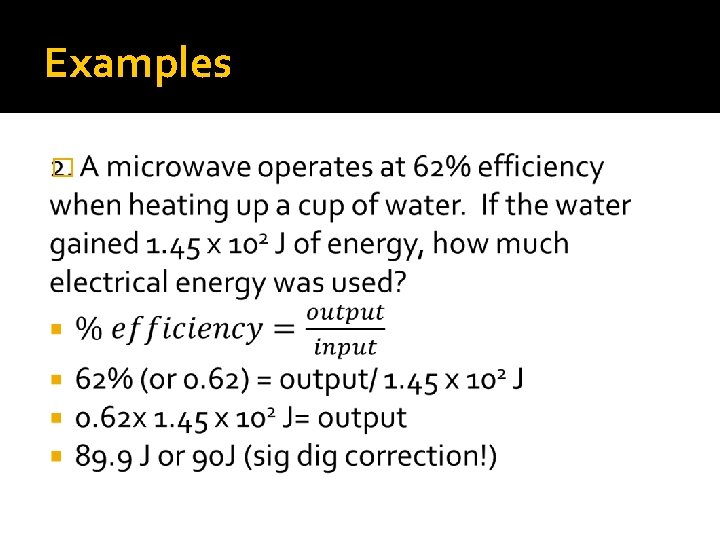
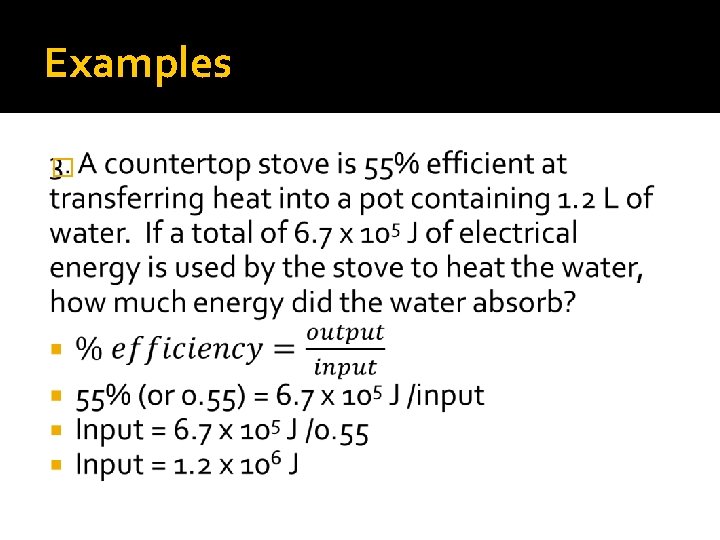
Examples: � 1. A light bulb uses 2. 5 x 10³ J of electrical energy to produce 1. 4 x 10² J of light energy. What is the efficiency of the light bulb? � 2. A microwave operates at 62% efficiency when heating up a cup of water. If the water gained 1. 45 x 102 J of energy, how much electrical energy was used? � 3. A countertop stove is 55% efficient at transferring heat into a pot containing 1. 2 L of water. If a total of 6. 7 x 10⁵ J of electrical energy is used by the stove to heat the water, how much energy did the water absorb?
Examples: �
Examples �
Examples �
Practice: �B 3. 3 Check and Reflect p 220, #1 - 3 and 5 - 9
- Slides: 25