
Science 10 Aim Intro to Energy Flow in
- Slides: 17
Science 10 �Aim: Intro to Energy Flow in Global Systems
Agenda �Go over Unit test �Intro to Energy Flow in Global Systems �Next class
Defining Systems System: The part of the universe you wish to study. Surroundings: Anything outside the system.
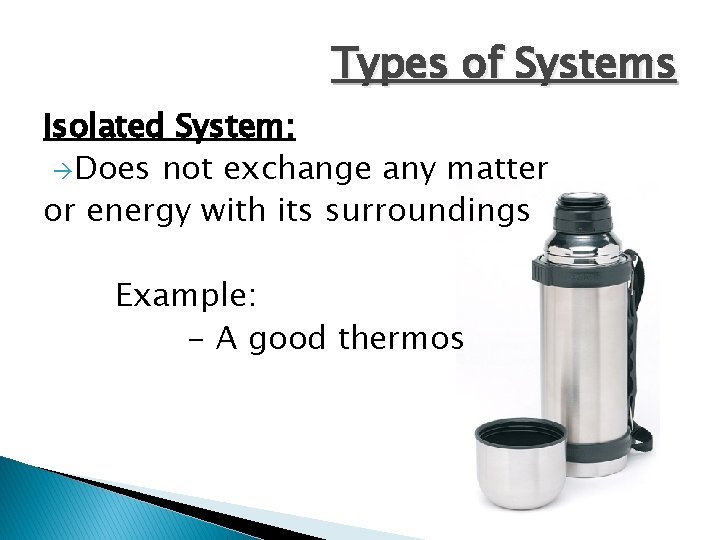
Types of Systems Isolated System: Does not exchange any matter or energy with its surroundings Example: - A good thermos
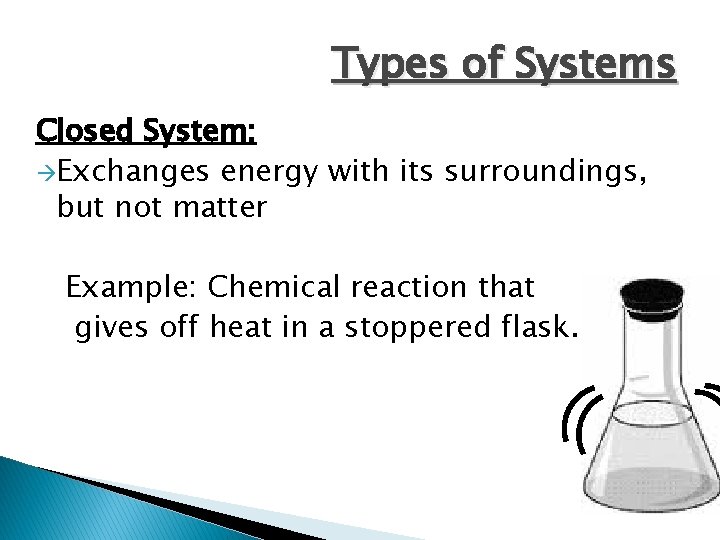
Types of Systems Closed System: Exchanges energy with its surroundings, but not matter Example: Chemical reaction that gives off heat in a stoppered flask.
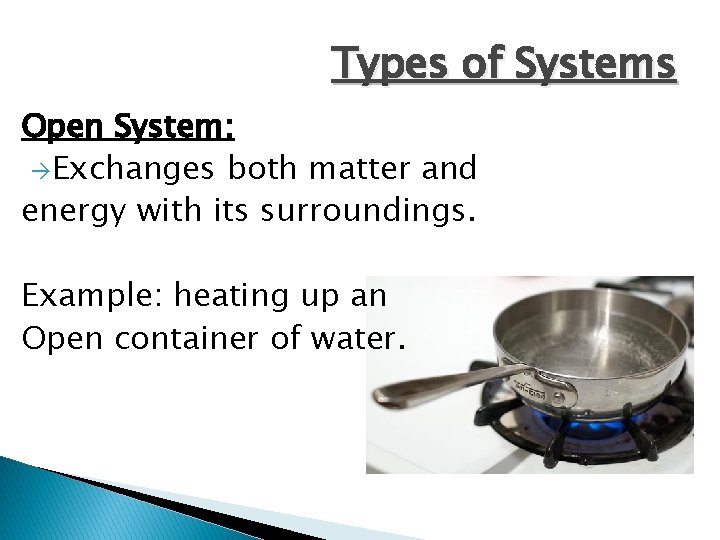
Types of Systems Open System: Exchanges both matter and energy with its surroundings. Example: heating up an Open container of water.
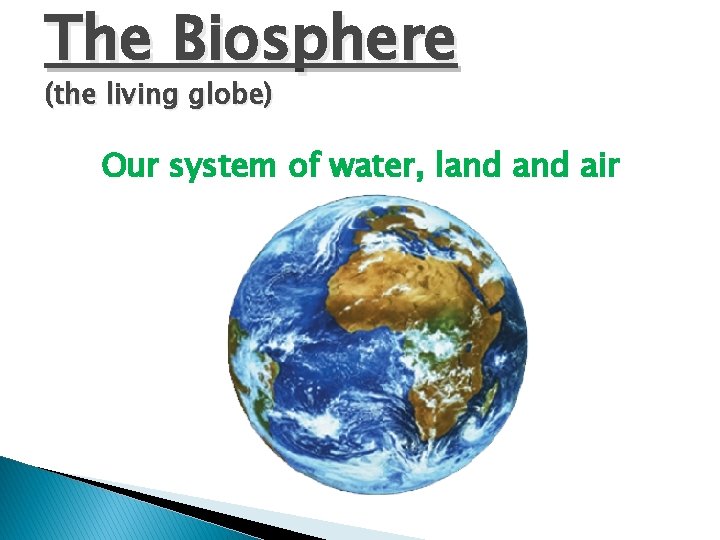
The Biosphere (the living globe) Our system of water, land air
The Biosphere (the living globe) The biosphere requires a constant supply of energy to function.
The Biosphere (the living globe) The sun delivers this energy daily.
The Biosphere (the living globe) Consists of three components: 1) Atmosphere 2) Hydrosphere 3) Lithosphere
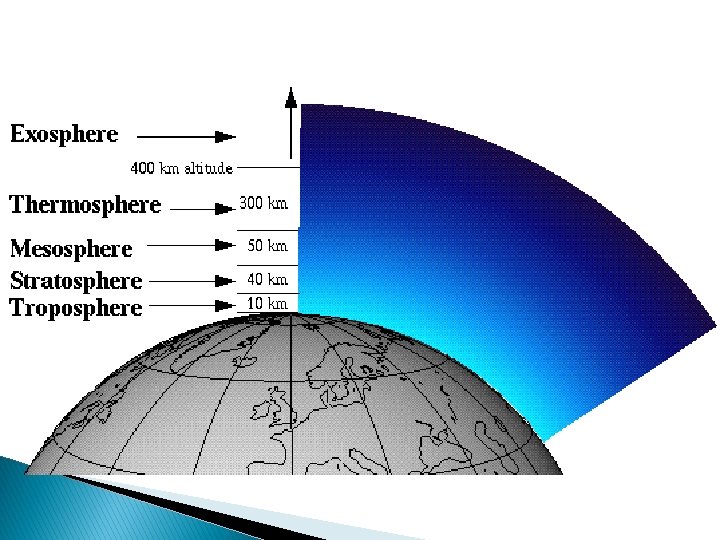
The Biosphere: Atmosphere �A thin layer of well mixed gasses (mostly nitrogen (78%) and oxygen (21%)) surrounding the Earth. � Allows vital light rays to pass through to the Earth but shields us against lethal radiation.
The Biosphere: Atmosphere Most of the atmosphere is concentrated in the lower 2 layers: �Troposphere: 0 – 12 km high �Stratosphere: 13 – 50 km high, �Mesophere: 50 – 80 km high �Thermosphere : 80 km – 300 km
The Biosphere: Atmosphere �O 2 and O 3 (ozone) in the outermost layers of the atmosphere absorb most of the harmful ultraviolet type radiation. Most of which is in the stratosphere. �Also burns most meteorites.
Hydrosphere: �All of the Earth’s water (Includes water in the air and ground water). �The hydrologic cycle is the evaporation and condensation of the Earth’s water. �Water continuously cycles in and out of the atmosphere.
Hydrosphere: �Clouds are water droplets found mostly in the troposphere �The Cryosphere consists of water that is temporarily frozen in polar ice caps, snow, permafrost, and glaciers.
Lithosphere: �All of the land (soil) �Provides the water and minerals needed by plants to produce the food for all trophic levels. �Varies in thickness from 100 – 200 km thick.