
Science 10 Aim Climate Weather and global warming
Science 10 Aim: Climate, Weather, and global warming

Agenda �Climate, Weather, and global warming �Bold Vocab p. 342 – 375 Quiz Wednesday �Next class
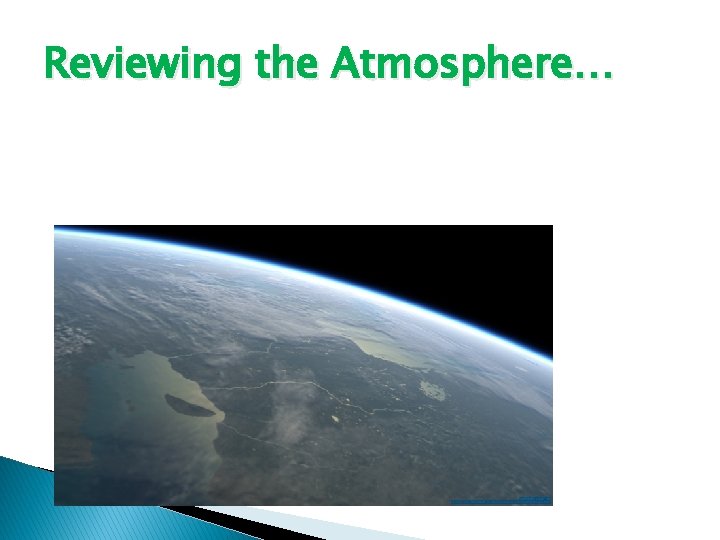
Reviewing the Atmosphere…

The Radiation Budget � the total amount of energy the Earth receives and loses � is held in a state of balance by the three components of the biosphere. � All of the energy entering the atmosphere is either absorbed by the earth, or reflected back into space. Albedo is the reflectivity of a surface.
Keeping in the heat � Insolation is the amount of solar energy received by a region of the Earths surface. � Greenhouse gasses absorb and reradiate the energy from the sun, keeping the Earth warm. � These gasses include water vapour, carbon dioxide, methane, nitrous oxide (dinitrogen monoxide), ground level (tropospheric) ozone, halocarbons (like chlorofluorocarbons (CFC’s)), and hydro fluorocarbons (HFC’s).

Weather: � Short term changes in temperature, precipitation, winds, humidity, clouds, storms, and air pressure. � Weather results from energy conversions: radiant energy from the sun to thermal energy in the atmosphere to mechanical energy.
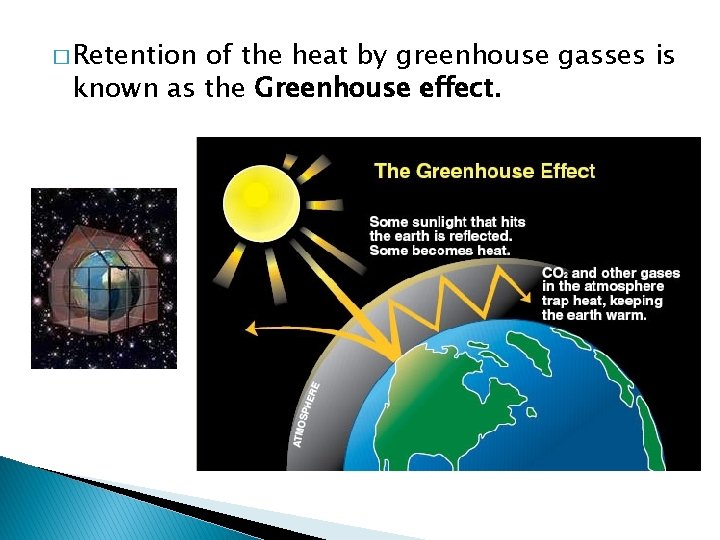
� Retention of the heat by greenhouse gasses is known as the Greenhouse effect.
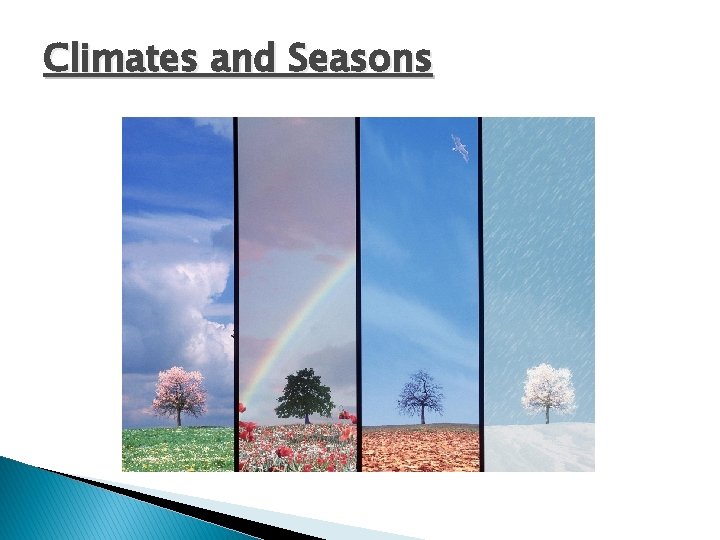
Climates and Seasons
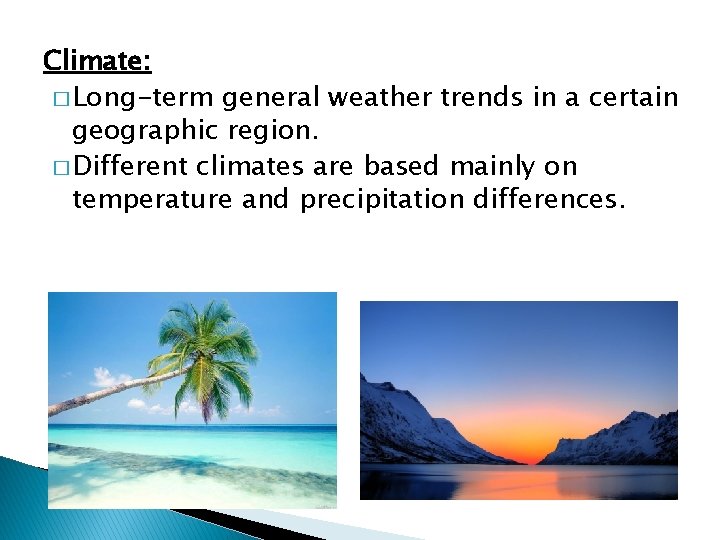
Climate: � Long-term general weather trends in a certain geographic region. � Different climates are based mainly on temperature and precipitation differences.
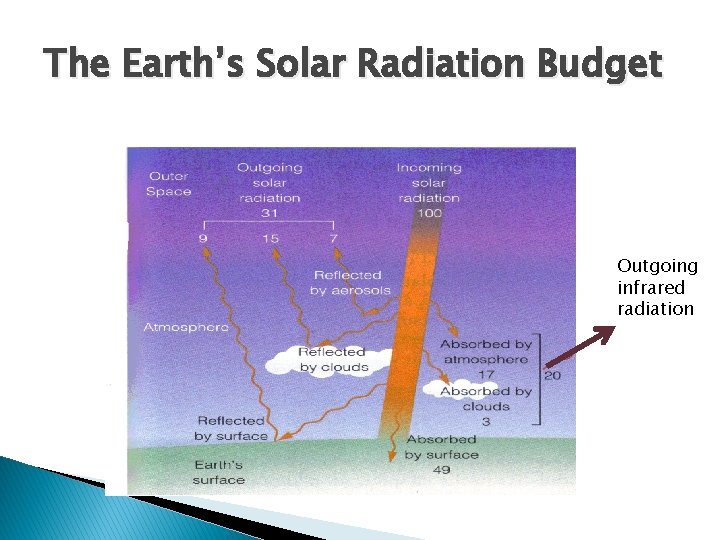
The Earth’s Solar Radiation Budget Outgoing infrared radiation
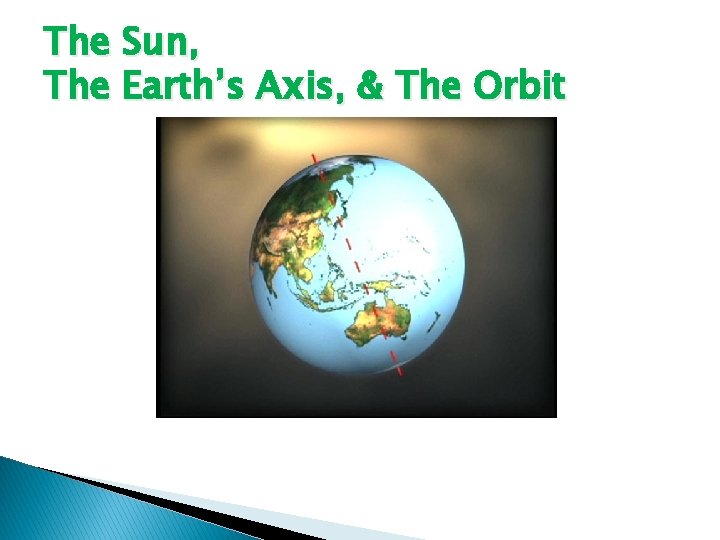
The Sun, The Earth’s Axis, & The Orbit
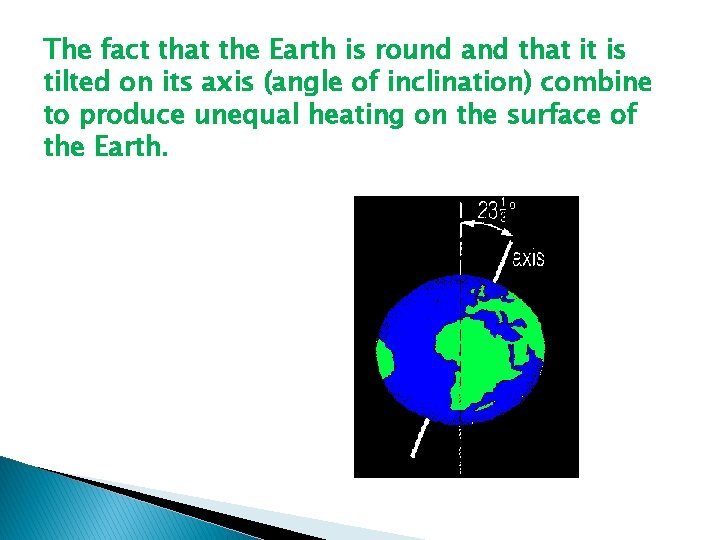
The fact that the Earth is round and that it is tilted on its axis (angle of inclination) combine to produce unequal heating on the surface of the Earth.
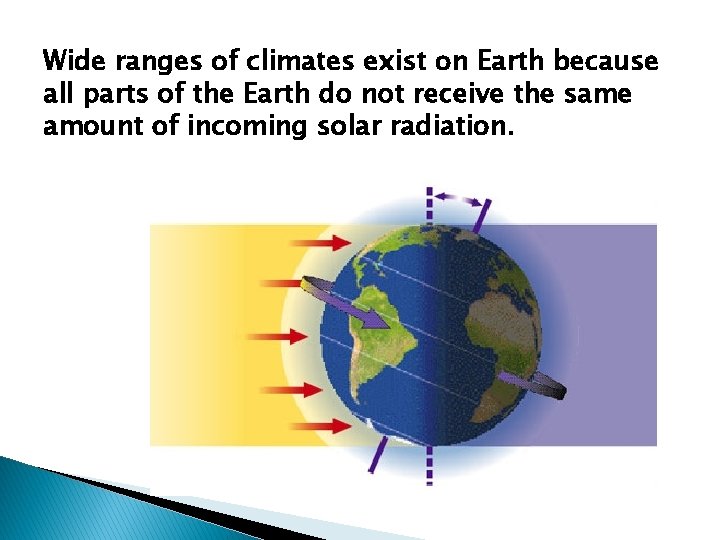
Wide ranges of climates exist on Earth because all parts of the Earth do not receive the same amount of incoming solar radiation.
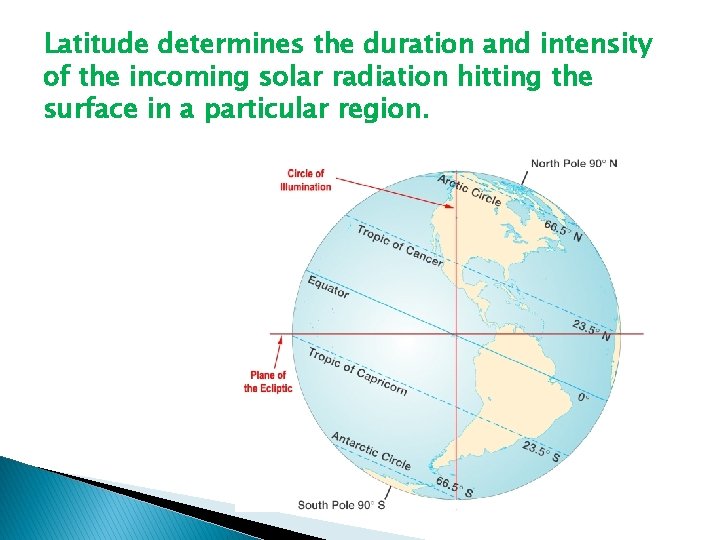
Latitude determines the duration and intensity of the incoming solar radiation hitting the surface in a particular region.
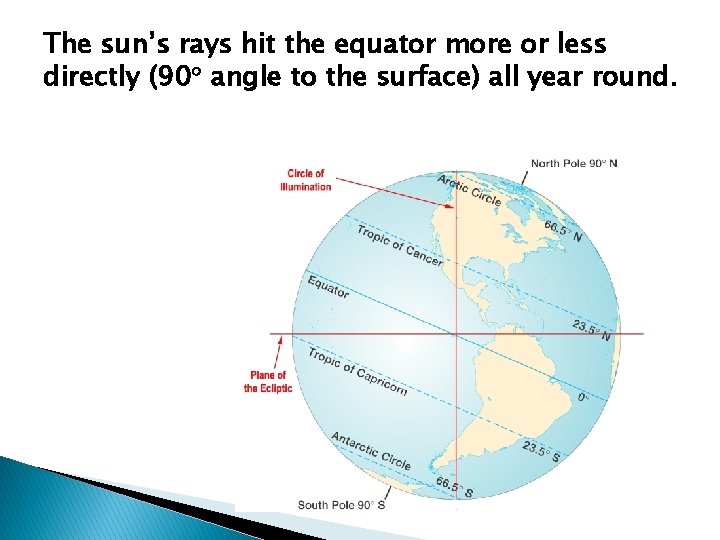
The sun’s rays hit the equator more or less directly (90 angle to the surface) all year round.
As we move away from the equator, the suns rays are spread out over a greater area intense) Therefore, the same amount of energy is covering more surface (= less
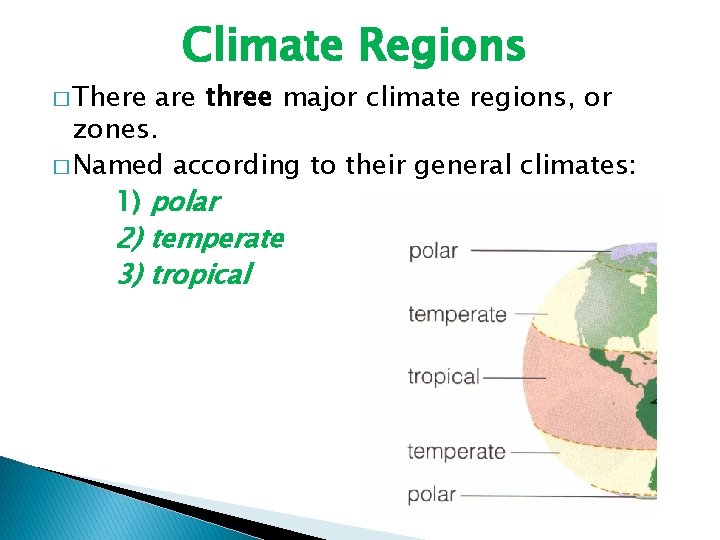
� There Climate Regions are three major climate regions, or zones. � Named according to their general climates: 1) polar 2) temperate 3) tropical
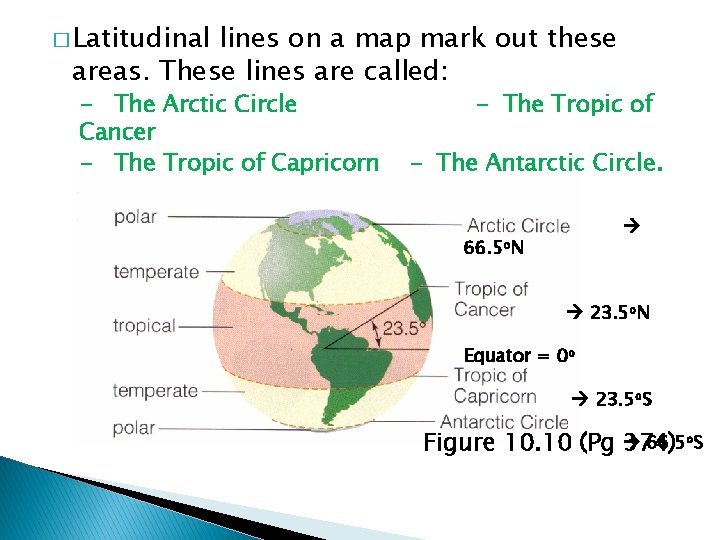
� Latitudinal lines on a map mark out these areas. These lines are called: - The Arctic Circle Cancer - The Tropic of Capricorn - The Tropic of - The Antarctic Circle. 66. 5 o. N 23. 5 o. N Equator = 0 o 23. 5 o. S 66. 5 o. S Figure 10. 10 (Pg 374)
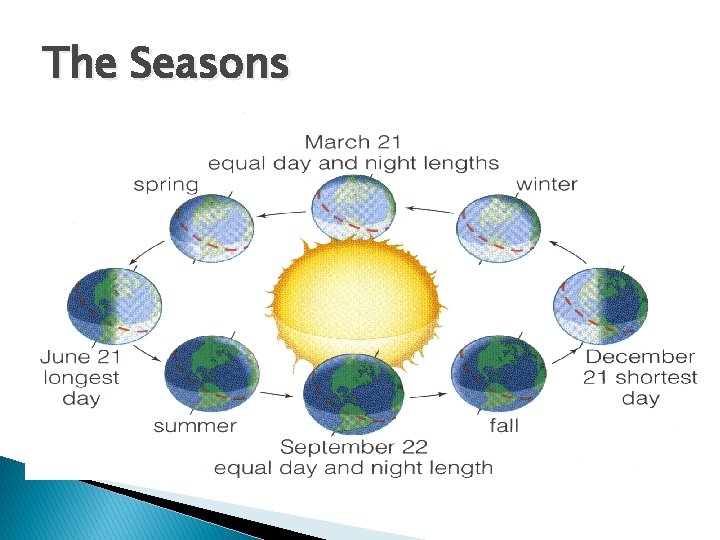
The Seasons
- Slides: 19