
Sci 4 3 Types of Machines Pages 98

- Slides: 15
Sci. 4 -3 Types of Machines Pages 98 - 105
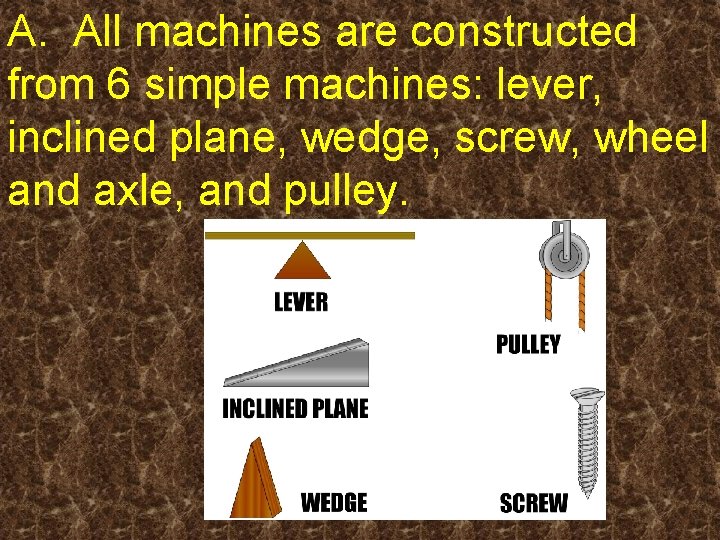
A. All machines are constructed from 6 simple machines: lever, inclined plane, wedge, screw, wheel and axle, and pulley.
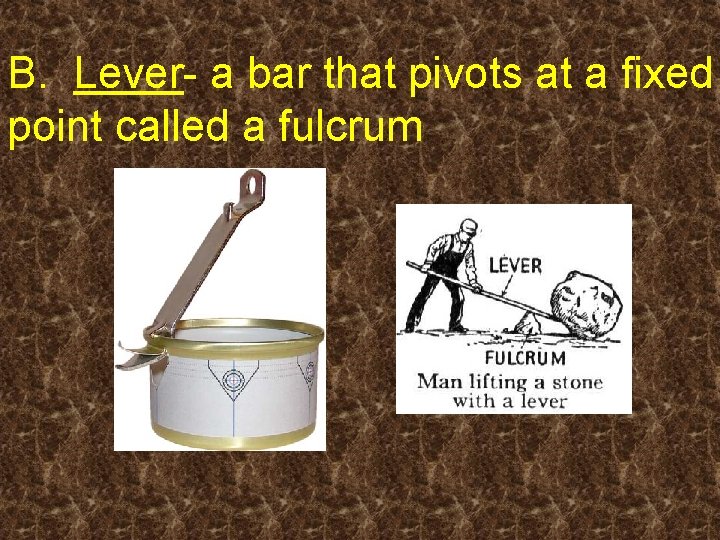
B. Lever- a bar that pivots at a fixed point called a fulcrum
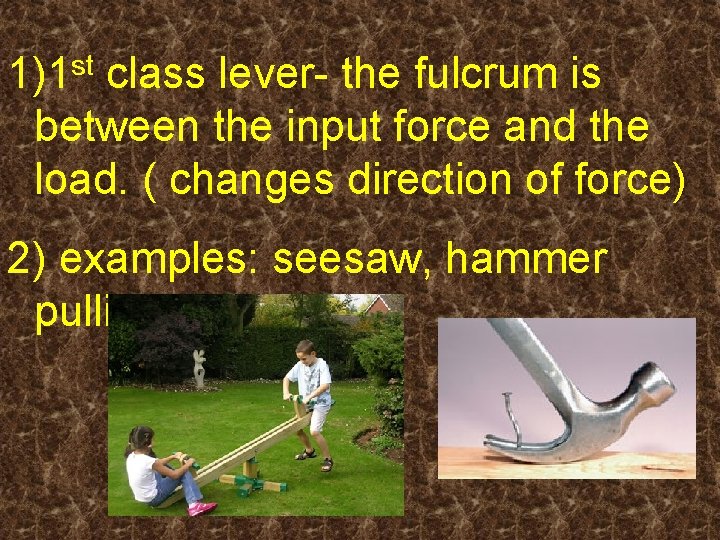
st 1)1 class lever- the fulcrum is between the input force and the load. ( changes direction of force) 2) examples: seesaw, hammer pulling nail
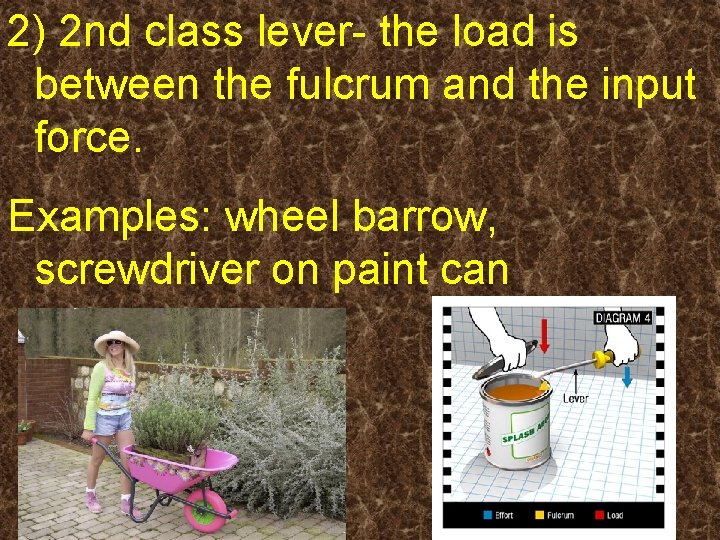
2) 2 nd class lever- the load is between the fulcrum and the input force. Examples: wheel barrow, screwdriver on paint can
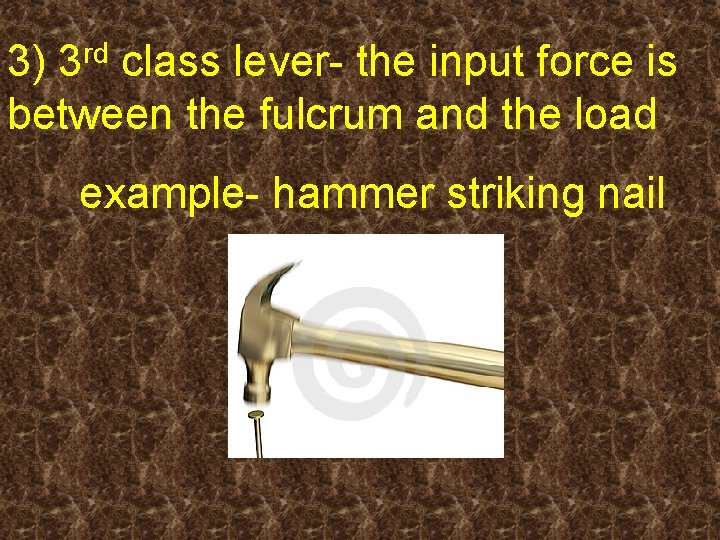
rd 3 3) class lever- the input force is between the fulcrum and the load example- hammer striking nail
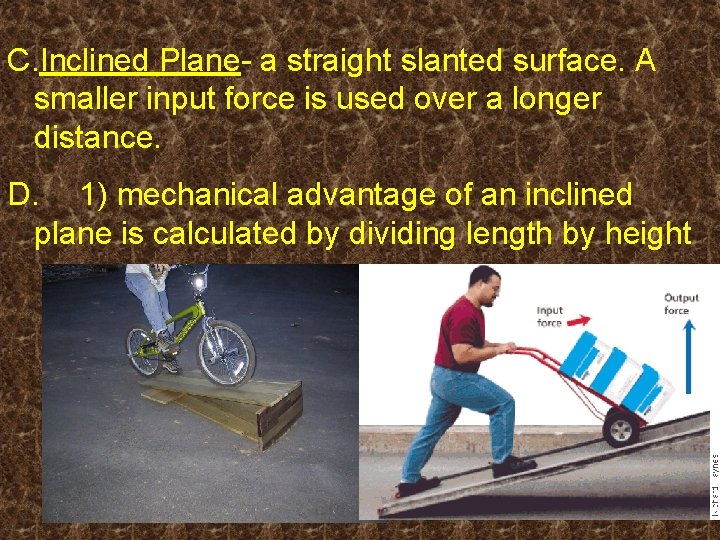
C. Inclined Plane- a straight slanted surface. A smaller input force is used over a longer distance. D. 1) mechanical advantage of an inclined plane is calculated by dividing length by height
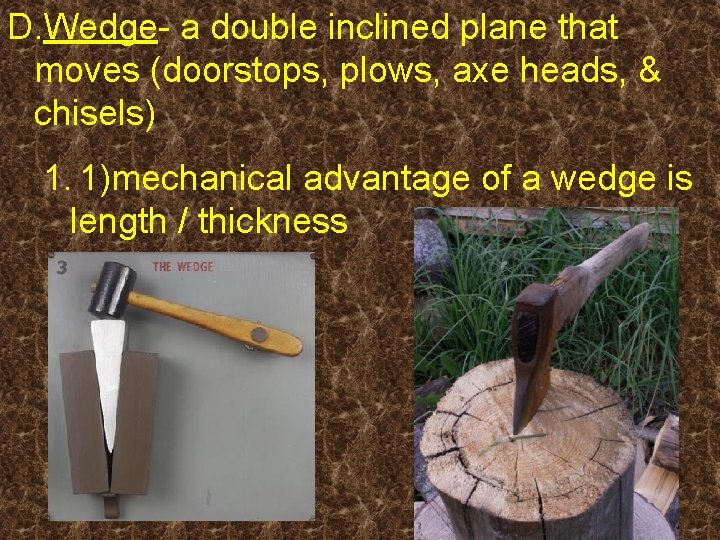
D. Wedge- a double inclined plane that moves (doorstops, plows, axe heads, & chisels) 1. 1)mechanical advantage of a wedge is length / thickness
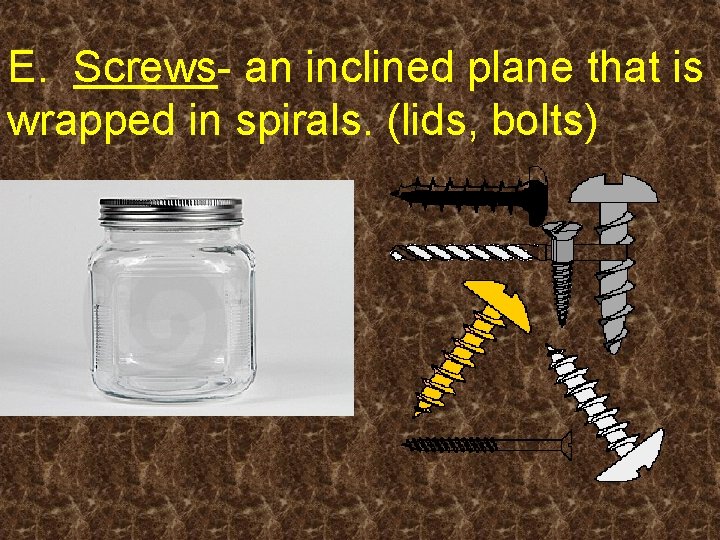
E. Screws- an inclined plane that is wrapped in spirals. (lids, bolts)
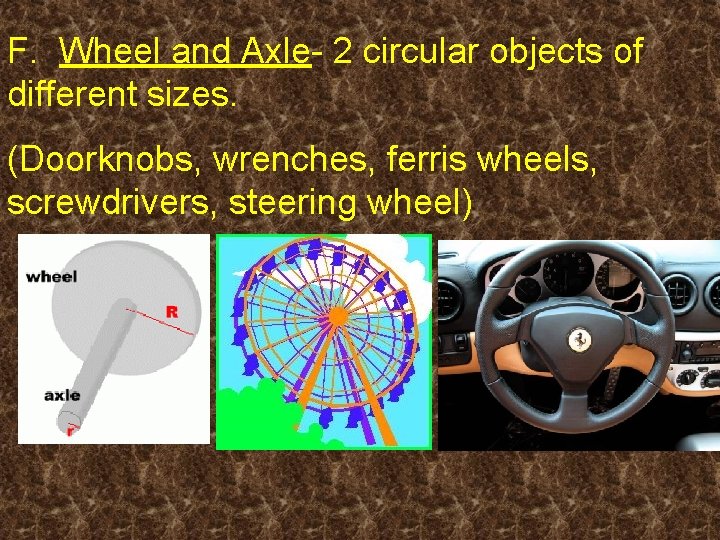
F. Wheel and Axle- 2 circular objects of different sizes. (Doorknobs, wrenches, ferris wheels, screwdrivers, steering wheel)
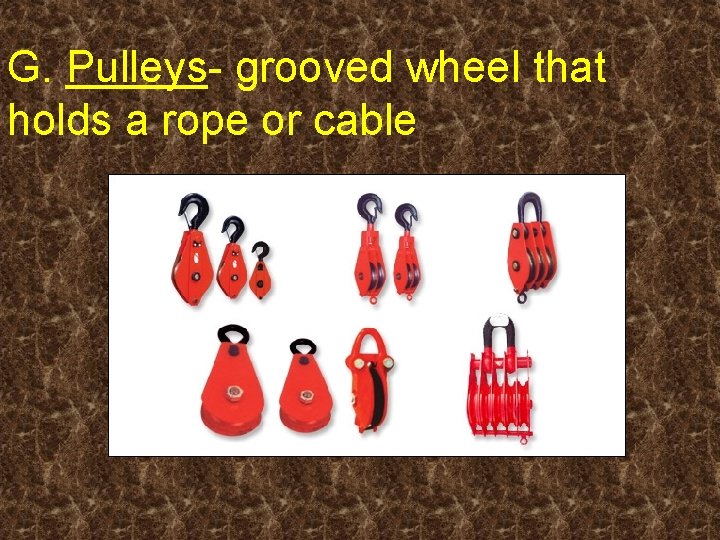
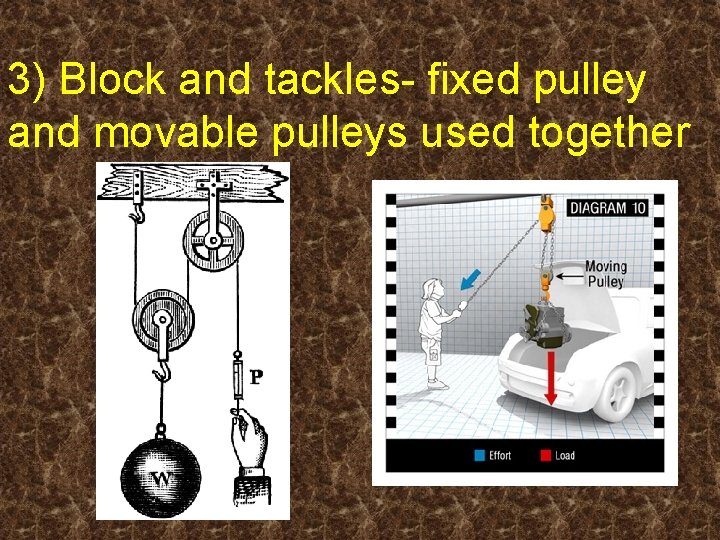
G. Pulleys- grooved wheel that holds a rope or cable
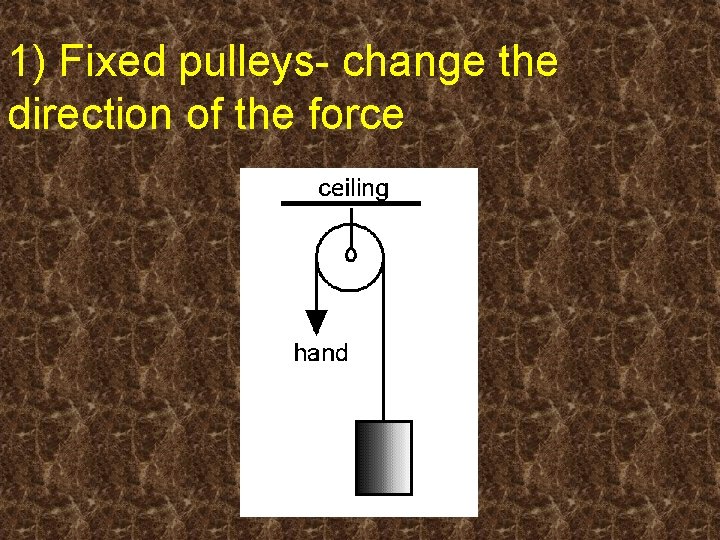
1) Fixed pulleys- change the direction of the force
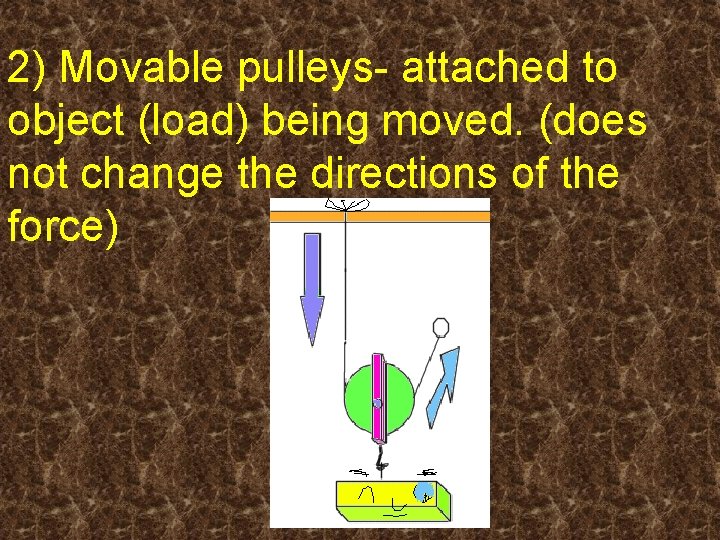
2) Movable pulleys- attached to object (load) being moved. (does not change the directions of the force)
3) Block and tackles- fixed pulley and movable pulleys used together
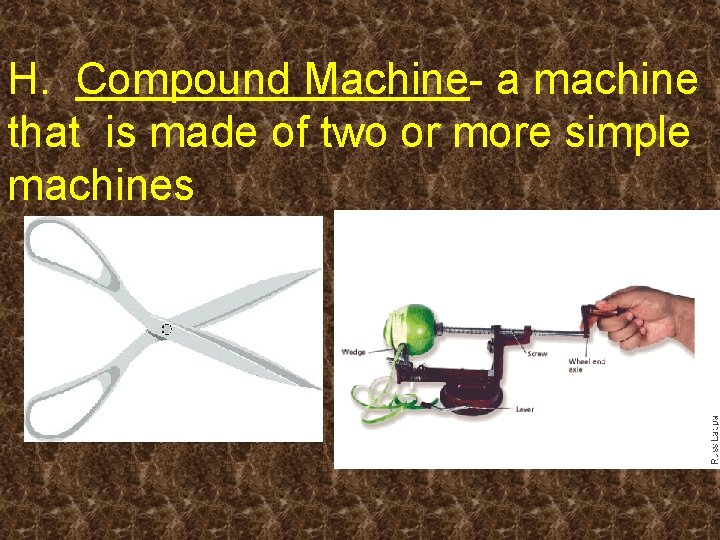
H. Compound Machine- a machine that is made of two or more simple machines