
SchoolWide Positive Behavioral Interventions and Supports SWPBIS Data
School-Wide Positive Behavioral Interventions and Supports (SWPBIS) Data Based Procedures for Monitoring Christine Downs & Erik Maki with support from Brandi Simonsen, Jen Freeman, Susannah Everett, Adam Feinberg, Katie Meyer, & George Sugai
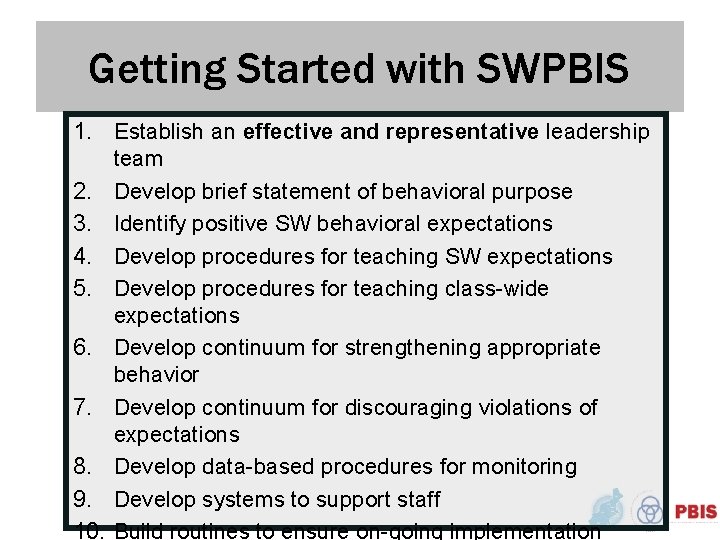
Getting Started with SWPBIS 1. Establish an effective and representative leadership team 2. Develop brief statement of behavioral purpose 3. Identify positive SW behavioral expectations 4. Develop procedures for teaching SW expectations 5. Develop procedures for teaching class-wide expectations 6. Develop continuum for strengthening appropriate behavior 7. Develop continuum for discouraging violations of expectations 8. Develop data-based procedures for monitoring 9. Develop systems to support staff 10. Build routines to ensure on-going implementation
Getting Started with SWPBIS 1. Establish an effective leadership team 2. Develop brief statement of behavioral purpose 3. Identify positive SW behavioral expectations II. B. viii 4. Develop procedures for teaching SW expectations 5. Develop procedures for teaching class-wide expectations 6. Develop continuum for strengthening appropriate behavior 7. Develop continuum for discouraging violations of expectations 8. Develop data-based procedures for monitoring 9. Develop systems to support staff 10. Build routines to ensure on-going implementation
Why Use Data for Decision Making? • Decisions are more likely to be effective and efficient when they are based on data. Use data to: – Identify problems – Refine problems – Define the questions that lead to a solution • The quality of decision making depends most on defining problems with precision & clarity. • Data help place the “problem” in the context rather than in the students. II. B. vii i
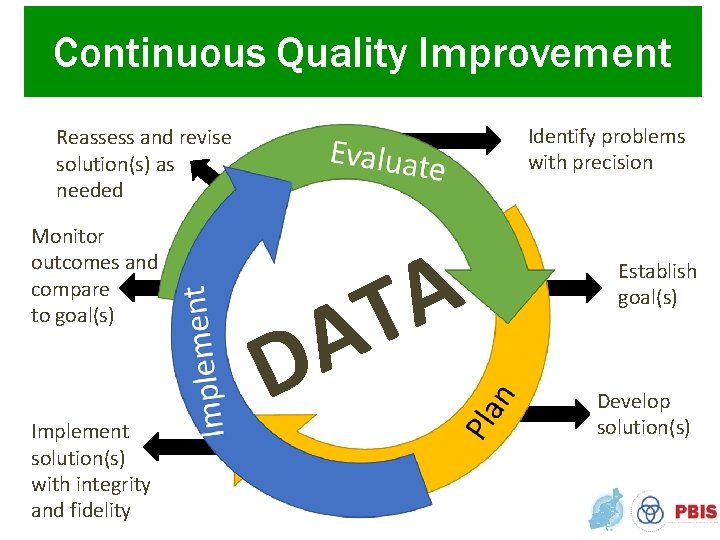
Continuous Quality Improvement Identify problems with precision Reassess and revise solution(s) as needed Monitor outcomes and compare to goal(s) Implement solution(s) with integrity and fidelity D A T A Establish goal(s) Develop solution(s)
Steps for Selecting, Monitoring, and Evaluating SWPBIS Practices • Step 1: Develop evaluation questions. What do you want to know? II. B. vii i
Steps for Selecting, Monitoring, and Evaluating SWPBIS Practices • Step 1: Develop evaluation questions. What do you want to know? • Step 2: Identify indicators or measures. What information can be collected? II. B. vii i
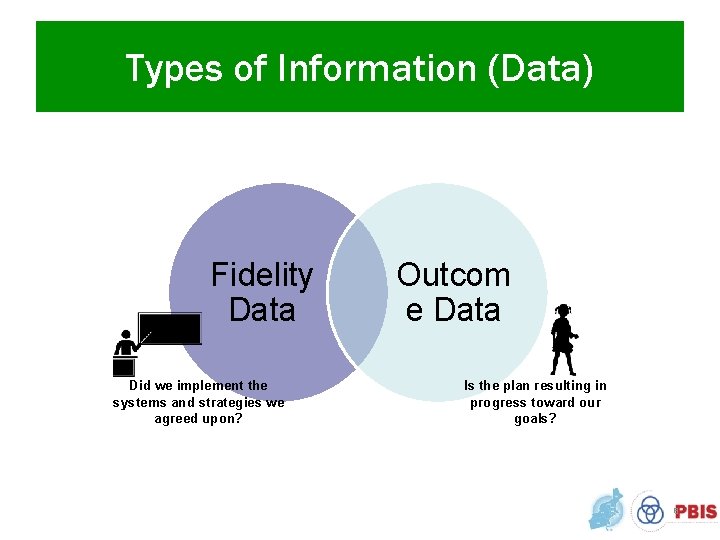
Types of Information (Data) Fidelity Data Did we implement the systems and strategies we agreed upon? Outcom e Data Is the plan resulting in progress toward our goals? 8
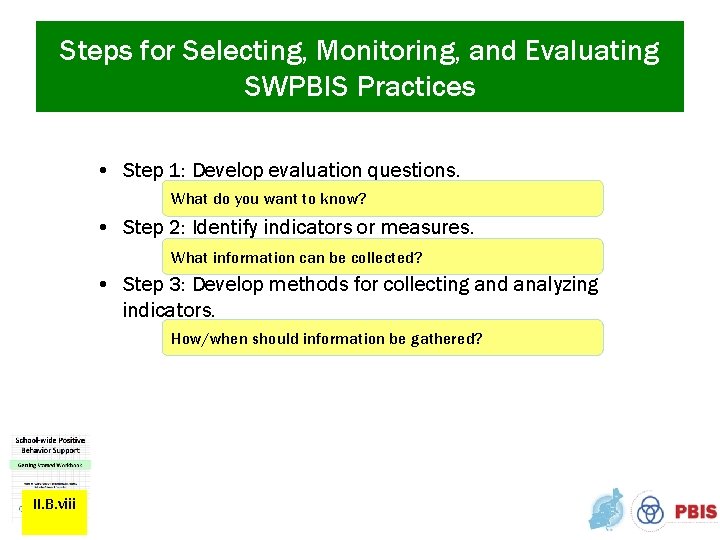
Steps for Selecting, Monitoring, and Evaluating SWPBIS Practices • Step 1: Develop evaluation questions. What do you want to know? • Step 2: Identify indicators or measures. What information can be collected? • Step 3: Develop methods for collecting and analyzing indicators. How/when should information be gathered? II. B. viii
Guidelines for Efficient Data Analysis • Protect team time to review data monthly – – • • Data system managed by 2 -3 staff members Efficient, timely, and graphic displays of data Structures and routines for staff members to receive weekly/monthly data reports about status of SW discipline Decision rules for guiding data analysis and actions II. B. viii
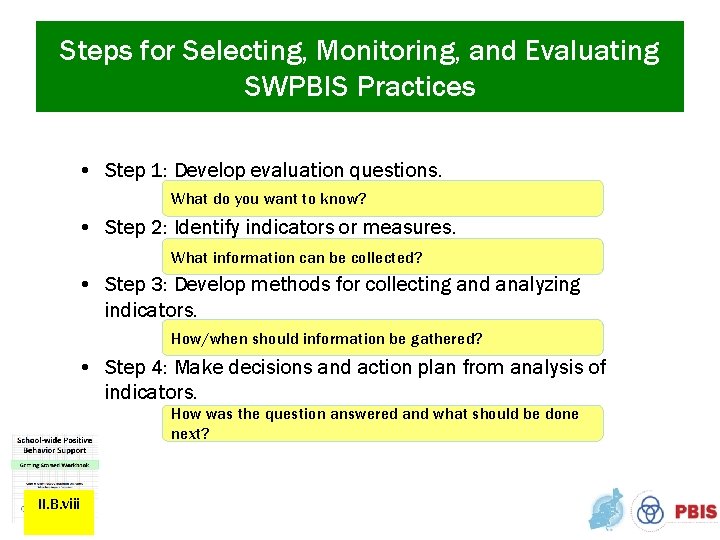
Steps for Selecting, Monitoring, and Evaluating SWPBIS Practices • Step 1: Develop evaluation questions. What do you want to know? • Step 2: Identify indicators or measures. What information can be collected? • Step 3: Develop methods for collecting and analyzing indicators. How/when should information be gathered? • Step 4: Make decisions and action plan from analysis of indicators. How was the question answered and what should be done next? II. B. viii
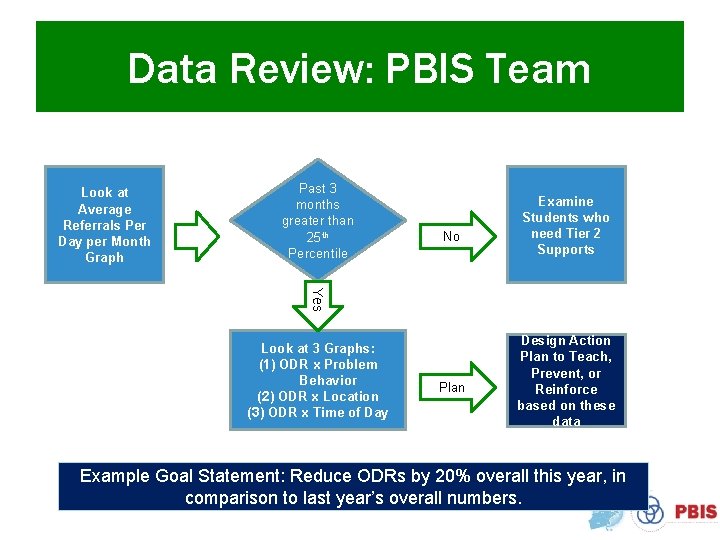
Data Review: PBIS Team Look at Average Referrals Per Day per Month Graph Past 3 months greater than 25 th Percentile No Examine Students who need Tier 2 Supports Yes Look at 3 Graphs: (1) ODR x Problem Behavior (2) ODR x Location (3) ODR x Time of Day Plan Design Action Plan to Teach, Prevent, or Reinforce based on these data Example Goal Statement: Reduce ODRs by 20% overall this year, in comparison to last year’s overall numbers.
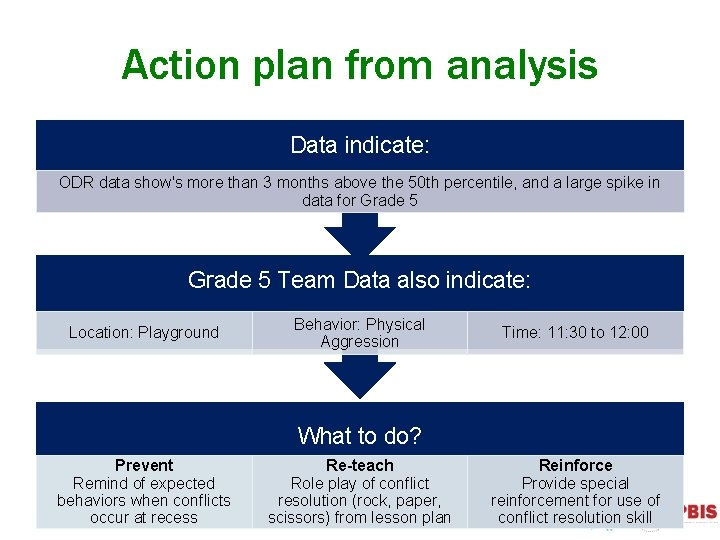
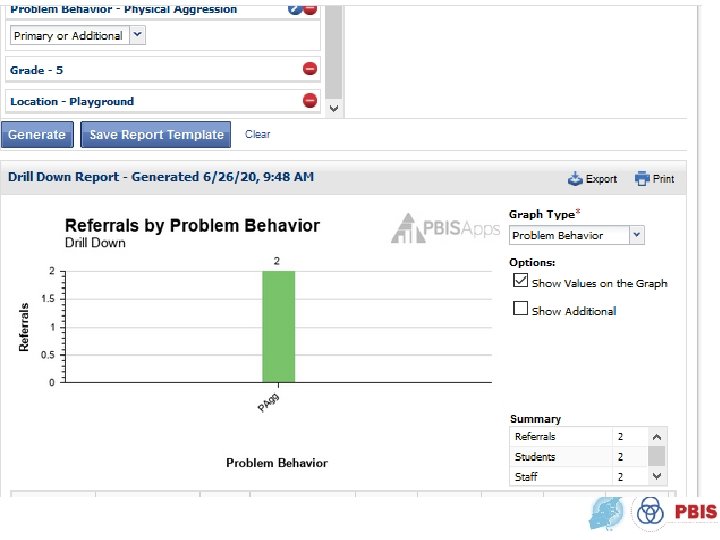
Action plan from analysis Data indicate: ODR data show's more than 3 months above the 50 th percentile, and a large spike in data for Grade 5 Team Data also indicate: Location: Playground Behavior: Physical Aggression Time: 11: 30 to 12: 00 What to do? Prevent Remind of expected behaviors when conflicts occur at recess Re-teach Role play of conflict resolution (rock, paper, scissors) from lesson plan Reinforce Provide special reinforcement for use of conflict resolution skill
What is the single factor most related to high sustainability? The frequency that data are presented to all school staff. Mc. Intosh, K. , Kim, J. R. , Pinkelman, S. , Rasplica, C. , Berg, T. & Strickland-Cohen, M. K. (2014).
Activity: Data Evaluation • Work as team • Create a goal statement related to student behavior or discipline referrals • Action plan – – What data will be collected By whom How often How will it be shared (e. g. with staff, pertinent stakeholders) • Add items to your Action Plan as necessary
- Slides: 16