
Schoolwide Positive Behavior Support Timeline Some Highlights Early
Schoolwide Positive Behavior Support
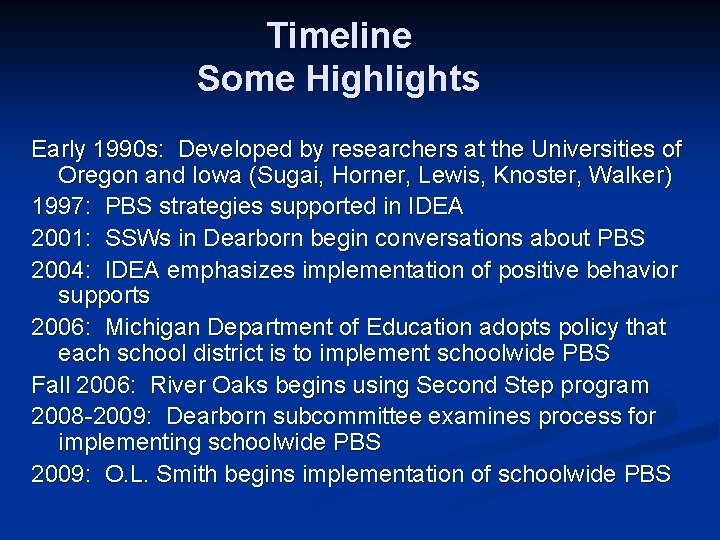
Timeline Some Highlights Early 1990 s: Developed by researchers at the Universities of Oregon and Iowa (Sugai, Horner, Lewis, Knoster, Walker) 1997: PBS strategies supported in IDEA 2001: SSWs in Dearborn begin conversations about PBS 2004: IDEA emphasizes implementation of positive behavior supports 2006: Michigan Department of Education adopts policy that each school district is to implement schoolwide PBS Fall 2006: River Oaks begins using Second Step program 2008 -2009: Dearborn subcommittee examines process for implementing schoolwide PBS 2009: O. L. Smith begins implementation of schoolwide PBS
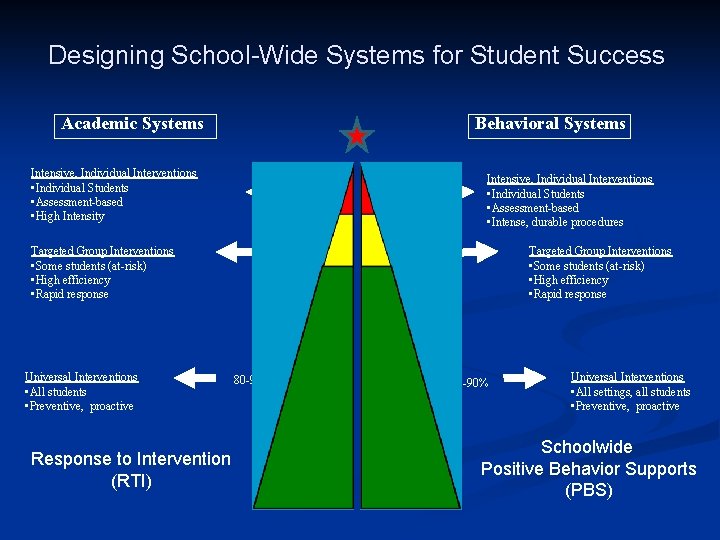
Designing School-Wide Systems for Student Success Academic Systems Behavioral Systems Intensive, Individual Interventions • Individual Students • Assessment-based • High Intensity 1 -5% Targeted Group Interventions • Some students (at-risk) • High efficiency • Rapid response Universal Interventions • All students • Preventive, proactive Response to Intervention (RTI) 5 -10% 80 -90% 1 -5% Intensive, Individual Interventions • Individual Students • Assessment-based • Intense, durable procedures 5 -10% Targeted Group Interventions • Some students (at-risk) • High efficiency • Rapid response 80 -90% Universal Interventions • All settings, all students • Preventive, proactive Schoolwide Positive Behavior Supports (PBS)
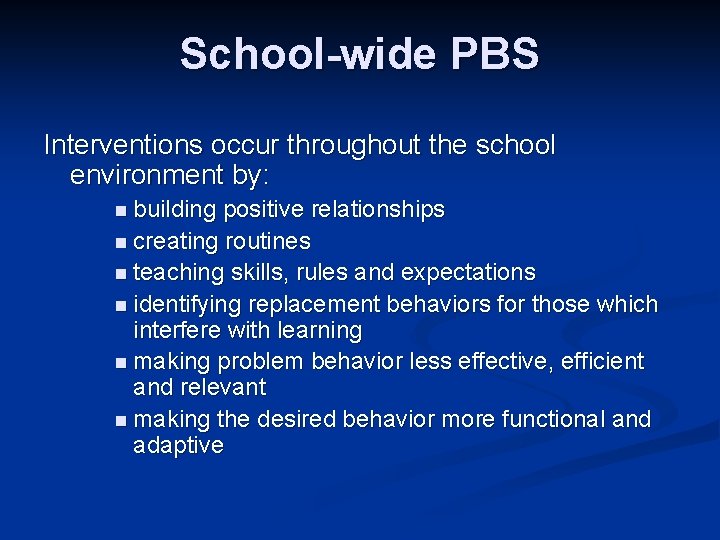
School-wide PBS Interventions occur throughout the school environment by: n building positive relationships n creating routines n teaching skills, rules and expectations n identifying replacement behaviors for those which interfere with learning n making problem behavior less effective, efficient and relevant n making the desired behavior more functional and adaptive
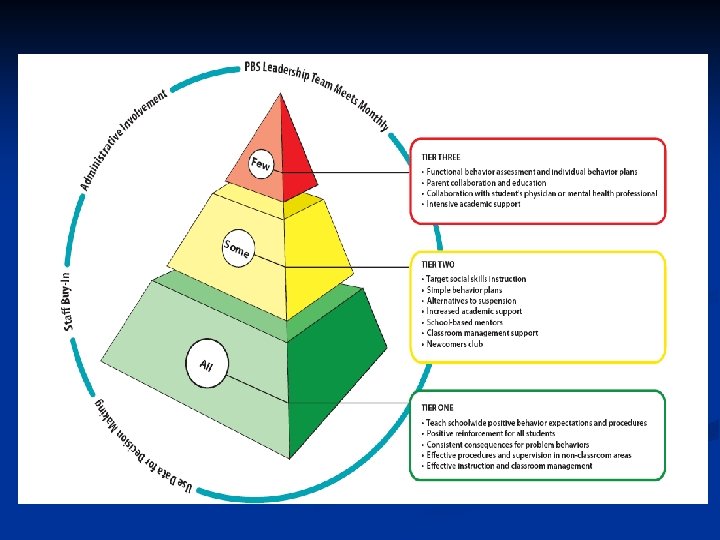
Tier 1 n n n ALL Used for 100% of students, effective for 80% Teach schoolwide positive behavior expectations and procedures Positive reinforcement for all students Consistent consequences for problem behaviors Effective procedures and supervision in nonclassroom areas Effective instruction and classroom management
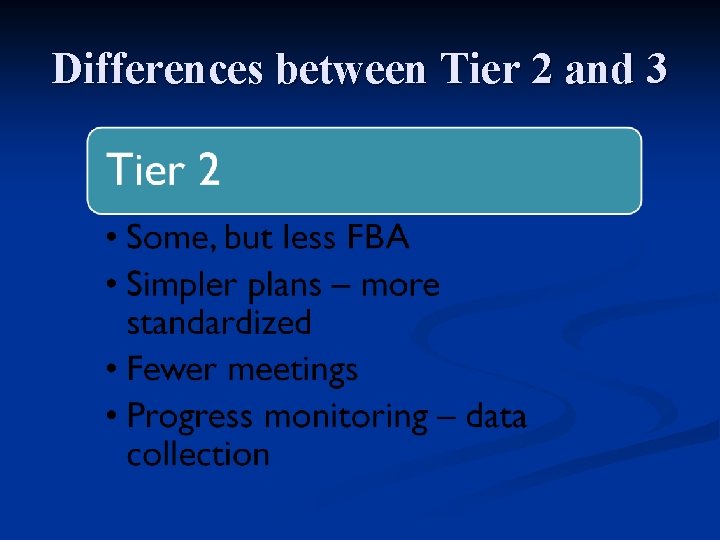
Tier 2 n n n n Some About 10 -15% of students will require Tier 2 interventions Targeted social skills instruction Check in/Check out system School-based mentors Newcomers Club Simple Behavior Plans Increased academic support Alternatives to suspension
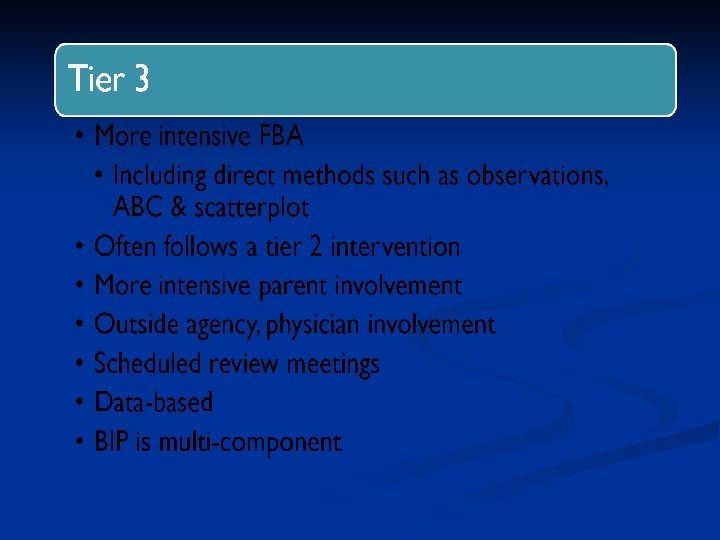
Tier 3 Few About 1 -5% of students will require Tier 3 interventions n Intensive Functional Behavior Assessment n Intensive, individualized Behavior Plans n Parent collaboration and education n Collaboration with student’s physician or mental health professional n Intensive academic support n
Differences between Tier 2 and 3
Understanding the problem
Key to Understanding the Problem: DATA
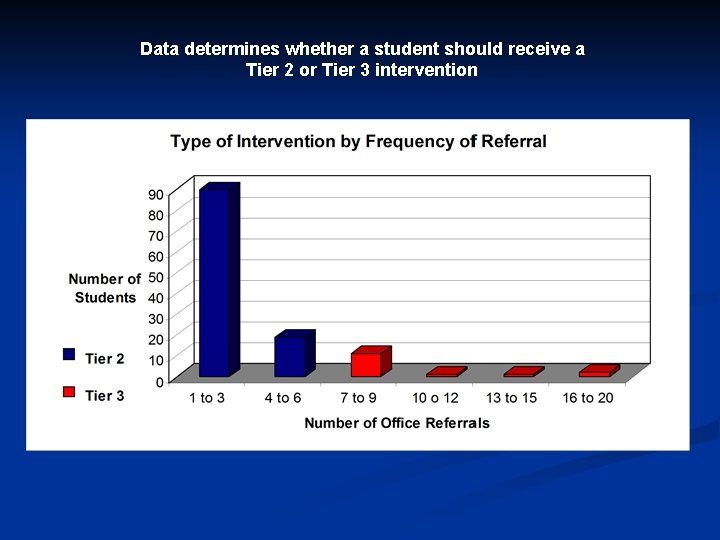
Data determines whether a student should receive a Tier 2 or Tier 3 intervention
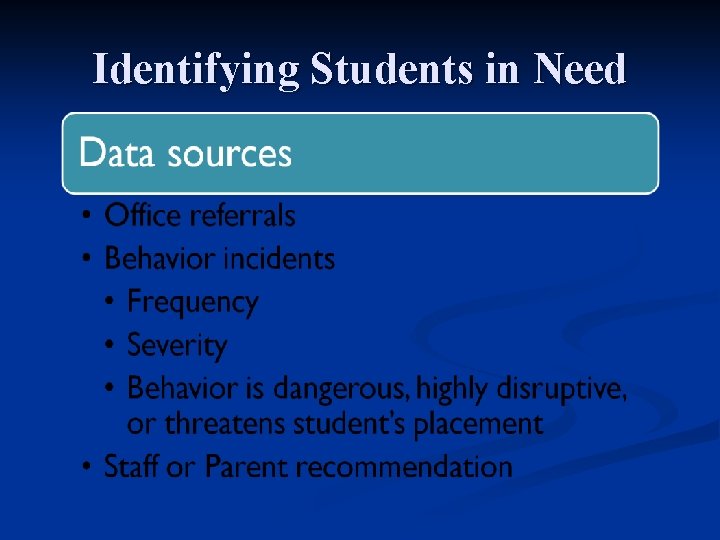
Identifying Students in Need
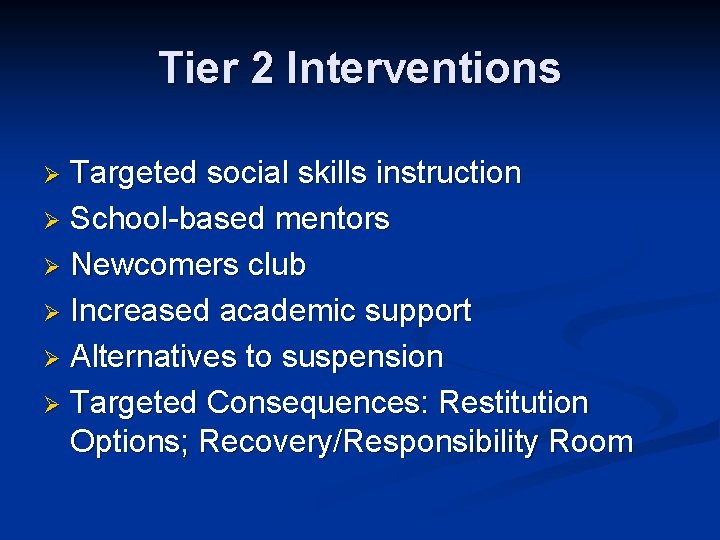
Tier 2 Interventions Targeted social skills instruction Ø School-based mentors Ø Newcomers club Ø Increased academic support Ø Alternatives to suspension Ø Targeted Consequences: Restitution Options; Recovery/Responsibility Room Ø

Check In/Check Out C: Documents and SettingsmilburgMy DocumentsGail's StuffTrainings and ISTsPBS 11 -09point_sheet_template. doc C: Documents and SettingsmilburgMy DocumentsGail's StuffTrainings and ISTsPBS 11 -09pbs_daily. xls C: Documents and SettingsmilburgMy DocumentsGail's StuffTrainings and ISTsPBS 11 -09pbs_weekly_sheet. xls C: Documents and SettingsmilburgMy DocumentsGail's StuffTrainings and ISTsPBS 11 -09sample_cico. xls
Home/School Behavior Plan C: Documents and SettingsmilburgMy DocumentsGail's StuffTrainings and ISTsPBS 1109home_and_school_behavior_form. doc
Simple Functional Assessment and Simple Behavior Plan C: Documents and SettingsmilburgMy DocumentsFBA and BIP forms and proceduresFBA Template-Simple rev 3 -08. dot. . FBA and BIP forms and proceduresBIP Form Template rev 3 -08. dot
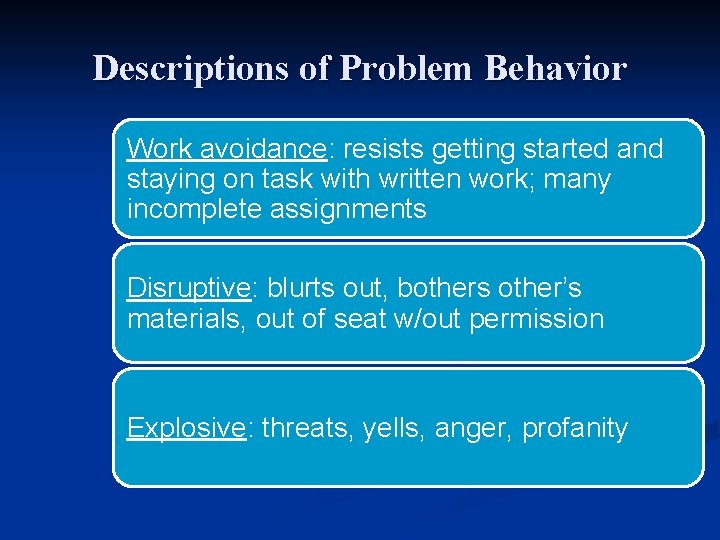
Descriptions of Problem Behavior Work avoidance: resists getting started and staying on task with written work; many incomplete assignments Disruptive: blurts out, bothers other’s materials, out of seat w/out permission Explosive: threats, yells, anger, profanity
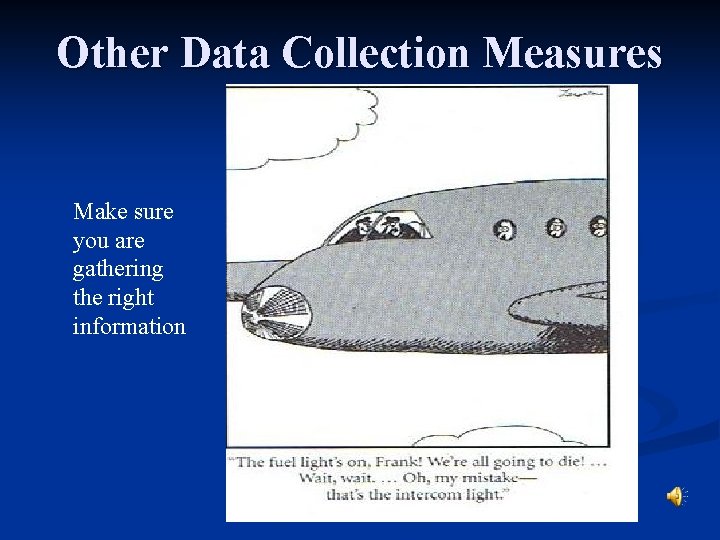
Other Data Collection Measures Make sure you are gathering the right information
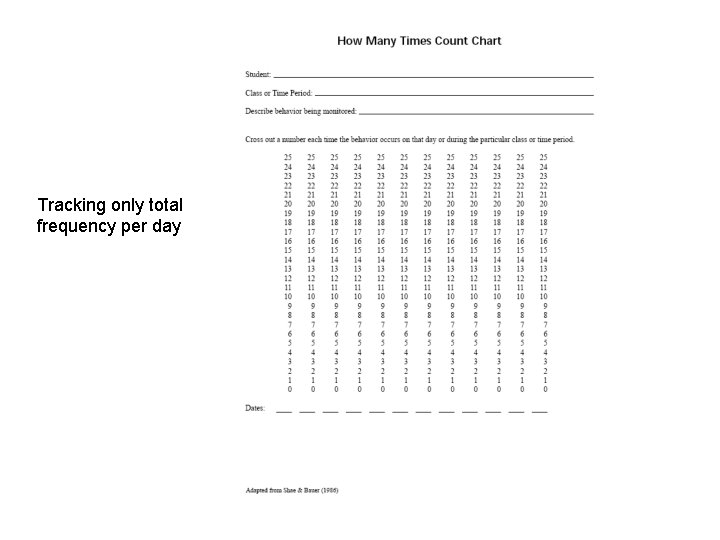
Tracking only total frequency per day
An example of Scatterplot Assessment Form One Behavior Observed or Not Observed
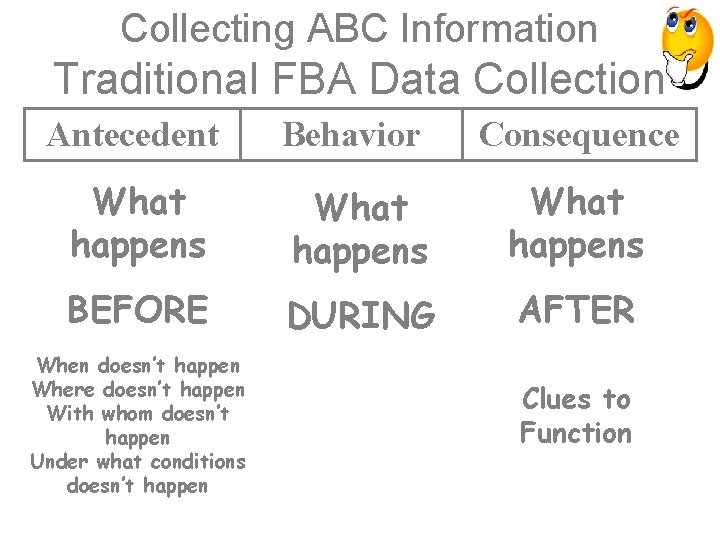
Collecting ABC Information Traditional FBA Data Collection Antecedent Behavior Consequence What happens BEFORE DURING AFTER When doesn’t happen Where doesn’t happen With whom doesn’t happen Under what conditions doesn’t happen Clues to Function
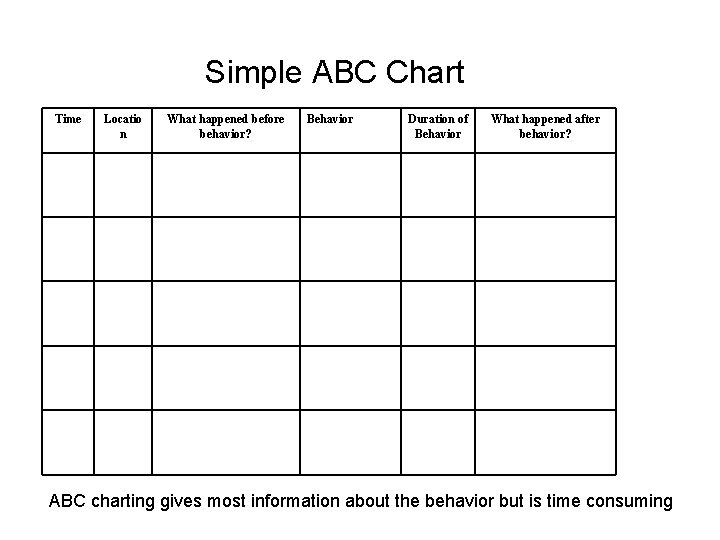
Simple ABC Chart Time Locatio n What happened before behavior? Behavior Duration of Behavior What happened after behavior? ABC charting gives most information about the behavior but is time consuming
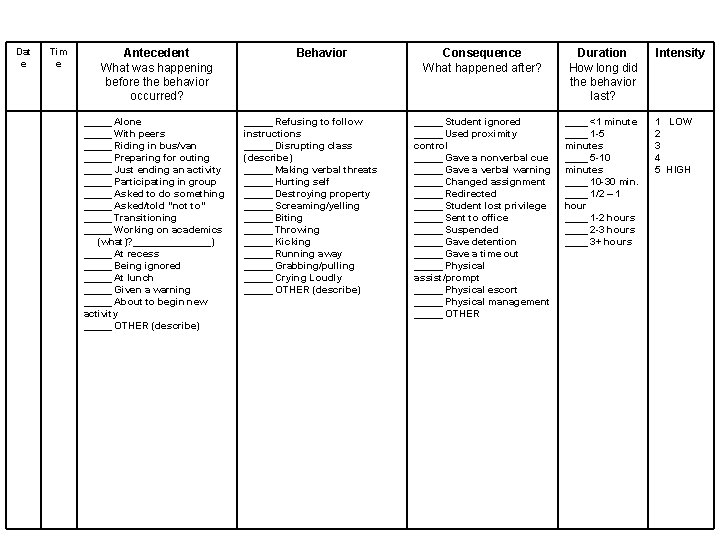
Dat e Tim e Antecedent What was happening before the behavior occurred? _____ Alone _____ With peers _____ Riding in bus/van _____ Preparing for outing _____ Just ending an activity _____ Participating in group _____ Asked to do something _____ Asked/told “not to” _____ Transitioning _____ Working on academics (what)? _______) _____ At recess _____ Being ignored _____ At lunch _____ Given a warning _____ About to begin new activity _____ OTHER (describe) Behavior _____ Refusing to follow instructions _____ Disrupting class (describe) _____ Making verbal threats _____ Hurting self _____ Destroying property _____ Screaming/yelling _____ Biting _____ Throwing _____ Kicking _____ Running away _____ Grabbing/pulling _____ Crying Loudly _____ OTHER (describe) Consequence What happened after? Duration How long did the behavior last? _____ Student ignored _____ Used proximity control _____ Gave a nonverbal cue _____ Gave a verbal warning _____ Changed assignment _____ Redirected _____ Student lost privilege _____ Sent to office _____ Suspended _____ Gave detention _____ Gave a time out _____ Physical assist/prompt _____ Physical escort _____ Physical management _____ OTHER ____ <1 minute ____ 1 -5 minutes ____ 5 -10 minutes ____ 10 -30 min. ____ 1/2 – 1 hour ____ 1 -2 hours ____ 2 -3 hours ____ 3+ hours Intensity 1 LOW 2 3 4 5 HIGH

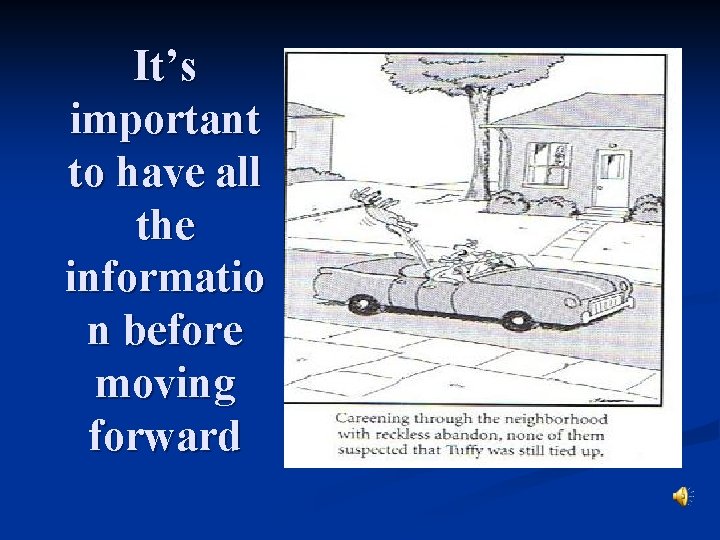
It’s important to have all the informatio n before moving forward
Sample FBA Summary
Developing Hypotheses • One’s best guess / explanation of how the antecedents / consequences affect the behavior. • An approach for narrowing the field of possible influences until eventually the governing variables are identified. • VARIABLES ASSOCIATED WITH THE PROBLEM
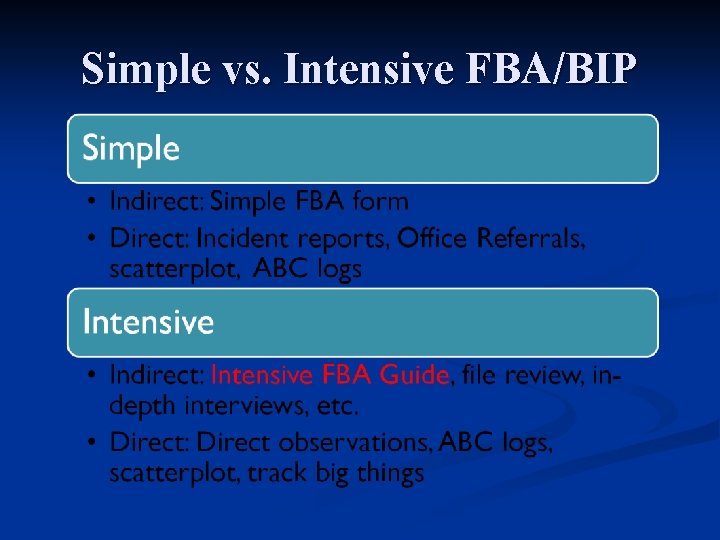
Simple vs. Intensive FBA/BIP
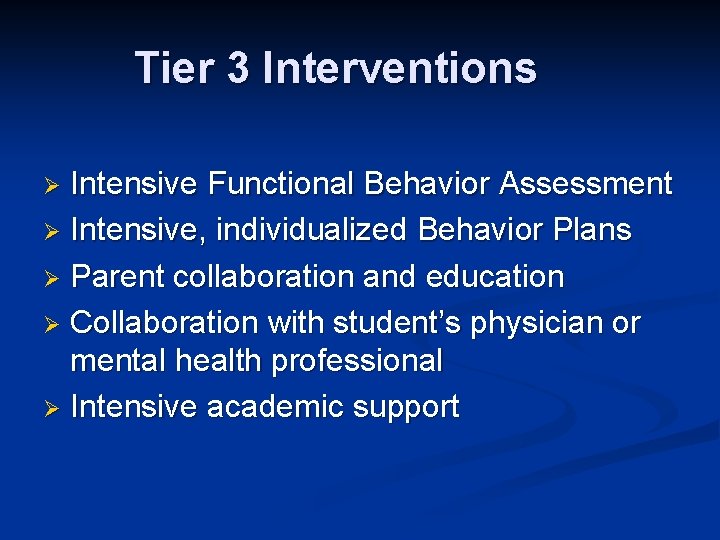
Tier 3 Interventions Intensive Functional Behavior Assessment Ø Intensive, individualized Behavior Plans Ø Parent collaboration and education Ø Collaboration with student’s physician or mental health professional Ø Intensive academic support Ø
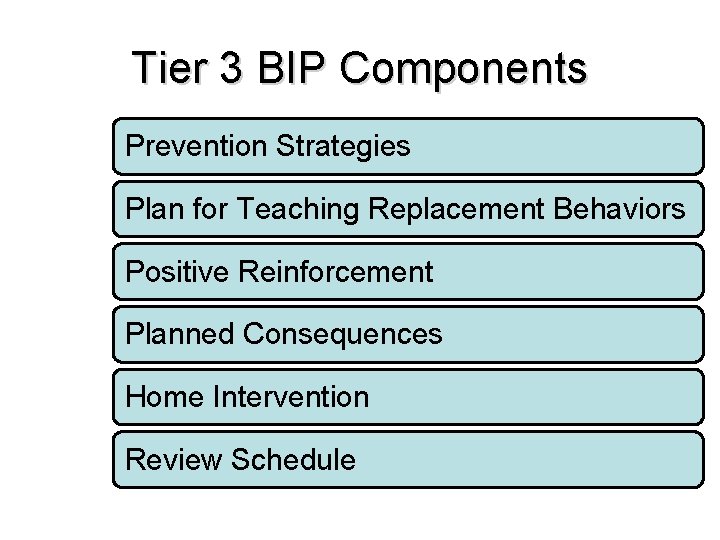
Tier 3 BIP Components Prevention Strategies Plan for Teaching Replacement Behaviors Positive Reinforcement Planned Consequences Home Intervention Review Schedule
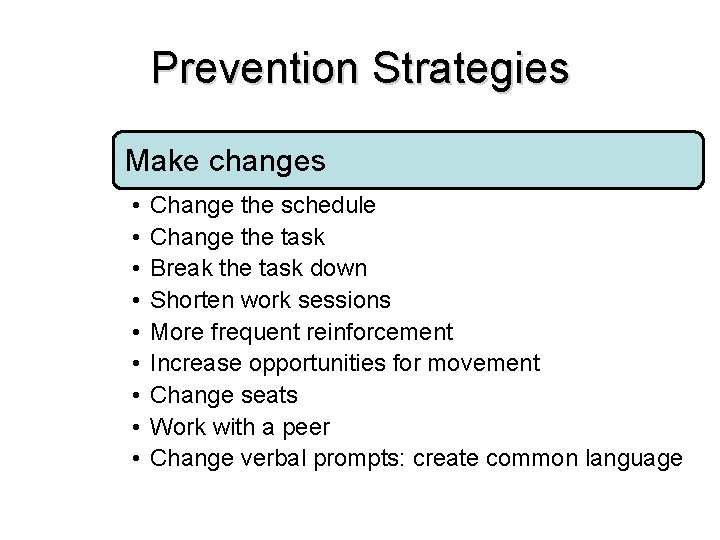
Prevention Strategies Make changes • • • Change the schedule Change the task Break the task down Shorten work sessions More frequent reinforcement Increase opportunities for movement Change seats Work with a peer Change verbal prompts: create common language
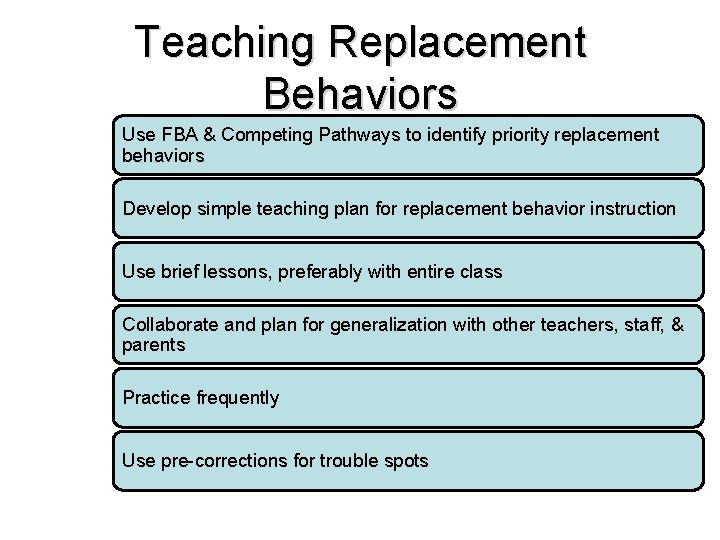
Teaching Replacement Behaviors Use FBA & Competing Pathways to identify priority replacement behaviors Develop simple teaching plan for replacement behavior instruction Use brief lessons, preferably with entire class Collaborate and plan for generalization with other teachers, staff, & parents Practice frequently Use pre-corrections for trouble spots
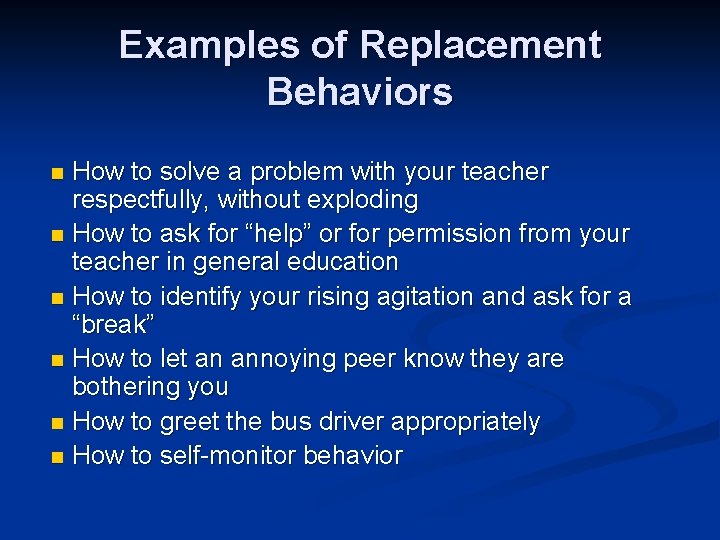
Examples of Replacement Behaviors How to solve a problem with your teacher respectfully, without exploding n How to ask for “help” or for permission from your teacher in general education n How to identify your rising agitation and ask for a “break” n How to let an annoying peer know they are bothering you n How to greet the bus driver appropriately n How to self-monitor behavior n
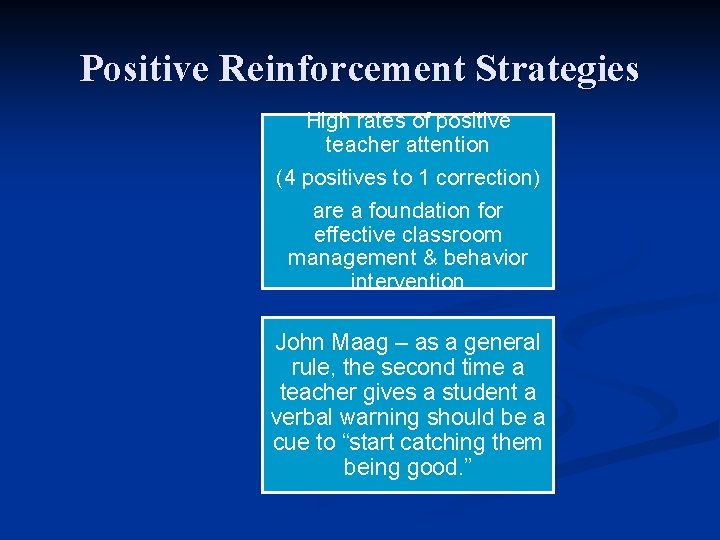
Positive Reinforcement Strategies High rates of positive teacher attention (4 positives to 1 correction) are a foundation for effective classroom management & behavior intervention John Maag – as a general rule, the second time a teacher gives a student a verbal warning should be a cue to “start catching them being good. ”
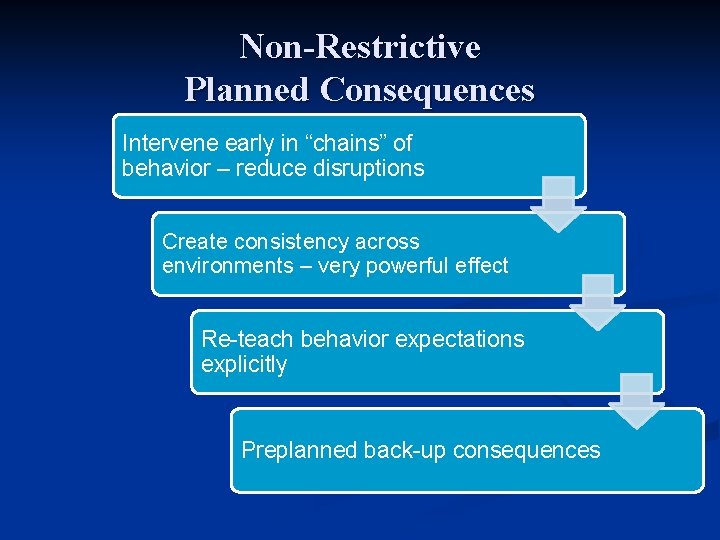
Non-Restrictive Planned Consequences Intervene early in “chains” of behavior – reduce disruptions Create consistency across environments – very powerful effect Re-teach behavior expectations explicitly Preplanned back-up consequences
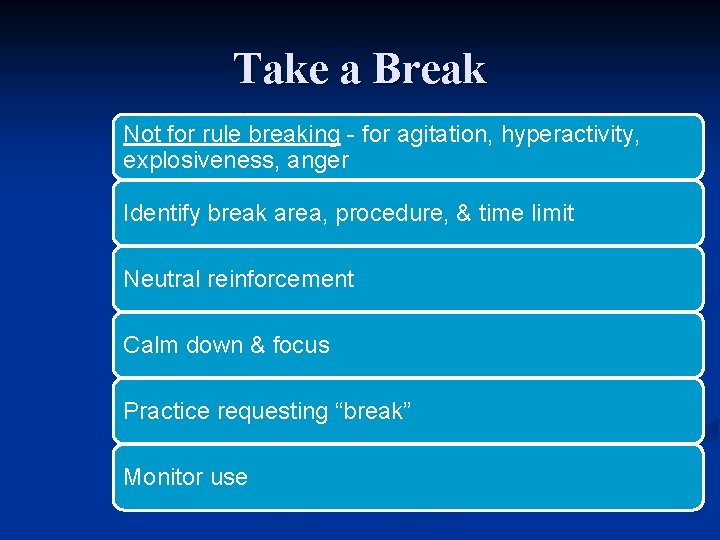
Take a Break Not for rule breaking - for agitation, hyperactivity, explosiveness, anger Identify break area, procedure, & time limit Neutral reinforcement Calm down & focus Practice requesting “break” Monitor use
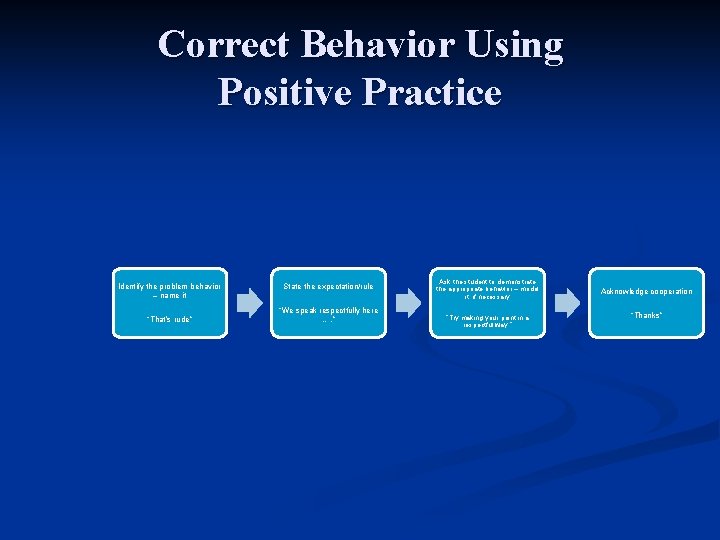
Correct Behavior Using Positive Practice Identify the problem behavior – name it “That’s rude” State the expectation/rule “We speak respectfully here …. ” Ask the student to demonstrate the appropriate behavior – model it, if necessary “Try making your point in a respectful way. ” Acknowledge cooperation “Thanks”
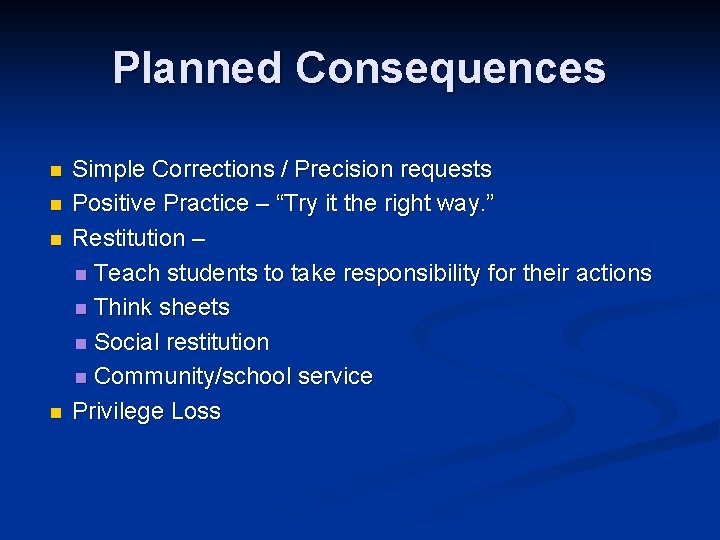
Planned Consequences n n Simple Corrections / Precision requests Positive Practice – “Try it the right way. ” Restitution – n Teach students to take responsibility for their actions n Think sheets n Social restitution n Community/school service Privilege Loss
In-Class Time-Out n Consequence for rule breaking n Establish & teach procedures n Keep it brief - keep instruction moving n Make it boring – minimize attention & talk n Think sheets
Moderately Restrictive Techniques Requires written BIP Requires parent approval
Exclusionary Time-Out Removal of student from classroom or program for longer time-out period (typically 10 -45 minutes). Identify ETO procedures and teach. • Reduced attention • Problem-solving • Academic work Intervene for disruptive behavior with ETO before behavior escalates to more severe levels.
Send-Homes Predetermined consequence Planned & cooperative effort with home Privilege loss at home One day duration Sends consistent message to child from home & school Evaluate effectiveness
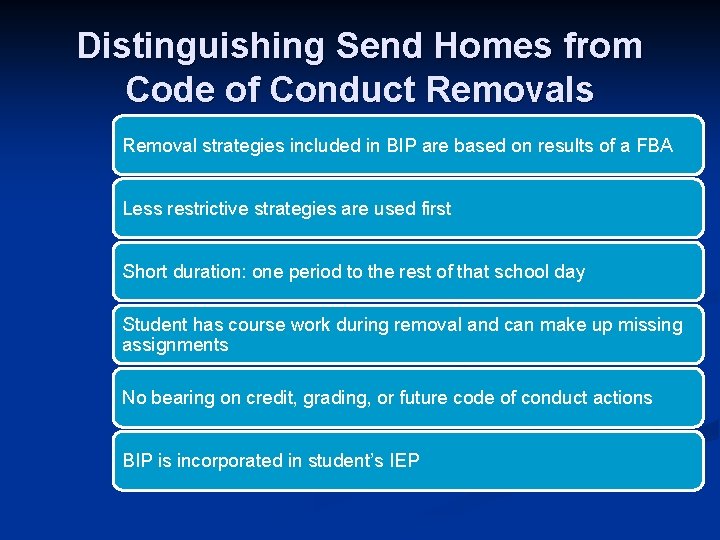
Distinguishing Send Homes from Code of Conduct Removals Removal strategies included in BIP are based on results of a FBA Less restrictive strategies are used first Short duration: one period to the rest of that school day Student has course work during removal and can make up missing assignments No bearing on credit, grading, or future code of conduct actions BIP is incorporated in student’s IEP
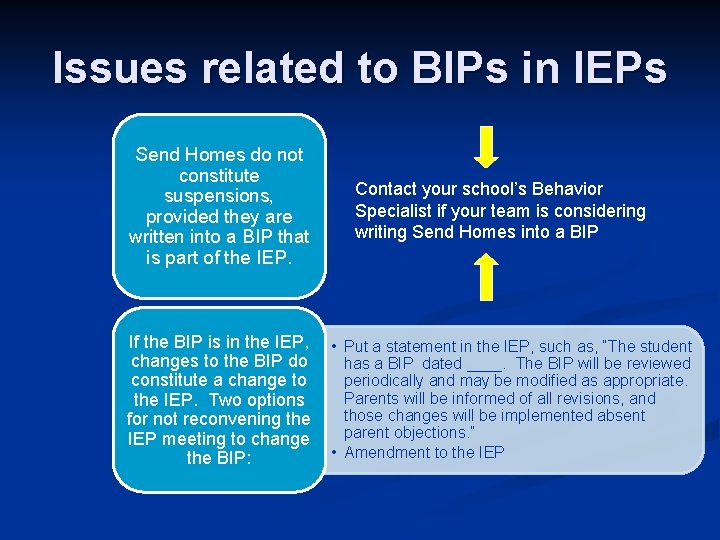
Issues related to BIPs in IEPs Send Homes do not constitute suspensions, provided they are written into a BIP that is part of the IEP. If the BIP is in the IEP, changes to the BIP do constitute a change to the IEP. Two options for not reconvening the IEP meeting to change the BIP: Contact your school’s Behavior Specialist if your team is considering writing Send Homes into a BIP • Put a statement in the IEP, such as, “The student has a BIP dated ____. The BIP will be reviewed periodically and may be modified as appropriate. Parents will be informed of all revisions, and those changes will be implemented absent parent objections. ” • Amendment to the IEP
Restrictive Consequences Primarily used only in center-based programs, numerous requirements regarding implementation, informed consent and RESA-level peer review if written into a BIP Physical Restraint Seclusion Protective Devices
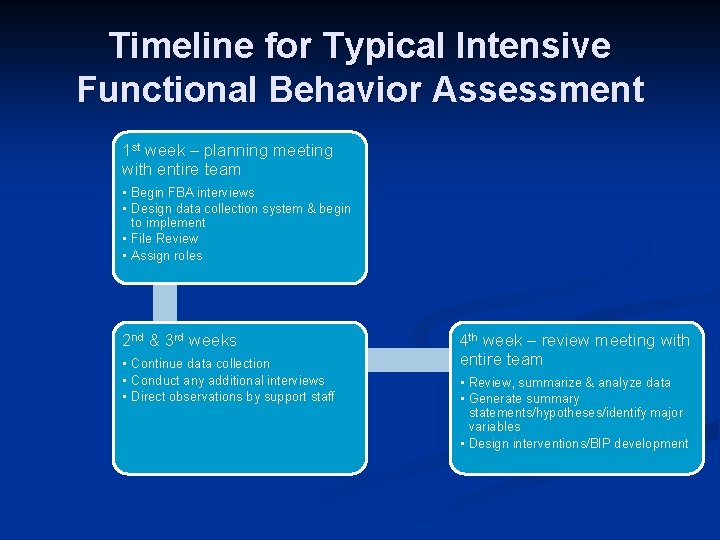
Timeline for Typical Intensive Functional Behavior Assessment 1 st week – planning meeting with entire team • Begin FBA interviews • Design data collection system & begin to implement • File Review • Assign roles 2 nd & 3 rd weeks • Continue data collection • Conduct any additional interviews • Direct observations by support staff 4 th week – review meeting with entire team • Review, summarize & analyze data • Generate summary statements/hypotheses/identify major variables • Design interventions/BIP development
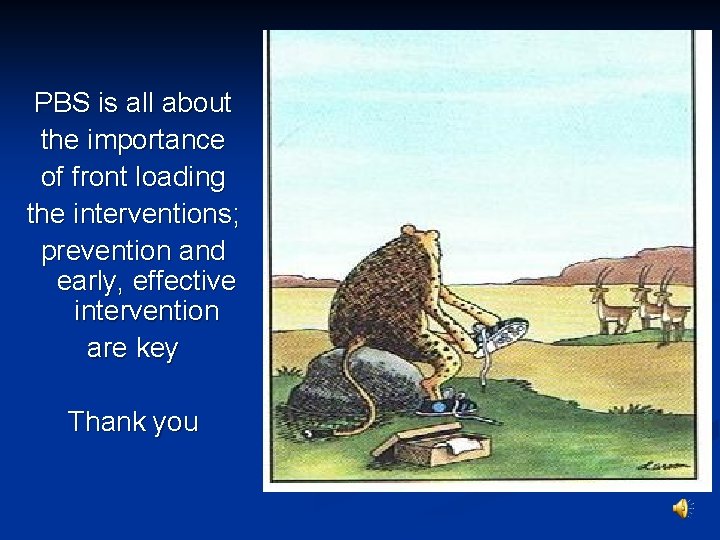
PBS is all about the importance of front loading the interventions; prevention and early, effective intervention are key Thank you
- Slides: 51