
SchoolWide PBIS Planning for Implementation Chris Borgmeier Ph
School-Wide PBIS: Planning for Implementation Chris Borgmeier, Ph. D Portland State University cborgmei@pdx. edu www. swpbis. pbworks. com
Why SW-PBIS? Academic Engaged Time
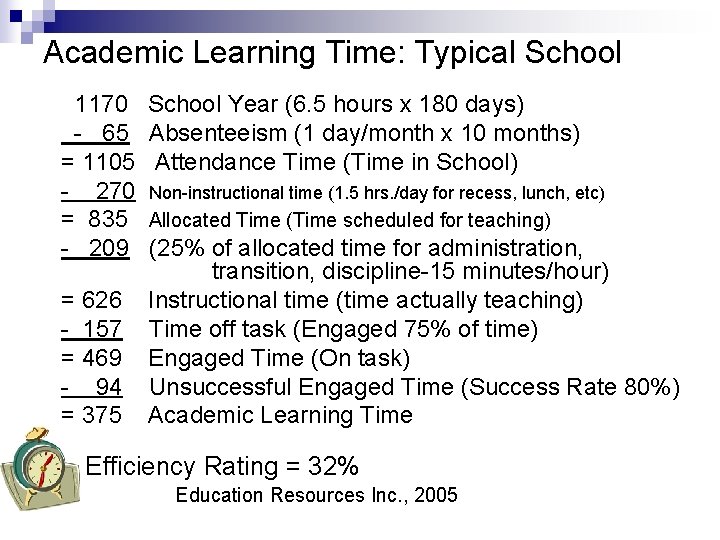
Academic Learning Time: Typical School 1170 - 65 = 1105 - 270 = 835 - 209 = 626 - 157 = 469 - 94 = 375 School Year (6. 5 hours x 180 days) Absenteeism (1 day/month x 10 months) Attendance Time (Time in School) Non-instructional time (1. 5 hrs. /day for recess, lunch, etc) Allocated Time (Time scheduled for teaching) (25% of allocated time for administration, transition, discipline-15 minutes/hour) Instructional time (time actually teaching) Time off task (Engaged 75% of time) Engaged Time (On task) Unsuccessful Engaged Time (Success Rate 80%) Academic Learning Time Efficiency Rating = 32% Education Resources Inc. , 2005
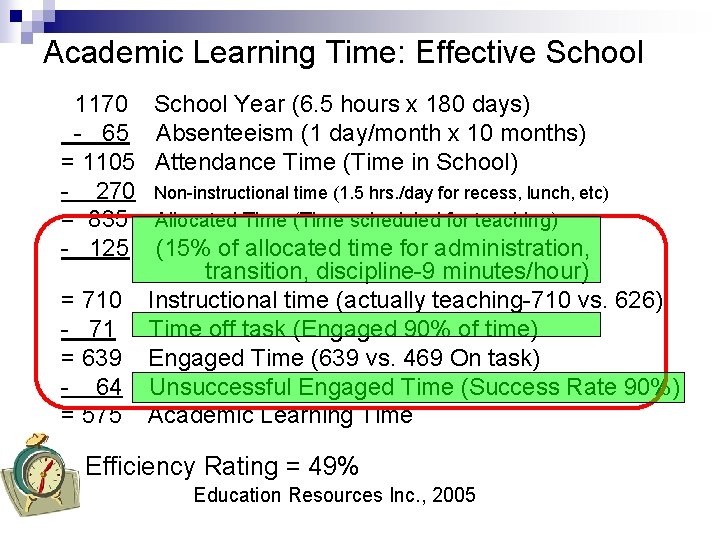
Academic Learning Time: Effective School 1170 - 65 = 1105 - 270 = 835 - 125 = 710 - 71 = 639 - 64 = 575 School Year (6. 5 hours x 180 days) Absenteeism (1 day/month x 10 months) Attendance Time (Time in School) Non-instructional time (1. 5 hrs. /day for recess, lunch, etc) Allocated Time (Time scheduled for teaching) (15% of allocated time for administration, transition, discipline-9 minutes/hour) Instructional time (actually teaching-710 vs. 626) Time off task (Engaged 90% of time) Engaged Time (639 vs. 469 On task) Unsuccessful Engaged Time (Success Rate 90%) Academic Learning Time Efficiency Rating = 49% Education Resources Inc. , 2005
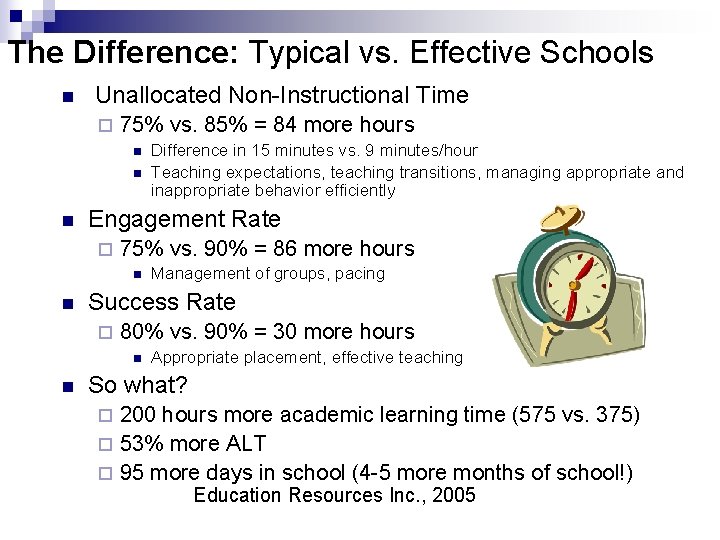
The Difference: Typical vs. Effective Schools n Unallocated Non-Instructional Time ¨ 75% vs. 85% = 84 more hours n n n Engagement Rate ¨ 75% vs. 90% = 86 more hours n n Management of groups, pacing Success Rate ¨ 80% vs. 90% = 30 more hours n n Difference in 15 minutes vs. 9 minutes/hour Teaching expectations, teaching transitions, managing appropriate and inappropriate behavior efficiently Appropriate placement, effective teaching So what? 200 hours more academic learning time (575 vs. 375) ¨ 53% more ALT ¨ 95 more days in school (4 -5 more months of school!) ¨ Education Resources Inc. , 2005
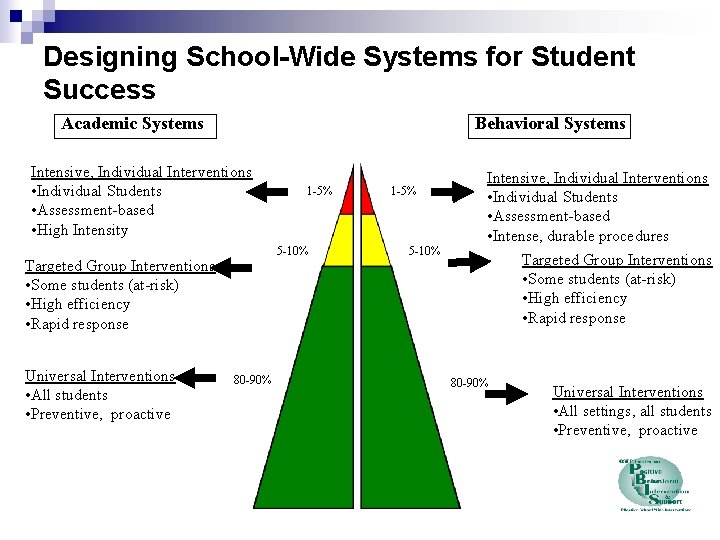
Designing School-Wide Systems for Student Success Academic Systems Behavioral Systems Intensive, Individual Interventions • Individual Students • Assessment-based • High Intensity 5 -10% Targeted Group Interventions • Some students (at-risk) • High efficiency • Rapid response Universal Interventions • All students • Preventive, proactive 1 -5% 80 -90% 1 -5% Intensive, Individual Interventions • Individual Students • Assessment-based • Intense, durable procedures 5 -10% Targeted Group Interventions • Some students (at-risk) • High efficiency • Rapid response 80 -90% Universal Interventions • All settings, all students • Preventive, proactive
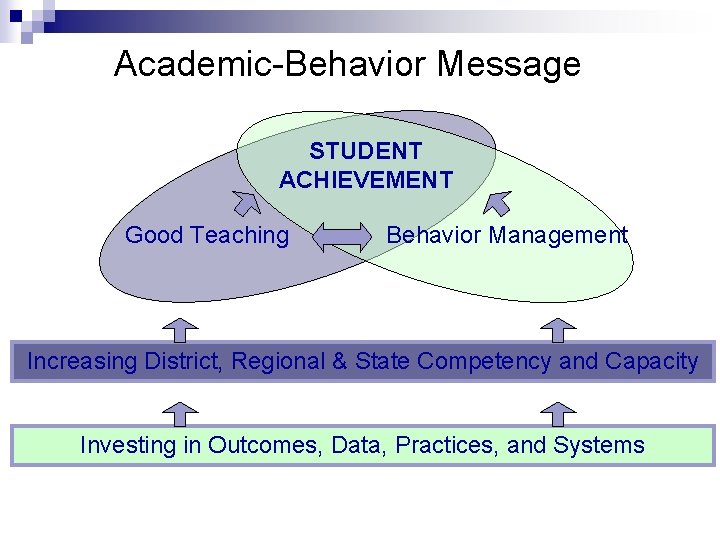
Academic-Behavior Message STUDENT ACHIEVEMENT Good Teaching Behavior Management Increasing District, Regional & State Competency and Capacity Investing in Outcomes, Data, Practices, and Systems
PBIS Handbook & Planning for Implementation
PBIS Handbook n What to include: ¨ PBIS summary & rationale ¨ School Rules & Posters ¨ Expectations Grid ¨ Lesson plans ¨ Schedule for teaching expectations ¨ Acknowledgment system n Example tickets & description of system ¨ Responding n n n to Misbehavior Office referral system Classroom v. Office Managed Behavior Suggested Interventions
Preparing for Implementation n Plan Ahead ¨ Be n Ready for PBIS Kick-Off (First 2 weeks) Obtain & Organize materials ¨ n n Rules Posters, Acknowledgment tickets, handbook Have “PBIS Kick Off” schedule ready to go Might need to Schedule a Summer meeting to finalize plans for the Kick-off
Kick-off Assembly n Make it FUN & memorable for students & staff ¨ Introducing School rules & Programs ¨ Should be more than 1 day/ 1 assembly, make part of every day for the first 2 -3 weeks ¨ Use the talents of people in school n Develop a Schedule for Teaching Expectations ¨ Teach expectations & routines n Particularly recess & cafeteria across settings
Training Staff for Implementation Plan Ahead n Schedule time during Pre-service week to train staff on PBIS implementation n ¨ Teach a Behavioral Lesson to staff, so they can understand what it will look like n Make the lesson fun and engage staff (still working on buy-in & creating a buzz) ¨ n Model lesson as if you’re teaching it to students OR teach Safe/Responsible & Respectful in staff lunchroom Also use the lesson to help them understand what student lessons will look like
Team Tasks n Develop a timeline for completing remaining task n Plan for organizing & developing PBIS Handbook n Develop schedule for PBIS Kick-Off & Back to School calendar n Develop plan for preparing & training staff for PBIS Roll-out and implementation ¨ Staff PBIS training in August ¨ Demonstrate teaching lessons to staff
- Slides: 13