
SCHOOL VIOLENCE AND UNSAFE HOME AND COMMUNITY ENVIRONMENTS

- Slides: 9
SCHOOL VIOLENCE AND UNSAFE HOME AND COMMUNITY ENVIRONMENTS Karla Morales Collaborative Health and Human Services CHHS 302 California State University Monterey Bay
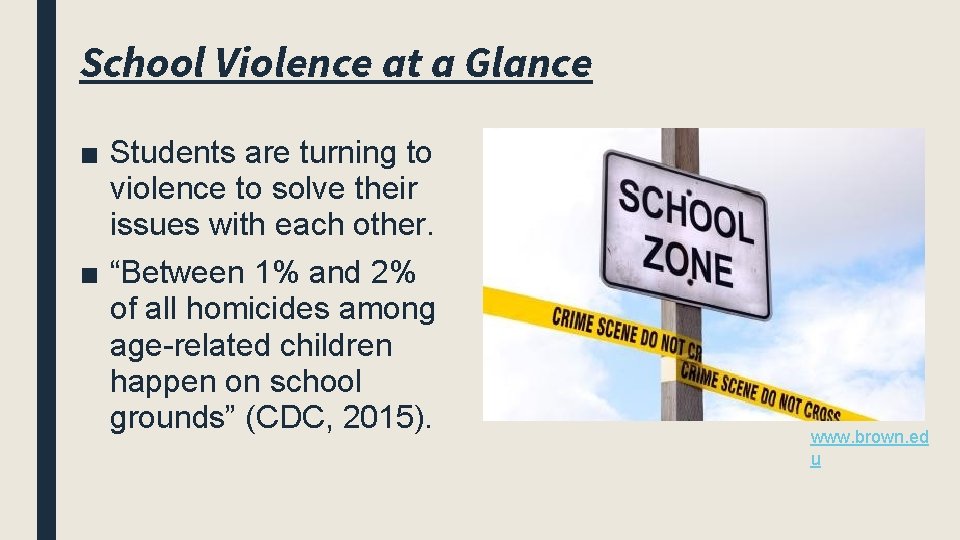
School Violence at a Glance ■ Students are turning to violence to solve their issues with each other. ■ “Between 1% and 2% of all homicides among age-related children happen on school grounds” (CDC, 2015). www. brown. ed u
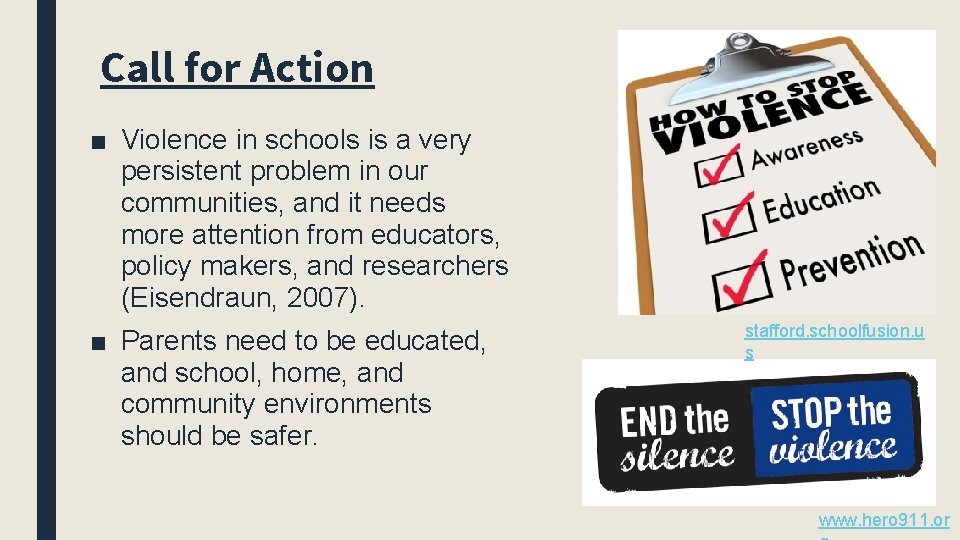
Call for Action ■ Violence in schools is a very persistent problem in our communities, and it needs more attention from educators, policy makers, and researchers (Eisendraun, 2007). ■ Parents need to be educated, and school, home, and community environments should be safer. stafford. schoolfusion. u s www. hero 911. or
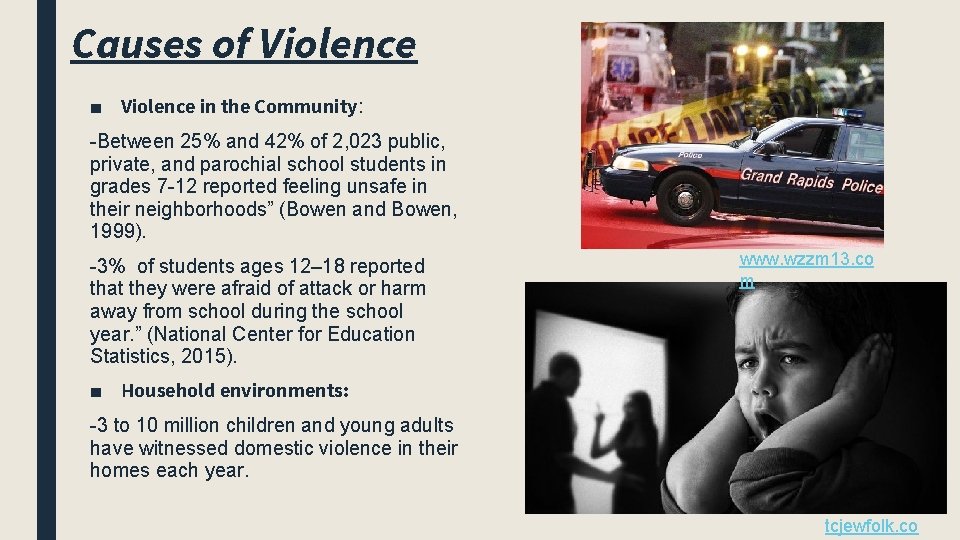
Causes of Violence ■ Violence in the Community: -Between 25% and 42% of 2, 023 public, private, and parochial school students in grades 7 -12 reported feeling unsafe in their neighborhoods” (Bowen and Bowen, 1999). -3% of students ages 12– 18 reported that they were afraid of attack or harm away from school during the school year. ” (National Center for Education Statistics, 2015). www. wzzm 13. co m ■ Household environments: -3 to 10 million children and young adults have witnessed domestic violence in their homes each year. tcjewfolk. co
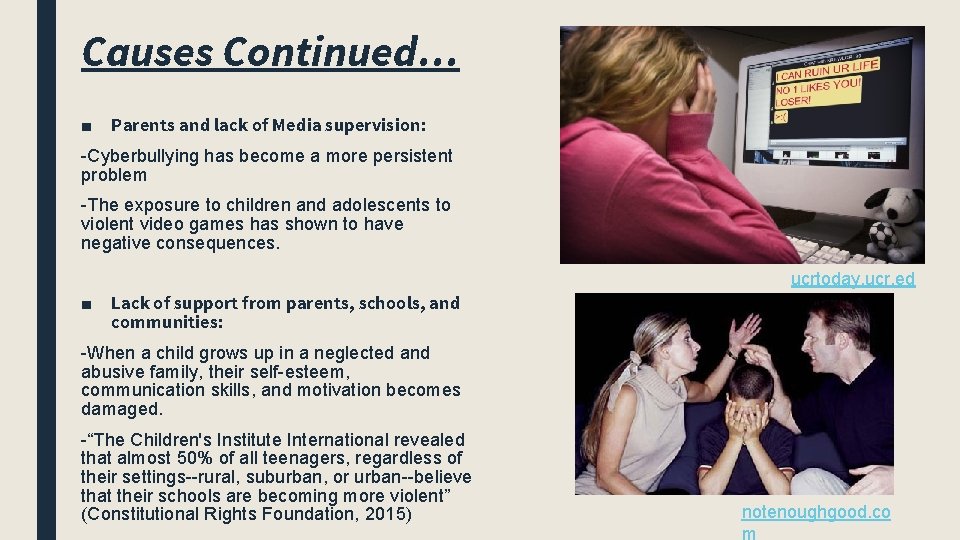
Causes Continued… ■ Parents and lack of Media supervision: -Cyberbullying has become a more persistent problem -The exposure to children and adolescents to violent video games has shown to have negative consequences. ■ Lack of support from parents, schools, and communities: ucrtoday. ucr. ed u -When a child grows up in a neglected and abusive family, their self-esteem, communication skills, and motivation becomes damaged. -“The Children's Institute International revealed that almost 50% of all teenagers, regardless of their settings--rural, suburban, or urban--believe that their schools are becoming more violent” (Constitutional Rights Foundation, 2015) notenoughgood. co m
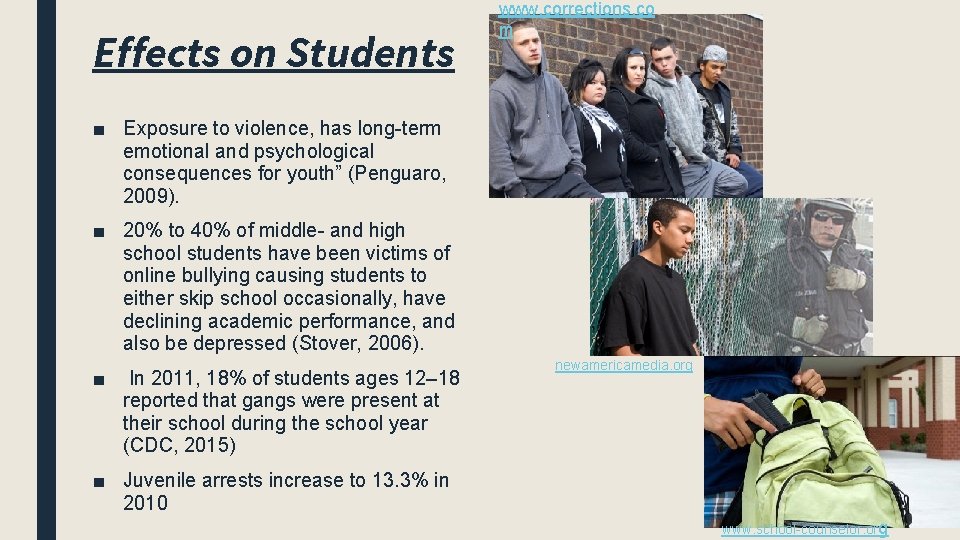
Effects on Students www. corrections. co m ■ Exposure to violence, has long-term emotional and psychological consequences for youth” (Penguaro, 2009). ■ 20% to 40% of middle- and high school students have been victims of online bullying causing students to either skip school occasionally, have declining academic performance, and also be depressed (Stover, 2006). ■ In 2011, 18% of students ages 12– 18 reported that gangs were present at their school during the school year (CDC, 2015) newamericamedia. org ■ Juvenile arrests increase to 13. 3% in 2010 www. school-counselor. org
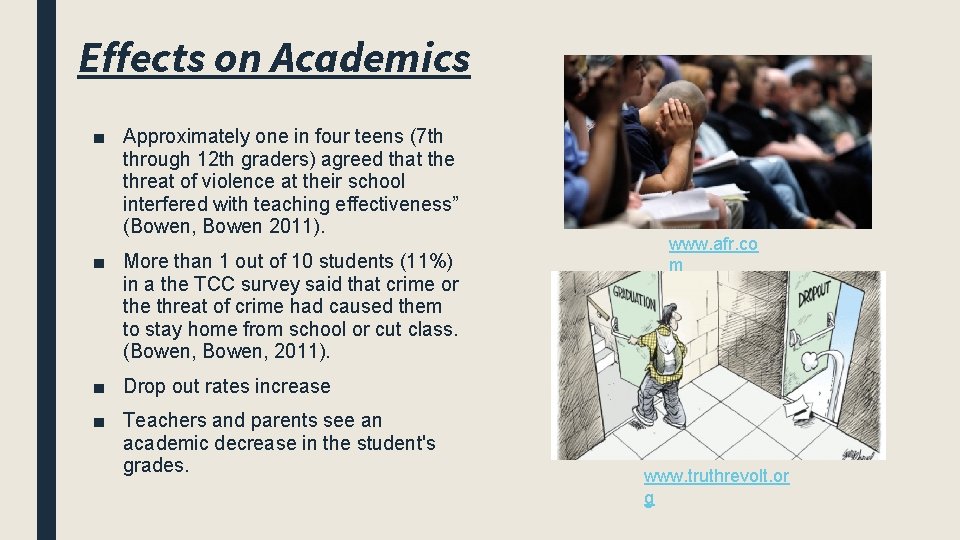
Effects on Academics ■ Approximately one in four teens (7 th through 12 th graders) agreed that the threat of violence at their school interfered with teaching effectiveness” (Bowen, Bowen 2011). ■ More than 1 out of 10 students (11%) in a the TCC survey said that crime or the threat of crime had caused them to stay home from school or cut class. (Bowen, 2011). www. afr. co m ■ Drop out rates increase ■ Teachers and parents see an academic decrease in the student's grades. www. truthrevolt. or g
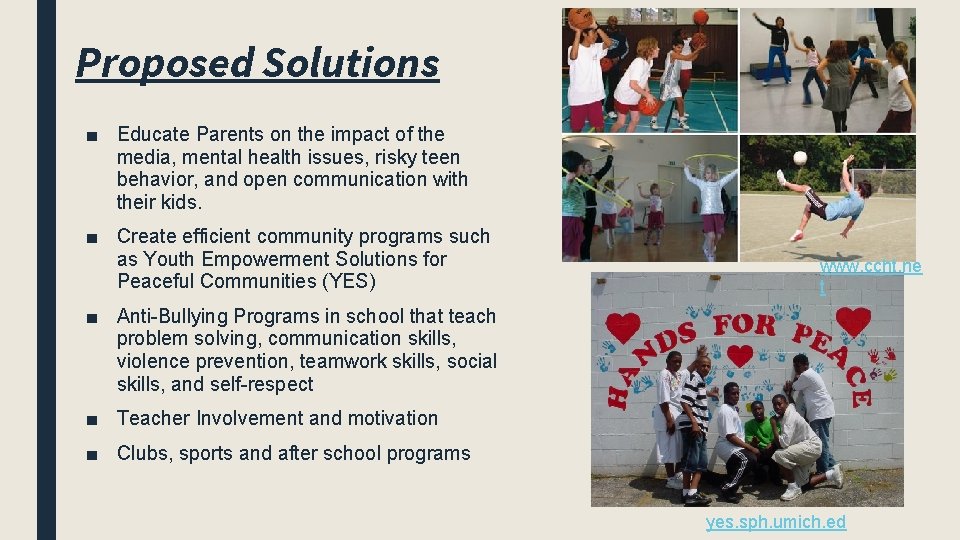
Proposed Solutions ■ Educate Parents on the impact of the media, mental health issues, risky teen behavior, and open communication with their kids. ■ Create efficient community programs such as Youth Empowerment Solutions for Peaceful Communities (YES) www. ccht. ne t ■ Anti-Bullying Programs in school that teach problem solving, communication skills, violence prevention, teamwork skills, social skills, and self-respect ■ Teacher Involvement and motivation ■ Clubs, sports and after school programs yes. sph. umich. ed
References Bowen, N. , & Bowen, G. (1999). Effects of crime and violence in neighborhoods and schools on the school behavior and performance of adolescents. Journal of Adolescent Research 14(3), 319 -342. Causes of School Violence. (2015) Constitutional Rights Foundation. Retrieved from http: //www. crf-usa. org/school-violence/causes-of-school-violence. html Eisenbraun, K. (2007). Violence in schools: Prevalence, prediction, and prevention. Aggression and Violent Behavior, 12(4), 459 -469. Peguero, A. A. (2009). Opportunity, Involvement, and Student Exposure to School Violence. Youth Violence and Juvenile Justice, 7(4), 299 -312. doi: 10. 1177/1541204008330634 Understanding School Violence. National Center for Injury Prevention and Control ( 2015). Retrived from http: //www. cdc. gov/violenceprevention/pdf/school_violence_fact_sheeta. pdf Stopping School Violence. (1998). Retrieved November 9, 2015. From www. ncpc. org