
SCHOOL STORE OPERATIONS CHAPTER 6 PROMOTE YOUR BUSINESS
SCHOOL STORE OPERATIONS CHAPTER 6: PROMOTE YOUR BUSINESS Mrs. Kuhn 16 -17 school year
LESSON 6. 1: SALES PROMOTION Objectives: * identify types of sales promotions * explain the elements of a promotional strategy

PROMOTIONAL ACTIVITIES Designed to q. Inform q. Persuade q. Remind customers about q. Service or goods available

SALES PROMOTION Use of incentives or activities to stimulate sales or increase customer demand or traffic Can be directed towards customers, sales associates, retailers, wholesalers, and manufacturers
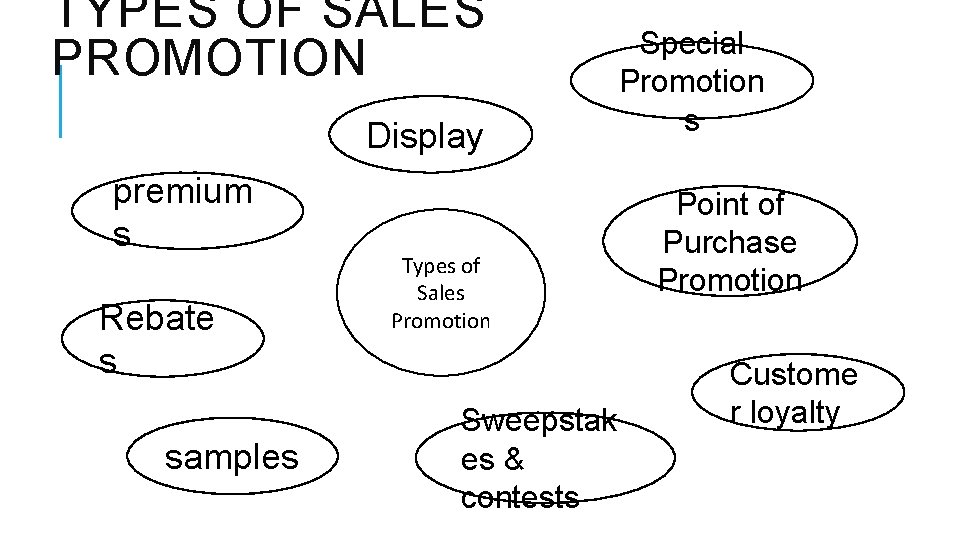
TYPES OF SALES PROMOTION Display premium s Rebate s samples Types of Sales Promotion Sweepstak es & contests Special Promotion s Point of Purchase Promotion Custome r loyalty

TYPES OF SALES PROMOTION Display ØInterior or exterior ØUses theme-related props ØShelves, mannequins, display cases, signs, posters

TYPES OF SALES PROMOTION Premiums ØAnything of value that is given IN ADDITION to item purchased
TYPES OF SALES PROMOTION Rebates ØReturn part of the purchase price ØGet $5 back with a $15 purchase of batteries
TYPES OF SALES PROMOTION Samples ØFree trial-size package ØMailed, distributed door-to-door, given away at retail store
TYPES OF SALES PROMOTION Sweepstakes and contests ØGames used to get customers to think and talk about stores goods
TYPES OF SALES PROMOTION Customer loyalty marketing ØDesigned to build long-term relationship ØRewards customers who spend a certain dollar amount each year ØReceive discounts, prior notice of sales, prouct samples, and other

TYPES OF SALES PROMOTION Point-of-purchase promotion ØPromotional display set up in the store ØUsed to ØBuild traffic ØAdvertise product ØEncourage impulse buy ØEnd of aisle displays
TYPES OF SALES PROMOTION Special Promotions Øgames ØSilent auctions ØSidewalk sales ØRaffles ØTaste test ØGrab bags
QUESTIONS TO ASK WHEN MAKING PROMOTIONAL DECISIONS ØWhat will be overall theme? ØWhich advertising medium to use? ØWhat public relations activities should be implemented? ØWhat sales promotion mix will be used? ØHow will the promotional activities be coordinated?
ONLINE SALES PROMOTIONS INCLUDES ØWaiving shipping charges if order over a certain dollar amount ØAllow customers to receive free samples in exchange for completing a survey ØProvide printable coupons
WHAT TO CONSIDER WHEN DEVELOPING PROMOTIONAL STRATEGY ØWho is your target audience? ØWhat is the objective? ØWhat merchandise/service will you promote? ØWhat types of promotion will you use? ØHow much money can you spend
PRIMARY GOAL OF EVERY PROMOTION? ØIncrease sales ØProvide a profit
PROMOTIONAL OBJECTIVES ØWhat is an objective? ØWhat you want to accomplish ØExample: increase sale of propel by 10%
THREE FACTORS THAT INFLUENCE WHICH MERCHANDISE YOU PROMOTE? ØWhat is promotional objective? ØWhat merchandise store sells ØHow much of that merchandise is available?
TYPES OF SALES PROMOTION
LESSON 6. 2: VISUAL MERCHANDISING Objectives: q Explain the concept of visual merchandising q Describe the components of visual merchandising q Identify the stages involved in executing a display
VISUAL MERCHANDISING - presentation of the ENTIRE store and merchandise Display- visual and artistic aspects of presenting a product to a select target audience
VISUAL MERCHANDISING CAN -Improve store productivity -Boost sales per square foot -Generate a faster turnover rate -Sell more of most profitable merchandise -Decrease markdown rates -Increase amount of average transactions
WHAT ARE THE COMPONENTS OF VISUAL MERCHANDISING? - store image - store front - store interior - layout - interior displays
VISUAL MERCHANDISING COMPONENTS 1. Store image • overall look of store • mental pictures and feelings it evokes • Store name creates image in customers mind • Identifiable trademark created by combining words, pictures, colors, shapes, typeface, texture, or style
VISUAL MERCHANDISING COMPONENTS 1. Store image • Identifiable trademark created by combining words, pictures, colors, shapes, typeface, texture, or style “A trademark is any name, symbol, figure, letter, word, or mark adopted and used by a manufacturer or merchant in order to designate his or her goods and to distinguish them from those manufactured or sold by others. ”
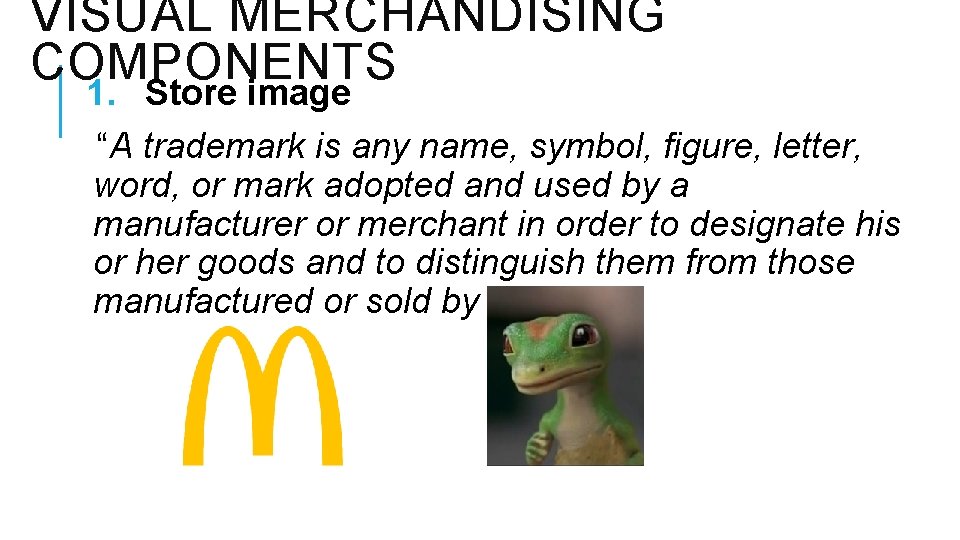
VISUAL MERCHANDISING COMPONENTS 1. Store image “A trademark is any name, symbol, figure, letter, word, or mark adopted and used by a manufacturer or merchant in order to designate his or her goods and to distinguish them from those manufactured or sold by others. ”
VISUAL MERCHANDISING COMPONENTS 2. Store front • Store’s sign, marquee, outdoor lighting, banners, planters, awnings, windows, building • Designed with customer convenience and store security in mind • Turnoffs- obstacle courses, visual clutter, warning signs on doors • Two types: • promotional window display • institutional window display
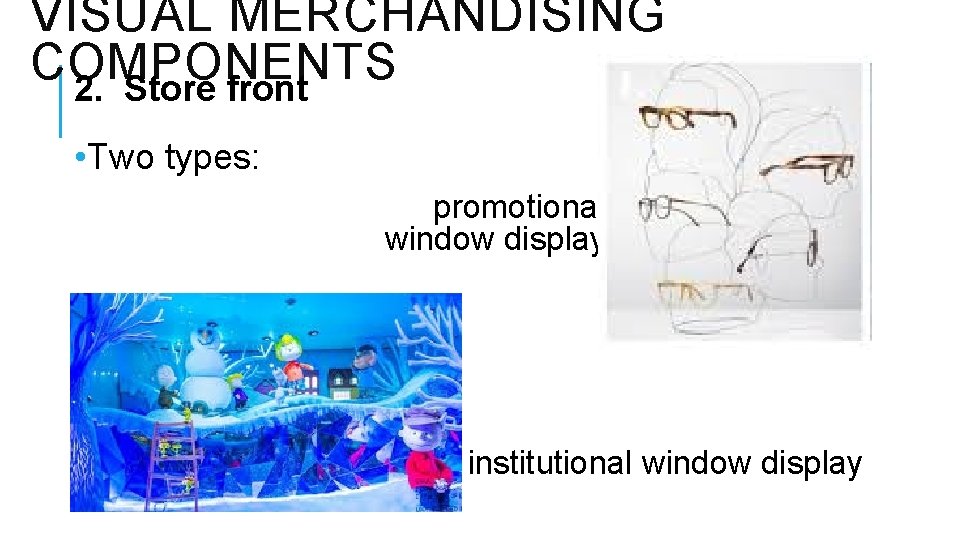
VISUAL MERCHANDISING COMPONENTS 2. Store front • Two types: promotional window display • institutional window display
VISUAL MERCHANDISING COMPONENTS 2. Store front • Promotional window display • Promote sale of product line • Emphasizes particular theme • Institutional window display • Creates customer good will • Enhances store image by showing company is interested in welfare of community
VISUAL MERCHANDISING COMPONENTS 3. Store image • Thoughtfully developed to make store’s exterior and interior a cohesive unit • Interior package includes: lighting, color selection, flooring, fixtures and other materials • Fixtures- permanent or movable store furnishings • Display cases, counters, shelves and racks
VISUAL MERCHANDISING COMPONENTS 4. layout • Way the store’s floor space is used to promote sales and provide customer service • Consists of: • Selling space, merchandise space, employee space, and customer space
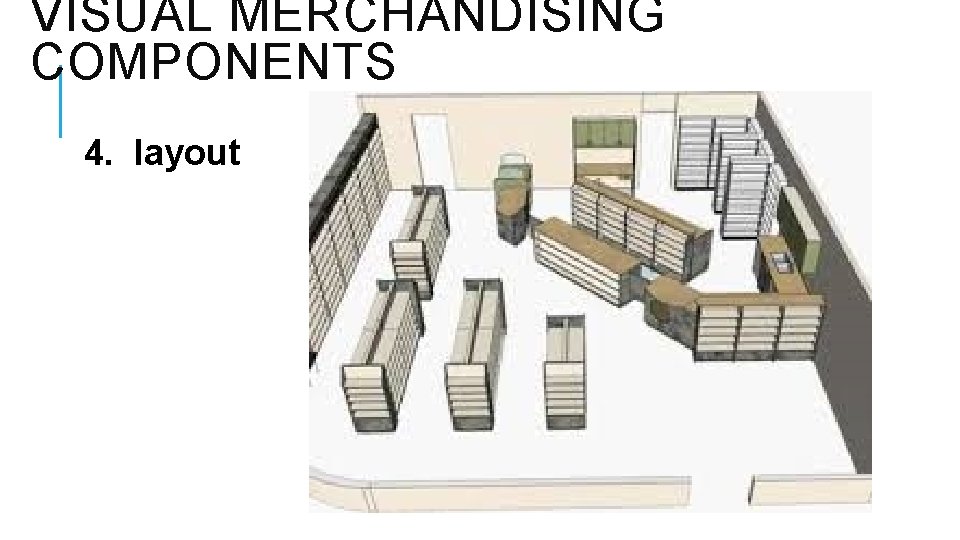
VISUAL MERCHANDISING COMPONENTS 4. layout
VISUAL MERCHANDISING COMPONENTS 5. Interior displays • Four types • Holiday/seasonal • Closed displays- high-ticket items (jewelry) • Open displays- customers can handle and examine • Point-of-purchase displays- impulse, near register
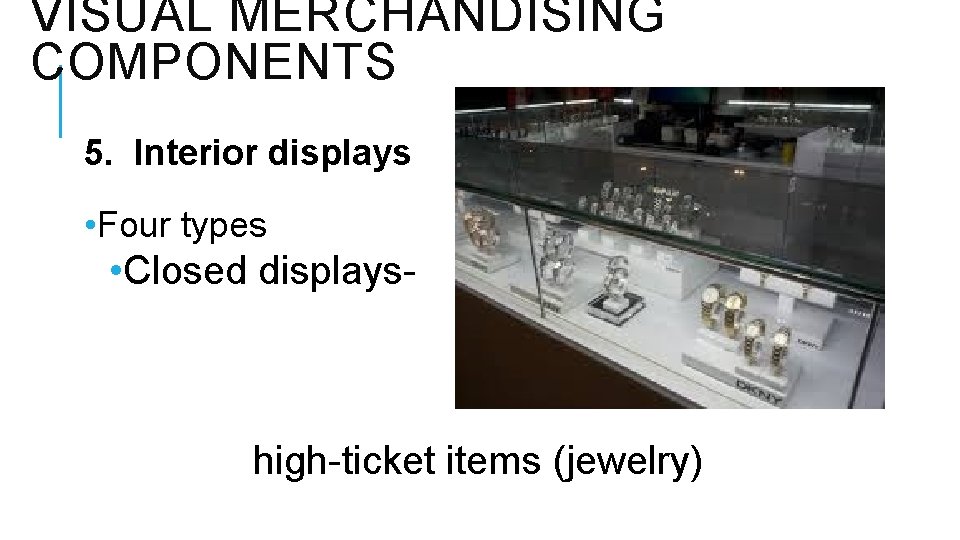
VISUAL MERCHANDISING COMPONENTS 5. Interior displays • Four types • Closed displays- high-ticket items (jewelry)
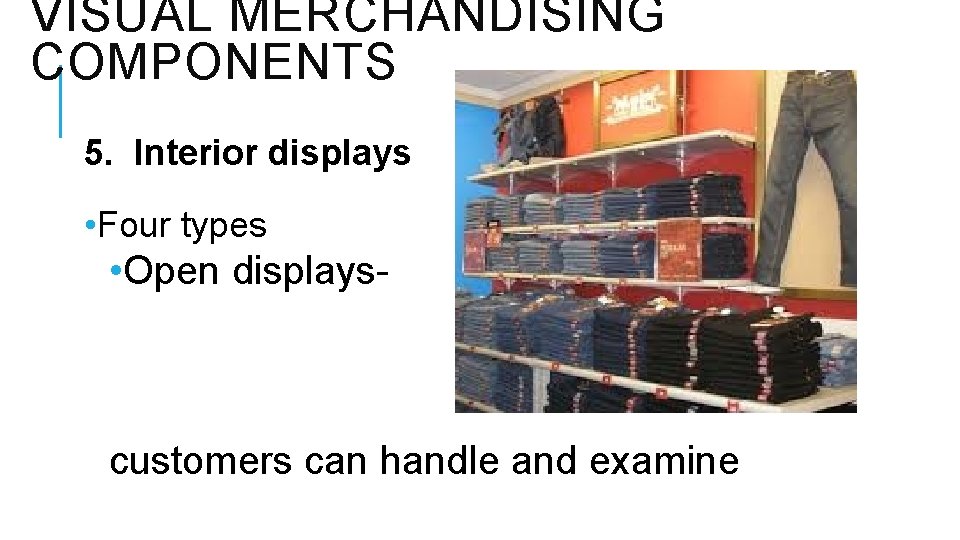
VISUAL MERCHANDISING COMPONENTS 5. Interior displays • Four types • Open displays- customers can handle and examine
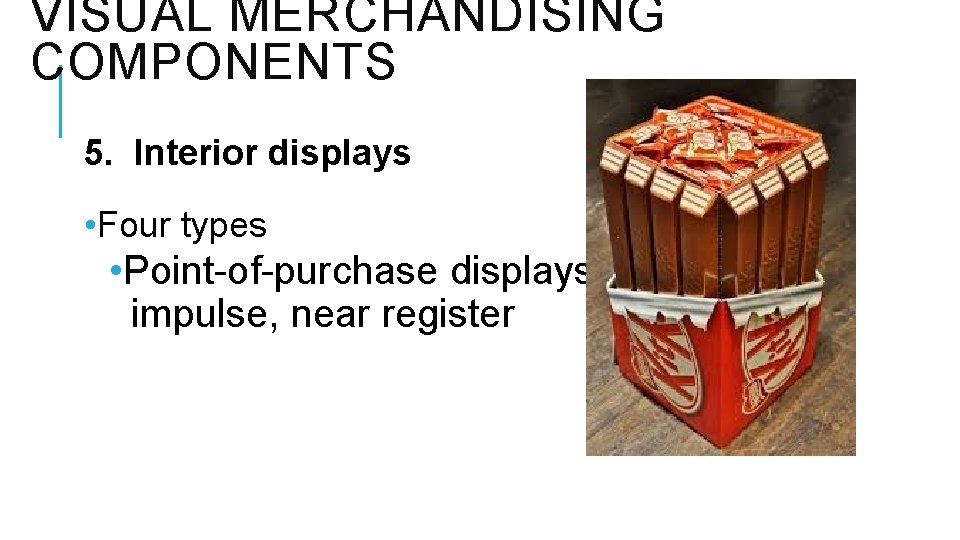
VISUAL MERCHANDISING COMPONENTS 5. Interior displays • Four types • Point-of-purchase displaysimpulse, near register
STEPS IN EXECUTING A DISPLAY 1. Select merchandise a. timely, have positive eye appeal, makes a statement 2. Prepare merchandise a. props 3. Developing specific displays a. One-item- shelf containing software b. Line-of-goods- several brands, sizes, or models of kind of product c. Related-merchandise d. Assortment displays- collection of unrelated items
STEPS IN EXECUTING A DISPLAY 4. Selecting a setting- should grab attention a. realistic setting- depicts room b. Semi-realistic- depicts room but leaves details to imagination c. Abstract-focus is on form and color 5. Understanding the Elements of Display design a. artistic elements: color, shape, texture, proportion, balance, motion, lighting b. color is best way to add excitement because it captures immediate attention 6. Evaluating displays a. Have desired objectives been met?
LESSON 6. 3: ADVERTISING AND PUBLICITY Objectives: • Identify types of advertising • Explain the steps for developing an advertising plan • Describe the guidelines for obtaining publicity
WHAT IS ADVERTISING? Any form of impersonal, paid communication of ideas, goods, or services directed toward a mass audience by an identified sponsor. Must appeal to your store’s target audience or they will ignore it! Two Types: q. Print qbroadcast
PRINT MEDIA Includes: Newspapers, magazines, direct mail, outdoor advertising, directories, and transit advertising.
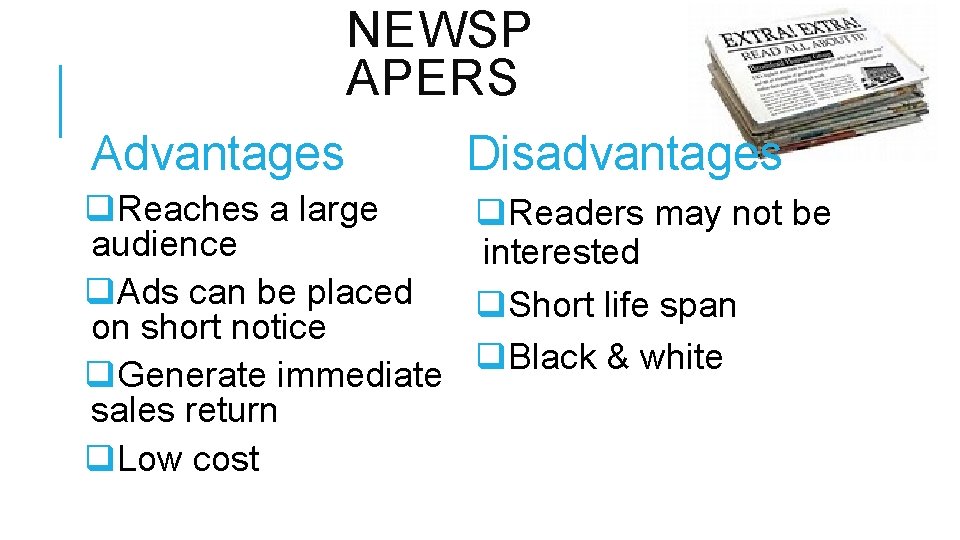
NEWSP APERS Advantages Disadvantages q. Reaches a large q. Readers may not be audience interested q. Ads can be placed q. Short life span on short notice q Black & white q. Generate immediate sales return q. Low cost
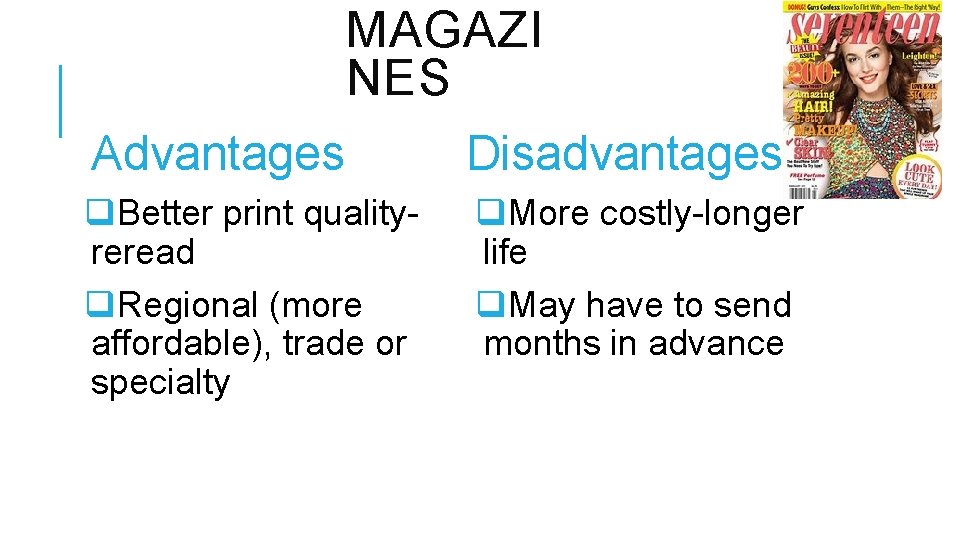
MAGAZI NES Advantages Disadvantages q. Better print qualityreread q. Regional (more affordable), trade or specialty q. More costly-longer life q. May have to send months in advance
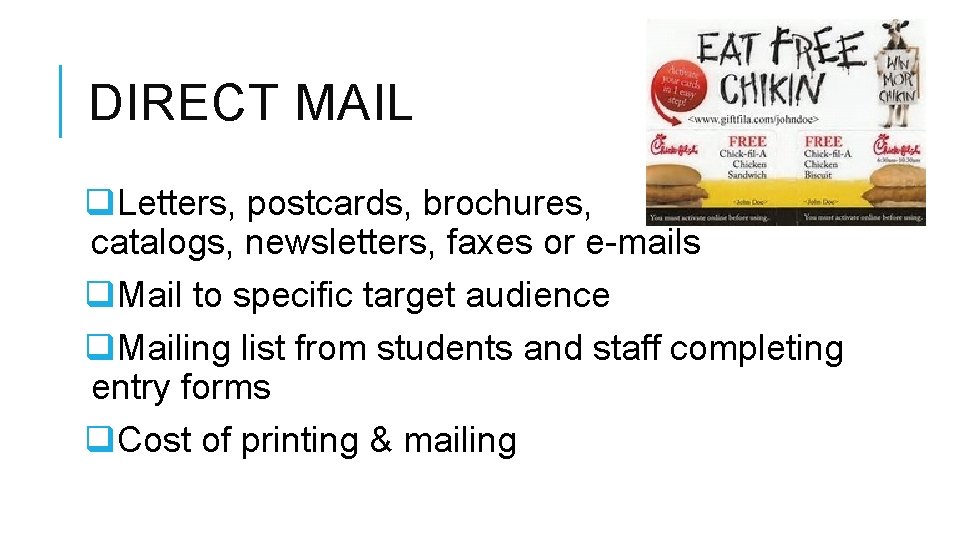
DIRECT MAIL q. Letters, postcards, brochures, catalogs, newsletters, faxes or e-mails q. Mail to specific target audience q. Mailing list from students and staff completing entry forms q. Cost of printing & mailing
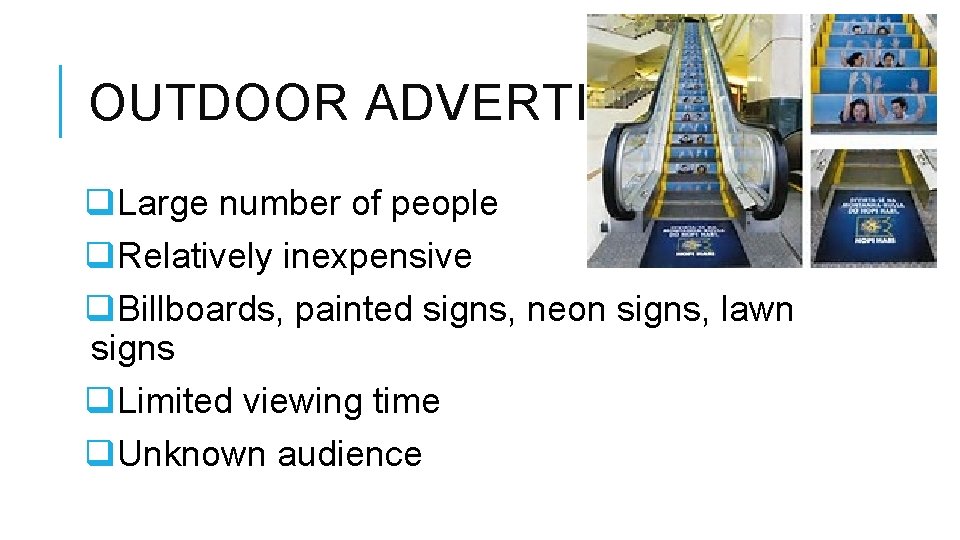
OUTDOOR ADVERTISING q. Large number of people q. Relatively inexpensive q. Billboards, painted signs, neon signs, lawn signs q. Limited viewing time q. Unknown audience
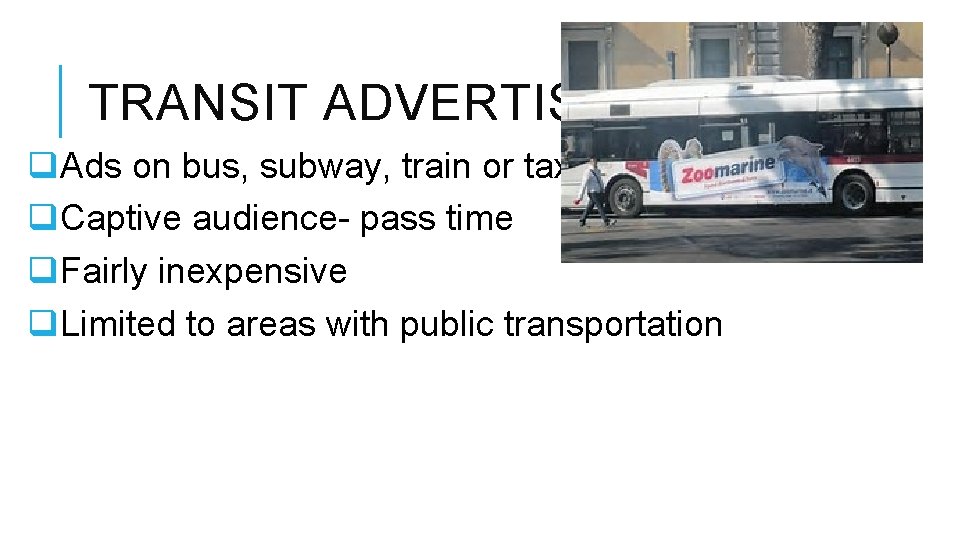
TRANSIT ADVERTISING q. Ads on bus, subway, train or taxi q. Captive audience- pass time q. Fairly inexpensive q. Limited to areas with public transportation
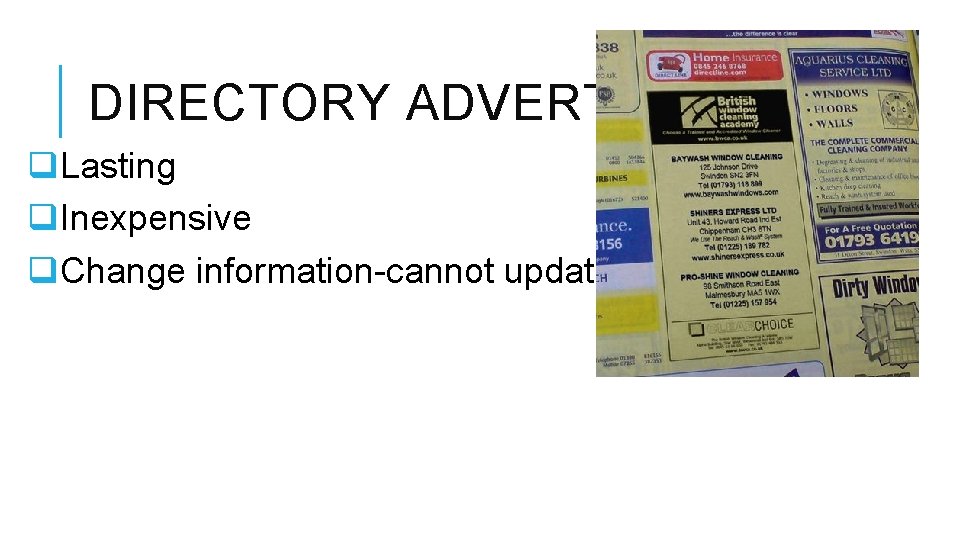
DIRECTORY ADVERTISING q. Lasting q. Inexpensive q. Change information-cannot update
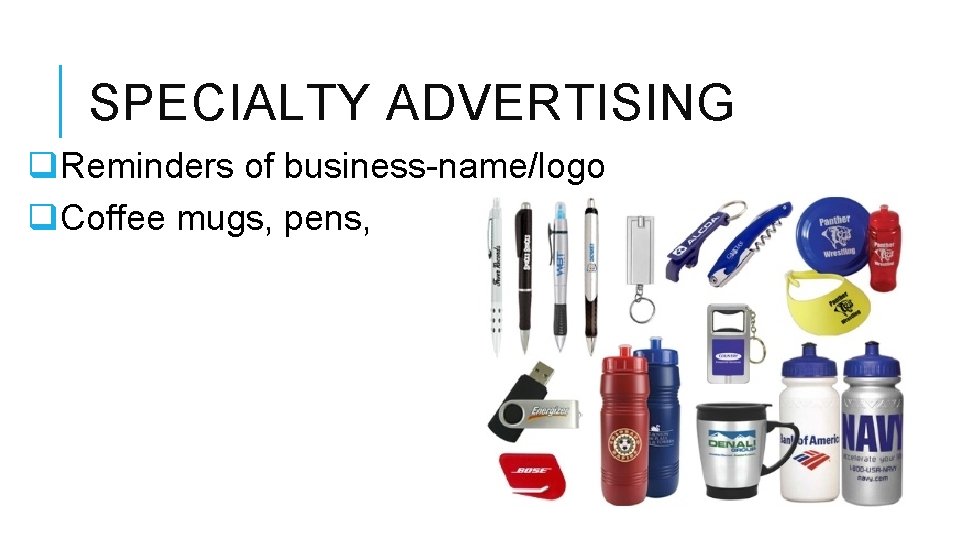
SPECIALTY ADVERTISING q. Reminders of business-name/logo q. Coffee mugs, pens,

TELEVISION q. Most costly
RADIO q. Rates vary by time of day and # of times q. Lacks visual involvement-listeners may get distracted and miss part of message q. Use catchy jingle
ONLINE ADVERTISING q. See what merchandise is available q. Low cost q. Uncertain of effectiveness q. Needs updated frequently
DEVELOPING AN ADVERTISING PLAN q. Identify objectives q. Create a theme q. Determine budget q. Select media type q. Create an ad q. Develop advertising schedule q. Measure effectiveness
PUBLICITY q. Any non-personal presentation of ideas, goods or services that is not paid for by the school. q. Ways to obtain publicity q. Write a news release q. Submit articles to newspapers and magazines q. Take pictures of events q. Call a press conference q. Contact local radio or television show
PUBLICITY q. Favorable vs unfavorable q. Favorable q. Positive effect q. Unfavorable q. Negative effect q. Believe publicity more than advertising- more factual and objective. Not paid to present information q
LESSON 6. 4: OTHER PROMOTIONAL IDEAS Objectives: * Describe the different types of special events * Identify promotional events for holidays
SPECIAL EVENTS Types of special events q. Institutional promotional q. Merchandise promotional
TYPES OF SPECIAL EVENTS Institutional promotional event q. Promotes goodwill, emphasize commitment to outstanding service, commemorate holiday or event q. Examples: seminars, charitable activities, personal appearances, awards show, fund raisers
TYPES OF SPECIAL EVENTS Merchandise promotional event q. Used to sell specific merchandise q. Examples: private sale (just for them), sampling, demonstrations
HOLIDAY EVENTS Can • Enhance store’s identity • Build customer loyalty • Create a sense of community spirit Examples: gimmick sale, harvest day sale, wish list promotion
- Slides: 60