
School of English Sheffield 4 March 2015 Multicultural

- Slides: 47
School of English, Sheffield 4 March 2015 Multicultural London English: blueprint for the future? Paul Kerswill University of York
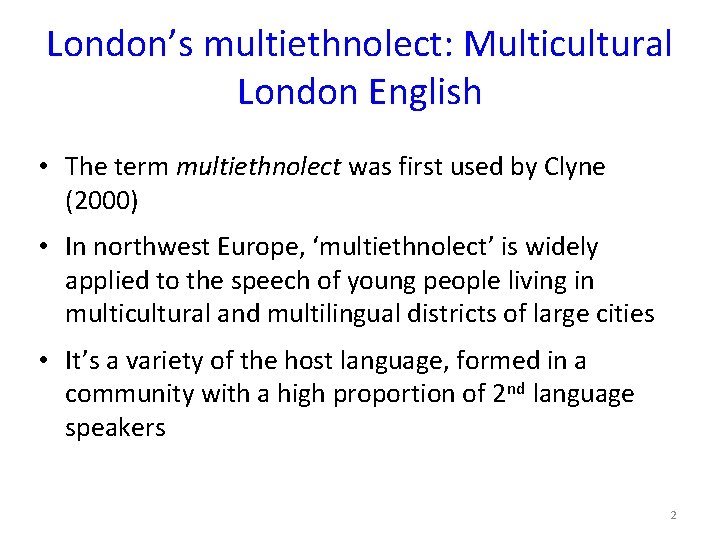
London’s multiethnolect: Multicultural London English • The term multiethnolect was first used by Clyne (2000) • In northwest Europe, ‘multiethnolect’ is widely applied to the speech of young people living in multicultural and multilingual districts of large cities • It’s a variety of the host language, formed in a community with a high proportion of 2 nd language speakers 2
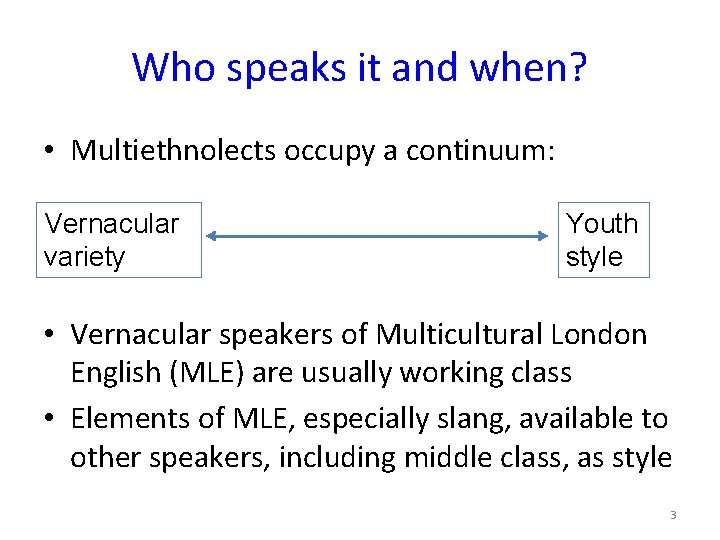
Who speaks it and when? • Multiethnolects occupy a continuum: Vernacular variety Youth style • Vernacular speakers of Multicultural London English (MLE) are usually working class • Elements of MLE, especially slang, available to other speakers, including middle class, as style 3
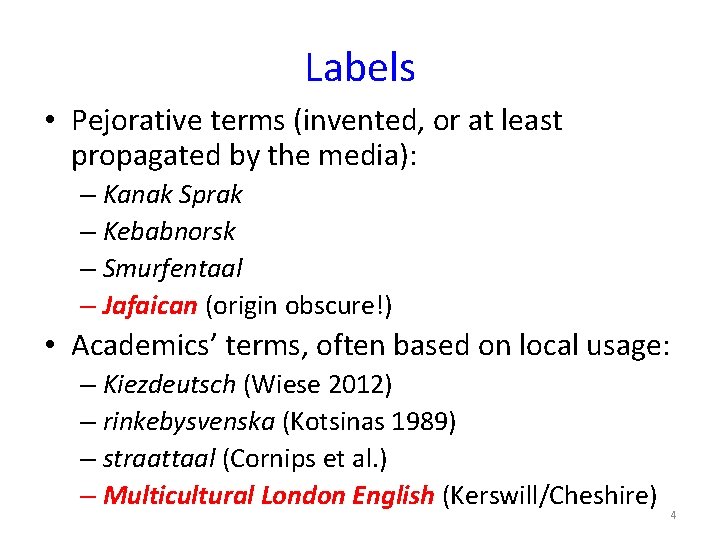
Labels • Pejorative terms (invented, or at least propagated by the media): – Kanak Sprak – Kebabnorsk – Smurfentaal – Jafaican (origin obscure!) • Academics’ terms, often based on local usage: – Kiezdeutsch (Wiese 2012) – rinkebysvenska (Kotsinas 1989) – straattaal (Cornips et al. ) – Multicultural London English (Kerswill/Cheshire) 4
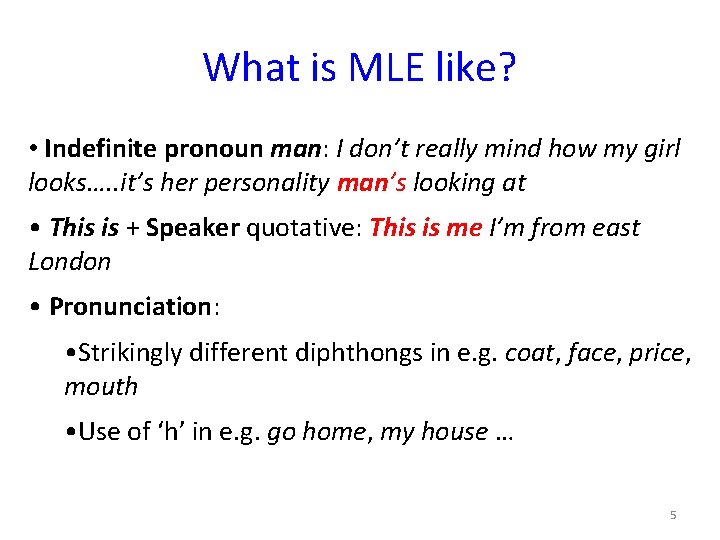
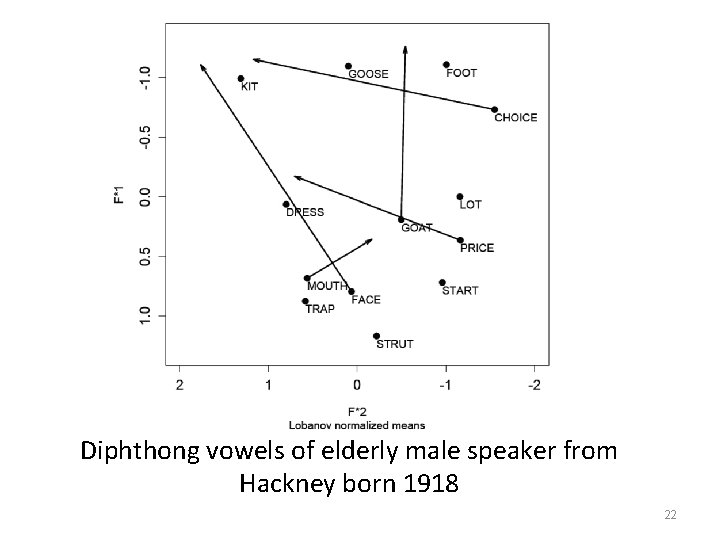
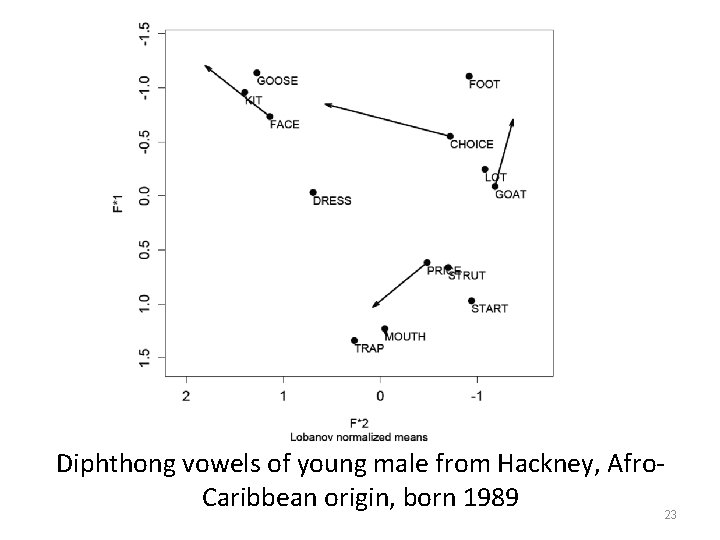
What is MLE like? • Indefinite pronoun man: I don’t really mind how my girl looks…. . it’s her personality man’s looking at • This is + Speaker quotative: This is me I’m from east London • Pronunciation: • Strikingly different diphthongs in e. g. coat, face, price, mouth • Use of ‘h’ in e. g. go home, my house … 5
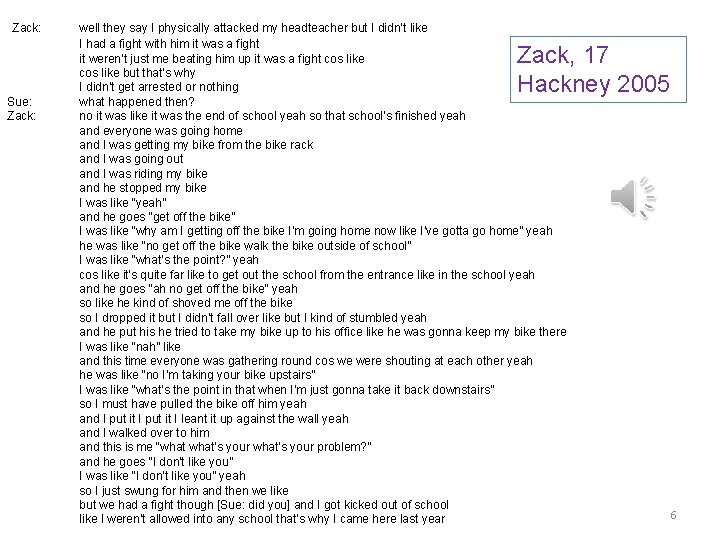
Zack: Sue: Zack: well they say I physically attacked my headteacher but I didn’t like I had a fight with him it was a fight it weren’t just me beating him up it was a fight cos like but that’s why I didn’t get arrested or nothing what happened then? no it was like it was the end of school yeah so that school’s finished yeah and everyone was going home and I was getting my bike from the bike rack and I was going out and I was riding my bike and he stopped my bike I was like “yeah” and he goes “get off the bike” I was like “why am I getting off the bike I’m going home now like I’ve gotta go home” yeah he was like “no get off the bike walk the bike outside of school” I was like “what’s the point? ” yeah cos like it’s quite far like to get out the school from the entrance like in the school yeah and he goes “ah no get off the bike” yeah so like he kind of shoved me off the bike so I dropped it but I didn’t fall over like but I kind of stumbled yeah and he put his he tried to take my bike up to his office like he was gonna keep my bike there I was like “nah” like and this time everyone was gathering round cos we were shouting at each other yeah he was like “no I’m taking your bike upstairs” I was like “what’s the point in that when I’m just gonna take it back downstairs” so I must have pulled the bike off him yeah and I put it I leant it up against the wall yeah and I walked over to him and this is me “what’s your problem? ” and he goes “I don't like you” I was like “I don't like you” yeah so I just swung for him and then we like but we had a fight though [Sue: did you] and I got kicked out of school like I weren’t allowed into any school that’s why I came here last year Zack, 17 Hackney 2005 6
Web resource with MLE extracts English Language Teaching Resources Archive • http: //linguistics. sllf. qmul. ac. uk/englishlanguage-teaching 7
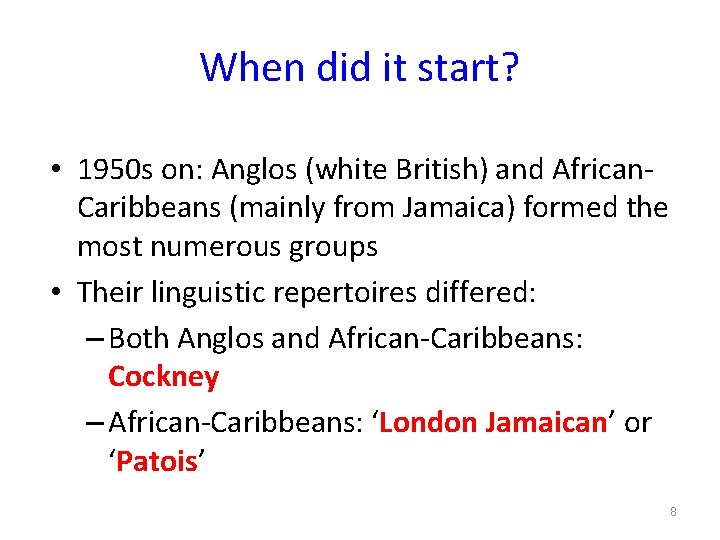
When did it start? • 1950 s on: Anglos (white British) and African. Caribbeans (mainly from Jamaica) formed the most numerous groups • Their linguistic repertoires differed: – Both Anglos and African-Caribbeans: Cockney – African-Caribbeans: ‘London Jamaican’ or ‘Patois’ 8
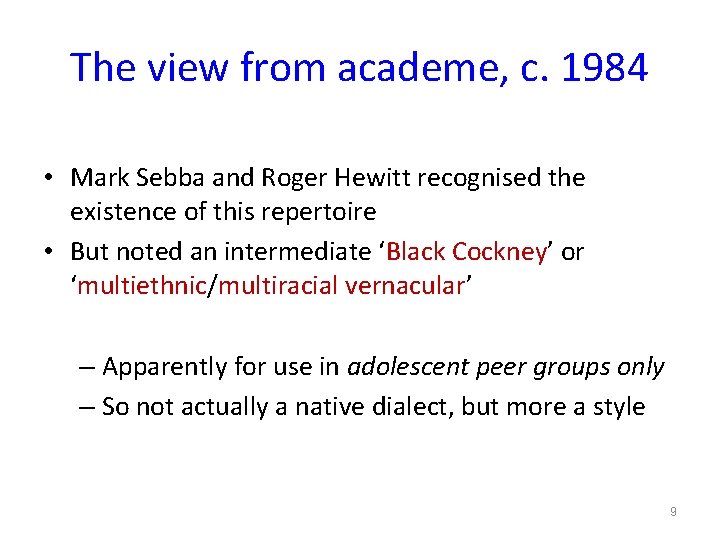
The view from academe, c. 1984 • Mark Sebba and Roger Hewitt recognised the existence of this repertoire • But noted an intermediate ‘Black Cockney’ or ‘multiethnic/multiracial vernacular’ – Apparently for use in adolescent peer groups only – So not actually a native dialect, but more a style 9
A criminologist speaks • John Pitts notes the start of a new youth language among young black people in the East End in the early 1980 s, when their deteriorating social position was preventing them from living up to their parents’ expectations • Pitts argues that the new dialect reflects a ‘resistance identity’. • http: //www. youtube. com/watch? v=Gd 3 SJ 6 qaky. Y (29 minutes in) 10
The London projects 2004– 10 11
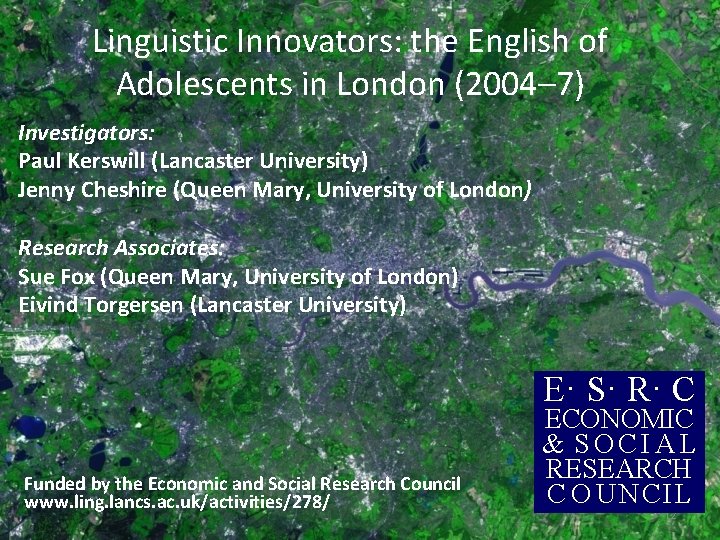
Linguistic Innovators: the English of Adolescents in London (2004– 7) Investigators: Paul Kerswill (Lancaster University) Jenny Cheshire (Queen Mary, University of London) Research Associates: Sue Fox (Queen Mary, University of London) Eivind Torgersen (Lancaster University) E· S· R· C Funded by the Economic and Social Research Council www. ling. lancs. ac. uk/activities/278/ ECONOMIC & SOCIAL RESEARCH C O UNCIL 12
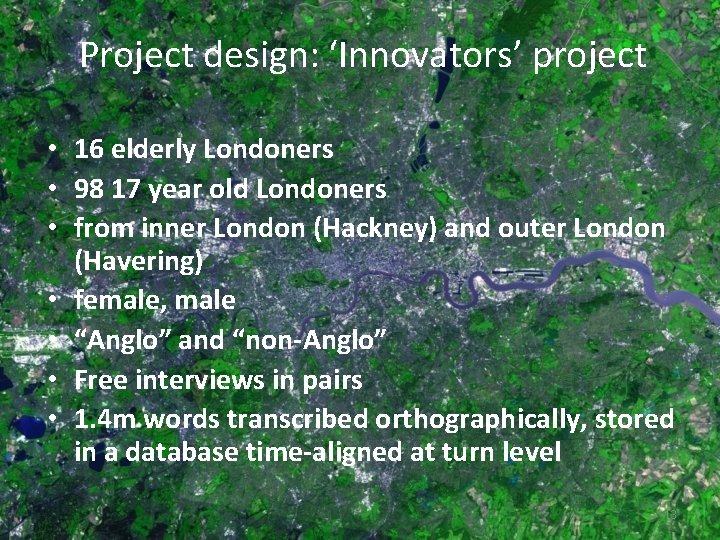
Project design: ‘Innovators’ project • 16 elderly Londoners • 98 17 year old Londoners • from inner London (Hackney) and outer London (Havering) • female, male • “Anglo” and “non-Anglo” • Free interviews in pairs • 1. 4 m words transcribed orthographically, stored in a database time-aligned at turn level 13
Multicultural London English: the emergence, acquisition and diffusion of a new variety (2007 – 10) Investigators: Paul Kerswill (Lancaster University) Jenny Cheshire (Queen Mary, University of London) Research Associates: Sue Fox, Arfaan Khan, (Queen Mary, University of London) Eivind Torgersen (Lancaster University) E· S· R· C Funded by the Economic and Social Research Council www. ling. lancs. ac. uk/activities/539/ ECONOMIC & SOCIAL RESEARCH C O U N C I 14 L
Project design: MLE project • • Six age groups: 4 -5, 8, 12, 17, c. 25, c. 40 North London female, male “Anglo” and “non-Anglo” Free interviews in pairs c. 1. 5 m words transcribed Phonological and grammatical analysis Perception tests 15
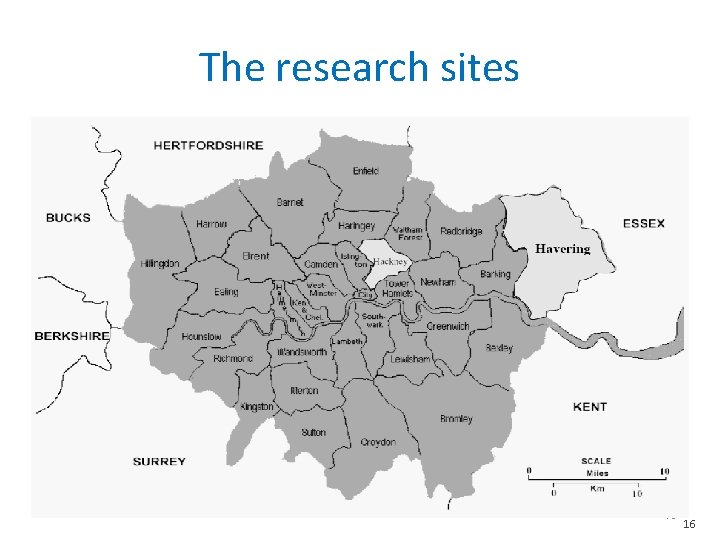
The research sites 16 16
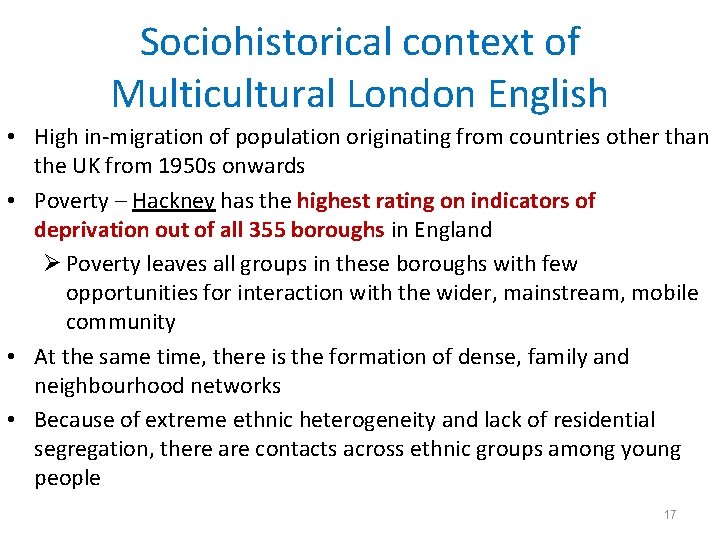
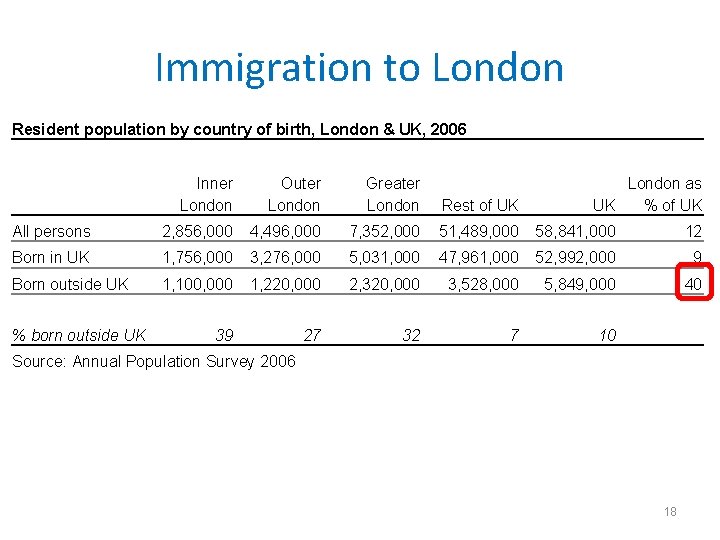
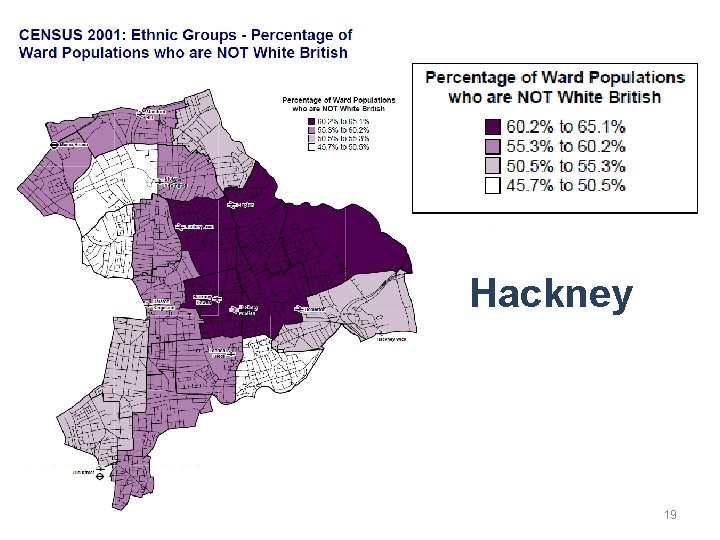
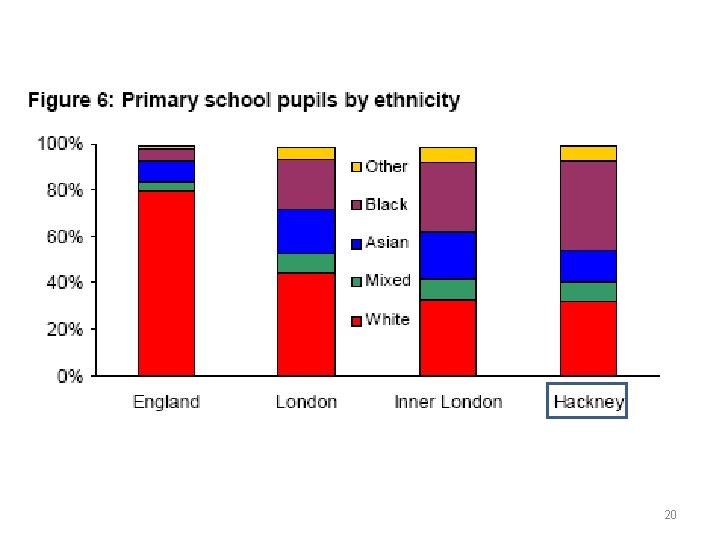
Sociohistorical context of Multicultural London English • High in-migration of population originating from countries other than the UK from 1950 s onwards • Poverty – Hackney has the highest rating on indicators of deprivation out of all 355 boroughs in England Ø Poverty leaves all groups in these boroughs with few opportunities for interaction with the wider, mainstream, mobile community • At the same time, there is the formation of dense, family and neighbourhood networks • Because of extreme ethnic heterogeneity and lack of residential segregation, there are contacts across ethnic groups among young people 17
Immigration to London Resident population by country of birth, London & UK, 2006 Inner London Outer London Greater London Rest of UK All persons 2, 856, 000 4, 496, 000 7, 352, 000 51, 489, 000 58, 841, 000 12 Born in UK 1, 756, 000 3, 276, 000 5, 031, 000 47, 961, 000 52, 992, 000 9 Born outside UK 1, 100, 000 1, 220, 000 2, 320, 000 3, 528, 000 5, 849, 000 40 39 27 32 7 % born outside UK London as UK % of UK 10 Source: Annual Population Survey 2006 18
Hackney 19
20
What kinds of English formed the input to MLE? • Creole-influenced varieties (Jamaica, etc. ) • Ex-colonial Englishes (Pakistan, Nigeria …) • Learner varieties of varieties • The local London vernacular (‘Cockney') • Kinds of English encountered in the school (Standard English, teachers’ varieties) • Media (television) • Monolingual English speakers have also been exposed to all these varieties 21
Diphthong vowels of elderly male speaker from Hackney born 1918 22
Diphthong vowels of young male from Hackney, Afro. Caribbean origin, born 1989 23
– Discourse markers, a new pronoun and quotatives as contact-based innovations in inner London 24
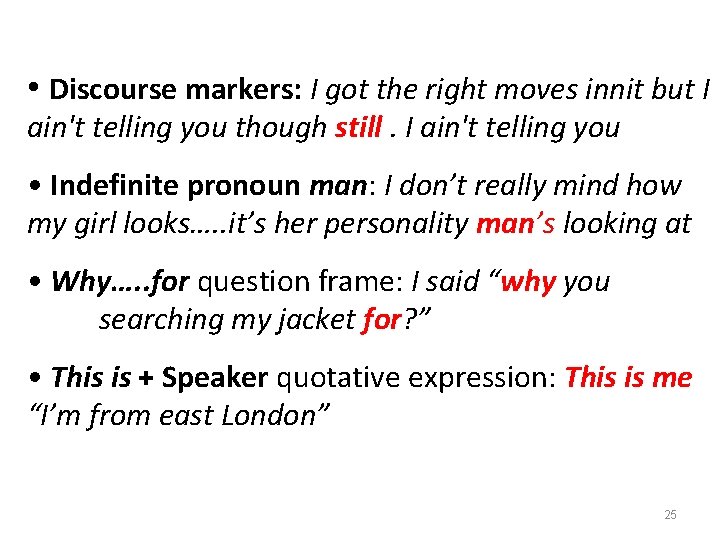
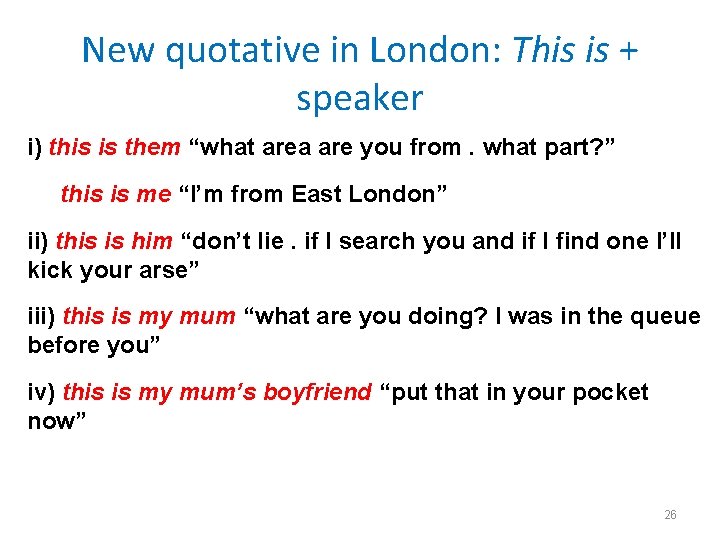
• Discourse markers: I got the right moves innit but I ain't telling you though still. I ain't telling you • Indefinite pronoun man: I don’t really mind how my girl looks…. . it’s her personality man’s looking at • Why…. . for question frame: I said “why you searching my jacket for? ” • This is + Speaker quotative expression: This is me “I’m from east London” 25
New quotative in London: This is + speaker i) this is them “what area are you from. what part? ” this is me “I’m from East London” ii) this is him “don’t lie. if I search you and if I find one I’ll kick your arse” iii) this is my mum “what are you doing? I was in the queue before you” iv) this is my mum’s boyfriend “put that in your pocket now” 26
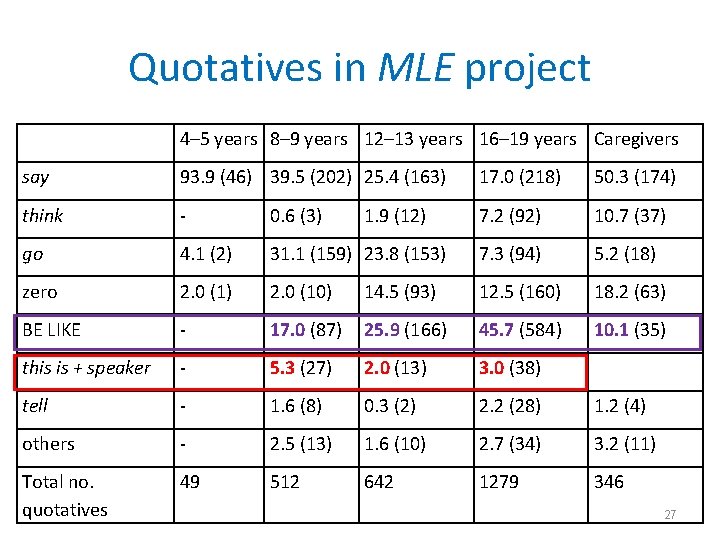
Quotatives in MLE project 4– 5 years 8– 9 years 12– 13 years 16– 19 years Caregivers say 93. 9 (46) 39. 5 (202) 25. 4 (163) 17. 0 (218) 50. 3 (174) think - 0. 6 (3) 7. 2 (92) 10. 7 (37) go 4. 1 (2) 31. 1 (159) 23. 8 (153) 7. 3 (94) 5. 2 (18) zero 2. 0 (1) 2. 0 (10) 14. 5 (93) 12. 5 (160) 18. 2 (63) BE LIKE - 17. 0 (87) 25. 9 (166) 45. 7 (584) 10. 1 (35) this is + speaker - 5. 3 (27) 2. 0 (13) 3. 0 (38) tell - 1. 6 (8) 0. 3 (2) 2. 2 (28) 1. 2 (4) others - 2. 5 (13) 1. 6 (10) 2. 7 (34) 3. 2 (11) Total no. quotatives 49 512 642 1279 346 1. 9 (12) 27
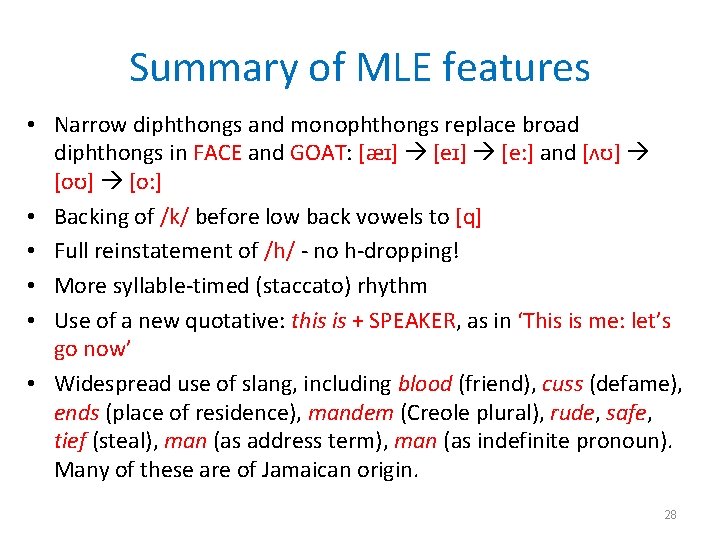
Summary of MLE features • Narrow diphthongs and monophthongs replace broad diphthongs in FACE and GOAT: [æɪ] [e: ] and [ʌʊ] [o: ] • Backing of /k/ before low back vowels to [q] • Full reinstatement of /h/ - no h-dropping! • More syllable-timed (staccato) rhythm • Use of a new quotative: this is + SPEAKER, as in ‘This is me: let’s go now’ • Widespread use of slang, including blood (friend), cuss (defame), ends (place of residence), mandem (Creole plural), rude, safe, tief (steal), man (as address term), man (as indefinite pronoun). Many of these are of Jamaican origin. 28
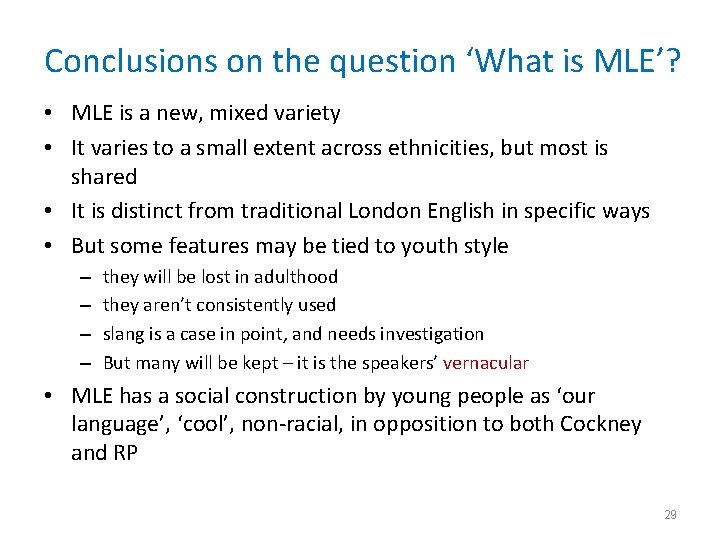
Conclusions on the question ‘What is MLE’? • MLE is a new, mixed variety • It varies to a small extent across ethnicities, but most is shared • It is distinct from traditional London English in specific ways • But some features may be tied to youth style – – they will be lost in adulthood they aren’t consistently used slang is a case in point, and needs investigation But many will be kept – it is the speakers’ vernacular • MLE has a social construction by young people as ‘our language’, ‘cool’, non-racial, in opposition to both Cockney and RP 29
Tracing Multicultural London English in British newspapers Kerswill, Paul. 2014. The objectification of ‘Jafaican’: the discoursal embedding of Multicultural London English in the British media. In Androutsopoulos, Jannis (ed. ) The Media and Sociolinguistic Change. Berlin: De Gruyter, pp. 428– 455. 30
The multiethnolect in the papers • Nexis UK database • I searched for Jafaican (Jafaikan) and Multicultural London English in July 2012 – 62 articles contained at least one occurrence of Jafaican – 29 contained Multicultural London English, of which 20 also contained Jafaican. 31
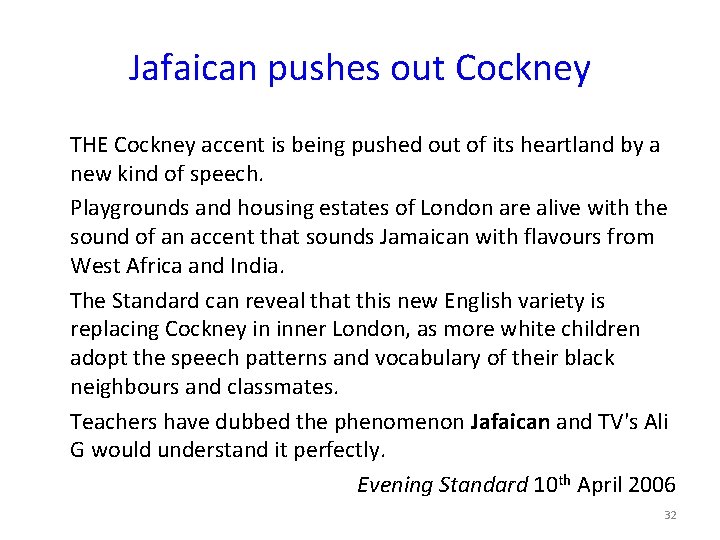
Jafaican pushes out Cockney THE Cockney accent is being pushed out of its heartland by a new kind of speech. Playgrounds and housing estates of London are alive with the sound of an accent that sounds Jamaican with flavours from West Africa and India. The Standard can reveal that this new English variety is replacing Cockney in inner London, as more white children adopt the speech patterns and vocabulary of their black neighbours and classmates. Teachers have dubbed the phenomenon Jafaican and TV's Ali G would understand it perfectly. Evening Standard 10 th April 2006 32
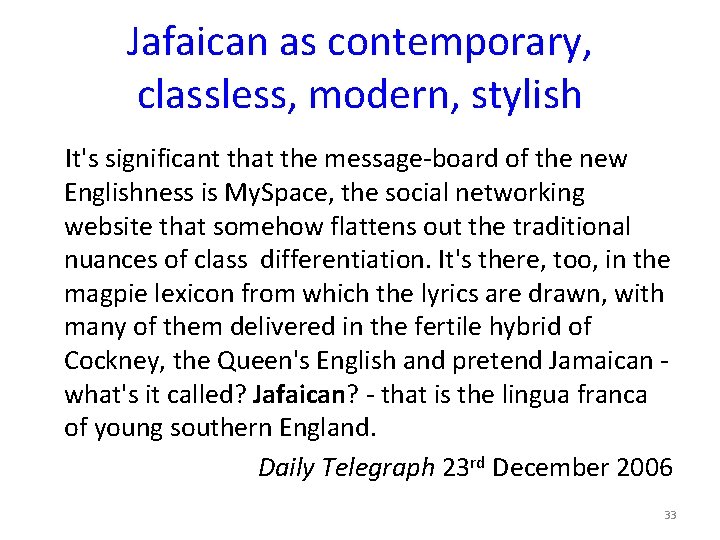
Jafaican as contemporary, classless, modern, stylish It's significant that the message-board of the new Englishness is My. Space, the social networking website that somehow flattens out the traditional nuances of class differentiation. It's there, too, in the magpie lexicon from which the lyrics are drawn, with many of them delivered in the fertile hybrid of Cockney, the Queen's English and pretend Jamaican - what's it called? Jafaican? - that is the lingua franca of young southern England. Daily Telegraph 23 rd December 2006 33
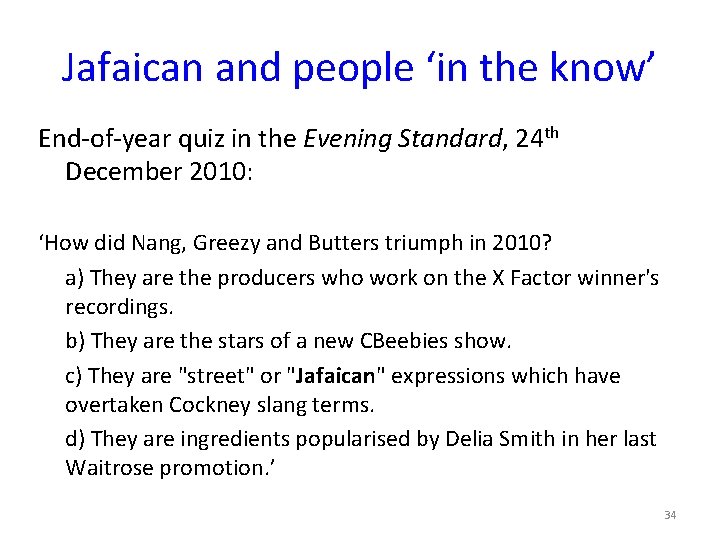
Jafaican and people ‘in the know’ End-of-year quiz in the Evening Standard, 24 th December 2010: ‘How did Nang, Greezy and Butters triumph in 2010? a) They are the producers who work on the X Factor winner's recordings. b) They are the stars of a new CBeebies show. c) They are "street" or "Jafaican" expressions which have overtaken Cockney slang terms. d) They are ingredients popularised by Delia Smith in her last Waitrose promotion. ’ 34
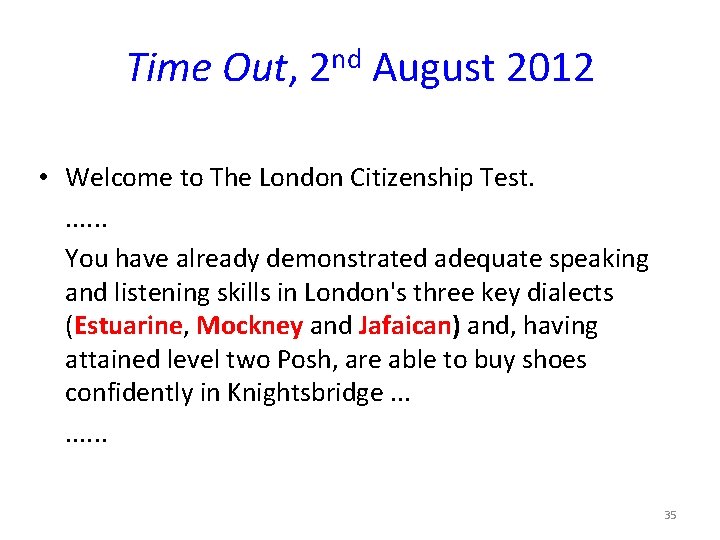
Time Out, 2 nd August 2012 • Welcome to The London Citizenship Test. . . . You have already demonstrated adequate speaking and listening skills in London's three key dialects (Estuarine, Mockney and Jafaican) and, having attained level two Posh, are able to buy shoes confidently in Knightsbridge. . 35
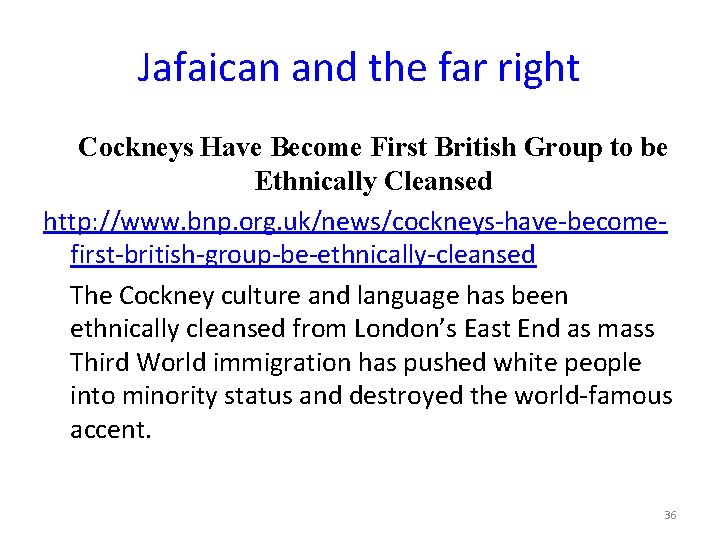
Jafaican and the far right Cockneys Have Become First British Group to be Ethnically Cleansed http: //www. bnp. org. uk/news/cockneys-have-becomefirst-british-group-be-ethnically-cleansed The Cockney culture and language has been ethnically cleansed from London’s East End as mass Third World immigration has pushed white people into minority status and destroyed the world-famous accent. 36
Starkey, Jamaican and the riots: just how wrong could he be? TEDx talk, September 2011: Who’s an East Ender now? Migration and the transformation of the Cockney dialect
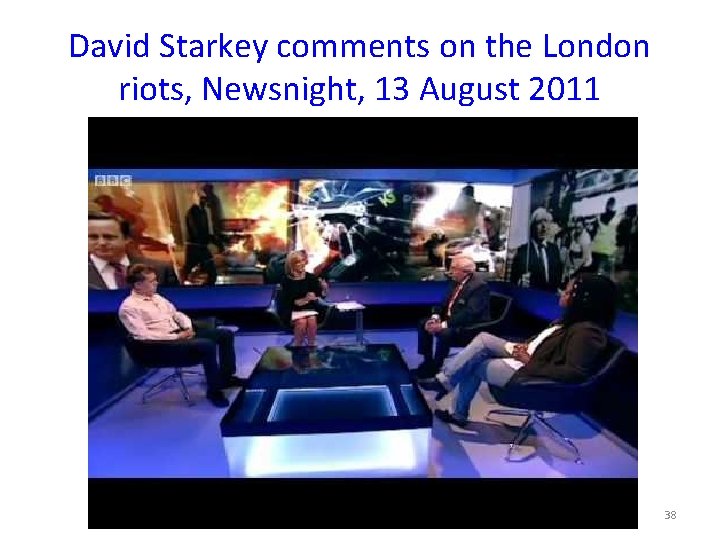
David Starkey comments on the London riots, Newsnight, 13 August 2011 38
David Starkey: • ‘The whites have become black. A particular sort of violent, destructive, nihilistic, gangster culture has become the fashion, and black and white, boy and girl, operate in this language together, this language which is wholly false, which is this Jamaican patois that has been intruded in England, and that is why so many of us have this sense of, literally, a foreign country. ’ 39
Linguist Geoff Pullum on Starkey (THE, 18 August 2011) • ‘Did Starkey really mean what he said? Well, he gave an additional clear indication of believing that the dangerous blacks are marked out by their patois, while safe ones such as the MP for Tottenham speak white English. “Listen to David Lammy, an archetypical successful black man, ” he said in his defence: “if you turned the screen off, so that you were listening to him on radio, you'd think he was white. ”. . . ’ 40
Starkey’s double mistake • He is hearing ‘Jamaican’, when actually he’s hearing MLE – Wrong attribution of foreignness • He ascribes a violent disposition directly to the language 41
19 August 2014 • James Foley’s killer is heard speaking with a British accent – Now known to be Mohammed Emwazi • Linguists (myself included!) widely interviewed, and confirmed the jihadist in the video as a speaker of Multicultural London English • ‘Multicultural London English’ appears dozens of times on the Internet closely associated with the jihadist 42
Consequences • Media exposure makes accents more recognisable • Media discourses strongly guide the way an accent is perceived socially • MLE has become negatively stereotyped, after a brief ‘honeymoon’ back in 2006 when the term was first used by the press • The riots and (especially) the explicit mention of MLE in the context of the London Jihadist will accelerate the negative stereotyping 43
Blueprint for the future? • More multicultural accents/dialects can be expected in the future – But they may remain restricted to inner cities • Constant renewal of immigrant populations – East End has had large-scale immigration over centuries • The linguistic and social mix will change • MLE and its successors are now part of our dialect landscape 44
• Kerswill, Paul, Torgersen, Eivind & Fox, Susan (2008). Reversing ‘drift’: Innovation and diffusion in the London diphthong system. Language Variation and Change 20: 451– 491. • Torgersen, Eivind and Anita Szakay (2012) An investigation of speech rhythm in London English. Lingua. • Cheshire, Jenny, David Adger and Sue Fox (2013). Relative who and the actuation problem. Lingua 126 (2013) 51– 77. 45
• Kerswill, Paul (fc 2014). The objectification of ‘Jafaican’: the discoursal embedding of Multicultural London English in the British media. In J. Androutsopoulos (ed. ) Media and sociolinguistic change. Mouton. • Kerswill, Paul (fc 2013). Identity, ethnicity and place: the construction of youth language in London. In P. Auer et al. (eds. ) Space in Language and Linguistics. Berlin: De Gruyter. • Torgersen, Eivind (2012). A perceptual study of ethnicity and geographical location in London and Birmingham. In P. Stoeckle, S. Hansen, T. Streck and C. Schwartz (eds. ) Raumkonzepte. Freiburg: FRIAS. • Cheshire, Jenny, Kerswill, Paul, Fox, Susan & Torgersen, Eivind (2011). Contact, the feature pool and the speech community: The emergence of Multicultural London English. Journal of Sociolinguistics 15/2: 151– 196. • Kerswill, Paul, Cheshire, Jenny, Fox, Susan and Torgersen, Eivind (2012). English as a contact language: the role of children and adolescents. In Hundt, Marianne & Schreier, Daniel (eds. ) English as a contact language. Cambridge: Cambridge University Press. 46
References • Cheshire, Jenny, Kerswill, Paul, Fox, Susan & Torgersen, Eivind. 2011. Contact, the feature pool and the speech community: The emergence of Multicultural London English. Journal of Sociolinguistics 15/2: 151– 196. • Kerswill, Paul. 2013. Identity, ethnicity and place: the construction of youth language in London. In P. Auer, M. Hilpert, A. Stukenbrock & B. Szmrecsanyi (eds). Space in language and linguistics: geographical, interactional, and cognitive perspectives. Berlin: de Gruyter, pp. 128 -164. • Kerswill, Paul. 2014. The objectification of ‘Jafaican’: the discoursal embedding of Multicultural London English in the British media. In Androutsopoulos, Jannis (ed. ) The Media and Sociolinguistic Change. Berlin: De Gruyter, pp. 428– 455. 47