
School of Business Eastern Illinois University Telecommunications systems
School of Business Eastern Illinois University Telecommunications systems (Part 1) (Week 12, Tuesday 3/27/2007) © Abdou Illia, Spring 2007
Learning Objectives n Describe and compare types of connection to subnets and networks offered by telephone companies 2
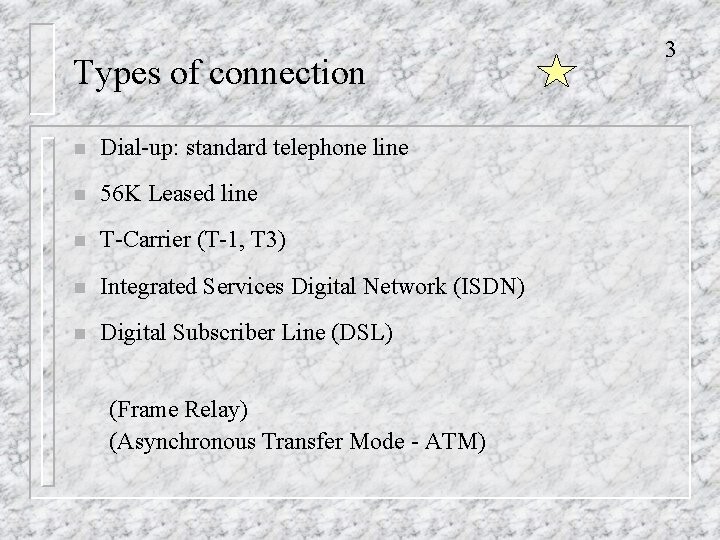
Types of connection n Dial-up: standard telephone line n 56 K Leased line n T-Carrier (T-1, T 3) n Integrated Services Digital Network (ISDN) n Digital Subscriber Line (DSL) (Frame Relay) (Asynchronous Transfer Mode - ATM) 3
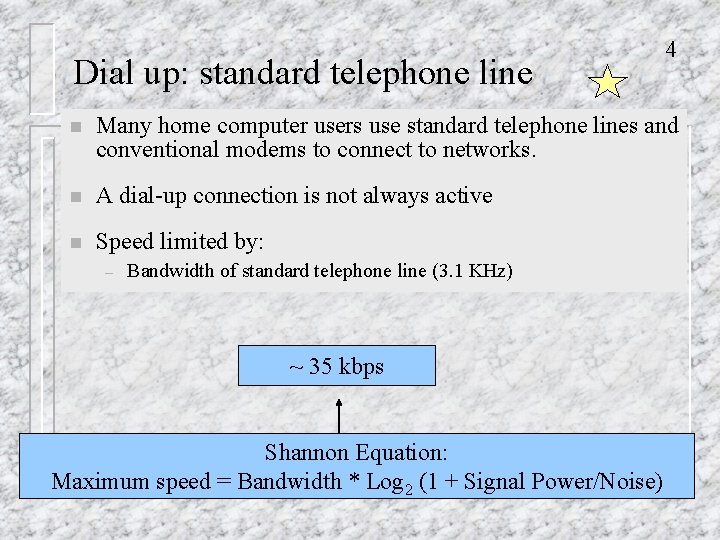
Dial up: standard telephone line 4 n Many home computer users use standard telephone lines and conventional modems to connect to networks. n A dial-up connection is not always active n Speed limited by: – Bandwidth of standard telephone line (3. 1 KHz) ~ 35 kbps Shannon Equation: Maximum speed = Bandwidth * Log 2 (1 + Signal Power/Noise)

Modems Standards 5 Modem standards Name Receiving speed Sending speed V. 92 56 kbps 48 kbps V. 90 56 kbps 33. 6 kbps V. 34 33. 6 kbps V. 32 bis 14. 4 kbps
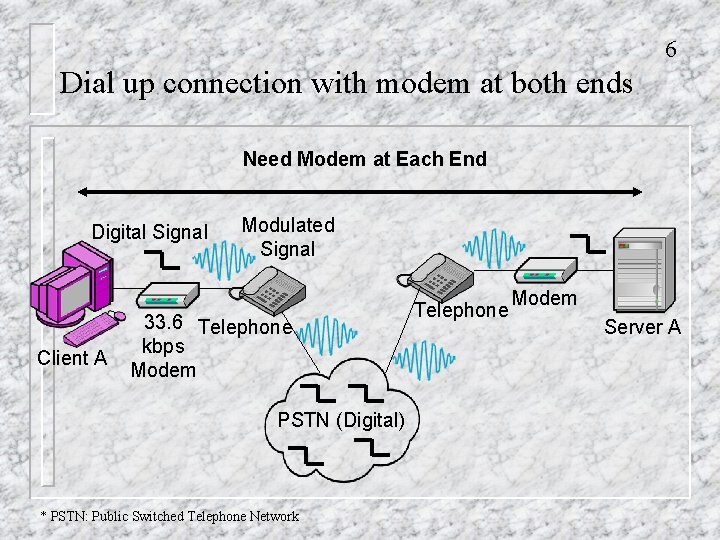
6 Dial up connection with modem at both ends Need Modem at Each End Digital Signal Client A Modulated Signal 33. 6 Telephone kbps Modem PSTN (Digital) * PSTN: Public Switched Telephone Network Telephone Modem Server A
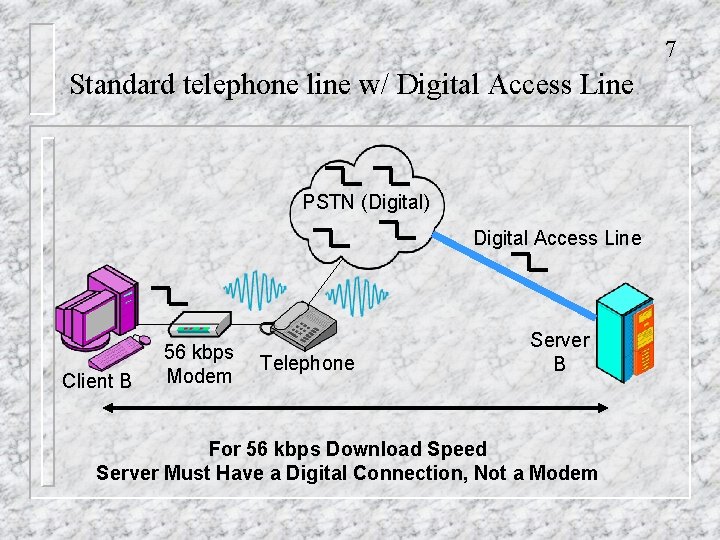
7 Standard telephone line w/ Digital Access Line PSTN (Digital) Digital Access Line Client B 56 kbps Modem Telephone Server B For 56 kbps Download Speed Server Must Have a Digital Connection, Not a Modem
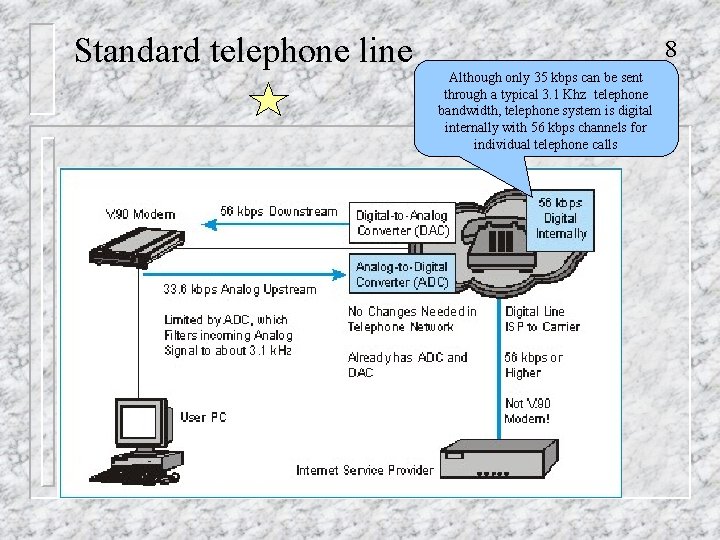
Standard telephone line 8 Although only 35 kbps can be sent through a typical 3. 1 Khz telephone bandwidth, telephone system is digital internally with 56 kbps channels for individual telephone calls
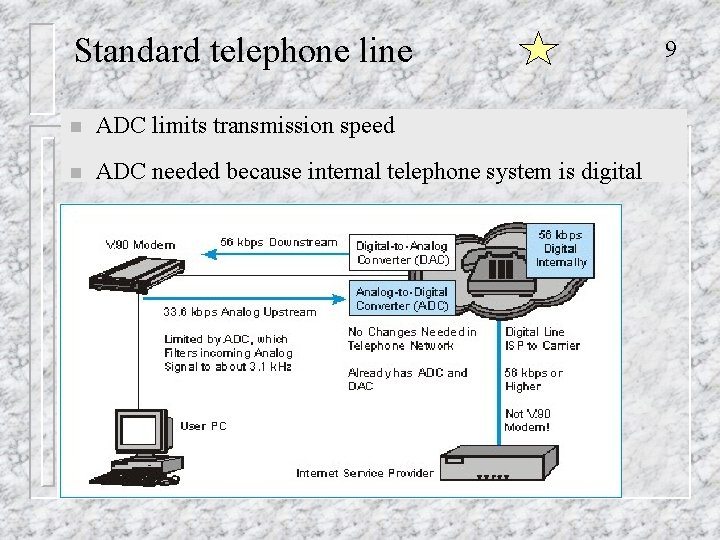
Standard telephone line n ADC limits transmission speed n ADC needed because internal telephone system is digital 9
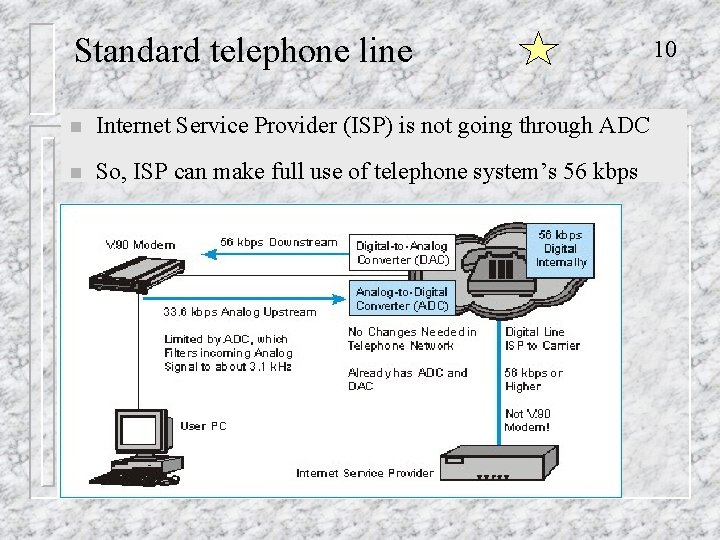
Standard telephone line n Internet Service Provider (ISP) is not going through ADC n So, ISP can make full use of telephone system’s 56 kbps 10
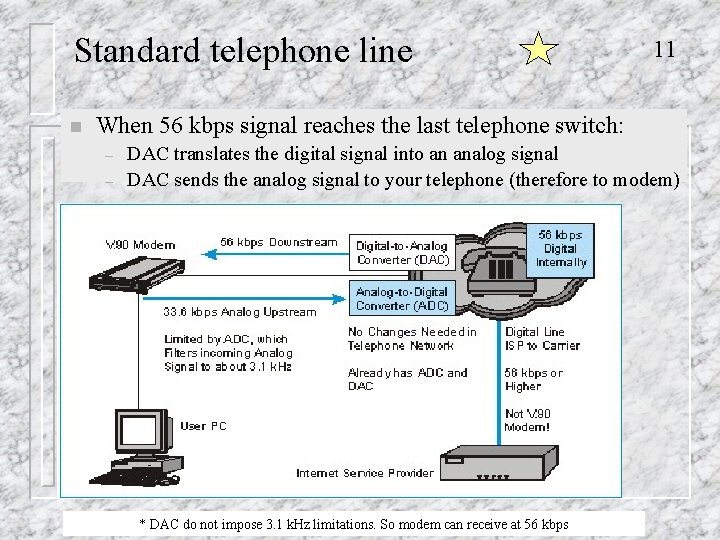
Standard telephone line n 11 When 56 kbps signal reaches the last telephone switch: – – DAC translates the digital signal into an analog signal DAC sends the analog signal to your telephone (therefore to modem) * DAC do not impose 3. 1 k. Hz limitations. So modem can receive at 56 kbps
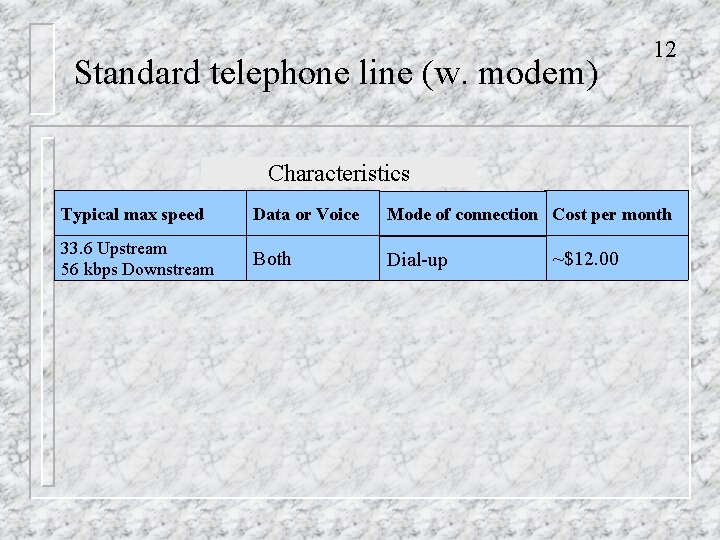
Standard telephone line (w. modem) 12 Characteristics Typical max speed Data or Voice Mode of connection Cost per month 33. 6 Upstream 56 kbps Downstream Both Dial-up ~$12. 00
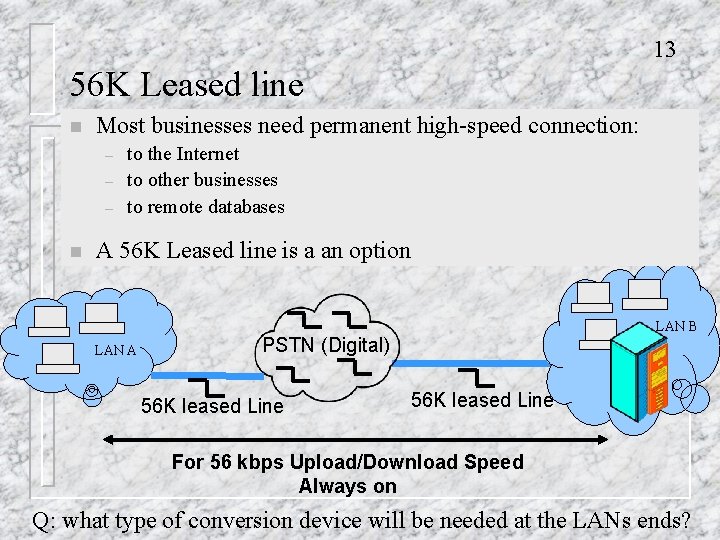
13 56 K Leased line n Most businesses need permanent high-speed connection: – – – n to the Internet to other businesses to remote databases A 56 K Leased line is a an option LAN B LAN A PSTN (Digital) 56 K leased Line For 56 kbps Upload/Download Speed Always on Q: what type of conversion device will be needed at the LANs ends?
56 K Leased line n 56 K leased lines: – – n Cost depends on distance: – – n Are dedicated lines leased from telephone companies Connect the Client to another party (Office, ISP, supplier, etc) Are always active (No need for Dial) Transfer data at 56, 000 bps ~$100/mo for local connection (non long-distance) ~$500/mo plus 1. 00/mile for long-distance connection For more about 56 Leased lines, see: – – http: //en. wikipedia. org/wiki/Leased_line http: //www. mva. net/support/56 kfaq. html 14
Summary Questions 1. 15 When a standard telephone line is used to connect to a network: (a) What device limits the speed? (b) Where is this device located? (a) The analog-to-digital converter (ADC). (b) It is located at the telephone company’s switch at the end of your local loop access line. 2. (a) In using a V. 90 modem for dial-up connection to the Internet, what is needed at the ISP end? (b) What does the telephone company need? (a) A digital access line to the telephone carrier (and some internal equipment). Note: The ISP does not have a V. 90 modem. If it did, it could only transmit at 33. 6 kbps. (b) The telephone company does not have to do anything differently. Note: the telephone company does not have to install ADCs. These are already there. You use ADCs and DACs every time you make a voice telephone call.
16 Summary Questions 3. (a) How are 56 K Leased lines and standard telephone lines different in terms of their operation? (b) How are they different in terms of speed and cost? (a) With standard telephone lines you need to dial a telephone number to connect. The connection is not permanent (active only during a call). With 56 K Leased line, there is no need to dial a telephone number, and the connection is always active. (b) 56 K Leased lines are faster and more expensive.
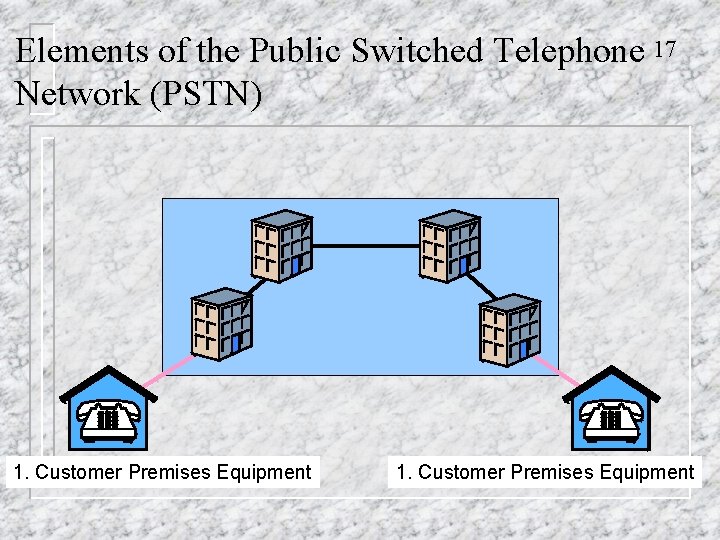
Elements of the Public Switched Telephone 17 Network (PSTN) 1. Customer Premises Equipment
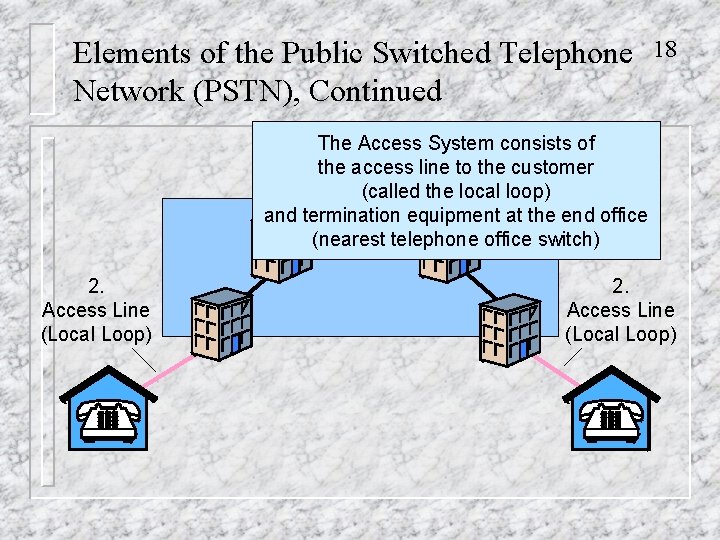
Elements of the Public Switched Telephone Network (PSTN), Continued 18 The Access System consists of the access line to the customer (called the local loop) and termination equipment at the end office (nearest telephone office switch) 2. Access Line (Local Loop)
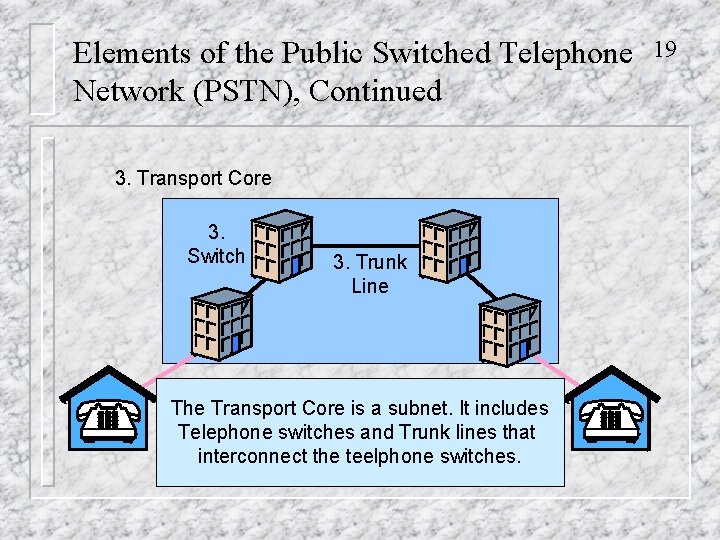
Elements of the Public Switched Telephone Network (PSTN), Continued 3. Transport Core 3. Switch 3. Trunk Line The Transport Core is a subnet. It includes Telephone switches and Trunk lines that interconnect the teelphone switches. 19
- Slides: 19