
SCHOOL MIKUMI SECONDARY SCHOOL TEACHER TABU ALLY CLASS
SCHOOL: MIKUMI SECONDARY SCHOOL TEACHER: TABU ALLY CLASS: FORM FOUR SUBJECT : HISTORY TOPIC: NATIONALISM AND DECOLONIZATION OF AFRICA SUB TOPIC: DECOLONIZATION OF AFRICA CASE STUDY: SOUTH AFRICA ( APARTHEID POLICY)
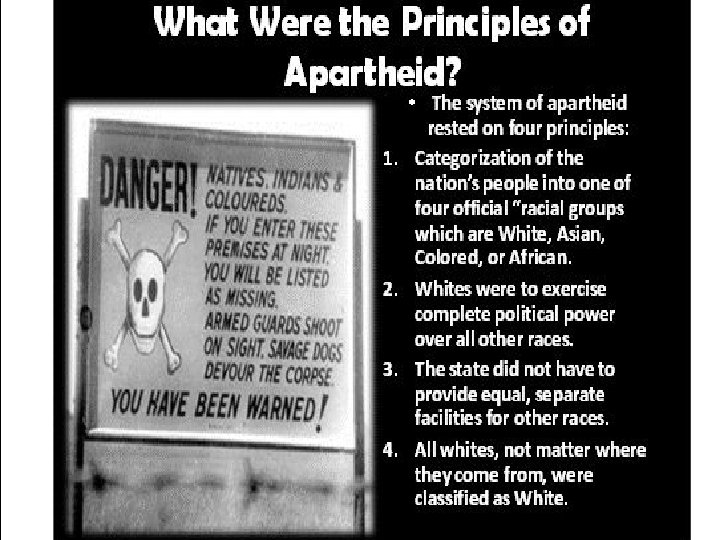
APARTHEID What is Apartheid policy? (brainstorm 2 minute)
SOUTH AFRICA • South African natives includes Zulu, Ndebele, Xhosa, • In 1652 the Dutch settlers established their first white settlement at the Cape • Around 1820 s big number of British arrived and establish their settlement in South Africa. They control the natives and other group of people • Many Afrikaners died in battles with the ‘natives’. Hatred of the British and Blacks deepened Afrikaner solidarity. • Independence was granted in 1910. While the Afrikaners made up only 13% of the population, they dominated the government.
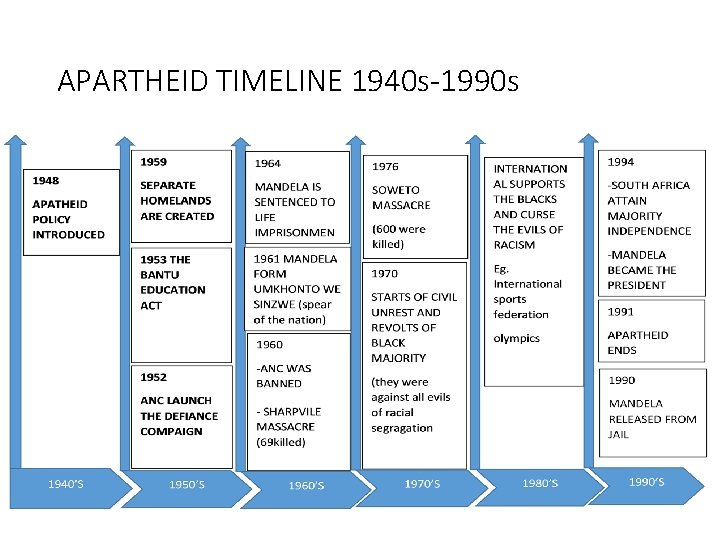
APARTHEID TIMELINE 1940 s-1990 s
APARTHEID LAWS • There were different laws introduced in order to favour the white minority rule in South Africa • There were about 148 laws during apartheid regime • These include
1. POPULATION LAW ACT 1950 • This law demanded people to register according to their races • whites, coloured, black and Asians • People were treated differently according to their races
2. GROUP AREA ACT 1950 • This was a law that started physical separation between races especially in urban areas. • The act called for the removal and restriction made to those who not belong to a particular race
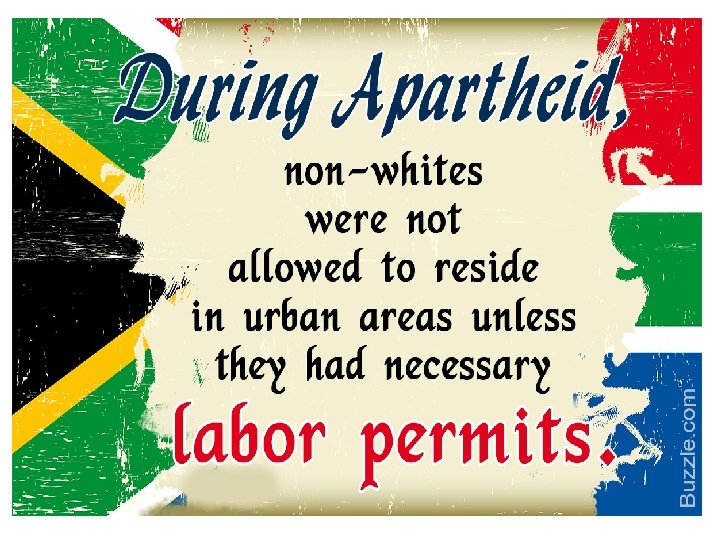
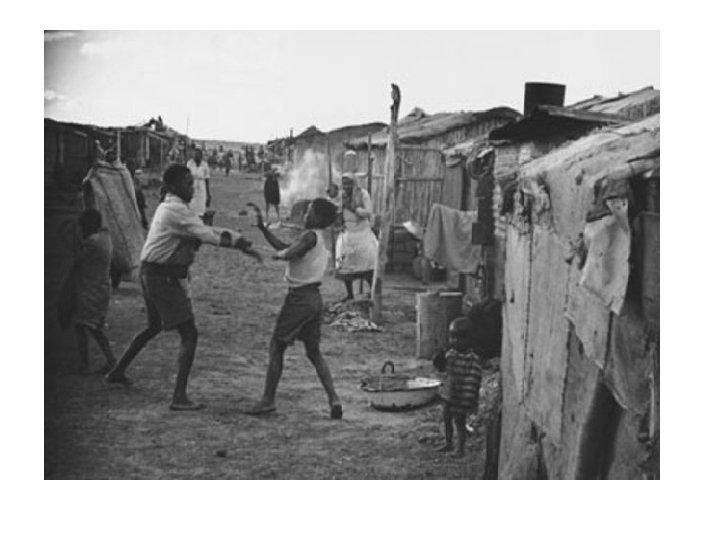
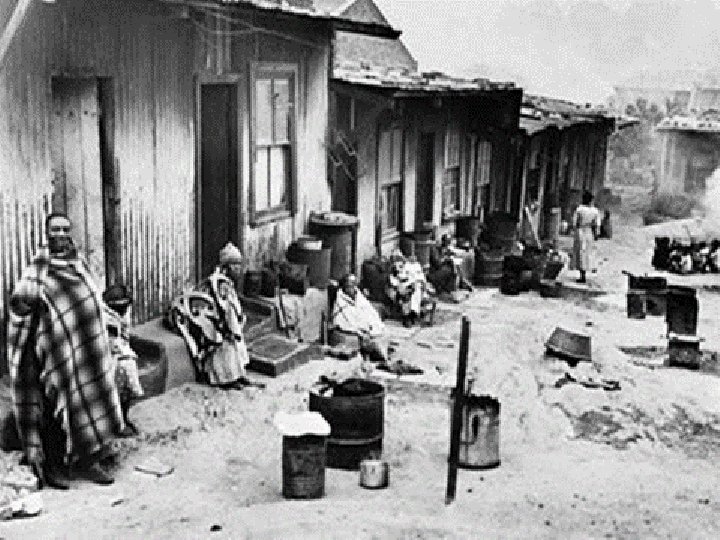
Apartheid • All citizens were classified by race. All public places were segregated. • There were separate residential areas. Each African tribe was given its own area, called ‘homelands’, which had little or no resources. All resources were owned by the whites. • Blacks were forced to live in separate areas called townships, which were often crowded clusters of tiny homes.
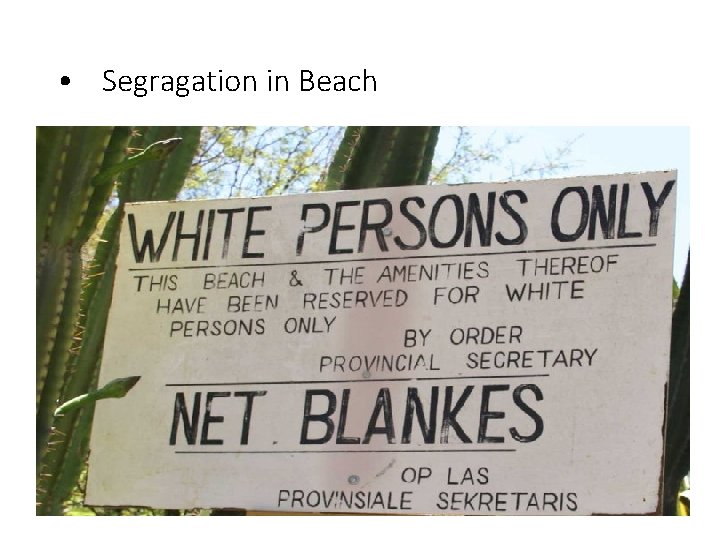
• Segragation in Beach
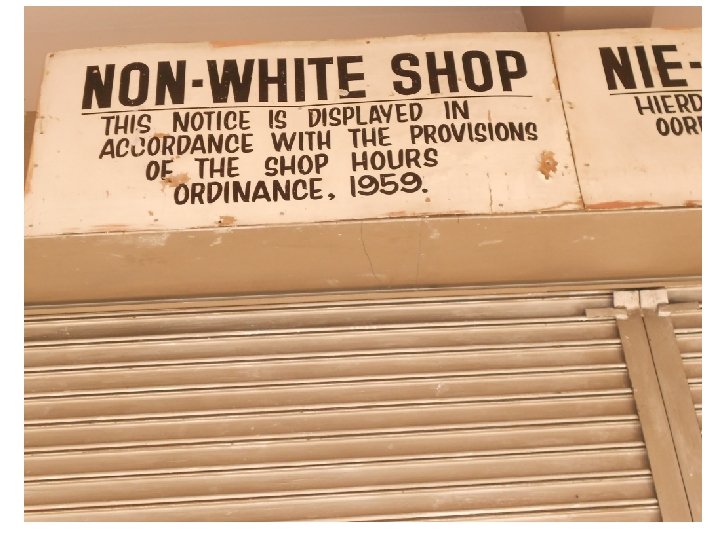
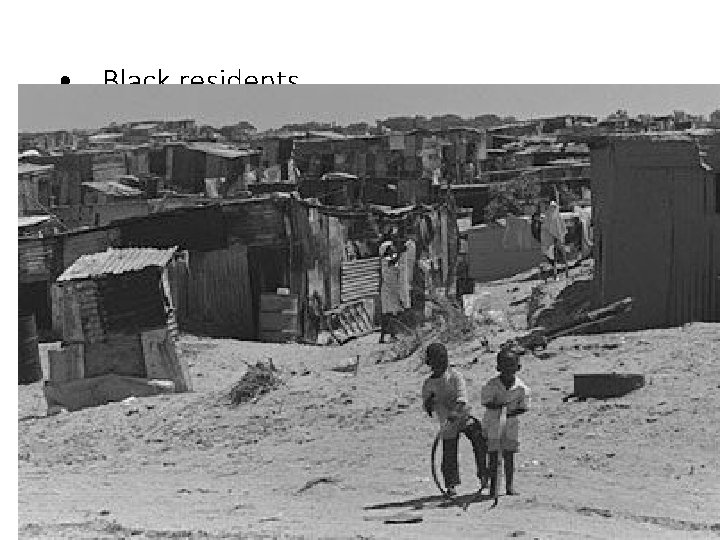
• Black residents
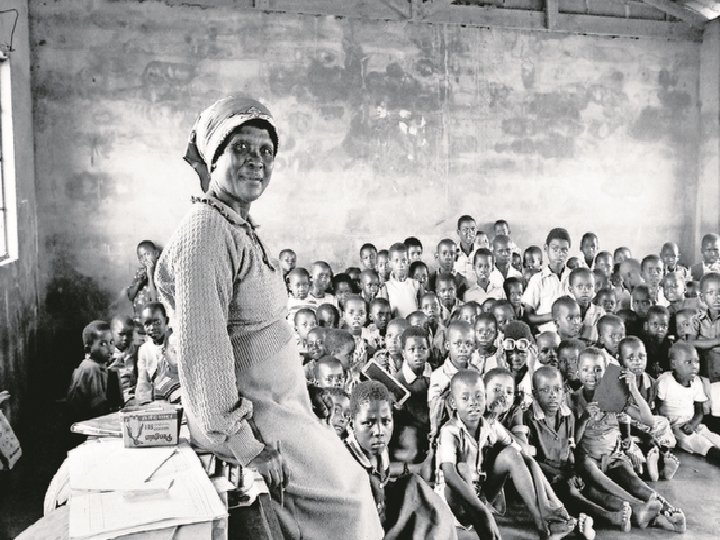
3. BANTU EDUCATION ACT OF 1953 • In terms of education they favoured much whites than blacks • Government invest much in whites schools and students than black students.
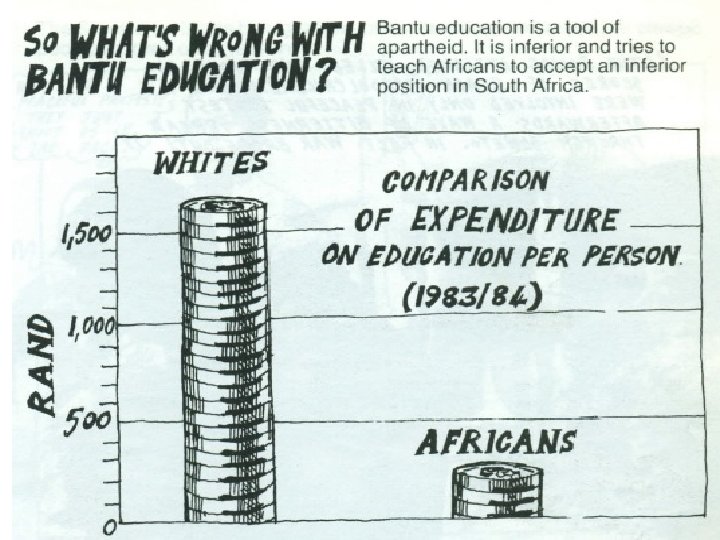
• Black schools had few buildings and classes were overcrowded with no or little facilities • They were trained to be inferior and prepared to work in low ranks position to favour whites interests
4. BANTU SELF GOVERNMENT ACT 1959 • Different racial had to live in different areas. Only a small percentage of land had left to the black. • There were removal of blacks in areas such as Johannesburg, Durban, Cape town, Pretoria • The black could not own property. They rent houses or land • They were isolated in political issues
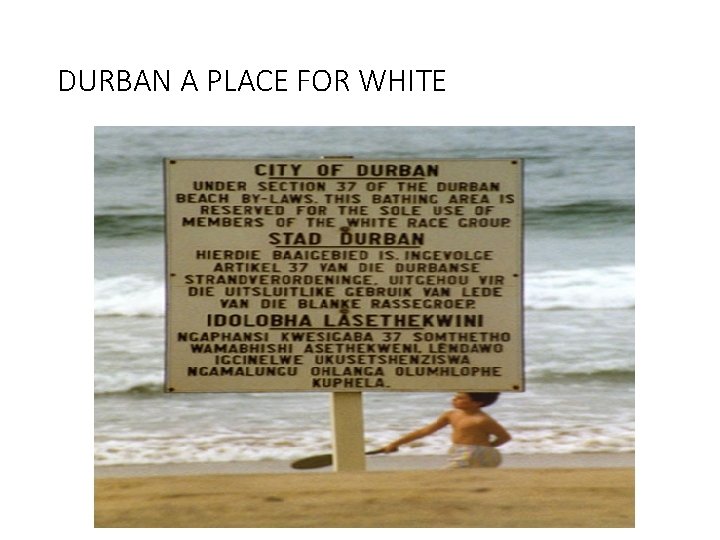
DURBAN A PLACE FOR WHITE
5. PROHIBITION OF INTERMARRIAGE ACT OF 1949 • The law followed closely by the immorality act of 1950 which made illegal to marry or have a relationships with blacks • This law prohibited the marriage between whites and blacks
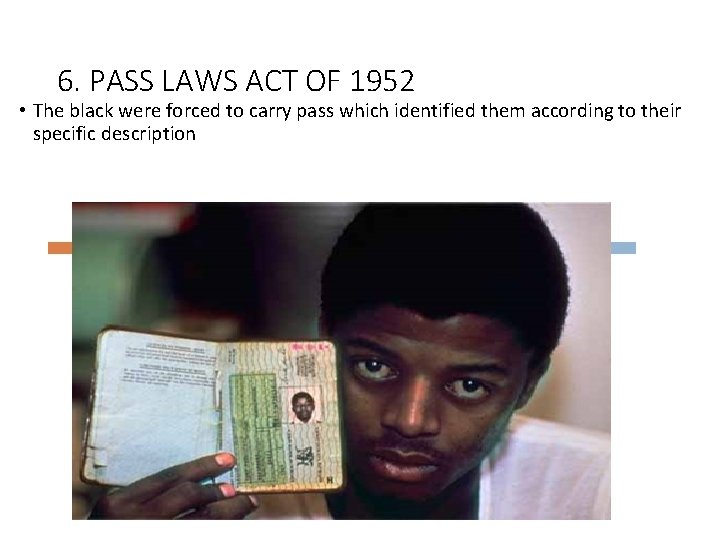
6. PASS LAWS ACT OF 1952 • The black were forced to carry pass which identified them according to their specific description
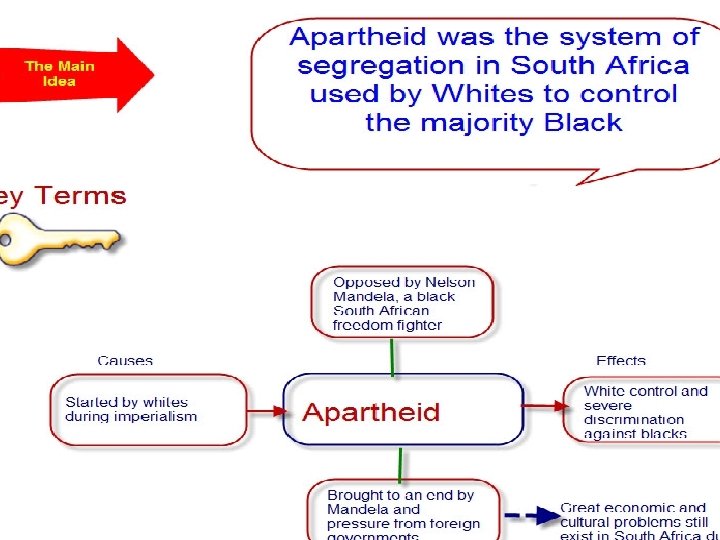
Resistance • Resistance began in the 1950 s. • Many countries objected to the apartheid laws, and put sanctions – economic penalties imposed by one country on another to force a change in policy- on South Africa. • South Africa became more isolated. • The African National Congress (ANC) was formed to protect the rights of black South Africans. Many ANC members were jailed and forced to leave the country.
ACTIVITY • In group of four students • Discuss and list the peaceful means used by Africans to oppose apartheid policy (10 minutes)

TASK • In group of three students should discuss and show the non violent methods used by South African to express their feelings (5 minutes)
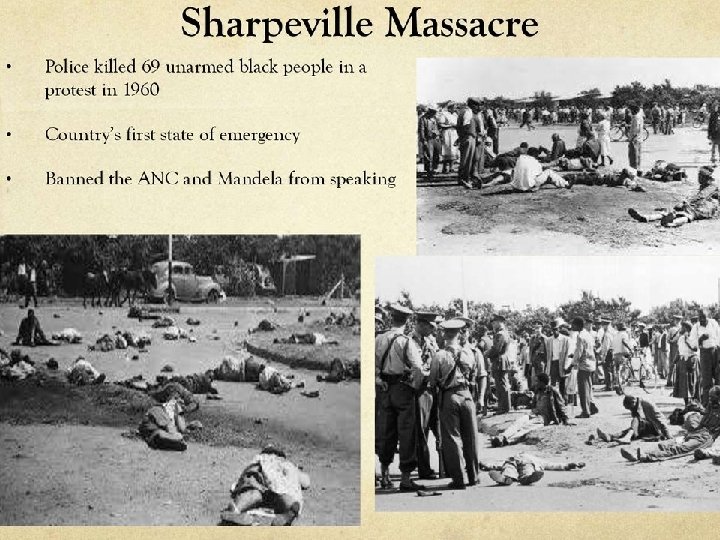
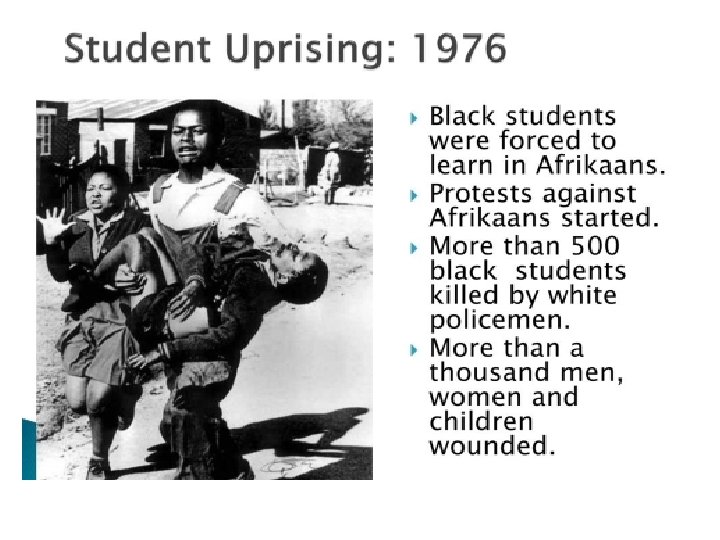
Resistance • Nelson Mandela rose to leadership of the ANC, but was arrested in 1964 and imprisoned for 26 years. • In 1976, thousands of students protested in a black township in Johannesburg, which became known as the Soweto Riot. The government killed 600 students. .
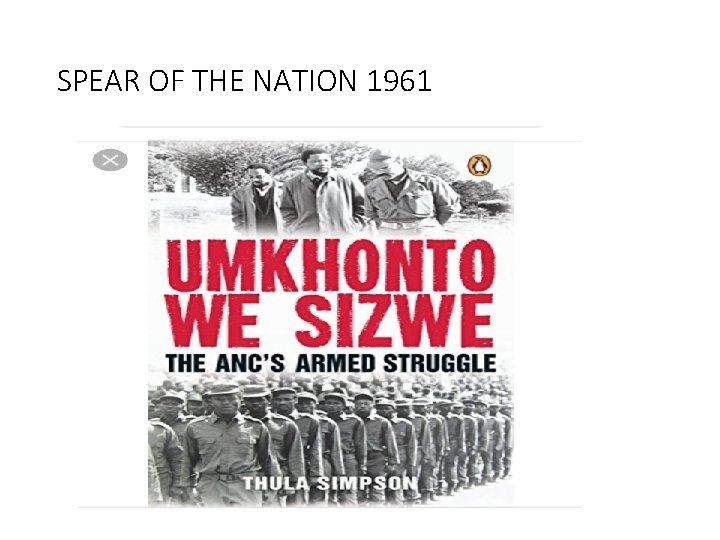
SPEAR OF THE NATION 1961
TASK no 3 Generalize ideas that you learn from South Africa. State why did they change their tactics and fight for majority rule. Or Why blacks change from peaceful to armed struggle to fight for their independence? (10 minutes)
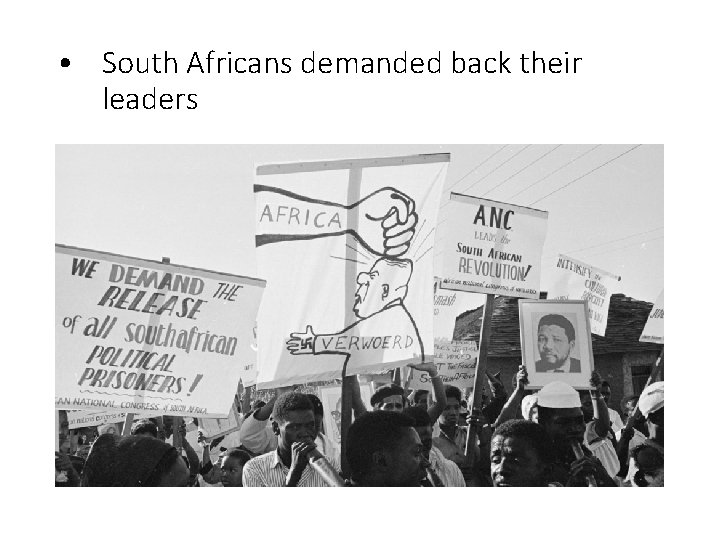
• South Africans demanded back their leaders
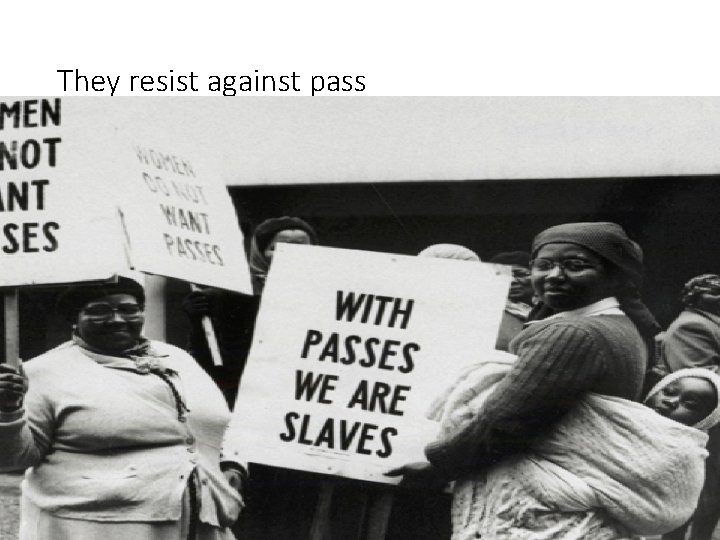
They resist against pass
Apartheid Ends • In the late 1980 s, South Africa began to move away from the Apartheid system. • In 1990 Nelson Mandela was released from prison and the ANC worked with the government to write a new constitution, which put an end to Apartheid. • In 1994 Mandela was elected as the first Black President of South Africa.

LINK https: //youtu. be/S 7 yvn. Uz 2 PLE
ACTIVITY • In group of 3 to 4 students discuss and tell the factors which delayed the majority independence of South Africa. (5 minutes)
CONCLUSION • Today all races have equal rights in South Africa. However, white South Africans are still far wealthier than the majority of black South Africans.
- Slides: 38