
SCHOOL LUPANGA PRACTISING S S NAME BENEDICT OKUMU

• SCHOOL: LUPANGA PRACTISING S. S. • NAME: BENEDICT OKUMU • REGION: MOROGORO • COUNTRY: TANZANIA • SUBJECT : PHYSICS • Topic: MEASUREMENTS • SUB TOPIC: BASIC FUNDAMENTAL QUANTITIES • .

OBJECTIVES • By the end of the lesson students should be able to know Meaning of quantity and categories of quantity
Introduction: • What is a physical quantity?
Physical quantity is any character which can be measured by an instrument. The Physical quantity is a complete measurement. For example a measurement such as 100 cm, 1 kg or 5 seconds is called physical quantity.

The physical quantities are split into 2 categories namely: 1. Fundamental quantities 2. Derived quantities
1. Fundamental quantities are the basic physical quantities of measurement which cannot be obtained from any simpler physical quantity.
The fundamental physical quantities of nature include: temperature, amount of substance, mass, electric current, length, time, luminous intensity. With their units they can be shown in the table follows:
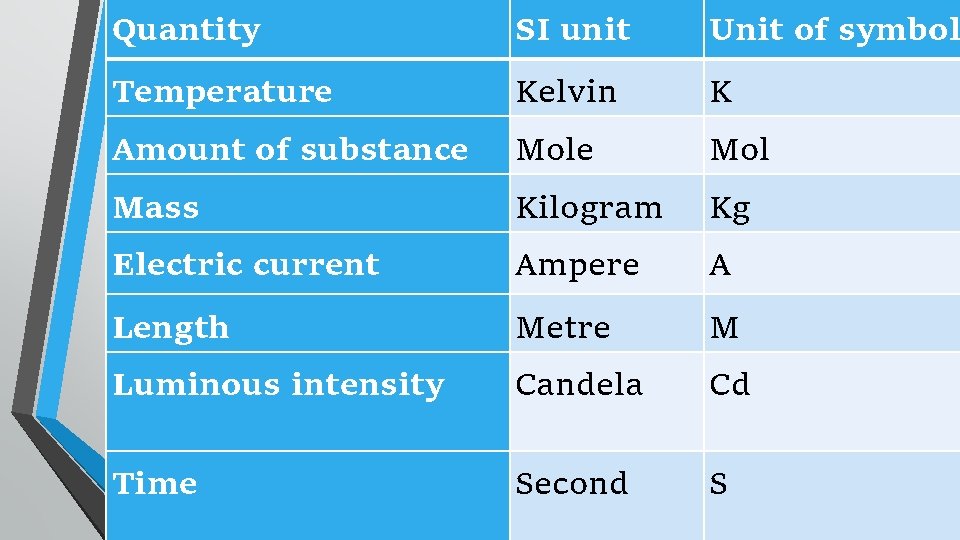
Quantity SI unit Unit of symbol Temperature Kelvin K Amount of substance Mol Mass Kilogram Kg Electric current Ampere A Length Metre M Luminous intensity Candela Cd Time Second S
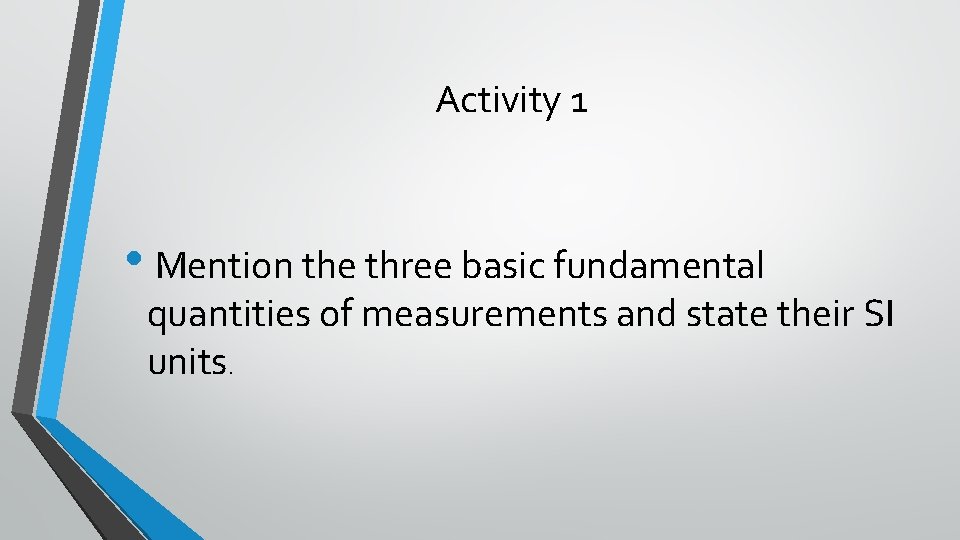
Activity 1 • Mention the three basic fundamental quantities of measurements and state their SI units.
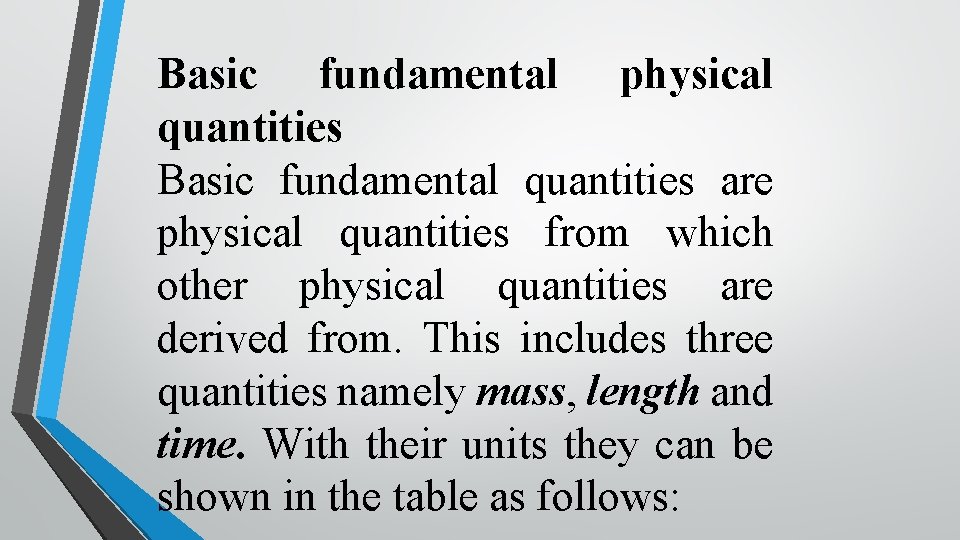
Basic fundamental physical quantities Basic fundamental quantities are physical quantities from which other physical quantities are derived from. This includes three quantities namely mass, length and time. With their units they can be shown in the table as follows:
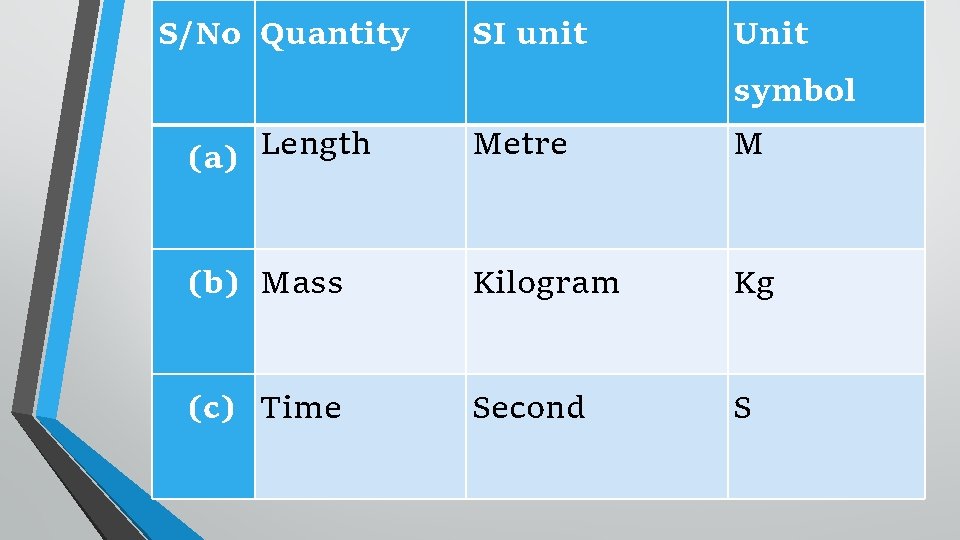
S/No Quantity SI unit Unit symbol Length (a) Metre M (b) Mass Kilogram Kg (c) Time Second S
INSTRUMENTS FOR MEASURING: • LENGTH • MASS • TIME
Activity 2 • List the instruments used in the laboratory for measuring • (a) length • (b) mass • (c) time
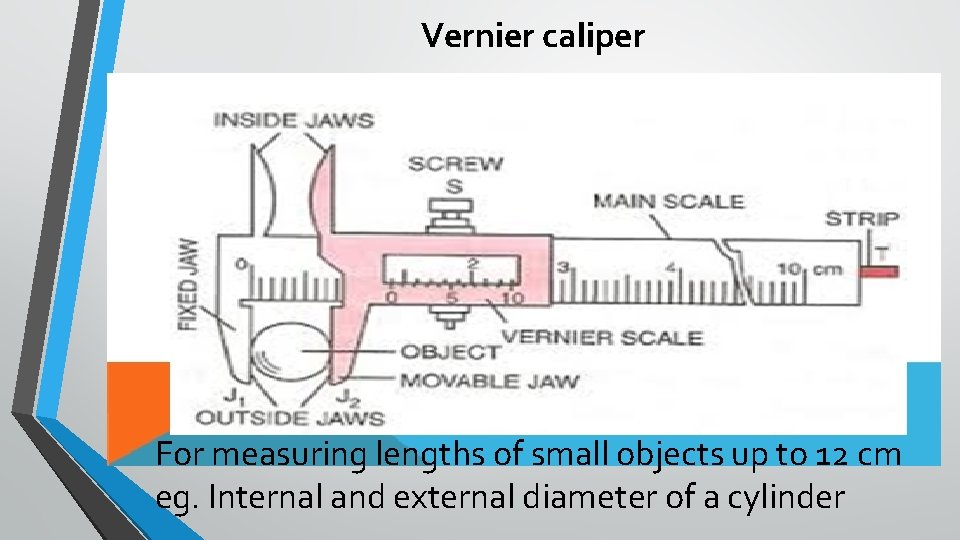
Vernier caliper For measuring lengths of small objects up to 12 cm eg. Internal and external diameter of a cylinder
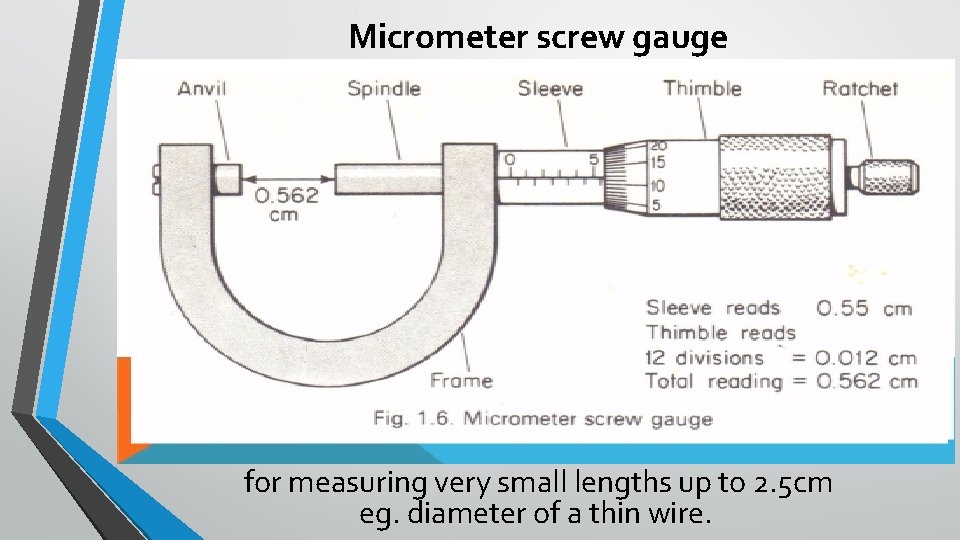
Micrometer screw gauge for measuring very small lengths up to 2. 5 cm eg. diameter of a thin wire.
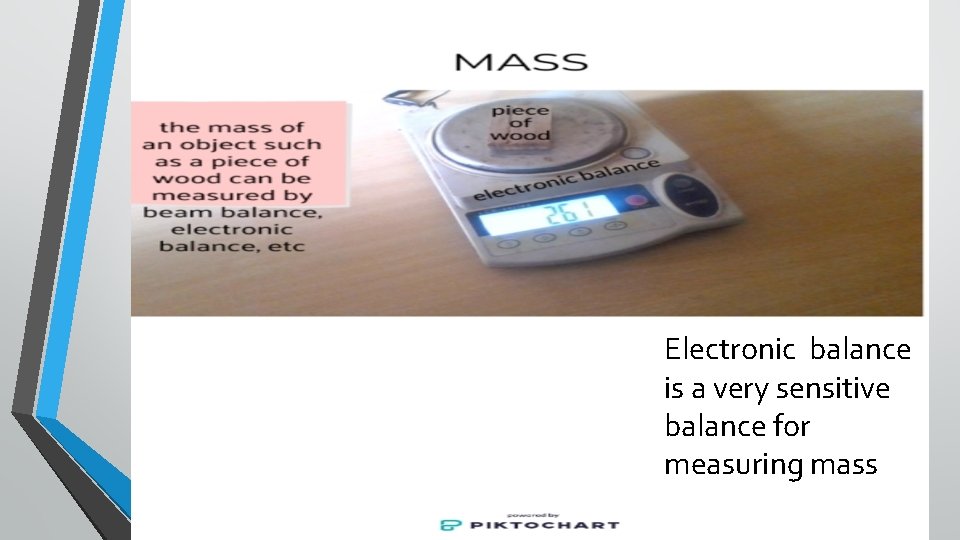
Electronic balance is a very sensitive balance for measuring mass
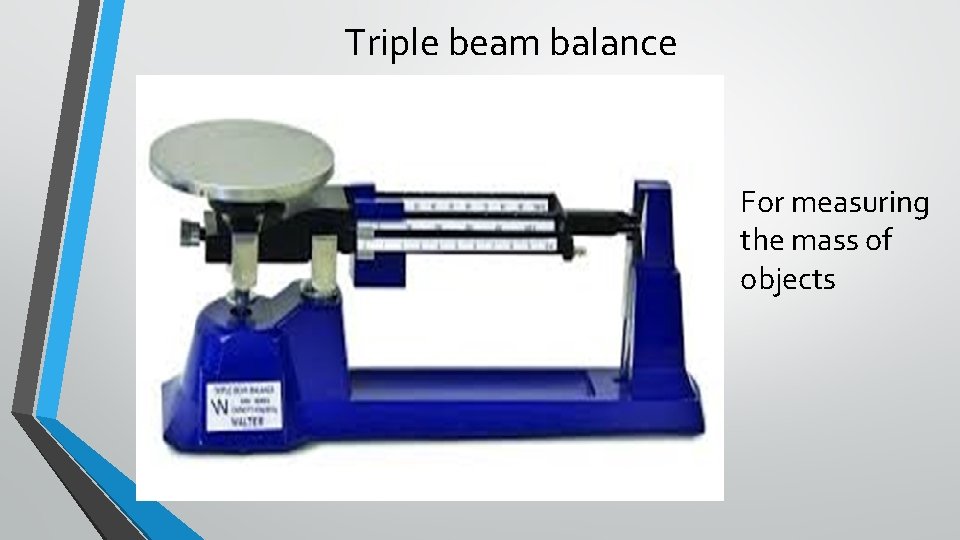
Triple beam balance For measuring the mass of objects
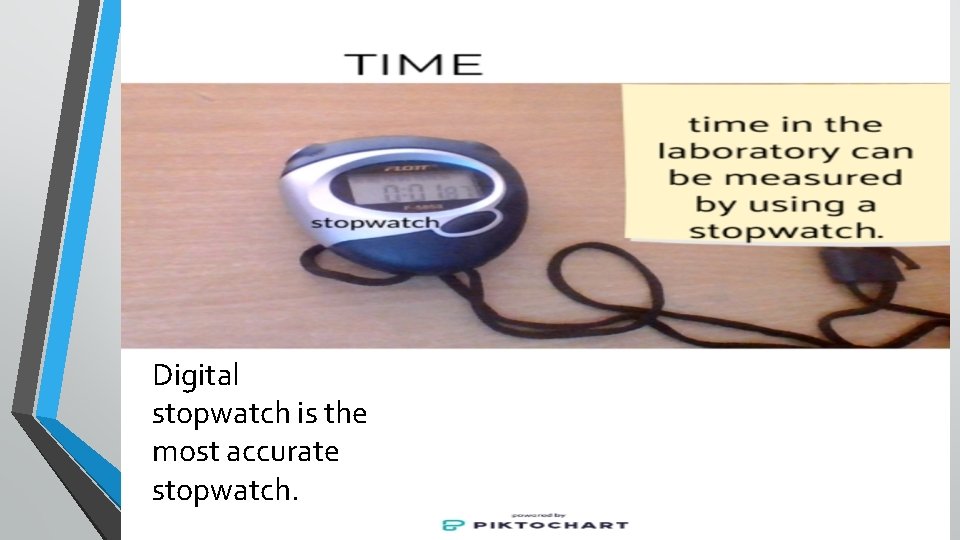
Digital stopwatch is the most accurate stopwatch.
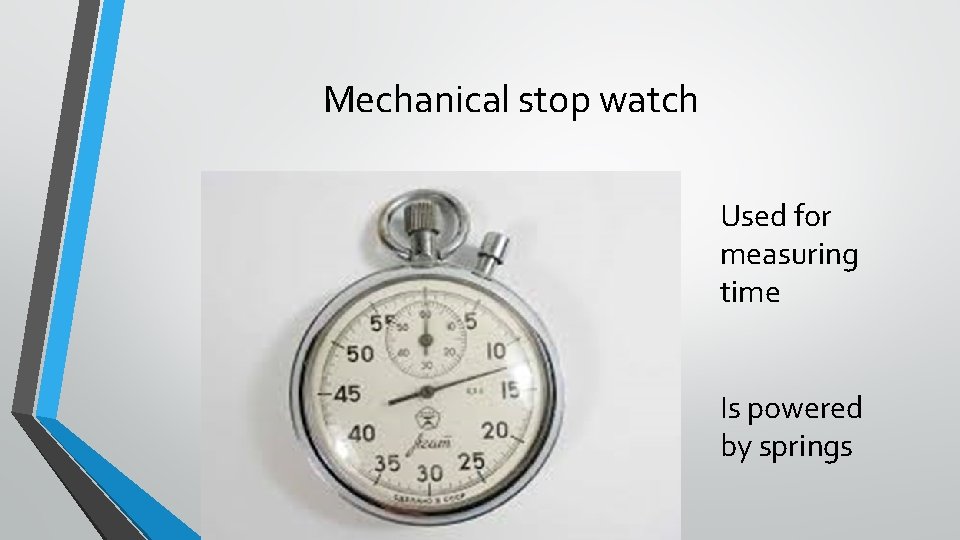
Mechanical stop watch Used for measuring time Is powered by springs
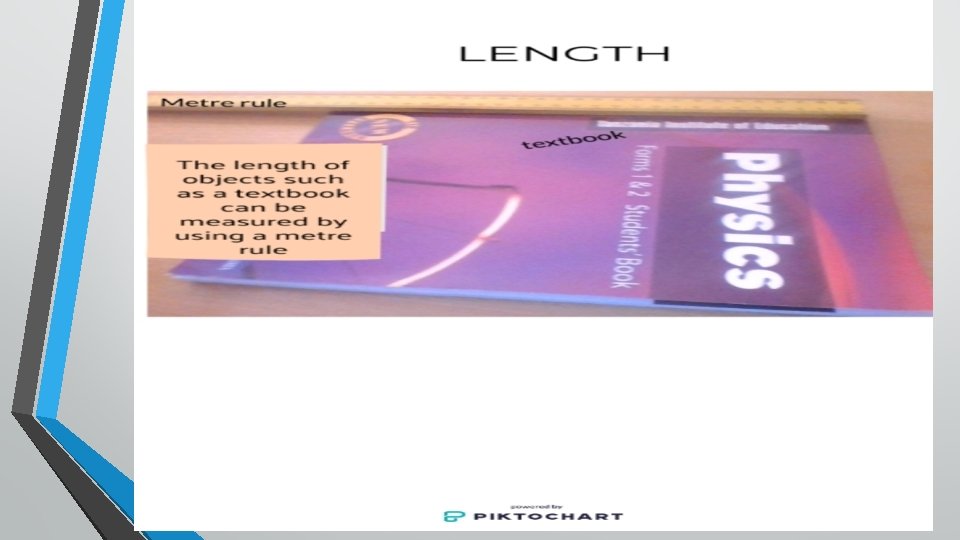
(a)Length • Length is the distance between two points, objects or space. • The SI unit of length is meter (m). • Other commonly used units are kilometer (km) and centimeter (cm). Their equivalence is given as: • 1 kilometer (km) =1000 meter (m) • 1 meter (m) =100 centimeter (cm) • 1 centimeter (cm) =10 millimeter (mm)
• Very small lengths are measured in micrometers and nanometers. Their equivalence is given as follow: • 1 metre (m) =10 -6 micrometre (µm) • 1 metre (m)=10 -9 nanometer (nm)
ACTIVITY 3 • 1. Measure the length, width and thickness of your exercise book • 2. determine the volume of your exercise book
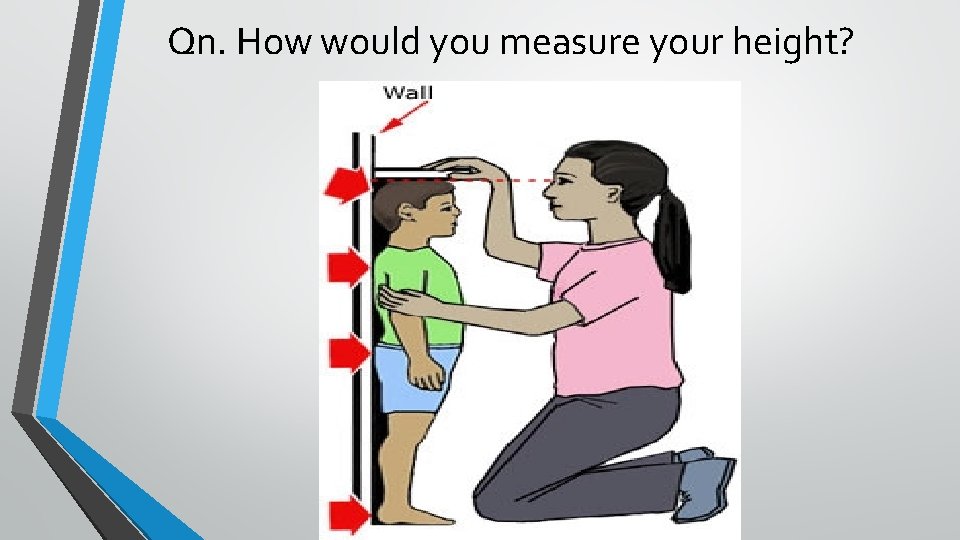
Qn. How would you measure your height?
Homework 1. How would you measure the length of your desk? 2. Convert the following into metres a) 2 km b) 1500 cm 3. Calculate the volume of a cube whose sides are 2 cm each
References • SCSU&MOEVT(2008) Physics For Secondary Schools, Oxford Univeristy Press T (Ltd), Dar es salaam. • https: //create. piktochart. com/dashboard • https: //www. google. com/search? q=measuring+heights&rlz=1 C 1 EKKP_en. T Z 862 TZ 862&source=lnms&tbm=isch&sa=X&ved=2 ah. UKEwi 1 g 42 xh 4 jo. Ah. W M 4 YUKHSy_Dr. MQ_AUo. AXo. ECA 8 QAw&biw=1366&bih=657#imgrc=BYT 8 b 2 B-k. MIIVM
- Slides: 26