
School Learning Support Officers Working with the Primary
- Slides: 18
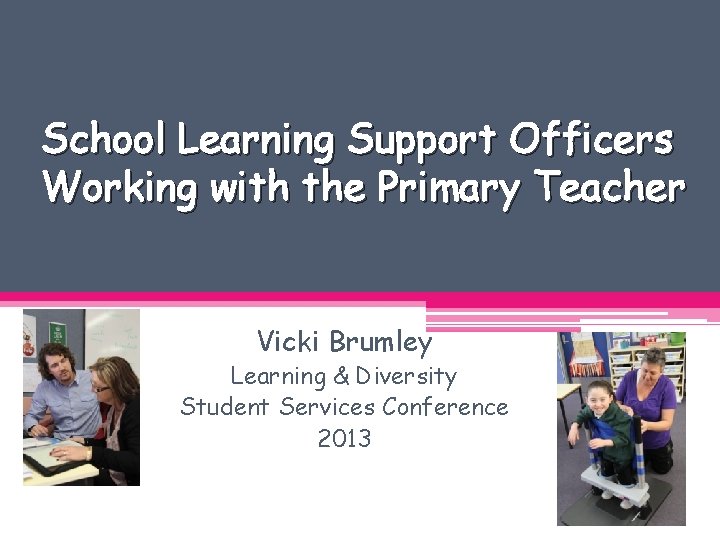
School Learning Support Officers Working with the Primary Teacher Vicki Brumley Learning & Diversity Student Services Conference 2013
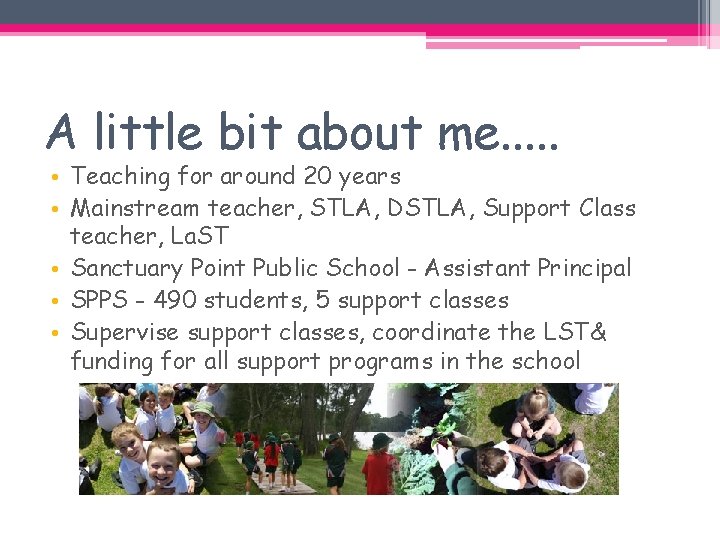
A little bit about me. . . • Teaching for around 20 years • Mainstream teacher, STLA, DSTLA, Support Class teacher, La. ST • Sanctuary Point Public School - Assistant Principal • SPPS - 490 students, 5 support classes • Supervise support classes, coordinate the LST& funding for all support programs in the school
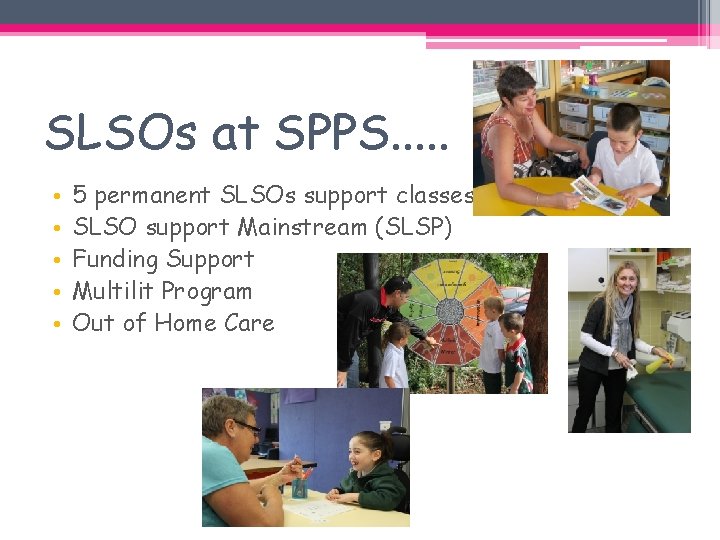
SLSOs at SPPS. . . • • • 5 permanent SLSOs support classes SLSO support Mainstream (SLSP) Funding Support Multilit Program Out of Home Care
Workshop. . Qualities Game Questions
Making An Impact • The credibility of a School Learning Support Officer hinges on their competence and their ability to perform in their role. This means that the School Learning Support Officer needs excellent communication skills, the ability to work well in a team and the skills and knowledge specific to the job. (School Learning Support Officer Information Handbook 2013)
Top Three Qualities • Professionalism • Effective Communicator • Team Player
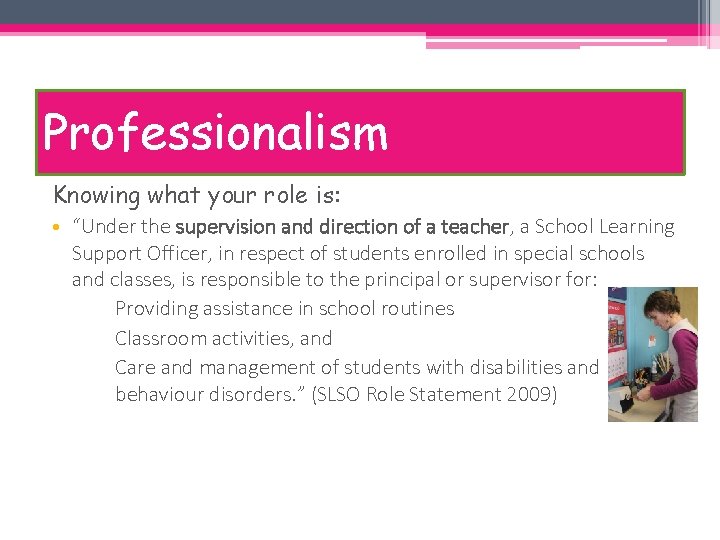
Professionalism Knowing what your role is: • “Under the supervision and direction of a teacher, a School Learning Support Officer, in respect of students enrolled in special schools and classes, is responsible to the principal or supervisor for: Providing assistance in school routines Classroom activities, and Care and management of students with disabilities and behaviour disorders. ” (SLSO Role Statement 2009)
Professionalism Knowing what your role is NOT: • Assuming responsibility for performing a duty that is primarily teaching in nature. • Taking responsibility for classroom management, behaviour, teaching or supervision of students.
Professionalism • • • Employment Conditions (Handbook for Non Teaching Staff in Schools) Work Health & Safety Act 2011 (Effective 2012) Code of Conduct Child Protection Training Every Student, Every School Initiative Commonwealth Disability Standards for Education 2005
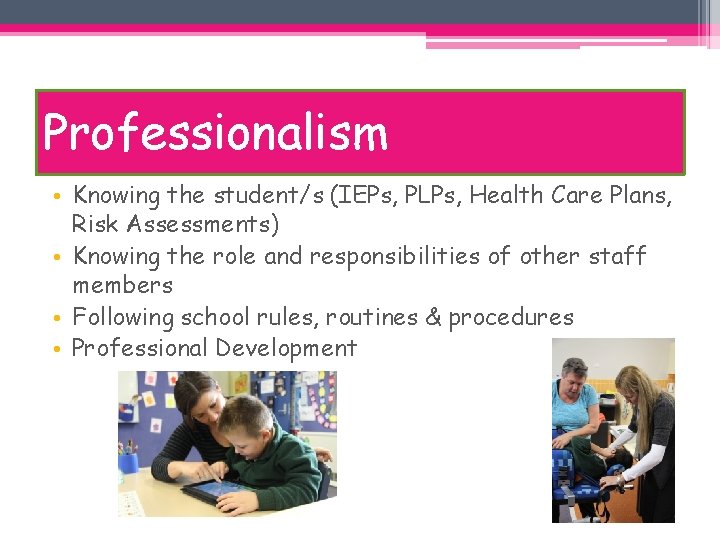
Professionalism • Knowing the student/s (IEPs, PLPs, Health Care Plans, Risk Assessments) • Knowing the role and responsibilities of other staff members • Following school rules, routines & procedures • Professional Development
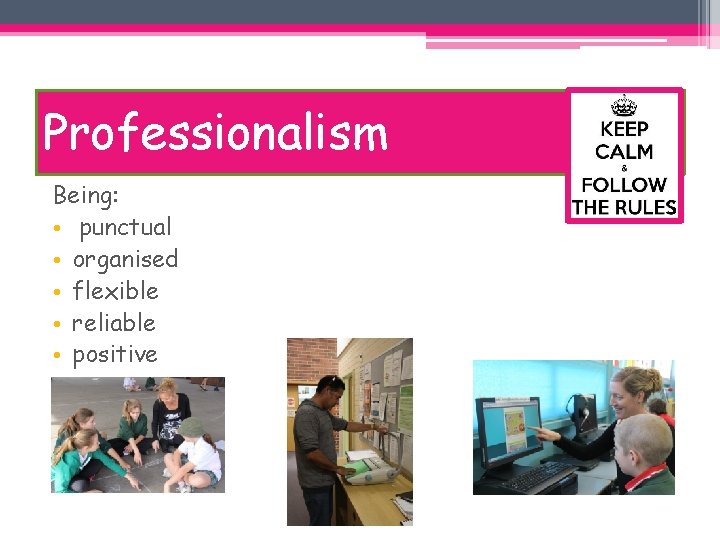
Professionalism Being: • punctual • organised • flexible • reliable • positive
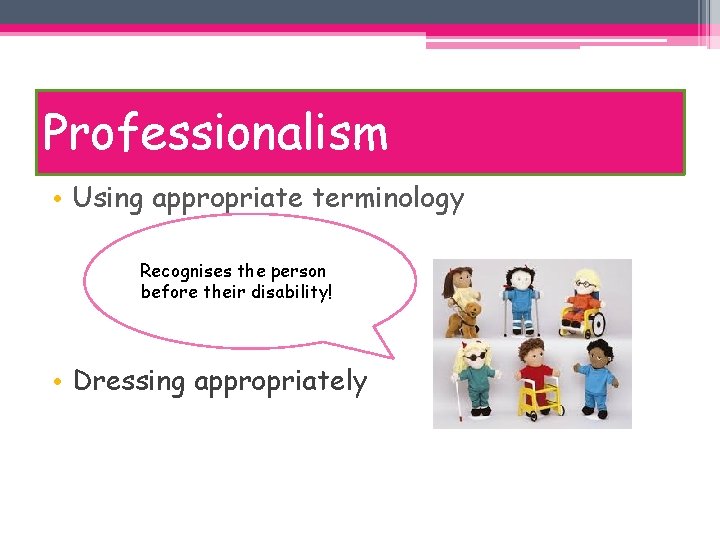
Professionalism • Using appropriate terminology Recognises the person before their disability! • Dressing appropriately
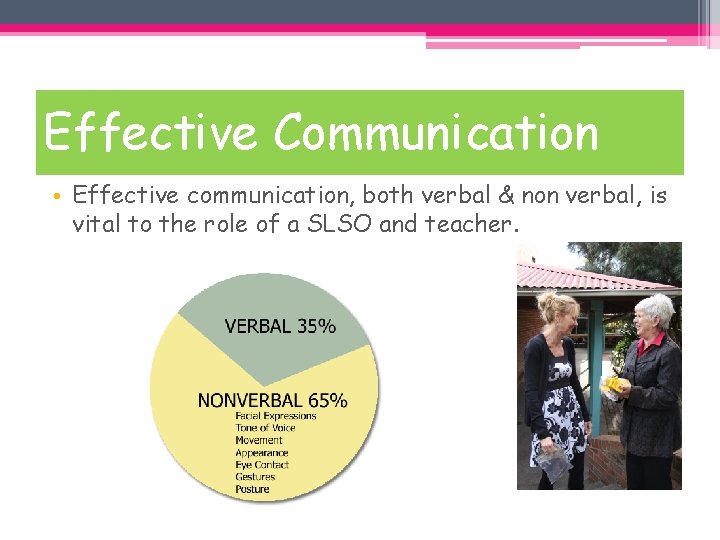
Effective Communication • Effective communication, both verbal & non verbal, is vital to the role of a SLSO and teacher.
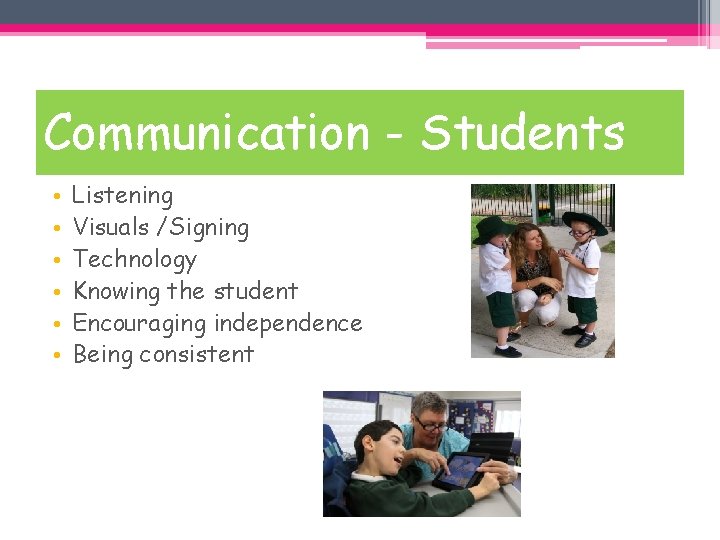
Communication - Students • • • Listening Visuals /Signing Technology Knowing the student Encouraging independence Being consistent
Communication • • • YES NO YES NO Roles are clearly defined Confusion Student plans are discussed Plans not adequately implemented Using appropriate communication channels Uncertainty Organised meeting time / Same Page On the job / Mixed messages Professional & positive Issues / Toxic
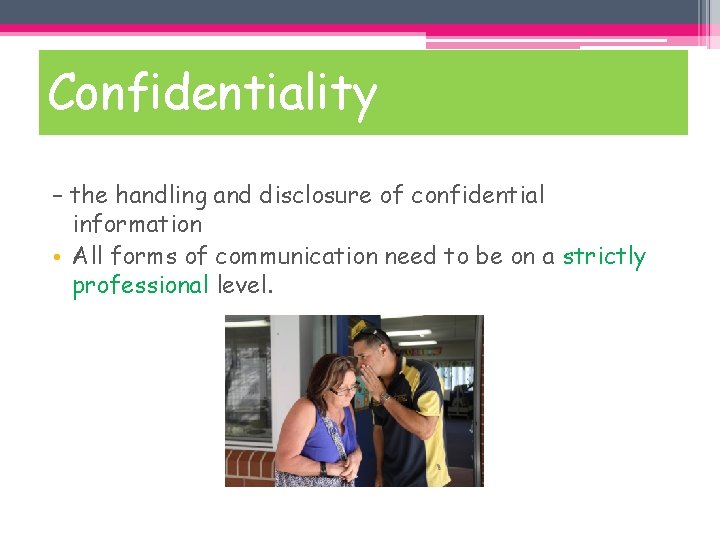
Confidentiality – the handling and disclosure of confidential information • All forms of communication need to be on a strictly professional level.
Confidentiality means: • Respecting the privacy rights of students, teachers, other staff and families • Seeking approval prior to reading, writing, discussing or distributing information • Using appropriate communication channels within the school • Maintaining a professional relationship with students, parents and carers (School Learning Support Officer Information Handbook 2013)
Team Player • • • Collaborating with staff Learning Support Team Attending Meetings Sharing expertise Committees Participating in school events