
Scholastic Read 180 System 44 Secondary Implementation Curriculum
- Slides: 13
Scholastic Read 180 System 44 Secondary Implementation Curriculum Advisory Council April 23, 2015 Coming: Fall 2015
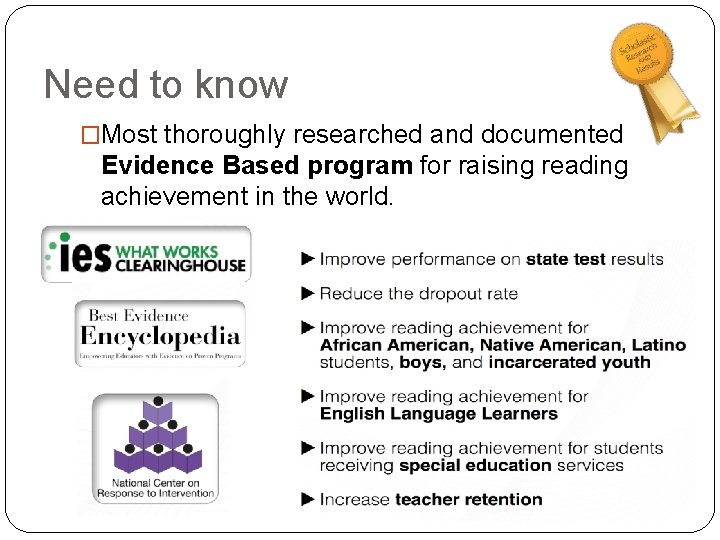
Need to know �Most thoroughly researched and documented Evidence Based program for raising reading achievement in the world.
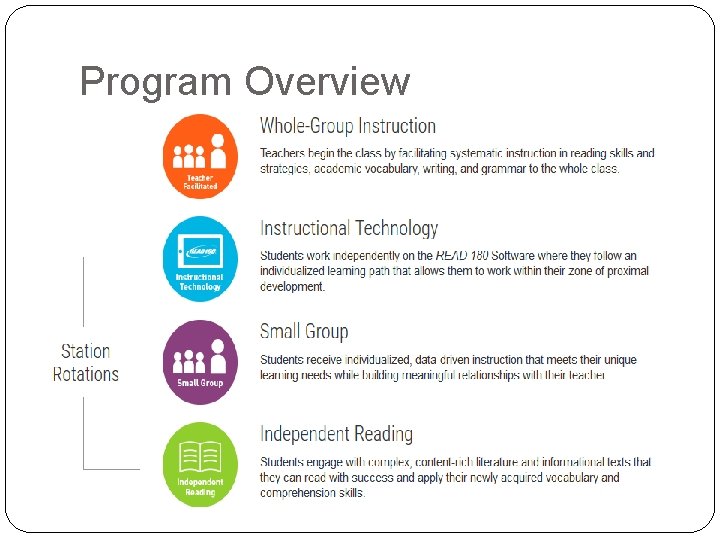
Program Overview
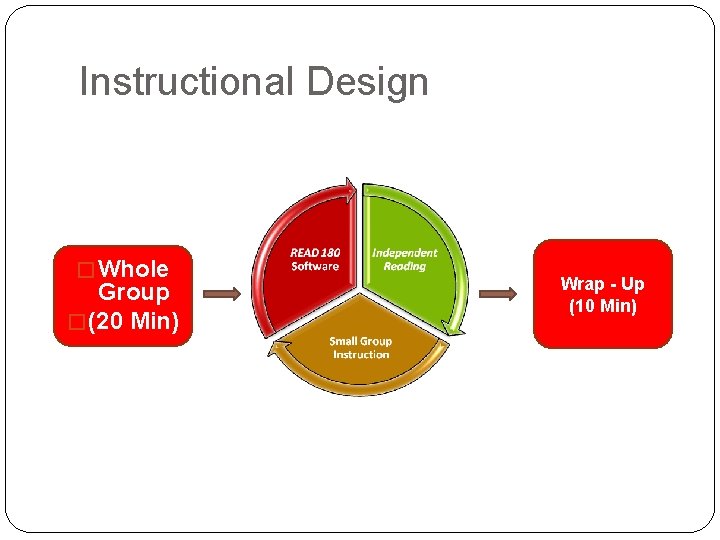
Instructional Design � Whole Group � (20 Min) Wrap - Up (10 Min)
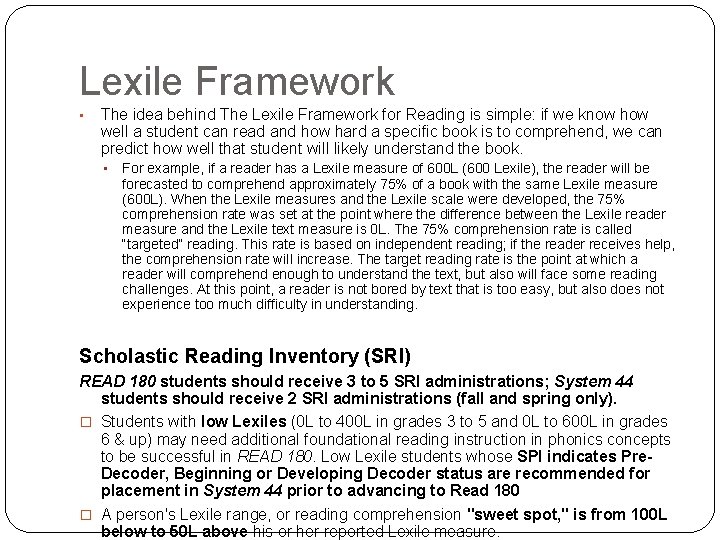
Lexile Framework • The idea behind The Lexile Framework for Reading is simple: if we know how well a student can read and how hard a specific book is to comprehend, we can predict how well that student will likely understand the book. • For example, if a reader has a Lexile measure of 600 L (600 Lexile), the reader will be forecasted to comprehend approximately 75% of a book with the same Lexile measure (600 L). When the Lexile measures and the Lexile scale were developed, the 75% comprehension rate was set at the point where the difference between the Lexile reader measure and the Lexile text measure is 0 L. The 75% comprehension rate is called “targeted” reading. This rate is based on independent reading; if the reader receives help, the comprehension rate will increase. The target reading rate is the point at which a reader will comprehend enough to understand the text, but also will face some reading challenges. At this point, a reader is not bored by text that is too easy, but also does not experience too much difficulty in understanding. Scholastic Reading Inventory (SRI) READ 180 students should receive 3 to 5 SRI administrations; System 44 students should receive 2 SRI administrations (fall and spring only). � Students with low Lexiles (0 L to 400 L in grades 3 to 5 and 0 L to 600 L in grades 6 & up) may need additional foundational reading instruction in phonics concepts to be successful in READ 180. Low Lexile students whose SPI indicates Pre. Decoder, Beginning or Developing Decoder status are recommended for placement in System 44 prior to advancing to Read 180 � A person's Lexile range, or reading comprehension "sweet spot, " is from 100 L below to 50 L above his or her reported Lexile measure.
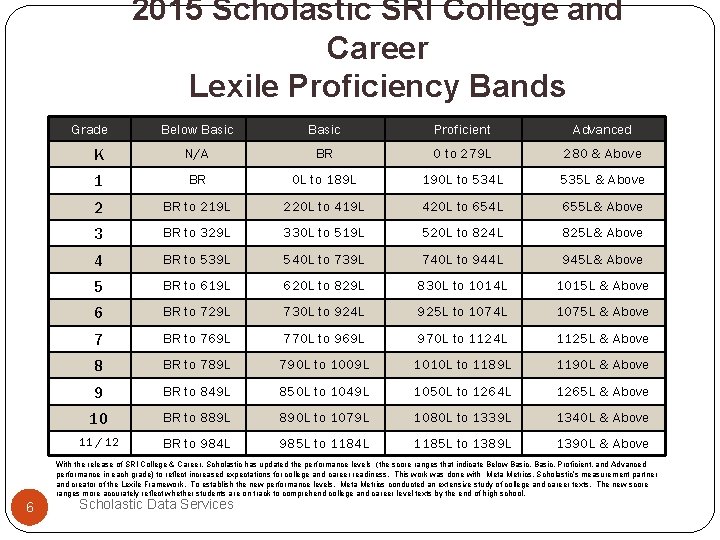
2015 Scholastic SRI College and Career Lexile Proficiency Bands Grade Below Basic Proficient Advanced K N/A BR 0 to 279 L 280 & Above 1 BR 0 L to 189 L 190 L to 534 L 535 L & Above 2 BR to 219 L 220 L to 419 L 420 L to 654 L 655 L& Above 3 BR to 329 L 330 L to 519 L 520 L to 824 L 825 L& Above 4 BR to 539 L 540 L to 739 L 740 L to 944 L 945 L& Above 5 BR to 619 L 620 L to 829 L 830 L to 1014 L 1015 L & Above 6 BR to 729 L 730 L to 924 L 925 L to 1074 L 1075 L & Above 7 BR to 769 L 770 L to 969 L 970 L to 1124 L 1125 L & Above 8 BR to 789 L 790 L to 1009 L 1010 L to 1189 L 1190 L & Above 9 BR to 849 L 850 L to 1049 L 1050 L to 1264 L 1265 L & Above 10 BR to 889 L 890 L to 1079 L 1080 L to 1339 L 1340 L & Above 11 / 12 BR to 984 L 985 L to 1184 L 1185 L to 1389 L 1390 L & Above With the release of SRI College & Career, Scholastic has updated the performance levels (the score ranges that indicate Below Basic, Proficient, and Advanced performance in each grade) to reflect increased expectations for college and career readiness. This work was done with Meta Metrics, Scholastic’s measurement partner and creator of the Lexile Framework. To establish the new performance levels, Meta Metrics conducted an extensive study of college and career texts. The new score ranges more accurately reflect whether students are on track to comprehend college and career level texts by the end of high school. 6 Scholastic Data Services
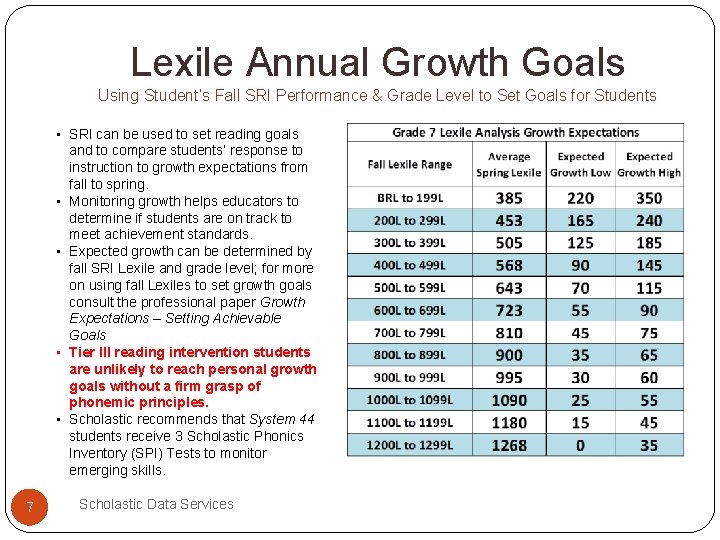
Lexile Annual Growth Goals Using Student’s Fall SRI Performance & Grade Level to Set Goals for Students • SRI can be used to set reading goals and to compare students’ response to instruction to growth expectations from fall to spring. • Monitoring growth helps educators to determine if students are on track to meet achievement standards. • Expected growth can be determined by fall SRI Lexile and grade level; for more on using fall Lexiles to set growth goals consult the professional paper Growth Expectations – Setting Achievable Goals • Tier III reading intervention students are unlikely to reach personal growth goals without a firm grasp of phonemic principles. • Scholastic recommends that System 44 students receive 3 Scholastic Phonics Inventory (SPI) Tests to monitor emerging skills. 7 Scholastic Data Services
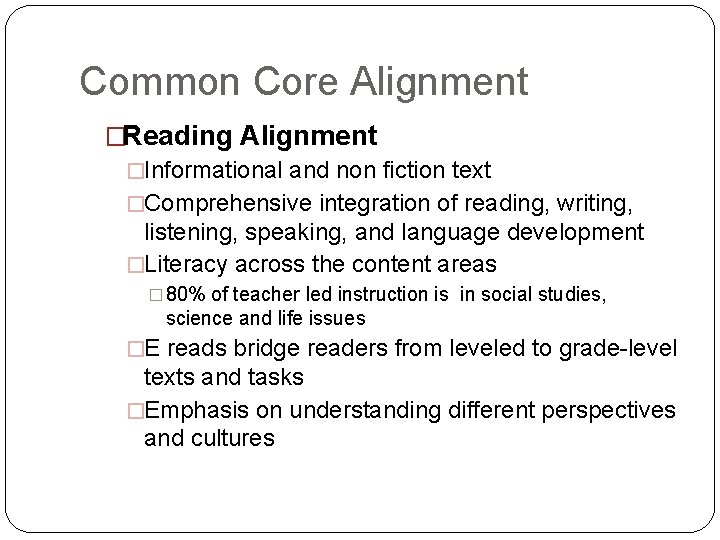
Common Core Alignment �Reading Alignment �Informational and non fiction text �Comprehensive integration of reading, writing, listening, speaking, and language development �Literacy across the content areas � 80% of teacher led instruction is in social studies, science and life issues �E reads bridge readers from leveled to grade-level texts and tasks �Emphasis on understanding different perspectives and cultures
Common Core Alignment �Language Aligned �Growth of vocabulary and language development o Academic vocabulary and strengthen oral language o Word meanings, nuances of words, expand fluency of words in conversation and writing �Conventions of Standard English Writing and Speaking o Mastery in grammar, usage, mechanics
Common Core Alignment �Speaking and Listening Alignment �Engage in Structured Conversations Built Around important content in Various Domains � Rbook Lessons provide opportunities in academic discussion and collaboration in whole and small group �Integrate and Evaluate Information Presented by others and express one’s opinions and Ideas Clearly and Persuasively
Common Core Alignment �Writing Alignment �Write Arguments to support claims in an analysis of texts �Student writes every day responses to reading and are exposed to argument essays, informational, explanatory and narrative writing �Move from single to multiple paragraph essays in each genre �Research paper in e. Books give students practice with evaluating and selecting sources, supporting claims and writing academic citations � Develop and Strengthen Writing by planning, revising, editing and rewriting �Differentiated writing moves from teacher led to independent practice
Plan for Implementation � Identify target students �Needs in decoding, fluency, comprehension, vocabulary development and writing �Currently receiving supplanted support in a double block of language arts and decoding � 24 -27 students in each building � Summer training for Identified Read 180 Instructors � 2 days of rigorous training for implementation, program components, student groupings, and data analysis � Scholastic Aptitude Manager � Groupinator � Teacher Dashboard � Planning and implementation
Plan for Implementation �Fall 2015 � 90 minute instructional block �One classroom in each secondary building � 7 th grade class � 8 th grade class � 9 th /10 th class � 11 th /12 th class �Follow up training after start up in late September � 6 coaching days for support and collaboration throughout 2015 -2016 school year with a certified Read 180 coach.