
Schizophrenia Presentation for PHO Dr Verity Humberstone Overview
+ Schizophrenia Presentation for PHO Dr Verity Humberstone
+ Overview n Why prioritize schizophrenia? n Diagnosing Schizophrenia n Treatment of schizophrenia n Atypical Antipsychotic – metabolic monitoring n Clozapine
+ Questions n Which is the most common diagnosis in acute and forensic hospitals? n Which is the most common diagnosis for people requiring residential support? n Are people with schizophrenia at a greater risk of victimisation? n Are people with schizophrenia at a greater risk of perpetrating violence?
+ Maori and Schizophrenia n The psychiatric report 1986 – Maori 10 -12% population 67% special patient admissions n Te Puni Kokiri - 1996 rates of admission for schizophrenia 2 -3 times greater for Maori than Non Maori / Pacific. Greater first presentations and readmissions. n Hauora: Maori standards of Health IV has identified that between 2003 and 2005 Maori were over 3. 5 times more likely to be hospitalized for schizophrenia than non Maori men had a hospitalization rate for schizophrenia of 416. 7 per 100, 000 compared with 222. 4 for Maori women, 119. 7 for non. Maori men and 62. 3 per 100, 000 for non- Maori women
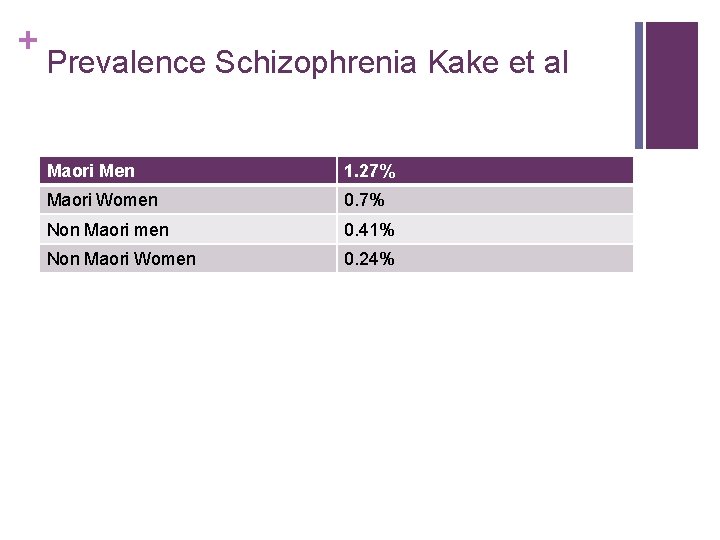
+ Prevalence Schizophrenia Kake et al Maori Men 1. 27% Maori Women 0. 7% Non Maori men 0. 41% Non Maori Women 0. 24%
+ Diagnosing schizophrenia
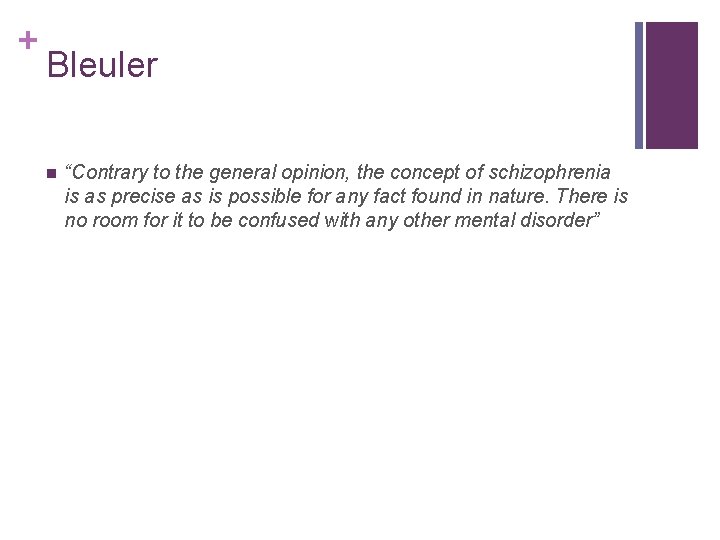
+ Bleuler n “Contrary to the general opinion, the concept of schizophrenia is as precise as is possible for any fact found in nature. There is no room for it to be confused with any other mental disorder”
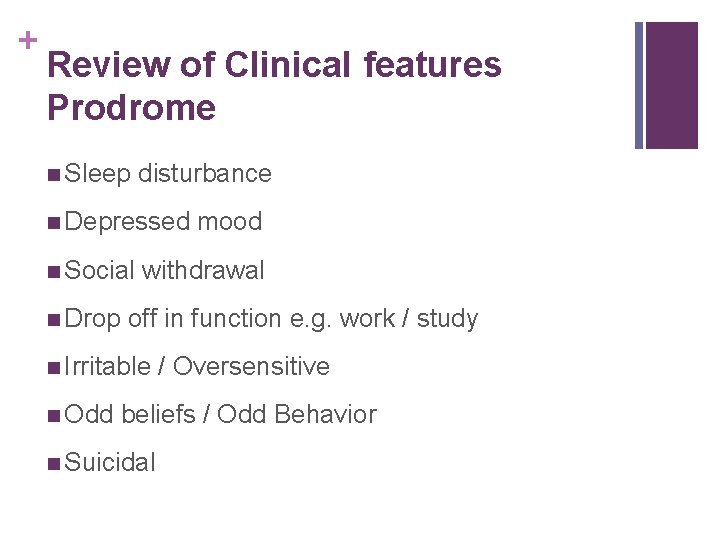
+ Review of Clinical features Prodrome n Sleep disturbance n Depressed n Social n Drop withdrawal off in function e. g. work / study n Irritable n Odd mood / Oversensitive beliefs / Odd Behavior n Suicidal
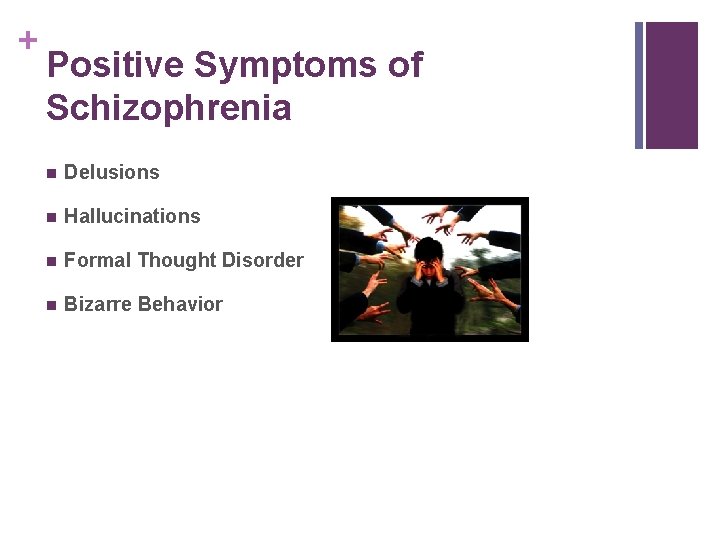
+ Positive Symptoms of Schizophrenia n Delusions n Hallucinations n Formal Thought Disorder n Bizarre Behavior
+ Delusions n Bizarre n Grandiose delusions n Non n Delusions of control Bizarre n Delusions of reference n Religious n Delusions of mind reading n Nihilistic delusions n Somatic delusions n Jealous delusions n Persecutory delusions n Erotomanic delusions
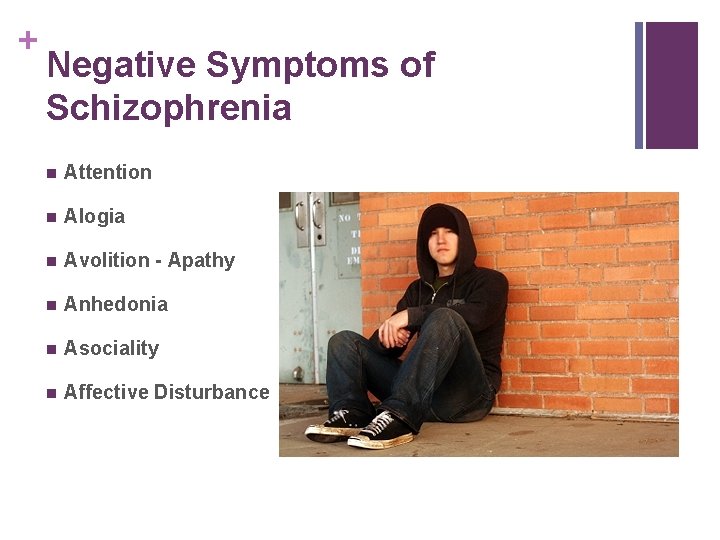
+ Negative Symptoms of Schizophrenia n Attention n Alogia n Avolition - Apathy n Anhedonia n Asociality n Affective Disturbance

+ Cognitive Symptoms of Schizophrenia n Verbal memory and learning n Executive function n Attention n Spatial memory
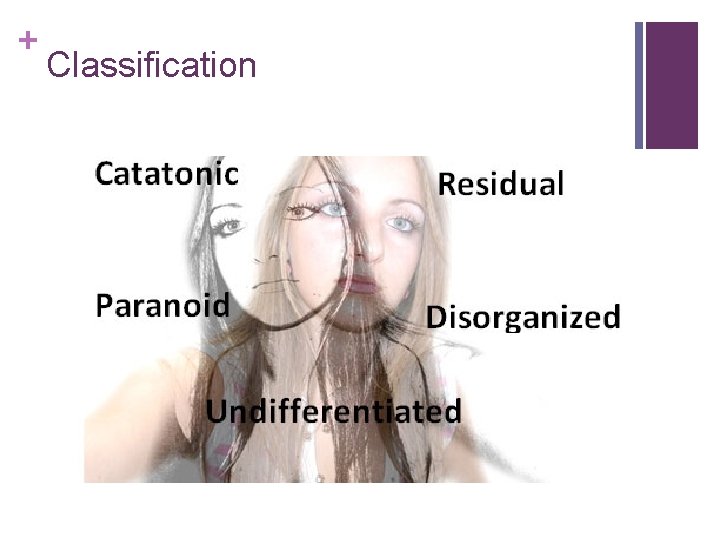
+ Classification
+ Types of schizophrenia n Delusional disorder n Paranoid schizophrenia n Undifferentiated schizophrenia n Disorganized schizophrenia n Catatonic schizophrenia n Schizotypal personality n Schizoaffective disorder (controversial)
+ Clarify Diagnosis n. If people have delusions, thought disorder and hallucinations with a euthymic or normal mood the diagnosis is schizophrenia rather than a mood disorder n. Look at longitudinal history for medical conditions / drug and alcohol
+ Diagnostic Confusion n. Where schizophrenia is diagnosed as bipolar affective disorder n. Where schizophrenia is diagnosed as a personality disorder n. Where schizophrenia is diagnosed as a substance induced psychosis
+ Schizophrenia diagnosed as Bipolar Affective Disorder n Grandiose delusions, sleep disturbance and elevated mood are often attributed to a manic episode from cross sectional rather than longitudinal analysis n Key distinguishing factor is in schizophrenia the arousal and mood disturbance resolve more quickly than hallucinations, delusions or thought disorder
+ Schizophrenia diagnosed as Bipolar Affective Disorder n. Key features relate to affect and function n. Analysing cases all have combinations of mood stabilisers and antipsychotics inevitably stabilised on clozapine – controversial usefulness of mood stabilisers
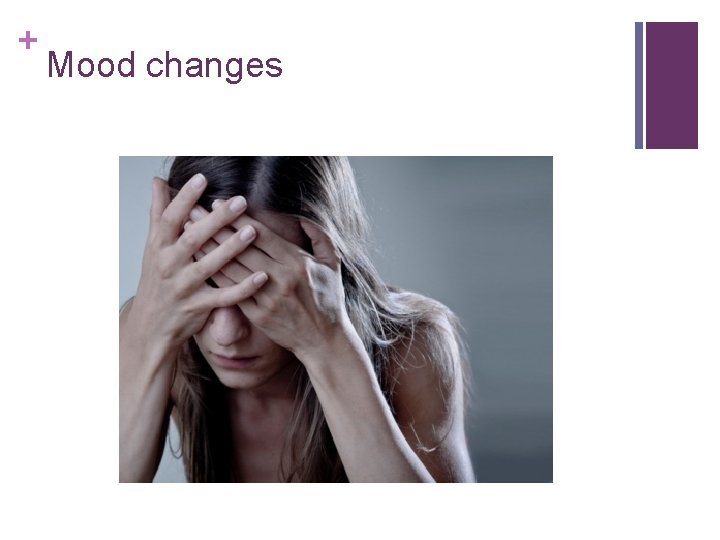
+ Mood changes
+ Schizophrenia treated as depression n Mood changes are very common in schizophrenia and particularly a dysphoric, tormented, anxious mood with sleep disturbance n If there are hallucinations and delusions or any other psychotic symptom treat with antipsychotic medication n SSRIs will be useless
+ Schizophrenia Diagnosed as Substance induced psychosis n Significant substance abuse is common – ending up with recurrent psychotic mental health admissions is very uncommon n Psychosis with substances does not explain disturbances in affect, persistent disorganisation or cognitive dysfunction n Controversy regarding severe prolonged amphetamine use and paranoid schizophrenia
+ Marijuana n Heavy marijuana use prior to age 18 years in prospective studies increases risk of developing schizophrenia by 6 -7 times. n NZ Dunedin study 10. 3% those using marijuana at age 15 years had schizophrenia by 26 years cf 3% controls
+ Schizophrenia diagnosed as personality disorder n A totally normal social history is not compatible with the diagnosis of personality disorder n Schizophrenia typically has a pattern of a deteriorating social history although this can be complex with early onset schizophrenia
+ Schizophrenia diagnosed as Borderline Disorder n Distracted by extreme behaviours that evoke powerful emotions within staff n Often an underlying hostility and wish to reject the patient n Behavioural disturbances are a direct manifestation of the psychotic process often the underlying exploration of the causes of behaviour are inadequate and the patient’s explanation is accepted at face value
+ Schizophrenia diagnosed as Borderline Disorder n. Often recurrent self harm is equated with borderline disorder when it can be part of a psychotic manifestation either directly in response to undisclosed schizophrenia or as a coping strategy in people with a limited degree of psychological maturity or propensity to externalising behaviours
+ Schizophrenia diagnosed as Antisocial Personality Disorder n Schizophrenia can present through contact with the criminal justice system n Behavioural disturbance in the forms of violence or law breaking can be directly attributable to psychotic symptoms or a secondary manifestation e. g. paranoia and disorganisation leading to homelessness and trespass / burglary
+ Schizophrenia diagnosed as Antisocial Personality Disorder n Two important patterns to distinguish 1. Absence of conduct disorder and sudden change to criminality and convictions later in life 2. Premorbid conduct disorder then change in escalating pattern of offending or nature of offending
+ Schizophrenia diagnosed as Antisocial Personality Disorder n. Key feature is a careful analysis of causes of offending or violent behaviour n. Does it make sense? n. What are the motivations? n. What are the observations of staff within the criminal justice system?
+ Interviewing Issues n. Look and Observe n. Understand the different language that people have for perceptual experiences – look for dimensionality and affective investment n“Do you hear voices inside / outside head” – limiting and simplistic
+ Interviewing Issues n For guarded patient use other strategies e. g. proverb analysis with cognitive assessment n “People in glass houses should not throw stones” n Assess n Be negative and cognitive features aware of the tendency to normalise psychosis like completion illusions

+ Being guarded
+ Functional Issues n. Developmental n. Housing arrest history n. Employment pattern – however factor in socioeconomic deprivation n. Relationships n. Change – shrinking network in habitual behaviour

+ Functional impact
+ Family Interview n. Changes n. Times n. Did in sleep, motivation, self care that they did not make sense you ever hear them talk to themselves and what did they say about it n. Anger
+ Management n 1. Engagement n 2. Safety n 3. Clarify the Diagnosis n 4. Biological Management n 5. Psychological Management n 6. Social and Family n 7. Rehabilitation
+ Safety n Assess risk of killing or harming themselves n Assess risk of killing or harming others n Assess sexual risk towards others or of being exploited / abused / pregnant n Assess risk from coexistent medical condition n Assess risk of homelessness n Assess risk of financially exploited
+ Safety n Assess risk of very poor self care e. g. ability to obtain food, manage money n Assess risk from comorbid substance n Assess risk of treatment disengagement abuse n Assess risk from certain symptoms: Command Hallucinations, Delusions of control, Jealous delusions, Persecutory delusions
+ Question n. Which features of the mental state are important when assessing risk?
+ Biological Management n Atypical Antipsychotics vs typical n First line treatment can include risperidone, aripiprazole, amisulpride, ziprasidone, quetiapine, olanzapine n Olanzapine has a higher risk of weight gain and metabolic syndrome than the other first line agents and should be only used after prior treatment intolerance and with caution n Clozapine only effective treatment for treatment resistant schizophrenia n Depot antipsychotics require- three months to steady state

+ Antipsychotic prescribing Antipsychotic Dose range Risperidone 2 -6 mg Aripiprazole 10 -30 mg Olanzapine 10 -30 mg Quetiapine 300 mg – 900 mg Ziprasidone Amisulpride 40 mg bd – 80 mg bd 200 mg – 800 mg
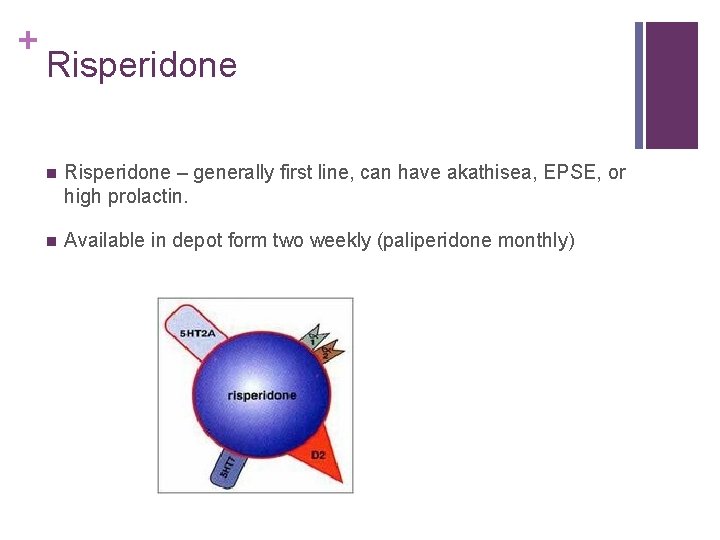
+ Risperidone n Risperidone – generally first line, can have akathisea, EPSE, or high prolactin. n Available in depot form two weekly (paliperidone monthly)
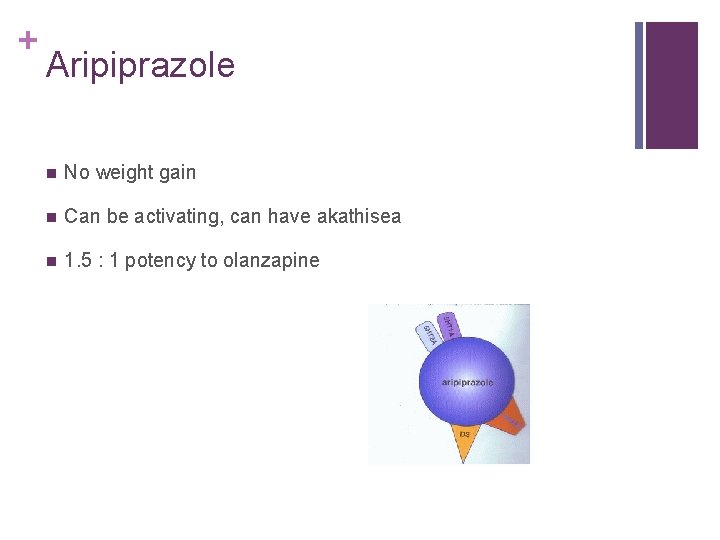
+ Aripiprazole n No weight gain n Can be activating, can have akathisea n 1. 5 : 1 potency to olanzapine
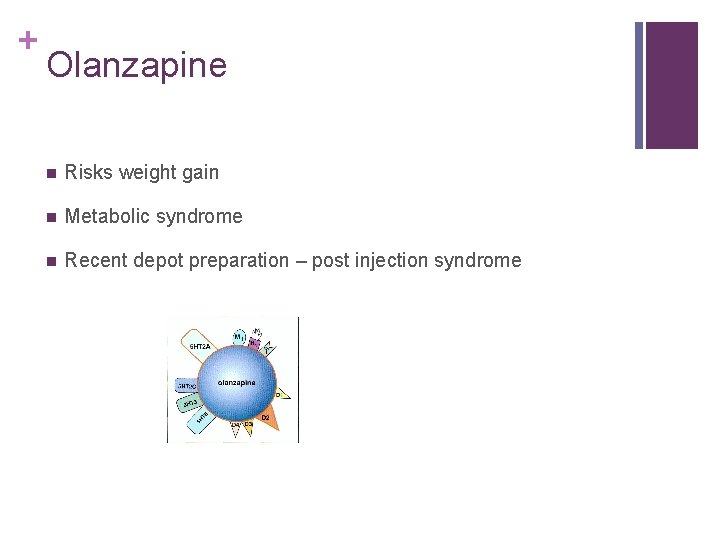
+ Olanzapine n Risks weight gain n Metabolic syndrome n Recent depot preparation – post injection syndrome

+ Quetiapine n Frequently used low dose range off label conditions n Doses required for antipsychotic effect may be too sedating
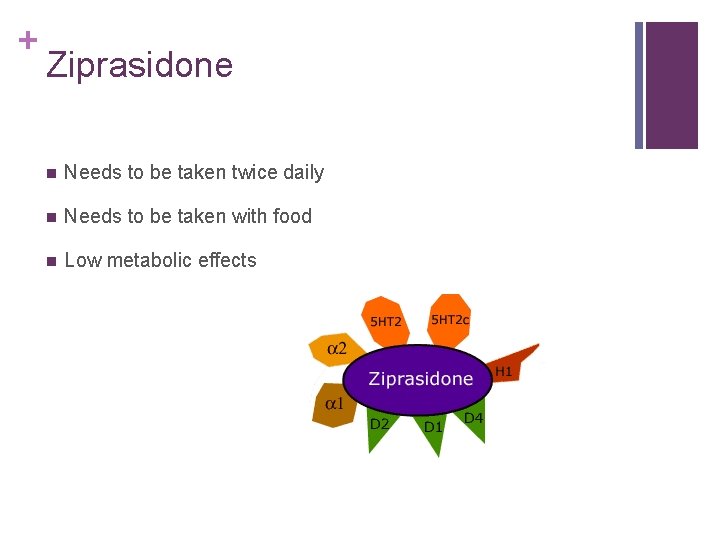
+ Ziprasidone n Needs to be taken twice daily n Needs to be taken with food n Low metabolic effects
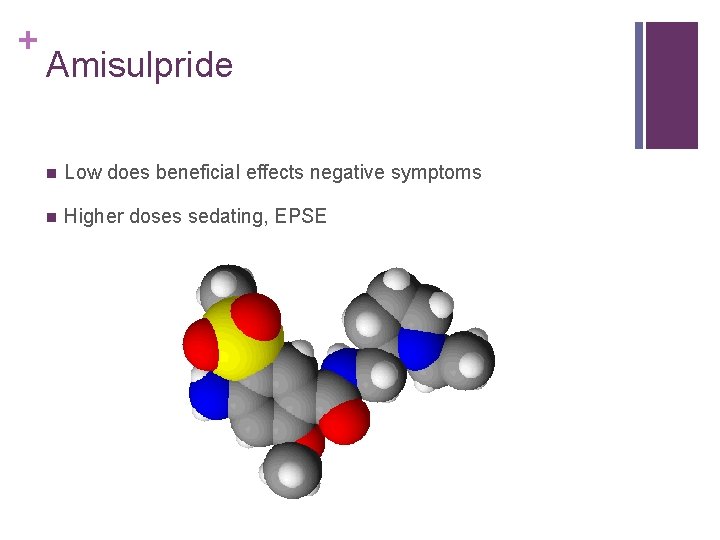
+ Amisulpride n Low does beneficial effects negative symptoms n Higher doses sedating, EPSE
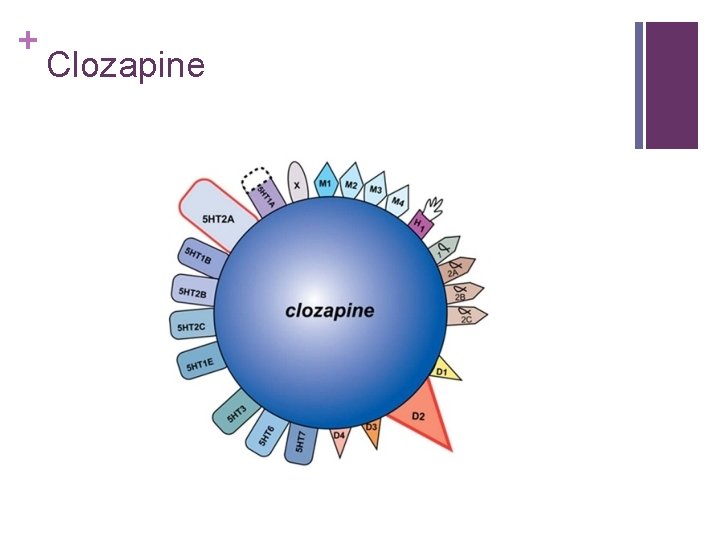
+ Clozapine n. Clozapine has revolutionized the treatment of schizophrenia and is simply more effective than other antipsychotic medication for persistent and severe psychotic illness.
+ Clozapine
+ Treatment resistant schizophrenia n Two different antipsychotic agents taken at right doses for sufficient time still not associated with improvement in positive psychotic symptoms n Repeated admissions, suicide attempts, assaults, homelessness, imprisonment, severe coexisting substance abuse
+ Clozapine outcomes n 33% significant improvement in six week, 70% one year n. Reduction in hospitalization, suicide, imprisonment, increased housing stability, drug use
+ Clozapine side effects n Constipation n Hypersalivation n Reflux n Sedation n Weight gain / metabolic effects
+ Clozapine – Serious but rare n Neutropenia – agranulocytosis – requires weekly FBC for first 18 weeks and after every 28 days n Myocarditis n Cardiomyopathy n Lowering seizure threshold – myoclonic jerks n Toxic megacolon n Death with high alcohol consumption
+ Clozapine initiation n Gradual dose titration – cross tapering n Fortnightly BP Temp Pulse n Wide dose range n Levels useful for adherence but not for therapeutic window n Clozapine re titration after missing three days n Clozapine and alcohol
+ Common side effects of atypical antipsychotic medication n Insulin resistance n Weight gain n Dyslipidemia n Elevation in prolactin
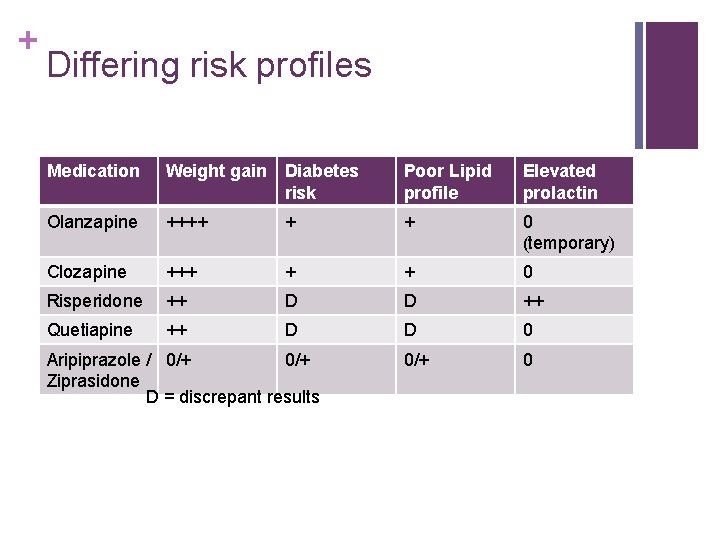
+ Differing risk profiles Medication Weight gain Diabetes risk Poor Lipid profile Elevated prolactin Olanzapine ++++ + + 0 (temporary) Clozapine +++ + + 0 Risperidone ++ D D ++ Quetiapine ++ D D 0 0/+ 0 Aripiprazole / 0/+ Ziprasidone D = discrepant results
+ Insulin resistance n Antipsychotic medication causes changes in glucose homeostasis n Other risk factors n Aging n Family history of diabetes n Ethnicity – Maori n Cigarette smoking n Physical inactivity n Diagnosis of schizophrenia itself
+ Weight Gain with antipsychotic medication n Combination of n Decreased physical activity – sedation, negative symptoms, poverty, demoralization n Alteration of the hunger / satiety centers mediated by hormone leptin n Blocking of certain receptors
+ Dyslipidemia n Generally consistent with gain in weight n Other risks family history n Diet
+ Prolactin levels n Antipsychotics especially risperidone and first generation antipsychotics (e. g. haloperidol, clopixol) can be associated with increased prolactin n Dopamine inhibits prolactin increase so antipsychotics blocking dopamine lead to increase prolactin
+ Side effects of increased prolactin n n In Females n Galactorrhoea n Irregular or no menstruation n Infertility n Sexual dysfunction In Males n Galactorrhoea n Gynaecomastia n Impotence, reduced libido, erectile dysfunction
+ Side effects of increased prolactin n In both men and women long term increase in prolactin leads to risk of osteoporosis from effects on sex steroid production n Be aware of other causes of increased prolactin such as a brain tumor

+ Monitoring Program n Now core practice in all DHBs in New Zealand with National guidelines n Role of all mental health workers to be aware and participate n All doctors and key workers are expected to be able to record height, waist circumference where appropriate and calculate a BMI n If antipsychotics are changed the monitoring program should start again
+ Baseline Monitoring n At start of antipsychotic prescribing – or as close as possible § Document personal and family history of dyslipidemia, hypertension, smoking, heart disease, history of syncope or QT abnormalities § Sudden death in relative under 40 years § Galactorrhoea, menstrual problems, sexual dysfunction, Gynaecomastia
+ Baseline monitoring n Height and weight to calculate BMI n Hb. A 1 C n Fasting lipids n Full bloods count n Electrolyte and creatinine n Liver function
+ Monthly for first three months n Weight calculate BMI n Waist circumference n BP
+ Three months after starting antipsychotic medication n Repeat blood tests n Hb. A 1 C n Fasting lipids n Liver function tests
+ Annually n Height and weight to calculate BMI n Hb. A 1 C n Fasting lipids n Full bloods count n Electrolyte and creatinine n Liver function
+ ECGs n It is good practice to have an ECG before prescribing any antipsychotic n This is indicated for n Known heart disease n History of syncope n Family history of sudden death under 40 years n Congenital long QT n Co administration of any QT prolonging medication
+ ECG n For patients on polypharmacy of antipsychotic medication or high doses of antipsychotic medication an ECG should be performed 6 monthly n Clozapine clients require a yearly ECG
+ Information for consumers n Prior to starting antipsychotic medication (or when over acute phase) discuss with consumer and family the possible side effects and need for awareness of diet and exercise n Written information and assistance with practical support such as Green prescription , local lifestyle groups should be given
+ Prevention better than weight loss n It is easier to prevent weight gain than deal with needing to loose weight. n Where possible use antipsychotic medication that has a lower risk of weight gain – remember clozapine is the only antipsychotic that is more effective than the others at reducing psychosis n Most of the weight gain is in the first three months – critical time for follow up
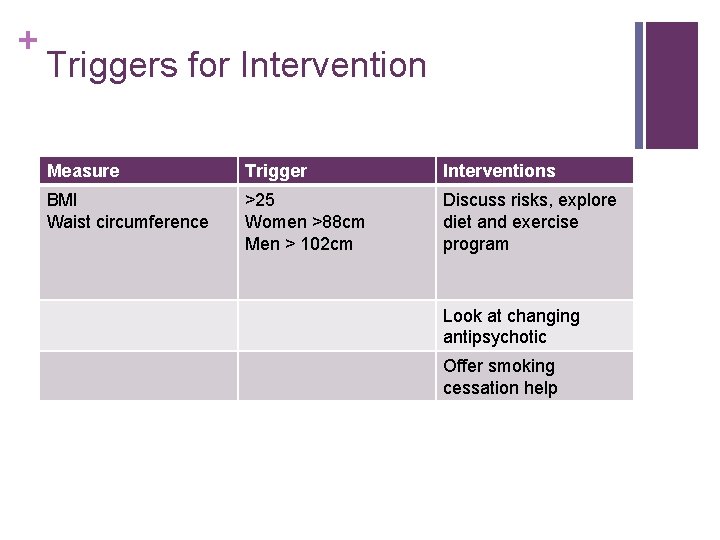
+ Triggers for Intervention Measure Trigger Interventions BMI Waist circumference >25 Women >88 cm Men > 102 cm Discuss risks, explore diet and exercise program Look at changing antipsychotic Offer smoking cessation help
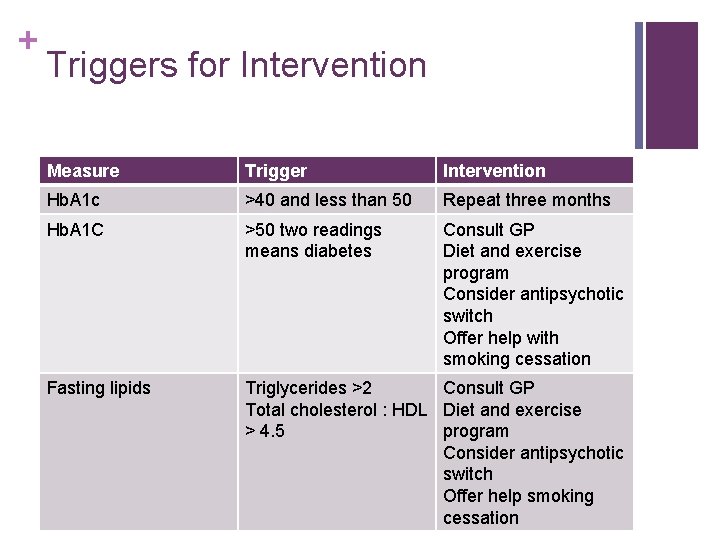
+ Triggers for Intervention Measure Trigger Intervention Hb. A 1 c >40 and less than 50 Repeat three months Hb. A 1 C >50 two readings means diabetes Consult GP Diet and exercise program Consider antipsychotic switch Offer help with smoking cessation Fasting lipids Triglycerides >2 Consult GP Total cholesterol : HDL Diet and exercise > 4. 5 program Consider antipsychotic switch Offer help smoking cessation
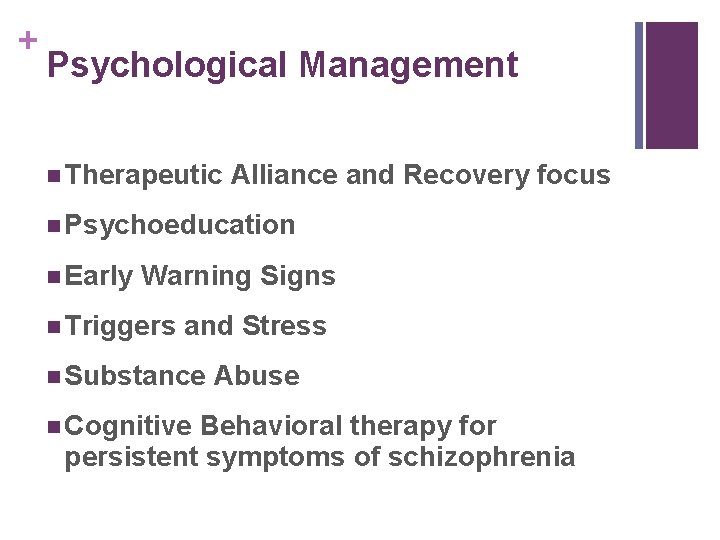
+ Psychological Management n Therapeutic Alliance and Recovery focus n Psychoeducation n Early Warning Signs n Triggers and Stress n Substance n Cognitive Abuse Behavioral therapy for persistent symptoms of schizophrenia
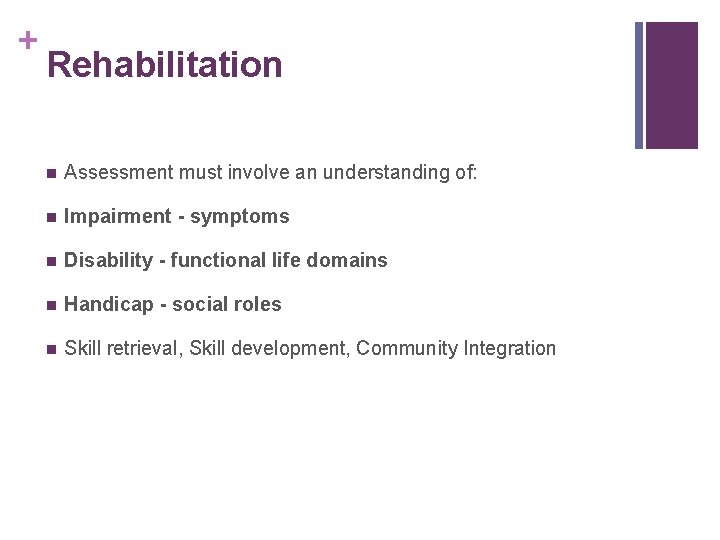
+ Rehabilitation n Assessment must involve an understanding of: n Impairment - symptoms n Disability - functional life domains n Handicap - social roles n Skill retrieval, Skill development, Community Integration
- Slides: 78