
Schizophrenia Lecture 23 Mental Illness Definition Characteristically Controversial
- Slides: 19
Schizophrenia Lecture 23
Mental Illness: Definition Characteristically Controversial n Deviations from normal l Behavior l Thought Processes l Affect n Harmful dysfunction l Distress l Impairment n Magnitude & duration ~ n
Schizophrenia Disordered thoughts & bizarre behavior l 1 percent of population l equal among sexes n Progressive? l can only manage symptoms n Symptoms > 6 mo l 2 classes of symptoms l Positive l Negative ~ n
Positive Symptoms n Thought disorders l l n n incoherence loose associations Delusions l bizarre beliefs l persecution, grandeur Hallucinations l l sensory experiences no external stimuli ~
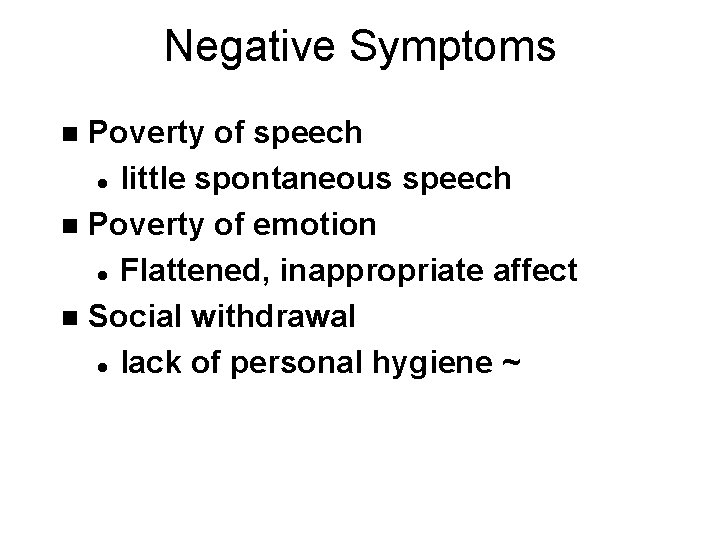
Negative Symptoms Poverty of speech l little spontaneous speech n Poverty of emotion l Flattened, inappropriate affect n Social withdrawal l lack of personal hygiene ~ n
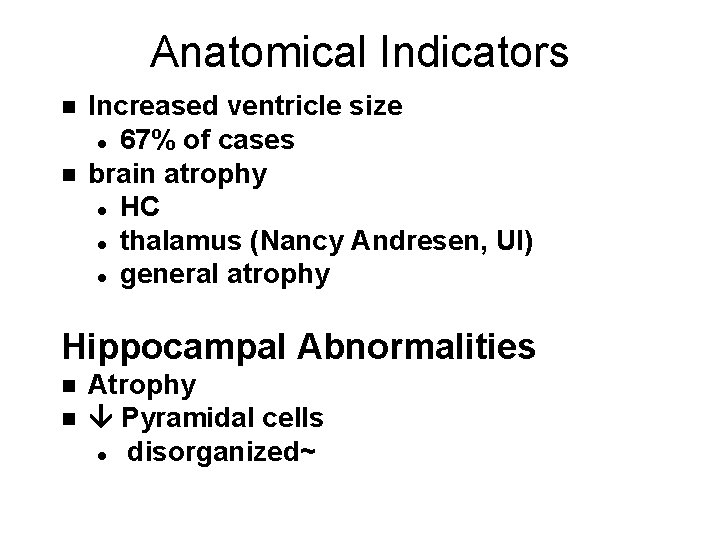
Anatomical Indicators n n Increased ventricle size S l 67% of cases brain atrophy l HC l thalamus (Nancy Andresen, UI) l general atrophy S Hippocampal Abnormalities n n Atrophy Pyramidal cells l disorganized~ N
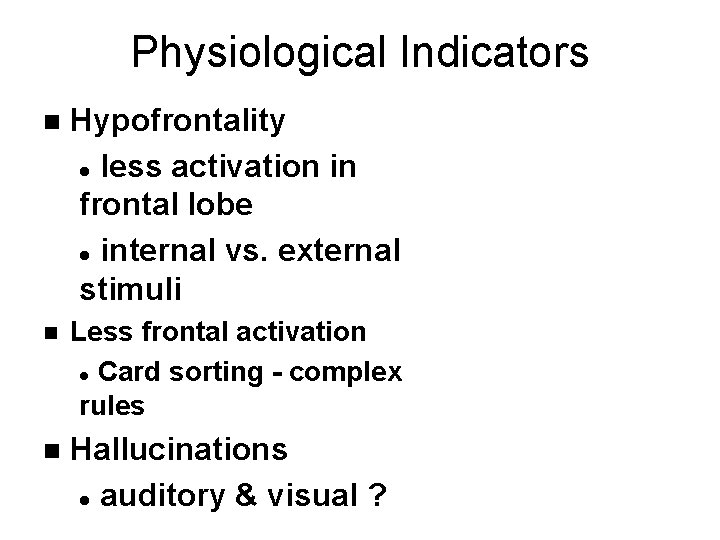
Physiological Indicators n Hypofrontality l less activation in frontal lobe l internal vs. external stimuli n Less frontal activation l Card sorting - complex rules n Hallucinations l auditory & visual ?
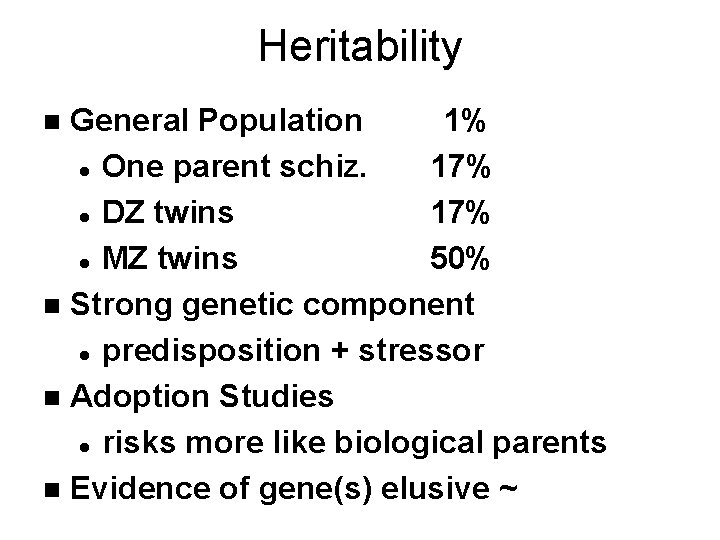
Heritability General Population 1% l One parent schiz. 17% l DZ twins 17% l MZ twins 50% n Strong genetic component l predisposition + stressor n Adoption Studies l risks more like biological parents n Evidence of gene(s) elusive ~ n
Neurodevelopmental Hypothesis Pre – neonatal environment l trauma schizophrenia n Rh blood-type incompatibility n Season-of-birth effect l incidence for winter births l viral infections n Cat virus l Toxoplasma gondii n Relatively weak correlations ~ n
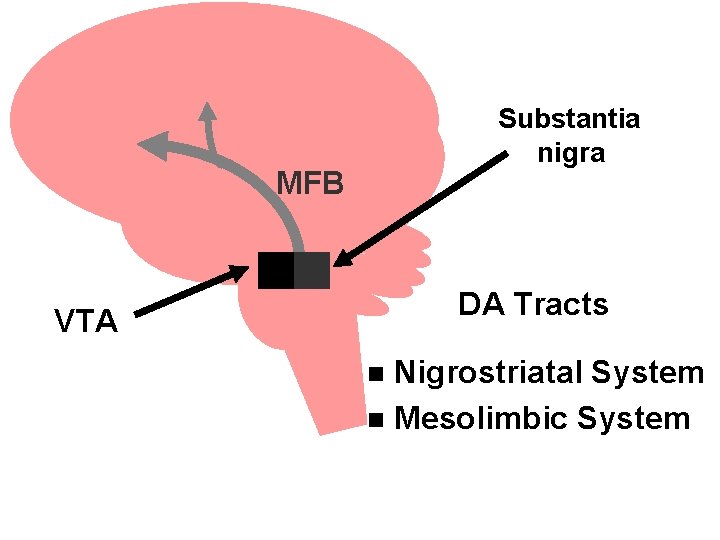
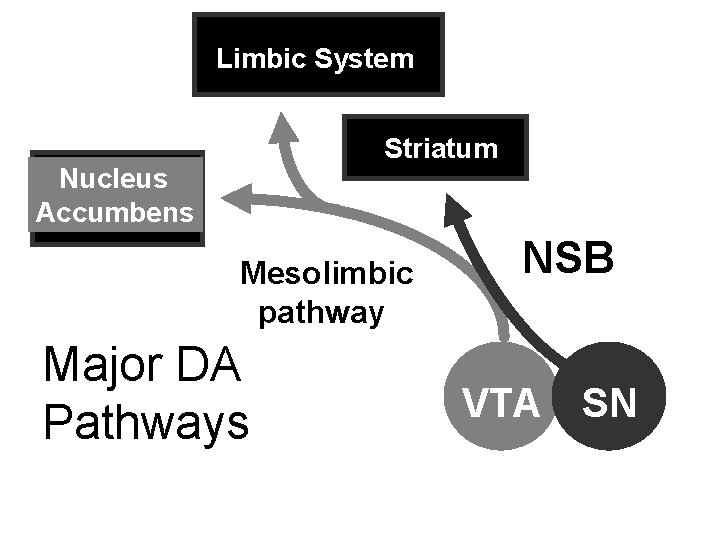
The Dopamine Hypothesis Positive symptoms l too much DA activity l Not excessive DA levels l Maybe overabundance of receptors n 2 major DA systems l Mesolimbic l Nigrostriatal ~ n
Substantia nigra MFB DA Tracts VTA Nigrostriatal System n Mesolimbic System n
Limbic System Striatum Nucleus Accumbens Mesolimbic pathway Major DA Pathways NSB VTA SN
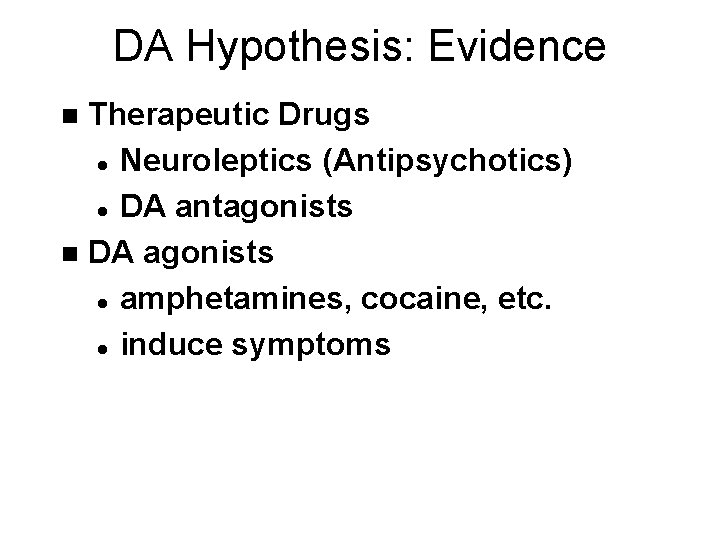
DA Hypothesis: Evidence Therapeutic Drugs l Neuroleptics (Antipsychotics) l DA antagonists n DA agonists l amphetamines, cocaine, etc. l induce symptoms n
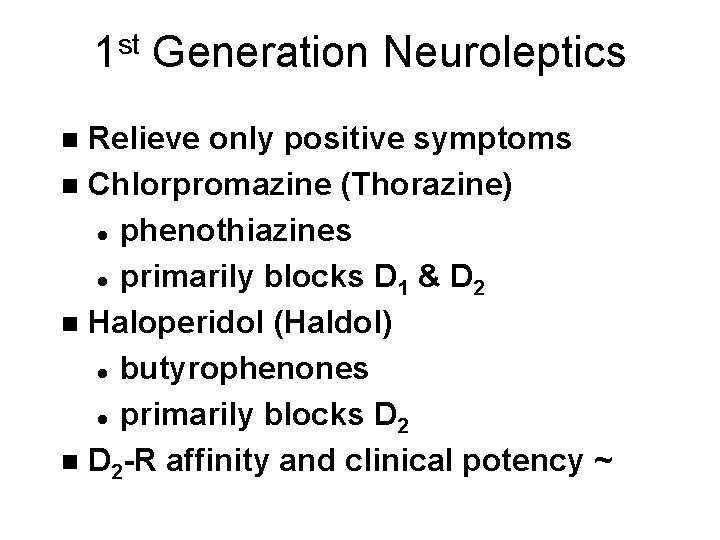
1 st Generation Neuroleptics Relieve only positive symptoms n Chlorpromazine (Thorazine) l phenothiazines l primarily blocks D 1 & D 2 n Haloperidol (Haldol) l butyrophenones l primarily blocks D 2 n D 2 -R affinity and clinical potency ~ n
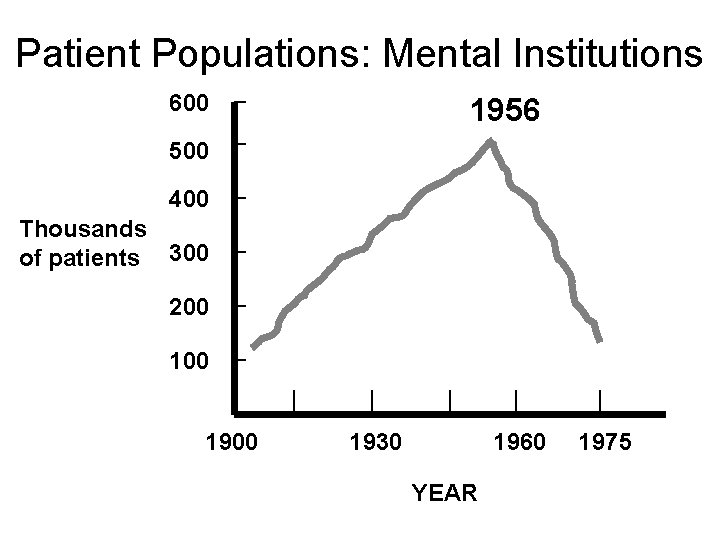
Patient Populations: Mental Institutions 600 1956 500 400 Thousands of patients 300 200 1900 1930 1960 YEAR 1975
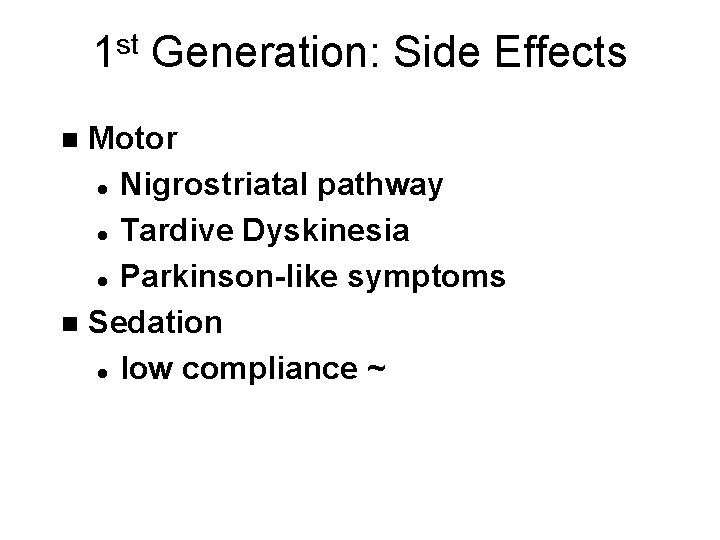
1 st Generation: Side Effects Motor l Nigrostriatal pathway l Tardive Dyskinesia l Parkinson-like symptoms n Sedation l low compliance ~ n
DA Hypothesis: Problem Physiologic effect? l Minutes n Therapeutic effect? l Weeks n Why the delay? l maybe homeostatic mechanisms l offset changes by drugs at first ~ n
2 nd Generation Neuroleptics Block DA and 5 -HT receptors l Relieve positive & negative symptoms l Lower Parkinson’s-like side effects n Clozapine (Clozaril) l high risk agranulocytosis n Risperidone (Risperidal) l low risk of agranulocytosis ~ n
Role of Glutamate Prefrontal lobe l DA inhibits Glu release n NMDA-R l NMDA-R abnormal behavior in rats n PCP (phencylidine) hallucinations l blocks NMDA-R n Glu treatment? l risk of excitotoxicity ~ n