
SCHIZOPHRENIA By Zain and Aqsa Definition A chronic
SCHIZOPHRENIA By Zain and Aqsa
Definition: • A chronic and severe mental disorder that affects how a person thinks, feels and behave • A person with schizophrenia may have difficulty distinguishing between real and imaginary • May be unresponsive or withdrawn • May have difficulty expressing normal emotions in social situations • Symptoms are not identical for each person
Causes: • Still unclear • Theories suggest: • Genetics(heredity) • Biology(abnormalities in the brain’s chemistry or structure) • Viral infections • Immune disorders
Genetics: • Scientists have discovered that the disorder tends to run in families • Person inherits a tendency to develop the disease • May appear when the body undergoes hormonal and physical changes(e. g, in puberty) • After dealing with highly stressful situations
Biology: • Chemical: Imbalance of brain chemicals or neurotransmitters(dopamine, serotonin, glutamate) • Imbalance can affect the way the brain reacts to stimuli - explains why patient is overwhelmed by sensory stimuli, e. g: loud music or bright lights which other people can easily handle • Can lead to hallucinations and delusions • Structure: problems with development of connections and pathways in the brain in the womb may lead to schizophrenia
Viral infections and immune disorders: • Babies whose mothers get the flu whilst pregnant are at higher risk • People hospitalized for severe infections
Signs: • Different for everyone • Behaviors that are early warning signs of schizophrenia include: • Hearing or seeing something that isn’t there • A constant feeling of being watched • Peculiar or nonsensical way of speaking or writing • Strange body positioning • Feeling indifferent to very important situations • Deterioration of academic or work performance • A change in personal hygiene and appearance • A change in personality • Irrational, angry or fearful response to loved ones • Inability to sleep or concentrate • Inappropriate or bizarre behavior • Extreme preoccupation with religion or the occult
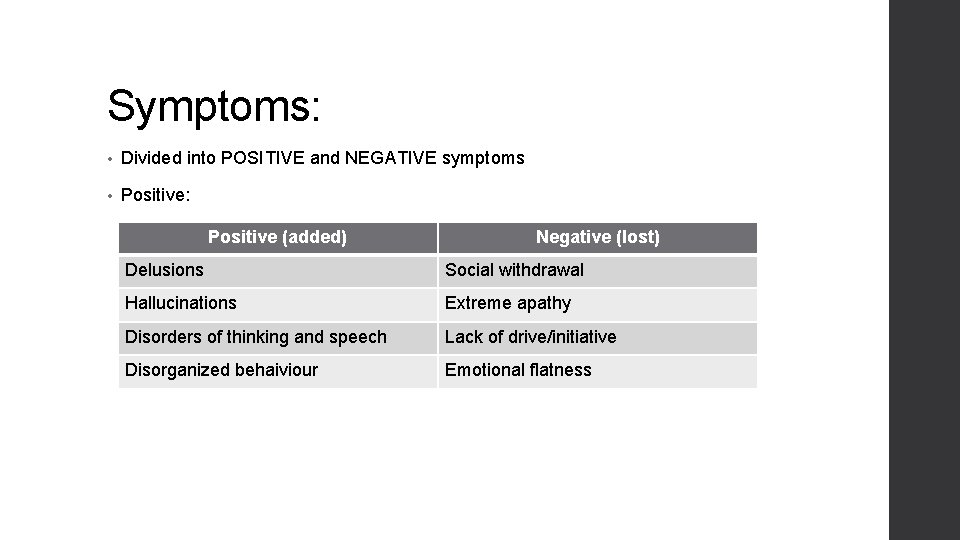
Symptoms: • Divided into POSITIVE and NEGATIVE symptoms • Positive: Positive (added) Negative (lost) Delusions Social withdrawal Hallucinations Extreme apathy Disorders of thinking and speech Lack of drive/initiative Disorganized behaiviour Emotional flatness
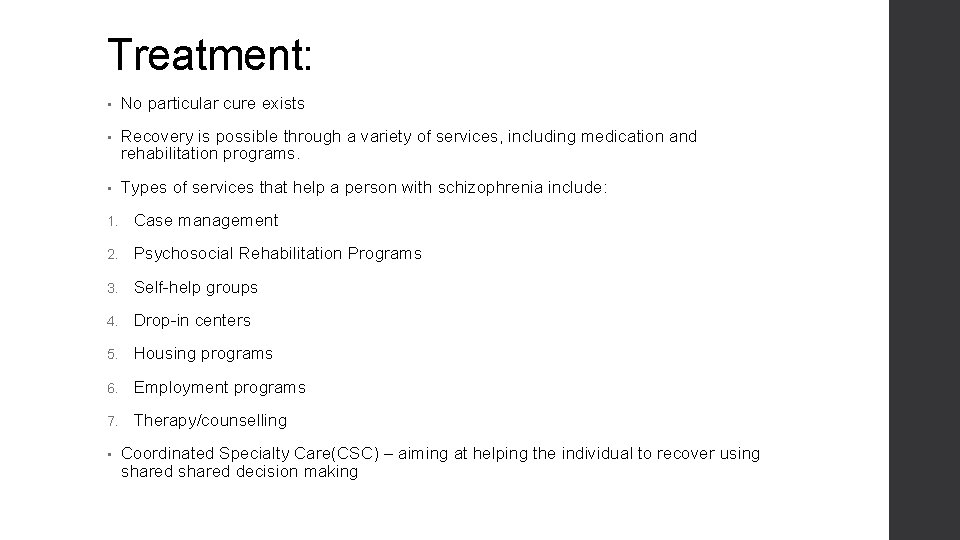
Treatment: • No particular cure exists • Recovery is possible through a variety of services, including medication and rehabilitation programs. • Types of services that help a person with schizophrenia include: 1. Case management 2. Psychosocial Rehabilitation Programs 3. Self-help groups 4. Drop-in centers 5. Housing programs 6. Employment programs 7. Therapy/counselling • Coordinated Specialty Care(CSC) – aiming at helping the individual to recover using shared decision making
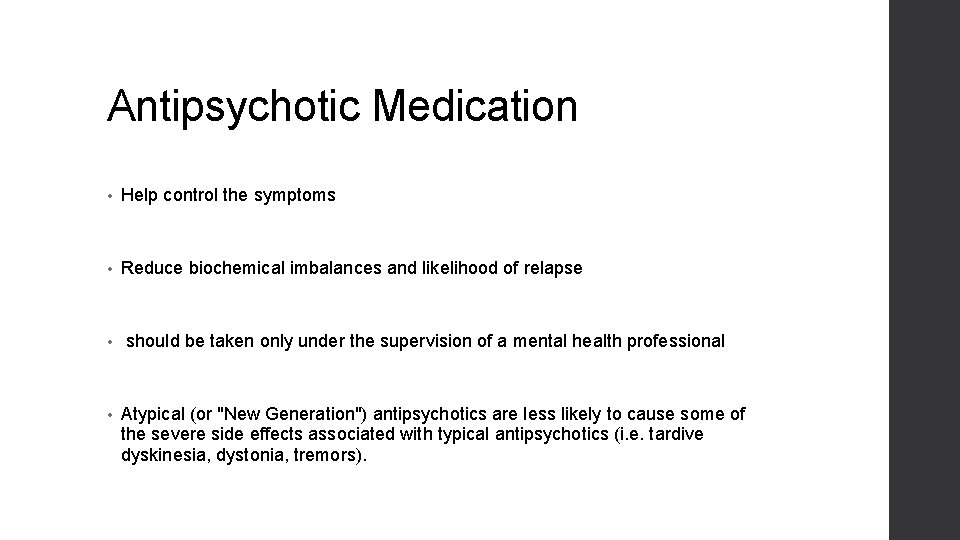
Antipsychotic Medication • Help control the symptoms • Reduce biochemical imbalances and likelihood of relapse • should be taken only under the supervision of a mental health professional • Atypical (or "New Generation") antipsychotics are less likely to cause some of the severe side effects associated with typical antipsychotics (i. e. tardive dyskinesia, dystonia, tremors).
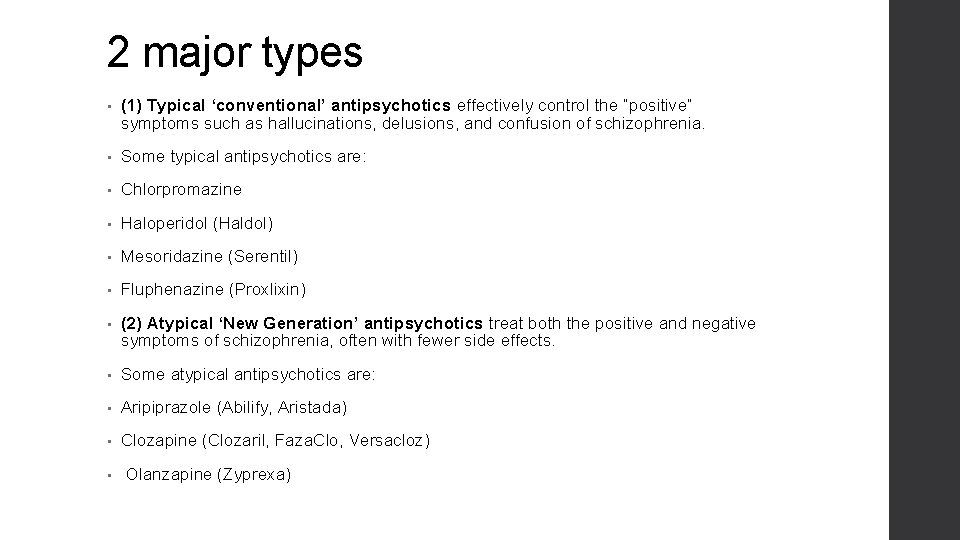
2 major types • (1) Typical ‘conventional’ antipsychotics effectively control the “positive” symptoms such as hallucinations, delusions, and confusion of schizophrenia. • Some typical antipsychotics are: • Chlorpromazine • Haloperidol (Haldol) • Mesoridazine (Serentil) • Fluphenazine (Proxlixin) • (2) Atypical ‘New Generation’ antipsychotics treat both the positive and negative symptoms of schizophrenia, often with fewer side effects. • Some atypical antipsychotics are: • Aripiprazole (Abilify, Aristada) • Clozapine (Clozaril, Faza. Clo, Versacloz) • Olanzapine (Zyprexa)
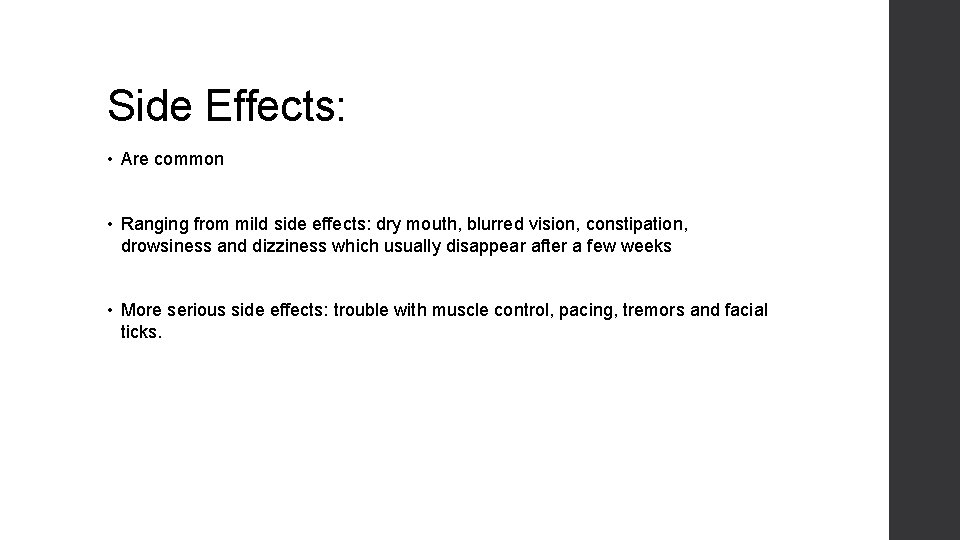
Side Effects: • Are common • Ranging from mild side effects: dry mouth, blurred vision, constipation, drowsiness and dizziness which usually disappear after a few weeks • More serious side effects: trouble with muscle control, pacing, tremors and facial ticks.
- Slides: 12