
Schizophrenia and other psychotic disorders Beatrix Mersich M
Schizophrenia and other psychotic disorders Beatrix Mersich M. D. , Ph. D. Semmelweis University Department of Psychiatry and Psychotherapy 26/Sept/2016
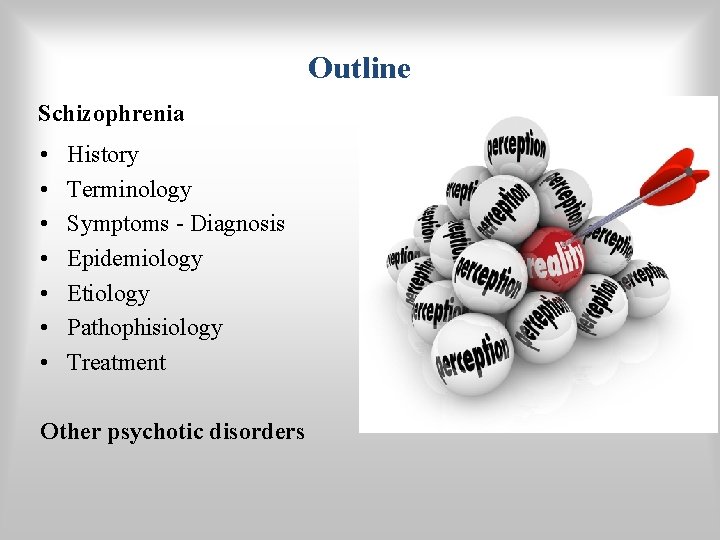
Outline Schizophrenia • • History Terminology Symptoms - Diagnosis Epidemiology Etiology Pathophisiology Treatment Other psychotic disorders
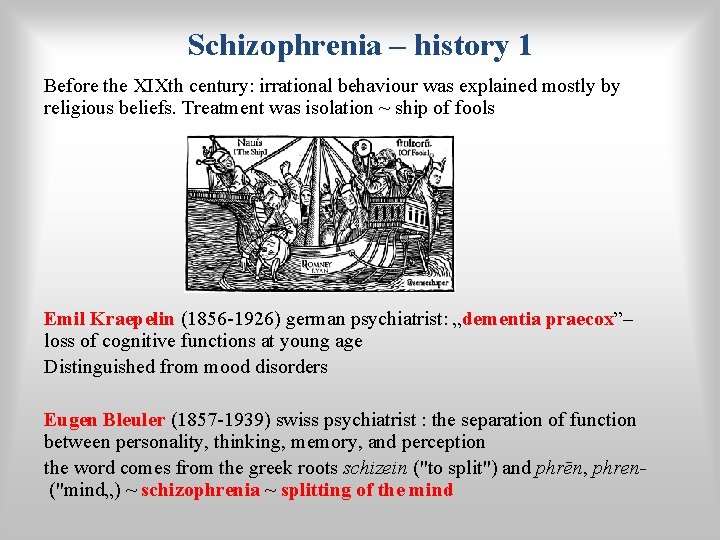
Schizophrenia – history 1 Before the XIXth century: irrational behaviour was explained mostly by religious beliefs. Treatment was isolation ~ ship of fools Emil Kraepelin (1856 -1926) german psychiatrist: „dementia praecox”– loss of cognitive functions at young age Distinguished from mood disorders Eugen Bleuler (1857 -1939) swiss psychiatrist : the separation of function between personality, thinking, memory, and perception the word comes from the greek roots schizein ("to split") and phrēn, phren("mind„) ~ schizophrenia ~ splitting of the mind
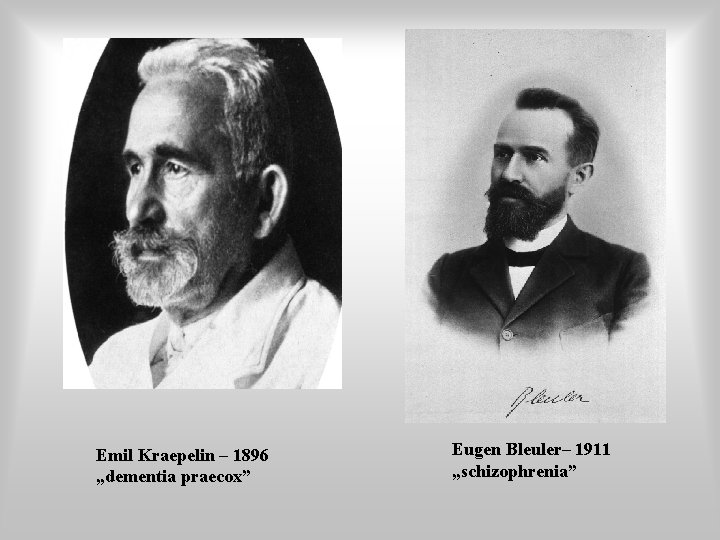
Emil Kraepelin – 1896 „dementia praecox” Eugen Bleuler– 1911 „schizophrenia”
Schizophrenia – history 2 • Kurt Schneider (1887 -1967) german psychiatrist: first rank symptoms: delusions of being controlled by an external force, the belief that thoughts are being inserted into or withdrawn from one's conscious mind, the belief that one's thoughts are being broadcast to other people, hearing hallucinatory voices that comment on one's thoughts ~ see. recent classifications • Andreasen /Crow: Positive and negative symptoms
Terminology Psychosis ≠ Schizophrenia! Psychosis is a mental condition. Schizophrenia is a mental disorder (illness). Psychosis is a break of connection with reality. And then what is schizophrenia? How to diagnose schizophrenia?
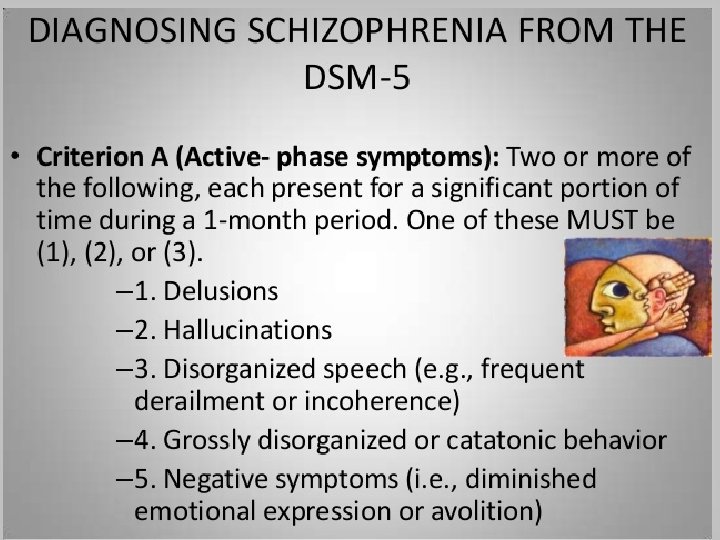
Schizophrenia - diagnosis • Symptoms must be present for 6 months • Active for 1 month • Symptoms causing functional decline (occupational, social life, partnership etc) • The condition is not better explained by other mental disorder
• Diagnosis of schizophrenia is made by psychiatric INTERVIEWS (patients and heteroanamnesis!) + OBSERVATION of patient’s behaviour • lab tests (blood, urine), CT/MRI • psychometric tests: SCID-I, PANSS
Symptoms of psychosis • Great variety of symptoms • Several grouping • Positive/negative/catatonic/cognitive
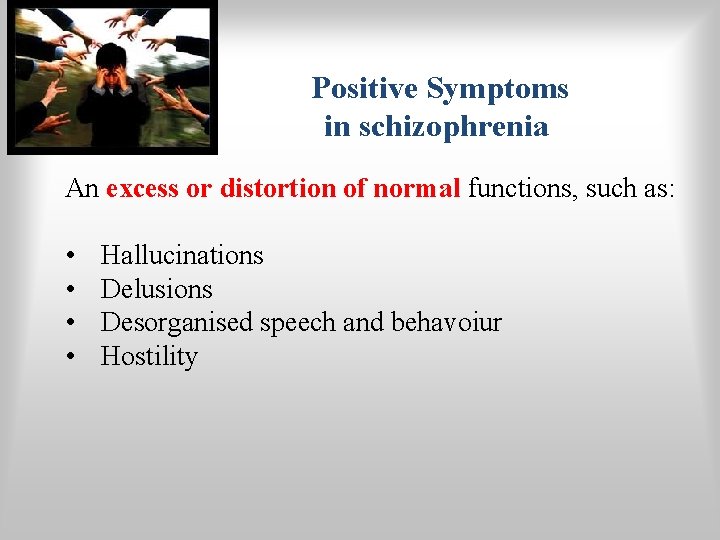
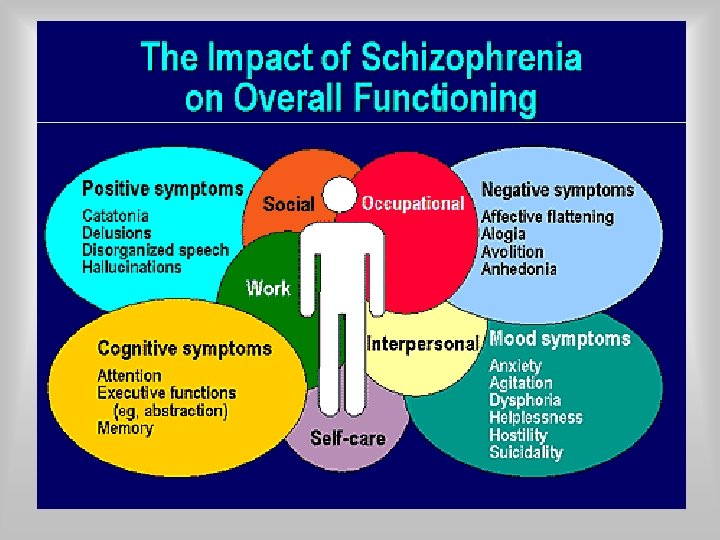
Positive Symptoms in schizophrenia An excess or distortion of normal functions, such as: • • Hallucinations Delusions Desorganised speech and behavoiur Hostility
Negative symptoms in schizophrenia Diminution or loss of normal functions • • • Emotional withdrawal Blunted affect Poor rapport Lack of spontaneity Social withdrawal
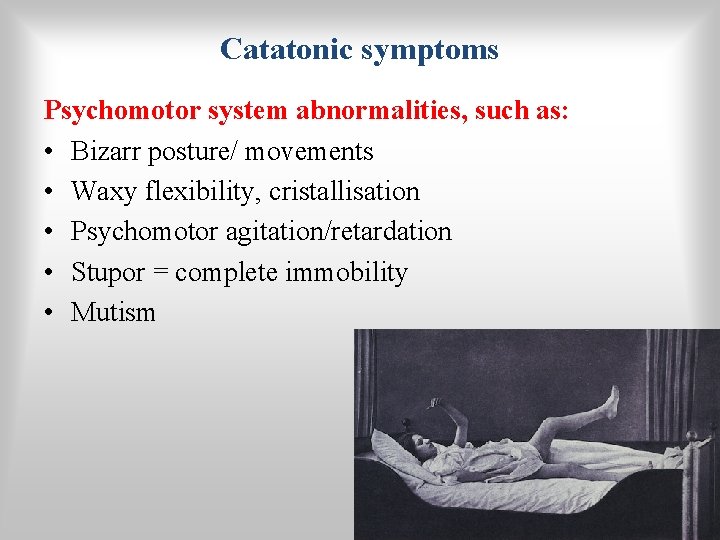
Catatonic symptoms Psychomotor system abnormalities, such as: • Bizarr posture/ movements • Waxy flexibility, cristallisation • Psychomotor agitation/retardation • Stupor = complete immobility • Mutism
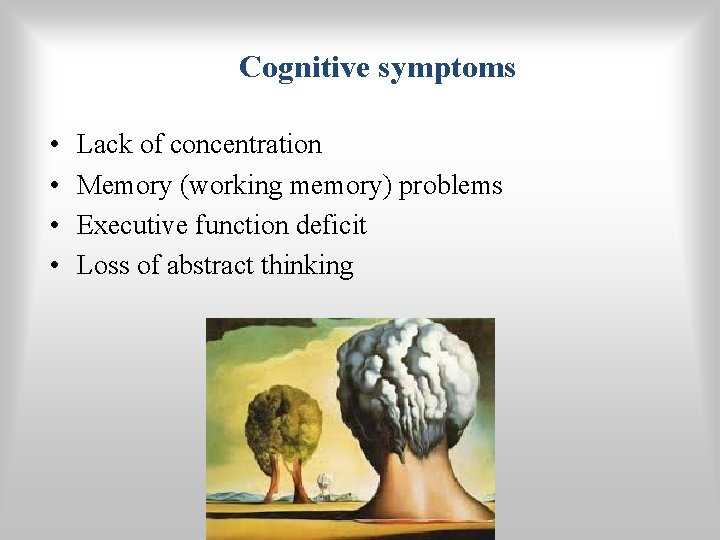
Cognitive symptoms • • Lack of concentration Memory (working memory) problems Executive function deficit Loss of abstract thinking
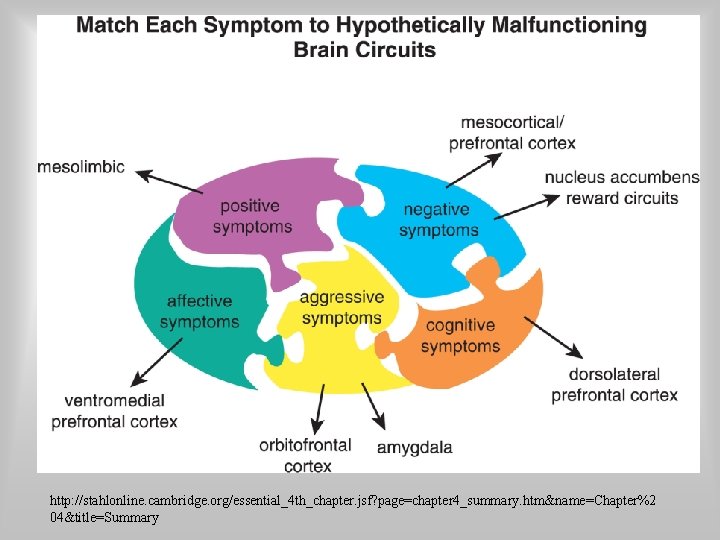
http: //stahlonline. cambridge. org/essential_4 th_chapter. jsf? page=chapter 4_summary. htm&name=Chapter%2 04&title=Summary
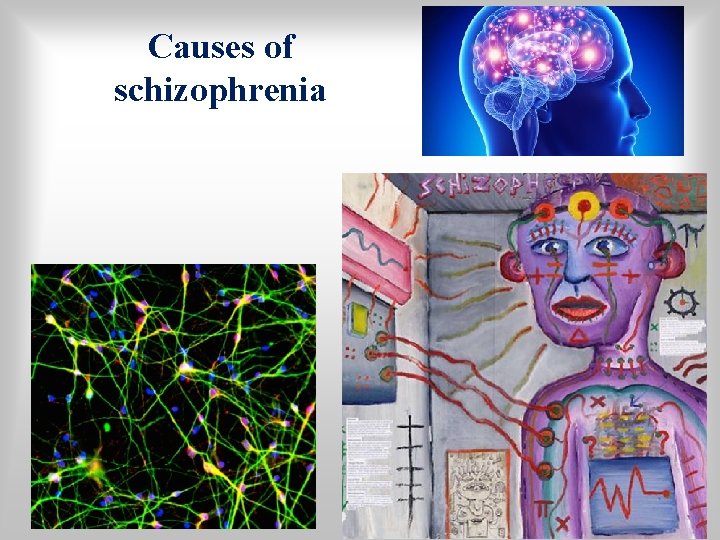
Causes of schizophrenia
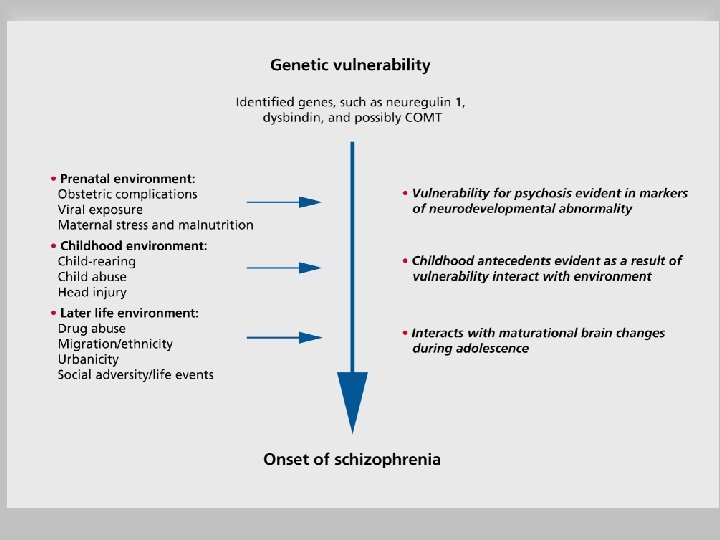
Causes of schizophrenia Multifactorial etiology!: • Genetic • Neurodevelopmental • Epigenetic (environment, psychosocial interactions, substance abuse) • Cognitive model
Causes of schizophrenia- genetics • Family Studies • Other family members are at increased risk of schizophrenia • Twin Studies • Risk of schizophrenia in monozygotic twins is 48% • Risk of schizophrenia drops to 17% for fraternal (dizygotic) twins • Adoption Studies • Risk of schizophrenia remains high in adopted children with a biological parent suffering from schizophrenia
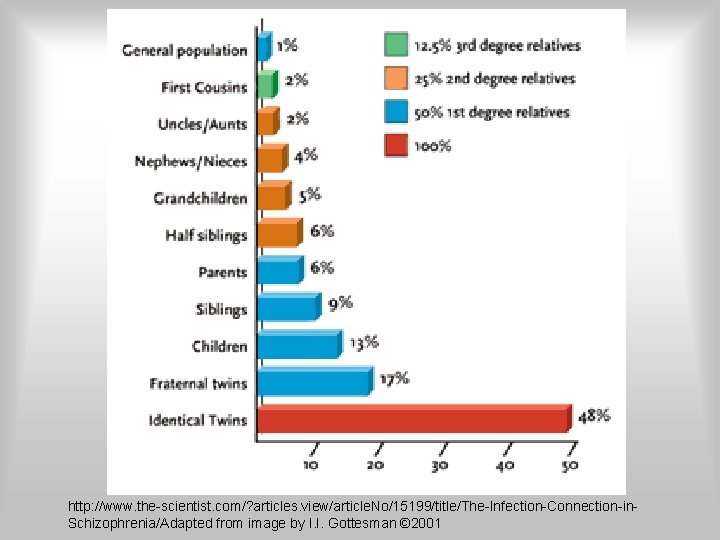
http: //www. the-scientist. com/? articles. view/article. No/15199/title/The-Infection-Connection-in. Schizophrenia/Adapted from image by I. I. Gottesman © 2001
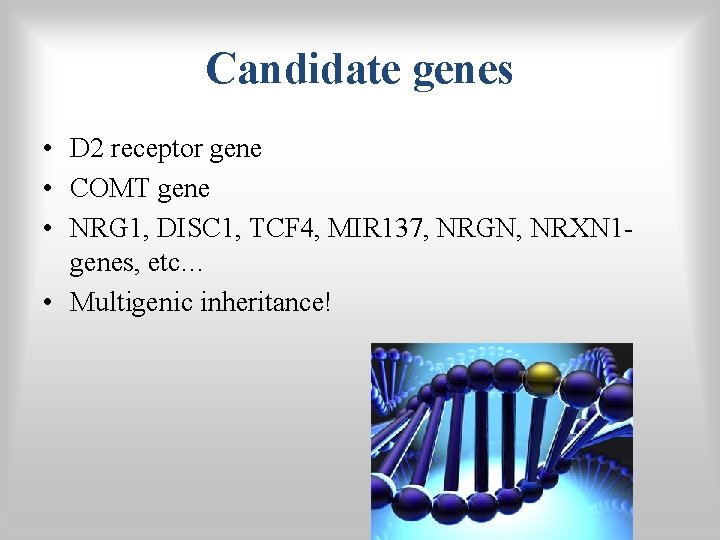
Candidate genes • D 2 receptor gene • COMT gene • NRG 1, DISC 1, TCF 4, MIR 137, NRGN, NRXN 1 genes, etc… • Multigenic inheritance!
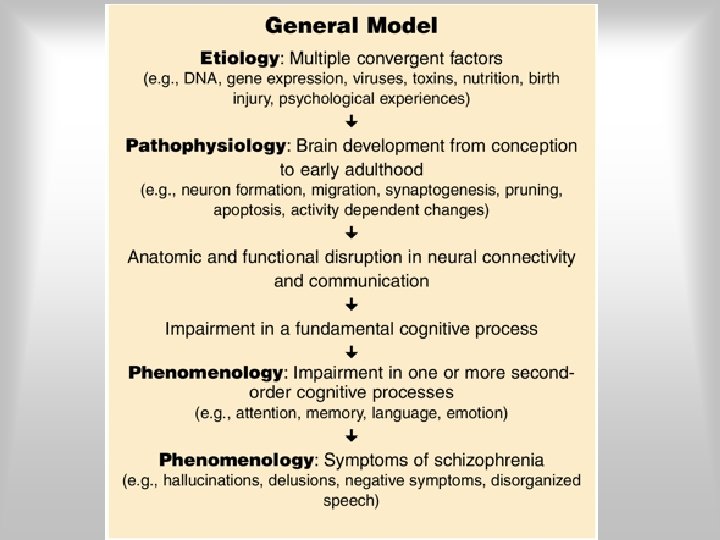
Causes of schizophrenia - neurodevelopmental model • Schizophrenia is a „silent lesion” in the brain: disconnection or abnormal connection between frontal, temporal and parietal lobe • Caused by different factors (genetic, inborn, infections, trauma, etc. . ) • In very early developmental period (prenatal and early postnatal) • Leading to brain structural and functional abnormalities
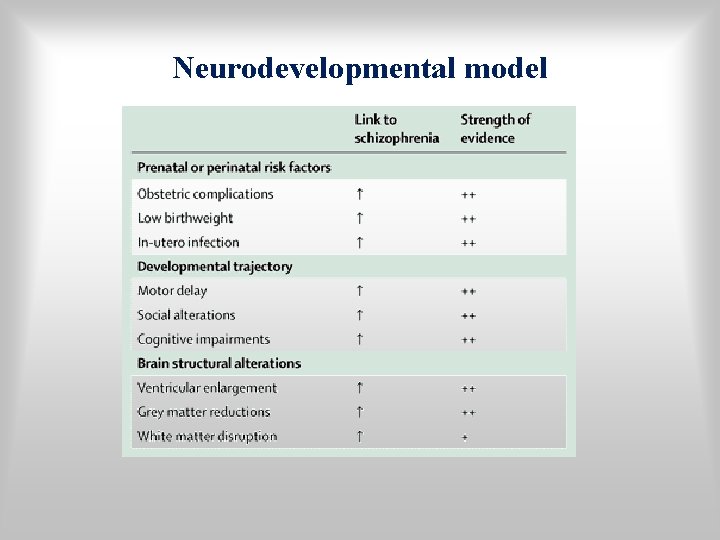
Neurodevelopmental model
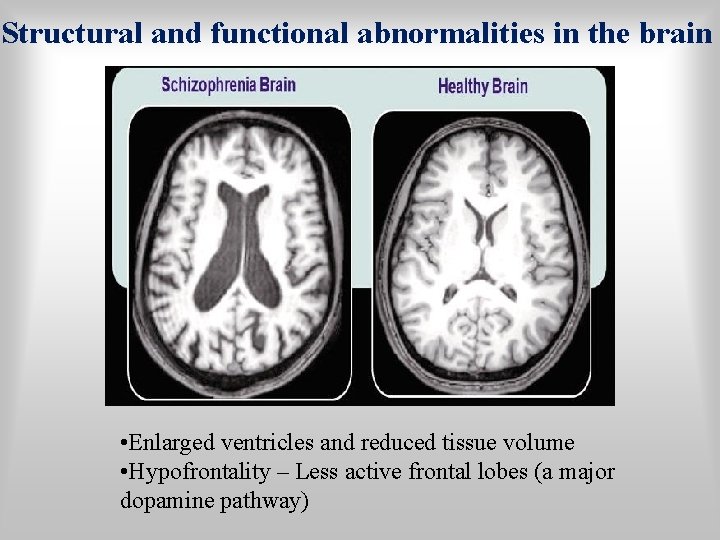
Structural and functional abnormalities in the brain • Enlarged ventricles and reduced tissue volume • Hypofrontality – Less active frontal lobes (a major dopamine pathway)
Epigenetics: Psychological and Social Influences The Role of Stress • May activate underlying vulnerability and/or increase risk of relapse Family Interactions • Families of people with schizophrenia show ineffective communication patterns • High expressed emotion in the family is associated with relapse Substance abuse (cannabis etc. . ) • May activate underlying vulnerability and/or increase risk of relapse
Causes of schizophrenia- Cognitive model • Normal brain filters among stimuli • Sch brain is unable to filter –”abberant salience”even neutral stimuli can lead to inappropriate perceptions, thughts and behaviour • Impairment in working memory (prefrontal cortex) and problem solving
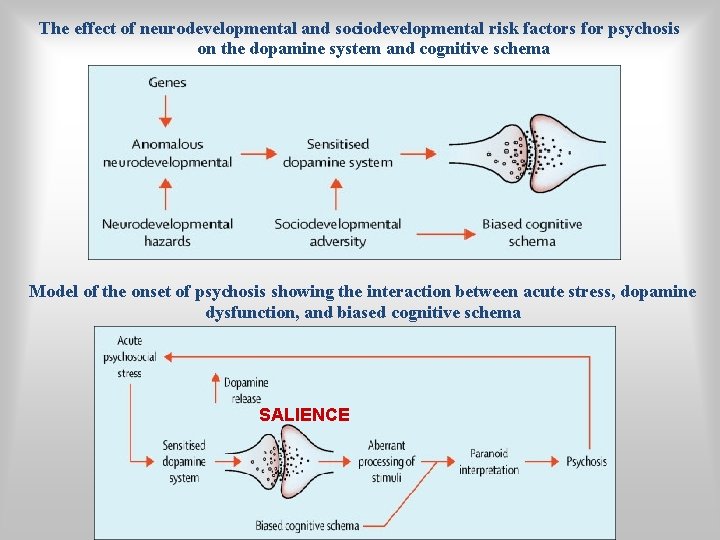
The effect of neurodevelopmental and sociodevelopmental risk factors for psychosis on the dopamine system and cognitive schema Model of the onset of psychosis showing the interaction between acute stress, dopamine dysfunction, and biased cognitive schema SALIENCE
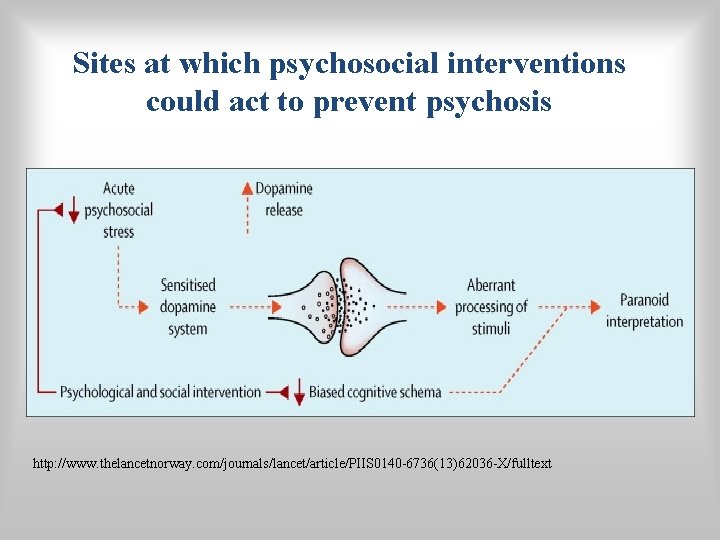
Sites at which psychosocial interventions could act to prevent psychosis http: //www. thelancetnorway. com/journals/lancet/article/PIIS 0140 -6736(13)62036 -X/fulltext
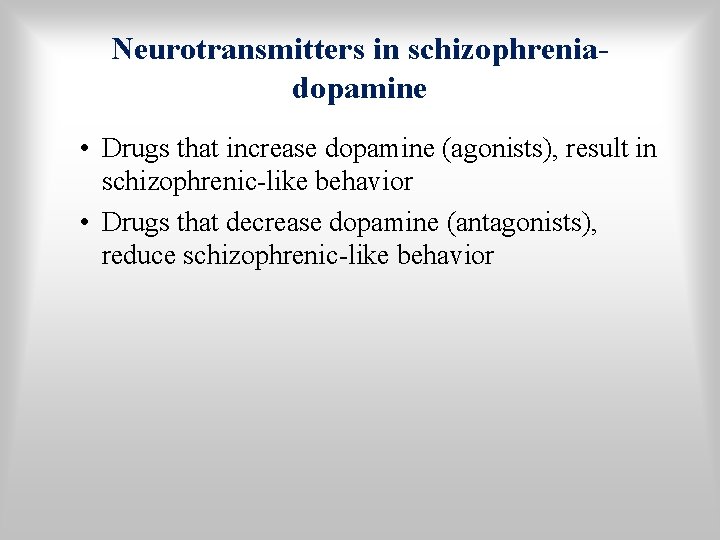
Neurotransmitters in schizophreniadopamine • Drugs that increase dopamine (agonists), result in schizophrenic-like behavior • Drugs that decrease dopamine (antagonists), reduce schizophrenic-like behavior
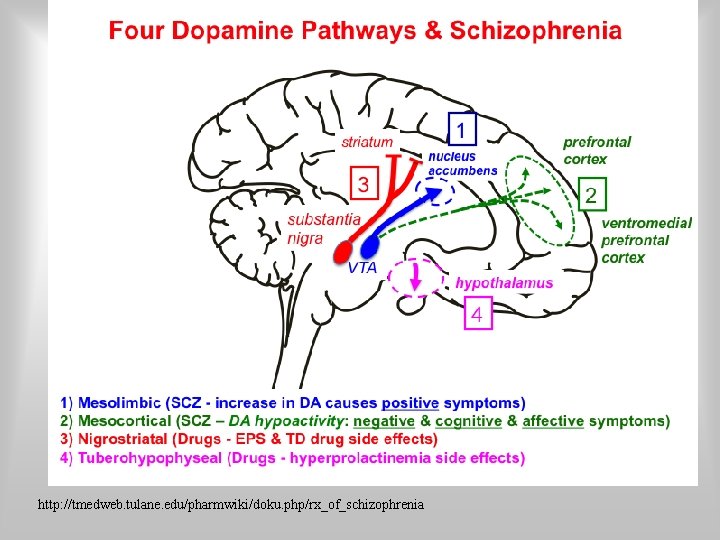
http: //tmedweb. tulane. edu/pharmwiki/doku. php/rx_of_schizophrenia
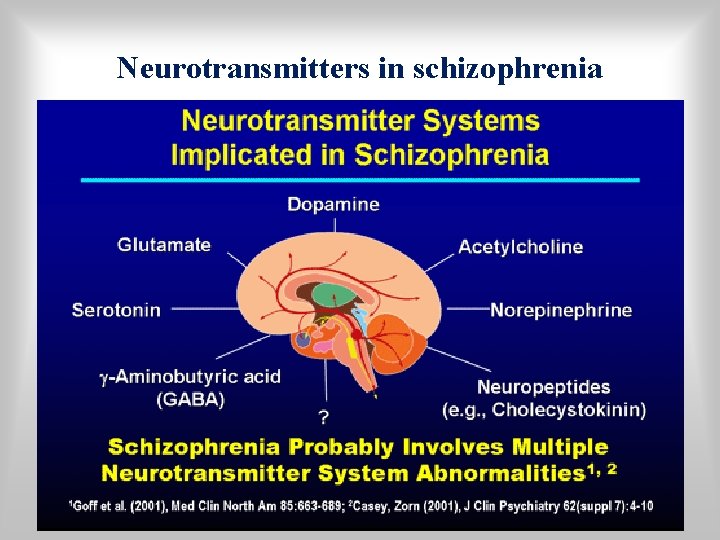
Neurotransmitters in schizophrenia
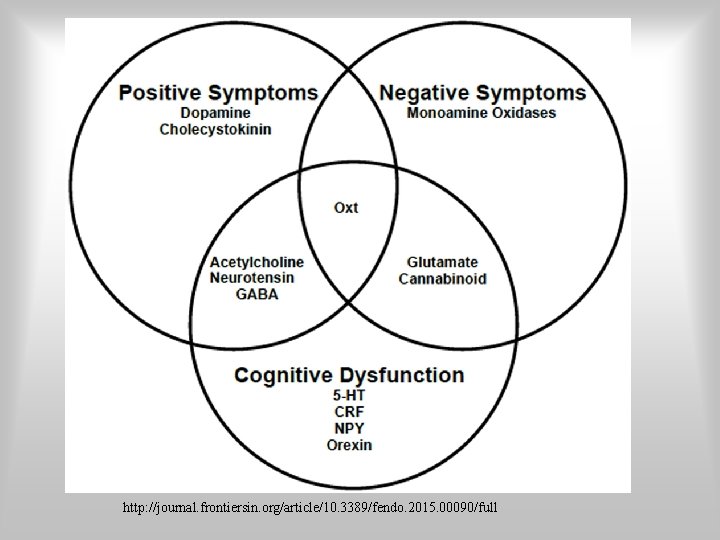
http: //journal. frontiersin. org/article/10. 3389/fendo. 2015. 00090/full
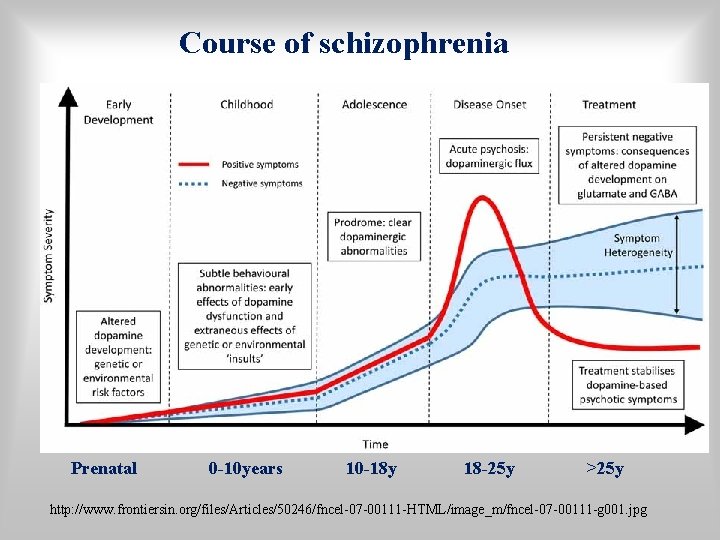
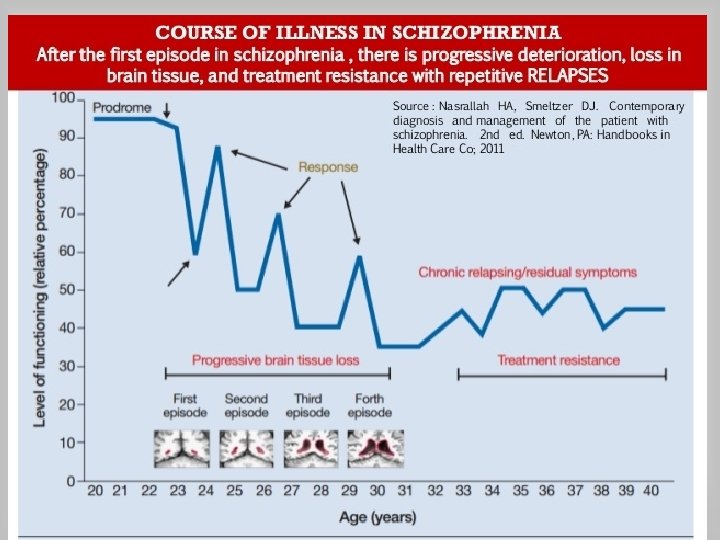
Course of schizophrenia Prenatal 0 -10 years 10 -18 y 18 -25 y >25 y http: //www. frontiersin. org/files/Articles/50246/fncel-07 -00111 -HTML/image_m/fncel-07 -00111 -g 001. jpg
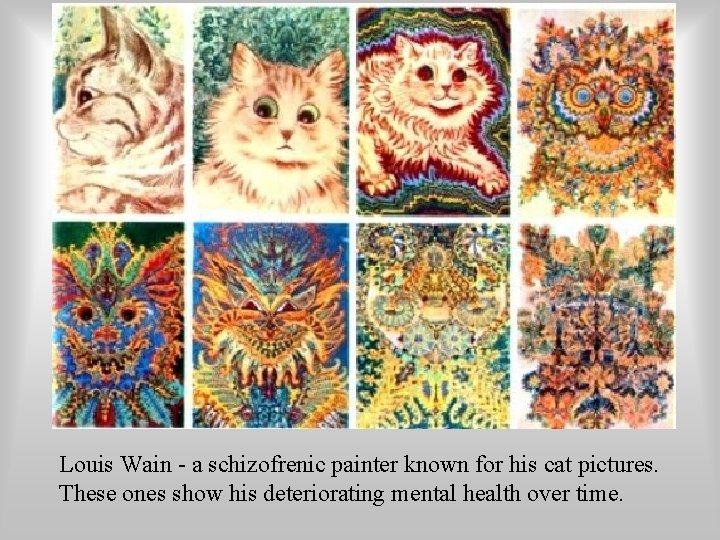
Louis Wain - a schizofrenic painter known for his cat pictures. These ones show his deteriorating mental health over time.
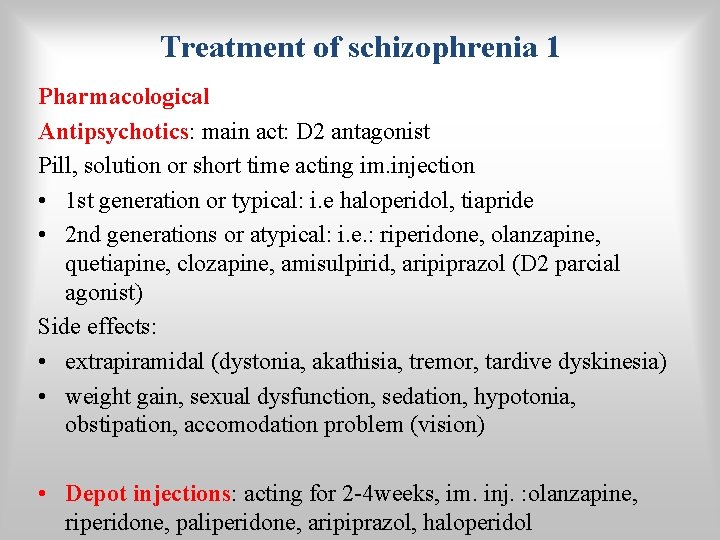
Treatment of schizophrenia 1 Pharmacological Antipsychotics: main act: D 2 antagonist Pill, solution or short time acting im. injection • 1 st generation or typical: i. e haloperidol, tiapride • 2 nd generations or atypical: i. e. : riperidone, olanzapine, quetiapine, clozapine, amisulpirid, aripiprazol (D 2 parcial agonist) Side effects: • extrapiramidal (dystonia, akathisia, tremor, tardive dyskinesia) • weight gain, sexual dysfunction, sedation, hypotonia, obstipation, accomodation problem (vision) • Depot injections: acting for 2 -4 weeks, im. inj. : olanzapine, riperidone, paliperidone, aripiprazol, haloperidol
Treatment of schizophrenia 2 Psychoeducation : patient and family!
Treatment of schizophrenia 3 Psychotherapy: • supportive care in the acute phase; • cognitive-behaviour therapy after the first epizode and early stages; • social skill training • family intervention • community psychiatry • day hospital
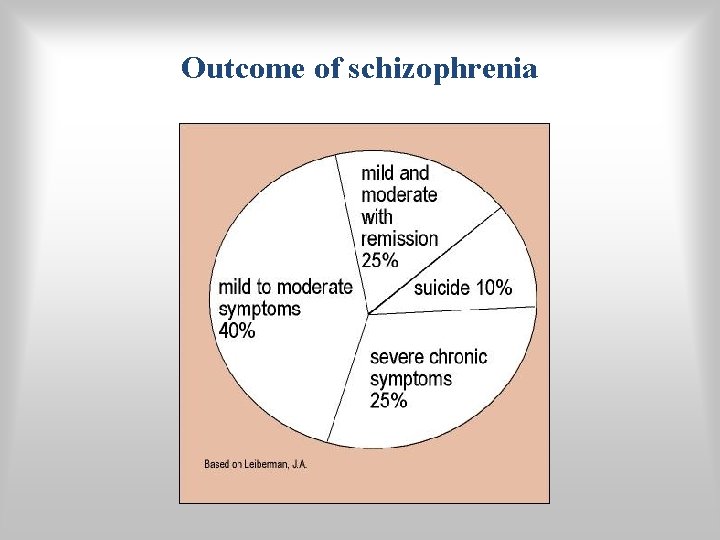
Outcome of schizophrenia
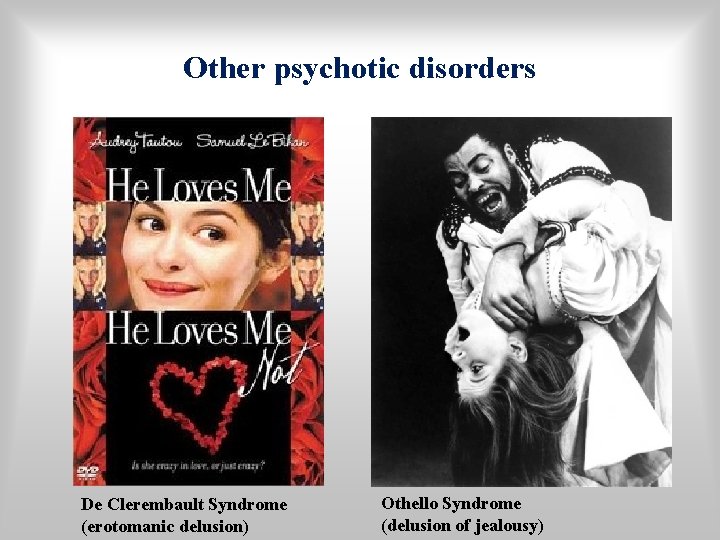
Other psychotic disorders De Clerembault Syndrome (erotomanic delusion) Othello Syndrome (delusion of jealousy)
ICD 10 categories of psychotic disorders • • Schizophrenia Schizotypal Disorder Persistent Delusional Disorders Acute and Transient Psychotic Disorders Induced Delusional Disorder • Schizoaffective Disorders • Other Non-organic Psychotic Disorders
DSM 5 categories of psychotic disorders • • Schizophrenia Brief Psychotic Disorder Schizophreniform Disorder Schizoaffective Disorder Delusional Disorder Shared Psychotic Disorder due to a General Medical Condition • Substance-induced Psychotic Disorder Not Otherwise Specified
Brief psychotic disorder • Symptoms for at least 1 day, no more than 1 month • Can have postpartum onset Schizophreniform disorder • Symptoms for at least 1 month but less than 6 months
Schizoaffective disorder • • Uninterrupted period of illness Major Depressive Episode Manic Episode or a Major Depressive Episode, Manic Episode or a Mixed episode with concurrent psychotic symptoms • In the same period, there have been 2 weeks of delusions/hallucinations without mood symptoms Bipolar type, Depressive type
Delusional disorder I. • Well-systematized, encapsulated, non-bizarre delusions • lasting for at least 1 month • involving situations that occur in real life (non bizarre) • Well-preserved personality • Absence of hallucinations • No mental deterioration • Erotomanic, grandiose, jealous, persecutory, somatic
SHARED PSYCHOTIC DISORDER „Folie à deux” • Person develops delusion based on a relationship with a psychotic individual • Uncommon • Treatment: Separation • Treat ill individual with medications/counselling
PSYCHOTIC DISORDERS DUE TO GENERAL MEDICAL CONDITION I Neurological conditions: • Stroke • Epilepsy (temproral lobe) • Huntington’s/Pick’s disease • Alzheimer’s disease • Multi-infarct dementia • Leukoencephalopathies • Multiple sclerosis (rare) • Migraine headaches (rare)
PSYCHOTIC DISORDERS DUE TO GENERAL MEDICAL CONDITION II • Ionic/endocrine imbalances • Hyperthyroidism Hypercortisolism • Cushing’s syndrome/disease • Corticosteroids/anabolic steroid use/abuse • Auto-immune disorders • Porphyria • Iron storage diseases • Copper storage disease (Wilson) • Trauma • Infections • Vitamin deficiency
OTHER MENTAL DISORDERS WHICH PRESENT WITH PSYCHOSIS • Mood disorder with psychotic features (common in severe mood disorders) • Dementia with psychotic features (delusional disorders and hallucinations are quite common)
Substance induced psychosis • • • Alcohol Barbiturates Stimulants (Amphetamines) Marijuana Hallucinogens (L S D ) Cocaine Anticholinergic Designer drugs Etc…
Thank you for your attention! Reality testing is sometimes difficult… http: //semmelweis. hu/pszichiatria/oktatas/gradualis-kepzes/englisheducation/lectures-in-downloadable-format-pdf
- Slides: 56