
Scheduling Sleep A Clear Mind A Combat Edge
Scheduling Sleep: A Clear Mind, A Combat Edge Nita Lewis Shattuck, Ph. D. Operations Research Department
Pretending to be superhuman is very dangerous. In a well-led military, the self-maintenance of the commander, the interests of his or her country, and the good of the troops are incommensurable only when the enemy succeeds in making them so. It is time to critically reexamine our love affair with stoic self-denial, starting with the service academies. If an adversary can turn our commanders into sleepwalking zombies, from a moral point of view the adversary has done nothing fundamentally different than destroying supplies of food, water, or ammunition. Such could be the outcome, despite our best efforts to counter it. But we must stop doing it to ourselves and handing the enemy a dangerous and unearned advantage. -- Jonathan Shay, 1998
Overview Normal sleep Human performance is affected by • Circadian variability • Reduced/restricted sleep Sleep in adolescents and young adults Sleep and the military culture Tips for Healthy Sleep
What is Sleep? Sleep is an ACTIVE process Probably all animals sleep (various lengths) May be the strongest, most insistent drive Still not known exactly why we sleep • Restorative function? • Adaptive function?

Examples of Total Daily Sleep in Mammals Mammal Total Daily Sleep Time (hours) Giraffe 1. 9 Roe deer 3. 09 Asiatic elephant 3. 1 Pilot whale 5. 3 Man 8. 0 Baboon 9. 4 Domestic cat 12. 5 Laboratory rat 13. 0 Lion 13. 5 Eastern chipmunk 15. 8 Little brown bat 19. 9 Source: http: //www. sleephomepages. org/sleepsyllabus
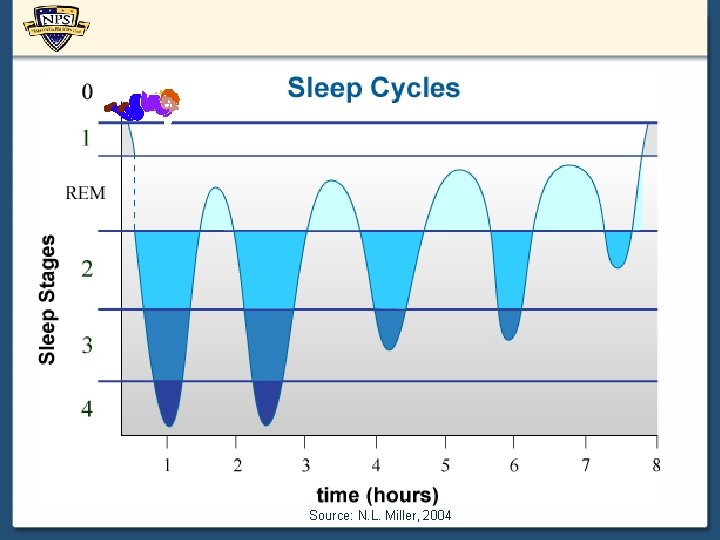
Source: N. L. Miller, 2004
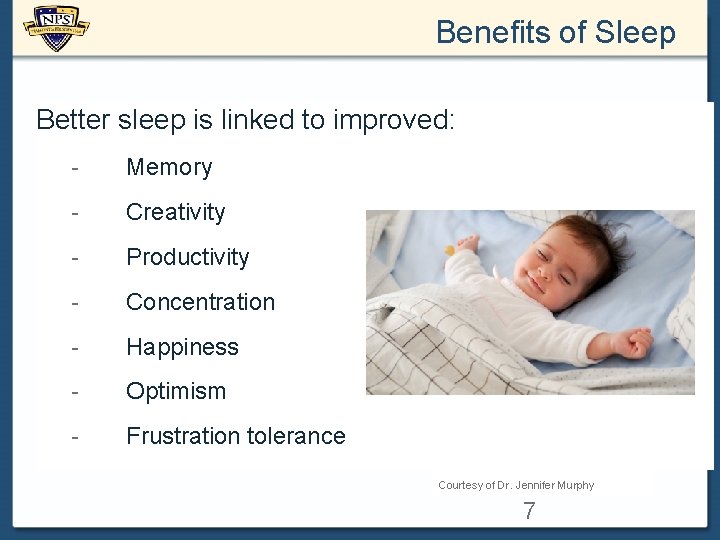
Benefits of Sleep Better sleep is linked to improved: - Memory - Creativity - Productivity - Concentration - Happiness - Optimism - Frustration tolerance Courtesy of Dr. Jennifer Murphy 7
The Straight Skinny about SLEEP Most individuals need 7 to 8 of sleep at night to function optimally for maximum alertness. The human body cannot be trained to need less sleep. Sleep loss: • reduces the ability to control one’s impulses, delay gratification, and make mature and sound moral decisions; • hinders one’s ability to accurately interpret the emotions of others and identify what one is feeling—specifically, the ability to identify angry and happy facial expressions; • lowers the ability to interact effectively with those around you and to communicate effectively; • decreases one’s ability to understand where others are coming from and reduces one’s ability to maintain good relationships. Source: DOD Human Performance Resource Center HPRC-online. org “The Impact of Sleep Loss on Total Fitness”
Scientific Findings Decision-making under uncertainty may be particularly vulnerable to sleep loss and is more pronounced with increased age. (J. Sleep Research, 2006) Moral judgment is altered by sleep deprivation. (Sleep, March 2007) Health consequences: weight gain (ghrelin and leptin levels), heart and kidney disease, immune response are all affected by sleep.

Sleep Patterns over the Life Span (Source: NL Miller, 2003)
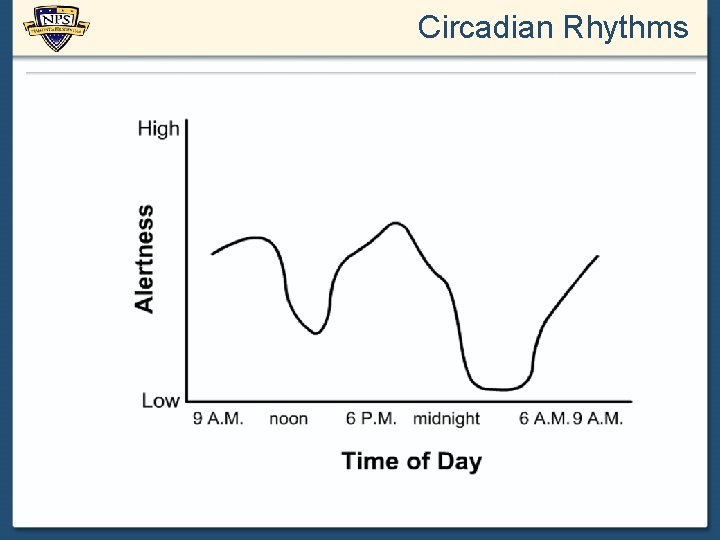
Circadian Rhythms
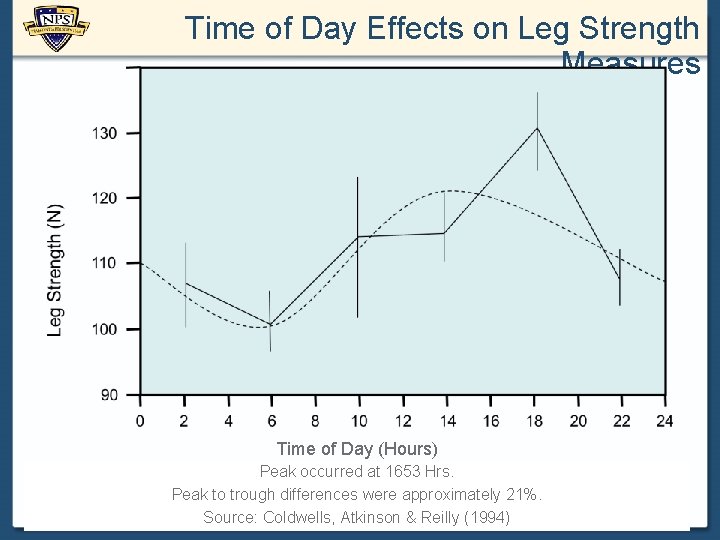
Time of Day Effects on Leg Strength Measures Time of Day (Hours) Peak occurred at 1653 Hrs. Peak to trough differences were approximately 21%. Source: Coldwells, Atkinson & Reilly (1994)

Melatonin in Adults 21: 00 Melatonin secretion starts 24: 00 midnight 02: 00 Deepest sleep 04: 00 Lowest body temp 19: 00 Highest body temp Highest BP 18: 30 18: 00 06: 45 Sharpest BP rise 17: 00 Greatest CV efficiency & muscle strength 07: 30 Melatonin secretion stops 15: 30 Fastest reaction time 14: 30 Best coordination 12: 00 noon 10: 00 Highest alertness
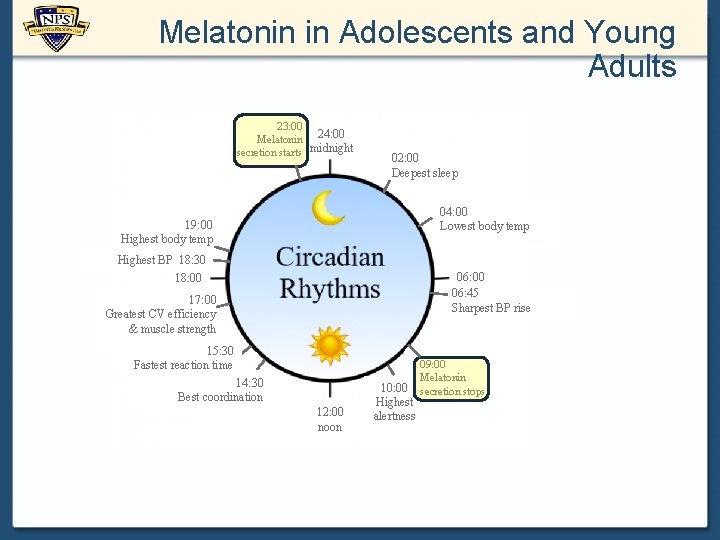
Melatonin in Adolescents and Young Adults 23: 00 24: 00 Melatonin secretion starts midnight 02: 00 Deepest sleep 04: 00 Lowest body temp 19: 00 Highest body temp Highest BP 18: 30 18: 00 06: 45 Sharpest BP rise 17: 00 Greatest CV efficiency & muscle strength 15: 30 Fastest reaction time 14: 30 Best coordination 12: 00 noon 10: 00 Highest alertness 09: 00 Melatonin secretion stops
What happens when I go without sleep?
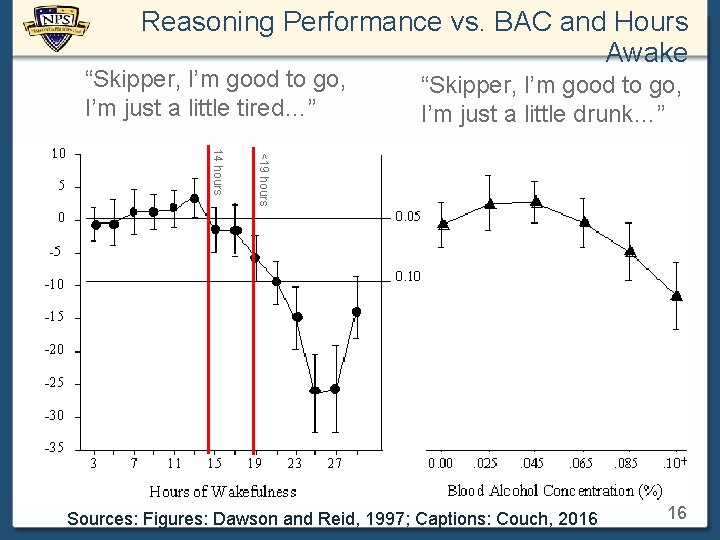
Reasoning Performance vs. BAC and Hours Awake “Skipper, I’m good to go, I’m just a little tired…” “Skipper, I’m good to go, I’m just a little drunk…” <19 hours 14 hours Sources: Figures: Dawson and Reid, 1997; Captions: Couch, 2016 16
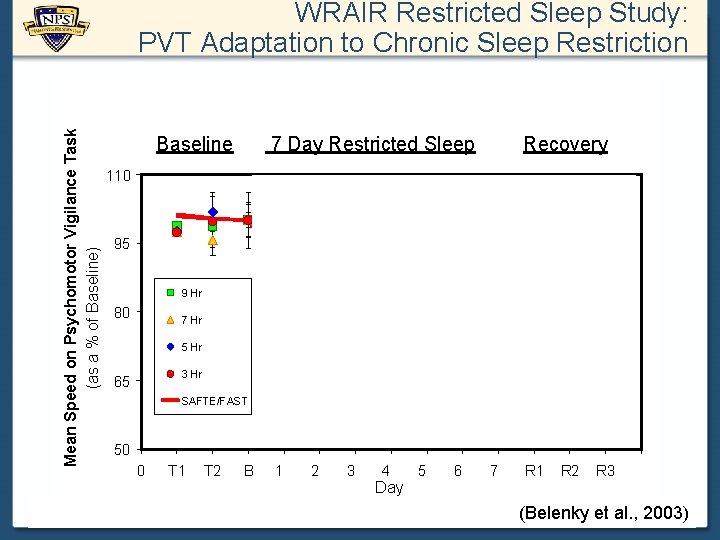
Mean Speed on Psychomotor Vigilance Task (as a % of Baseline) WRAIR Restricted Sleep Study: PVT Adaptation to Chronic Sleep Restriction Baseline 7 Day Restricted Sleep Recovery 110 95 9 Hr 80 7 Hr 5 Hr 3 Hr 65 SAFTE/FAST R 2 = 0. 94 50 0 T 1 T 2 B 1 2 3 4 Day 5 6 7 R 1 R 2 R 3 (Belenky et al. , 2003)
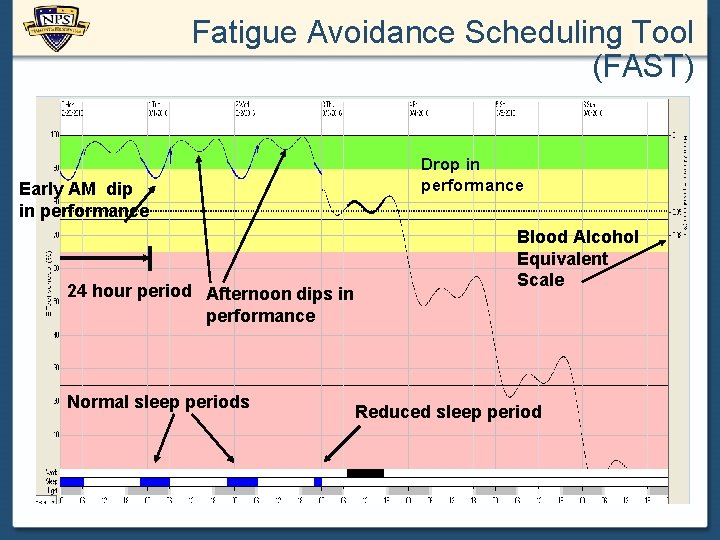
Fatigue Avoidance Scheduling Tool (FAST) Drop in performance Early AM dip in performance 24 hour period Afternoon dips in performance Normal sleep periods Blood Alcohol Equivalent Scale Reduced sleep period
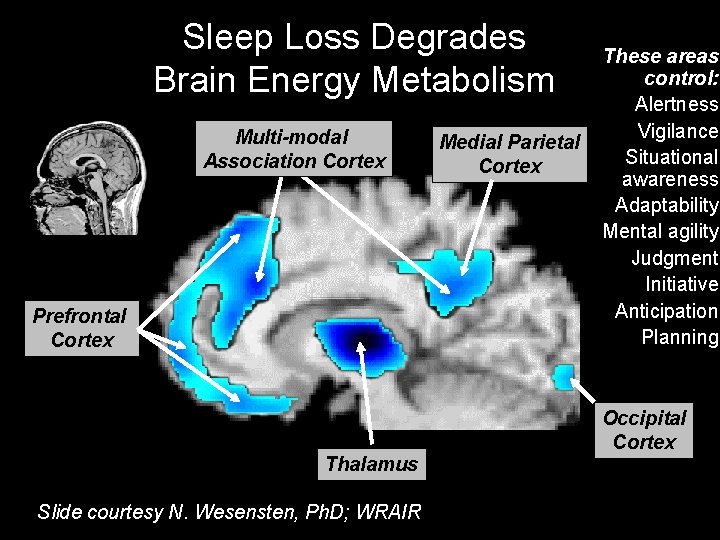
Sleep Loss Degrades Brain Energy Metabolism Multi-modal Association Cortex Prefrontal Cortex Thalamus Slide courtesy N. Wesensten, Ph. D; WRAIR Medial Parietal Cortex 19 These areas control: Alertness Vigilance Situational awareness Adaptability Mental agility Judgment Initiative Anticipation Planning Occipital Cortex
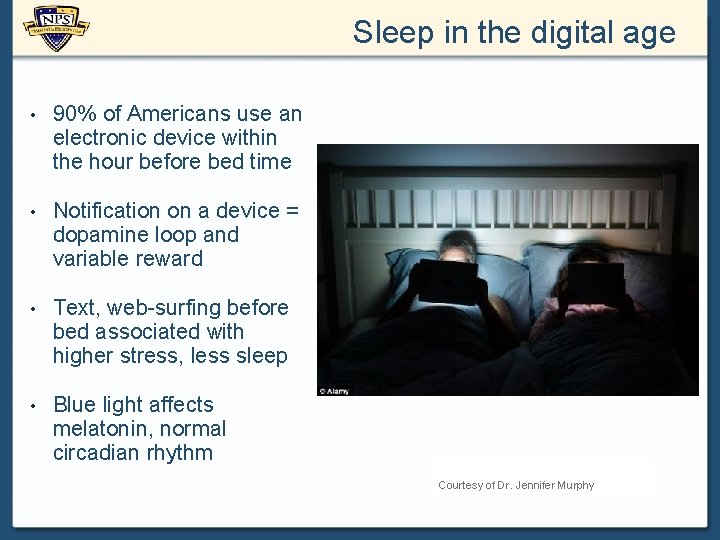
Sleep in the digital age • 90% of Americans use an electronic device within the hour before bed time • Notification on a device = dopamine loop and variable reward • Text, web-surfing before bed associated with higher stress, less sleep • Blue light affects melatonin, normal circadian rhythm Courtesy of Dr. Jennifer Murphy
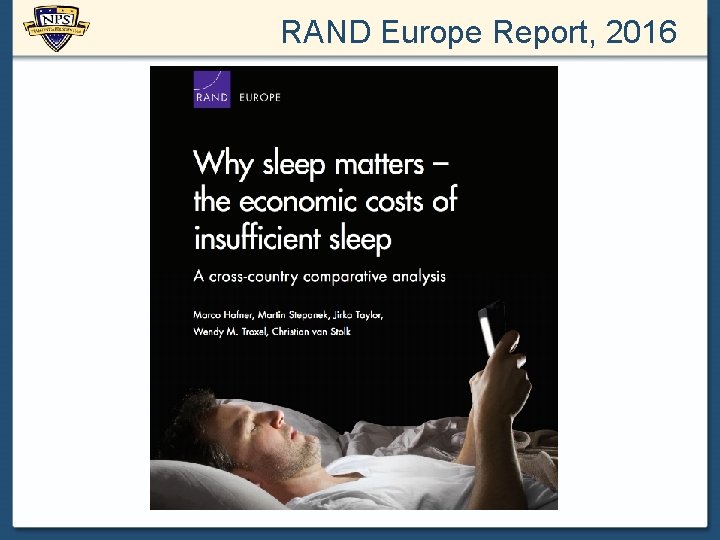
RAND Europe Report, 2016
RAND Europe Report, 2016 Key Findings The US sustains by far the highest economic losses (up to $411 billion a year) due to the size of its economy, followed by Japan (up to $138 billion a year). On an annual basis, the US loses an equivalent of about 1. 23 million working days due to insufficient sleep. Sleep deprivation is linked to a higher mortality risk.
Individual Costs of Insufficient Sleep An individual who sleeps less than six hours per night on average has a 13% higher mortality risk than a person sleeping between seven and nine hours. For “in-betweeners” who get six to seven hours of sleep, the mortality risk is still 7% higher for all causes of death, including car accidents, strokes, cancer and cardiovascular disease. Source: RAND Europe report 2016 http: //www. rand. org/pubs/research_reports/RR 1791. html
Epworth Sleepiness Scale
Two Questions Have you ever been a shiftworker? (that is, worked hours outside 8 to 5 routine) How many years did you do shiftwork? 25
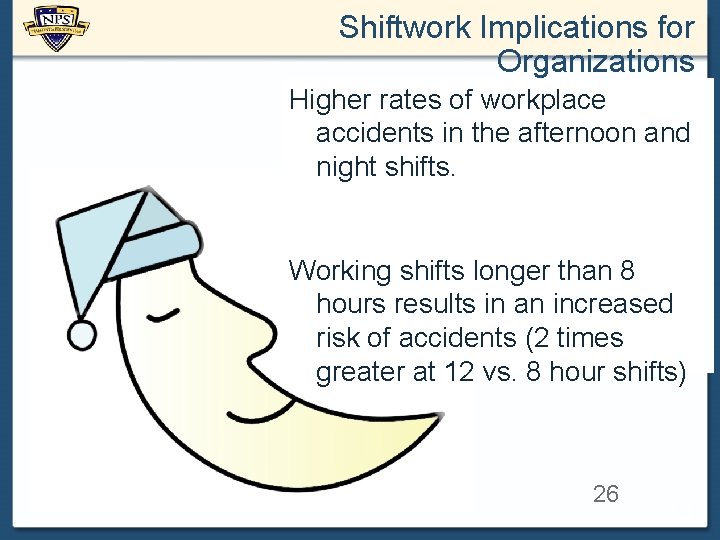
Shiftwork Implications for Organizations Higher rates of workplace accidents in the afternoon and night shifts. Working shifts longer than 8 hours results in an increased risk of accidents (2 times greater at 12 vs. 8 hour shifts) 26 23
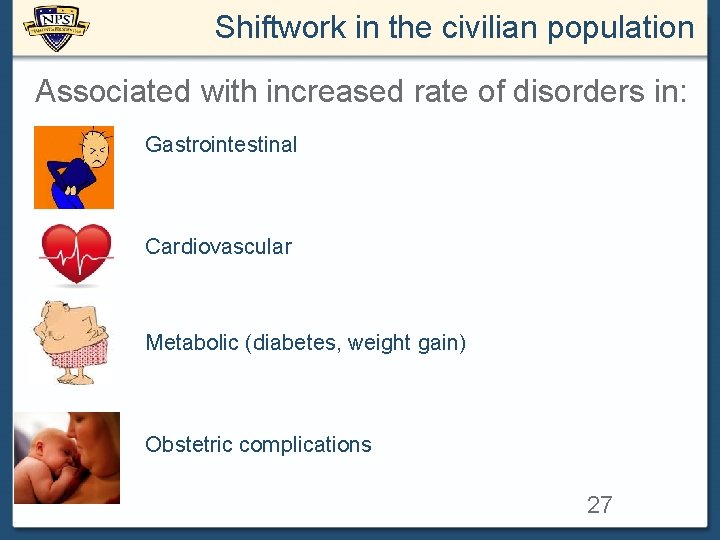
Shiftwork in the civilian population Associated with increased rate of disorders in: Gastrointestinal Cardiovascular Metabolic (diabetes, weight gain) Obstetric complications 27
Shiftwork Findings Linked to higher rates of colon and breast cancer in women and prostate cancer in men – suspected carcinogen (World Health Organization, 2007) Shiftworkers (especially night shiftworkers) experience greater fatigue than day workers. Prolonged exposure to shiftwork degrades physical & psychological well-being (Tucker & Folkard, 2012). Critical decision-making is impaired following night shiftwork and prolonged wakefulness (Horne, 2012). 28 23
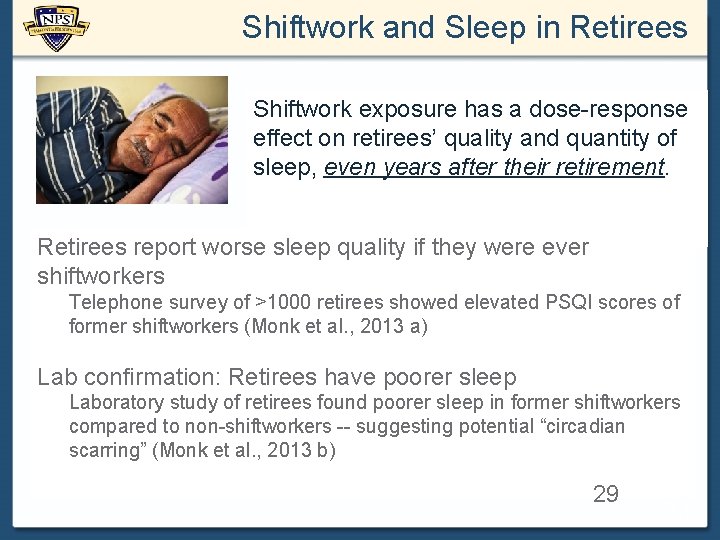
Shiftwork and Sleep in Retirees Shiftwork exposure has a dose-response effect on retirees’ quality and quantity of sleep, even years after their retirement. Retirees report worse sleep quality if they were ever shiftworkers Telephone survey of >1000 retirees showed elevated PSQI scores of former shiftworkers (Monk et al. , 2013 a) Lab confirmation: Retirees have poorer sleep Laboratory study of retirees found poorer sleep in former shiftworkers compared to non-shiftworkers -- suggesting potential “circadian scarring” (Monk et al. , 2013 b) 29 24
The Big Gray Elephant “Fatigue is so prevalent and such a part of our culture that we scarcely see or recognize it. It’s the big gray elephant we muscle out of the cockpit when we fly, step around when we enter the bridge, and push aside when we peer into the periscope. ” CAPT Nick Davenport Command Flight Surgeon Naval Safety Center
Sleep and the Warfighter US Army Surgeon General’s Mental Health Advisory Team (MHAT IV-VII) found: Number one concern among deployed Warfighters continues to be not getting enough sleep (2006 -2009). 2010: Significant increase in percentage of Marines who report high or very high concern about not getting enough sleep (2010 vs 2006 -7) Warfighters who have experienced combat have more trouble sleeping—both during and after deployment— than those who have not deployed (Seelig et al. , 2010) Source: Office of the Surgeon General, US Army Medical Command; Office of the Command Surgeon, HQ USCENTCOM; and Office of the Command Surgeon US Forces Afghanistan MHAT Reports IV, V, VII 2006 -2010; Seelig AD, Jacobson IG, Smith B, et al. 2010.
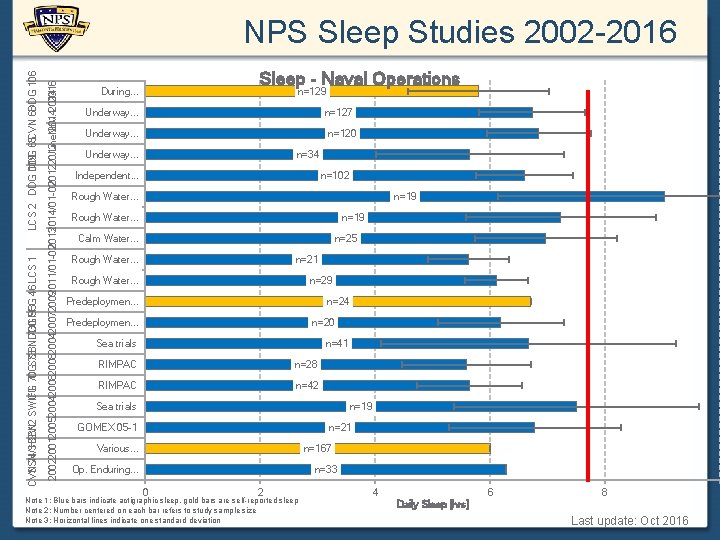
June. Nov. 2014 2016 200220012005200420082004200720092011/01 -0220132014/01 -022013 CVN SSN/SSBN 74 HSV 2 SWIFT CG 70 CGSSBN 73 DDG 730 FFG 93 46 LCS 1 LCS 2 DDG 109 65 CVN 68 DDG 106 NPS Sleep Studies 2002 -2016 Sleep - Naval Operations During. . . n=129 n=127 Underway. . . n=120 Underway. . . n=34 Independent. . . n=102 Rough Water. . . n=19 Calm Water. . . n=25 Rough Water. . . n=21 Rough Water. . . n=29 Predeploymen. . . n=24 Predeploymen. . . n=20 Sea trials n=41 RIMPAC n=28 RIMPAC n=42 Sea trials n=19 GOMEX 05 -1 n=21 Various. . . n=167 Op. Enduring. . . n=33 0 2 Note 1: Blue bars indicate actigraphic sleep, gold bars are self-reported sleep Note 2: Number centered on each bar refers to study sample size Note 3: Horizontal lines indicate one standard deviation 4 6 8 Daily Sleep [hrs] Last update: Oct 2016 10
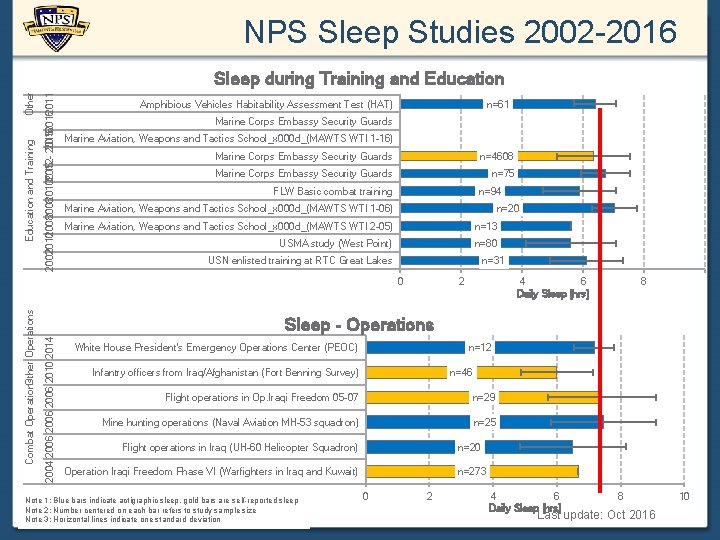
NPS Sleep Studies 2002 -2016 200220102008201022012015 20162011 Education and Training Other Sleep during Training and Education n=61 Amphibious Vehicles Habitability Assessment Test (HAT) Marine Corps Embassy Security Guards Marine Aviation, Weapons and Tactics School_x 000 d_(MAWTS WTI 1 -16) Marine Corps Embassy Security Guards n=4608 Marine Corps Embassy Security Guards n=75 FLW Basic combat training n=94 n=20 Marine Aviation, Weapons and Tactics School_x 000 d_(MAWTS WTI 1 -06) Marine Aviation, Weapons and Tactics School_x 000 d_(MAWTS WTI 2 -05) n=13 USMA study (West Point) n=80 USN enlisted training at RTC Great Lakes n=31 2 4 6 Daily Sleep [hrs] 8 10 Sleep - Operations 2004 2006 2010 2014 Combat Operations Other Operations 0 n=12 White House President's Emergency Operations Center (PEOC) Infantry officers from Iraq/Afghanistan (Fort Benning Survey) n=46 Flight operations in Op. Iraqi Freedom 05 -07 n=29 Mine hunting operations (Naval Aviation MH-53 squadron) n=25 Flight operations in Iraq (UH-60 Helicopter Squadron) n=20 Operation Iraqi Freedom Phase VI (Warfighters in Iraq and Kuwait) Note 1: Blue bars indicate actigraphic sleep, gold bars are self-reported sleep Note 2: Number centered on each bar refers to study sample size Note 3: Horizontal lines indicate one standard deviation n=273 0 2 4 6 Daily Sleep [hrs] 8 Last update: Oct 2016 10
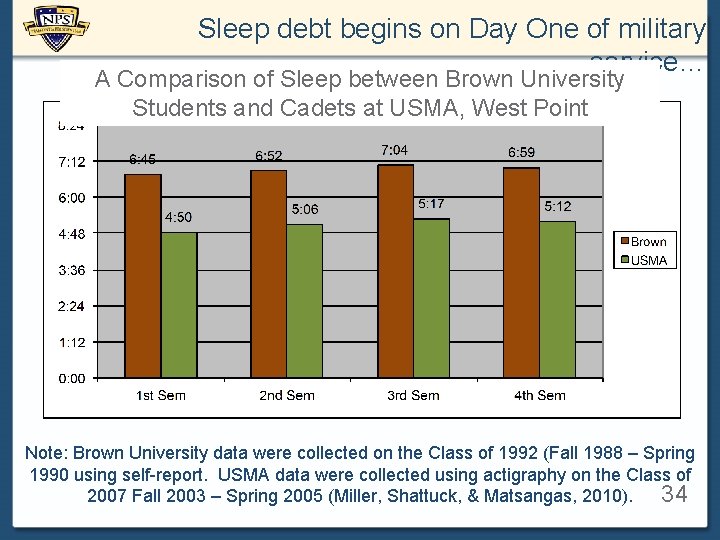
Sleep debt begins on Day One of military service… A Comparison of Sleep between Brown University Students and Cadets at USMA, West Point Note: Brown University data were collected on the Class of 1992 (Fall 1988 – Spring 1990 using self-report. USMA data were collected using actigraphy on the Class of 34 2007 Fall 2003 – Spring 2005 (Miller, Shattuck, & Matsangas, 2010).
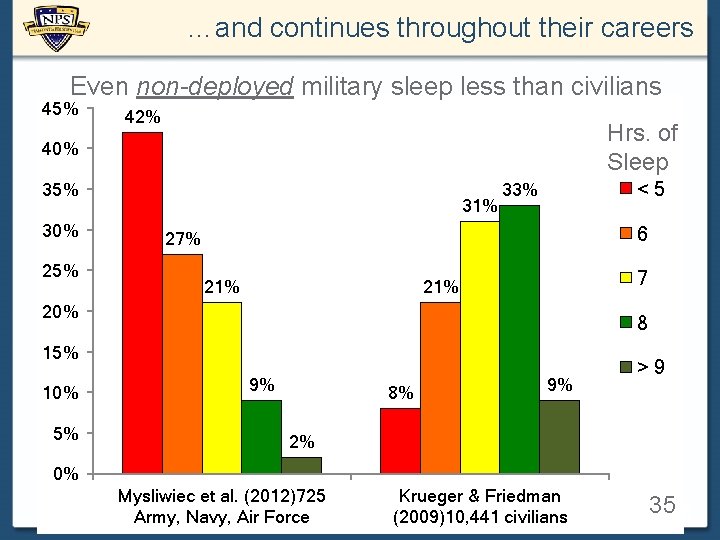
…and continues throughout their careers Even non-deployed military sleep less than civilians 45% 42% Hrs. of Sleep 40% 35% 30% 25% 31% <5 33% 6 27% 21% 7 21% 20% 8 15% 10% 5% 9% 8% 9% >9 2% 0% Mysliwiec et al. (2012)725 Army, Navy, Air Force Krueger & Friedman (2009)10, 441 civilians 3518
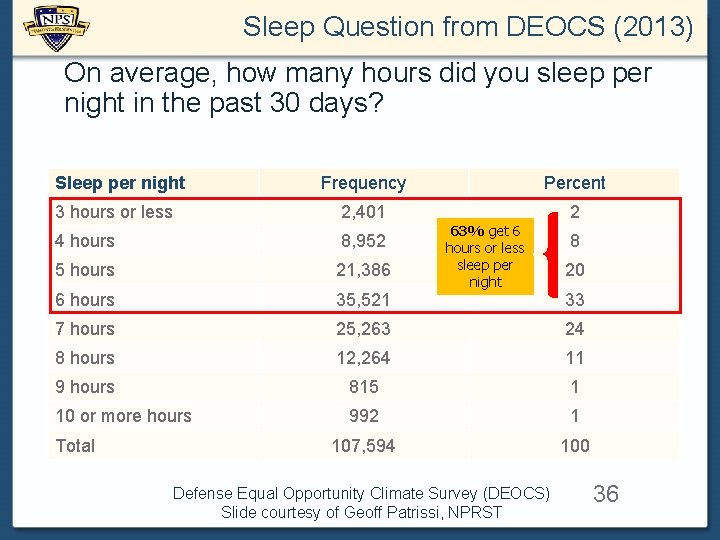
Sleep Question from DEOCS (2013) On average, how many hours did you sleep per night in the past 30 days? Sleep per night Frequency Percent 3 hours or less 2, 401 2 4 hours 8, 952 5 hours 21, 386 6 hours 35, 521 7 hours 25, 263 24 8 hours 12, 264 11 9 hours 815 1 10 or more hours 992 1 107, 594 100 Total 63% get 6 hours or less sleep per night Defense Equal Opportunity Climate Survey (DEOCS) Slide courtesy of Geoff Patrissi, NPRST 8 20 33 36
Scientific Studies in Military Training and Education
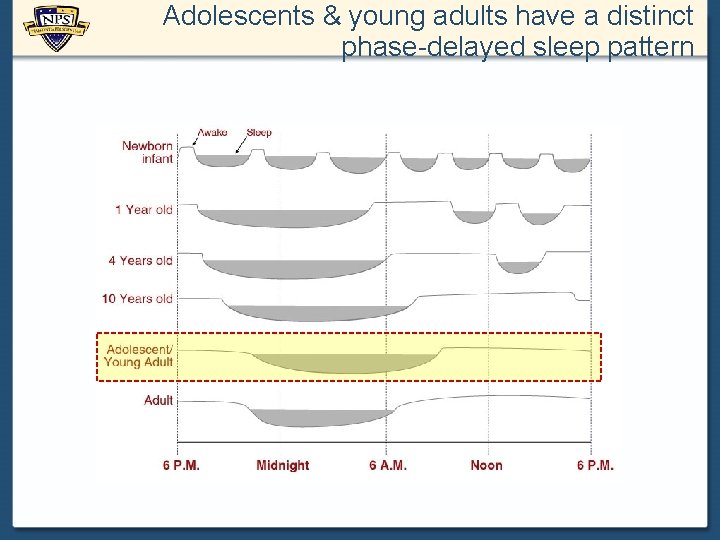
Adolescents & young adults have a distinct phase-delayed sleep pattern
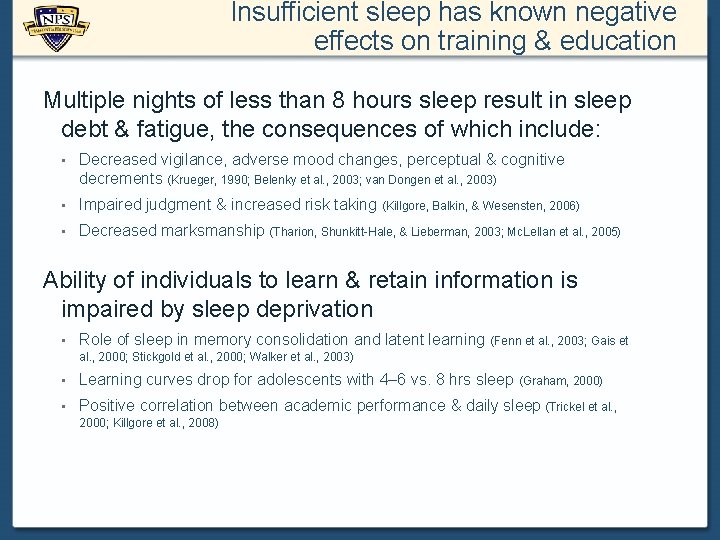
Insufficient sleep has known negative effects on training & education Multiple nights of less than 8 hours sleep result in sleep debt & fatigue, the consequences of which include: • Decreased vigilance, adverse mood changes, perceptual & cognitive decrements (Krueger, 1990; Belenky et al. , 2003; van Dongen et al. , 2003) • Impaired judgment & increased risk taking (Killgore, Balkin, & Wesensten, 2006) • Decreased marksmanship (Tharion, Shunkitt-Hale, & Lieberman, 2003; Mc. Lellan et al. , 2005) Ability of individuals to learn & retain information is impaired by sleep deprivation • Role of sleep in memory consolidation and latent learning (Fenn et al. , 2003; Gais et al. , 2000; Stickgold et al. , 2000; Walker et al. , 2003) • Learning curves drop for adolescents with 4– 6 vs. 8 hrs sleep (Graham, 2000) • Positive correlation between academic performance & daily sleep (Trickel et al. , 2000; Killgore et al. , 2008)
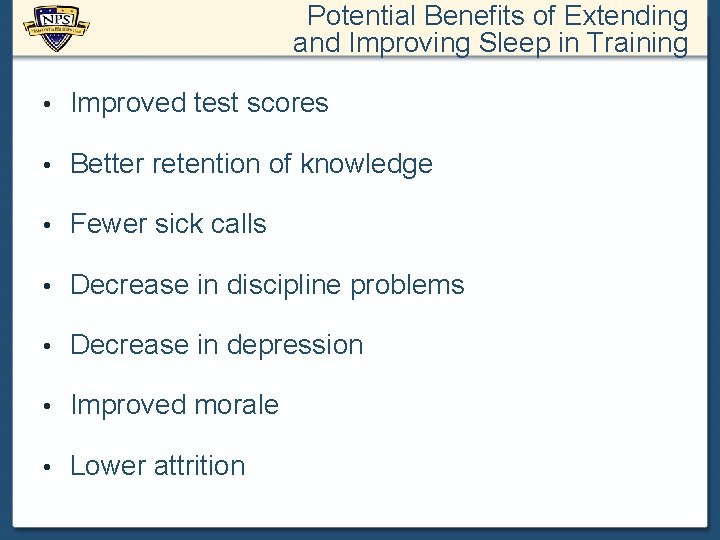
Potential Benefits of Extending and Improving Sleep in Training • Improved test scores • Better retention of knowledge • Fewer sick calls • Decrease in discipline problems • Decrease in depression • Improved morale • Lower attrition
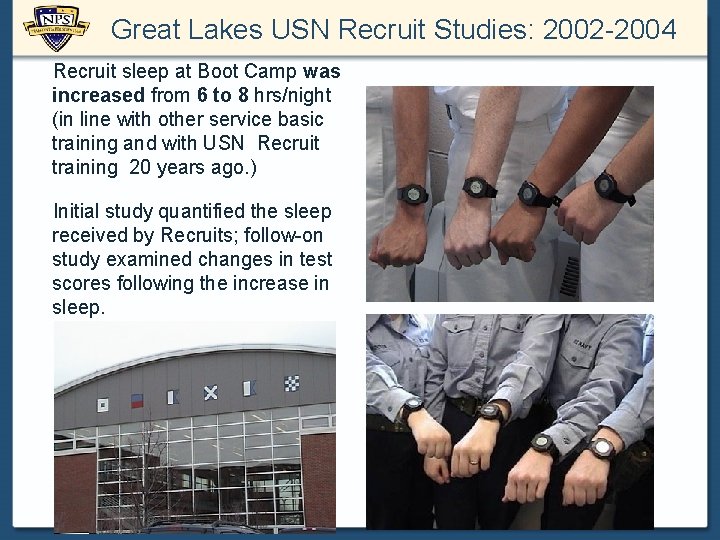
Great Lakes USN Recruit Studies: 2002 -2004 Recruit sleep at Boot Camp was increased from 6 to 8 hrs/night (in line with other service basic training and with USN Recruit training 20 years ago. ) Initial study quantified the sleep received by Recruits; follow-on study examined changes in test scores following the increase in sleep.
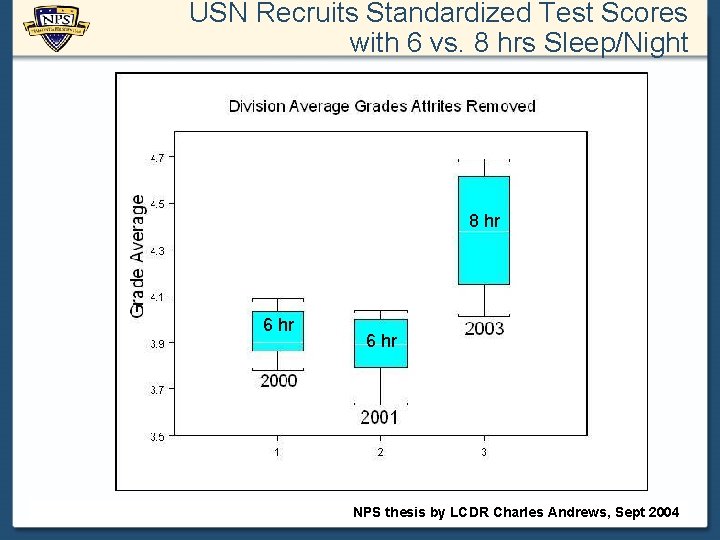
USN Recruits Standardized Test Scores with 6 vs. 8 hrs Sleep/Night 8 hr 6 hr NPS thesis by LCDR Charles Andrews, Sept 2004
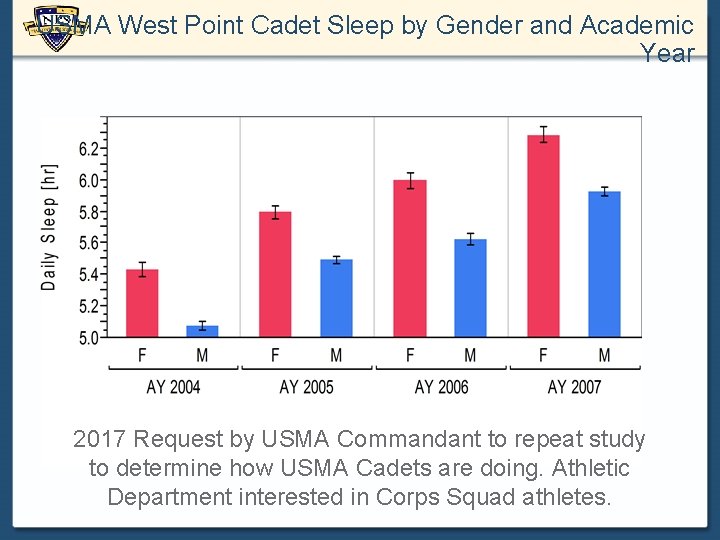
USMA West Point Cadet Sleep by Gender and Academic Year 2017 Request by USMA Commandant to repeat study to determine how USMA Cadets are doing. Athletic Department interested in Corps Squad athletes.
FT Leonard Wood US Army Basic Combat Training Study Bottom Line Up Front: Accommodating adolescent sleep patterns makes a difference in Soldier health and performance in the training environment.
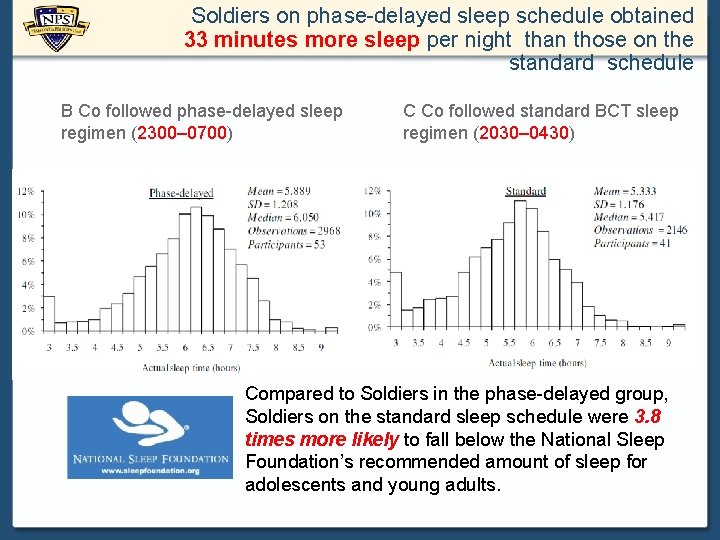
Soldiers on phase-delayed sleep schedule obtained 33 minutes more sleep per night than those on the standard schedule B Co followed phase-delayed sleep regimen (2300– 0700) C Co followed standard BCT sleep regimen (2030– 0430) Compared to Soldiers in the phase-delayed group, Soldiers on the standard sleep schedule were 3. 8 times more likely to fall below the National Sleep Foundation’s recommended amount of sleep for adolescents and young adults.
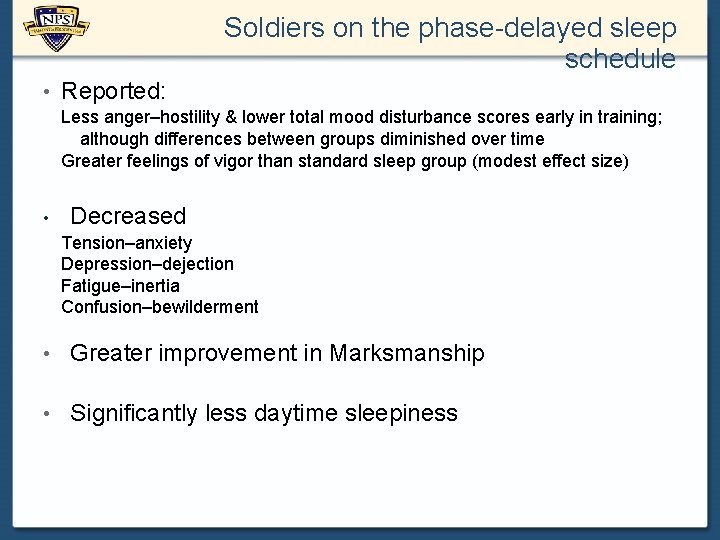
Soldiers on the phase-delayed sleep schedule • Reported: Less anger–hostility & lower total mood disturbance scores early in training; although differences between groups diminished over time Greater feelings of vigor than standard sleep group (modest effect size) • Decreased Tension–anxiety Depression–dejection Fatigue–inertia Confusion–bewilderment • Greater improvement in Marksmanship • Significantly less daytime sleepiness
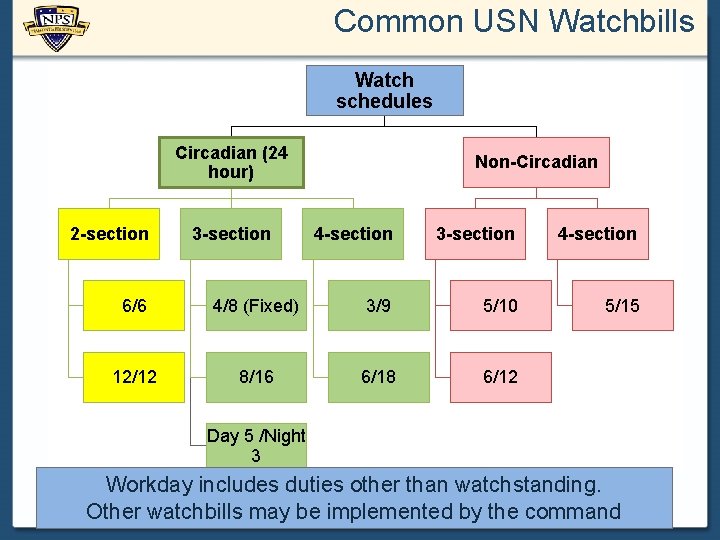
Common USN Watchbills Watch schedules Circadian (24 hour) 2 -section 3 -section Non-Circadian 4 -section 3 -section 4 -section 5/15 6/6 4/8 (Fixed) 3/9 5/10 12/12 8/16 6/18 6/12 Day 5 /Night 3 Workday includes duties other than watchstanding. Other watchbills may be implemented by the command
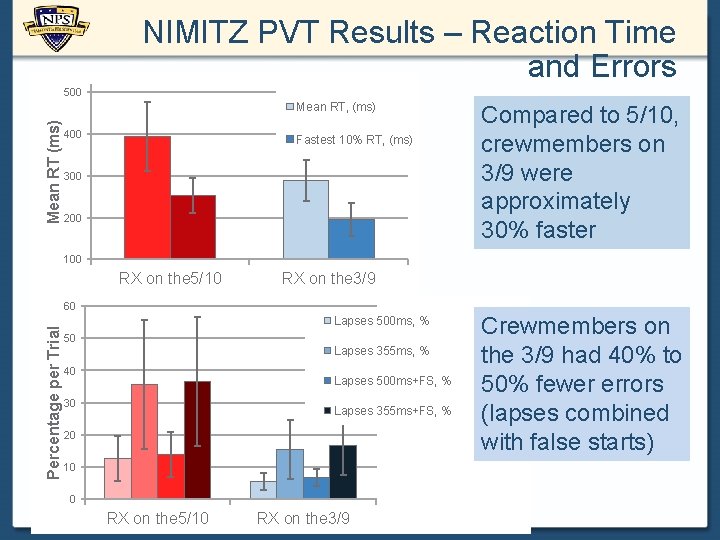
NIMITZ PVT Results – Reaction Time and Errors 500 Mean RT (ms) Mean RT, (ms) 400 Fastest 10% RT, (ms) 300 200 Compared to 5/10, crewmembers on 3/9 were approximately 30% faster 100 RX on the 5/10 RX on the 3/9 Percentage per Trial 60 Lapses 500 ms, % 50 Lapses 355 ms, % 40 Lapses 500 ms+FS, % 30 Lapses 355 ms+FS, % 20 10 0 RX on the 5/10 RX on the 3/9 Crewmembers on the 3/9 had 40% to 50% fewer errors (lapses combined with false starts)
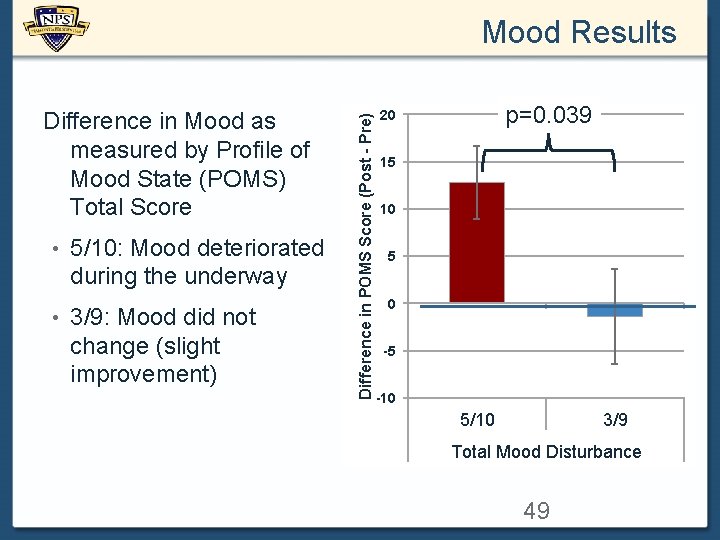
Difference in Mood as measured by Profile of Mood State (POMS) Total Score • 5/10: Mood deteriorated during the underway • 3/9: Mood did not change (slight improvement) Difference in POMS Score (Post - Pre) Mood Results p=0. 039 20 15 10 5 0 -5 -10 5/10 3/9 Total Mood Disturbance 49
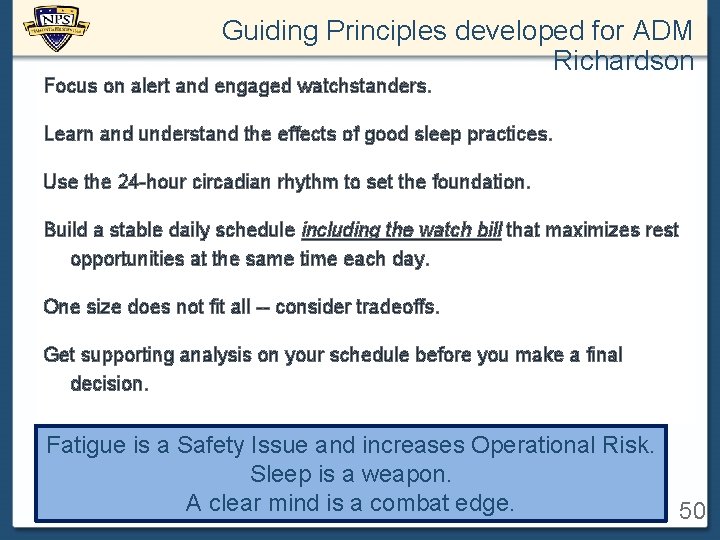
Guiding Principles developed for ADM Richardson Focus on alert and engaged watchstanders. Learn and understand the effects of good sleep practices. Use the 24 -hour circadian rhythm to set the foundation. Build a stable daily schedule including the watch bill that maximizes rest opportunities at the same time each day. One size does not fit all -- consider tradeoffs. Get supporting analysis on your schedule before you make a final decision. Fatigue is a Safety Issue and increases Operational Risk. Sleep is a weapon. A clear mind is a combat edge. 50
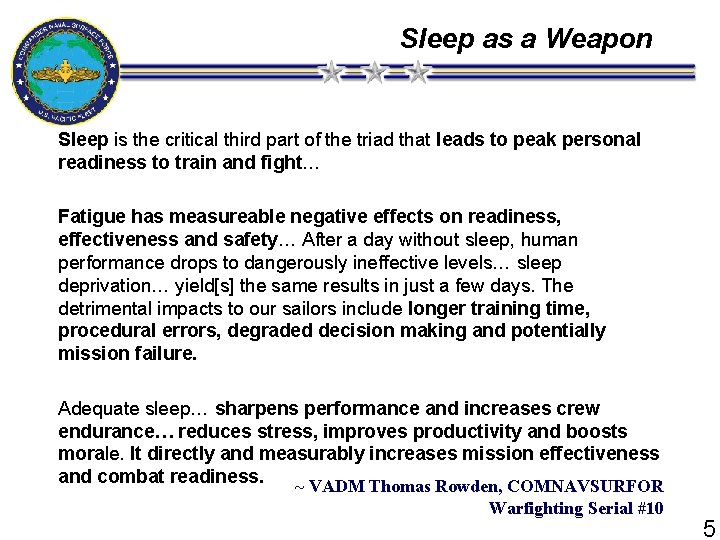
Sleep as a Weapon Sleep is the critical third part of the triad that leads to peak personal readiness to train and fight… Fatigue has measureable negative effects on readiness, effectiveness and safety… After a day without sleep, human performance drops to dangerously ineffective levels… sleep deprivation… yield[s] the same results in just a few days. The detrimental impacts to our sailors include longer training time, procedural errors, degraded decision making and potentially mission failure. Adequate sleep… sharpens performance and increases crew endurance… reduces stress, improves productivity and boosts morale. It directly and measurably increases mission effectiveness and combat readiness. ~ VADM Thomas Rowden, COMNAVSURFOR Warfighting Serial #10 5
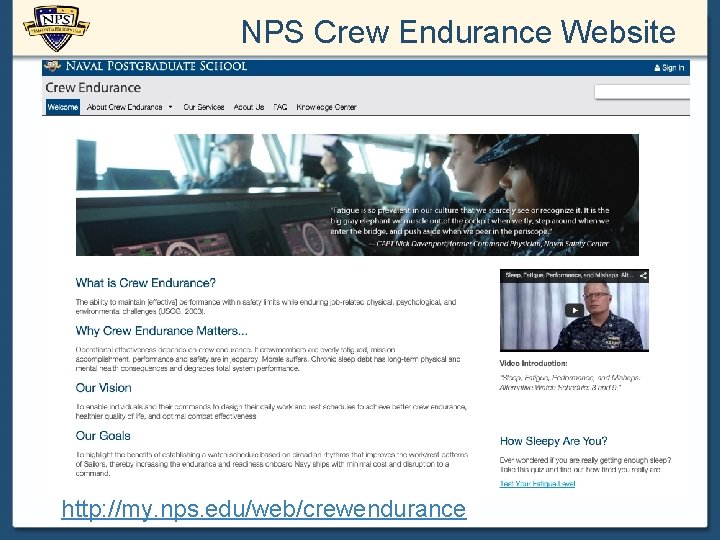
NPS Crew Endurance Website http: //my. nps. edu/web/crewendurance
RAND Europe Report, 2016 Recommendations To improve sleep outcomes, individuals should: Set consistent wake-up times; limit the use of electronic items before bedtime; and exercise. Employers should: Recognise the importance of sleep and the employer's role in its promotion; design and build brighter workspaces; combat workplace psychosocial risks; and discourage the extended use of electronic devices. Public authorities should: Support health professionals in providing sleep-related help; encourage employers to pay attention to sleep issues; and introduce later school starting times.
Questions? Contact information: Nita Lewis Shattuck, Ph. D. (831)656 -2281 nlshattu@nps. edu NPS Crew Endurance Resource Website https: //my. nps. edu/web/crewendurance
Sleep Resources Some Helpful Sleep-Related Apps: CBT-I Coach F-lux (for blocking blue light from computer screens) Crew. Alert Lite Crew Endurance Resources: http: //my. nps. edu/web/crewendurance Websites: The National Sleep Foundation is a nonprofit organization in the USA whose stated objectives are to improve public health and safety by achieving understanding of sleep and sleep disorders, and to support sleeprelated education, research, and advocacy. https: //sleepfoundation. org/ The Centers for Disease Control's website has training for emergency responders to reduce the risks associated with long work hours. http: //www. cdc. gov/niosh/emres/longhourstraining/ The website for the Naval Center for Operational Stress Control is a great resource for managing stress and fatigue levels. http: //www. med. navy. mil/sites/nmcsd/nccosc/service. Members. V 2/Pages/default. aspx The Naval Safety Center offers some great resources on sleep and safety. They have a large number of resources including videos and articles. The DOD Human Performance Resource Center website has great resources on Total Force Fitness. http: //hprc -online. org/ One of their links is the Performance Triad initiative started by the Department of Defense and in trial phase at various military installations. http: //hprc-online. org/total-force-fitness/performance-triad The Navy and Marine Corps Public Health Center website has some valuable resources for managing sleep and fatigue. http: //www. med. navy. mil/sites/nmcphc/health-promotion/psychological-emotional-wellbeing/relax/pages/index. html
10 Sleep Tips Healthy sleep habits can make a big difference in your quality of life. Having healthy sleep habits is often referred to as having good “sleep hygiene”. Try to keep the following sleep practices on a consistent basis: Stick to a sleep schedule of the same bedtime and wake up time, even on the weekends. This helps to regulate your body's clock and could help you fall asleep and stay asleep for the night. Practice a relaxing bedtime ritual. A relaxing, routine activity right before bedtime conducted away from bright lights helps separate your sleep time from activities that can cause excitement, stress or anxiety which can make it more difficult to fall asleep, get sound and deep sleep or remain asleep. If you have trouble sleeping, avoid naps, especially in the afternoon. Power napping may help you get through the day, but if you find that you can't fall asleep at bedtime, eliminating even short catnaps may help. Exercise daily. Vigorous exercise is best, but even light exercise is better than no activity. Exercise at any time of day, but not at the expense of your sleep and not too close to bedtime. Evaluate your room. Design your sleep environment to establish the conditions you need for sleep. Your bedroom should be cool – between 60 and 67 degrees. Your bedroom should also be free from any noise that can disturb your sleep. Finally, your bedroom should be free from any light. Check your room for noises or other distractions. This includes a bed partner's sleep disruptions such as snoring. Consider using blackout curtains, eye shades, ear plugs, "white noise" machines, humidifiers, fans and other devices. Source: National Sleep Foundation website
10 Sleep Tips (continued) Sleep on a comfortable mattress and pillows. Make sure your mattress is comfortable and supportive. The one you have been using for years may have exceeded its life expectancy – about 9 or 10 years for most good quality mattresses. Have comfortable pillows and make the room attractive and inviting for sleep but also free of allergens that might affect you and objects that might cause you to slip or fall if you have to get up during the night. Use bright light to help manage your circadian rhythms. Avoid bright light in the evening and expose yourself to sunlight in the morning. This will keep your circadian rhythms in sync. Avoid alcohol, cigarettes, and heavy meals in the evening. Alcohol, cigarettes and caffeine can disrupt sleep. Eating big or spicy meals can cause discomfort from indigestion that can make it hard to sleep. If you can, avoid eating large meals for two to three hours before bedtime. Try a light snack 45 minutes before bed if you’re still hungry. Wind down. Your body needs time to shift into sleep mode, so spend the last hour before bed doing a calming activity such as reading. For some people, using an electronic device such as a laptop can make it hard to fall asleep, because the particular type of light emanating from the screens of these devices is activating to the brain. If you have trouble sleeping, avoid electronics before bed or in the middle of the night. If you can't sleep, go into another room and do something relaxing until you feel tired. It is best to take work materials, computers and televisions out of the sleeping environment. Use your bed only for sleep and sex to strengthen the association between bed and sleep. If you associate a particular activity or item with anxiety about sleeping, omit it from your bedtime routine. Source: National Sleep Foundation website
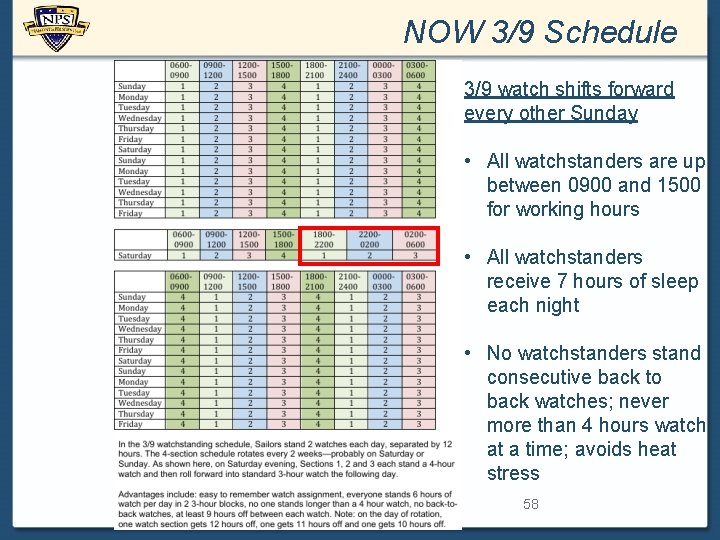
NOW 3/9 Schedule 3/9 watch shifts forward every other Sunday • All watchstanders are up between 0900 and 1500 for working hours • All watchstanders receive 7 hours of sleep each night • No watchstanders stand consecutive back to back watches; never more than 4 hours watch at a time; avoids heat stress 58
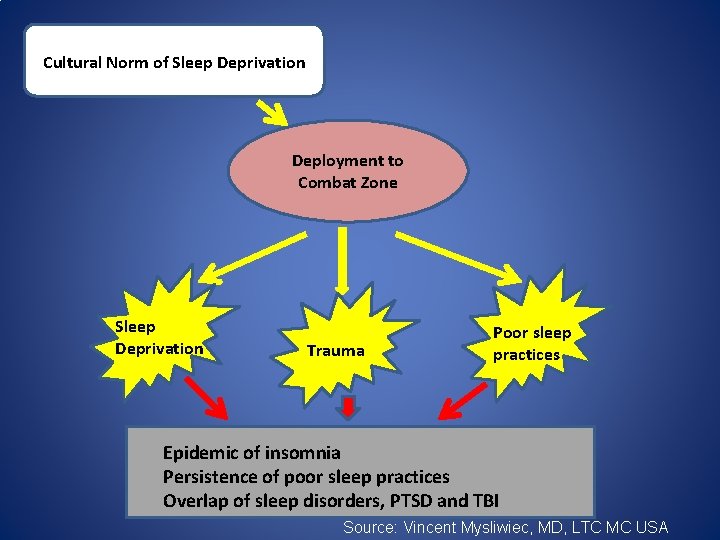
Cultural Norm of. Cc Sleep Deprivation Deployment to Combat Zone Sleep Deprivation Trauma Poor sleep practices Epidemic of insomnia Persistence of poor sleep practices Overlap of sleep disorders, PTSD and TBI Source: Vincent Mysliwiec, MD, LTC MC USA
- Slides: 59