
Scheduling Academic Groundwork Assistance 12162021 Outline Organizational Chart



- Slides: 34
Scheduling Academic Groundwork Assistance 12/16/2021
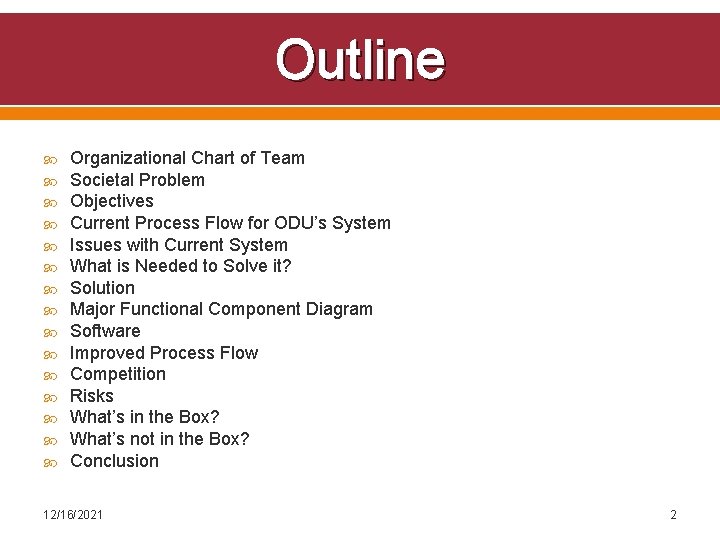
Outline Organizational Chart of Team Societal Problem Objectives Current Process Flow for ODU’s System Issues with Current System What is Needed to Solve it? Solution Major Functional Component Diagram Software Improved Process Flow Competition Risks What’s in the Box? What’s not in the Box? Conclusion 12/16/2021 2
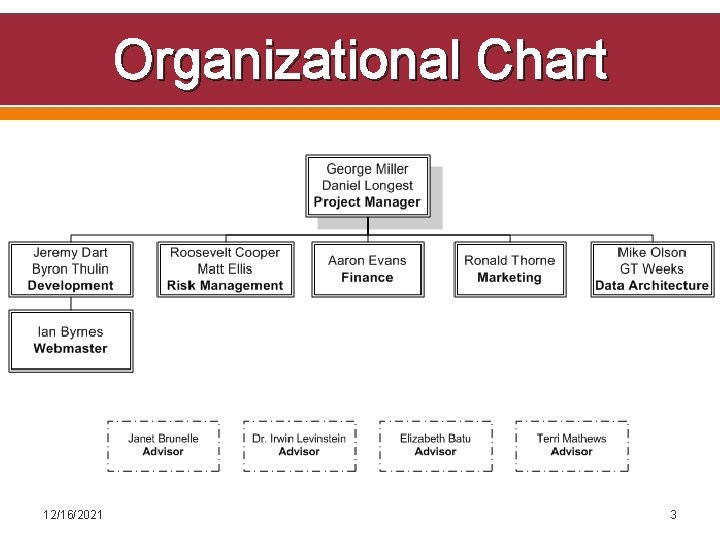
Organizational Chart 12/16/2021 3
Are you. . As a University Scheduler Wasting time keying in the same course schedules semester after semester? Having trouble scheduling the right number of course sessions for a semester? Graduation rates suffering due to course availability? 12/16/2021 4
Higher Education in the US 5, 758 higher education institutions in the United States, the second largest number in the world 19, 764, 000 students are currently enrolled in these institutions 66 public and private universities in Virginia 12/16/2021 United States Census Bureau img: americanancestors. info 5
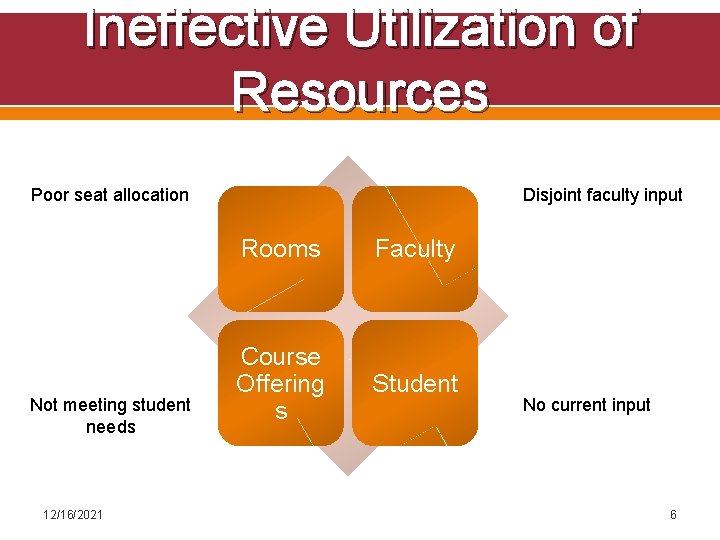
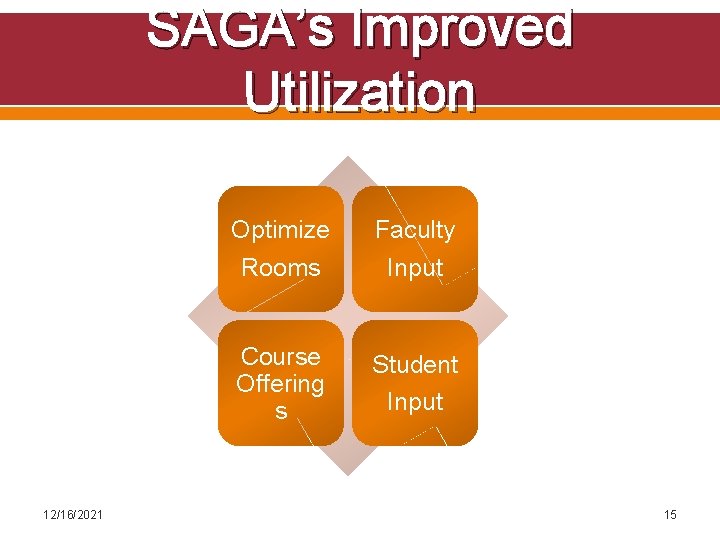
Ineffective Utilization of Resources Poor seat allocation Not meeting student needs 12/16/2021 Disjoint faculty input Rooms Faculty Course Offering s Student No current input 6
Societal Problem The lack of an effective scheduling software results in many universities: Requiring faculty and staff spending undue amounts of time on the scheduling process Developing a negative image among potential students Creates an unhappy student body Having less than optimal graduation rates (Average of five years for graduation) 12/16/2021 Five Year Graduation 7
Solution: Build SAGA Provide this scheduling software suite which: Includes a predictive scheduling engine Allows for efficient management of room ownership Considers faculty preference and needs Considers student preference and needs Digitally automates the collection of faculty and student preferences 12/16/2021 8
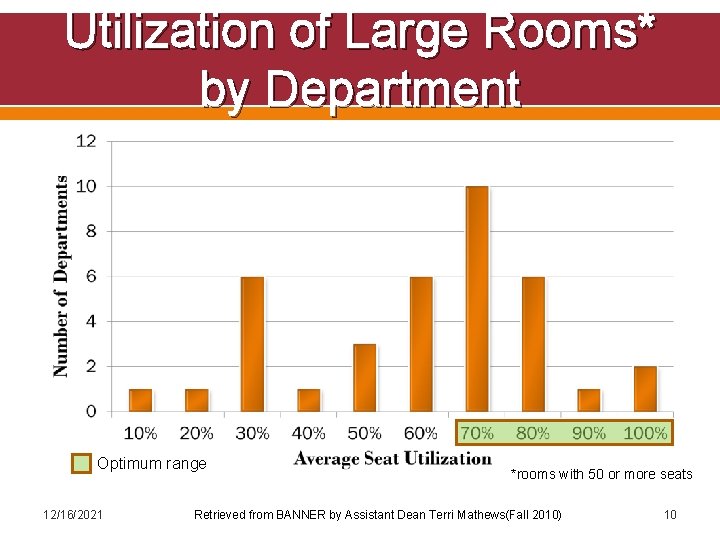
Case Study: ODU – Computer Science Old Dominion University’s Computer Science department represents a stable case that demonstrates problems that similar universities have with scheduling and utilization of resources 12/16/2021 9
Utilization of Large Rooms* by Department Optimum range 12/16/2021 *rooms with 50 or more seats Retrieved from BANNER by Assistant Dean Terri Mathews(Fall 2010) 10
Improving Freshman Retention Universities similar to ODU will benefit the most from SAGA. 12/16/2021 Schools Rate Eastern Michigan University 71% Old Dominion University 80% Florida International University 81% Georgia State University 82% Oakland University 72% carnegiefoundation. org 11
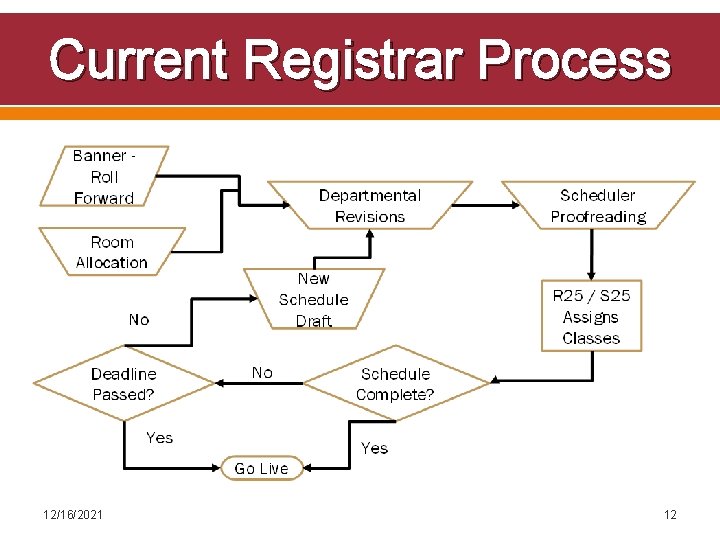
Current Registrar Process 12/16/2021 12
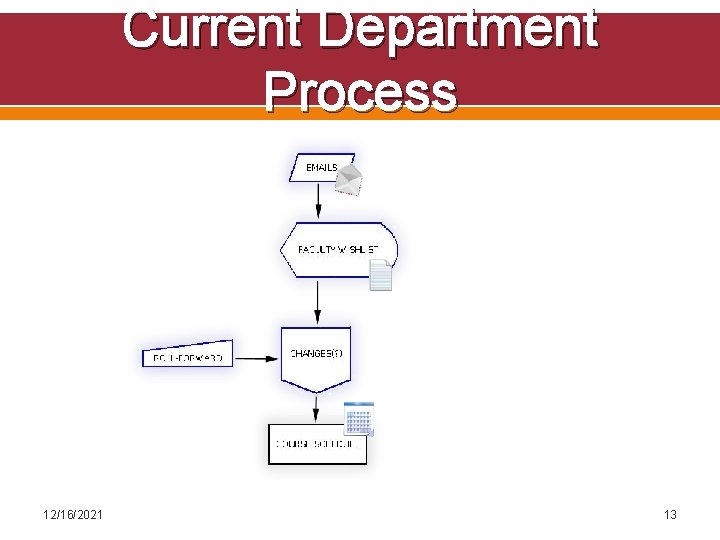
Current Department Process 12/16/2021 13
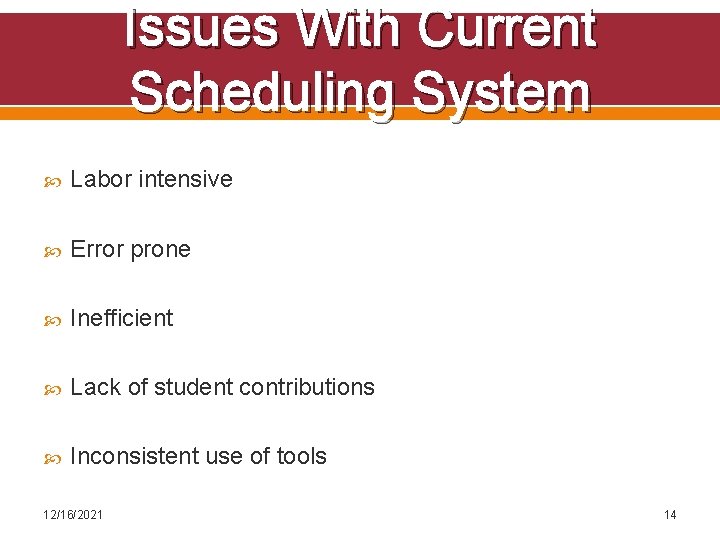
Issues With Current Scheduling System Labor intensive Error prone Inefficient Lack of student contributions Inconsistent use of tools 12/16/2021 14
SAGA’s Improved Utilization 12/16/2021 Optimize Rooms Faculty Input Course Offering s Student Input 15
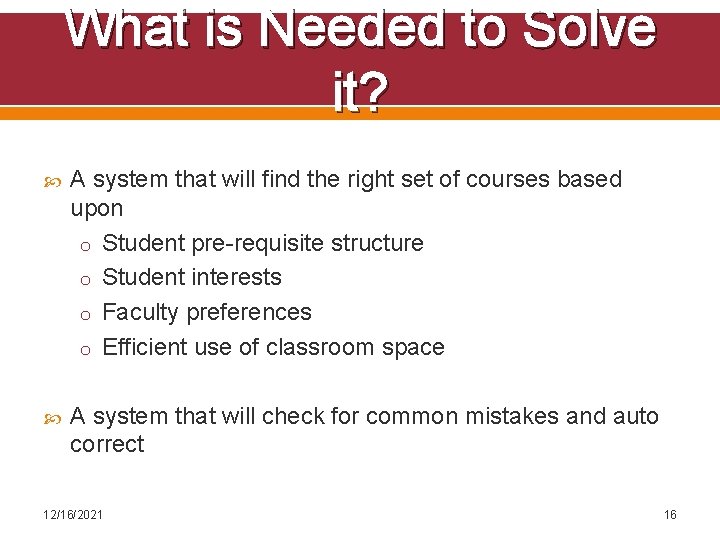
What is Needed to Solve it? A system that will find the right set of courses based upon o Student pre-requisite structure o Student interests o Faculty preferences o Efficient use of classroom space A system that will check for common mistakes and auto correct 12/16/2021 16
The SAGA Solution SAGA is a customizable, intuitive, scheduling software suite that can be integrated into any existing university infrastructure. SAGA will support student input, faculty preferences, prediction, report generation, and efficient classroom utilization on a semester by semester basis. 12/16/2021 17
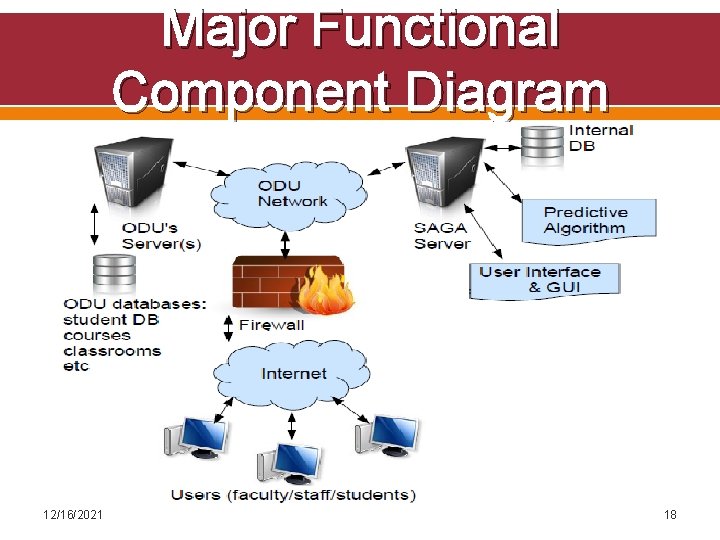
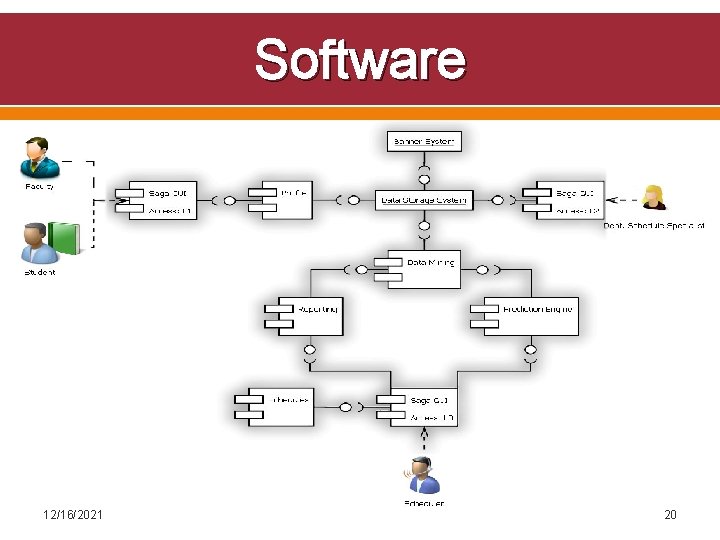
Major Functional Component Diagram 12/16/2021 18
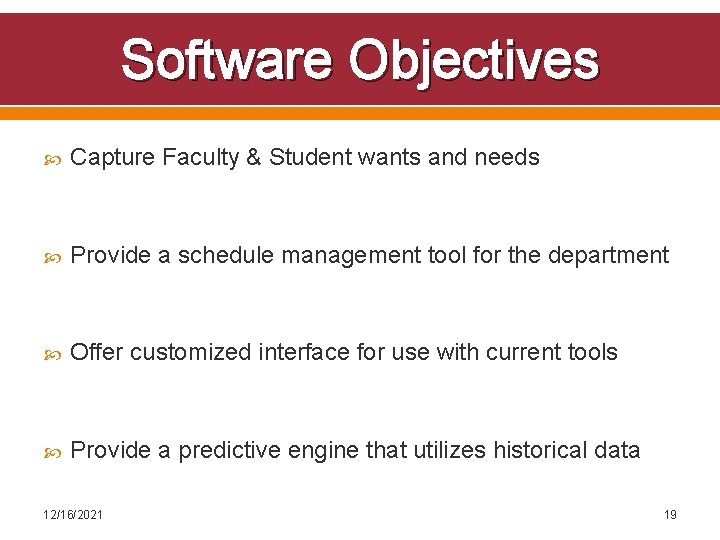
Software Objectives Capture Faculty & Student wants and needs Provide a schedule management tool for the department Offer customized interface for use with current tools Provide a predictive engine that utilizes historical data 12/16/2021 19
Software 12/16/2021 20
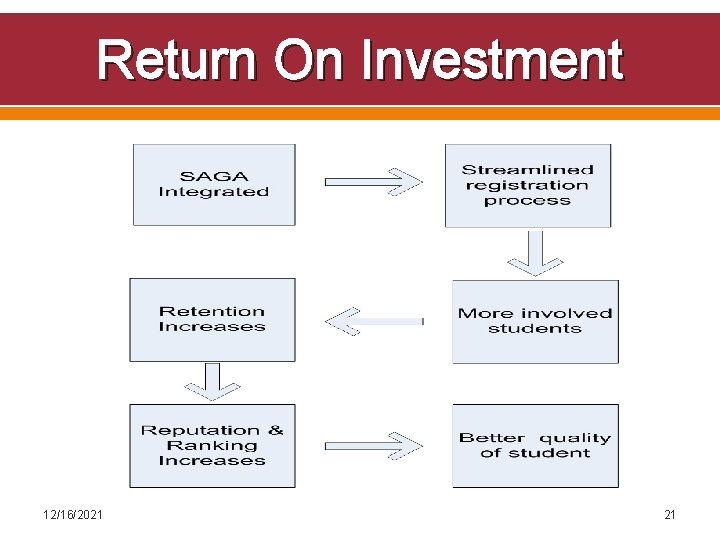
Return On Investment 12/16/2021 21
Improved Registrar Process 12/16/2021 22
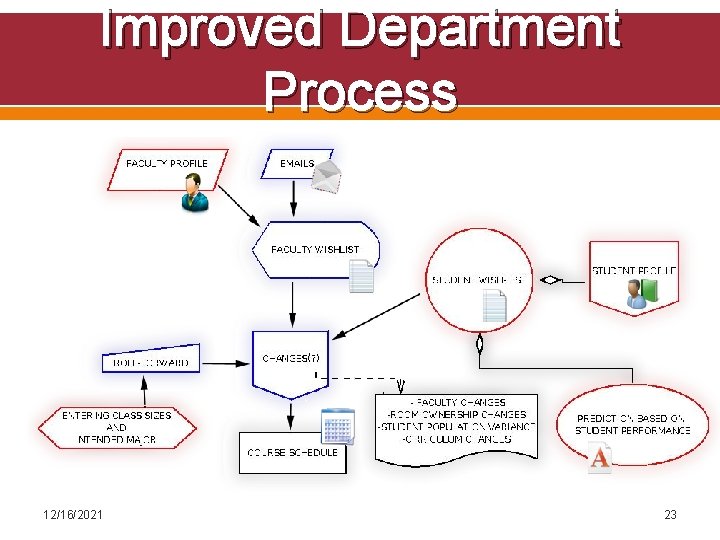
Improved Department Process 12/16/2021 23
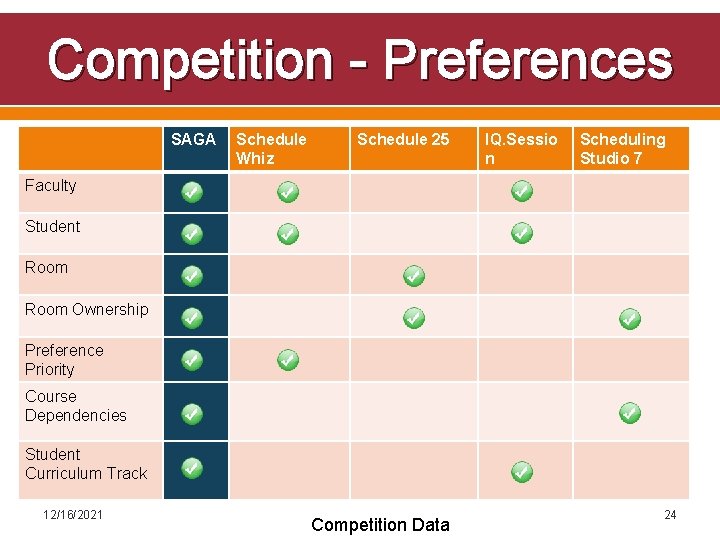
Competition - Preferences SAGA Schedule Whiz Schedule 25 IQ. Sessio n Scheduling Studio 7 Faculty Student Room Ownership Preference Priority Course Dependencies Student Curriculum Track 12/16/2021 Competition Data 24
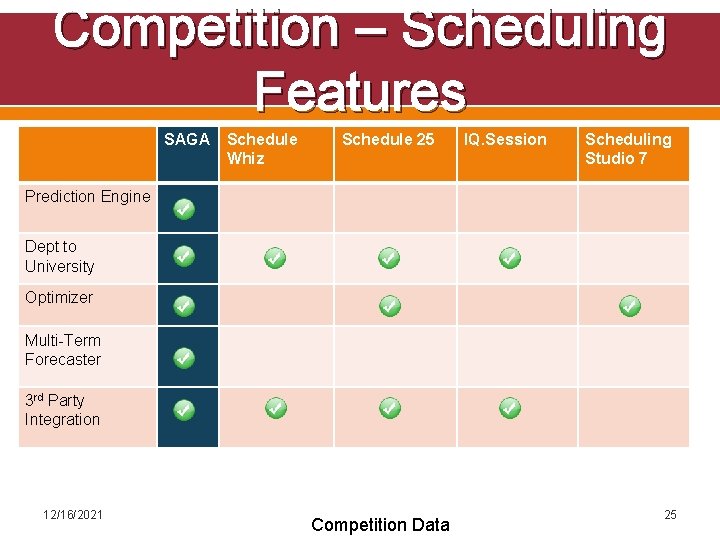
Competition – Scheduling Features SAGA Schedule Whiz Schedule 25 IQ. Session Scheduling Studio 7 Prediction Engine Dept to University Optimizer Multi-Term Forecaster 3 rd Party Integration 12/16/2021 Competition Data 25
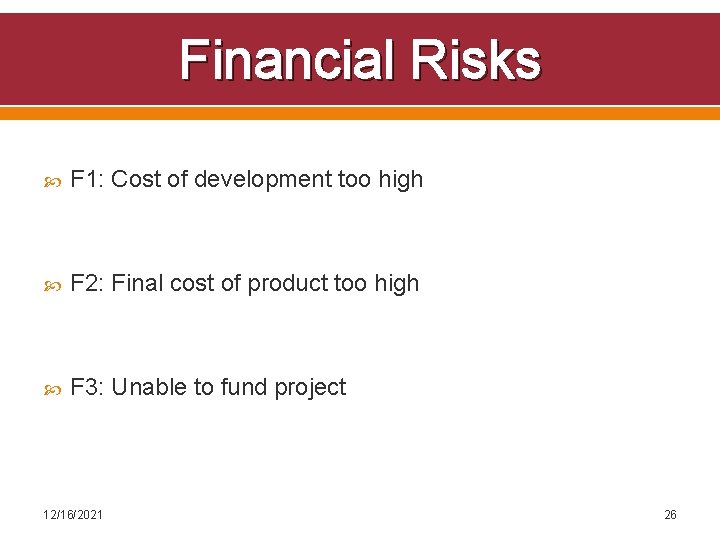
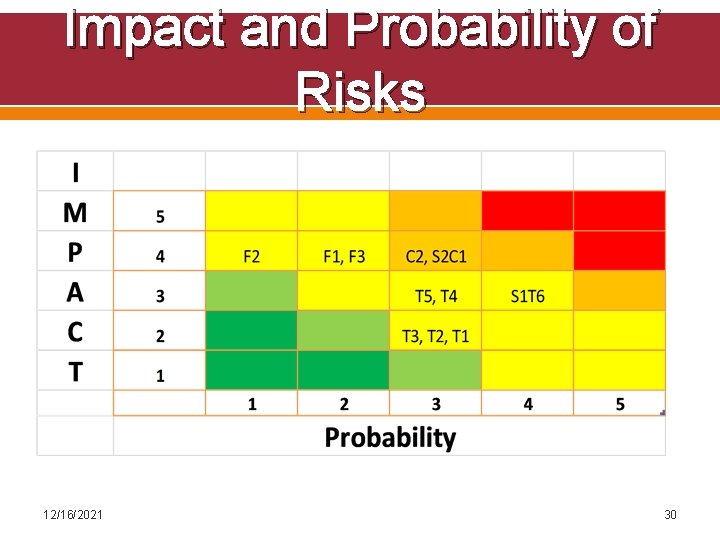
Financial Risks F 1: Cost of development too high F 2: Final cost of product too high F 3: Unable to fund project 12/16/2021 26
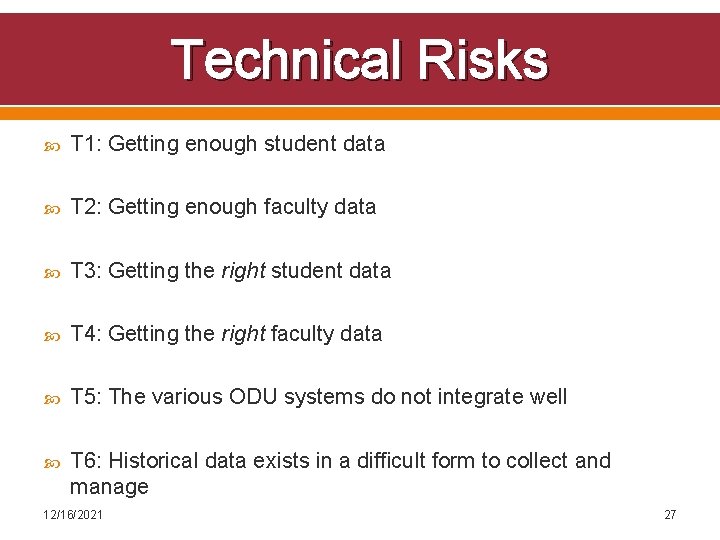
Technical Risks T 1: Getting enough student data T 2: Getting enough faculty data T 3: Getting the right student data T 4: Getting the right faculty data T 5: The various ODU systems do not integrate well T 6: Historical data exists in a difficult form to collect and manage 12/16/2021 27
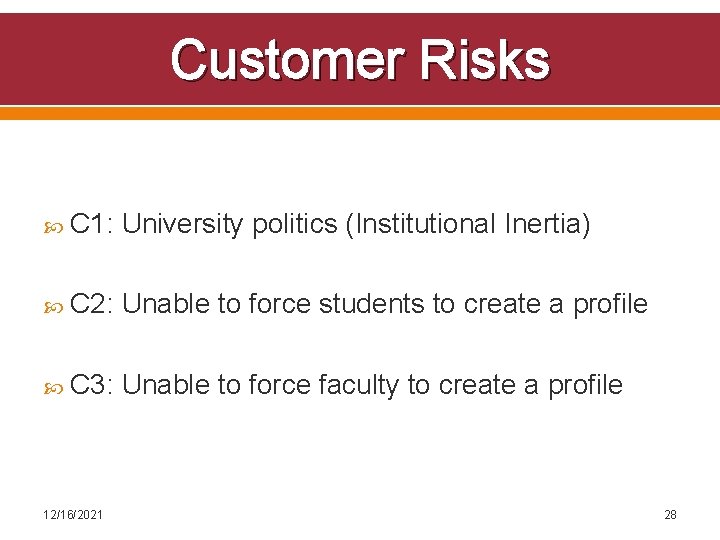
Customer Risks C 1: University politics (Institutional Inertia) C 2: Unable to force students to create a profile C 3: Unable to force faculty to create a profile 12/16/2021 28
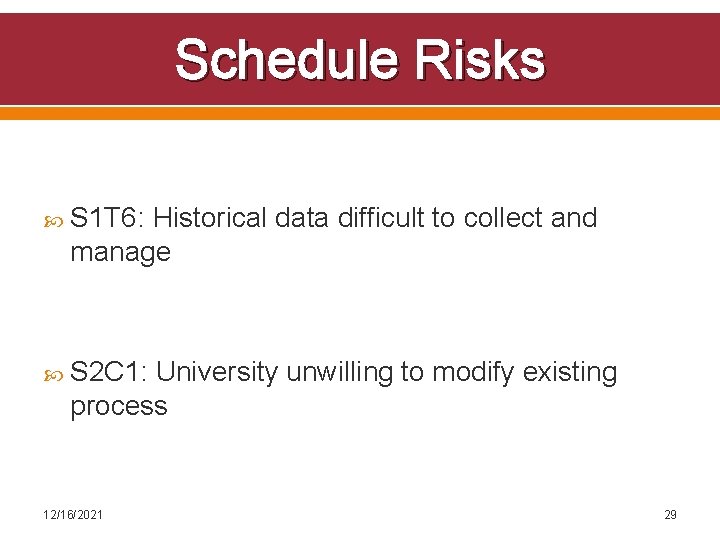
Schedule Risks S 1 T 6: Historical data difficult to collect and manage S 2 C 1: University unwilling to modify existing process 12/16/2021 29
Impact and Probability of Risks 12/16/2021 30
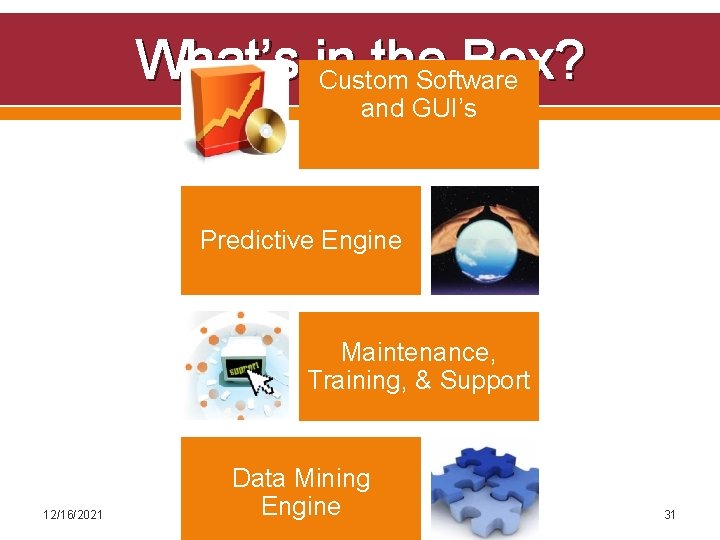
What’s in the Box? Custom Software and GUI’s Predictive Engine Maintenance, Training, & Support 12/16/2021 Data Mining Engine 31
What’s Not In The Box Will not replace current tools Will not change university politics Will not automate the schedule 12/16/2021 32
Conclusion The ultimate purpose of SAGA is to ease the burden of those involved with the scheduling process while simultaneously catering to student and faculty needs and interests which will lead to increased tuition dollars. SAGA improves the course making process by providing collaborative input from students, faculty, and historical trends to assist in predicting demand for the future. 12/16/2021 33
Works Cited Mathews, Terri (Fall 2010) – Mathews, Terri. (2011). Fall 2010 Room Utilization By Priority Rooms Cost of Students http: //www. collegemeasures. org/reporting/Institution/Scorecard/232982. aspx Retention Rate - The Carnegie Foundation for the Advancement of Teaching. (2011, March 30). Carnegie classifications. Retrieved from http: //classifications. carnegiefoundation. org Competition Data – www. thoughtitmus. com , corp. collegenet. com , www. comquip. com , www. collegescheduler. com , www. lantiv. com Fiver Year Graduation http: //www. collegeparents. org/members/resources/articles/reason s-why-your-college-student-might-not-graduate-four-years 12/16/2021 34