
SCENE SET DESIGNING SCENERY FOR THEATRE SCENE SET
- Slides: 28
SCENE (SET) DESIGNING SCENERY FOR THEATRE
SCENE (SET) DESIGN § Scene (Set) design is the creation of theatrical, as well as film or television scenery. § Traditionally, designers come from a variety of artistic backgrounds, but now they are trained professionals, often with M. F. A. degrees in theatre arts.
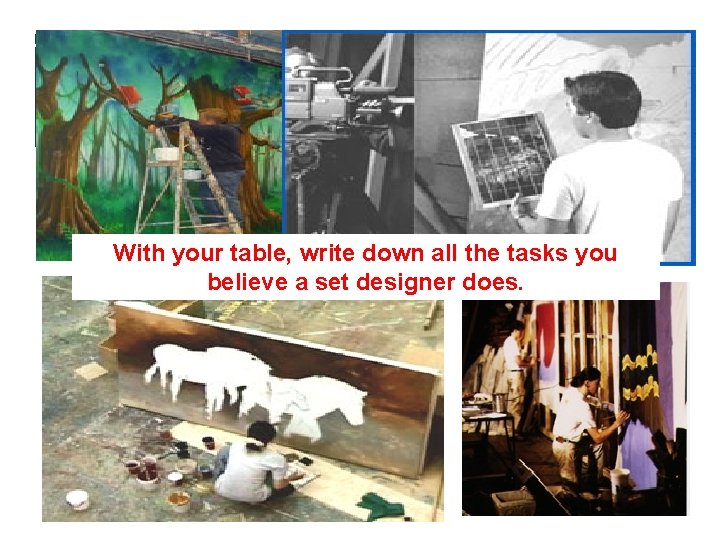
With your table, write down all the tasks you believe a set designer does.
WHAT IS A SET DESIGNER? § Architect § Sculptor § Interior Decorator § Model Maker § Painter § Draftsperson § Artist § Graphic Artist § Historian (politics, arts, fashion, ar chitecture, literature, the atre, film) § Schmoozer § Detective
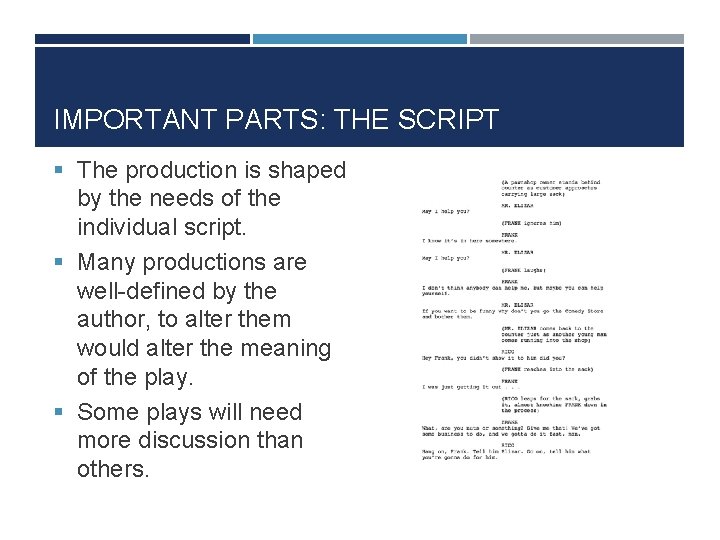
IMPORTANT PARTS: THE SCRIPT § The production is shaped by the needs of the individual script. § Many productions are well-defined by the author, to alter them would alter the meaning of the play. § Some plays will need more discussion than others.
EXISTING LIMITATIONS In some production situations, there are circumstances that shape the discussion of a play. Budget Calendar People-power Flexibility for a travelling production Emphasis on a particular design element Unique space restrictions. Know and discuss the limitations at the very beginning.
THE STEPS A DESIGNER TAKES Takes on the project Reads the Script Researches the play or film § Analyzes the Script § Place and Locale § Time Period § Themes § Mood
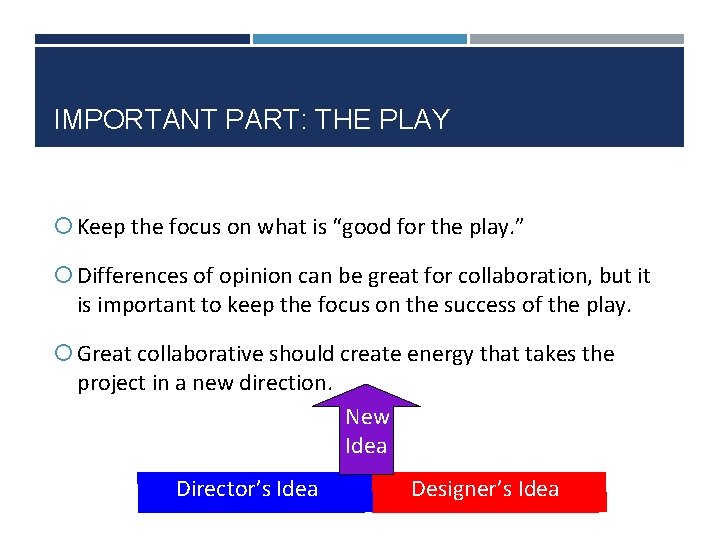
IMPORTANT PART: THE PLAY Keep the focus on what is “good for the play. ” Differences of opinion can be great for collaboration, but it is important to keep the focus on the success of the play. Great collaborative should create energy that takes the project in a new direction. New Idea Director’s Idea Designer’s Idea
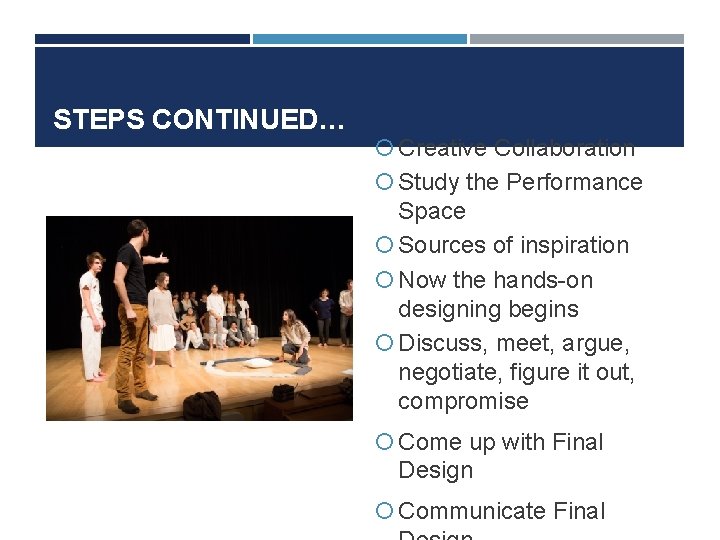
STEPS CONTINUED… Creative Collaboration Study the Performance Space Sources of inspiration Now the hands-on designing begins Discuss, meet, argue, negotiate, figure it out, compromise Come up with Final Design Communicate Final
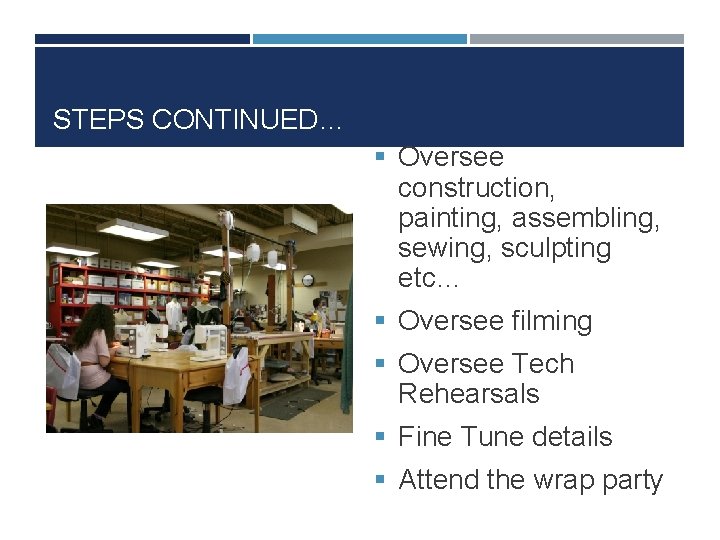
STEPS CONTINUED… § Oversee construction, painting, assembling, sewing, sculpting etc… § Oversee filming § Oversee Tech Rehearsals § Fine Tune details § Attend the wrap party
ELEMENTS AND PRINCIPLES OF DESIGN § Color § Shape § Form § Texture § Space Balance § Proportion § Emphasis § Unity §
MATERIALS OF DESIGN § Wood § Cardboard Metals (budget) § Fake plants/shrubs § Paint § Furniture § Fabric § Decor § Styrofoam §
PARTS OF THE STAGE SCENE (SET) DESIGN
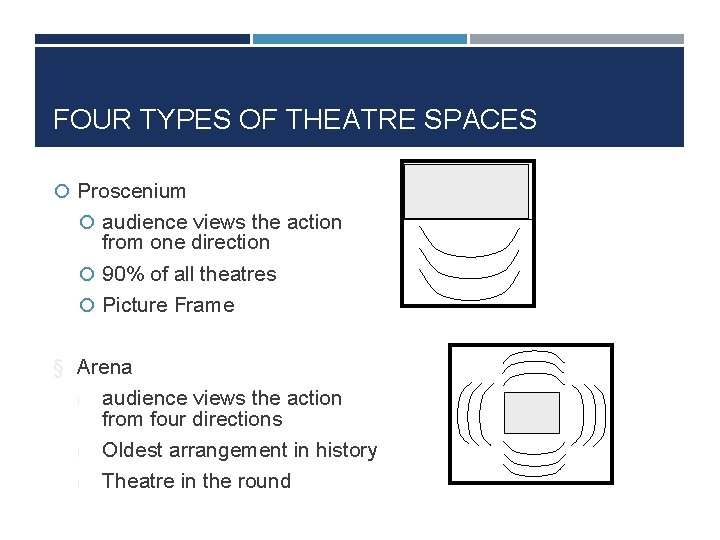
FOUR TYPES OF THEATRE SPACES Proscenium audience views the action from one direction 90% of all theatres Picture Frame § Arena l l l audience views the action from four directions Oldest arrangement in history Theatre in the round
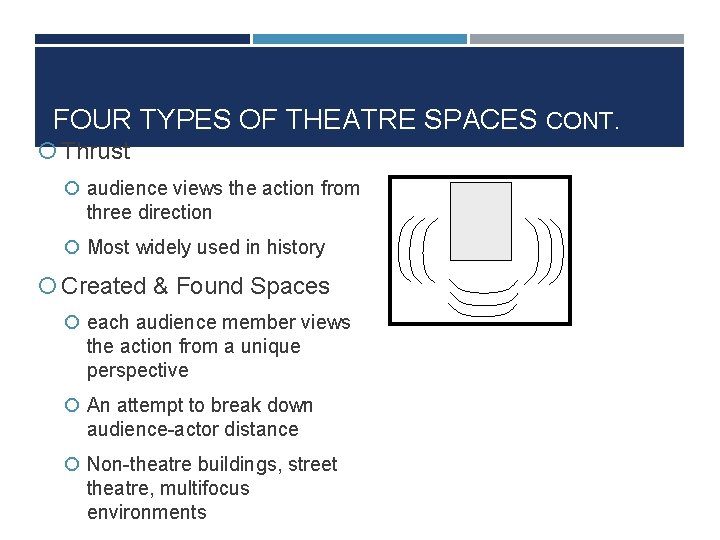
FOUR TYPES OF THEATRE SPACES CONT. Thrust audience views the action from three direction Most widely used in history Created & Found Spaces each audience member views the action from a unique perspective An attempt to break down audience-actor distance Non-theatre buildings, street theatre, multifocus environments
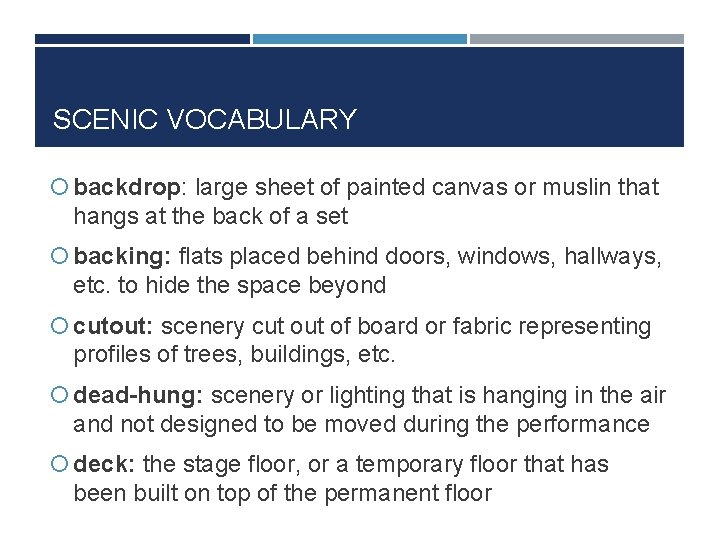
SCENIC VOCABULARY backdrop: large sheet of painted canvas or muslin that hangs at the back of a set backing: flats placed behind doors, windows, hallways, etc. to hide the space beyond cutout: scenery cut of board or fabric representing profiles of trees, buildings, etc. dead-hung: scenery or lighting that is hanging in the air and not designed to be moved during the performance deck: the stage floor, or a temporary floor that has been built on top of the permanent floor
SCENIC VOCABULARY flat: frame constructed of 1 -by-3 boards, covered with canvas, painted and used most often for interior and exterior walls of a building in a stage setting levels: steps, platforms, etc. that raise the actor from the stage
TYPES OF SET SCENE (SET) DESIGN
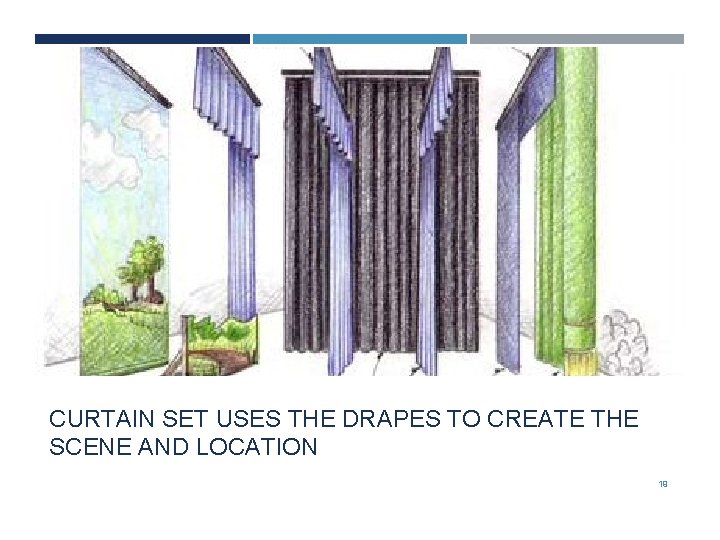
CURTAIN SET USES THE DRAPES TO CREATE THE SCENE AND LOCATION 19
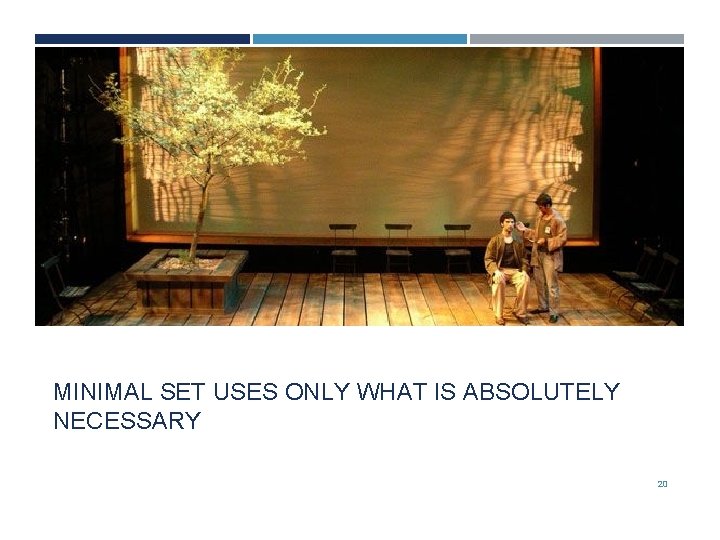
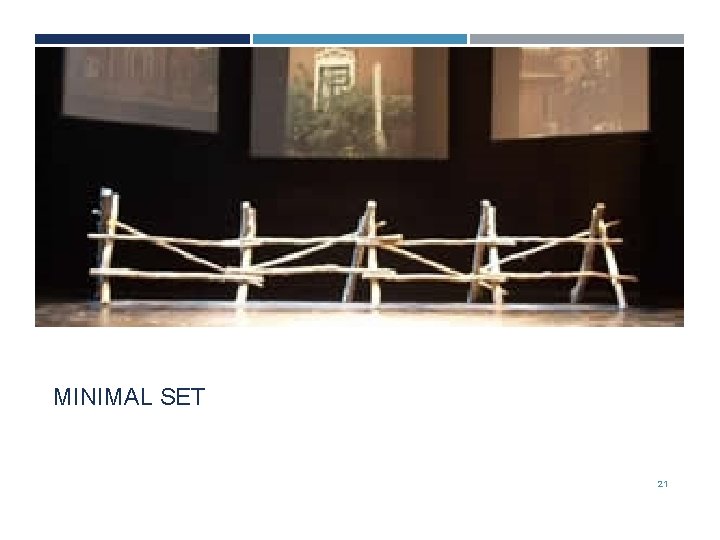
MINIMAL SET USES ONLY WHAT IS ABSOLUTELY NECESSARY 20
MINIMAL SET 21
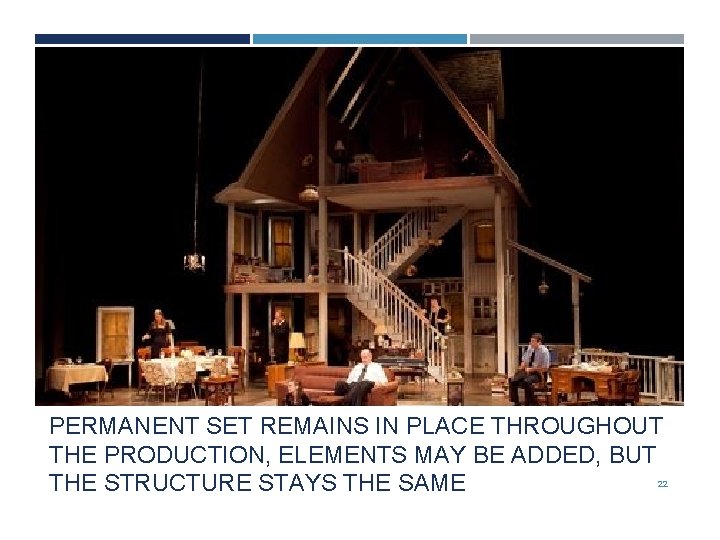
PERMANENT SET REMAINS IN PLACE THROUGHOUT THE PRODUCTION, ELEMENTS MAY BE ADDED, BUT THE STRUCTURE STAYS THE SAME 22
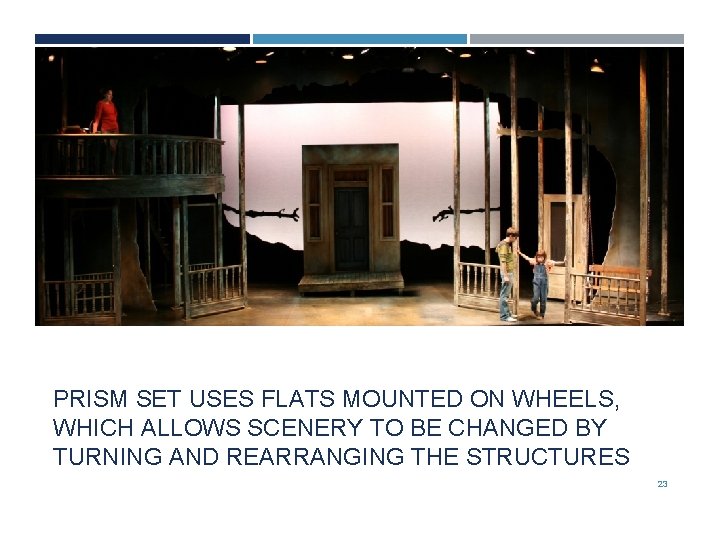
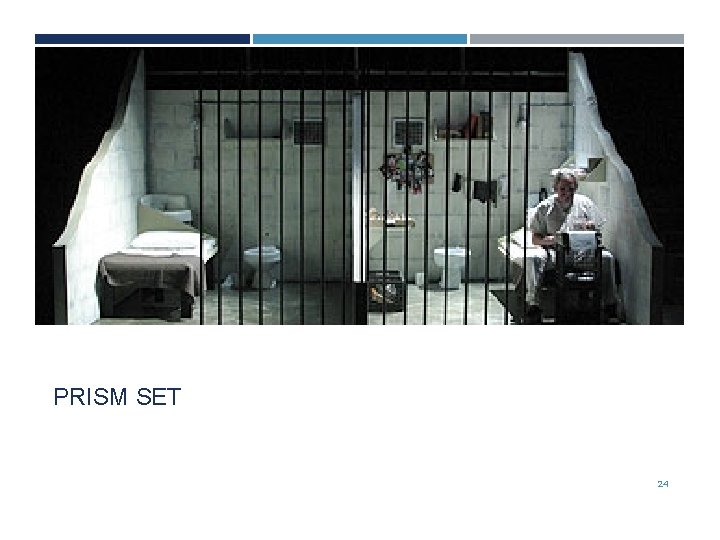
PRISM SET USES FLATS MOUNTED ON WHEELS, WHICH ALLOWS SCENERY TO BE CHANGED BY TURNING AND REARRANGING THE STRUCTURES 23
PRISM SET 24
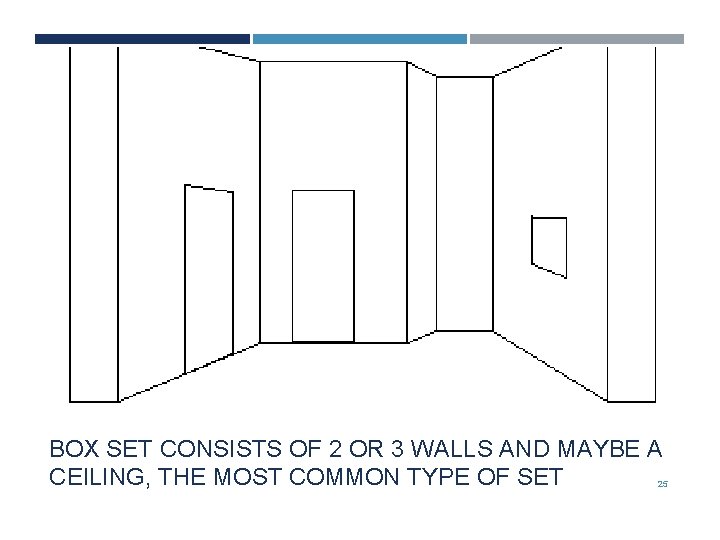
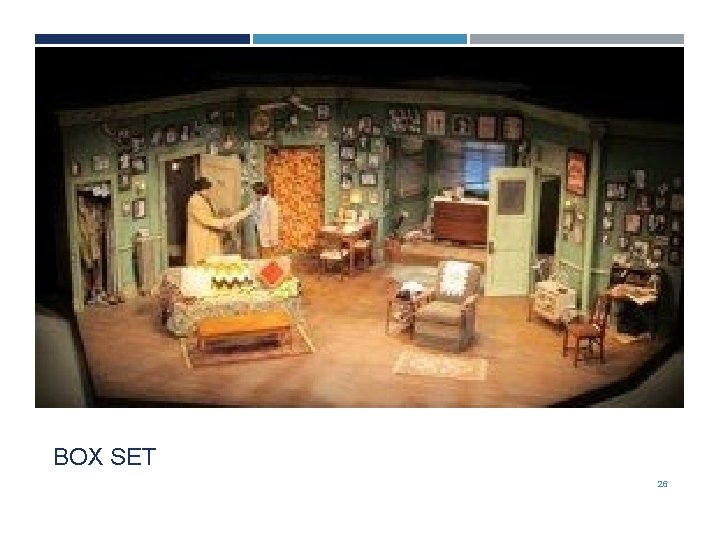
BOX SET CONSISTS OF 2 OR 3 WALLS AND MAYBE A CEILING, THE MOST COMMON TYPE OF SET 25
BOX SET 26
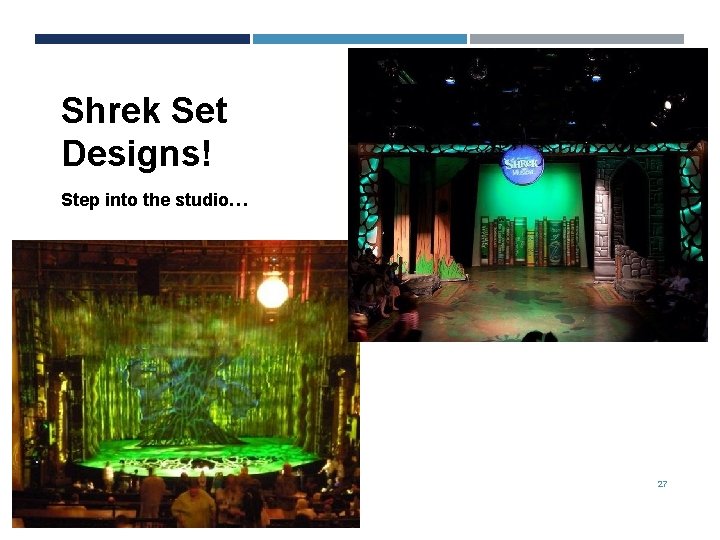
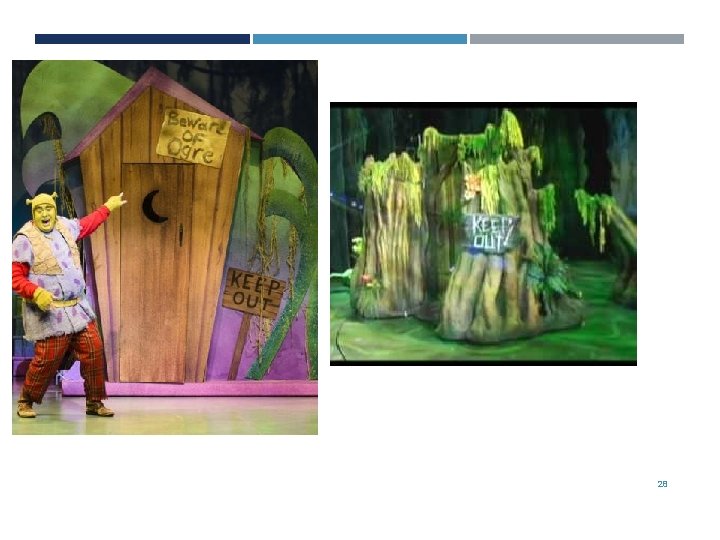
Shrek SHREK SET Set DESIGNS! Designs! Step into the studio… 27
28