
Scenarios for waste release case studies from the
- Slides: 25
Scenarios for waste release: case studies from the ERIIP research programme Robert J Nicholls, Richard Beaven, Anne Stringfellow
Plan of Talk • Introduction • Brief overview of case studies: 3 coastal landfill sites • Challenges in application of C 718 (Guidance on the management of landfill sites and land contamination on eroding or low-lying coastlines)
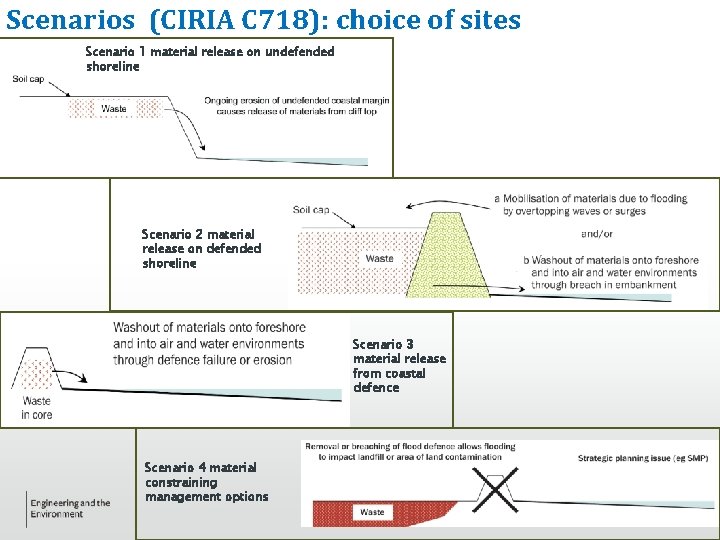
Scenarios (CIRIA C 718): choice of sites Scenario 1 material release on undefended shoreline Scenario 2 material release on defended shoreline Scenario 3 material release from coastal defence Scenario 4 material constraining management options
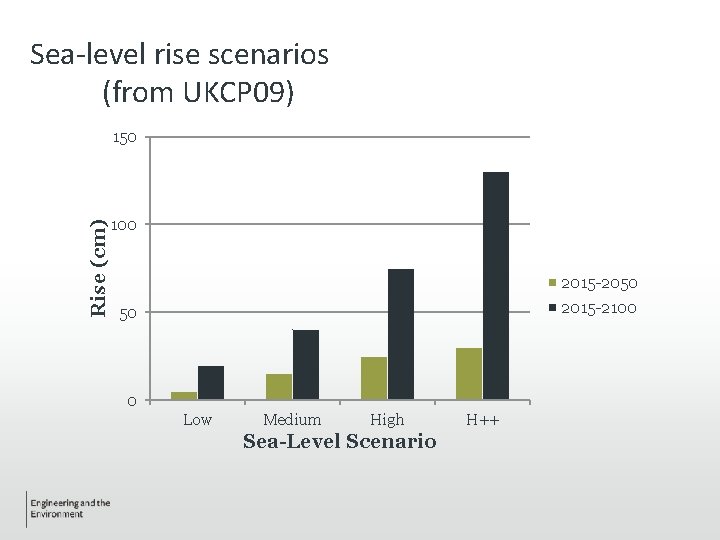
Sea-level rise scenarios (from UKCP 09) Rise (cm) 150 100 2015 -2050 2015 -2100 50 0 Low Medium High Sea-Level Scenario H++
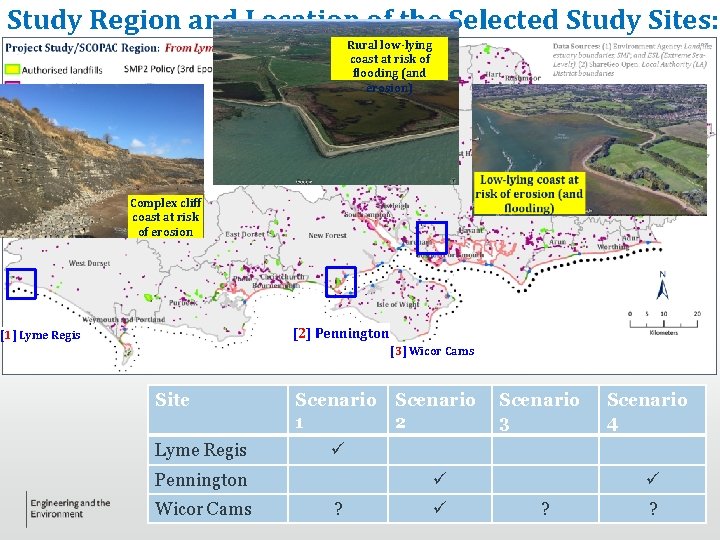
Study Region and Location of the Selected Study Sites: Rural low-lying coast at risk of flooding (and erosion) Complex cliff coast at risk of erosion [2] Pennington [1] Lyme Regis [3] Wicor Cams Site Lyme Regis Scenario 1 2 Scenario 4 Pennington Wicor Cams Scenario 3 ? ? ?
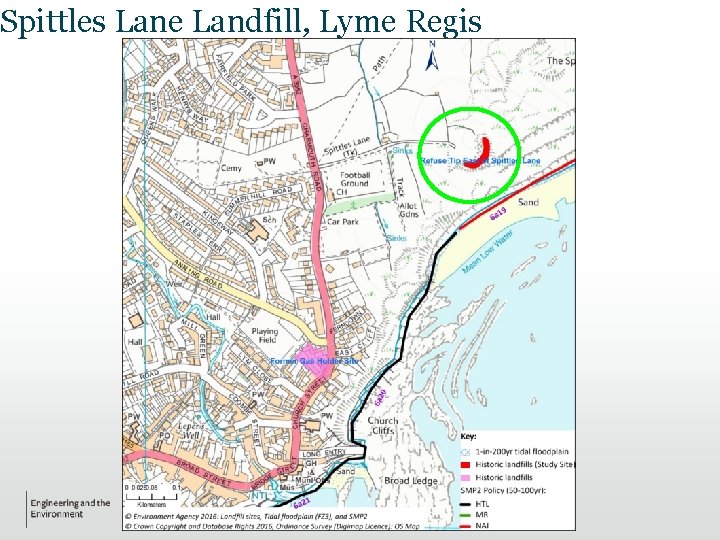
Spittles Lane Landfill, Lyme Regis
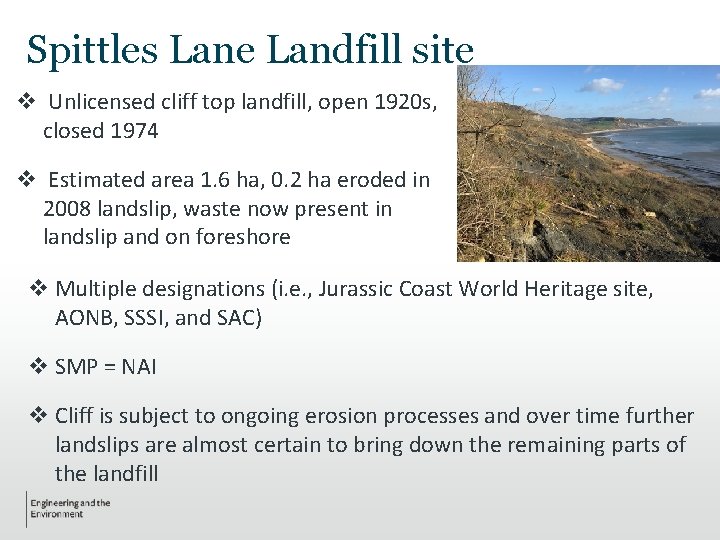
Spittles Lane Landfill site v Unlicensed cliff top landfill, open 1920 s, closed 1974 v Estimated area 1. 6 ha, 0. 2 ha eroded in 2008 landslip, waste now present in landslip and on foreshore v Multiple designations (i. e. , Jurassic Coast World Heritage site, AONB, SSSI, and SAC) v SMP = NAI v Cliff is subject to ongoing erosion processes and over time further landslips are almost certain to bring down the remaining parts of the landfill
Management options considered v Current: inspect beach and remove waste materials v Future: § Request view from EA regarding need for environmental permit to authorise discharge of waste material § Site inspection to determine extent of waste on site and obtain waste characterisation § Assess feasibility of removing landfill site
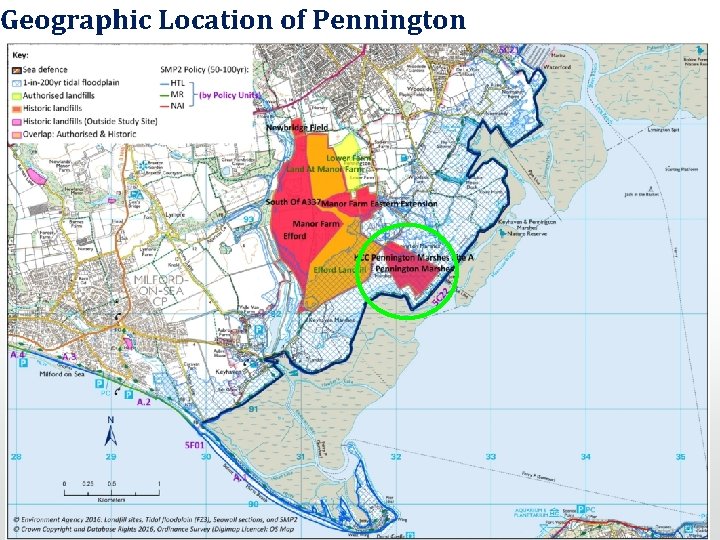
Geographic Location of Pennington
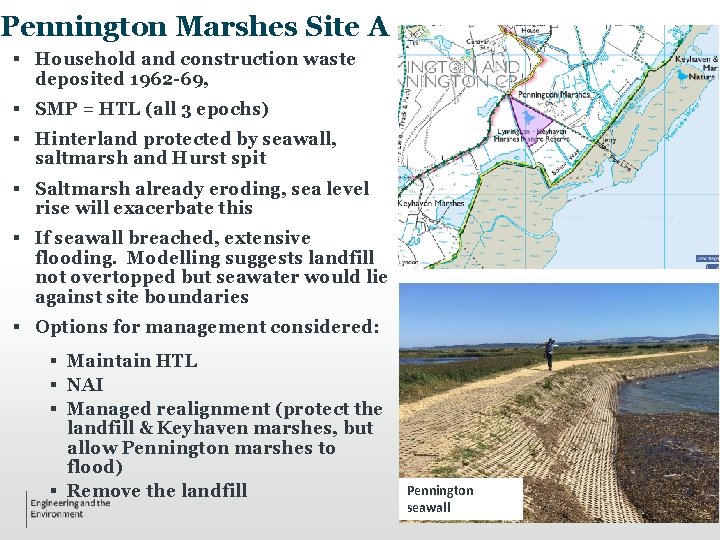
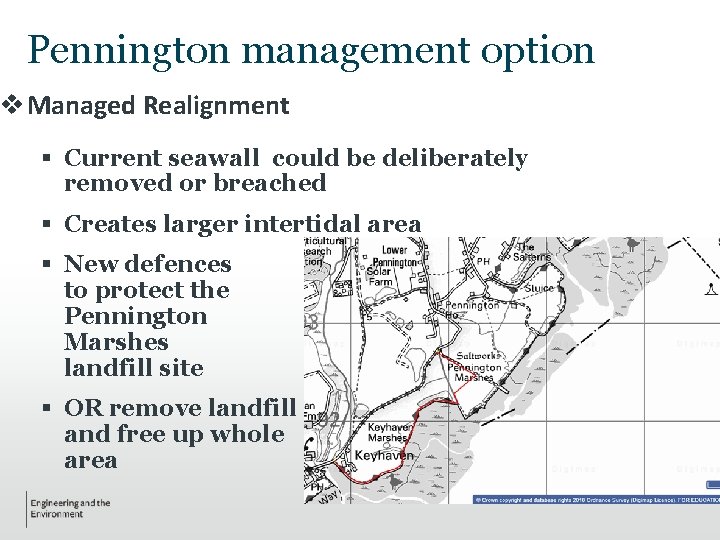
Pennington Marshes Site A § Household and construction waste deposited 1962 -69, § SMP = HTL (all 3 epochs) § Hinterland protected by seawall, saltmarsh and Hurst spit § Saltmarsh already eroding, sea level rise will exacerbate this § If seawall breached, extensive flooding. Modelling suggests landfill not overtopped but seawater would lie against site boundaries § Options for management considered: § Maintain HTL § NAI § Managed realignment (protect the landfill & Keyhaven marshes, but allow Pennington marshes to flood) § Remove the landfill Pennington seawall
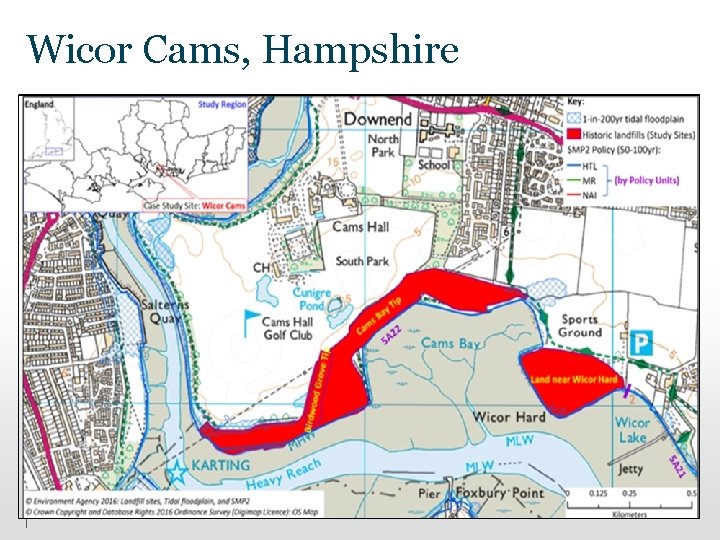
Wicor Cams, Hampshire
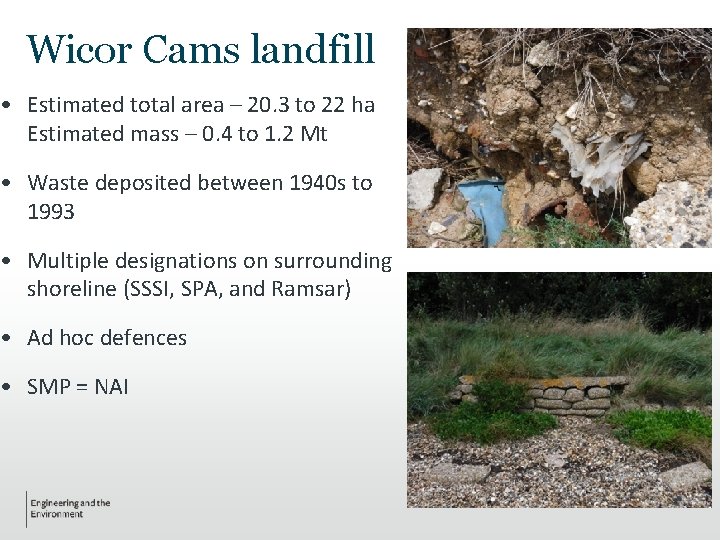
Wicor Cams landfill • Estimated total area – 20. 3 to 22 ha Estimated mass – 0. 4 to 1. 2 Mt • Waste deposited between 1940 s to 1993 • Multiple designations on surrounding shoreline (SSSI, SPA, and Ramsar) • Ad hoc defences • SMP = NAI
Lessons learnt from case studies • Areas where C 718 could be improved • Difficulties encountered • Identified gaps in science
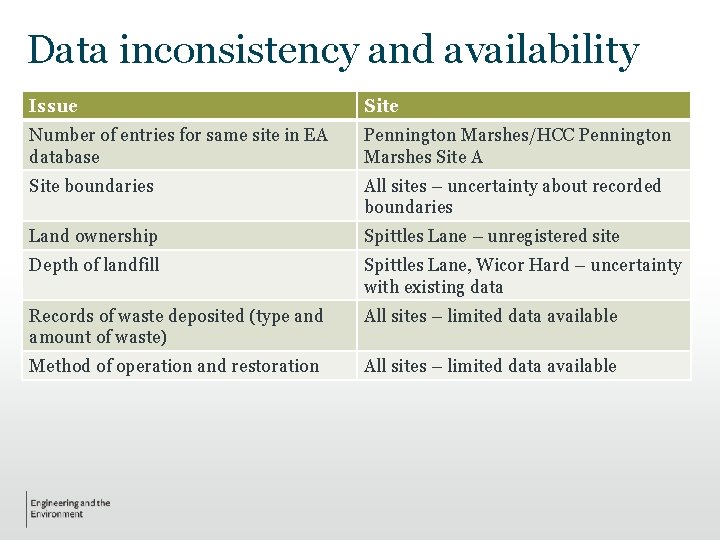
Data inconsistency and availability Issue Site Number of entries for same site in EA database Pennington Marshes/HCC Pennington Marshes Site A Site boundaries All sites – uncertainty about recorded boundaries Land ownership Spittles Lane – unregistered site Depth of landfill Spittles Lane, Wicor Hard – uncertainty with existing data Records of waste deposited (type and amount of waste) All sites – limited data available Method of operation and restoration All sites – limited data available
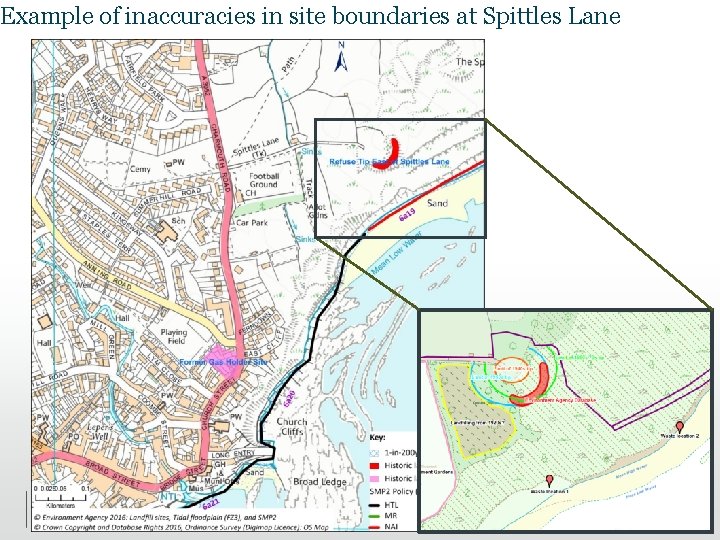
Example of inaccuracies in site boundaries at Spittles Lane
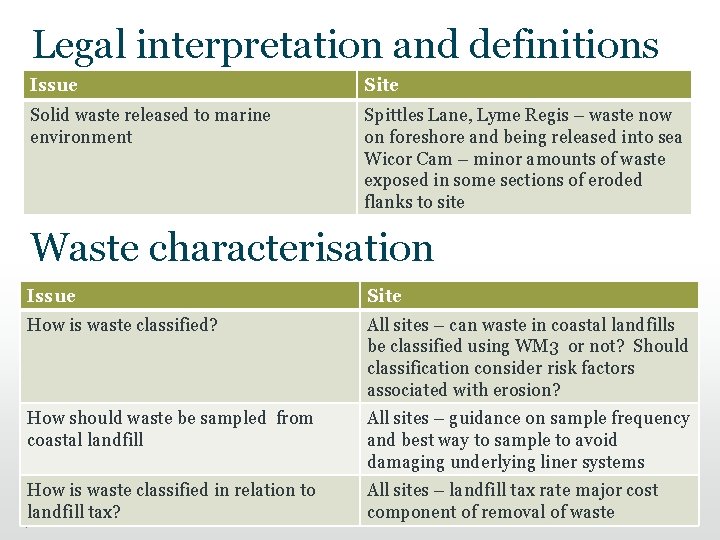
Legal interpretation and definitions Issue Site Solid waste released to marine environment Spittles Lane, Lyme Regis – waste now on foreshore and being released into sea Wicor Cam – minor amounts of waste exposed in some sections of eroded flanks to site Waste characterisation Issue Site How is waste classified? All sites – can waste in coastal landfills be classified using WM 3 or not? Should classification consider risk factors associated with erosion? How should waste be sampled from coastal landfill All sites – guidance on sample frequency and best way to sample to avoid damaging underlying liner systems How is waste classified in relation to landfill tax? All sites – landfill tax rate major cost component of removal of waste
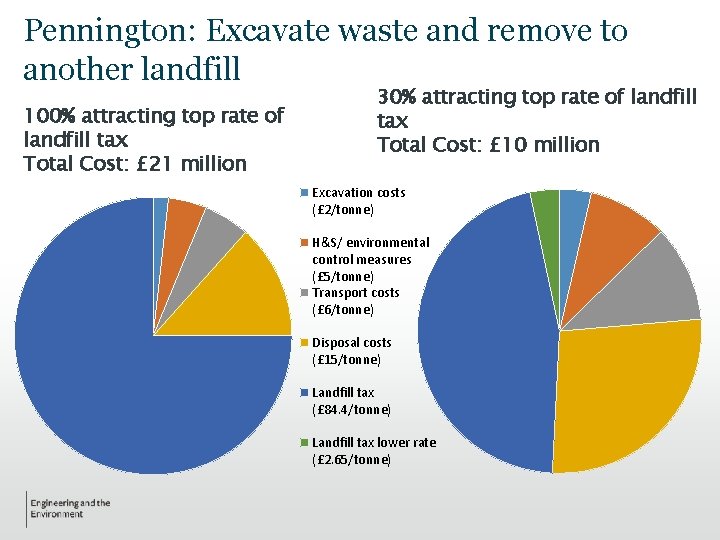
Pennington: Excavate waste and remove to another landfill 100% attracting top rate of landfill tax Total Cost: £ 21 million 30% attracting top rate of landfill tax Total Cost: £ 10 million Excavation costs (£ 2/tonne) H&S/ environmental control measures (£ 5/tonne) Transport costs (£ 6/tonne) Disposal costs (£ 15/tonne) Landfill tax (£ 84. 4/tonne) Landfill tax lower rate (£ 2. 65/tonne)
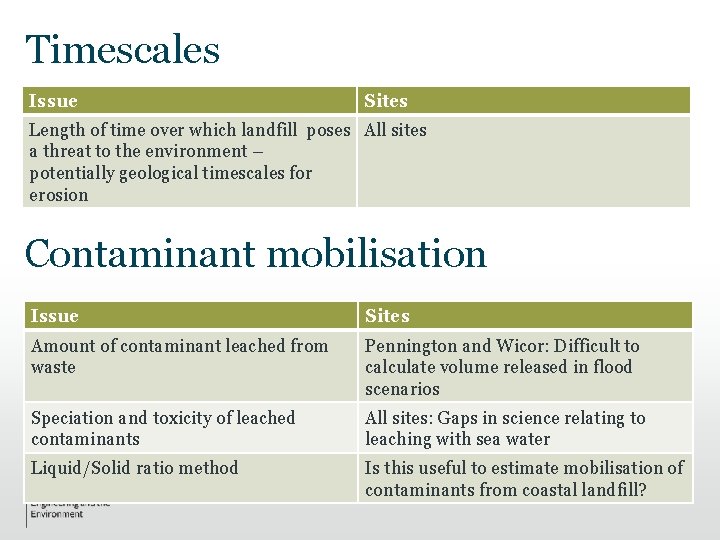
Timescales Issue Sites Length of time over which landfill poses All sites a threat to the environment – potentially geological timescales for erosion Contaminant mobilisation Issue Sites Amount of contaminant leached from waste Pennington and Wicor: Difficult to calculate volume released in flood scenarios Speciation and toxicity of leached contaminants All sites: Gaps in science relating to leaching with sea water Liquid/Solid ratio method Is this useful to estimate mobilisation of contaminants from coastal landfill?
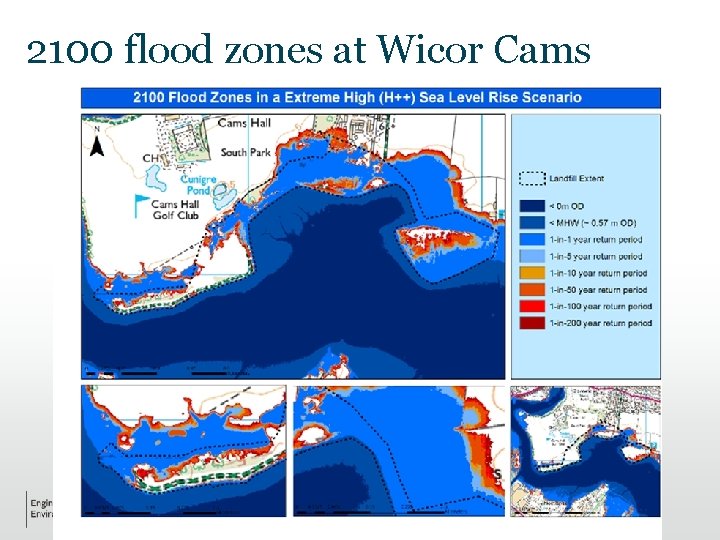
2100 flood zones at Wicor Cams
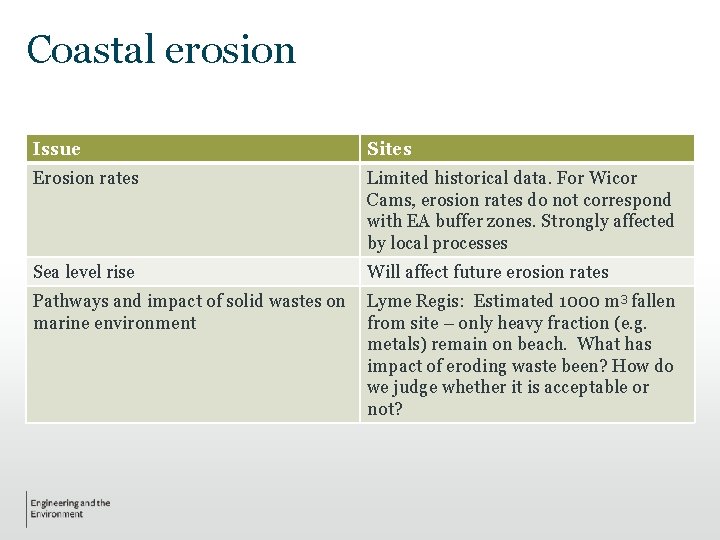
Coastal erosion Issue Sites Erosion rates Limited historical data. For Wicor Cams, erosion rates do not correspond with EA buffer zones. Strongly affected by local processes Sea level rise Will affect future erosion rates Pathways and impact of solid wastes on marine environment Lyme Regis: Estimated 1000 m 3 fallen from site – only heavy fraction (e. g. metals) remain on beach. What has impact of eroding waste been? How do we judge whether it is acceptable or not?
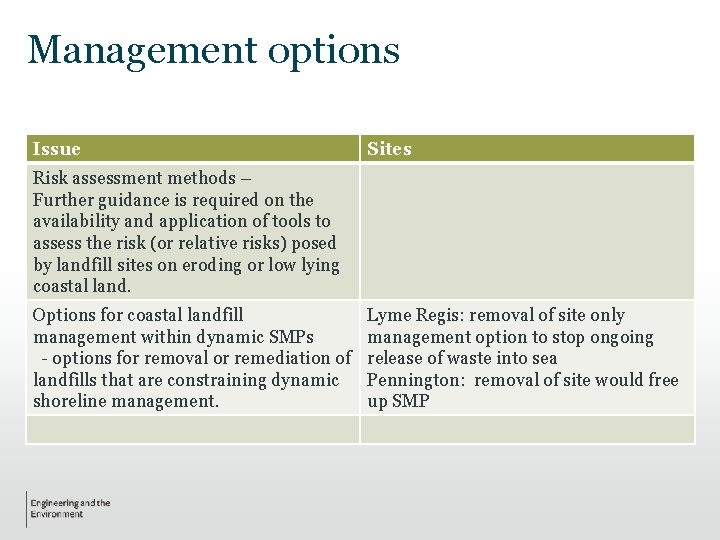
Management options Issue Sites Risk assessment methods – Further guidance is required on the availability and application of tools to assess the risk (or relative risks) posed by landfill sites on eroding or low lying coastal land. Options for coastal landfill management within dynamic SMPs - options for removal or remediation of landfills that are constraining dynamic shoreline management. Lyme Regis: removal of site only management option to stop ongoing release of waste into sea Pennington: removal of site would free up SMP
Pennington management option v Managed Realignment § Current seawall could be deliberately removed or breached § Creates larger intertidal area § New defences to protect the Pennington Marshes landfill site § OR remove landfill and free up whole area
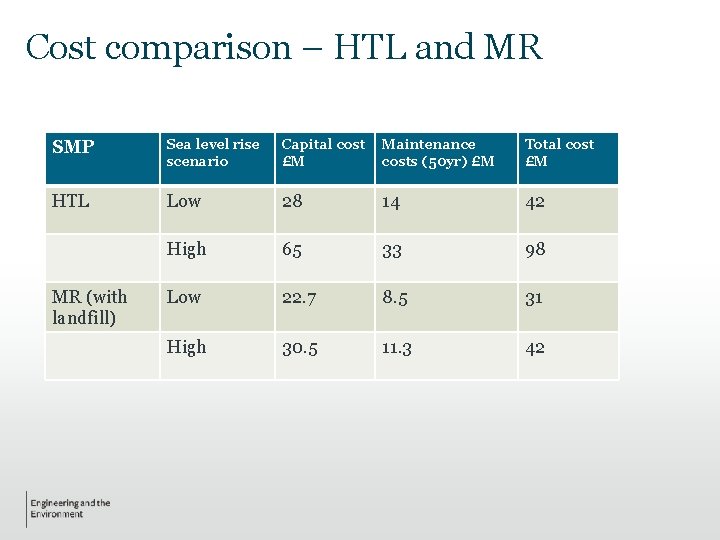
Cost comparison – HTL and MR SMP Sea level rise scenario Capital cost £M Maintenance costs (50 yr) £M Total cost £M HTL Low 28 14 42 High 65 33 98 Low 22. 7 8. 5 31 High 30. 5 11. 3 42 MR (with landfill)
Acknowledgements (NERC ERIIP project) • Richard Beaven, Abiy Kebede, Jenny Watts, William Powrie, Ivan Haigh, Anne Stringfellow, Co-workers at University of Southampton • Owen Tarrant, Jim Wilkinson, Environment Agency • Sam Cope, Matt Wadey, East Solent Coastal Partnership • Pete Fergusson, New Forest District Council • Kate Spencer, Queen Mary University • David Emmett, Hampshire County Council • Owen Jenkins, CIRIA • Richard Thomas, Independent Consultant • Jonathon Simm, HR Wallingford
Scenarios for waste release: case studies from the ERIIP research programme Robert J Nicholls, Richard Beaven, Anne Stringfellow