
Scenarios for leveraging Core Capabilities using Enterprise Systems
Scenarios for leveraging Core Capabilities using Enterprise Systems Implementation: An Agenda for Research Simon Woodworth Business Information Systems, UCC
Introduction Desire to gain competitive advantage is a motivator for implementing Enterprise Systems (ES) But the nature and extent of the contribution of ES to competitive advantage is unclear Using Dynamic Capabilities Theory (DCT) and Diffusion Of Innovation Theory (DOI), we can build a framework for examining the interplay between ES and Core Capabilities Framework can then be used to guide field research using Case Study methodology.
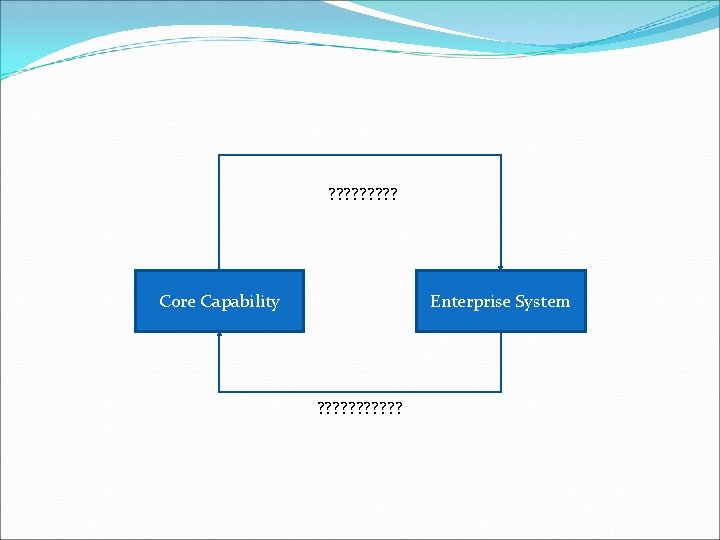
? ? ? ? ? Core Capability Enterprise System ? ? ?
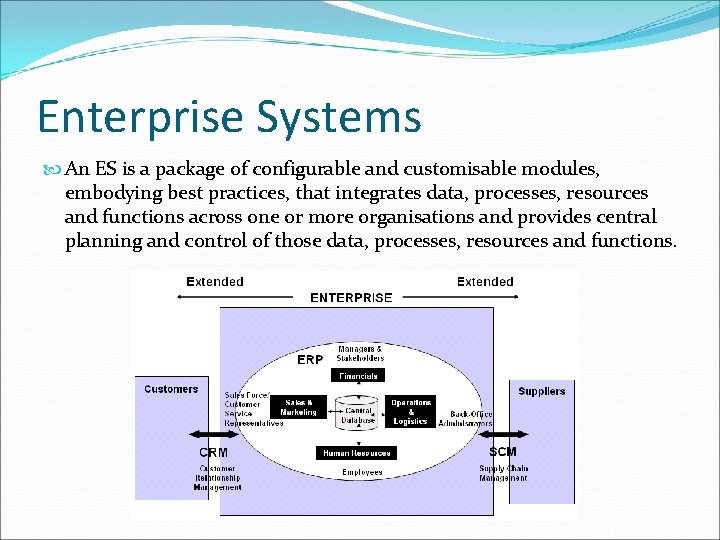
Enterprise Systems An ES is a package of configurable and customisable modules, embodying best practices, that integrates data, processes, resources and functions across one or more organisations and provides central planning and control of those data, processes, resources and functions.
Core Capabilities A construct of the Resource Based View (RBV) and Dynamic Capabilities Theory (DCT). RBV states that capabilities that are Valuable, Rare and Inimitable confer a sustained competitive advantage on an organisation, as long as it is organised to exploit them.
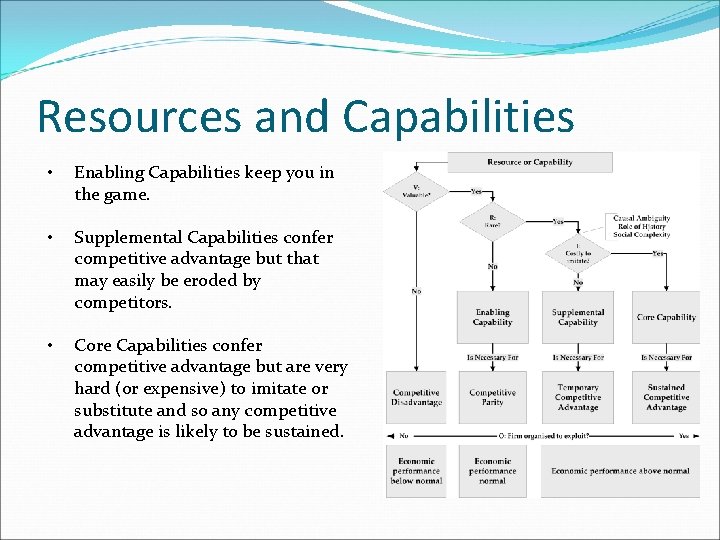
Resources and Capabilities • Enabling Capabilities keep you in the game. • Supplemental Capabilities confer competitive advantage but that may easily be eroded by competitors. • Core Capabilities confer competitive advantage but are very hard (or expensive) to imitate or substitute and so any competitive advantage is likely to be sustained.
Core Capabilities
Core Capabilities and ES Ideally, an Enterprise system would enhance Core Capabilities Why? Resultant Sustained Competitive Advantage would confer the best opportunity to gain a decent return on the investment Diffusion Of Innovation theory provides a suitable basis for examining how the implementation (or the diffusion) of an ES influences CC
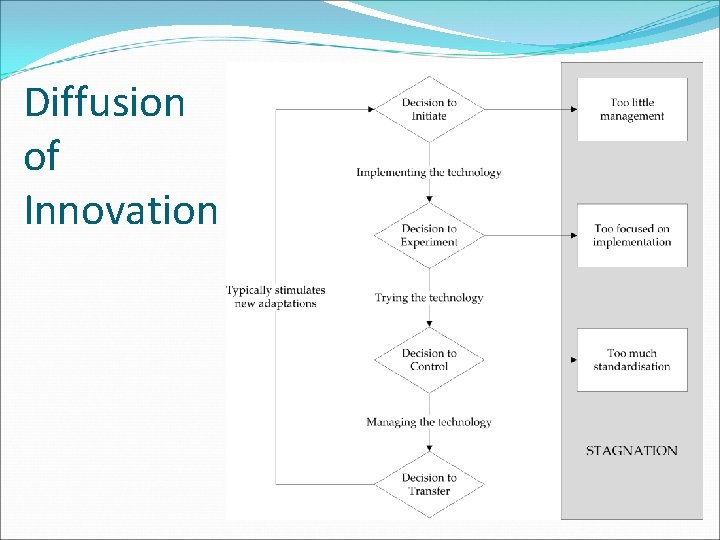
Diffusion of Innovation
The Research Topic The interactions between Enterprise Systems and Core Capabilities
Research Questions & Hypothesis RQ 1 What are the Core Capabilities of the organisation? RQ 2 What activities are observed during the Enterprise System implementation? RQ 3 What are the interactions between the Core Capabilities and the Enterprise System? H 1 The process of Enterprise System implementation determines future Competitive Advantage.
Looking for the answers RQ 1 – Core Capabilities Look for tacit processes (difficult), the history of the organisation, asset positions that are protected by patent or which would be extremely expensive to imitate or substitute. RQ 2 – The Implementation Activities For example process re-engineering, imposition of control mechanisms, replacement of legacy systems, integration and learning activities, configuration and customisation of new ES. RQ 3 – The Interactions between ES and CC Examine changes to processes, asset positions and technological opportunities (ability to adapt in future). Do the activities examined in RQ 2 change the core capabilities identified in RQ 1?
Looking for the answers H 1 The independent variable The ES implementation process, as determined by RQ 2 The dependent variable Future competitive advantage, surrogated by changes to Core Capabilities, as determined by RQ 1 and RQ 3 Note: How is a Core Capability “enhanced? ” Look at changes to value, rarity, inimitability and organisation’s ability to exploit.
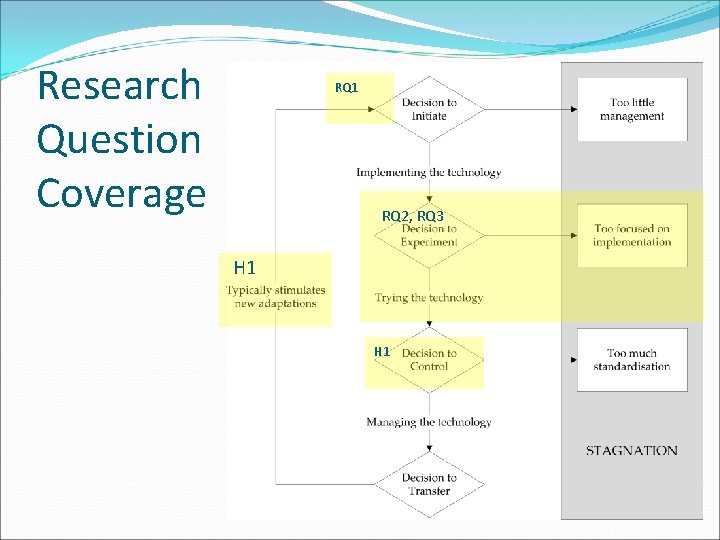
Research Question Coverage RQ 1 RQ 2, RQ 3 H 1
Research Strategy Case Study approach Two cases required Select cases along dimension of degree of adaptation of deployed ES (Out-of-box versus high degree of customisation)
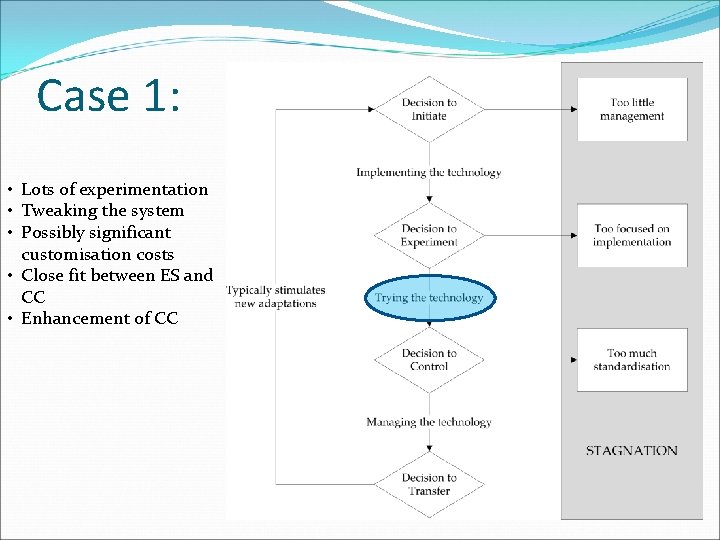
Case 1: • Lots of experimentation • Tweaking the system • Possibly significant customisation costs • Close fit between ES and CC • Enhancement of CC
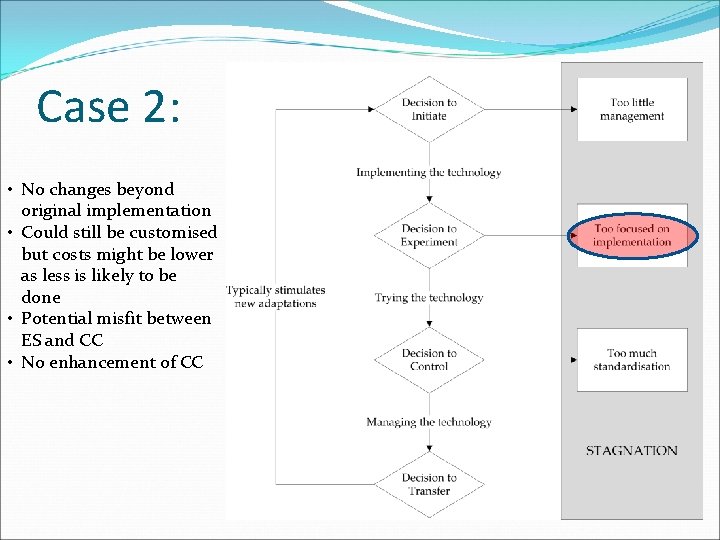
Case 2: • No changes beyond original implementation • Could still be customised but costs might be lower as less is likely to be done • Potential misfit between ES and CC • No enhancement of CC
Analysis Within – case analysis to answer RQ 1, RQ 2, RQ 3 with very concrete view of Core Capabilities Cross – case analysis to develop a more abstract view of the Core Capabilities concerned and to test H 1.
Results Concrete view of Core Capabilities that addresses accusations of tautology, empirical impracticality and vagueness. We can draw some conclusions about the influence of Enterprise systems and their implementation on Core Capabilities and thus Competitive advantage This may have implications for ES Implementation practice
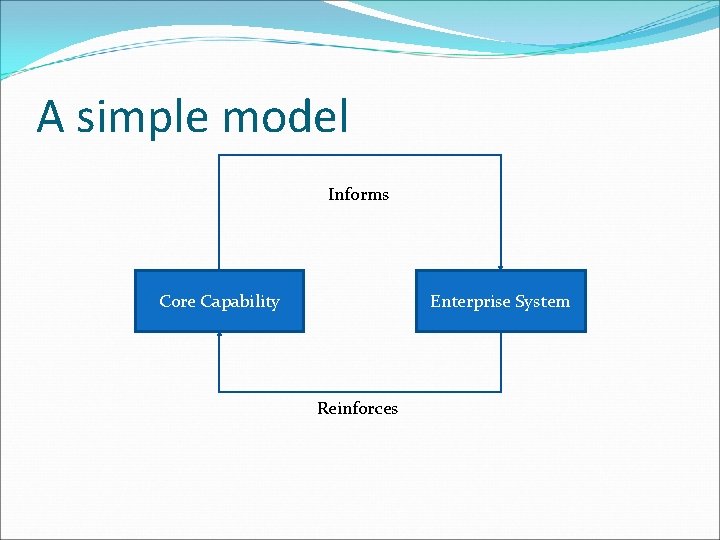
A simple model Informs Core Capability Enterprise System Reinforces
- Slides: 20