
Scenario Planning A Supplement to Traditional Strategic Planning
- Slides: 13
Scenario Planning: A Supplement to Traditional Strategic Planning Accelerating changes and uncertainty in the world about us force some organizations to supplement strategic planning with the longer view called scenario planning. . ﺳﻴﻨﺎﺭﻳﻮﻫﺎﺕ ﻫﻲ ﻗﺼﺺ ﻛﻴﻒ ﺃﻨﻨﺎ ﻧﻌﺘﻘﺪ ﺃﻦ ﺍﻷﻤﻮﺭ ﻳﻤﻜﻦ ﺃﻦ ﺗﻠﻌﺐ ﺑﻬﺎ ﻋﻠﻰ ﺍﻟﻤﺪﻯ ﺍﻟﻄﻮﻳﻞ • “Scenario planning is risk contingency planning, without really moving organizational resources. ” • Scenarios are stories of how we believe things could play out in the longer run. • Scenario planning is a structured process of thinking about future possible environments that would have potential high impact to disrupt the way you do business, and then developing potential strategies to compete in these altered environments. 2– 2
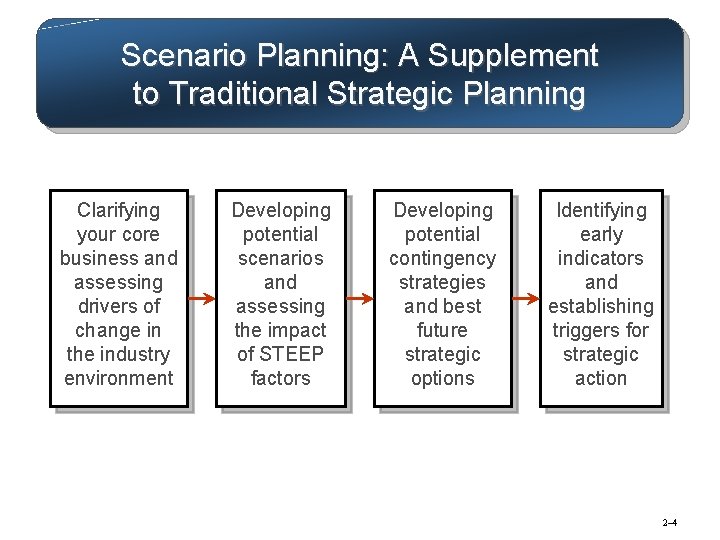
Scenario Planning: A Supplement to Traditional Strategic Planning Clarifying your core business and assessing drivers of change in the industry environment Developing potential scenarios and assessing the impact of STEEP factors Developing potential contingency strategies and best future strategic options Identifying early indicators and establishing triggers for strategic action 2– 4
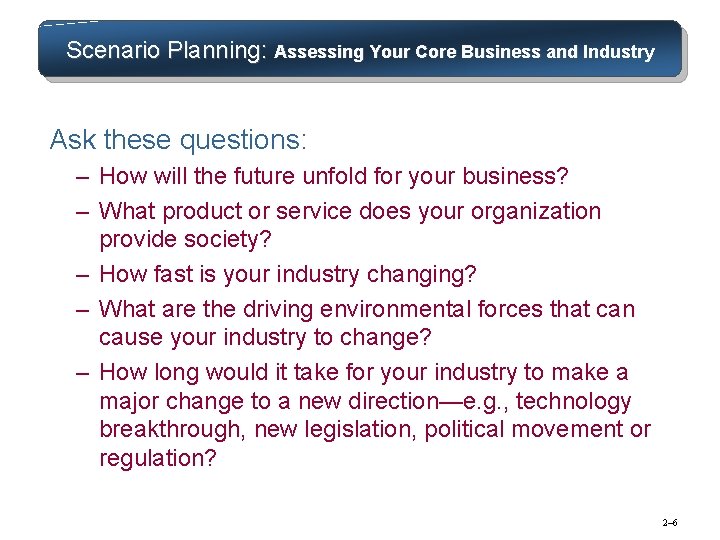
Scenario Planning: Assessing Your Core Business and Industry Ask these questions: – How will the future unfold for your business? – What product or service does your organization provide society? – How fast is your industry changing? – What are the driving environmental forces that can cause your industry to change? – How long would it take for your industry to make a major change to a new direction—e. g. , technology breakthrough, new legislation, political movement or regulation? 2– 6
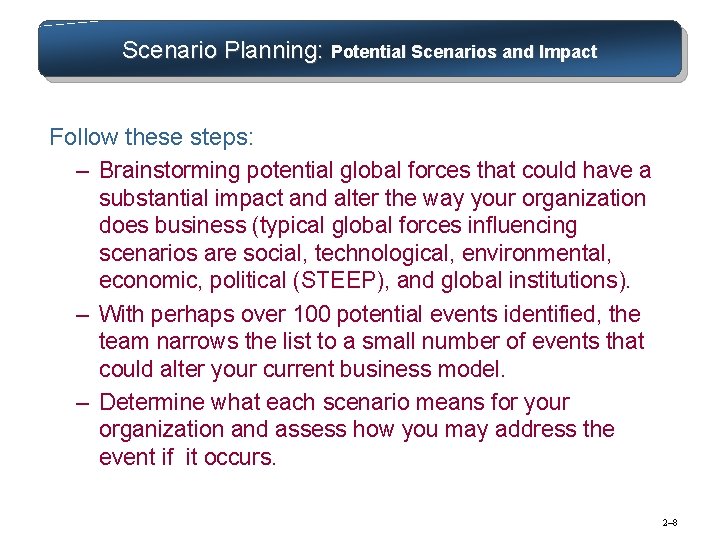
Scenario Planning: Potential Scenarios and Impact Follow these steps: – Brainstorming potential global forces that could have a substantial impact and alter the way your organization does business (typical global forces influencing scenarios are social, technological, environmental, economic, political (STEEP), and global institutions). – With perhaps over 100 potential events identified, the team narrows the list to a small number of events that could alter your current business model. – Determine what each scenario means for your organization and assess how you may address the event if it occurs. 2– 8
Scenario Planning: Potential Strategies Assuming the scenario occurs: – What strategy(s) would you use to move the organization to respond to the change? – How does the industry make major changes today— in 1– 2 years, 3– 5 years, 6– 10 years? – Given your core competencies, is your organization capable of changing to operate in this future environment? – How would your competition react to this new scenario? – What strategic options would work best for your organization? 2– 10
Scenario Planning: Indicators & Triggers • Scenario planning concludes with identifying early indicators for different scenarios and establishing “triggers” that tell you the event is quickly approaching and detailed strategic planning is needed. • What upstream factors and driving forces cause the scenario to move forward (technology, political, economic, and social)? • What must come true for the scenario event to materialize and cause you to take action? 2– 12